Home / Commercial Roofing Services
Preventive Roof Maintenance in Downey, CA
Preventive commercial roof maintenance in Downey, CA. We inspect seams, drains, flashings and rooftop units, clear debris and price real repairs separately.
A roof maintenance visit should find small defects before rain reaches tenants or stock. In Downey, long dry stretches can hide a slow drain problem until winter storms arrive. Start with an inspection that checks the same details every time. Walk seams, penetrations, drains, walls and roof edges. Photograph damage before anyone applies sealant or covers it.
Use the resulting list to separate upkeep from repairs. Clearing accessible debris is not the same as rebuilding a failed flashing. The manager should see each location, recommended work and price before approval. A roof inspection that records visible conditions and next steps creates that starting point. Then the crew can handle approved maintenance without treating the visit as a blanket certification of the roof.
Locate the upkeep tasks before approving a visit
Give the crew a roof plan and mark known leak areas. Identify roof sections, access points and equipment that needs an operator. Review available drawings or repair records before the walk. Note earlier patches and any roof areas that the crew cannot reach. A maintenance visit for an industrial property near Santa Fe Springs still needs that building-specific preparation. The city name does not tell a roofer which hatch to use or where the leak was reported.
Walk the accessible roof from perimeter to interior details. Look for open seams, cracked sealant, loose edge metal, punctures and displaced flashing. Check around units where vibration or prior service may have disturbed the roof. Record ponding and debris at drains. Do not label every stain an active leak. Locate the visible condition and trace it to the detail that needs repair.
After HVAC, plumbing or solar work, inspect the paths and penetrations those crews used. Look for loose flashing, foot traffic, dropped fasteners and material scraps. Compare the before and after photos. If a contractor changed a curb or support, review the affected connection before equipment hides it. That targeted check keeps the follow-up focused on the work that changed.
Make the maintenance report useful next month. Use dated photos and mark each condition on the roof plan. Separate a completed housekeeping item from a repair awaiting approval. That distinction prevents a manager from reading “serviced” as “all roof defects fixed.”
Check drains and scuppers
Clear leaves and debris from accessible drain bowls and scuppers. Check the visible clamping rings, strainers and surrounding membrane. Look for loose flashing, standing debris or signs that water has backed up. A maintenance crew can remove accessible blockage. A damaged drain connection may need a separate permanent repair.
The roof drain and scupper repair scope should identify which part failed. Check the drain body, surrounding membrane and route water follows across the roof. The visible outlet may not explain a leak at the adjoining deck or piping. Report those questions separately instead of folding them into routine drain cleaning.
Check downspout transitions from the roof to accessible discharge points. A blocked outlet above can send water toward a wall or tenant entrance below. Record the observed path rather than assume the drain alone caused interior damage.
After clearing the outlet, photograph the open drain and surrounding surface. Record any standing water observed after the work. A maintenance visit cannot predict drainage performance during every storm. It can show what the crew found, what was cleared and which connection needs additional inspection.
Separate membrane and flashing repairs from upkeep
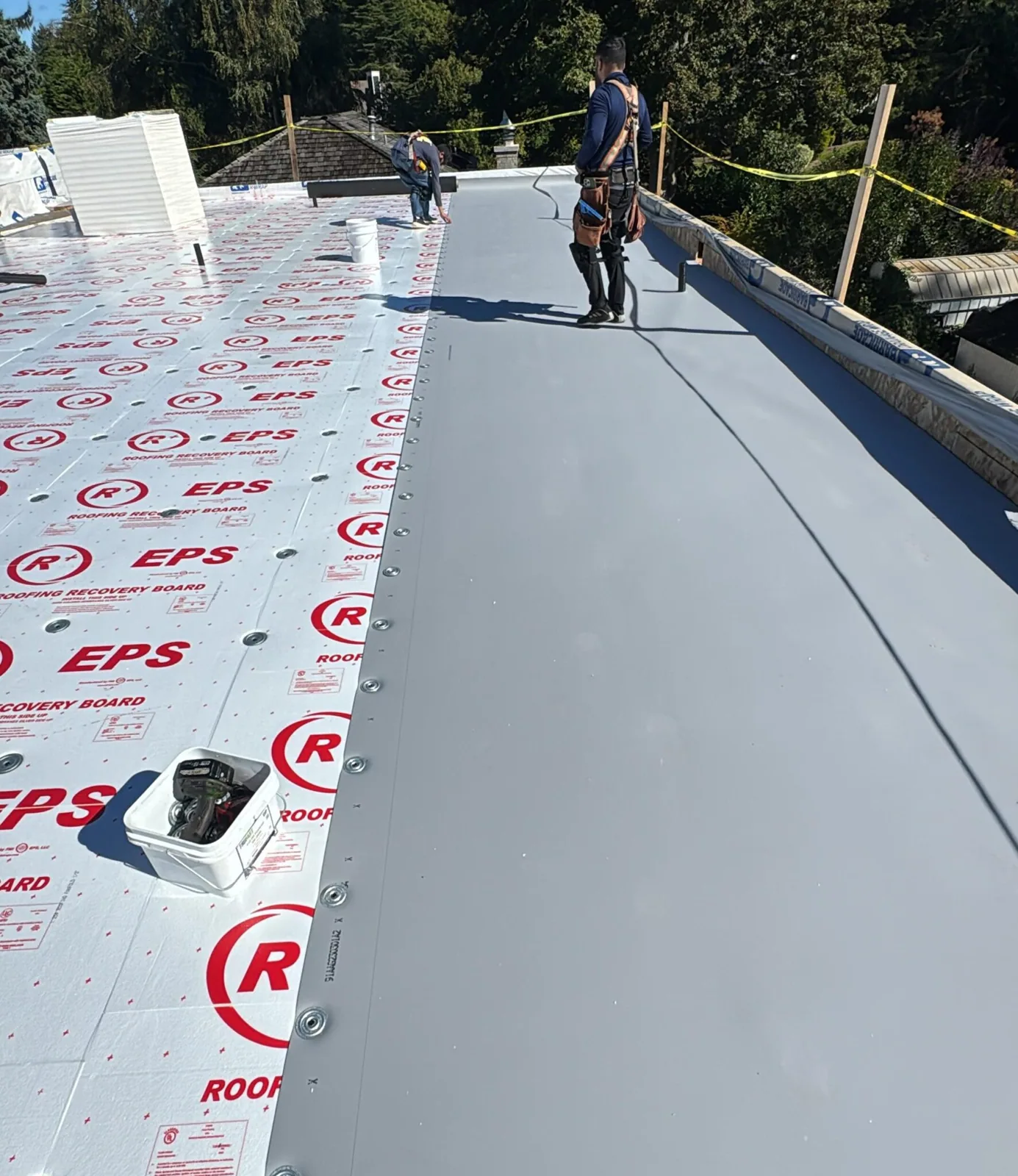
Examine exposed seams, fasteners, flashing and sealant joints during the same visit. Heat and ultraviolet exposure can age roof materials through a long Downey summer. Dry Santa Ana winds can stress old sealant and perimeter details. Look for a lifted edge, a cracked joint or a seam that has opened. These are specific repair leads, not reasons to coat or replace the entire roof.
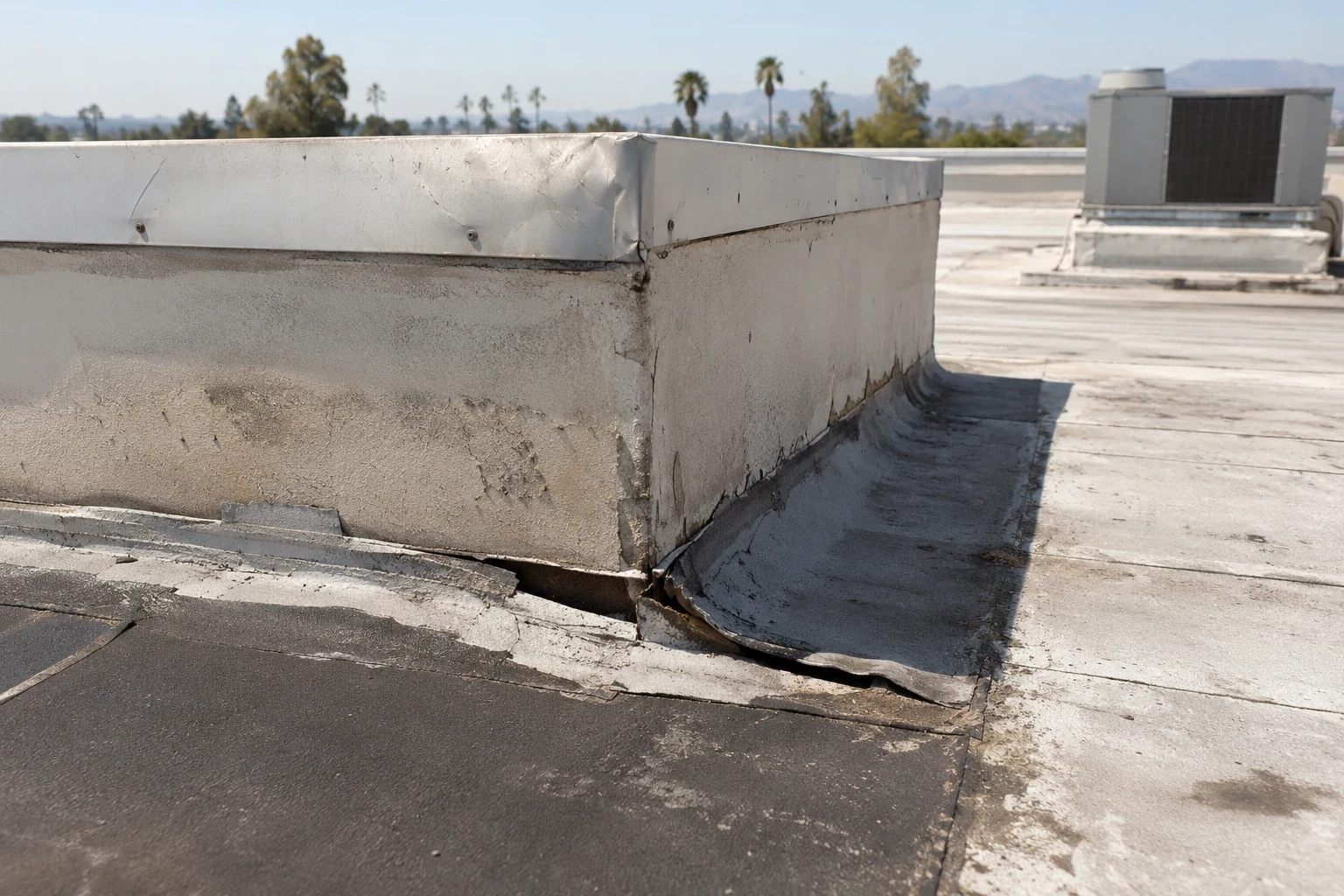
A seam repair at a located opening needs compatible preparation and a permanent joining method. The contractor should show the seam, adjoining material and repair boundary. For a flashing repair that includes the receiving surface, identify any loose or deteriorated backing before the new material goes on. A bead of sealant will not rebuild a failed support.
Keep routine cleaning and permanent correction on separate lines. The owner can approve a defined maintenance list and decide which repairs need a proposal. This avoids paying twice for a temporary seal that still leaves the underlying connection open.
Coordinate rooftop units before working on their flashing
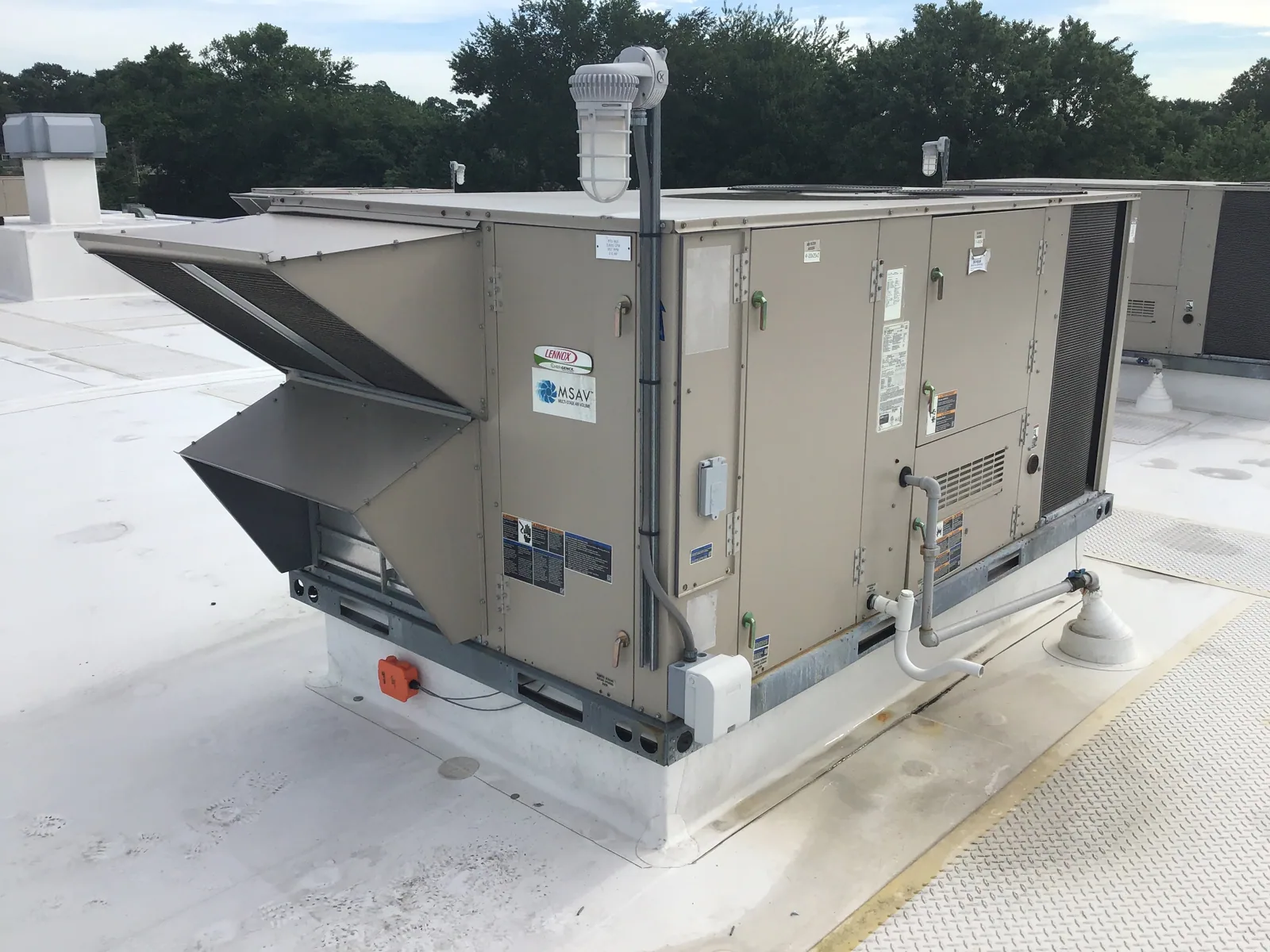
Walk the roof around every rooftop unit that is part of the maintenance assignment. Check visible curb flashing, counterflashing and nearby membrane. Look for gaps, split corners, loose metal and service lines that interfere with the roof detail. Ask whether recent equipment work changed the flashing. A roofer should not move, open or repair another trade’s equipment without the proper authorization.
Use a curb and support inspection for a specific rooftop connection when a unit blocks access or its support appears damaged. Name the equipment, position and action needed before roofing can finish. The facility’s operator can arrange a shutdown or service task if required. Keep that preparation separate from the roof repair so neither trade assumes the other has completed it.
If the roof remains open after inspection, protect the affected location and record who will return. Do not report the connection as maintained until the permanent flashing is complete. Keep the other units on their own findings; one curb repair does not cover the rest.
Keep a record of what was serviced and what still needs a decision
Finish with a short work record. List the roof areas walked, accessible drains cleared, defects photographed and repairs actually completed. Include the product used where a maintenance treatment was part of the approved scope. Keep inaccessible sections and open repair requests on a separate list. A roof condition report tied to the serviced locations helps the next manager compare changes without assuming that an earlier visit covered every detail.
For a commercial roof maintenance assignment in Commerce, identify the building and roof sections in the service request. Then schedule the next visit before the rainy part of the year. Use the same checklist and photo locations where access allows. Changes in seams, ponding, flashing or equipment clearances can then be compared over time.
Ask the contractor to price repairs that fall outside routine upkeep. Each proposal should identify the condition, permanent fix, access needs and remaining questions. The owner can approve those tasks on their merits. A maintenance record is not a roof warranty, and one visit does not certify concealed material. It shows which work was completed and what still needs a decision.
Commercial Roofing Questions
What should a commercial roof maintenance visit include?
Start with a documented walk of accessible seams, flashings, drains, edges and rooftop units. Clear accessible debris, photograph defects and mark each finding on a roof plan. Price permanent repairs separately from routine upkeep.
Does clearing a drain repair a leak around the outlet?
Not by itself. The crew should inspect the drain body, roof membrane and visible connection. If flashing or the drain assembly is damaged, identify that repair separately from debris removal.
How often should we schedule maintenance?
Set the interval from roof condition, system requirements and site exposure. At minimum, plan a documented review before the wet season and after significant roof work or storm damage. Follow the manufacturer’s requirements where they apply.
What should the owner receive after the visit?
Request the walked roof areas, dated photos, completed work, product used and open defects. Keep inaccessible locations visible. Approve a separate proposal for permanent repairs rather than rely on a general “serviced” note.
Set up your maintenance and repair list
Send us the address, the roof areas to include and any records on the existing roof. We will inspect and clean what we can reach, then list any permanent repairs, equipment issues and areas needing a closer look.