Commerce Commercial Roofing from Downey, CA
Commercial roof leak and puncture repair in Commerce from our Downey crew. We trace the leak, check for wet insulation and price a repair that lasts.
A leak in Commerce can interrupt a warehouse shift or damage stored goods. We start by locating the water path and the roof detail above it, checking the membrane, seams, curbs, drains and edge metal. A stain on a ceiling tile narrows the search; it does not prove where water entered. We photograph the visible condition and explain what the repair needs.
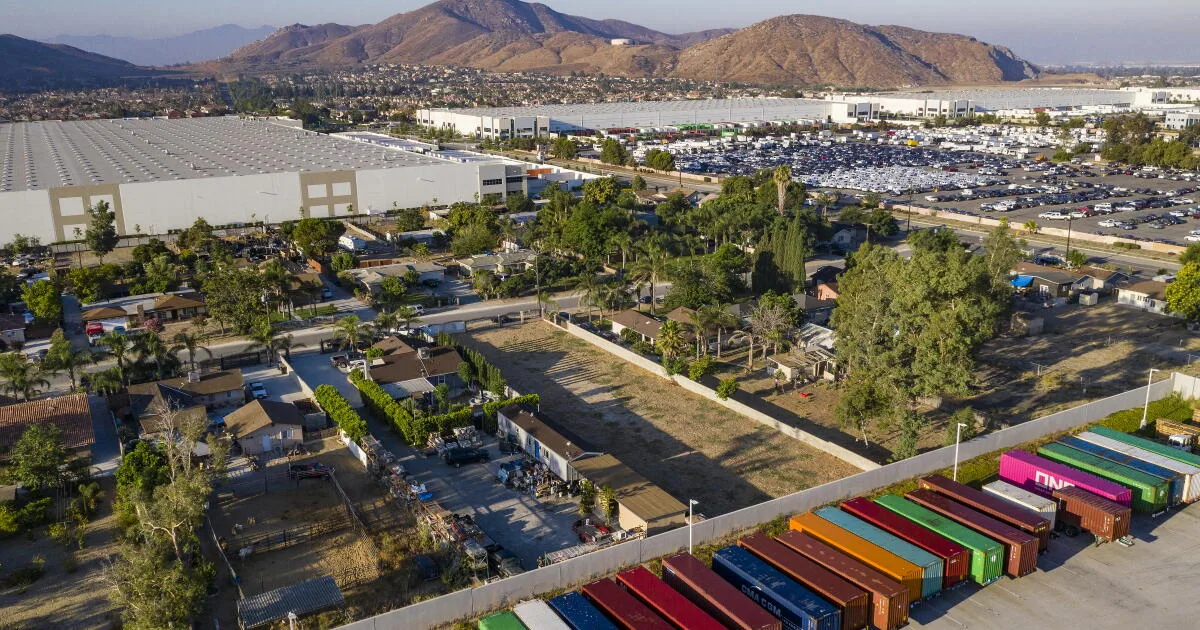
Commerce is a heavily industrial city with a major rail yard. Freight routes and distribution activity make clear access planning useful for many properties. The work still depends on the individual roof. Our commercial roofing service in Vernon follows the same inspection rule. We identify the actual assembly before recommending a patch, restoration or replacement.
Inspect the damage and the membrane around it
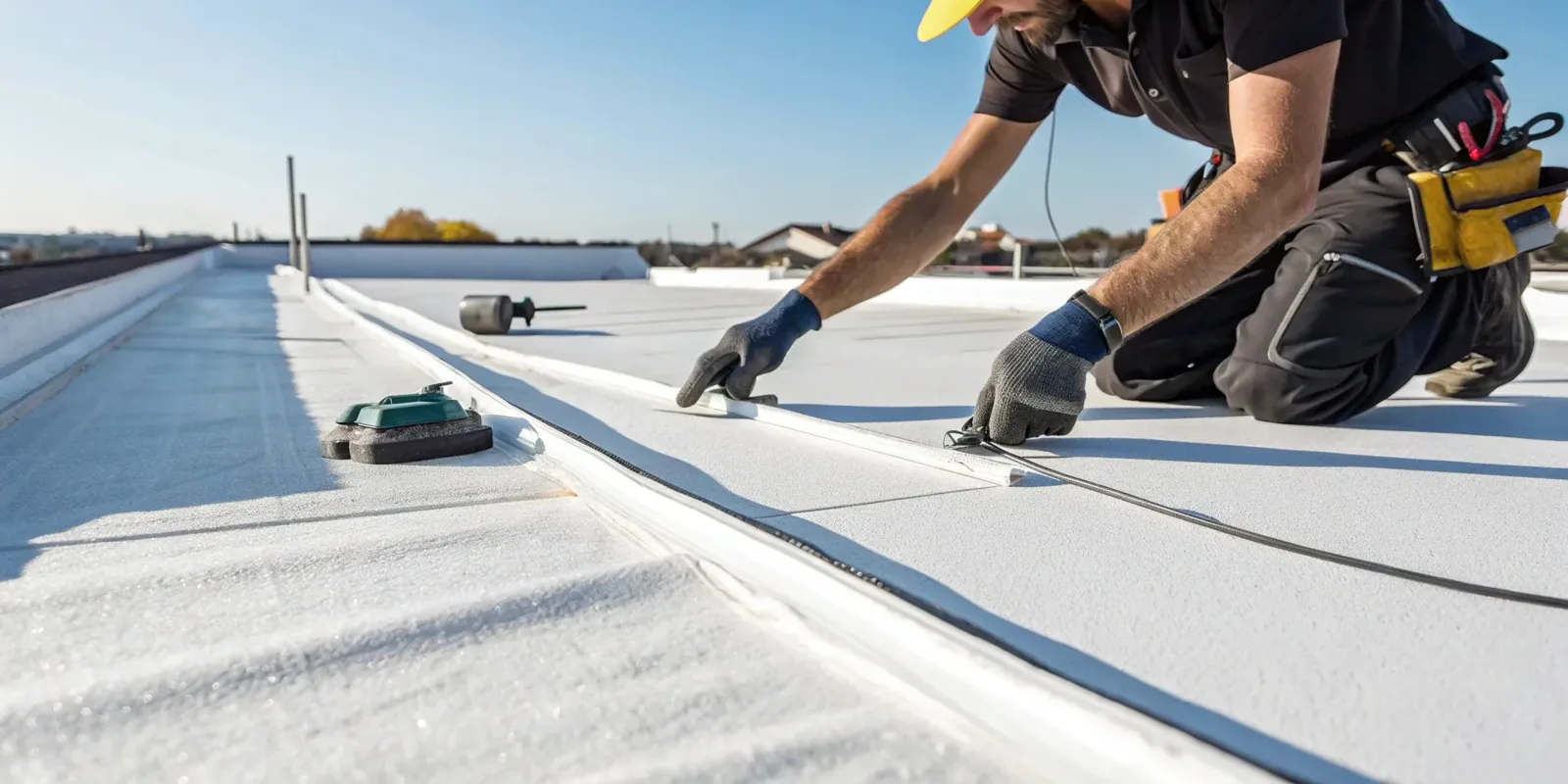
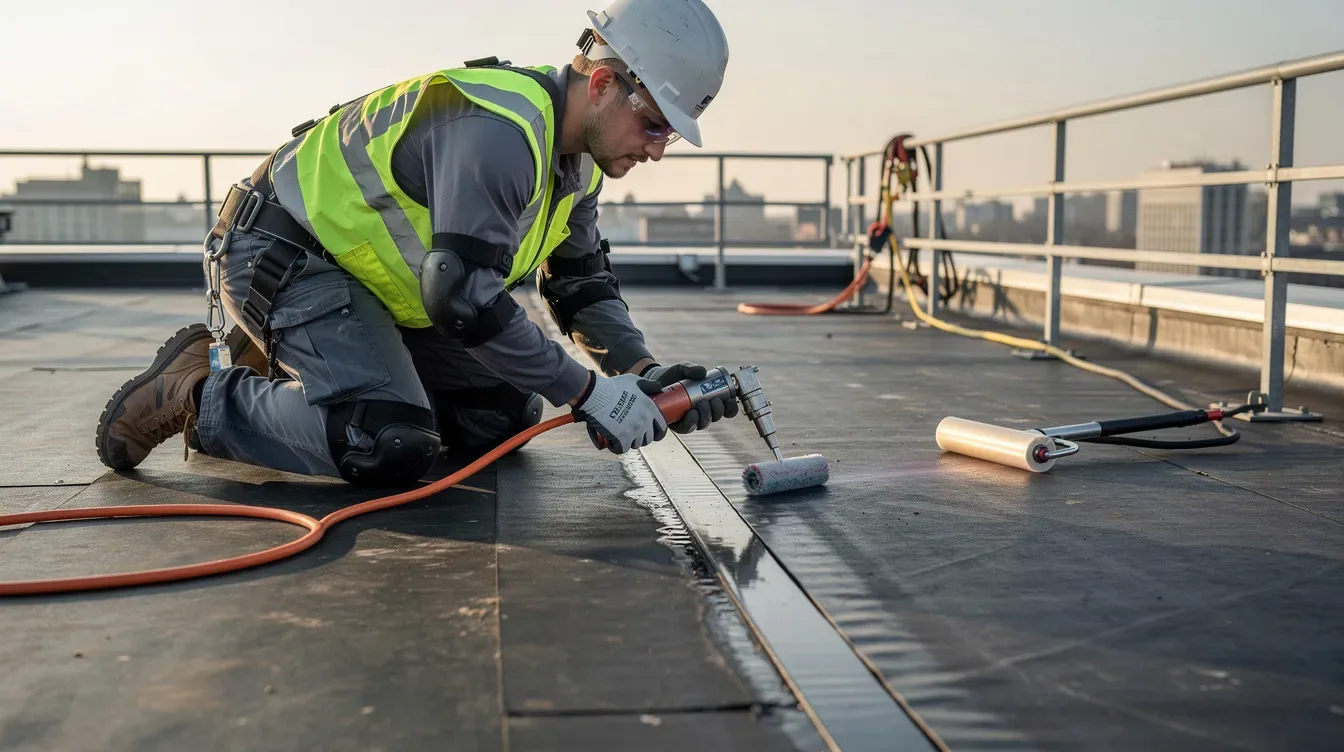
We walk the roof from the leak toward the closest seams and penetrations, looking for an open lap, puncture, cracked flashing or water held at a drain. Check whether the membrane around the suspected entry remains sound. A patch needs clean, compatible material around its full edge. If that area has split or pulled away, the repair extends to stable membrane.
For a puncture repair, the estimate shows the damaged area and the preparation needed, plus any insulation or cover board that must be removed. Hidden damage is not priced until it is confirmed. The manager should see the difference between a surface repair and reconstruction below it.
On a broad warehouse roof, we check long seams at changes in sheet direction and look at curb corners and flashing where ducts rise through the membrane. A repaired section should tie into material that can accept the selected method. We organize photos by roof section, because an aerial photo without close views cannot show a split seam or loose termination.
One roof can have several conditions. We do not lump separate leaks or drains into a single repair line unless they share a cause. Each location is marked on a roof plan. The owner can approve a limited task or request a wider investigation with a clear reason.
Confirm whether concealed layers need rebuilding
Moisture below the membrane changes the repair. We check for soft insulation, damaged cover board and any deck problems. A small opening can reveal a larger wet area, but we do not assume that before we look. Confirmed removal and rebuilding is priced separately from sound roofing that can stay.
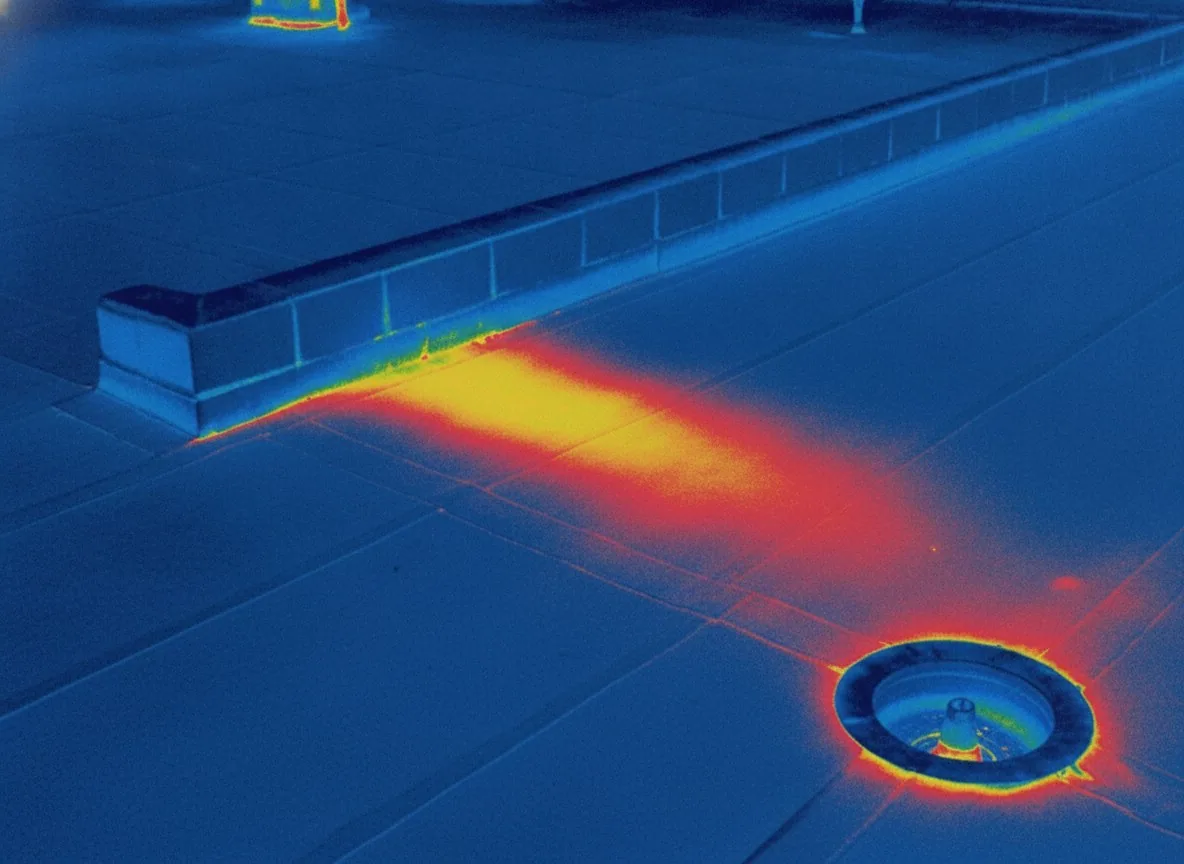
An infrared moisture survey may help locate a question. Temperature patterns need interpretation; they do not set the removal boundary on their own. If test cuts are needed, we agree on where, get your approval and close them the same day. Each one is photographed and marked on the roof plan.
If removal exposes more damage than the approved scope, we stop and photograph it, measure the added work and explain how it changes cost or timing. Temporary protection stays in place until you approve the revised repair. A change order should describe the material found, not simply add square footage.
Arrange working clearance and material handling
For roof work in Commerce, we confirm the gate, roof hatch, delivery point and work area with the site contact, and ask where inventory, loading and vehicle routes need protection. The roof crew's access stays separate from rail, utility or equipment operations managed by others.
For another industrial assignment, our roofing work in Santa Fe Springs also starts with the specific building and its materials. If a unit, sign or service line blocks the flashing, whoever owns it needs to move or support it first, and our proposal shows the roofing work that follows. We do not start removal until the opening can be protected and closed.
Where the facility stays in operation, we define each roof section and where the day's work will be closed up. Smaller stages may require repeated setup. Compare that cost with a larger exposure that needs more interior protection. The best sequence protects the building and completes a permanent connection at every stage.
Approve material suited to the actual membrane
We choose the repair material after identifying the roof system. TPO, PVC, EPDM, modified bitumen and metal require different preparation and joining. An old patch may use another product, so we check the overlap before building on it. The estimate should name the material, repair method and edge treatment.
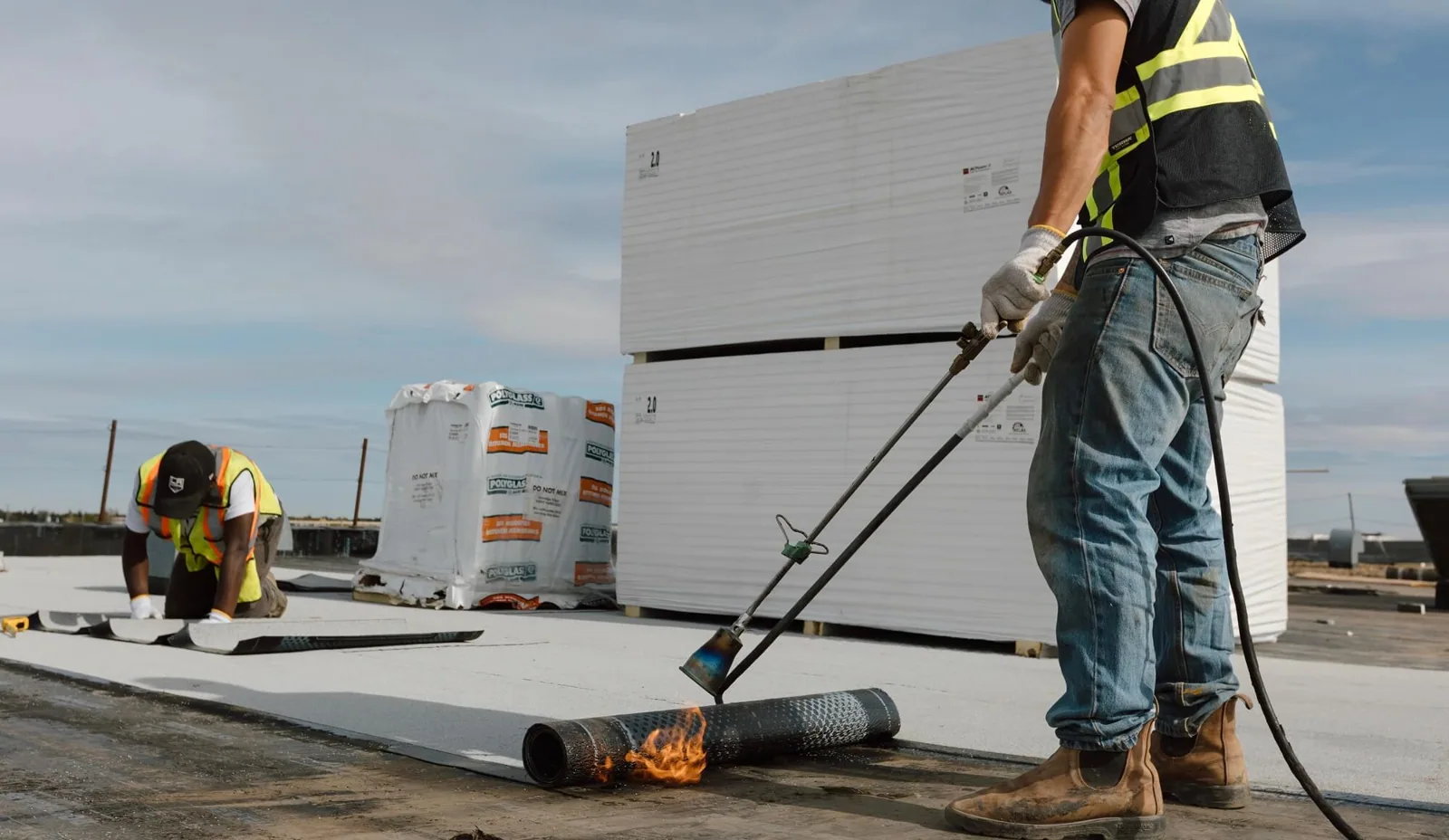
For TPO repairs, the crew cleans and prepares the existing sheet so the weld will hold. Other roof types get their own details. A coating should not cover a loose seam or wet insulation. We fix the underlying problem first, then restore the surface if the roof is a good candidate for it.
We also inspect roof edges where sheet metal meets the membrane, since wind can lift a loose edge and drive rain beneath it. That means checking fasteners, splice plates, sealant and the membrane termination. Edge work is not lumped into a field patch unless the repair actually reaches the edge. A separate amount should show the metal length and backing that need attention.
Drains, wall transitions and equipment curbs beside the repair get checked too. The patch must meet those details without leaving a gap or unsupported edge. Metal, backing or equipment work that belongs to another trade is listed separately. The property manager can then compare complete options rather than a low material-only number.
Locate the repair and record its concealed work
Each repair is closed out with dated photos of the opening, the prepared surface and the finished seal. We record which layers were removed, what remained and where the membrane was joined. We note how the repair was tested, and roof sections we could not reach go on a separate list.
A roof condition report gives the next crew a reliable starting point. The roof plan is kept with those photos. If another leak appears, we compare its location with earlier work before deciding on a cause. A past repair tells you nothing about the condition of a different drain, seam or penetration.
Where a roof has older coatings, we check what is underneath before recommending another coat. A surface can look intact while seams or wet insulation remain unresolved. The proposal should say whether the crew will remove a test area, repair a detail, or apply material over an accepted substrate. Keep separate quantities for each route.
For Commerce owners, a clear record also helps budget the next season. List immediate repairs, items to monitor and work that needs a separate inspection. That short list is more useful than a broad “roof serviced” note. Every recommendation should match what the crew saw and what it could access.
Commercial Roofing Questions
What should a Commerce roof leak inspection cover?
We trace the water from inside to the seams, drains, curbs and wall flashing above it, note the roof type and visible damage, and flag anything that needs a closer look. Separate leak spots are treated separately unless they share a cause.
Can a patch cover an area with wet insulation?
Not as a lasting repair. Wet insulation needs to be confirmed, cut out and replaced before new membrane goes on. Suspected wet areas are tested before we price removing them.
How should warehouse access affect the repair plan?
We confirm the gate, roof hatch, delivery point and work zone with your site contact, and note inventory or truck routes that need protection. Removal is scheduled only when the crew can protect and close the opening the same day.
What should a roofing proposal show?
It should name the roof system, the repair locations, how deep the removal goes, the prep work and how the repair ties in. Access or equipment work should be listed separately, and it should explain how added work is approved if hidden damage turns up.
What belongs in the repair closeout?
Dated photos, repair locations on a roof plan, which layers were removed or kept, and the finished details. Test results and any areas we could not reach are noted, and open items are listed apart from completed work.
Get the leak traced and priced
Have a leak or puncture on a Commerce warehouse or industrial roof? We will trace the leak, check the membrane and insulation, and give you an estimate for a permanent repair.