About Commercial Roofing Downey
Commercial Roofing Downey writes proposals from what we find on the roof, not from a guess made over the phone. A leak report tells us where to start looking. It does not tell us how big the repair is. We inspect the roof, find the cause, and explain the repair in plain terms: what comes off, what goes back, and what other trades need to do. If the backing behind a flashing is rotted or the insulation under a seam is wet, that goes in the proposal, so the price covers a repair that will last. If the area needs protection while the work is done, that is in there too.
For a Downey commercial roofing request, share the property location, reported concern and roof information available. We inspect the assigned building, document accessible conditions and explain the repair or project scope supported by those findings. The owner can request roofing service near the I-5/I-605 interchange or review office roof repair and replacement by property type. We tie each recommendation to the specific roof and the condition found there.
We start where the problem is
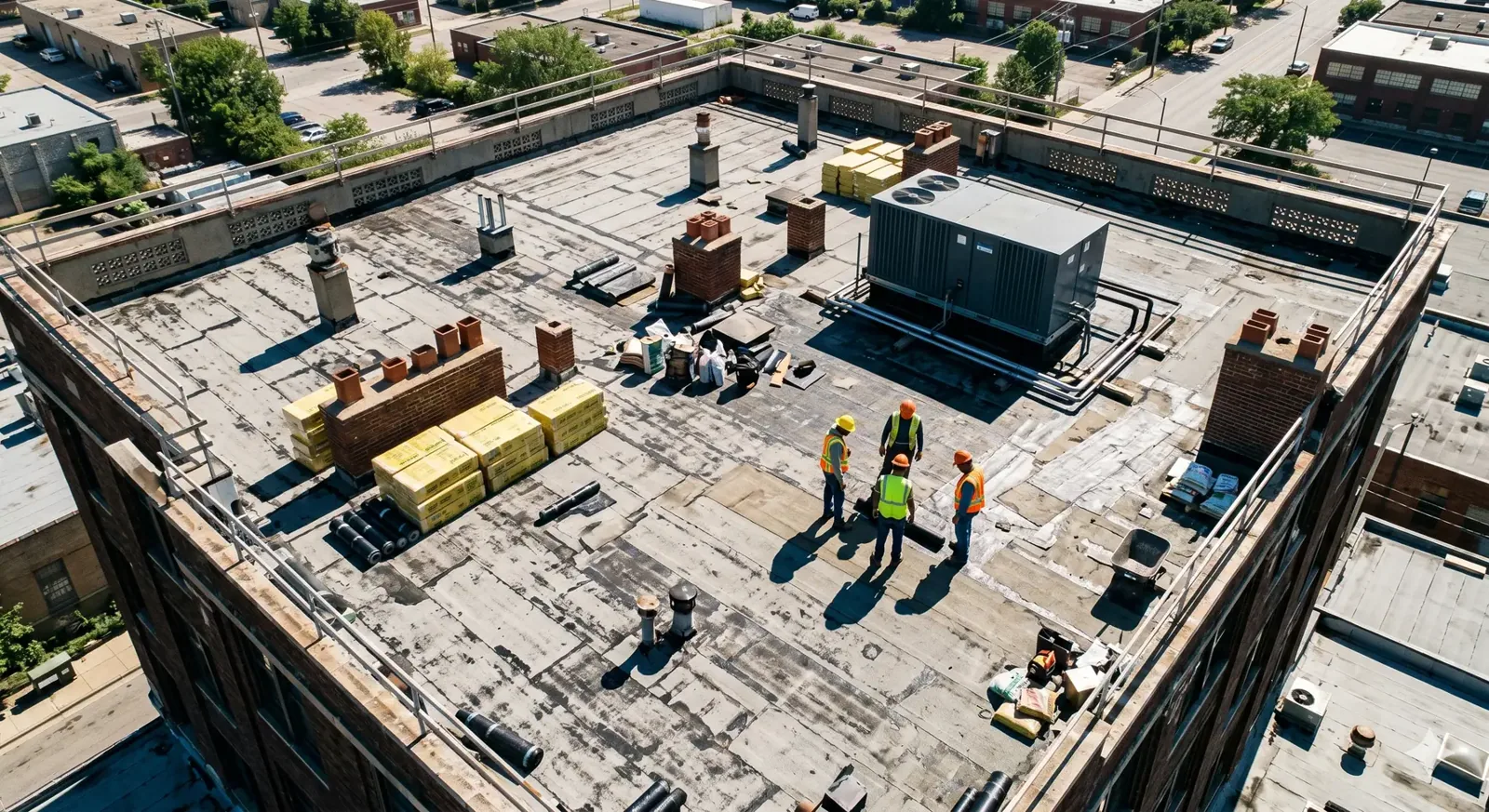
A commercial roof inspection starts at the reported problem and works outward. We check the seams, flashing, drains and rooftop equipment near the leak, because water inside a building does not always come in directly above where it shows up. If the cause is not clear, we say so and explain what else we need to check, rather than promising a fix for a problem we have not found. If the water is coming from a pipe or an HVAC unit, we tell you which trade to call.
Photos are part of every inspection, but a photo is not an explanation. Our reports say why a section needs repair and how far the repair has to go. Sometimes a membrane only needs cleaning before a patch. Sometimes the layers underneath have to come out. We explain where the repair will reach sound material, and why a narrow patch over a bad spot would only lead to another call.
We price the whole repair
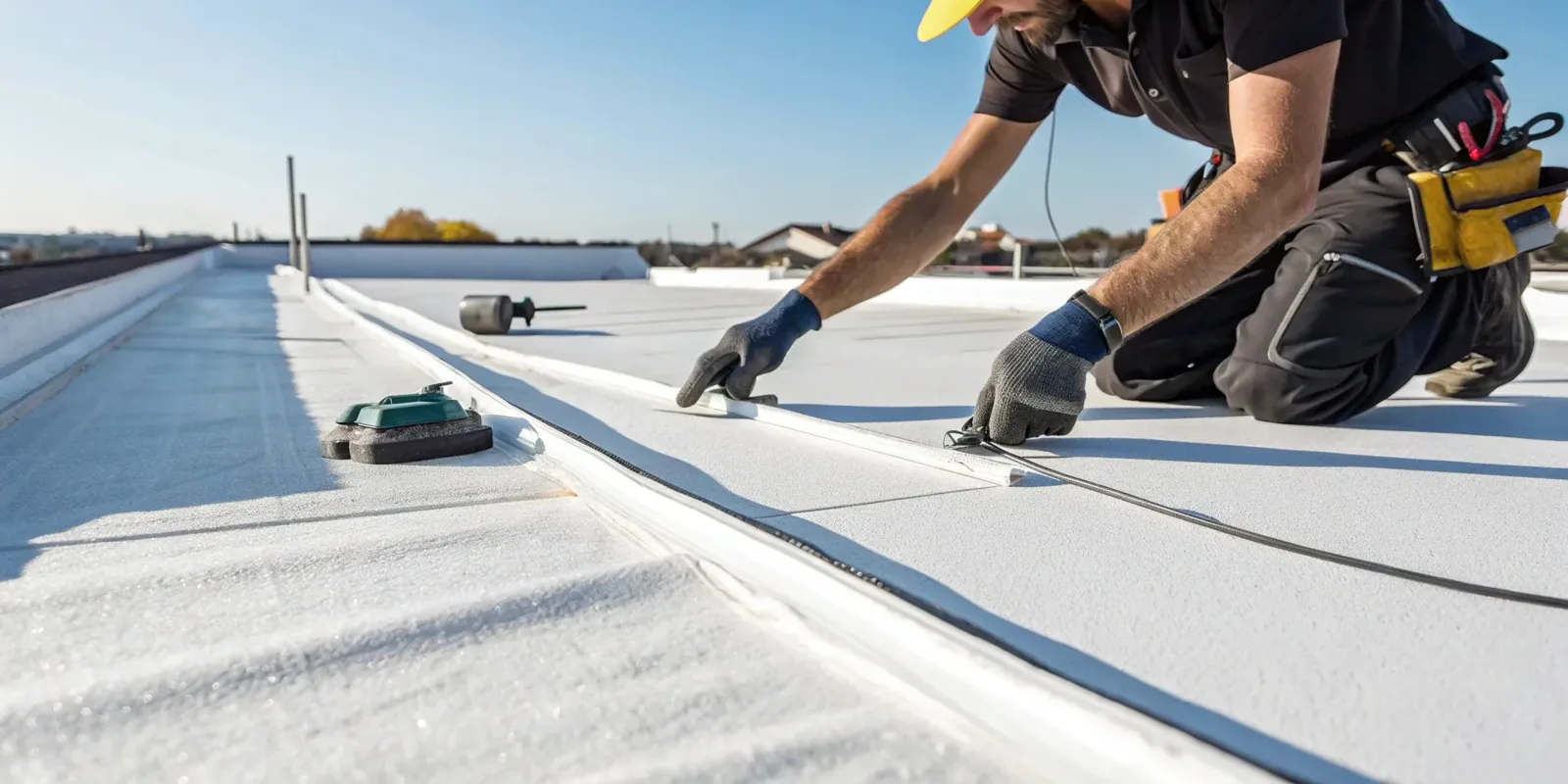
A commercial roof repair should end at a point where the roof is properly sealed. TPO and PVC seams are heat-welded, EPDM is taped or glued, and modified bitumen is torched or adhered. Each roof type needs its own method. We check whether the existing material is in good enough shape to tie into before we price the repair, so when you compare bids you are comparing the same finished work.
Some repairs need other trades. A wall flashing may need a stucco or masonry repair first. Rooftop equipment curbs and supports may need an HVAC contractor to disconnect and lift a unit. Structural changes need an engineer. We list those steps in the proposal so you know who does what and in what order, and so our roofing price is not missing anything it depends on.
We test before recommending a recover
Keeping the existing roof and adding a coating or a new layer over it can save a lot of money, but only if the old roof is dry. An infrared moisture survey can show likely wet areas, which we then confirm with core cuts or moisture readings. Every test cut is patched the same day. Our proposal shows which areas tested dry, which are wet and which have not been tested.
Small wet areas can be cut out and replaced. If water has spread across a large part of the roof, a coating or recover will trap it, and a commercial roof replacement is usually the better choice. A replacement estimate should include new flashing, edge metal, drains and any design questions, not just the field membrane. We recommend what the roof can support, not whichever option is cheapest on paper.
We plan the work with the building
Inspecting a roof and tearing part of it off are different things. Before we open a roof, we go over the work area with the building contact: where materials will be delivered, how debris will leave, which spaces are below the work and whether anything there needs to be protected or shut down. The building manager handles tenant notices and any equipment that has to be turned off.
Sometimes we find more damage once the roof is open. When that happens, we stop, show you what we found and explain why the repair needs to grow. We price the extra work, including any additional interior protection, and wait for approval. In the meantime, the open area is covered so no water gets in. The temporary cover is just that, and the permanent repair is still on the list until it is done.
We leave a clear record
When a job is finished, you get a close-out showing what was repaired or replaced, where, and photos of the work before it was covered. Test cuts that were patched are noted. If a wall, plumbing or HVAC item is still waiting on another trade, it is listed with who is responsible, so nothing gets lost between contractors. That record makes the next repair decision faster and keeps the next estimate based on what is actually left to do.
When a project requires a closer look, we explain the roof details examined, the material proposed and any repair or access question that remains. A Downey interchange-area assignment follows the same process: inspect the building, locate the affected section and provide a construction-based proposal. The owner receives a clear description of work, assumptions and next steps before approving the scope.
Commercial Roofing Questions
What should be sent before a roof examination is arranged?
Send the building address, where the leak or damage shows up, any roof records or past repair invoices, and the name of the person who can give us access. If tenants or equipment are below the problem area, let us know so we can plan the visit.
How should the proposal explain a larger repair boundary?
We show where the damaged membrane or backing is, explain why the repair has to reach sound material, and list any extra work from other trades. If the repair is bigger than the visible damage, the proposal says why, with photos.
What supports recommending a method that retains roof layers?
Testing. Before recommending a coating or recover, we check whether the insulation is dry using an infrared scan, moisture readings or core cuts, and we patch any test cuts. The proposal shows what tested dry, what is wet and what still needs checking.
What should remain clear after the roof detail is completed?
You should know exactly what roofing work was completed, which temporary covers were replaced with permanent work, and which items are still waiting on other trades. That way the next decision addresses what is actually left to do.
Get a roofing proposal you can understand
Send us the building address, the problem you are seeing and any roof records you have. We will inspect the roof and explain the repair, what it includes and what it will cost.