I-5/I-605 Downey Interchange Area Commercial Roofing from Downey, CA
Roof repair and inspection near Downey’s I-5/I-605 junction. Get a scope based on the building, membrane, drainage and repair details.
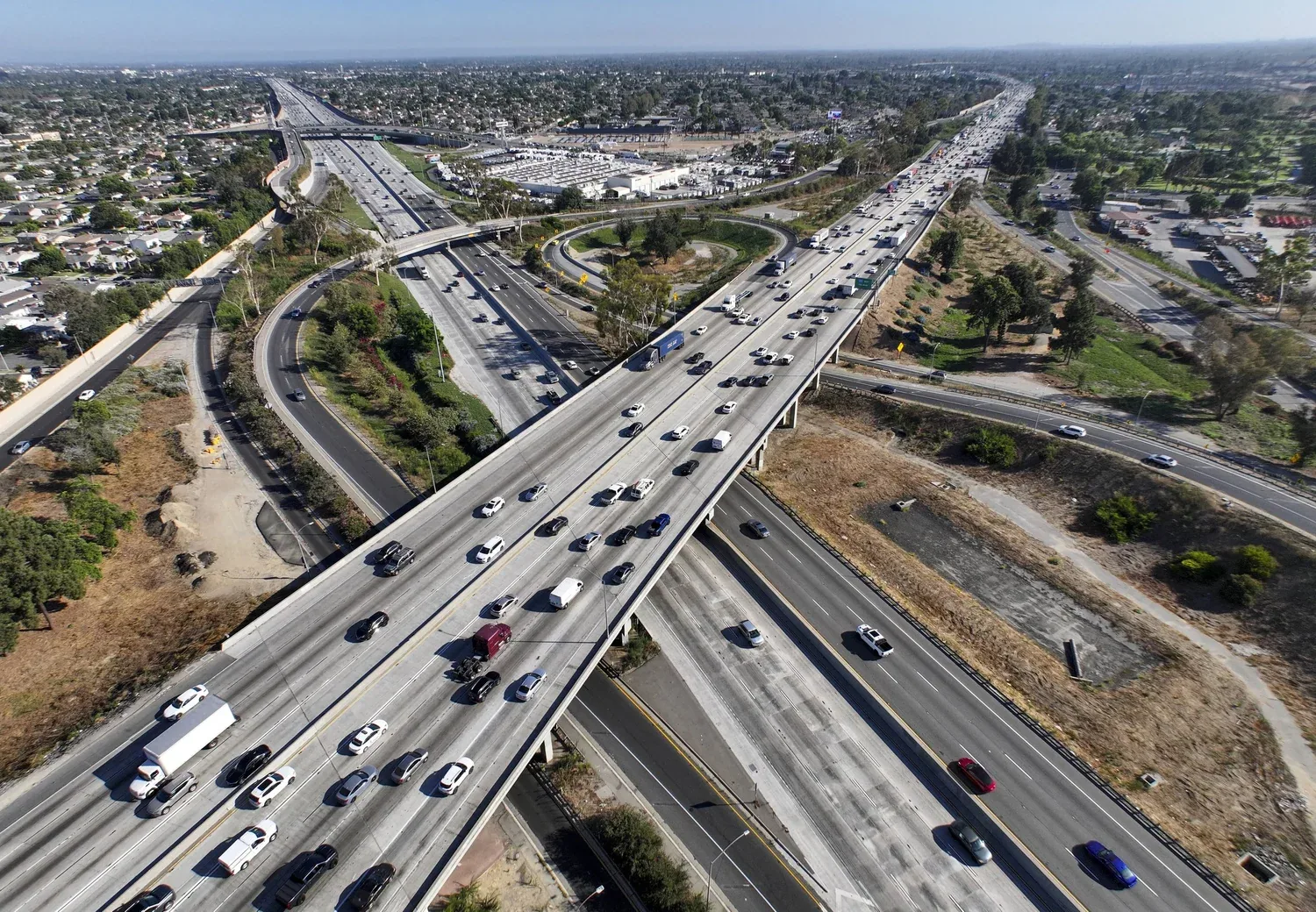
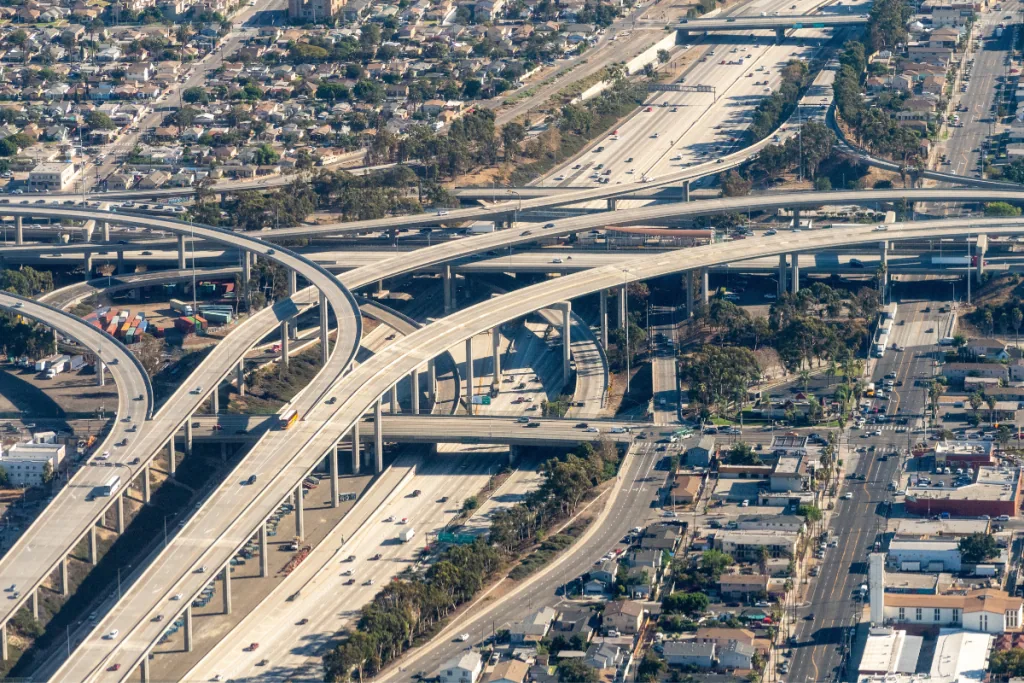
I-5 and I-605 meet in Downey, putting this service area at a regional junction used by commercial properties across the Gateway Cities. The interchange identifies a broad public geography, not a single building or roof. Downey also has commercial strips along its arterial streets alongside residential neighborhoods. A shopping property, service building and distribution roof can each have a different assembly, drainage pattern and access plan. We start with the actual street address supplied for the customer's property, identify the roof sections involved, and inspect the reported condition before recommending a repair or replacement. The freeway location helps owners describe the broader area; the roof itself determines the work.
I-605 travels through Downey and neighboring cities and connects with I-5, I-105, SR-91 and SR-60. It does not mean every nearby roof shares the same age or exposure. At the first visit, we identify the membrane, edge details, drains, curbs and prior repairs that affect the requested work. The manager receives a located condition and a scope tied to those findings, so a small leak investigation does not silently turn into a full replacement recommendation. For roof work along the I-105/Lakewood Boulevard corridor, the assigned building and roof condition still determine the scope.
Inspect the roof section tied to the report
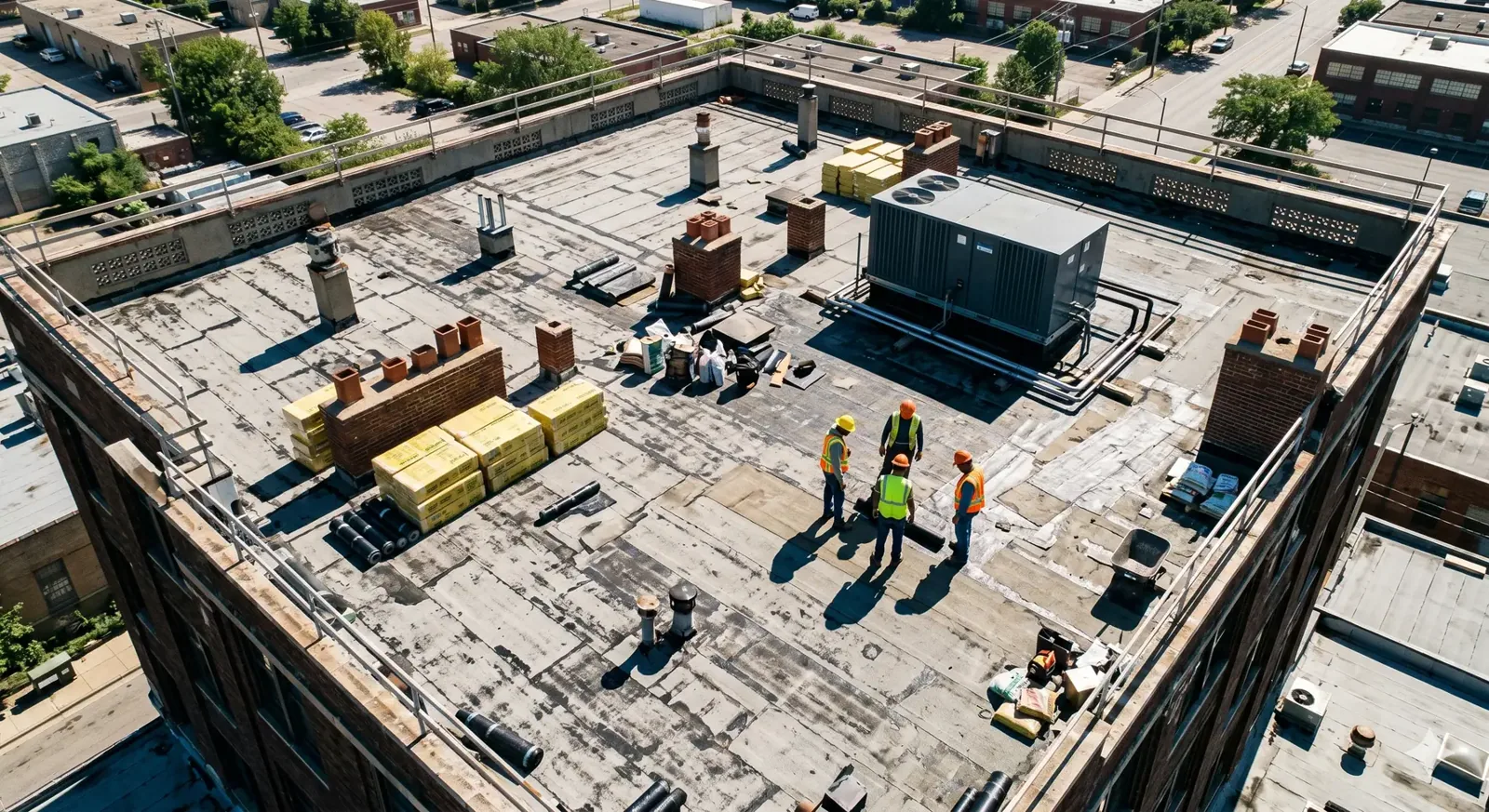
Begin at the reported interior symptom, then compare it with roof conditions above and around that space. Water can travel before it appears on a ceiling, so a stain alone does not identify the entry point. We check accessible membrane seams, penetrations, wall transitions, curbs and nearby drainage. The inspection notes what was visible and where it was found. If access or a building component prevents confirmation, we name the examination still needed instead of treating an assumption as a diagnosis. The owner can then decide whether to authorize a targeted investigation or a repair supported by the observed condition.
The freeway junction sits within a city of more than 114,000 residents, with a mix of commercial strips and larger regional employers. That variety makes building identification important: two roofs in the same general area may have different heights, systems and operating contacts. Our commercial roof inspection records the assembly and the specific details examined. We separate roof findings from HVAC, plumbing or electrical conditions that need another trade. That makes the next step clear for the property manager and keeps a roofing proposal focused on work CRA can actually perform.
Choose a repair boundary that can be closed
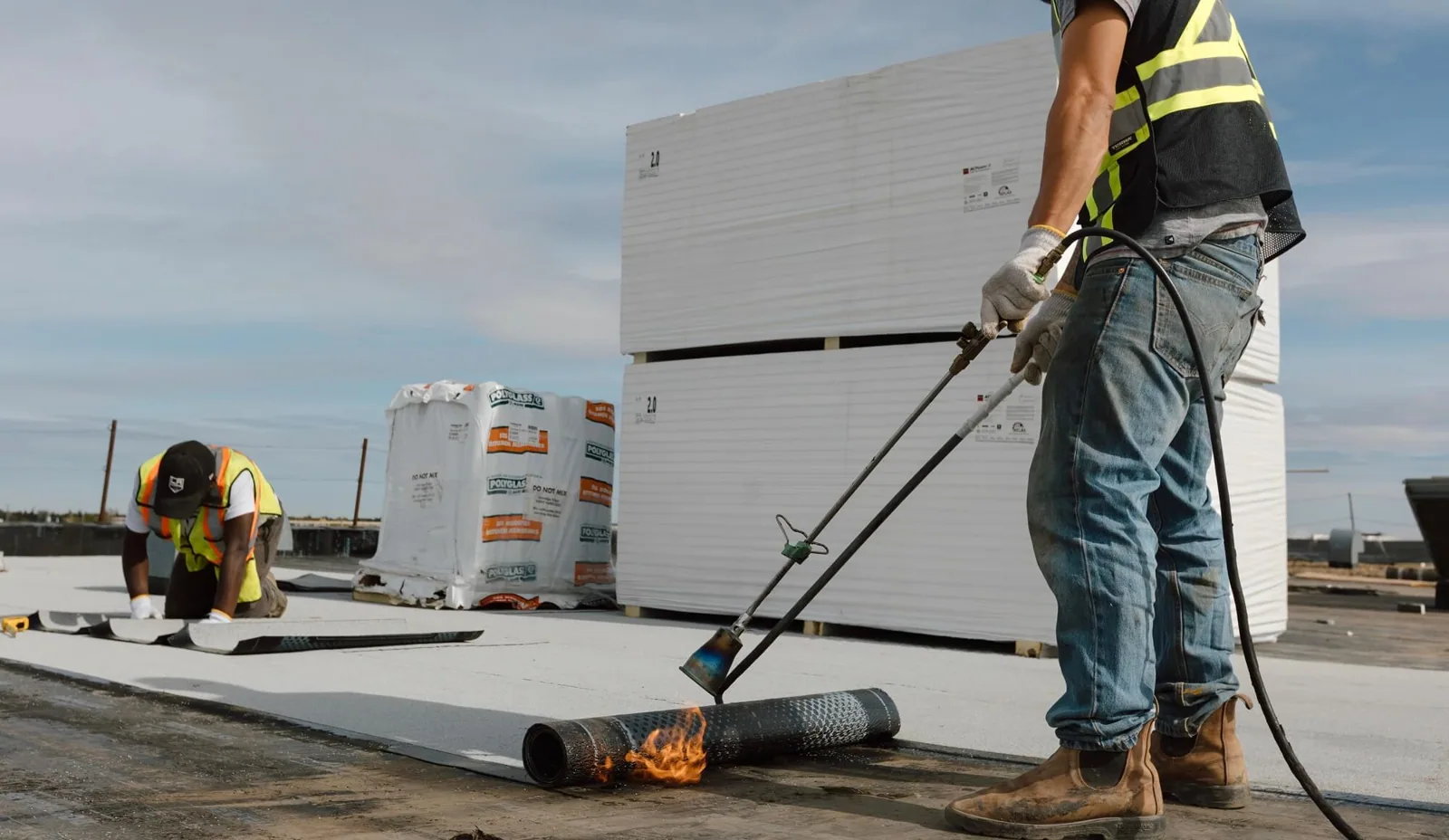
A durable repair extends to sound material and includes the transition that makes the roof weather-tight. We inspect the failed seam, puncture or flashing, then identify how the repair will join the retained membrane. If removal exposes wet insulation, deteriorated cover board or a damaged deck, the scope should show the affected area and the rebuilding required. Do not price a small patch outline if the new material cannot bond to its edge. Conversely, one damaged section does not prove that every unexamined roof area needs replacement. Our commercial roof repair scope explains the finding, preparation, repair and closure.
Drainage deserves separate attention when water remains after rainfall. We inspect the roof slope and accessible outlets, strainers, scuppers and nearby membrane. Ponding can point to a blocked drain, a low area or a broader layout issue; the observation alone does not establish which correction is appropriate. The proposal identifies a cleaning or repair task separately from structural or design work. A damaged outlet or drain body needs the appropriate roof drain and scupper repair, scoped separately from nearby membrane work. The manager can compare the roofing connection with any additional work needed to restore drainage without treating a surface patch as a complete correction.
Compare restoration and replacement on evidence
A coating or recover may extend service life when the retained assembly is sound and compatible with the new system. First identify the existing membrane, prior coatings, repairs and conditions beneath the surface. Then check whether the roof can receive the proposed preparation and finish. Open seams, failed flashing, saturated insulation or unstable substrate require attention before a restoration layer is considered. Our roof coating restoration work begins with those checks; it does not assume that a coating can solve every leak or drainage problem.
Replacement becomes a stronger option when widespread deterioration, multiple failed details or unsuitable retained layers make isolated repairs unreliable. The scope should state the removal depth, new assembly, insulation, edge metal, penetrations and final tie-ins. If some sections can remain, show how new and retained roofing will meet. A clear comparison lets the owner weigh near-term repair against a larger capital project. Our replacement service describes the assembly and transition details needed for the building examined. A freeway corridor does not dictate the budget decision; the condition of the customer's roof does.
Plan roof access and occupied operations
The I-5/I-605 junction links several employment and residential communities, but each project has its own access. Before mobilization, confirm who can release the roof, where materials can be staged and which areas below need protection. Identify rooftop equipment that must remain in service and coordinate any required work by its authorized trade. These are practical job arrangements to verify with the property contact, not assumptions based on the building's location. Our occupied-building roofing plans keep work zones, temporary protection and daily closure visible in the sequence.
When water is entering a building, our dispatch is available any hour, every day of the week and on holidays. The first visit focuses on limiting water entry and protecting the affected area; permanent repair follows once the assembly, access and necessary materials are understood. We explain what the temporary measure addresses and what remains before the roof is fully restored. If a curb, wall detail or HVAC connection is involved, we identify the required trade coordination and the point at which roofing can continue. This gives the manager an honest handoff rather than implying that every emergency can be permanently repaired during the first visit.
Keep a useful record of the completed work
Photographs should show the defect, the opened layers, preparation, repair and finished tie-in. We locate each image by roof section or nearby equipment so a later service visit can find the same detail. The closeout record identifies the system repaired and any adjacent condition that remains outside the work. That record helps owners managing properties across the interchange and neighboring cities compare recurring issues without assuming one building's finding applies to another.
Before approving the invoice, compare the completed work with the proposal: the repair boundary, replaced materials, flashing details and any added work authorized after opening. Ask which items were permanently repaired and which received temporary protection. Our roof condition reports make those findings easier to retain for maintenance and capital planning. If another symptom develops, a new inspection should trace its current path rather than automatically assigning the earlier cause. The closeout record states what was examined, corrected and left for follow-up.
The owner can also compare service in the Imperial Highway corridor, where occupied properties may require a different access and protection sequence.
Commercial Roofing Questions
What does the Downey I-5/I-605 location cover?
It describes the public interchange area where I-5 and I-605 meet in Downey. It helps identify the broader service geography; the assigned building and roof condition determine the actual work.
How do you handle a leak that appears far from the roof defect?
We compare the interior report with accessible seams, penetrations, walls and drains above it. The repair recommendation identifies the confirmed entry detail and any further access needed to trace the path.
When is a small roof repair no longer enough?
A repair boundary may need to expand when opening exposes damaged insulation, cover board or an unsuitable tie-in surface. We document the finding and price the rebuilding needed to close the detail permanently.
Can you repair one section without replacing the whole roof?
Yes, when surrounding material can support a sound transition and the inspection does not show broader failure that changes the recommendation. The proposal identifies the examined area and retained roof.
What records should I keep after a project?
Keep photos and notes locating the original defect, exposed layers, repair and finished transition. Record remaining items separately so another building or future symptom is not confused with this work.
Request a roof-specific assessment
Arrange a commercial roof visit in the I-5/I-605 Downey Interchange Area. We will inspect the reported area, explain the roof details involved and outline the repair or project scope supported by the building’s condition.