Cold Storage Roofing in Downey, CA
Cold storage roofing in Downey, CA: we separate true roof leaks from condensation, repair curb and penetration flashing, and protect stored product below.
Cold storage roof budgets balloon when nobody pins down where the water is actually coming from. At a Downey, CA cold storage building, the roof may be only part of the story. Water inside a cooler or freezer can also come from condensation, a vapor-control gap in the walls or refrigeration equipment. We inspect the roof and find any defects that explain the problem. Refrigeration contractors handle their equipment, and building envelope specialists handle condensation issues. The roofing price should be tied to roof problems we can actually fix, because new membrane will not solve every moisture issue inside. You should see the cause and the repair next to the cost.
A cold-room leak can come from the roof, a vapor-control detail, or condensation at an interior surface. Compare the location and timing of the water with rooftop penetrations, freezer equipment, and the roof-to-wall transition. Inspect the exterior flashing before proposing a membrane patch. If the opening exposes wet insulation, keep its removal and replacement separate from refrigeration work, and protect the open section until the selected roof assembly is closed.
Tell roof leaks apart from condensation
Water inside a cold storage building can come from a roof leak, the refrigeration equipment or condensation inside the walls and ceiling. Our roof leak repair work checks the roof seams, flashing and penetrations above the problem area. We note any split membrane or damaged backing we find. Refrigeration contractors handle questions about their equipment, and an envelope specialist looks at condensation if the signs point that way. A wet spot inside does not automatically mean the membrane failed. Our proposal names the specific roof defect behind the repair and keeps other trades' issues separate.
A roof flashing problem and a condensation problem need completely different fixes. We explain what the roof inspection shows. New membrane cannot fix a refrigeration problem below it. The estimate should explain why the roof work is needed, and where the cause is still unclear, we say what further checking would help. Approve roof work only once a real roof defect has been found, not just because there is water inside.
Include flashing at curbs and refrigeration equipment
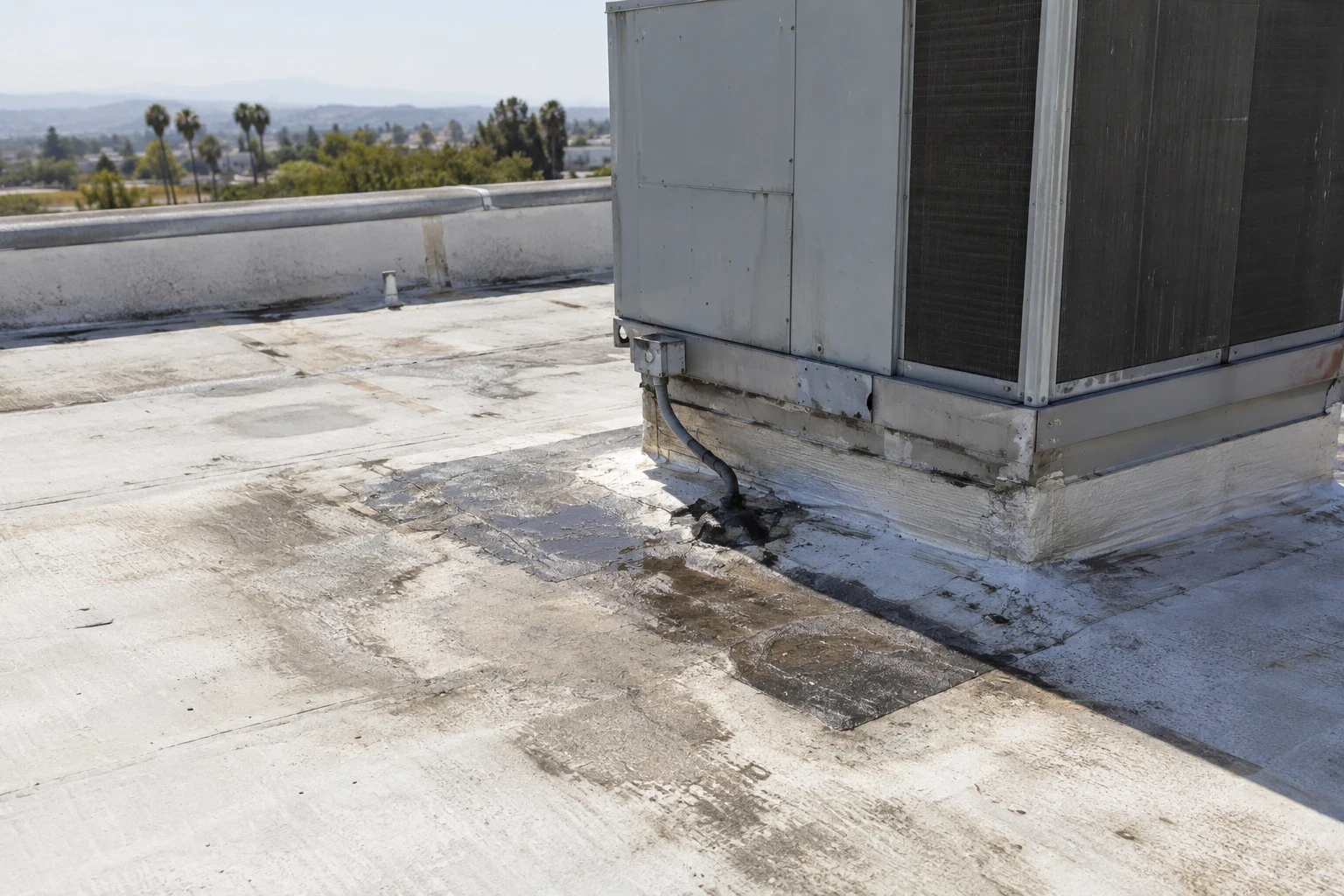
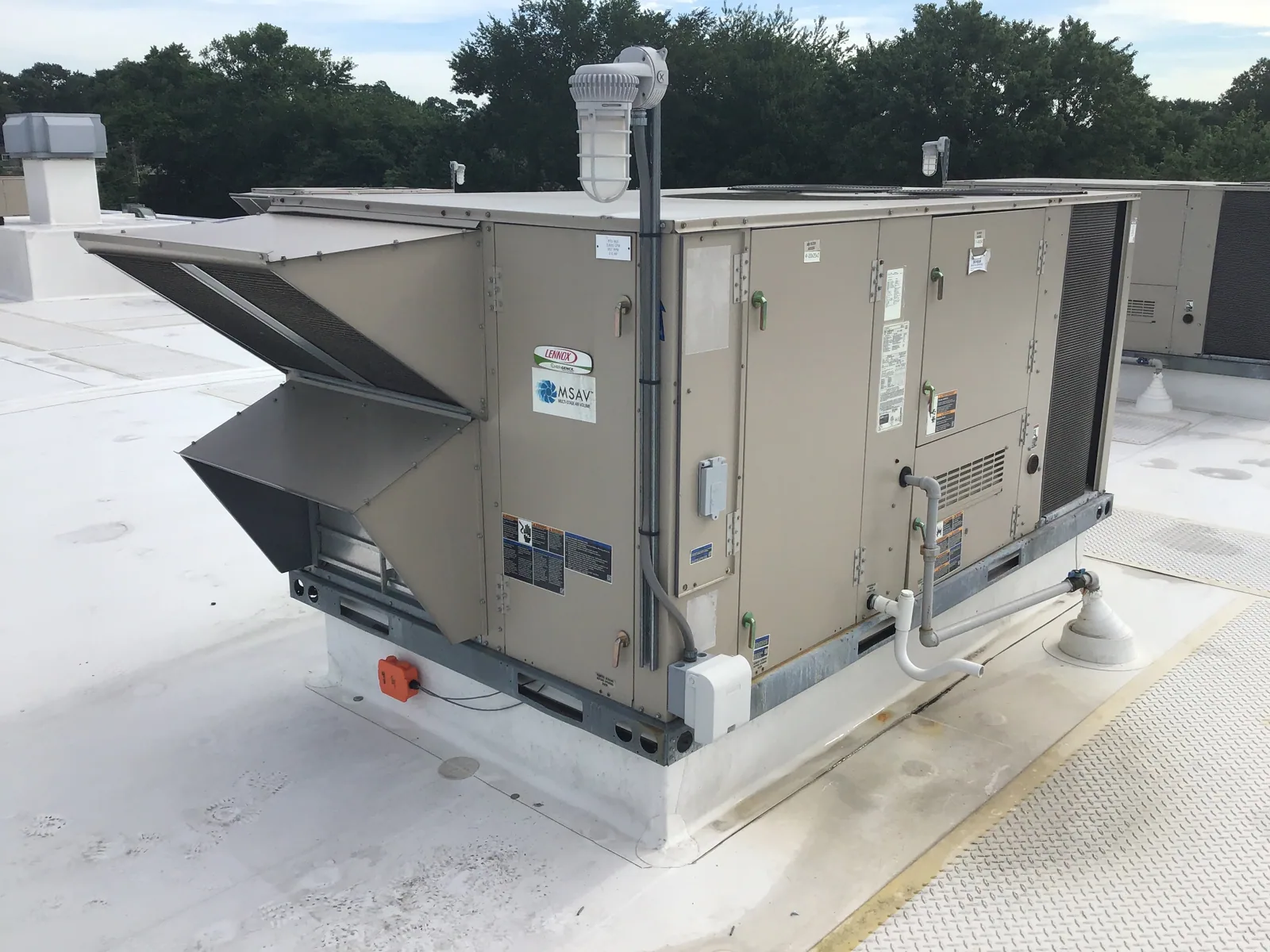
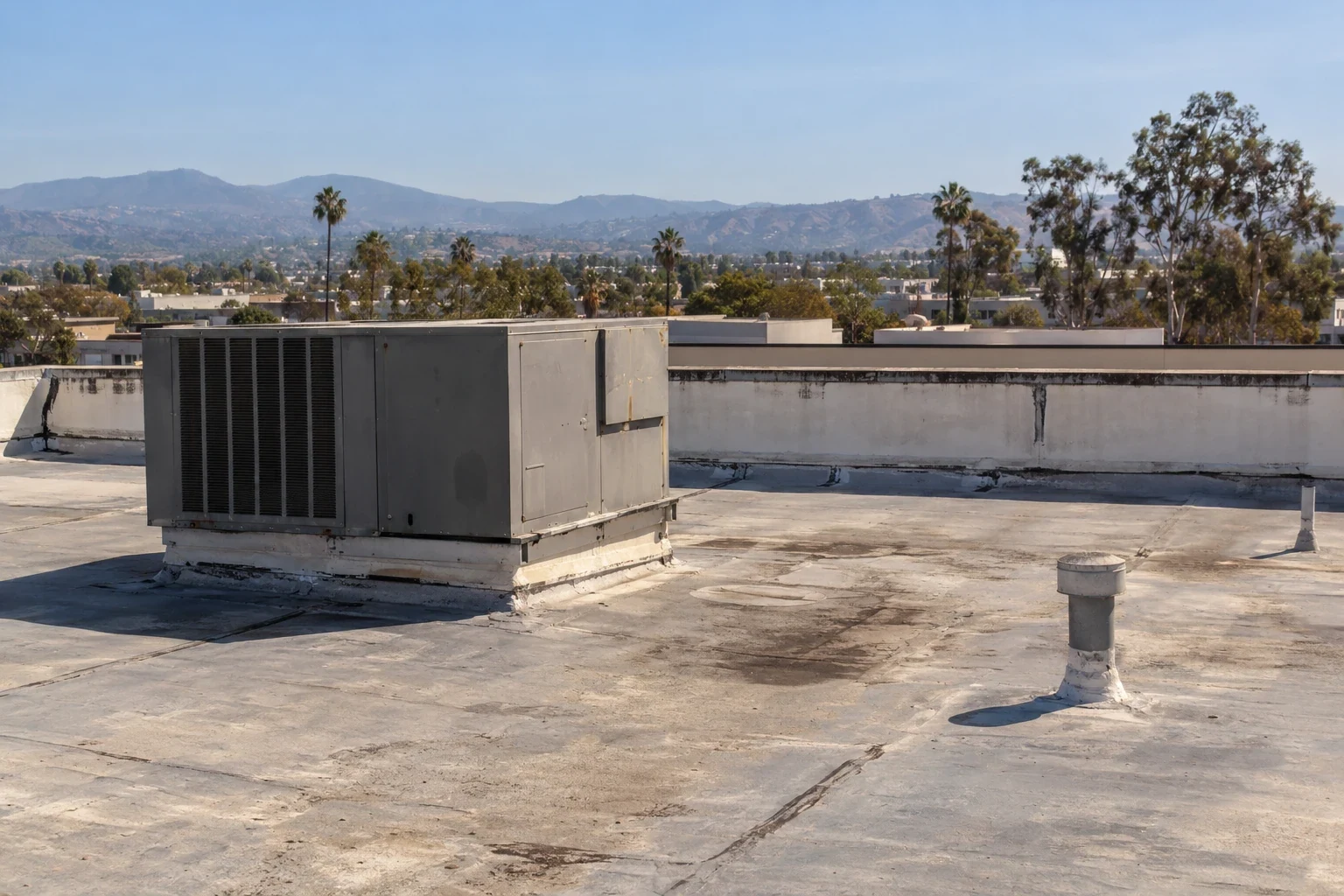
Condensers, evaporator lines and other rooftop equipment all need properly flashed curbs and supports. Our curb and equipment support work checks the flashing and support at each unit. The refrigeration contractor handles clearances, servicing and any equipment prep. If supports or attachments need to change, an engineer reviews it. We show where our flashing ends against each curb, and the estimate includes the preparation that makes that possible. A field repair that stops at an unprepared curb will not stay dry.
The flashing method has to fit the existing roof. TPO and PVC need clean, weldable material. Other roof types need the right primers, adhesives and fasteners. We separate membrane that only needs cleaning from membrane that has to be cut out. A patch over the split does not prove the surrounding roof is sound. The price should include the preparation needed on every side of the repair, so the bid shows how the detail will actually be finished.
Test the insulation before keeping the old layers
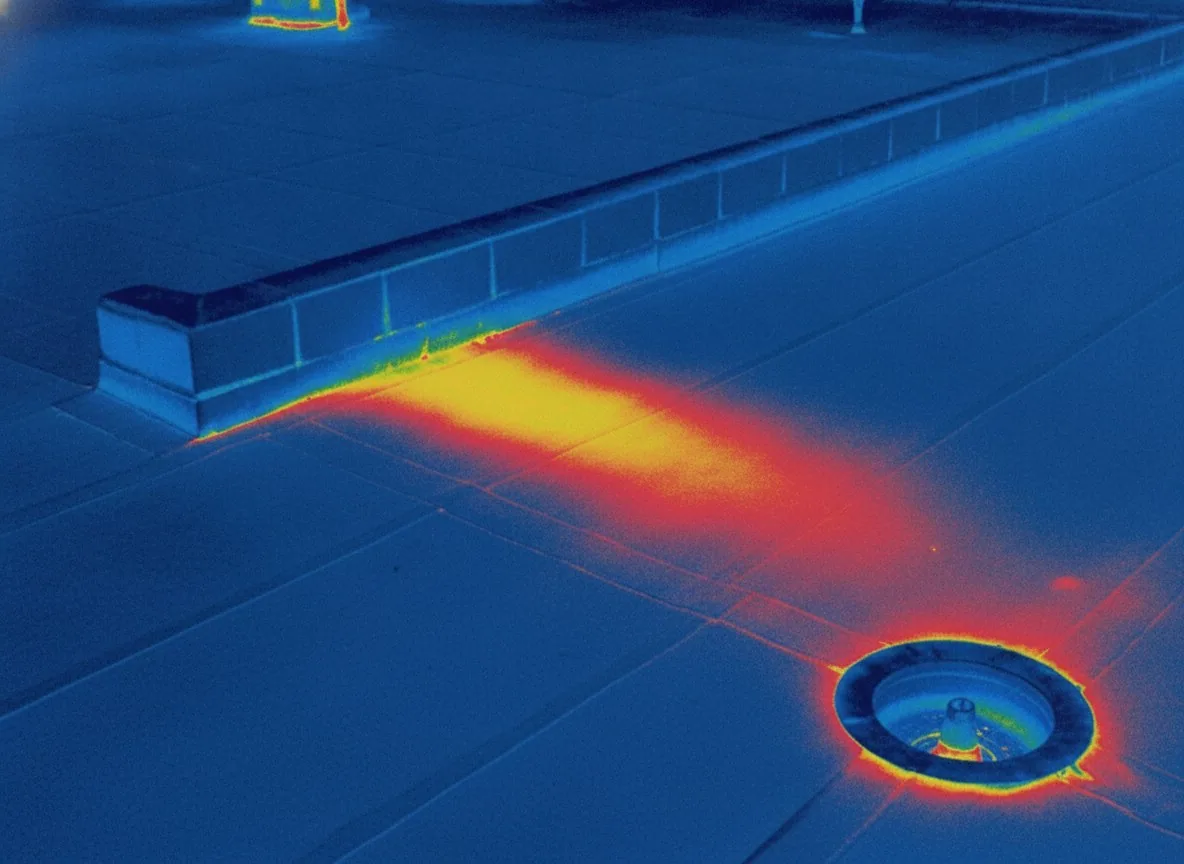
A cold storage roof can look intact while the insulation under it is wet. Our infrared moisture survey compares thermal scans with the roof records, and the conditions during the scan affect how we read them. A cold building can make readings harder to interpret. Hot or cool spots raise questions, but they do not prove the rest of the roof is dry. We confirm with core cuts wherever keeping the old layers affects the repair method. Condensation or equipment issues inside stay with the right specialists. Test cuts are patched, product below is protected, and the survey explains which decision it supports.
When a wet area is confirmed, we mark how far the removal goes. Widespread moisture may need more testing before choosing a repair method. We identify what makes the layers unfit to keep and what work is needed. That explains any change in quantity in plain terms. Adding more membrane on top will not fix wet insulation underneath. We review the plan before extending the opening, and the removal area stays tied to the protection needed below it.
Plan around stored product and refrigeration
Opening the roof over stored product takes a work plan, not just roofing material. Our occupied-building reroofing plan spells out the tear-off area and how materials and debris will move. Facility staff decide how stored product and systems below are protected. Refrigeration contractors handle their own equipment. Roofers do not decide whether refrigeration can be shut down. We price the agreed protection alongside the roofing material before the work starts, and the owner sees that cost in the budget.
If we find more wet insulation, the opening may extend over a different storage area. We show you the larger opening before removing more, because protection and material handling there may need to change. The added preparation is priced with the extra roofing. Access for an inspection does not mean another area is protected. A temporary seal can keep water out of a section waiting for its permanent repair, and it is listed separately from finished work.
Record roof repairs and open moisture questions
The closeout shows where we completed membrane and flashing repairs and where test cuts were patched. Open equipment or condensation questions are listed separately. Temporary seals are marked with the reason the permanent repair is on hold. The owner can then approve further work based on what is actually left. A fixed roof detail does not automatically solve every interior moisture issue, and the record keeps that distinction clear. Future budgets should follow what the inspections actually found.
For a cold-storage roof in Santa Fe Springs or Norwalk, identify each cooler, freezer and equipment curb affected by the work in the roof plan. Keep those details distinct from grocery-store refrigeration curbs and distribution roof drains, since each repair meets a different operating area. Keep insulation thickness and vapor-control continuity in view when rebuilding the roof. A membrane repair that leaves a gap at a penetration can admit warm, moist air and recreate the same interior problem. Price the roof connection and any separate refrigeration preparation before setting the work sequence.
During the walk, compare roof-side moisture with interior temperature and humidity observations supplied by facility staff. Check vapor-control transitions at walls and penetrations, where a small discontinuity can send moisture into the assembly. Do not treat every damp ceiling tile as evidence of a roof opening; condensation and refrigeration equipment can produce similar symptoms. Record which roof details were examined and what remains concealed. That distinction keeps roofing removal tied to a confirmed condition while refrigeration specialists handle their own equipment diagnosis.
Commercial Roofing Questions
Should every interior moisture report turn into a roof repair?
No. We look for an actual roof defect and define the repair it needs. Refrigeration and condensation issues stay with the right specialists. If the cause is still unclear, we recommend more investigation instead of assuming new roofing will fix every interior moisture problem.
Can a thermal scan prove the existing cold storage roof layers are dry?
Not on its own. The scan points to possible wet areas, and core cuts confirm them, with the weather and building temperature taken into account. Condensation or equipment questions are handled separately. Test cuts are patched and stored product is protected before you approve keeping the existing layers.
What else changes when the roof opening gets bigger?
We first show the added area and how debris and materials will move. Facility staff review the stored product and systems below it, and refrigeration contractors handle their equipment. Those changes are priced with the extra roofing. Protection set up for the first area does not automatically cover the new one.
What should the closeout show after the roof repairs are done?
It should show the roofing we finished and where test cuts were patched. Open condensation or equipment questions are listed separately, and temporary seals are marked with the work still needed. That way the next budget follows what is actually left, rather than assuming a fixed roof answered every moisture question.
Find the cause and get a cold storage roof plan
Send us the moisture reports, any roof records you have and the best facility contact. We will inspect the roof, separate roof leaks from equipment and condensation issues, and price the repair along with protection for stored product.