Data Center Roofing in Downey, CA
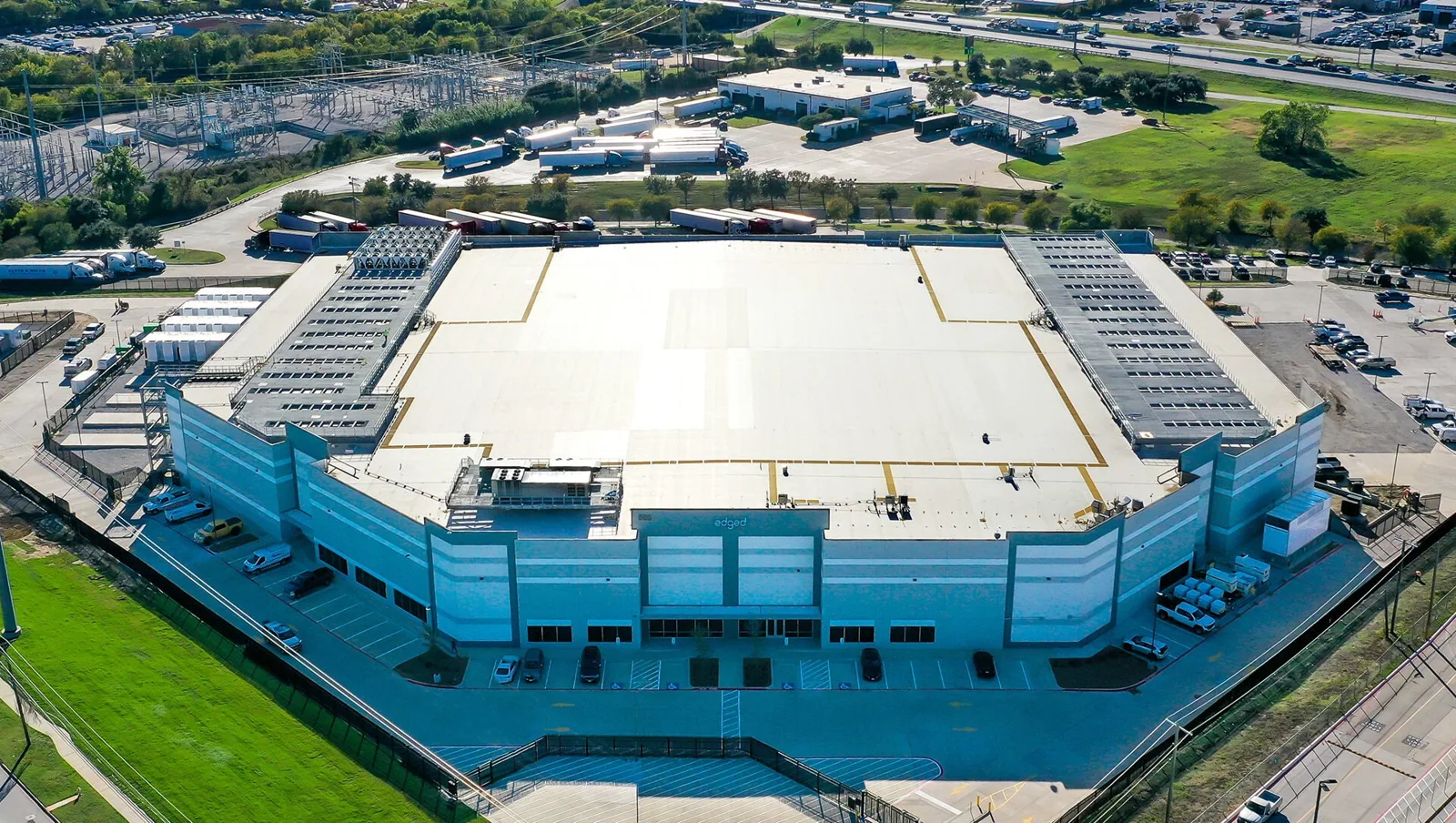
Data center roofing in Downey, CA: drain repairs, wet insulation checks, curb flashing and roof work planned around the equipment and cooling below.
On a data center, a leak at a roof drain is rarely just a drain problem. The membrane around the drain bowl may be split, the insulation under it may be wet, and the room below may hold servers or cooling equipment that cannot get wet or lose power while we work. A quote that only measures square feet of membrane in Downey, CA can miss all of that. We inspect the roof, find where the water is actually getting in, and price the repair together with the protection the room below needs during the work.
Before we cut into the membrane, we agree with your facility team on three things: which roof section we are opening, how our crew and materials get to it, and who signs off on protecting the equipment underneath. Roofing stays roofing; electrical and cooling work stays with the contractors who maintain those systems. If we expect to uncover something inside the building that needs another trade, we say so up front so nobody is left with an open roof waiting on a callback.
Find the drain connection that is failing
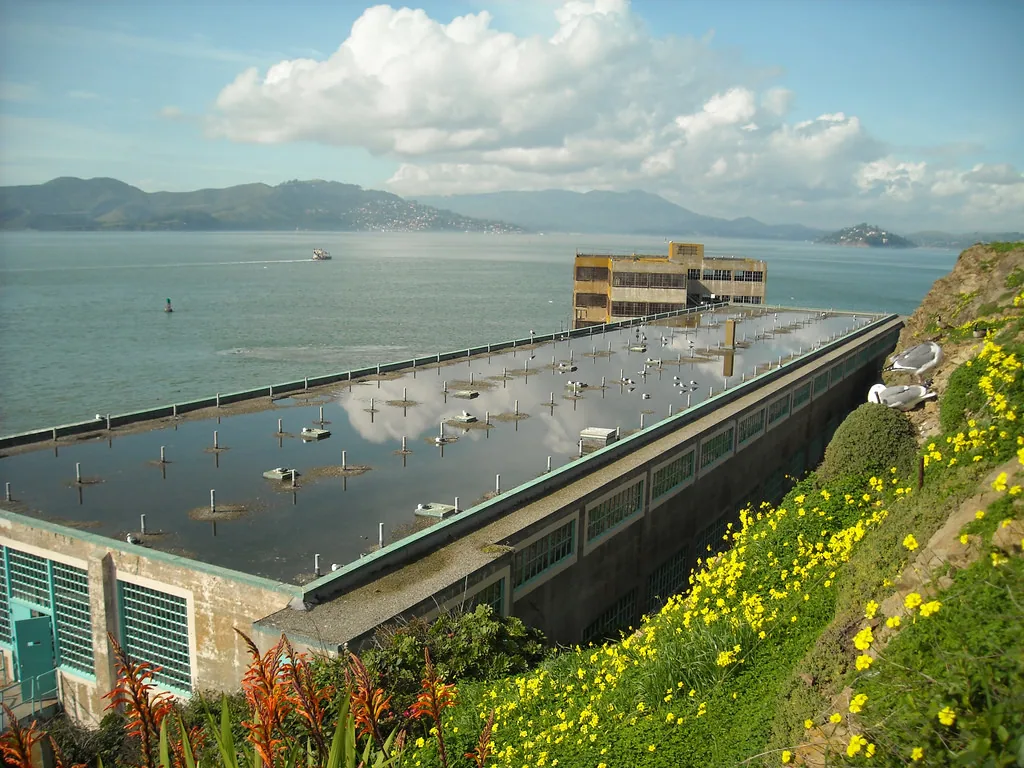
Most data center drain leaks start where the membrane is clamped into the drain bowl. Over time the clamping ring loosens, the membrane shrinks or tears at the edge, and water runs between the layers. Our roof drain inspection follows the water from the field of the roof to the drain and checks the bowl, the clamping ring, the strainer and the membrane around it. A cracked pipe or drain body below the roof goes to your plumber, and we time both jobs to close together.
A good drain repair extends to sound, dry membrane on every side. Sometimes cleaning and priming the existing surface is enough; sometimes the old membrane is too brittle and has to be cut back. We tell you which applies to your roof and why, because that choice drives the cost. We also include closing up any test cuts we make and protecting the floor below while the drain is open.
Check for wet insulation before keeping the old roof
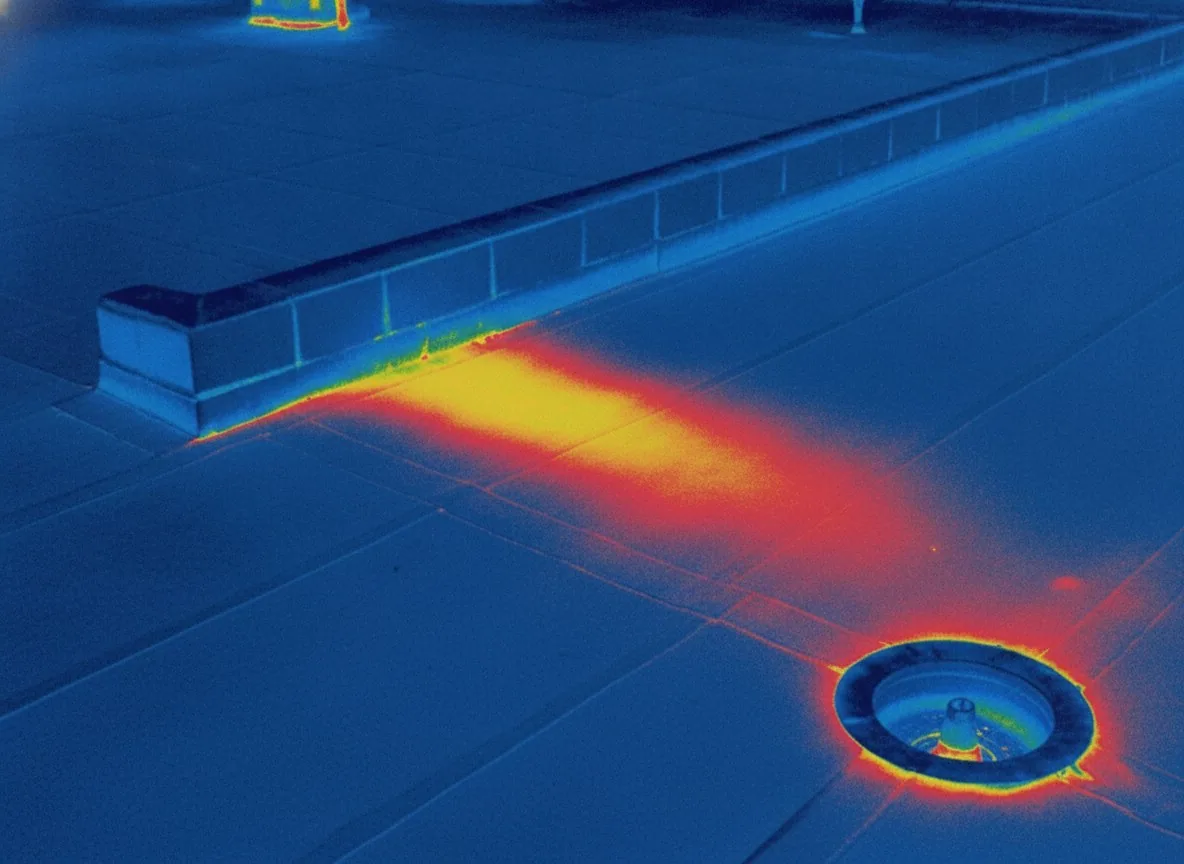
A data center roof can look perfectly sound from above while the insulation underneath is soaked. Our infrared moisture survey scans the roof at night to spot areas that hold heat differently, which usually points to trapped water. Weather, recent rain and the roof build-up all affect the readings, so we confirm suspect areas with small core cuts before drawing conclusions. That matters most when you are deciding whether to recover over the existing roof or tear it off. You cannot safely cover wet insulation, and the survey tells you where it is.
If the wet area is small, we mark its edges and price its removal and replacement. If it is spread across the roof, we may recommend more cores before choosing a repair or replacement approach. Either way, you see exactly why the price changed and what we found. If we open the roof and find more damage than expected, we stop and show your facility team before cutting further.
Plan protection for the equipment before opening the roof
Opening a roof above live equipment takes planning on both sides of the deck. Our occupied-building reroofing work starts with a plan for how much roof is open at once, how debris comes off the roof, and where materials are staged and lifted. Your facility manager decides which rooms are critical and when work overhead is acceptable; your cooling and electrical contractors handle protection on their own equipment. The estimate includes that protection work, not just the roofing material.
If we find more wet insulation than expected and the opening has to grow over another critical room, we stop and talk to your team before going further. Approval to open one section does not mean the next section is ready. When a permanent repair has to wait, we install a temporary seal and note it clearly so it does not get mistaken for finished work.
Finish the flashing at curbs and equipment, not just the field
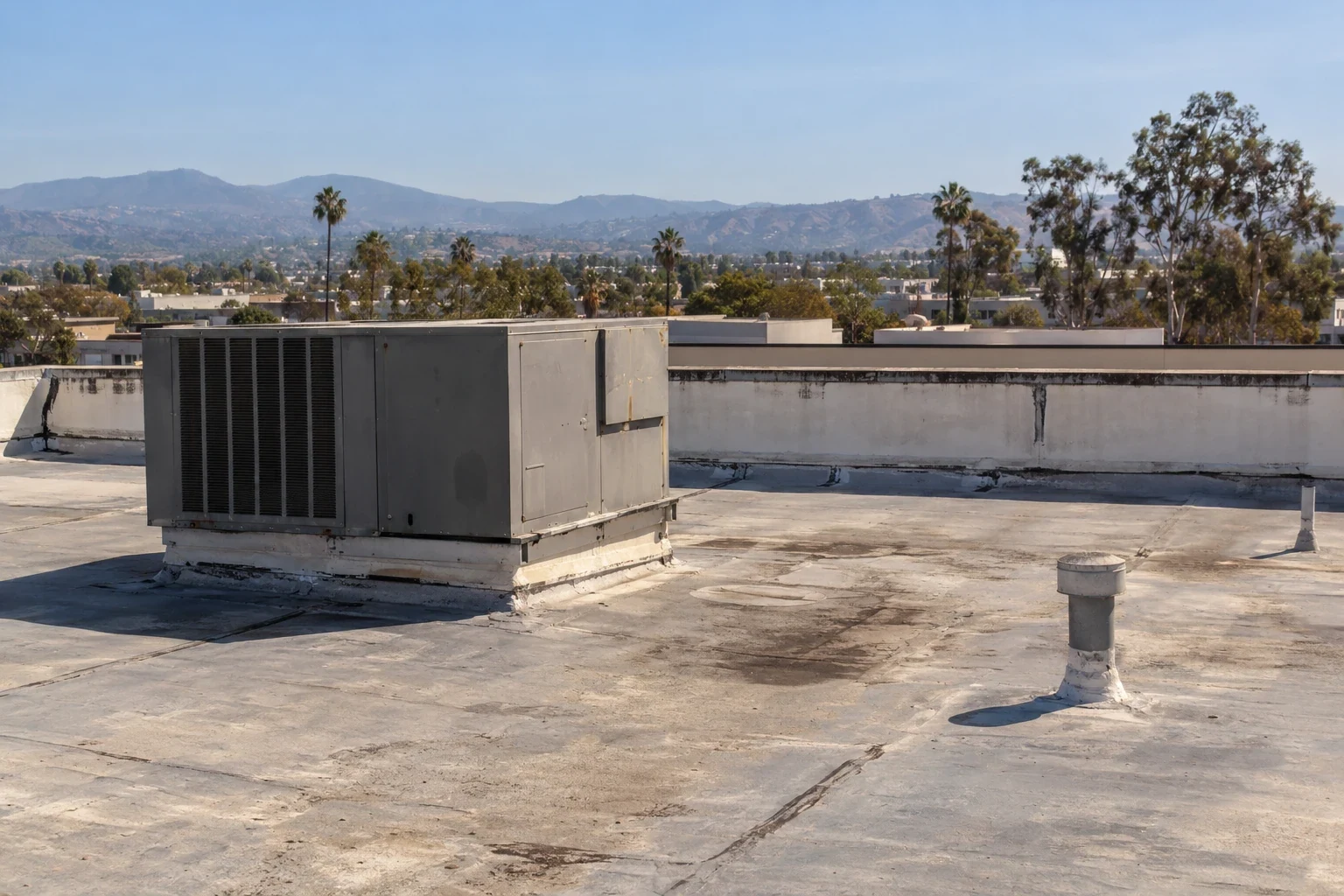
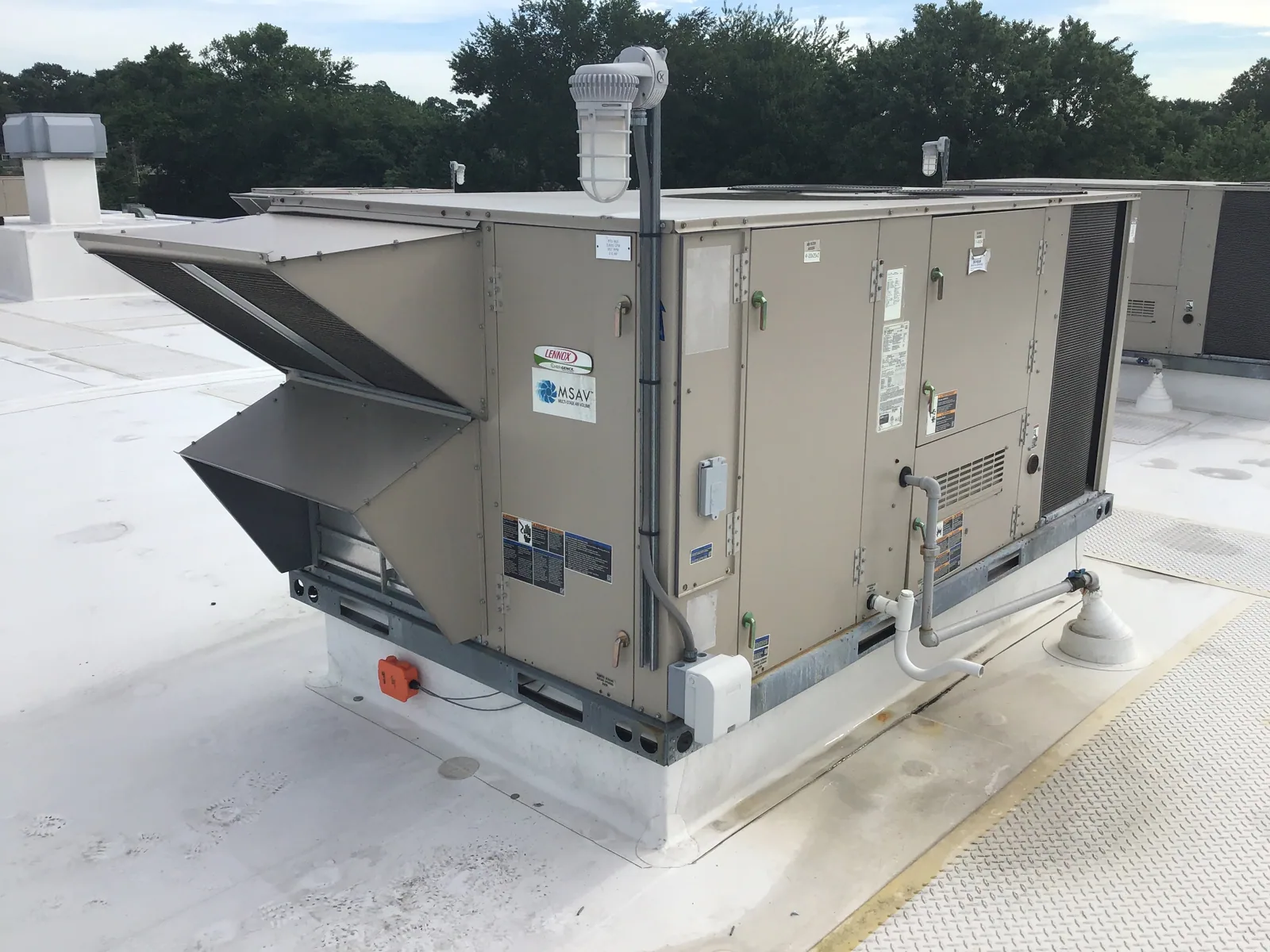
Many repairs stop at the base of a rooftop unit, which is exactly where the next leak starts. Our curb and equipment support work checks the flashing at each curb, pipe support and penetration. Your mechanical contractor handles the units themselves. We make sure the new membrane and flashing run up and over each curb properly so the repair actually closes.
The flashing also has to match the roof. A TPO or PVC membrane is heat-welded, so the existing sheet has to be clean and in good enough shape to accept a weld. Modified bitumen and other systems need their own primers and adhesives. If raising a curb or changing the slope to a drain is the right fix, we say so and price it alongside the simpler option. That way you compare repairs that will actually finish the job on your roof.
Keep a clear record of finished work and open items
At the end of the job you get photos of every drain, curb and patch we completed, including where our test cuts were closed. Anything still waiting on a plumber or mechanical contractor is listed separately. Temporary seals are marked as temporary, with the reason the permanent fix is on hold. That gives the next repair or budget a clear starting point. A dry roof does not by itself mean every piece of equipment or pipe is in good shape. You should know exactly which items are still open and where they are on the roof.
Rooftop units, cable trays, and conduit supports create repeated flashing points. Photograph each curb and penetration before work, then compare the finished tie-in with the same reference. A small membrane repair should include any wet insulation or failed cover board uncovered at that location. For projects in Downey, Commerce, and Santa Fe Springs, we label each roof detail by section so later technicians can find the exact spot without relying on an equipment name alone. Compare penetrations on manufacturing roofs and office buildings to see where unit supports and roof access create different flashing demands.
Santa Fe Springs has a dense industrial and manufacturing base. Norwalk sits where I-5 and I-605 meet, and both Metro C Line and Metrolink serve the city. A data center in either city still needs its own roof assembly and equipment assessed. We map the actual units, conduit supports and roof drains before repair so the crew can reach the flashing without blocking another contractor's service path. We keep each opening small enough to close within the planned work period, and document the finished tie-in beside any penetration that still needs follow-up.
Commercial Roofing Questions
What should a data center roof estimate include beyond the membrane?
It should include how much roof will be open at once, how it will be protected and closed each day, how debris and materials move on and off the roof, and protection for the equipment below. Your facility team decides when work can happen over critical rooms, and your equipment contractors handle their own systems. We price that preparation with the repair so the estimate reflects the real job.
If the roof looks fine on top, can we keep it and just repair it?
Not without checking underneath. Insulation can be soaked while the membrane looks intact. An infrared survey followed by a few core cuts shows whether the insulation is dry enough to keep. If it is, a repair or recover may make sense. If not, the wet sections need to come out first, and we show you where they are and how that changes the price.
Should drain repairs be priced separately from new membrane?
Yes. The drain bowl, clamping ring and the membrane tie-in are their own line items, and any problem with the pipe below goes to your plumber. Pricing them separately makes sure the drain actually gets sealed, instead of new membrane being laid up to a drain that still leaks.
What records should we get after a drain repair?
You should get photos of each completed drain and patch, a note on where test cuts were closed, and a separate list of anything still waiting on a plumber or mechanical contractor. Temporary seals should be marked as temporary. That record is what the next estimate should start from.
Get a data center roof drain and repair plan
Send us the leak locations and any drawings or past roof reports you have, along with the best person to contact at the facility. We will inspect the roof and give you a clear estimate covering the drain and flashing repairs and the protection needed for the equipment below.