I-710/Vernon-Commerce Freight Corridor Commercial Roofing from Downey, CA
Commercial roofing near Downey’s I-710 edge and the Vernon-Commerce freight corridor. Get a scope for leaks, drains and staged work.
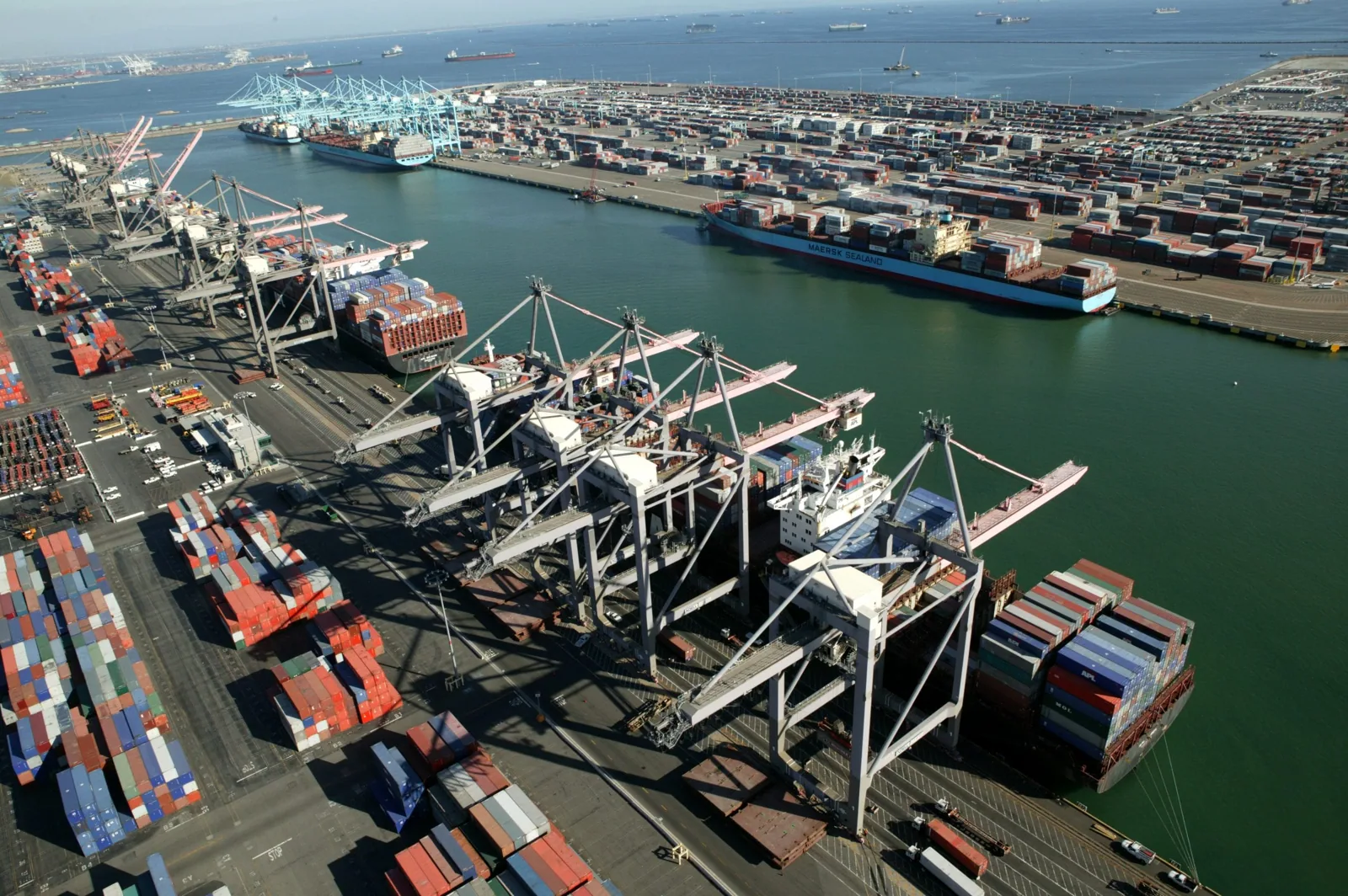
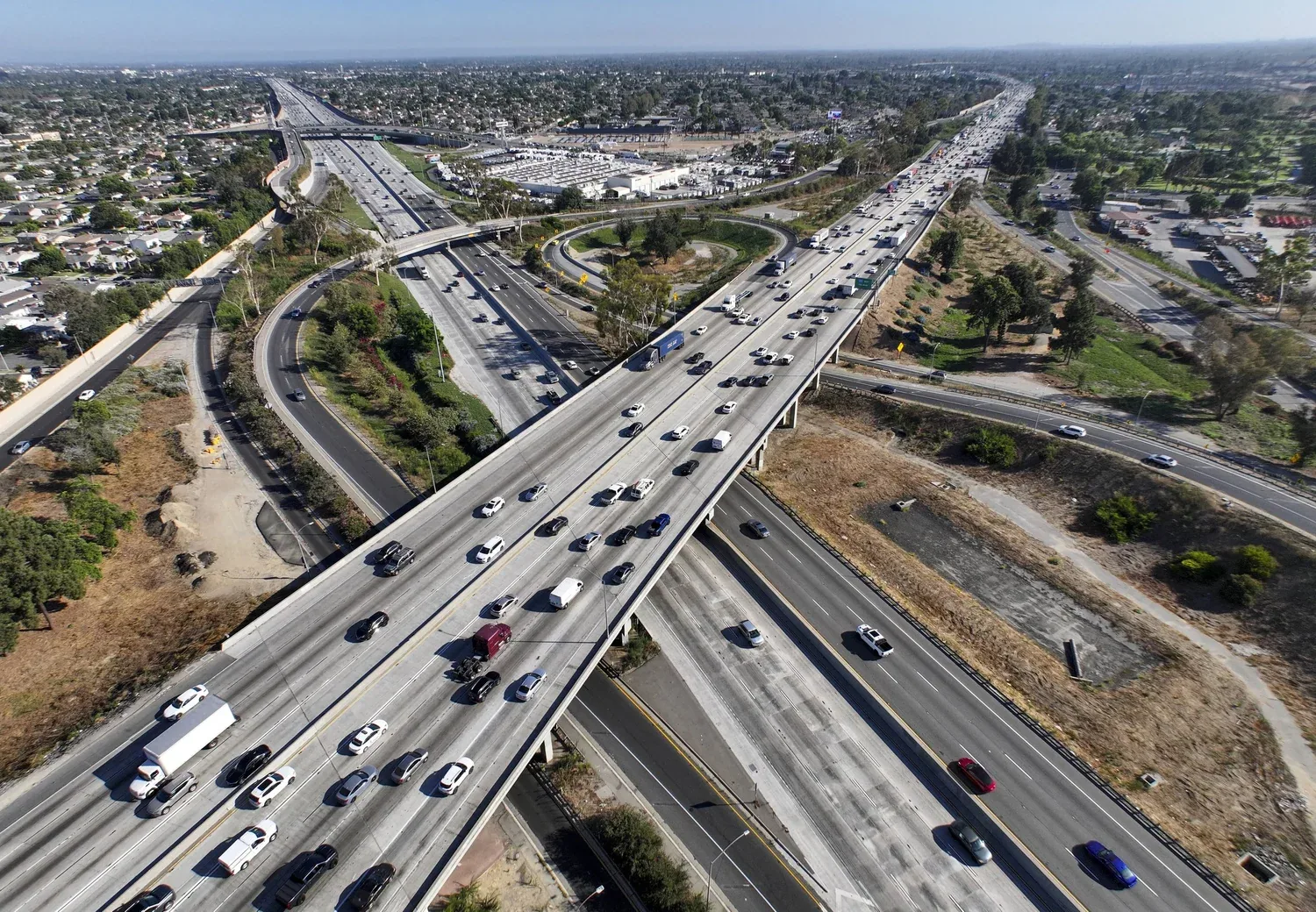
I-710 serves Downey's western edge. The Alameda Corridor carries port freight toward downtown Los Angeles, while freight rail through Vernon, Commerce and Santa Fe Springs connects the ports with regional distribution networks. For a roof project in this corridor, the property contact sets the delivery and roof-access plan. We inspect the assigned building and price its actual membrane, loading-area transition, drain or curb.
Regional movement can make a roof project sensitive to access, staged deliveries and the time needed to close an exposed section. The proposal should account for the customer's actual yard, roof entry, material route and operating needs, verified with its representative. We inspect seams, drains, penetrations, curbs and roof edges that matter to the requested work. For multi-building portfolios, we record findings by building instead of carrying one roof's condition across a site. Our I-5/I-605 Downey interchange service area covers another nearby geography.
Inspect large low-slope roofs by section
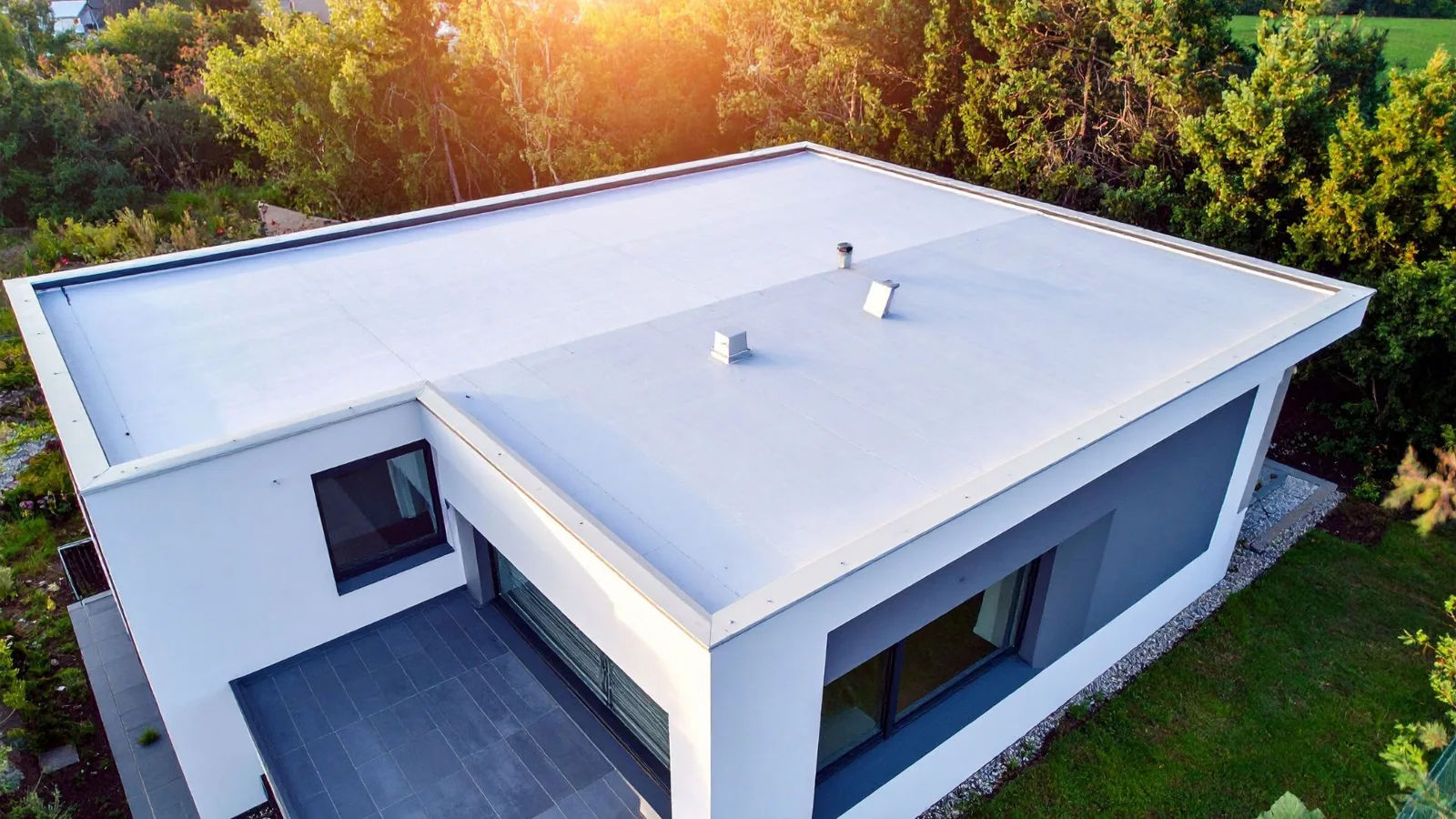
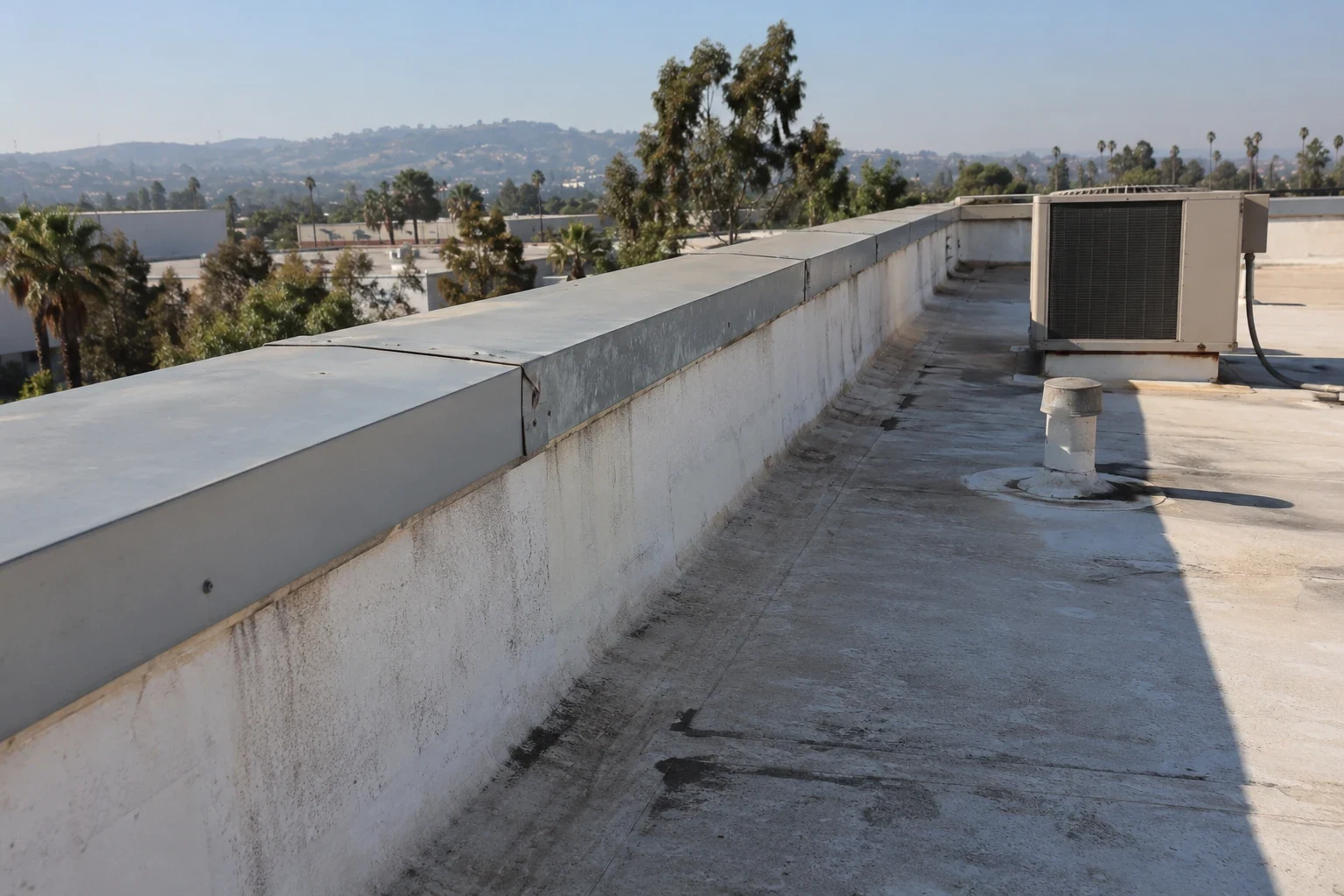
On a wide roof, define the inspection area before walking it. Mark roof sections, access points, drains, penetrations and visible repairs so findings can be located later. Look for open laps, punctures, aged flashing, displaced edge metal and areas where water remains. A single defect should not be described as a whole-roof failure without examining other sections. Conversely, a broad surface can conceal repeated problems that a small sample misses. The manager receives a clear account of where the crew went, what was visible and which areas still need access or closer testing.
Vernon is known for food manufacturing, metalworking and distribution employment, and nearby industrial cities contain a substantial business base. That regional context explains why warehouses and production buildings are common roofing subjects, but it does not determine the construction at an individual facility. We identify actual roof systems and equipment on the site. Our drone roof inspection can help document broad accessible surfaces and visible details; close inspection is still needed where the repair depends on membrane adhesion, a concealed layer or a mechanical connection. The method follows the question, not a generic square-foot assumption.
Protect inventory and keep operations in view
A leak above stored goods, production equipment or a loading area may need immediate protection before permanent repair. Confirm the interior location and the property contact's priorities, then trace the likely path from the roof. Emergency response is available 24/7, including weekends and holidays. A first response can limit water entry while the crew checks the assembly and plans the permanent closure. The account should say what was protected, which roof detail was confirmed and what remains before full repair. A temporary cover is not a substitute for restoring a failed membrane or flashing connection.
Where work takes place above active operations, agree on the access route, staging areas and protection below before opening the roof. If a production line, HVAC unit or electrical component affects the scope, the responsible operator or trade handles that system. Roofing work proceeds when the relevant surface is ready and the crew can complete its tie-in. Our occupied-building reroofing plans make those work stages clear. The customer can compare a protected opening, localized repair or larger project with each prerequisite visible, rather than discovering a handoff after materials have been removed.
Repair drainage and perimeter failures at the source
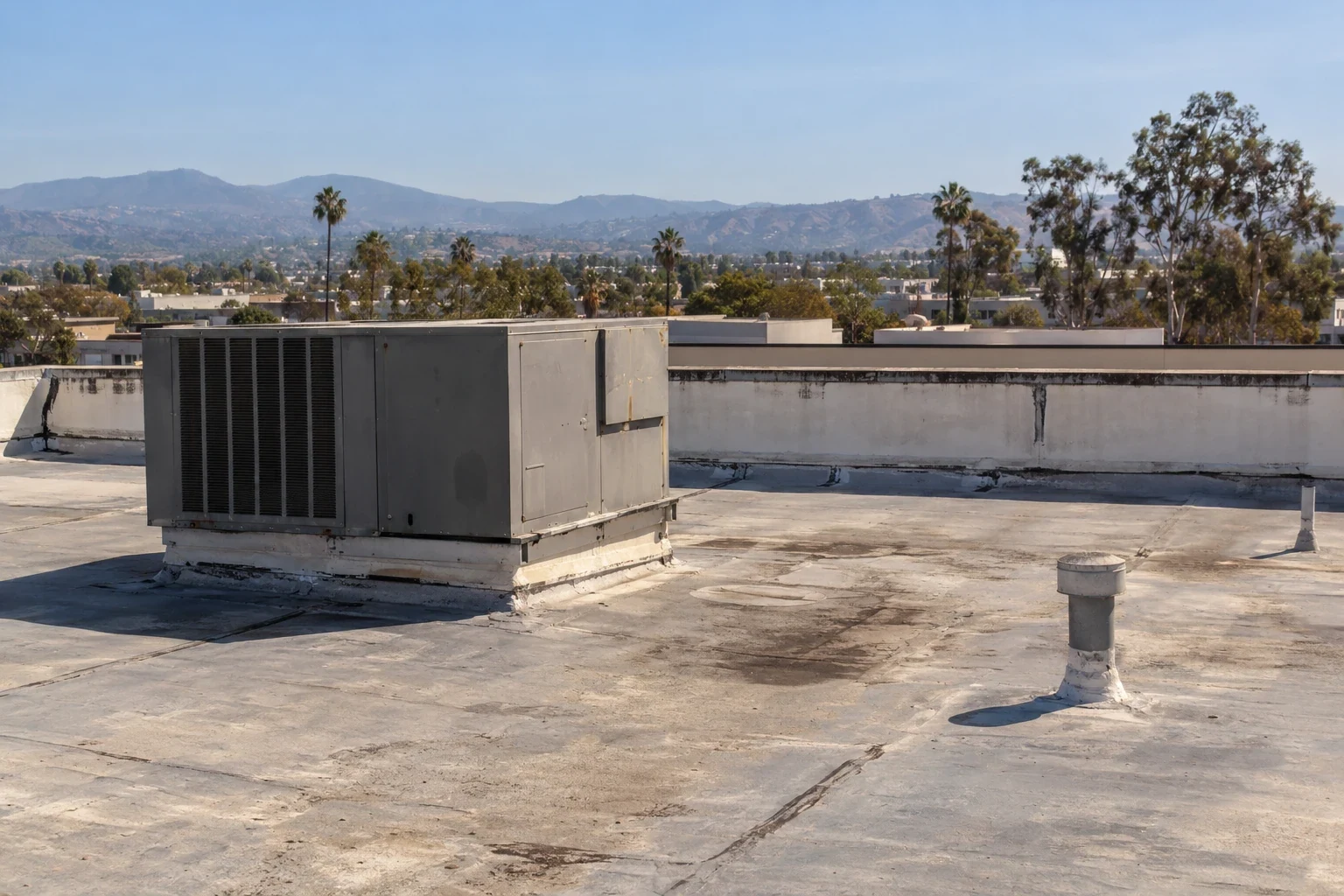
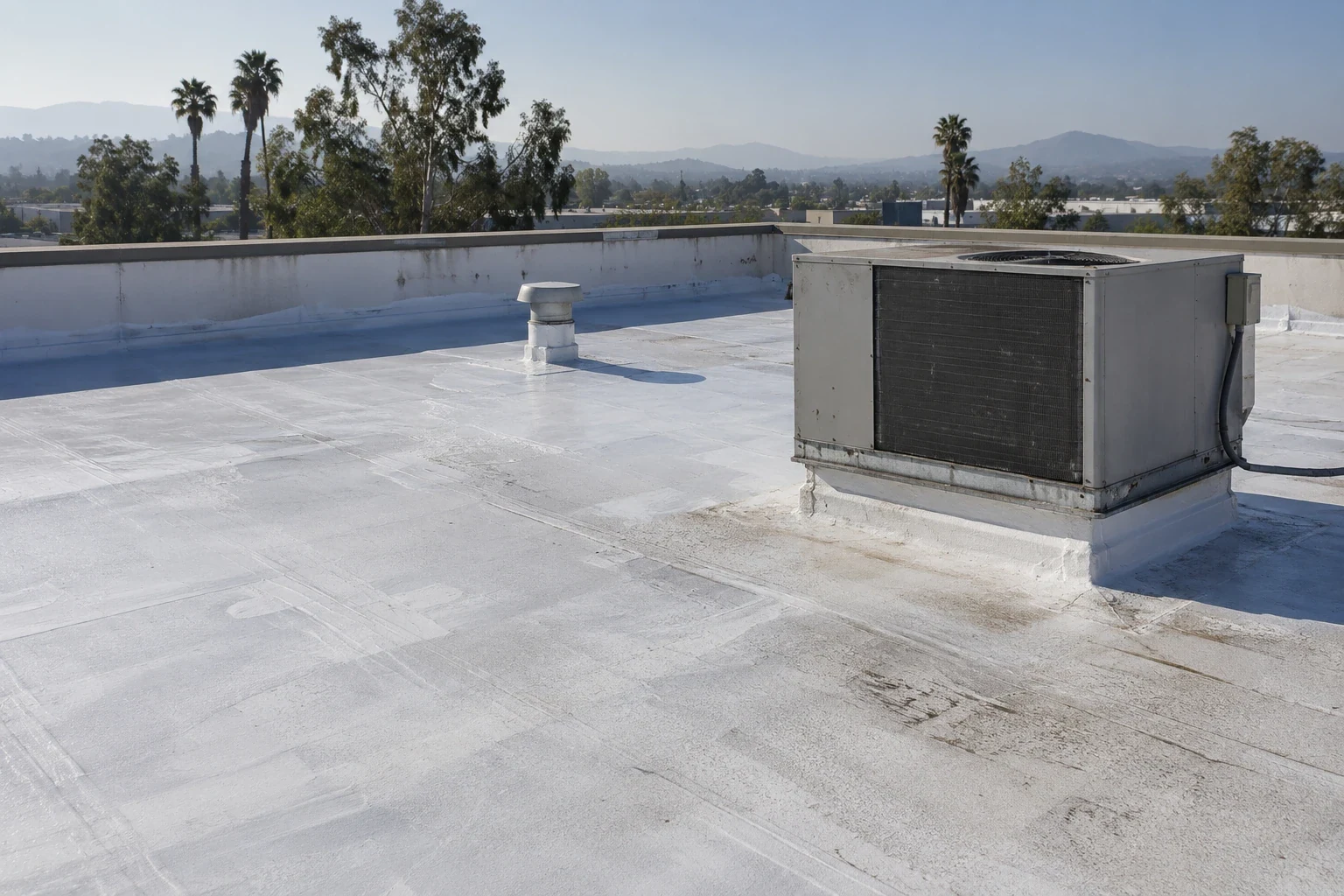
Industrial roofs often include long drainage runs, multiple roof levels and numerous wall or equipment penetrations. Check whether water is collecting at a blocked outlet, low area, open seam or failed flashing. Separate maintenance cleaning from a damaged drain body or a roof-slope question. If a repair surrounds a pipe, curb or rooftop unit, include the corners and permanent termination. The scope should identify removal and rebuilding if water has damaged insulation or cover board. A coating or sealant pass over the symptom leaves the source unresolved when the membrane connection itself is open.
At perimeter edges, inspect the membrane, metal and wall substrate as one weather detail. Loose coping, a failed termination bar or deteriorated flashing may require different work than a field seam. Our edge metal and gutter service identifies the metal-to-roof work that must accompany a membrane repair. For outlet problems, drain and scupper repairs address the connection where roofing meets drainage. Photographs should show the existing condition, preparation and completed closure so the maintenance team can understand what changed and where the next inspection should focus.
Choose restoration or replacement with the assembly in view
A recover or coating can make sense when the existing roof is dry enough, stable and compatible with the proposed system. Confirm the number and condition of retained layers, existing surface treatments, seams and flashings. Repair open details and establish that the surface can accept the new work. For a coating, the scope names cleaning, preparation, detail repairs and application requirements. Our roof coating restoration is considered only after those conditions are checked. A new finish cannot correct poor drainage or concealed moisture that has not been addressed.
When the assembly has widespread failures or unsuitable retained layers, replacement may offer a more dependable construction path. The estimate should show tear-off limits, insulation and cover board, the new membrane, perimeter details, penetrations and tie-ins. For a roof split into sections, identify how each stage will close against the next and what remains operational during construction. Our commercial roof replacement scope can be compared against repair or recover options using findings from the actual site. Port and rail connections explain the corridor's commercial role; they do not dictate what a particular roof needs.
Stage access, closure and the final roof record
Before mobilization, verify where the crew can enter, how materials will reach the roof and what conditions could interrupt the work. Confirm whether deliveries or normal vehicle movement affect the staging plan with the site contact. Identify the opening size that can be closed the same shift and maintain temporary protection if an unforeseen condition changes the sequence. Any additional deck repair or equipment coordination should be described before the crew covers the evidence. That keeps the customer informed about the work that is complete, the next step and any item awaiting another responsible party.
At completion, keep a roof plan or clear location notes with photographs of repaired seams, drains, curbs and perimeter details. Record the material installed and the area included in the work. The customer can use that record to compare later inspections across its properties. A condition report captures the visit's findings for maintenance and future project planning. A later leak still needs current examination: a prior repair provides useful history, but it cannot prove the cause of a new symptom elsewhere on the roof.
Santa Fe Springs is another nearby industrial market; review its commercial roofing service area for work beyond the I-710 corridor.
Commercial Roofing Questions
Does the freight corridor mean you work on port or rail property?
No. The corridor is a public geographic reference for nearby commercial service. A specific property’s owner, access and roof are confirmed before any work is proposed.
How do you inspect a large warehouse roof?
We define sections, mark access and drainage, then locate visible seams, penetrations, edge details and repairs. The report distinguishes areas examined from portions that need separate access.
Can urgent protection be arranged outside business hours?
Emergency response is available 24 hours a day, every day, including holidays. The crew documents the temporary measure and identifies the permanent roof work still needed.
What if opening the roof exposes wet insulation?
We photograph and locate the exposed condition, explain removal and rebuilding needed, and obtain approval for changed work before closing the opening.
How should a multi-building owner compare roof conditions?
Keep separate reports by building and roof section. Record the membrane, visible defects, repair boundary and outstanding items so conditions are not carried from one facility to another.
Request a roof-specific assessment
Arrange a commercial roof visit in the I-710/Vernon-Commerce Freight Corridor. We will inspect the reported area, explain the roof details involved and outline the repair or project scope supported by the building’s condition.