Roof Condition Reports in Downey, CA
Roof condition reports for Downey buildings: located findings with photos, plain explanations of what is wrong, and clear repair recommendations you can budget from.
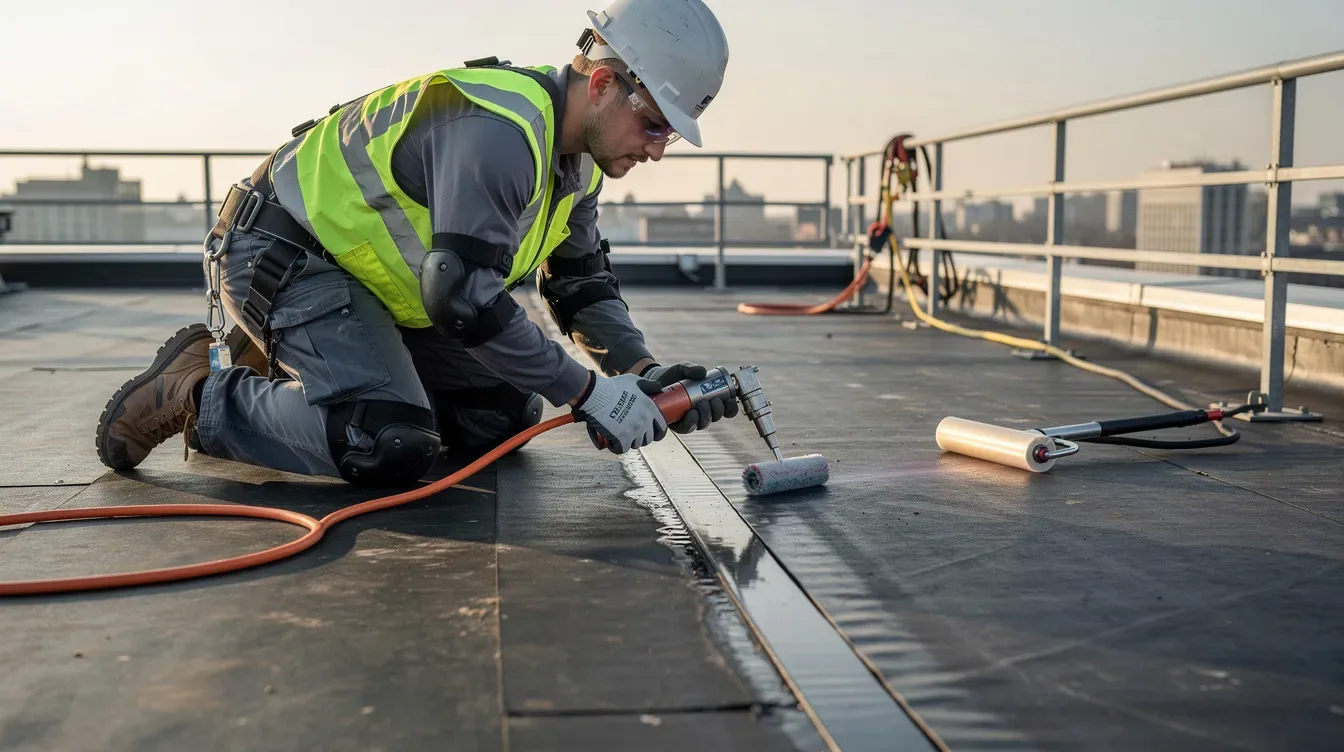
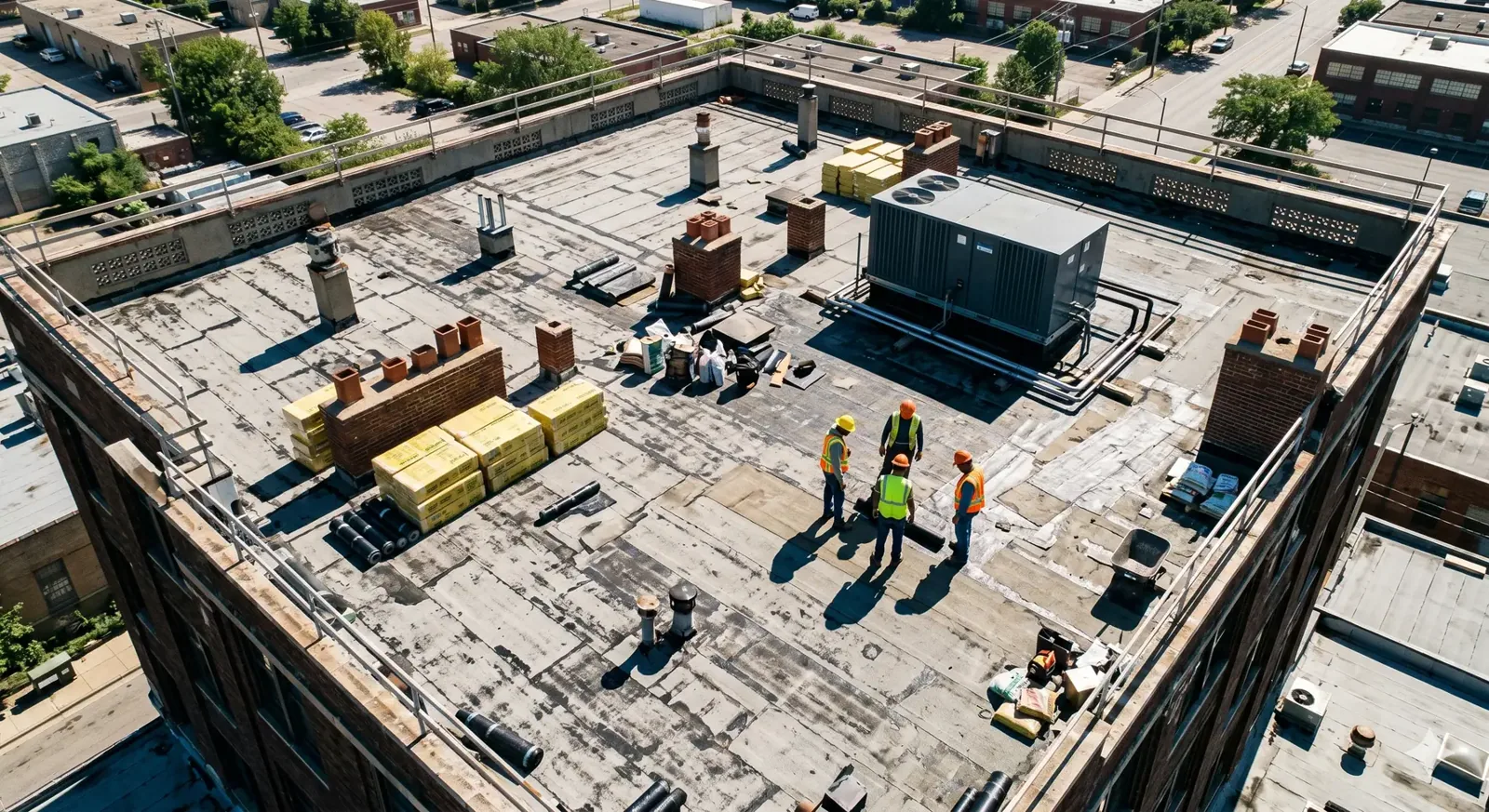
A roof condition report should tell you what is wrong with the roof, where, and what it will take to fix it. On a Downey office building, something as small as a damaged drain or scupper can change the repair scope. We inspect the roof, check the details where leaks usually start, and note anything we could not confirm from the surface. You get a list of problems with locations, photos and recommended next steps, not a vague overall grade.
For every concern, record the roof section, observable symptom, detail examined and result. Use photographs that show location and scale, not just close views that lose context. State whether the inspection was visual or included an opening, moisture survey or other test. Distinguish confirmed defects from questions that remain hidden beneath retained roofing. The property manager can then connect the next repair amount to evidence and see what was outside the visit. A commercial roof inspection is useful when the condition or access needed for that report has not yet been established.
Trace the leak before pricing the repair
Reports usually start with a complaint, often a ceiling stain or a wet floor. Water inside the building tells you there is an opening somewhere, but it can run along the deck before it drips. We check the drains, scuppers, flashing and seams near the reported spot and uphill from it, and note each likely source we find.
Sometimes there are two possible sources, such as a wall flashing and a rooftop unit curb. We list both and say which is more likely and why, rather than picking one and hoping. Older photos from the owner or tenant help if they are dated and show where they were taken.
A roof inspection for the report also states what was covered and what was not. If a section was blocked by equipment or locked off, the report says so. If a follow-up visit is recommended, we explain what it would answer and how it could change the repair.
Explain what the repair includes
A repair price should cover the whole fix, not just the visible damage. A split in the membrane might sit on top of wet insulation or a rusted deck. We look at what we can reach and say what still needs to be confirmed. The report explains what the repair would remove, replace and reflash, and whether the existing roof can accept the new material. Work that belongs to another trade, such as moving an HVAC unit, is listed with the roof repair it supports.
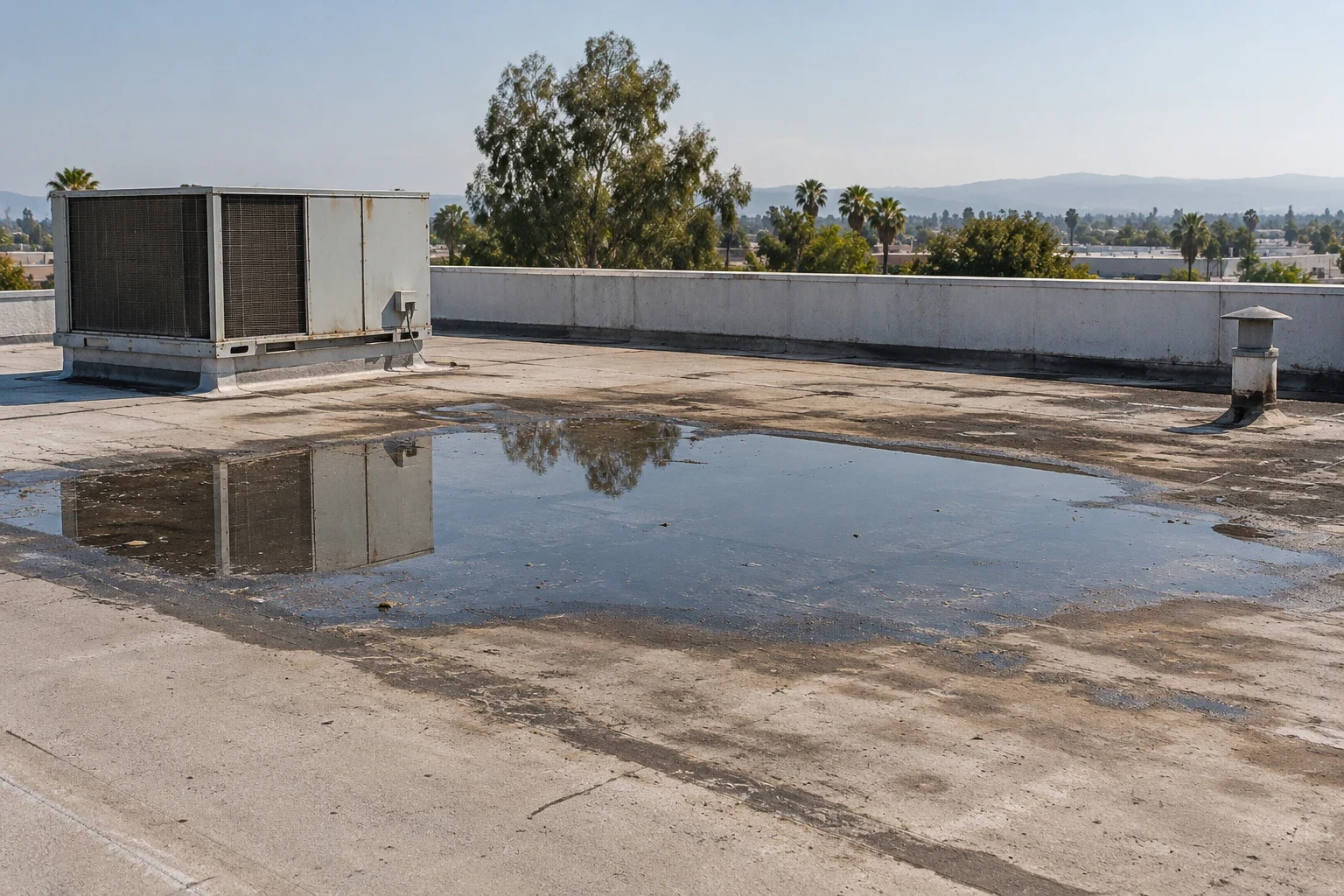
Drainage problems are a common example. Water standing near a clogged drain needs a different fix than water sitting in a low spot because the deck has sagged. Ponding water roof repair should start with the actual cause. Where the fix involves re-sloping or structural questions, the report says an engineer may need to weigh in.
Flag what still needs testing
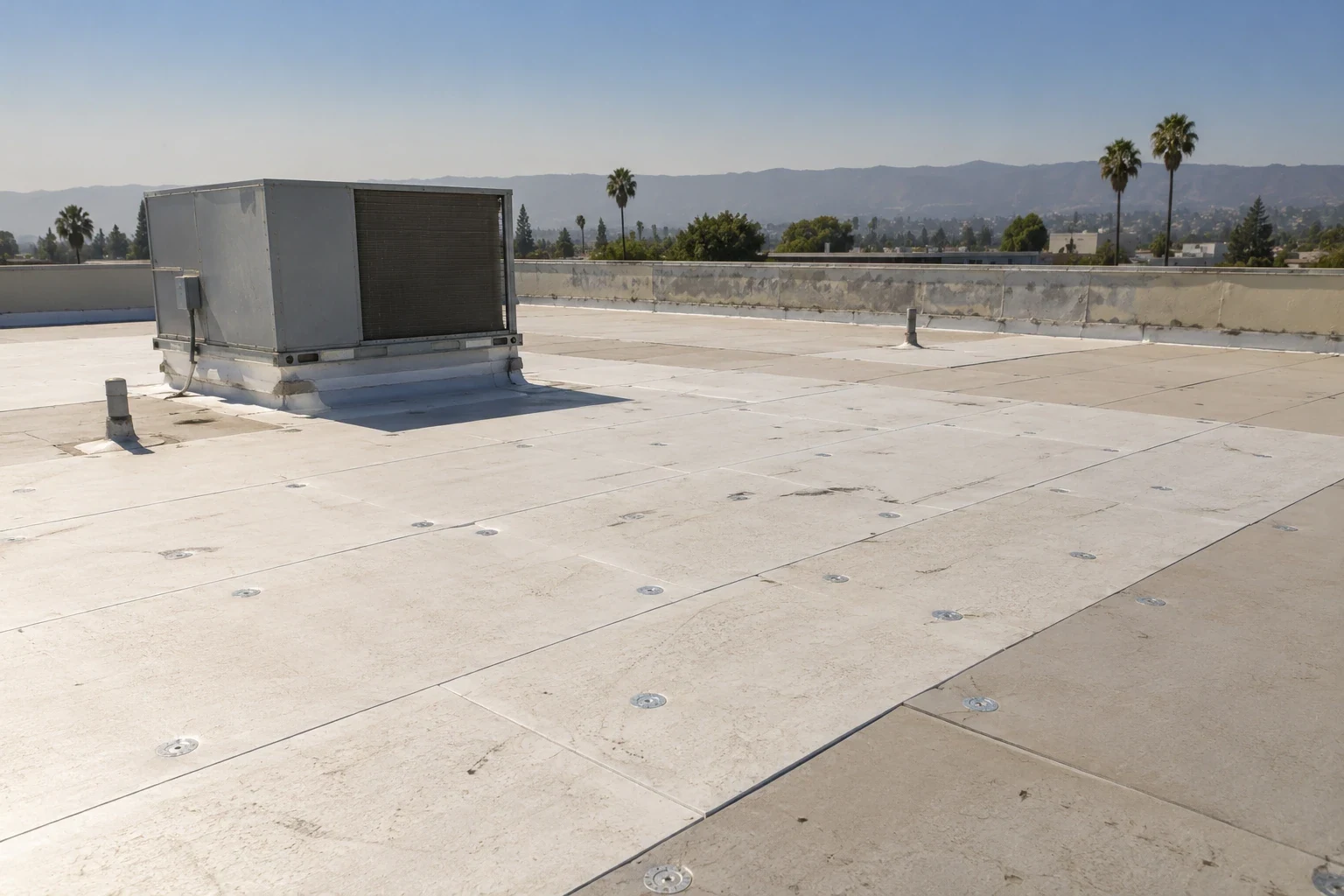
Some problems are hidden. A roof can look intact on top while the insulation below is wet. When that question affects the repair or replacement decision, the report recommends specific testing, such as a moisture scan or core cuts, and says what the result would change.
Test results apply to the area tested. One wet core near a drain does not mean the whole roof is wet, and the report keeps that distinction clear. Starting quantities can still be useful for budgeting as long as the assumptions are written down.
Replacing roof insulation and cover board may raise the roof height at walls, curbs and drains. The report notes where that would require taller flashing or drain adjustments. If more damage shows up during the work, it is documented, priced and approved before the crew continues, and the roof is kept watertight in the meantime.
Schedule the inspection and the repair separately
Permission to inspect a roof does not automatically cover the repair. Tear-off, crane lifts or disconnecting rooftop units usually need separate approval and sometimes another contractor. We confirm the site contact for the inspection and note what approvals the repair will need. Tenant and occupied-space concerns are handled by building management.
A building along Imperial Highway has its own access rules, hours and contact, even if the building next door is managed by the same company. If the questions can all be answered in one visit, that saves setup cost. If not, the report says what the second visit is for.
Make the report useful later
A good report can be picked up by someone who was not there and still make sense. It names the building and roof section, describes each problem, and lists any records reviewed. Temporary fixes are labeled as temporary, so nobody mistakes a patch for a permanent repair.
The report becomes part of the building's roof asset management file. If the property is later sold, the findings may be used in a due-diligence roof survey, along with a note of when they were made and what they covered. When new equipment goes on the roof or a new leak appears, the roof should be inspected again and the report updated, not re-used as is.
Use the same location names in photos, drawings and reports. A close-up of a crack is only useful if someone can find that spot again.
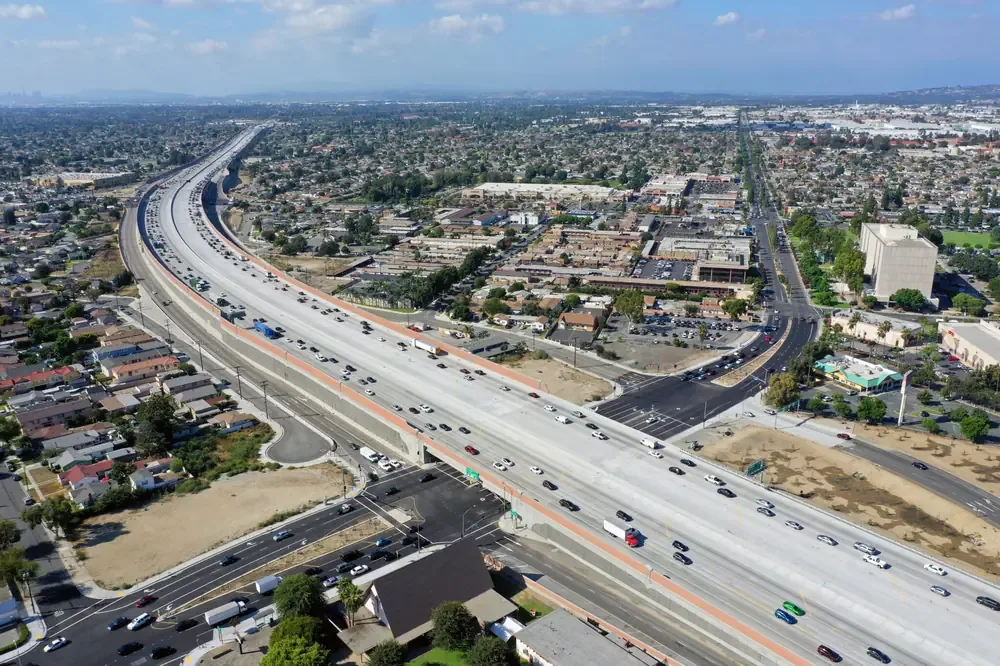
The report is most useful when it can be compared with the repair that follows. Record what was confirmed, what remains concealed and which decision depends on that remaining question. A Downey I-5/I-605 assignment and a building along the Imperial Highway corridor each need a location-specific roof record.
Commercial Roofing Questions
What makes the condition report useful before the owner signs?
It ties each problem to a location and to a repair that actually fixes it. The owner can see what the repair price includes, what work other trades need to do, and which items still need testing. An overall rating does not tell you any.
Which unanswered question should receive the next investigation amount?
Spend testing money on the question that could change the plan, such as whether wet insulation means replacement instead of repair. Agree on that question before the test, and make sure the results state where samples were taken and how much of the roof they cover.
Can an inspection appointment establish access for permanent repair?
No. An inspection visit is approved for inspection. Tear-off, lifting equipment or disconnecting rooftop units usually needs separate approval and sometimes another trade. We note those requirements in the report so the repair can be scheduled once everything is lined up.
When should a dated condition account be revisited?
Revisit it when something changes, such as new rooftop equipment, a new leak or storm damage, or when the report is more than a year or two old and you are making a budget decision. Keep the old report for reference, but base the next repair on a current inspection.
Get a clear report on your roof
Send us the Downey building address, the problem you are seeing and any roof records you have. We will inspect the roof and give you a report with located findings and practical repair recommendations.