Home / Commercial Roofing Services
Emergency Roof Repair in Downey, CA
Emergency commercial roof repair in Downey, CA. We stop active leaks with temporary protection, then price the permanent repair separately once we can inspect.
When water is coming through the ceiling, the first job is stopping it, and the crew should agree on exactly what that means before starting. An emergency call does not tell anyone how much of the roof is damaged. Emergency roof repair in Downey, CA starts with where the leak is, what we can safely reach and what temporary measure makes sense. We keep that temporary work separate from the permanent repair. The property manager knows what we are doing tonight and what still needs to be inspected later. How fast we can respond depends on the building and access.
For active water entry, first identify where water is reaching the occupied space and what roof opening can be safely accessed. Move contents or protect interior finishes where the owner can do so, and keep people clear of wet electrical equipment. On the roof, define the temporary cover or other immediate measure by its location and limits. Photograph the protected area and note any sections the crew could not reach. Permanent repair should follow when the opening, wet layers, and supporting surface can be examined and the repair boundary is clear.
When you call, tell us where the water is showing up and what you have seen. We note what is known and what is still a guess. The temporary fix is described with its limits, so no one plans permanent work around it as if it were finished.
Find the opening and the right temporary fix
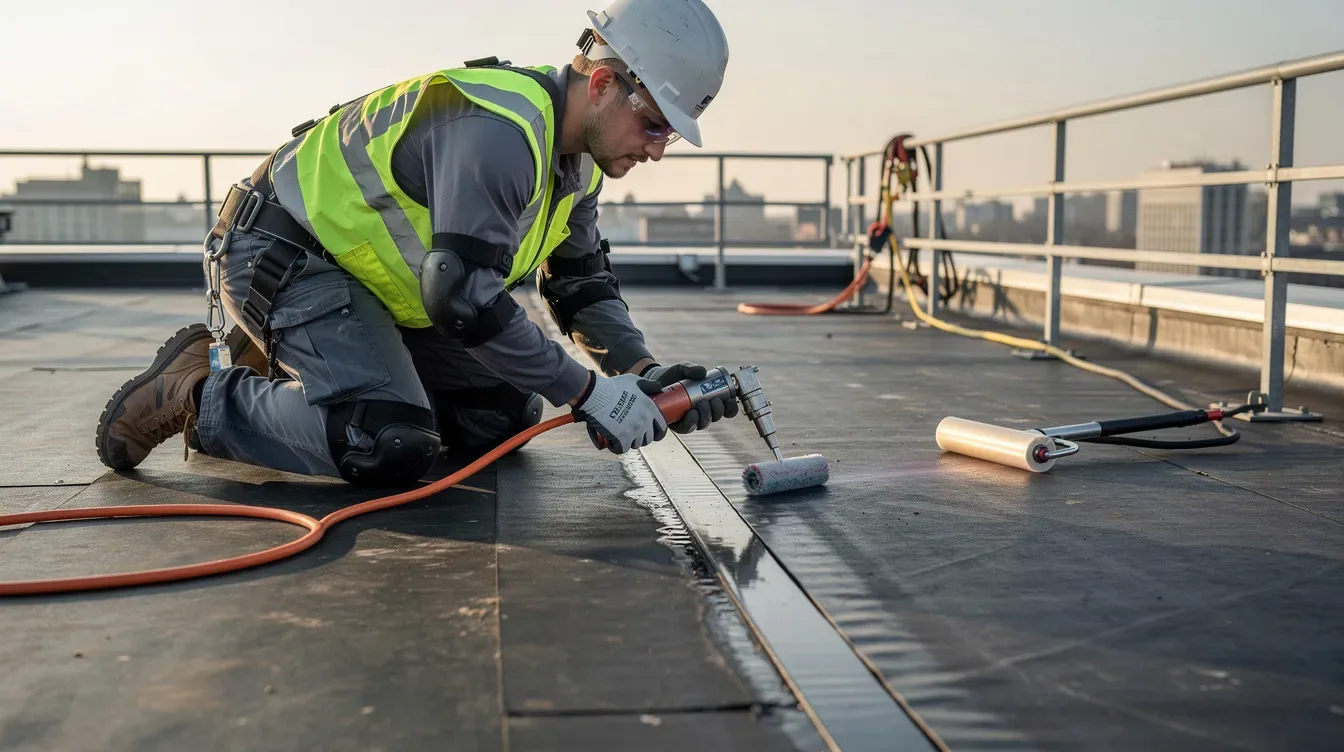
We look at the damage we can reach before choosing a temporary repair. A peeled-back edge, a puncture and a damaged curb each need a different fix. We check what the temporary material will stick to, and areas we cannot reach yet are clearly left out of the finished work.
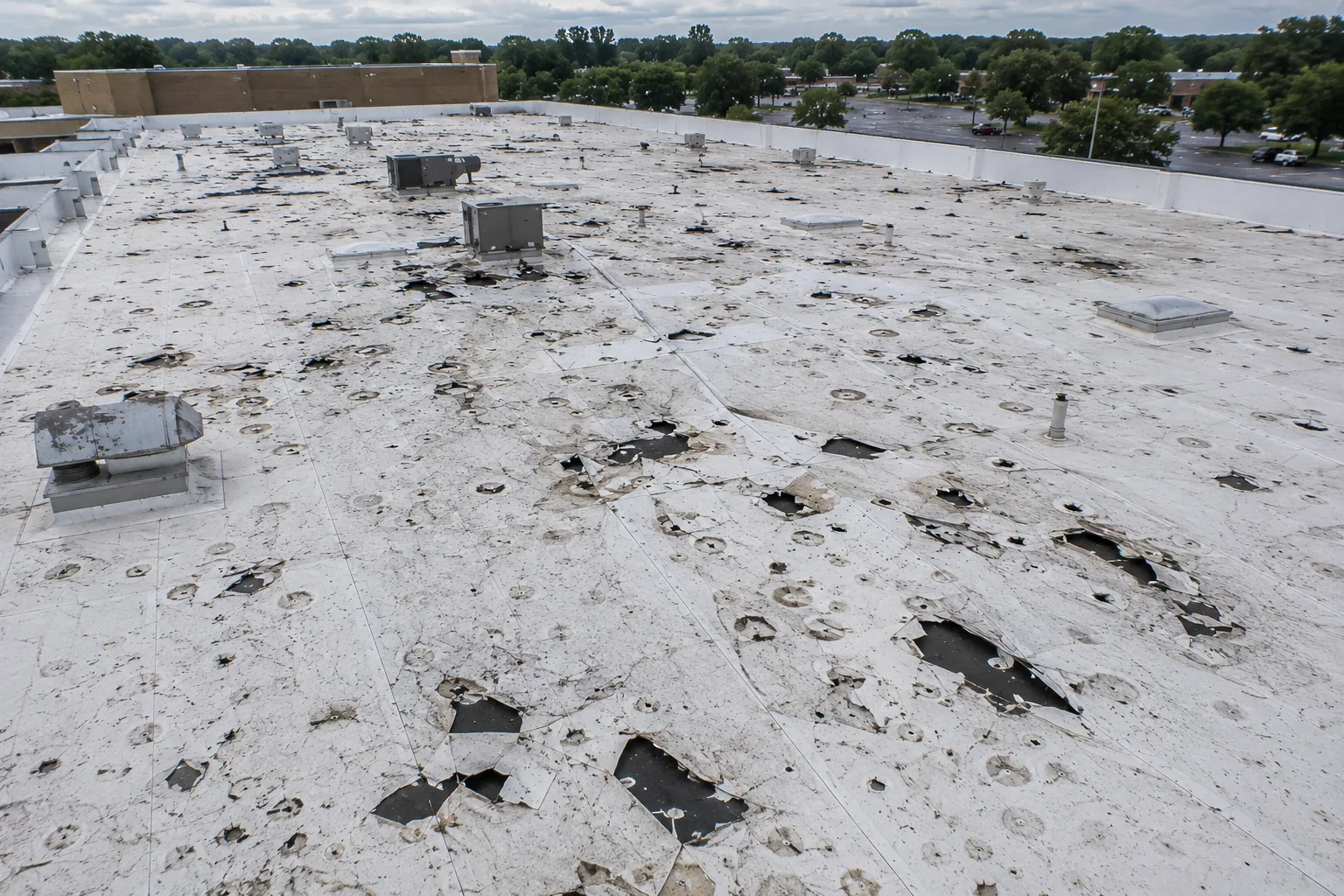
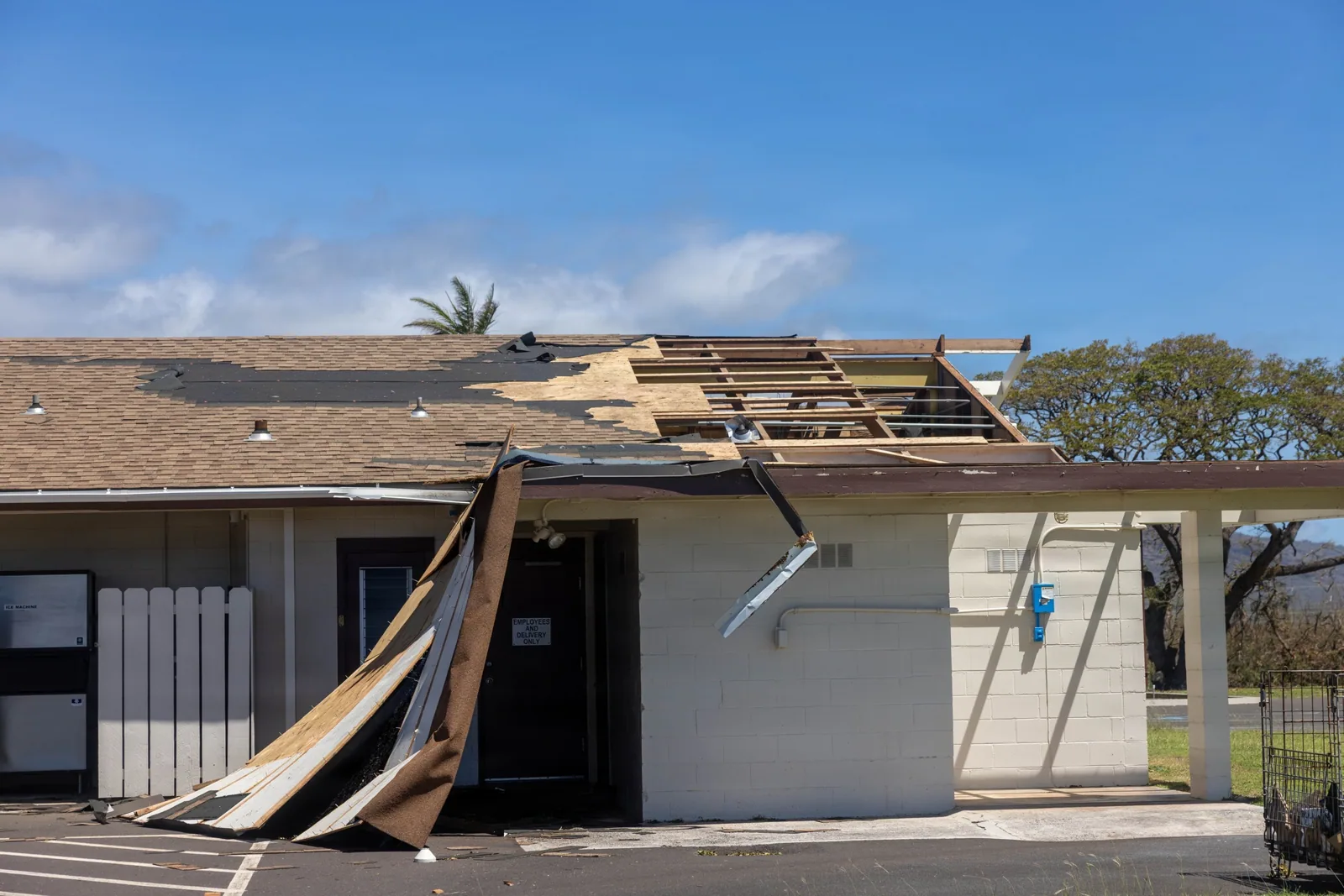
A wind damage repair starts with what we actually find. Wind does not explain every leak that shows up after a storm. The crew separates confirmed openings from possible leak paths that need checking later. A temporary patch is still a specific piece of work with its own limits.
We consider the weather, the wet roof surface and what materials will hold under those conditions. Roof access is arranged through the building contact. If a rooftop unit blocks the leak area, we say what the HVAC contractor needs to do to clear it, and that step stays separate from our roofing. The manager approves a clear temporary scope and knows where access or materials are still holding things up.
Approve the temporary work with its limits
Temporary protection and the permanent repair are described separately. We state what we propose, where, and who is approving it. Before starting, we explain what we can do on this visit and note anything that limits it, such as darkness, rain or blocked access.
The estimate covers crew time, materials and setup. If you set a spending limit for the emergency visit, we explain what it covers and how we will contact you if we find more. An urgent call should not turn into a large, unexplained total.
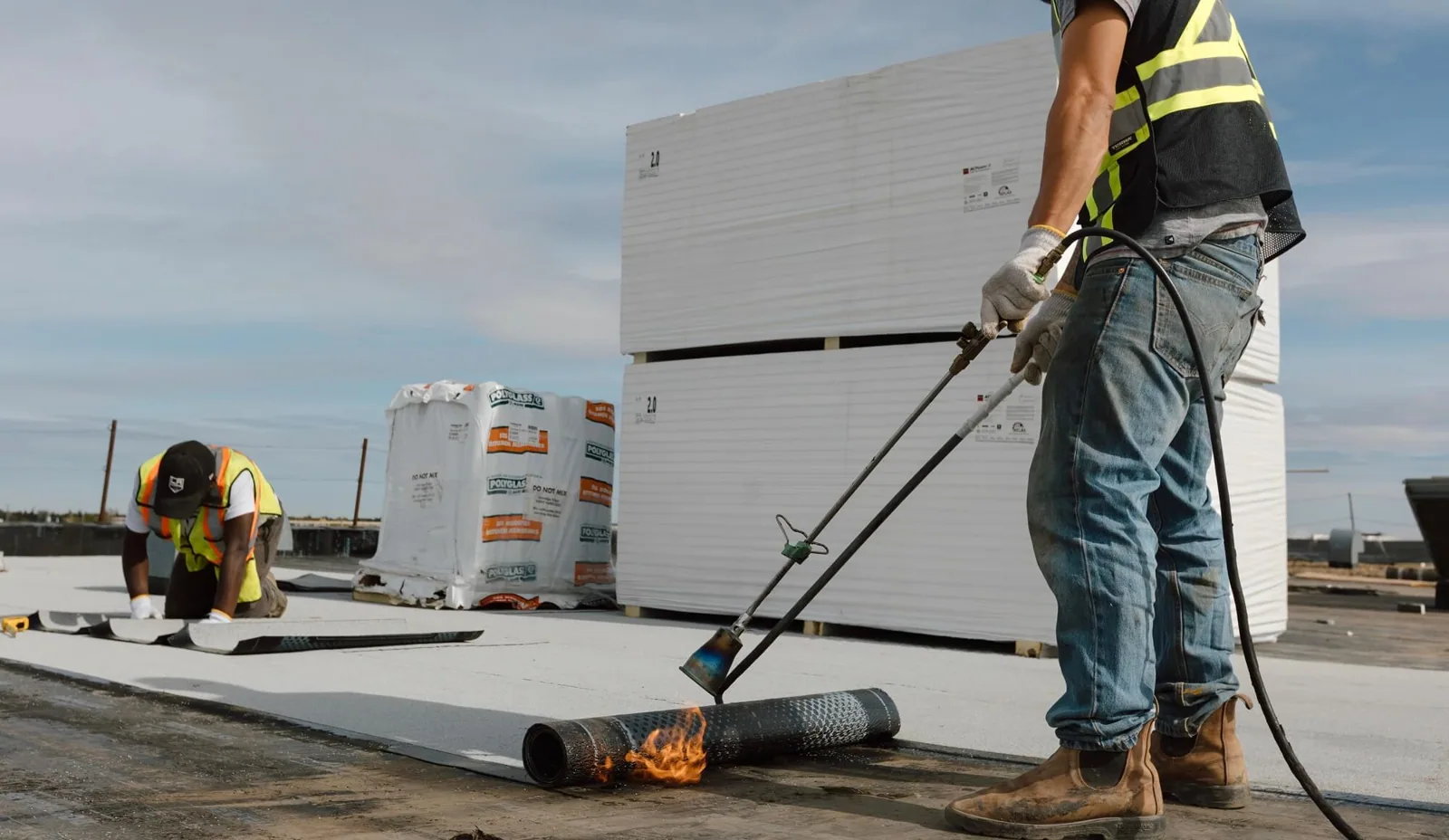
A permanent roof repair is priced afterward, based on a proper inspection and the right materials for the roof. We note where temporary materials were placed so they can be found later. If something prevents a full fix, that spot stays on the list. The manager gets a record of what we did and what still needs access, testing or prep. A tarp or patch over the leak is never recorded as a finished permanent repair.
Coordinate equipment work before closing the roof
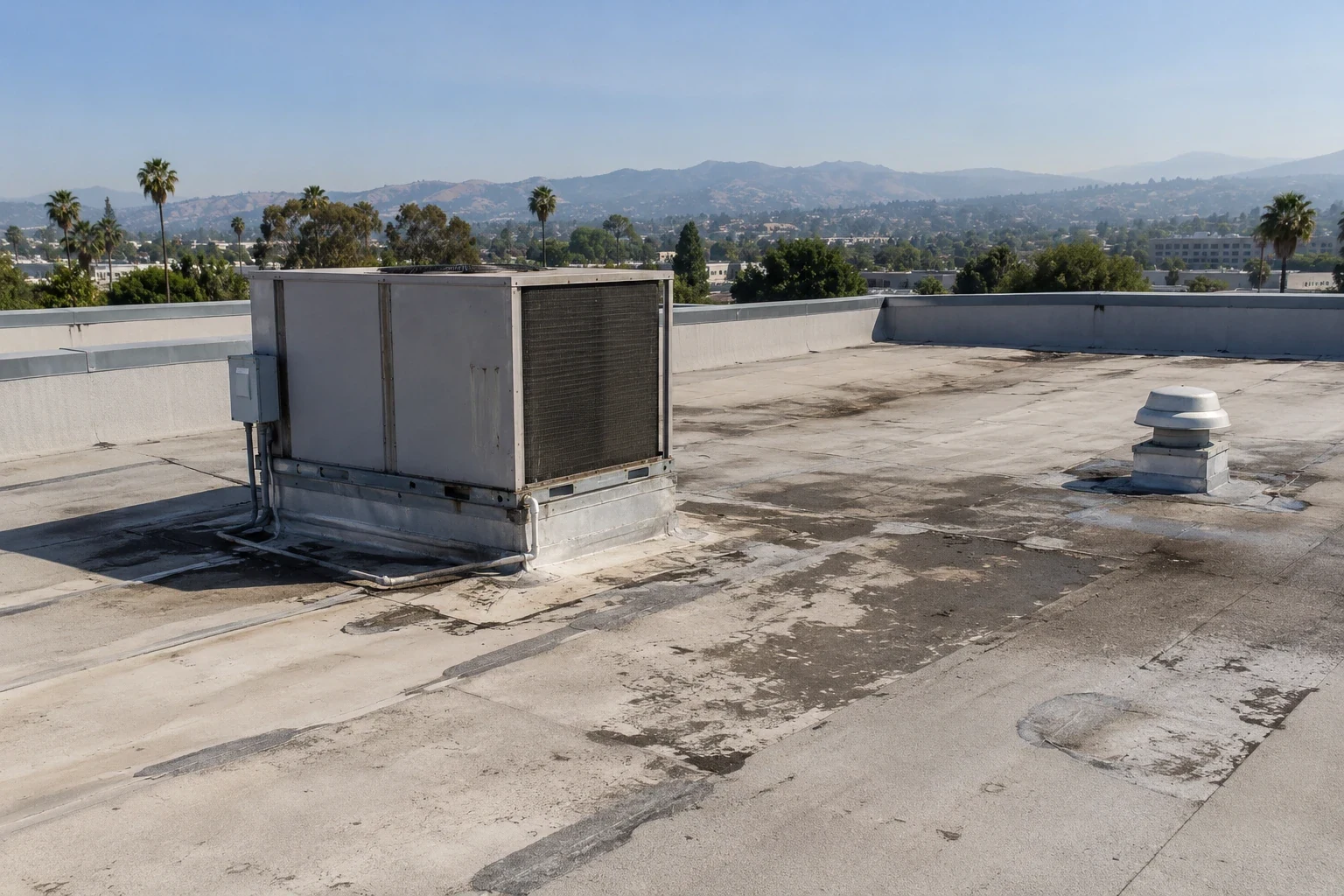
Rooftop units often sit right over the part of the roof that is leaking. We identify who services the unit and what they need to do so we can reach the curb flashing. Our crew does not repair HVAC equipment. Temporary protection is kept separate from any damage to the unit itself.
When equipment work is needed, we describe where and what it should accomplish, and arrange it through the building contact. Once the unit is cleared, we finish the permanent roofing at that curb. Fixing the membrane nearby does not finish the flashing hidden under the unit.
Sometimes protection and the permanent repair happen on separate visits. We include the extra setup and keep unfinished areas protected in between. If removal turns up damage beyond what we expected, we record it, and structural questions go to the right professional. The manager gets the added work before approving it, and finished work stays clearly separate from areas still waiting on a decision.
Record new findings and support claims with facts
Everything we find during an emergency visit is tied to a roof location and a date. We record the damage we could reach and what we could not inspect. Photos stay with the notes on the temporary work. A photo supports the record, but it cannot show whether the insulation underneath is wet.
If opening the roof shows wet insulation or damaged deck, we update the removal quantity. We explain the added work at that spot and get approval before doing permanent repairs. The open area stays protected while that is decided.
If you are filing an insurance claim, our roof insurance claim assistance can supply photos and repair records from the emergency visit. We document the roof; the insurance company decides coverage. Questions about your policy go to your carrier or adjuster. You get a clear record of temporary materials installed, repair locations and approved changes, and areas we could not reach are listed as still needing inspection rather than being folded into a note that the emergency was handled.
Plan the permanent repair for the actual roof
After temporary protection is in place, inspect the surrounding laps, nearby drains and the substrate before specifying the permanent repair. A cover can limit further entry while materials and access are arranged, but the closeout should identify its limits and the next work stage. Keep emergency protection distinct from completed membrane replacement or flashing repair.
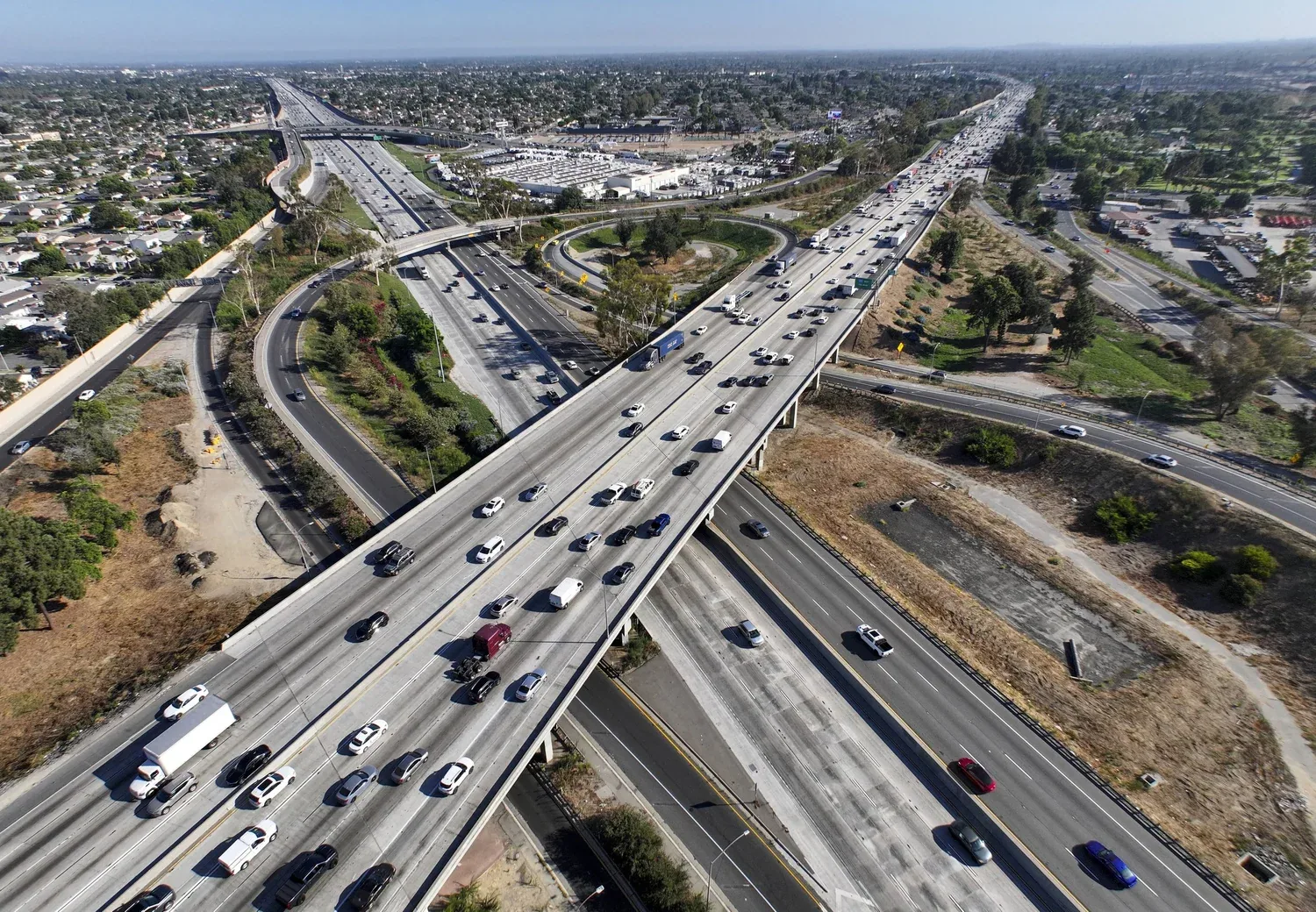
For urgent roof conditions near the I-5/I-605 Downey interchange, we identify the affected building, water-entry location and immediate protection needed. A warehouse roof visit follows the same sequence while accounting for the specific roof section and operations below.
The permanent repair starts with a look at the temporary materials and the roof around them. A roof condition report separates the emergency work from the permanent repair still needed. It records the products used, what we found underneath and any equipment work still pending. The manager gets a clear next scope, with testing and prep arranged before the permanent repair is approved.
Commercial Roofing Questions
What should I tell you when I call about an emergency leak?
The address, where the water is showing up, the best contact on site, and anything you know about roof access or rooftop equipment. Tell us what you have seen, not just what you think caused it. That lets us plan safe temporary protection quickly.
What is the difference between temporary protection and a permanent repair?
Temporary protection stops water now and is described by where it was placed and what it does not fix. A permanent repair comes after inspecting the membrane, insulation and flashing properly. We record both separately so a tarp is never mistaken for a finished repair.
What if you find more damage during the emergency visit?
We show you where it is, explain the extra work and get your approval before doing permanent repairs. The open area stays protected while you decide. Structural concerns go to an engineer.
What do I get after an emergency visit?
Photos, notes on the temporary materials and where they are, what we could not reach, any equipment work still pending, and the permanent repair we recommend next. That record is also useful if you file an insurance claim.
Get water stopped and a plan for the permanent fix
Send us the address, where the leak is and who to contact. We will check the roof, explain the temporary protection we can install and its limits, and outline the inspection needed before the permanent repair.