PVC Roofing in Downey, CA
PVC roofing in Downey, CA: we identify the membrane and old patches, replace wet insulation and weld seams and flashing that tie into sound PVC.
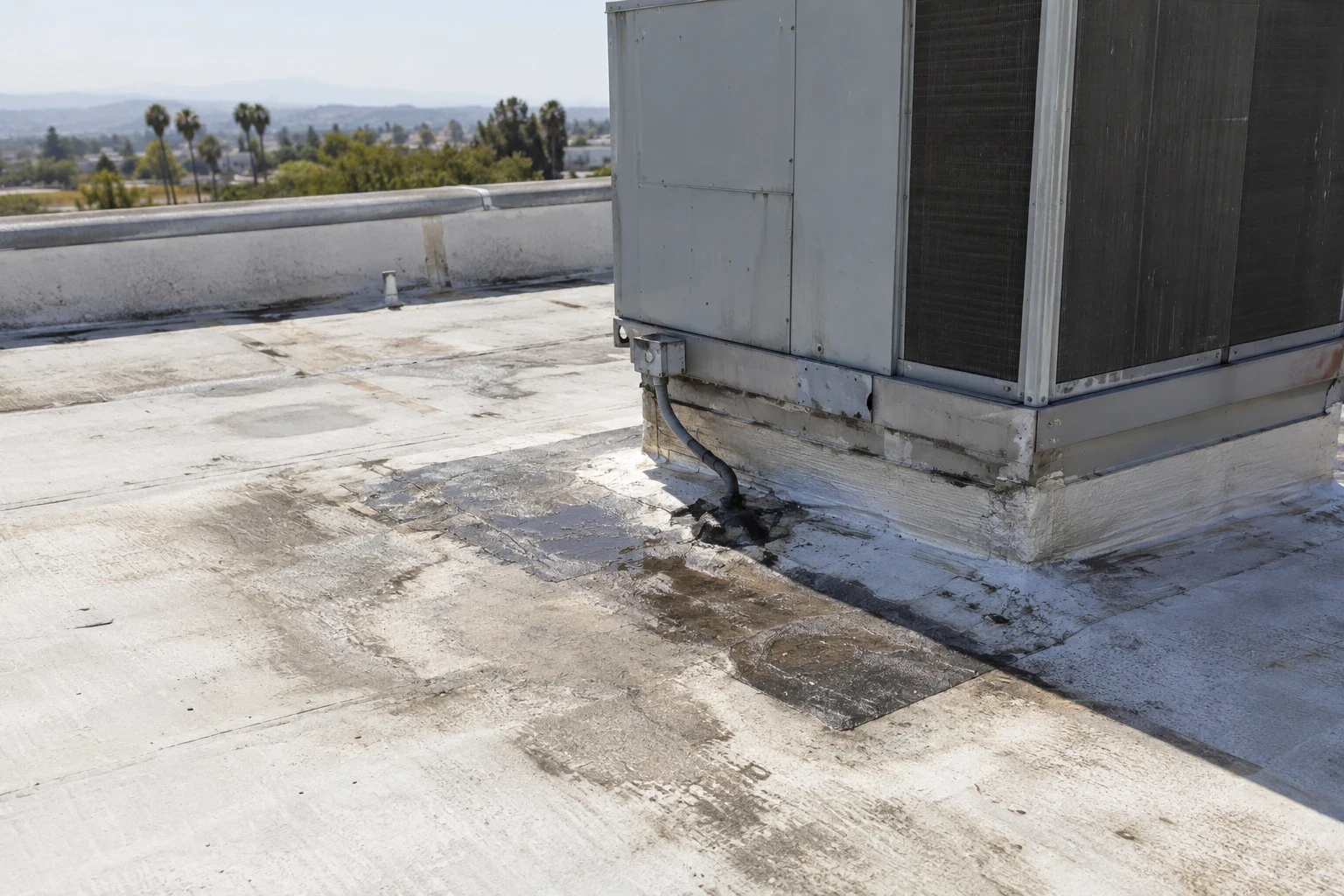
Old patches can make a PVC roof repair harder than it looks. Some were welded PVC, some were tape or sealant, and some may be a different material entirely. New PVC only welds to clean, compatible PVC, so we find out what each old patch is and what it is attached to before adding another. We identify the membrane in the repair area, show you where the repair starts and stops, and note anything that could change it. Insulation or backing repairs and any open questions about materials go into the proposal.
Downey's long dry summers and concentrated winter rain put PVC roofs through two very different seasons: months of sun and heat, then heavy rain that tests every seam and drain. We inspect the installed PVC, old patches and drain details before ordering a repair, and confirm the surface the new material has to bond to.
We start by clarifying what you want: fixing a leak at one detail is a different job from replacing a whole roof section. We define the work that goal involves and note what we still need to find out. The PVC product and details follow from those findings.
At penetrations, we inspect how the PVC turns up the curb or pipe boot and how the top edge is secured. At drains, we check that the membrane reaches the clamping ring without wrinkles or gaps. A repair can fail at either spot even when the open field looks fine. The proposal names those details and includes compatible accessories and careful work at their edges, so the finished membrane drains into the drain and away from the curb.
Confirm what the existing membrane is
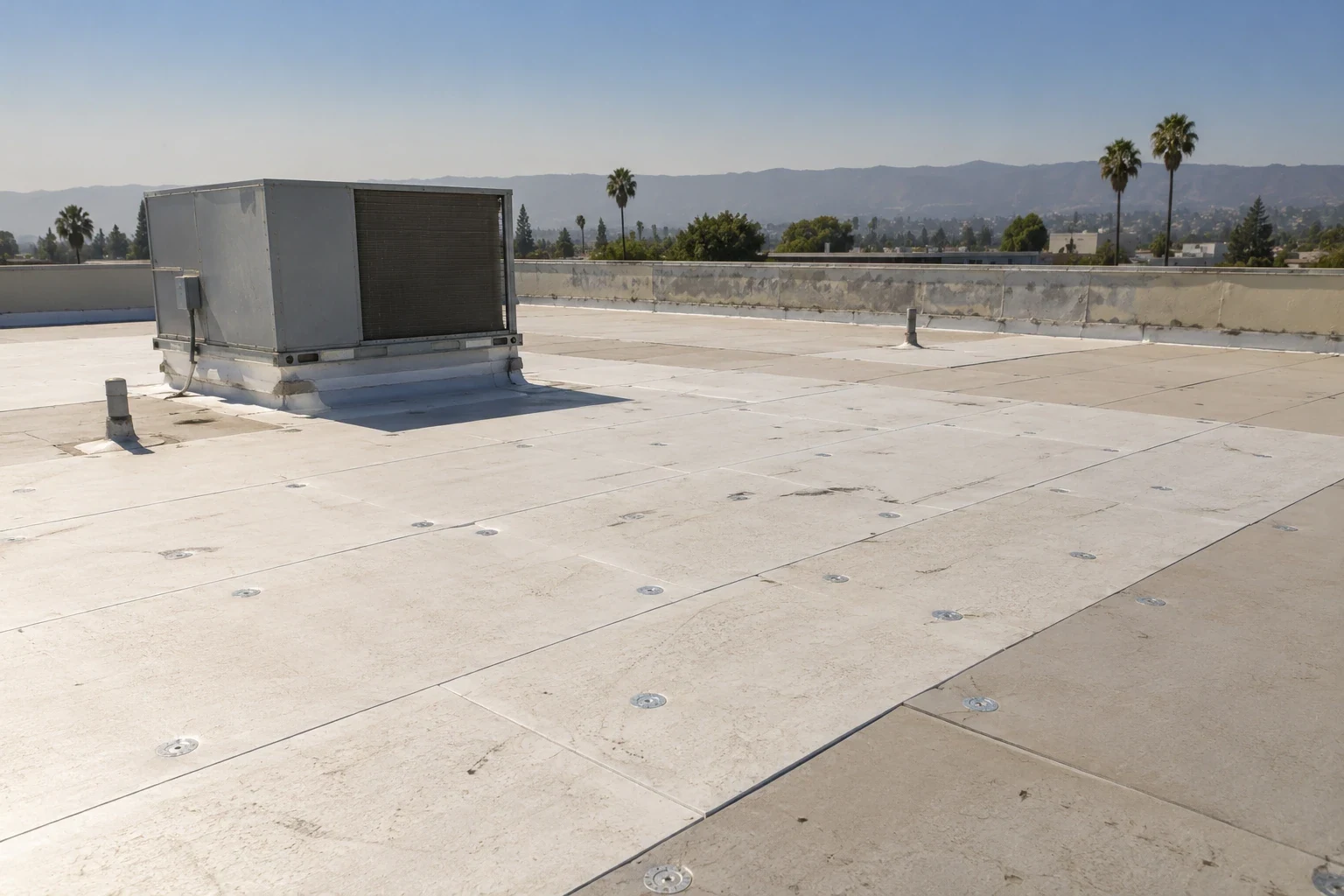
We compare any product records with what is on the roof and note where old patches cover the original sheet. Coatings, tapes and sealants at the repair spot are checked because they can keep a new weld from holding. A roof that looks uniform from a distance may have several materials up close.
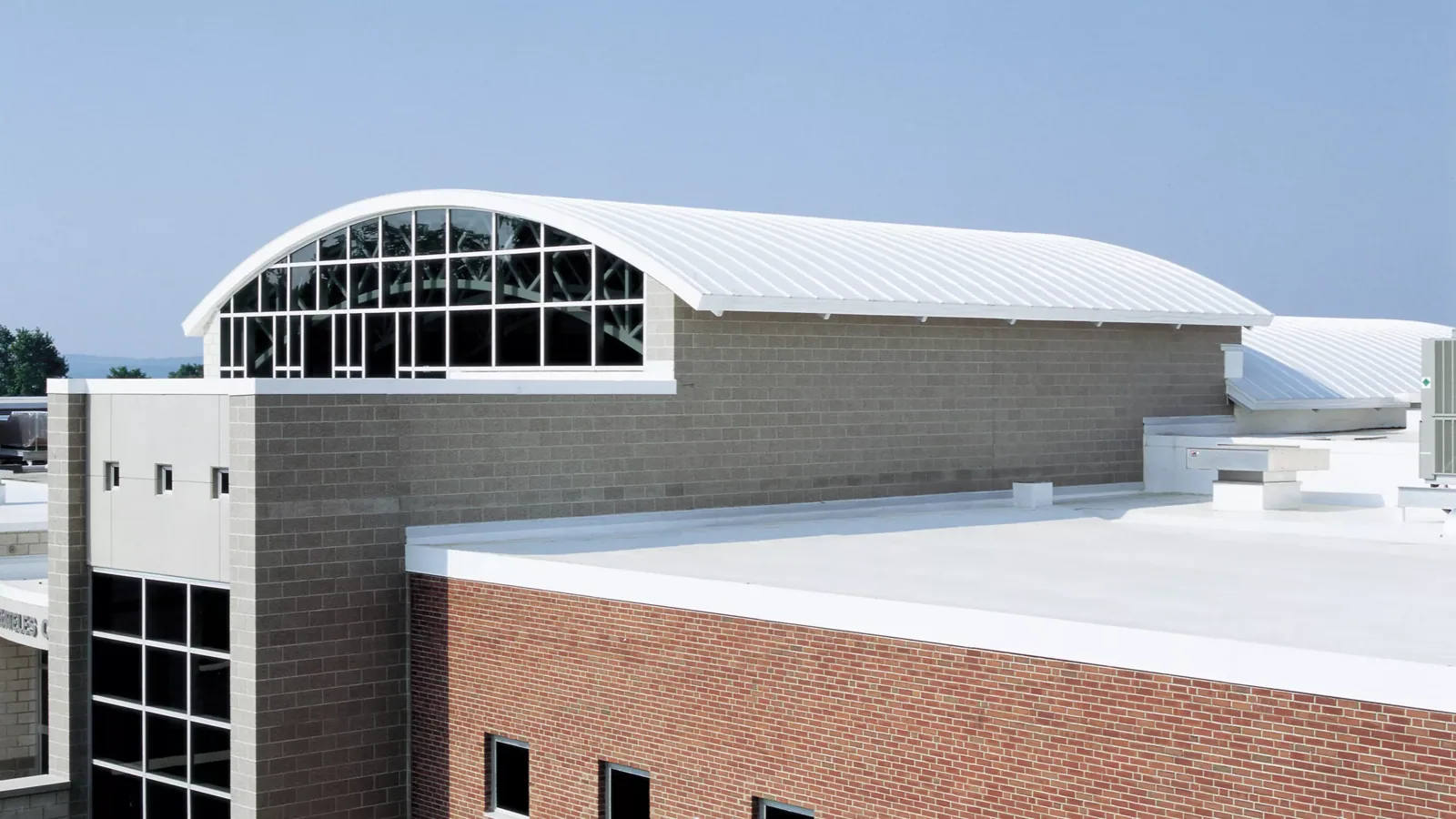
White single-ply roofs can be PVC or TPO roofing, and the two look alike but do not weld to each other. If we are not sure which it is, we test a sample before choosing a repair.
When the roof is a Sika Sarnafil PVC system, we follow Sarnafil's details and use compatible products. The brand tells us about the original membrane, not every patch added since. You get what we found and where our inspection stopped. If it will take extra testing to answer a question, we price that separately so you know before committing to the full repair.
Measure the repair before expanding it
We find the visible damage, then check the roof around it. A failed seam, a split at a curb and a loose edge each call for a different repair. We keep the likely cause separate from what we have confirmed, and explain if the repair has to extend past the visible damage to reach sound, weldable membrane.
Our leak repair work traces water from the interior stain to the roof details above it. The stain tells us where to look; the roof inspection tells us what to repair.
Our roof insulation and cover board work replaces wet or crushed layers under the PVC. We show what can stay and what still needs checking. If opening the roof changes the picture, we measure the added area and explain how it relates to the original repair, then get your approval before extending it. Each quantity in the price can be traced to something we found.
Weld the right detail at every edge
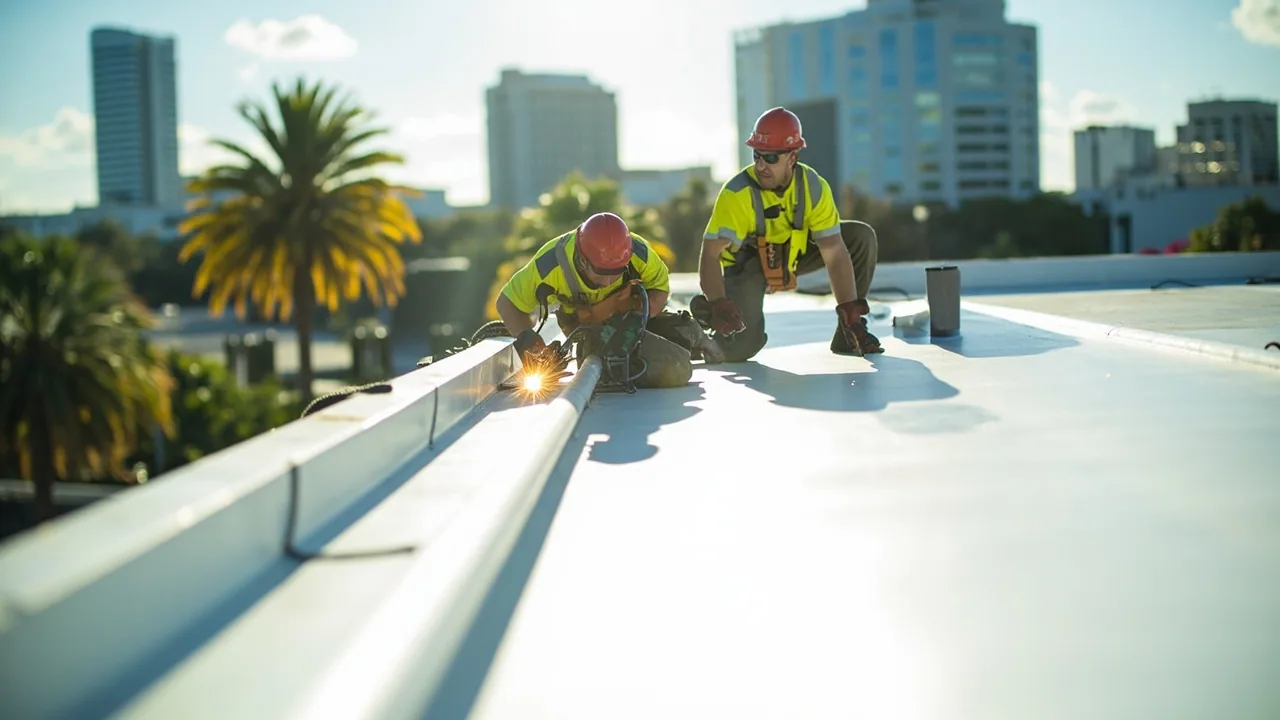
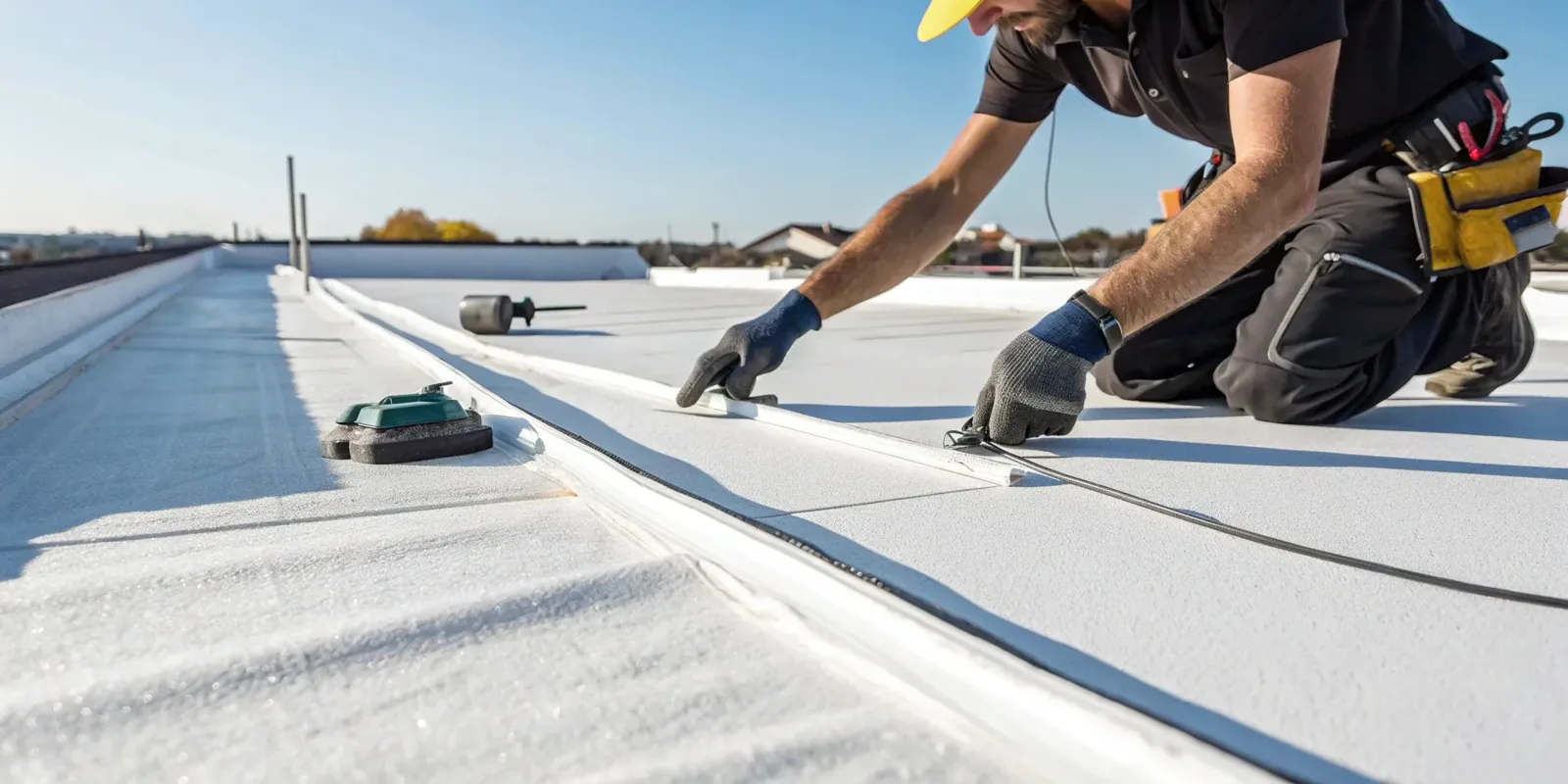
PVC seams and flashing are hot-air welded, and the requirements come from the membrane manufacturer. We check that the existing membrane is clean and weldable where the new material joins it, and cut back or prep it where needed. A seam that looks normal does not tell us how to weld an unknown sheet.
If the building also has KEE roofing on another section, that transition needs its own details. Where two different membranes meet inside the repair area, we specify the transition for those two materials.
At walls and penetrations, we check the backing and repair damage before rebuilding the flashing. If equipment blocks part of a detail, we explain what needs to move. The repair steps are listed in order, so you can compare a complete repair with what was found, instead of approving a membrane price that hides backing or equipment work.
Plan the work with the building manager
We confirm work rules and roof access with the building manager, along with which roof areas are available and who coordinates the rooftop equipment. A detail waiting on another trade stays on the list as unfinished, even if the roof around it is done.
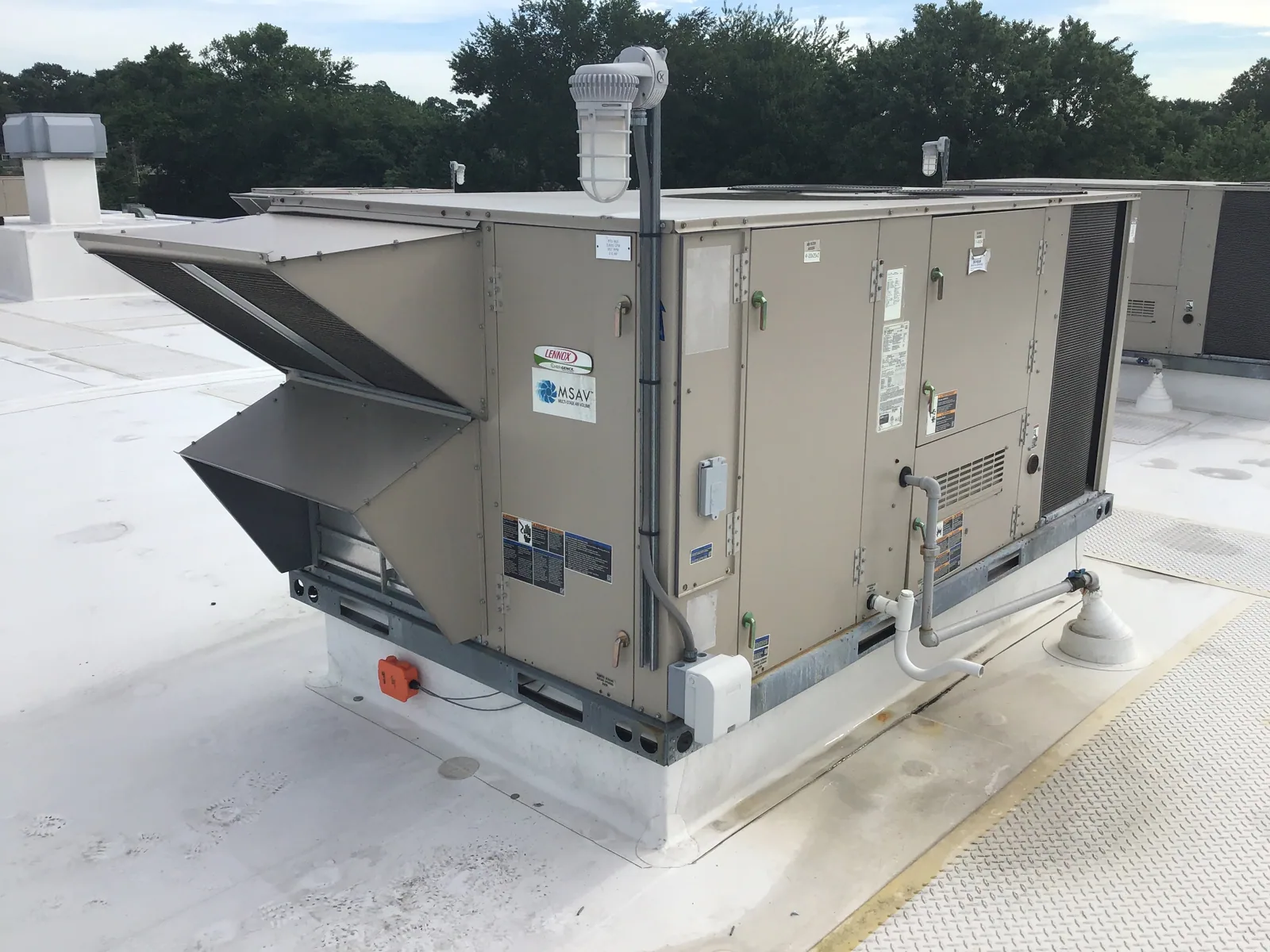
Our rooftop equipment curb and support plan shows the roofing work and the equipment work that has to happen first, including any curb or support repairs. Structural or design questions go to the right reviewer before the membrane order depends on them.
Phased work may need repeated setup and temporary protection, and we include those in the price. Unfinished areas between phases are sealed and listed with what has to happen next. If the schedule changes, the record shows which roof areas are affected, so access and equipment work can be coordinated.
Give the manager a usable record
At closeout, you get the PVC product installed and the details completed, any insulation or backing replaced and how much, photos of each detail and the results of agreed checks such as seam probing. Approved additions are tied to what we found. Areas we could not reach and equipment work still pending are listed separately, so the record shows exactly what was done and what remains.
Stonewood Center and The Promenade at Downey are two of the city's larger retail properties, and each has its own roofs and history. For a building near the I-5/I-605 interchange, we keep the address, membrane, patch history and repair work together in one record, compare approved removal with material kept and list unfinished items separately.
Commercial Roofing Questions
Why identify old patches before repairing a PVC roof?
New PVC only welds to clean, compatible PVC. If an old patch is tape, sealant or a different membrane, it has to be removed or prepared before the new repair will bond.
What should the price show if the insulation condition is uncertain?
Confirmed wet areas should be priced, and areas that still need checking should be listed separately with how they will be tested.
When does equipment work become part of a PVC repair?
When a unit blocks a curb or flashing we need to reach. The equipment owner moves or supports it first, then we finish the flashing.
What should be in the PVC repair closeout?
The product installed, details completed, insulation replaced, photos, seam checks and a list of any open items.
Get a PVC repair estimate
Need PVC roof repair in Downey? Send us the problem areas and any membrane records, and we will identify the material and give you a clear repair estimate.