Modified Bitumen Roofing in Downey, CA
Modified bitumen roofing in Downey, CA: we identify the cap sheet and layers below, replace wet areas and rebuild laps and flashing with the right method.
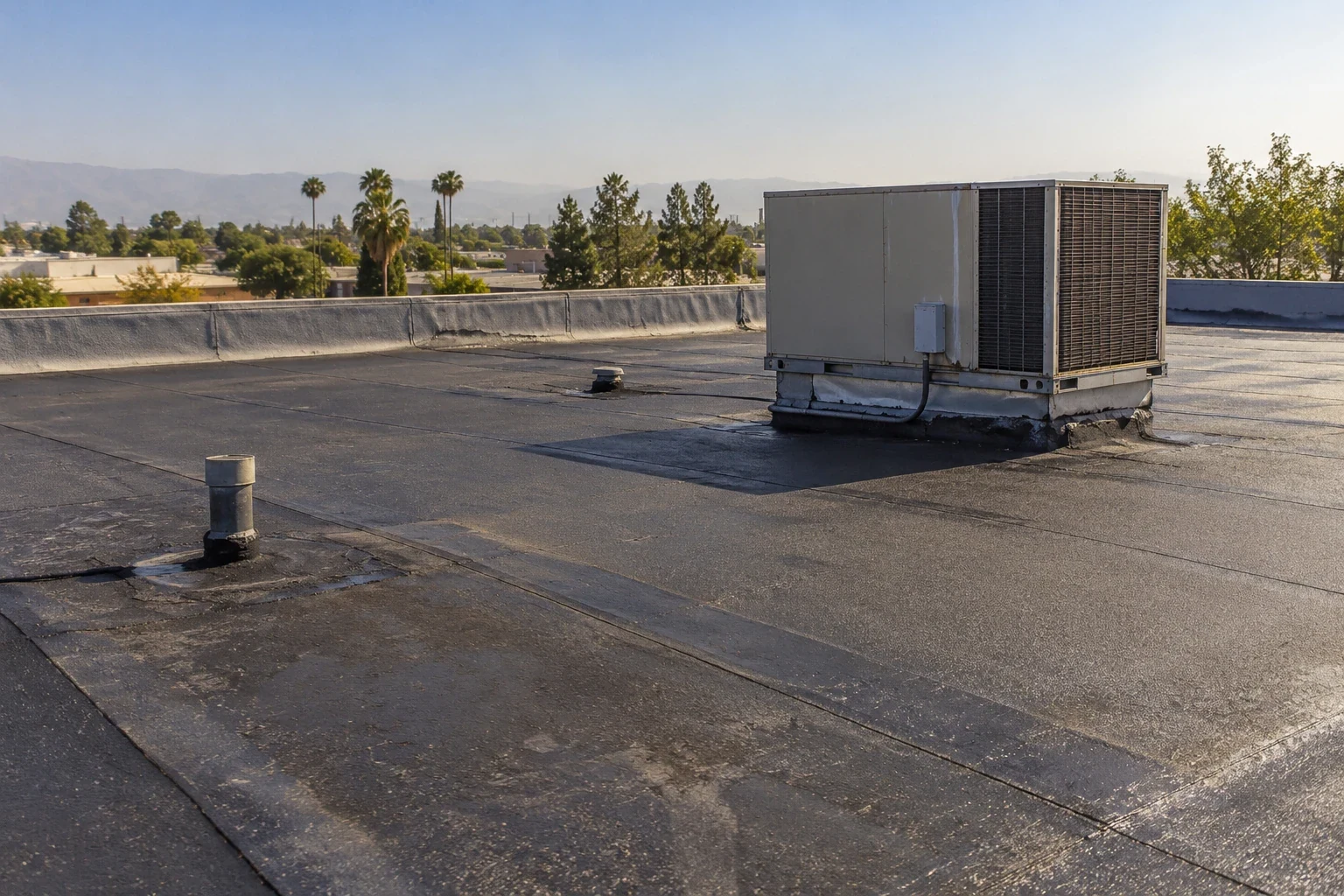
The cap sheet you see on a modified bitumen roof is only the top layer. Under it there is usually a base sheet, sometimes older plies, then insulation and the deck. A good repair depends on what is under the cap and what condition it is in. On Downey roofs, we identify the installed product, check past repairs and test the layers below before choosing how to fix it. The estimate ties each quantity to what we found and notes anything we could not see.
SBS modified bitumen is asphalt modified with the synthetic rubber polymer styrene butadiene styrene, which makes it more flexible than plain asphalt. That describes the material family, not the specific sheet, installation method or full roof assembly on your building. We identify the actual product and its instructions before choosing a repair.
We check whether the existing roof has a smooth or granule-surfaced cap sheet and how the seams and flashing were made. Laps are checked for separation, exposed reinforcement and old repairs that could affect a new bond. Where a torch-applied method is proposed, fire safety, nearby combustibles and site rules are reviewed before work begins; self-adhered and cold-applied options have their own surface and temperature requirements. The price covers the chosen method with its base sheet, cap sheet, flashing and edge termination.
Identify the sheet before choosing a method
We compare any product records with what is on the roof and note old patches, added surfacing and coatings that could affect the repair. Modified bitumen roofs are often patched with roof cement or coatings that a new torched or adhered sheet will not bond to. If we are not sure what something is, we flag it and test before ordering.
When the roof is a SOPREMA system, we identify the specific sheet and follow SOPREMA's details. The manufacturer's name alone does not tell us what has been added to the roof since, or which installation method suits the repair. If the detail depends on that answer, we find it out before ordering materials.
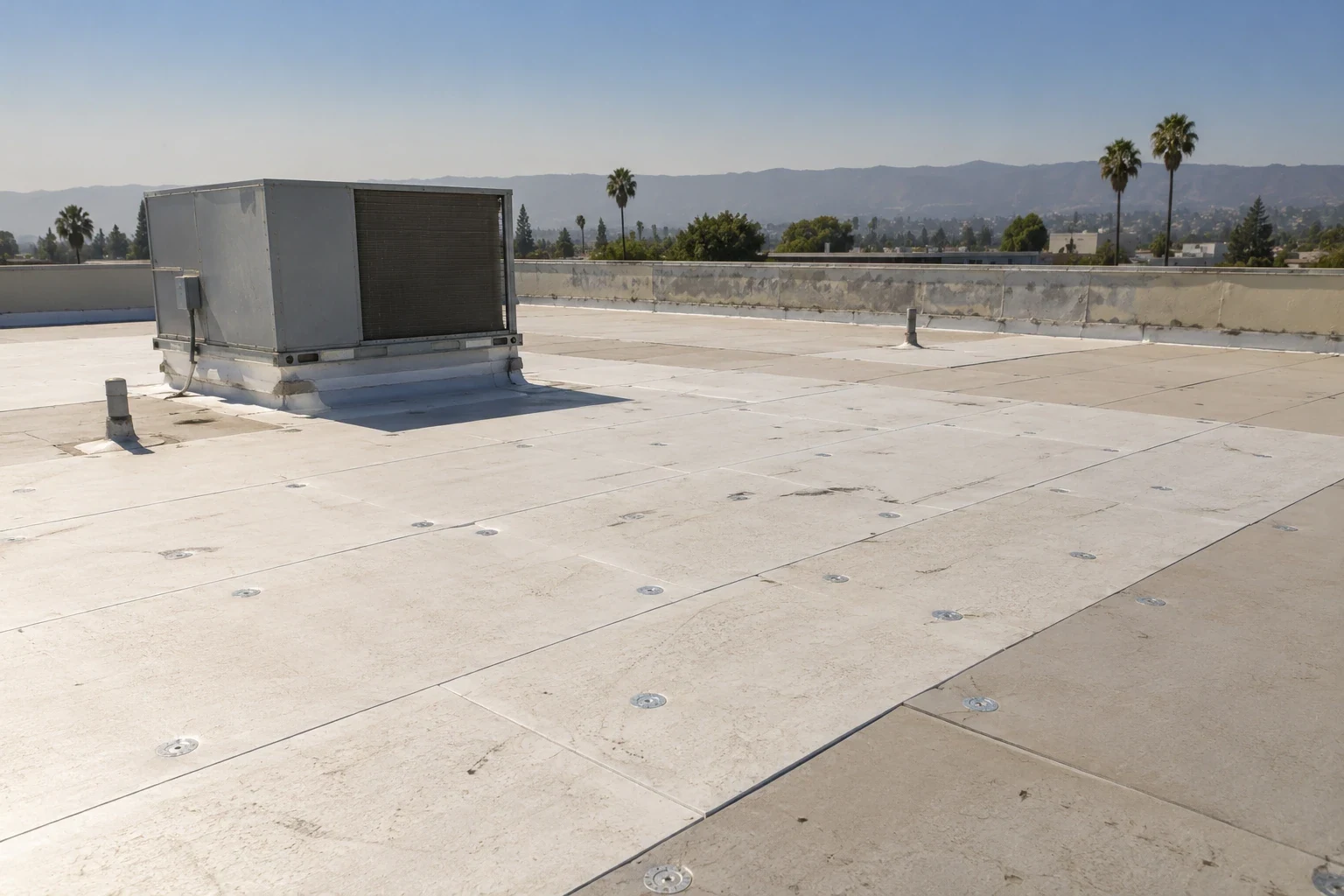
Many older roofs have modified bitumen over an old built-up roof. We check the layers that affect the repair rather than assuming from the cap sheet what is beneath it. You get what we know about the product, what we found in the layers and what still needs checking, so the repair is based on the actual roof rather than a general label.
Remove damaged layers down to sound material
We start at the damage and check the roof around it, then cut back until we reach sound, dry, well-bonded material. Layers that can stay are kept; damaged insulation or base sheet is replaced. The price for a new cap sheet should not hide unanswered questions about what it will be sitting on.
Our roof insulation and cover board work replaces wet or crushed material, with removal areas tied to what we found. We check the new layers against the system's requirements and note any areas we have not yet opened. Structural questions go to the appropriate engineer.
If opening the roof reveals more damage, we mark its location, measure the added work and explain it before continuing. You approve the extra work first, and the open area is protected while you decide. The record keeps the original inspection next to the new finding, so you can see why the price changed.
Build laps and flashing for the chosen sheet
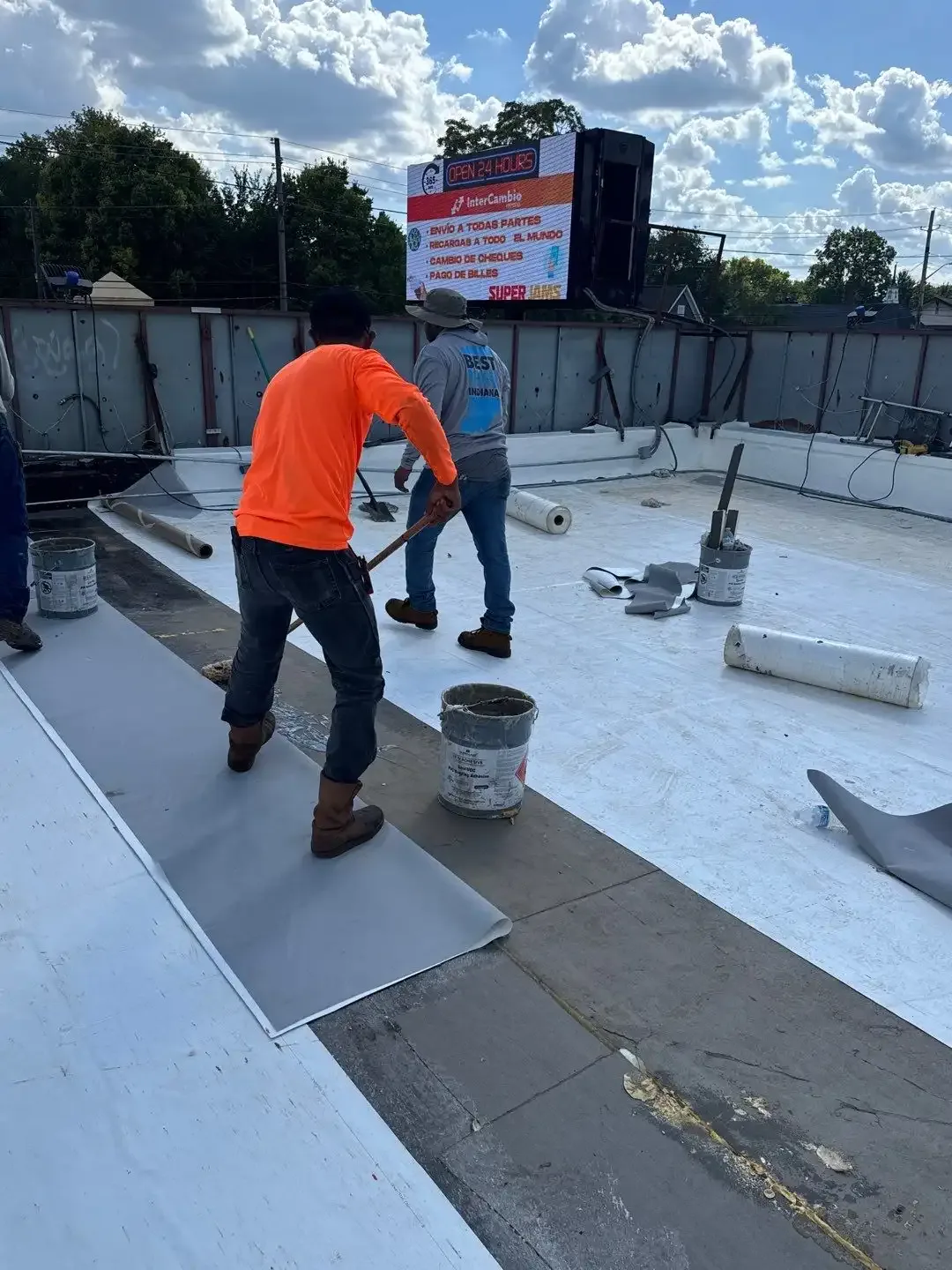
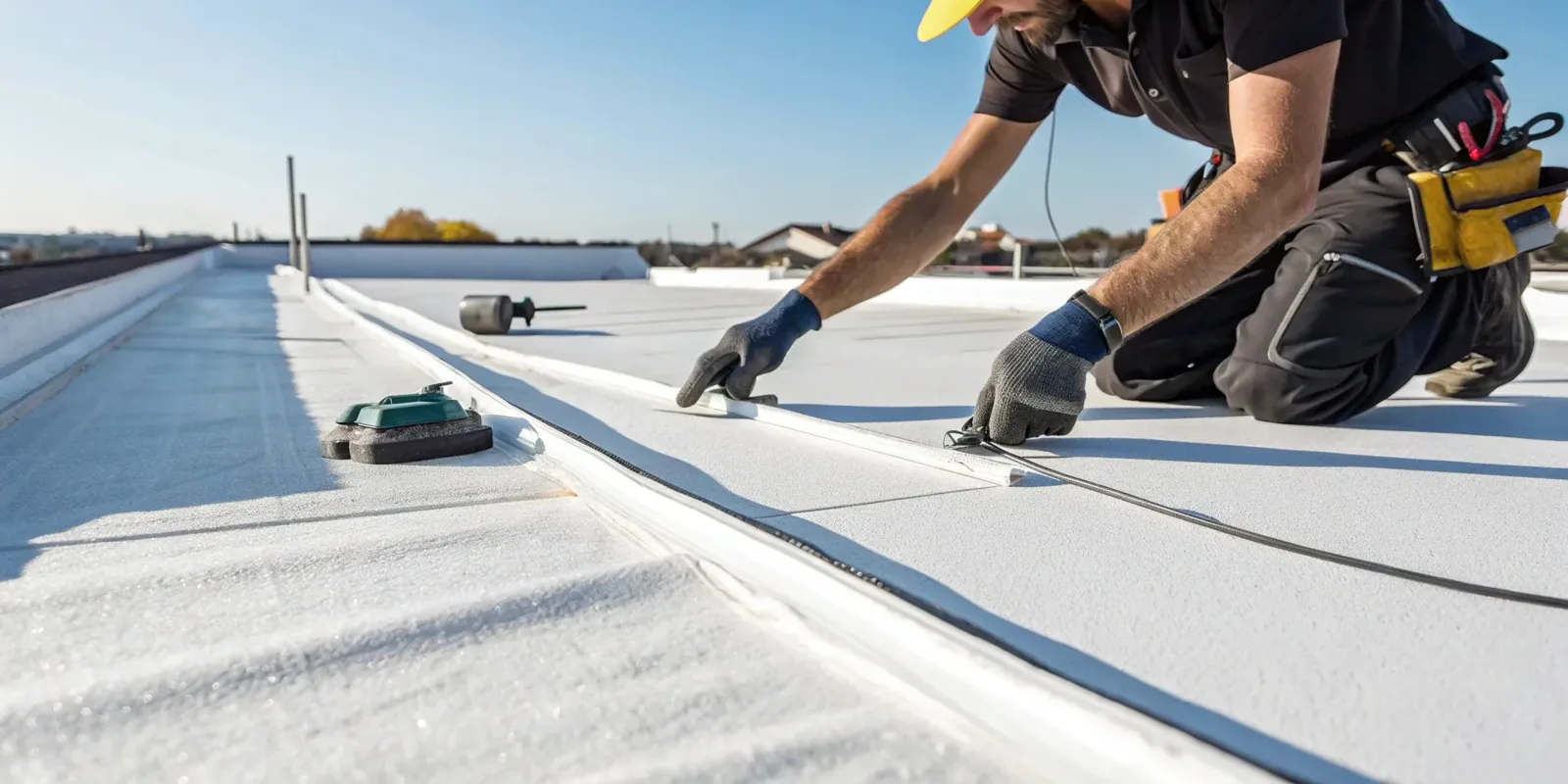
The lap and flashing method depends on the sheet: torched, hot-mopped, cold-adhered or self-adhered. Each has its own lap widths, primers and details. We choose the method from the product's requirements, prep the existing roof where new material meets it, and deal with old repairs at those edges so the new laps bond.
If the modified bitumen meets a TPO roof on another part of the building, that boundary needs its own transition detail, since asphalt and TPO do not bond and can damage each other. We describe it rather than extend the asphalt detail across an unknown neighbor.
At walls, curbs and pipes, we check what the flashing attaches to and repair damaged backing first. If equipment blocks a detail, we note what has to move. The estimate shows how removal, backing repair and new flashing fit together at each spot, with any open product or prep questions settled before materials are ordered.
Plan around equipment and work phases
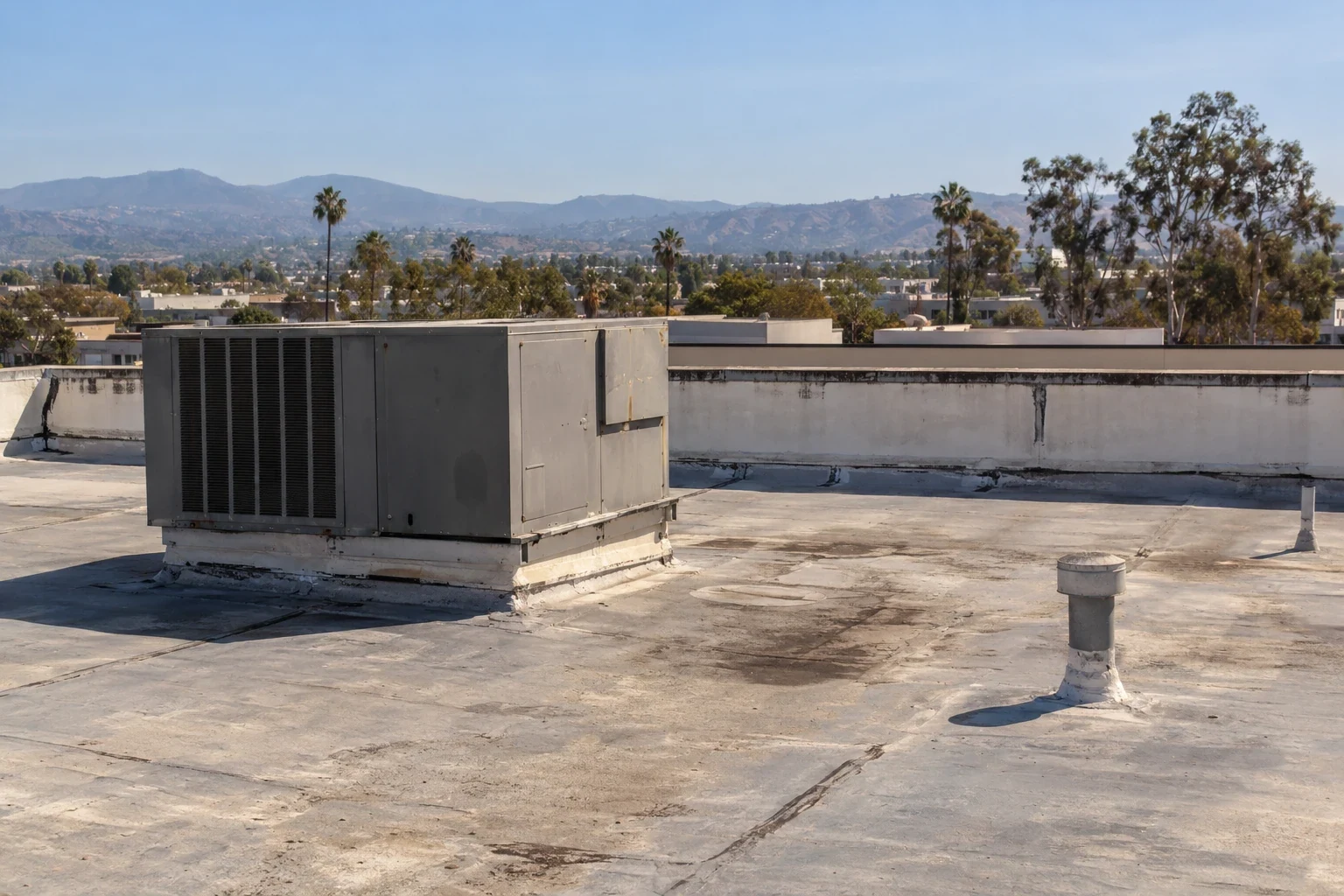
We get the current work rules for the building, confirm material handling and identify who controls the rooftop equipment. If a unit blocks a curb, it has to be moved or supported before we can flash it. Progress on the roof nearby does not finish that curb.
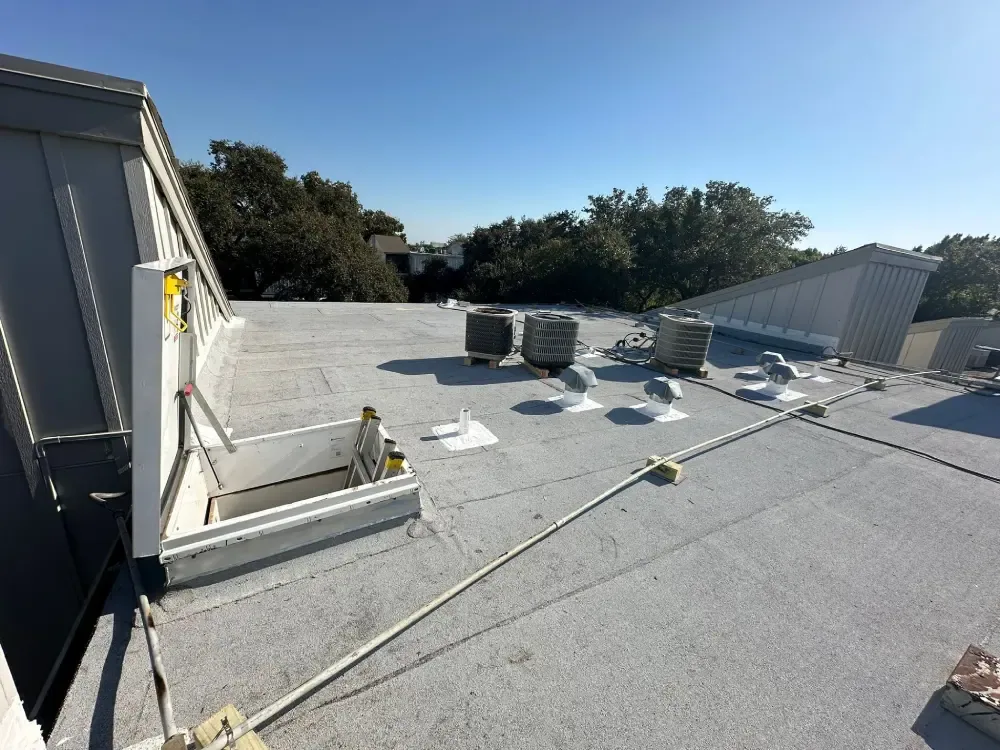
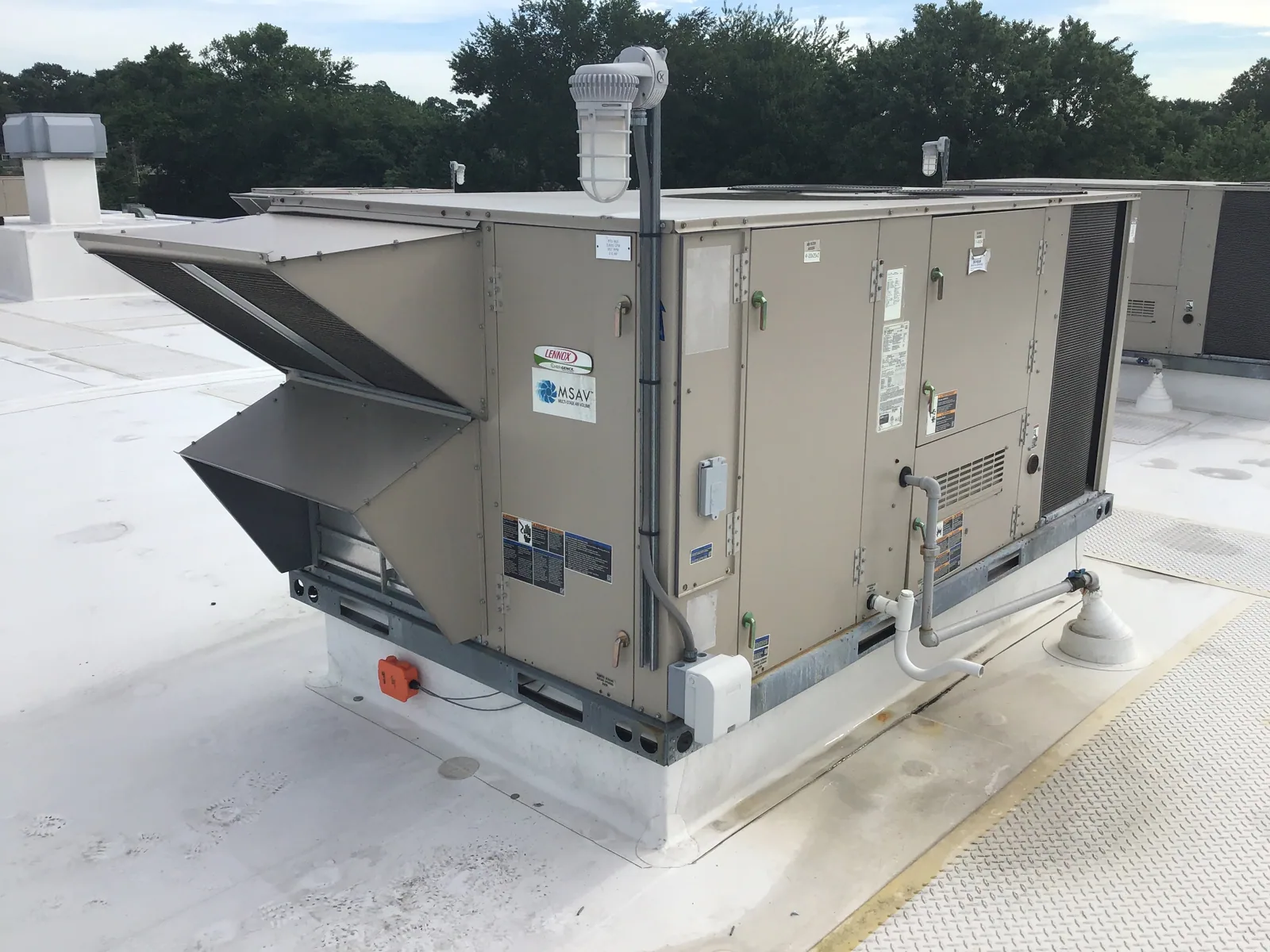
Our rooftop equipment curb and support work places curb or support repairs ahead of flashing in the schedule. If a change affects how the equipment is supported, it is reviewed before we rely on it. The HVAC contractor's work and ours are listed separately.
For occupied building projects, phased work may add setup and protection, which we price. Each unfinished section between phases is sealed and listed with what is needed next. That gives the building manager a clear schedule tied to actual roof areas, rather than assuming every detail is ready the day materials arrive.
Record the product and the rebuilt layers
At drains, curbs and parapets, we check the surface underneath before carrying the cap sheet into the detail. A patch over loose or wet material will not restore the seal. We match the reinforcement and flashing method to the existing roof and photograph seams and terminations for the closeout record. When replacing only a section, we tie the new work into sound membrane and mark the boundary so a future inspector can tell the repair from older layers. On commercial roofs in Santa Fe Springs and Commerce, we record the existing cap sheet and repair boundary before deciding how new work ties into it.
For a roof near the I-5/I-605 interchange, we keep the building's own condition findings with its estimate and do not borrow records from neighboring roofs. The material and repair boundaries are checked on the property itself.
At closeout, you get the sheet products installed and the locations of new details, which layers were removed, rebuilt or kept, photos and the results of any agreed checks. Approved additions are listed with their quantities and the reason for them. Areas we did not inspect and equipment work still pending are listed separately, so the record does not suggest more was done than was.
Commercial Roofing Questions
What needs to be identified before modified bitumen materials are ordered?
The existing cap sheet, how the seams and flashing were made, any patches or coatings on top, and the condition of the layers underneath. Those decide the repair method and products.
What happens if the layers under the cap sheet are damaged?
We measure the damaged area, explain the added removal and rebuilding, and get your approval before continuing. The area is protected while you decide.
What prep should be done before flashing is rebuilt?
Damaged wall or curb backing is repaired, old patches and coatings at the edges are removed, and any equipment in the way is moved by its owner.
What should the final modified bitumen record include?
Products installed, locations of new work, layers removed or kept, photos, test results and a list of any open items.
Get a modified bitumen estimate
Need modified bitumen roof repair in Downey? Send us the roof areas and any material records, and we will check the layers and give you a clear estimate.