I-105/Lakewood Boulevard Corridor Commercial Roofing from Downey, CA
Commercial roof service along Lakewood Boulevard and I-105 in Downey. Inspect seams, curbs and drains before choosing a permanent repair.
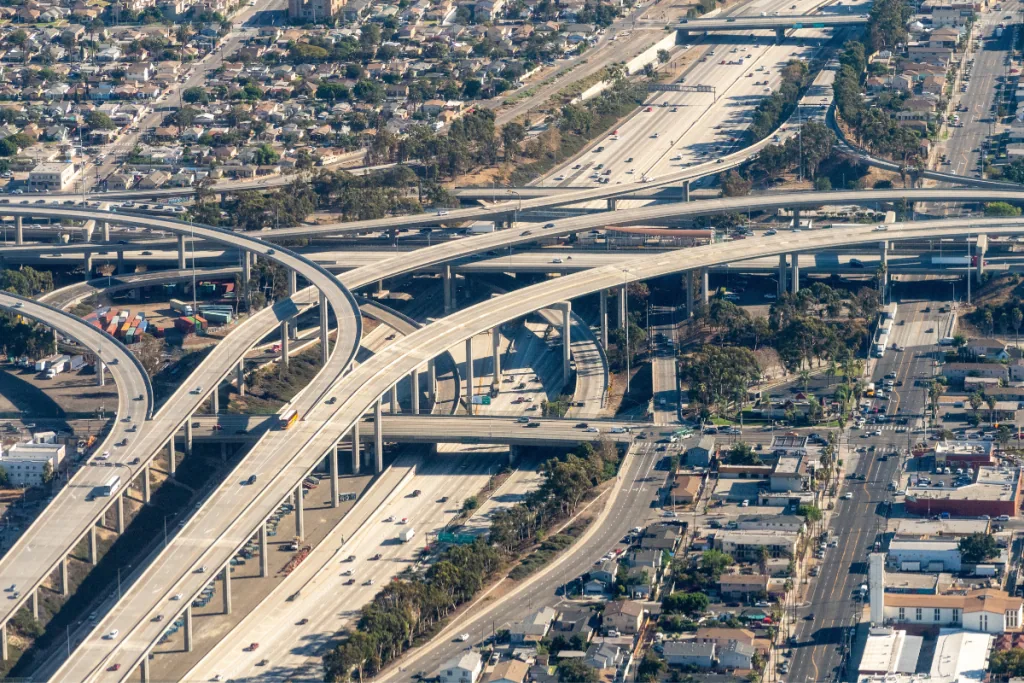
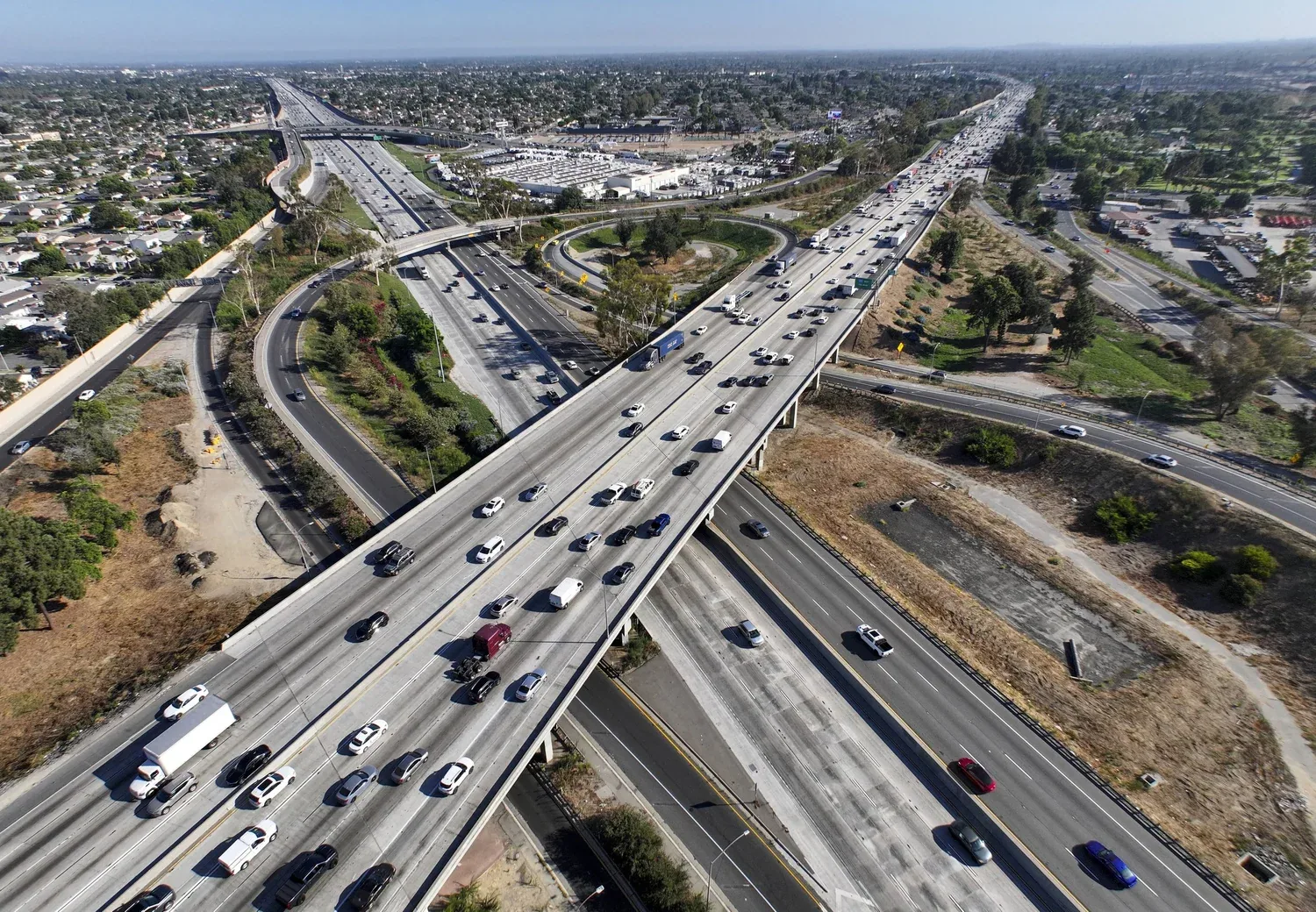
Lakewood Boulevard crosses I-105 in Downey, marking a service area for commercial properties along the freeway and nearby arterials. I-105 passes through Paramount, Lynwood and Norwalk, while the Metro C Line runs in its median and serves Lakewood Boulevard and Norwalk stations. At each property, we inspect the assigned roof and confirm its actual membrane, drainage and rooftop details before scoping the reported leak or planned project.
A commercial roof near Lakewood Boulevard may need a focused seam repair, a curb replacement or a larger restoration. The right choice depends on what inspection shows: the membrane type, condition of retained surfaces, affected layers and the detail needed for a permanent closure. We explain that evidence in plain terms and separate roofing work from equipment or structural tasks requiring another trade. If a property manager is coordinating multiple buildings along the route, each roof still receives its own condition record. An I-5/I-605 interchange property needs the same roof-specific inspection and scope.
Trace the water path to the roof detail
Start with the room or tenant space where water appeared, then inspect the roof above and around it. The point where a stain shows may be some distance from the entry point. We check seams, field membrane, wall transitions, equipment curbs, penetrations and drainage near the reported area. Each finding is tied to a visible location. If the suspected detail cannot be reached or a mechanical enclosure is responsible, we state what examination or trade response is needed before assigning the cause. This keeps a roofing repair from being priced against a symptom alone.
At the assigned property, confirm the building contact and roof access before planning the visit. A commercial roof leak repair records the symptom, roof finding and uncertainty still to resolve. A drain backup, failed flashing and equipment leak call for different work. Recommend a permanent patch only when examination supports the repair boundary. The manager gets a clear next step: a defined repair where the defect is visible, or a targeted investigation where additional evidence is needed.
Repair seams, curbs and perimeter details completely
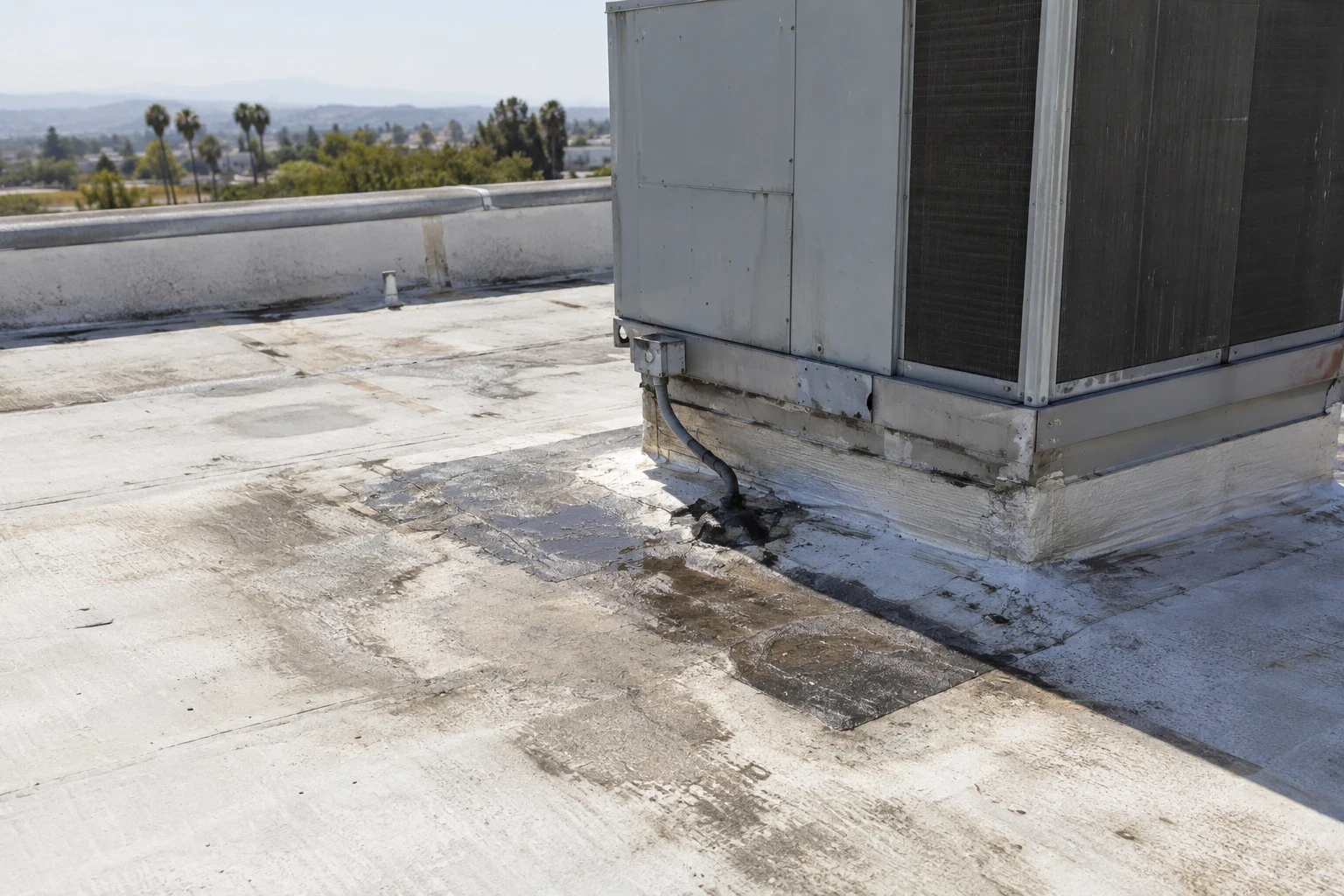
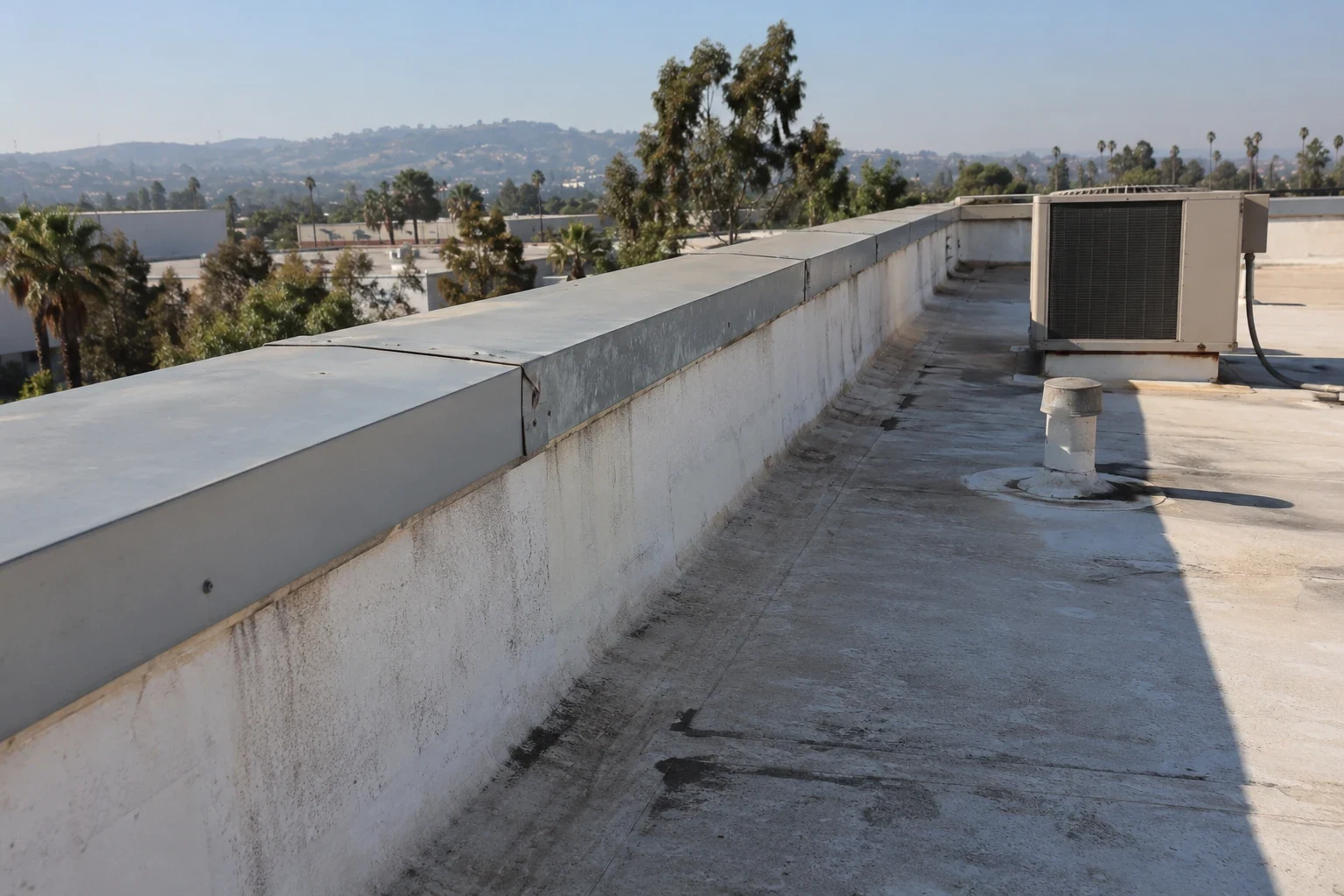
A membrane repair must tie into sound roofing with the correct preparation and system-compatible materials. We identify the failed seam, puncture or flashing and determine how far the affected material extends. At an equipment curb, the scope includes corners, curb faces and the upper termination, not only the visible field patch. At a wall or roof edge, the membrane and metal detail must work together. If the retained surface cannot receive a dependable tie-in, the estimate explains the needed removal or substrate correction. Our penetration and curb flashing service can address the detail itself.
Wind and sun can stress exposed membranes and sealants across inland Southern California. That regional climate context makes routine inspection of seams and edge details sensible, but it does not prove a particular roof has wind damage. We document actual lifted, split or brittle material and keep the repair size tied to the observed condition. When an edge, coping or gutter is part of the leak path, include it in the proposal rather than treating it as an unrelated accessory. Our edge metal and gutter service repairs roof-to-wall and perimeter details that affect closure.
Check drainage before water finds a low point
After a storm, look for debris at drains and scuppers, standing water, displaced strainers and seams near low areas. A slow outlet can concentrate water at a detail that was not the original defect. We note whether the concern is a maintenance blockage, a damaged component or a condition that needs further investigation. Do not treat every shallow water mark as proof that the roof needs a new slope. A drainage recommendation should identify the outlet or roof area, what was observed and what work would change the condition.
I-105 links Downey with communities that depend on the same broader regional road network, while each property remains responsible for its own drainage arrangement. Our drain and scupper service examines the accessible connection between the membrane and outlet. When water is entering at a drain bowl, the repair should renew that interface and any damaged surrounding material. If the roof has a low spot or structural question, we identify the evidence and recommend the appropriate review before promising a correction. The owner can then compare a localized outlet repair with any broader work supported by the inspection.
Decide whether a coating or replacement fits
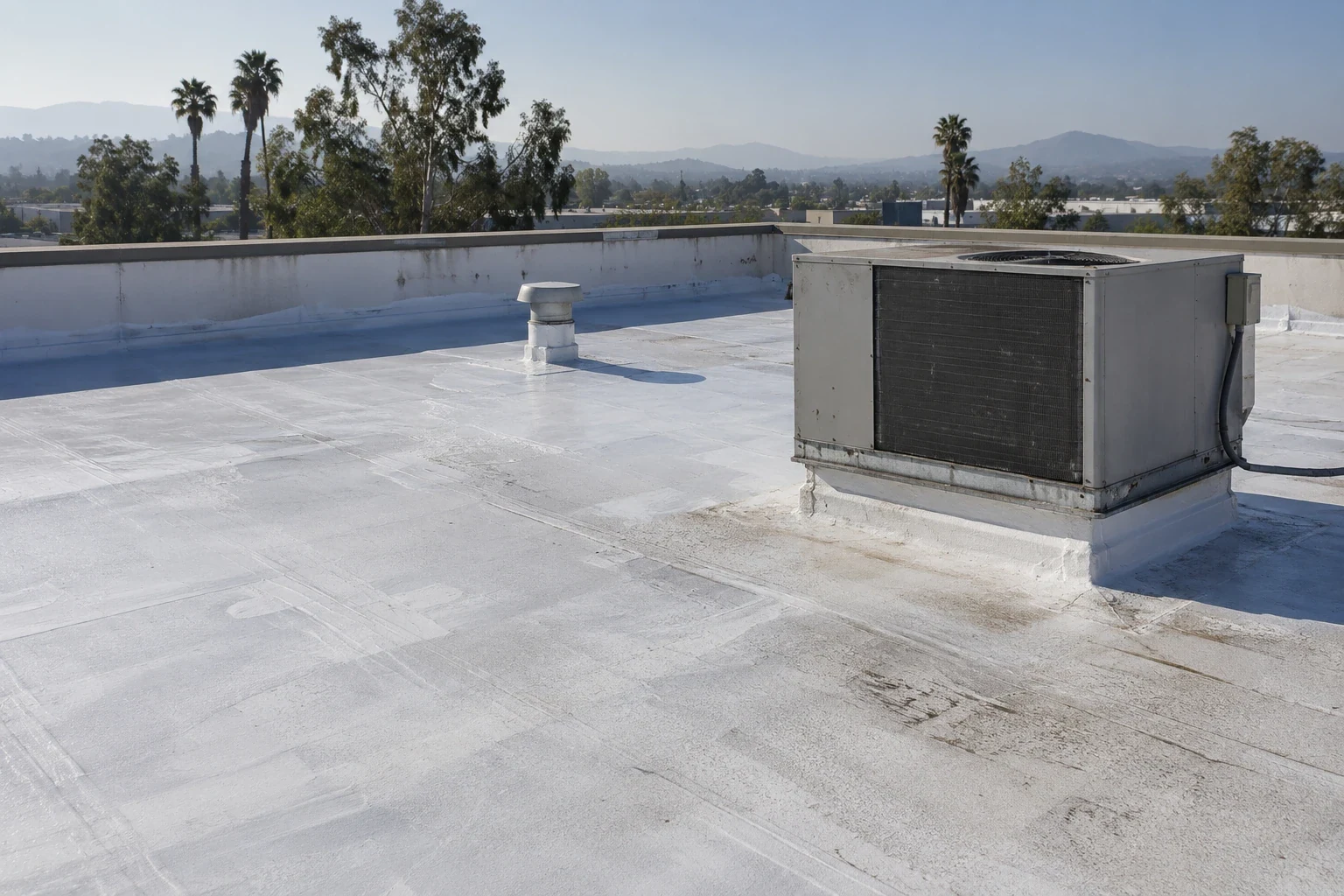
Before a restoration coating, identify the existing membrane and previous surface treatments. Check for open seams, loose flashing, wet insulation and locations where water remains. Those conditions must be repaired or addressed before a new finish is applied. The coating manufacturer’s requirements, substrate condition and any applicable project criteria guide the selection. Our roof coating restoration service includes preparation and detail repairs in the proposed scope. A product name by itself does not prove compatibility or make an aging assembly suitable for restoration.
Replacement may be appropriate when deterioration is widespread, the assembly has reached the limit of practical repairs or existing layers cannot support a reliable recover. The scope should identify removal, insulation, cover board, new membrane, edge metal and transitions at equipment and walls. Where part of the roof remains, define the tie-in between new and existing work. A commercial roof replacement proposal should show those parts so the owner can compare repair, restoration and replacement on actual conditions. The assessment should follow the actual roof assembly and findings.
Coordinate access, protection and closeout
At Lakewood Boulevard properties, roof access is arranged with the actual property contact. Confirm roof keys or escorts, staging location, working hours established by the customer and areas needing interior protection. If an HVAC unit or other service must be moved or shut down, the authorized representative coordinates that trade. We identify the prerequisite before opening roofing. The work sequence should leave time and materials to close the detail permanently, with temporary protection described separately if a handoff delays that closure.
Emergency roof response operates 24 hours a day, seven days a week, including holidays. For urgent water entry, the immediate objective is to limit damage and protect the affected area; investigation, material compatibility and trade coordination may determine when permanent repairs can proceed. We document the measure completed and the remaining repair. At closeout, keep photographs of the defect, prepared surface and final connection with the building's roof records. Our condition report service gives the manager a located record for future maintenance without extending one roof's finding to another property along the corridor.
For a roof near Imperial Highway's commercial corridor, inspect the assigned section and its connections before setting a repair quantity.
Commercial Roofing Questions
What is included in this I-105 service area?
This service area includes commercial properties near the Lakewood Boulevard crossing of I-105 in Downey. Each repair plan follows the assigned building's roof system, condition and access arrangements.
Does the Metro C Line affect a roof inspection?
The line and stations help orient the corridor. Roof entry and staging still need to be confirmed with the actual property contact; transit geography does not establish site access.
What should happen before a roof coating is applied?
Identify the existing membrane and prior treatments, repair failed flashing and seams, and confirm the retained surface can receive the specified preparation and coating.
How do you distinguish a drain problem from a membrane leak?
We inspect the outlet, surrounding membrane and the path of the reported water. The report states whether it shows a blockage, failed roof-to-drain connection or another condition needing closer review.
What happens if a curb is blocked by rooftop equipment?
We describe the access or equipment handoff needed before the roofing detail can be prepared. The authorized contact arranges any equipment work; the roofing scope then identifies its own tie-in and closure.
Request a roof-specific assessment
Arrange a commercial roof visit in the I-105/Lakewood Boulevard Corridor. We will inspect the reported area, explain the roof details involved and outline the repair or project scope supported by the building’s condition.