Home / Commercial Roofing Services
Roof Drains and Scuppers in Downey, CA
Commercial roof drain and scupper repair in Downey, CA. We fix the membrane seal, backing and flashing at each outlet and flag plumbing issues for the right trade.
A price for a new drain or scupper should include the roofing around it. A new drain bowl will not fix wet insulation or split flashing next to it. Roof drain and scupper work in Downey, CA starts with inspecting each outlet on the job before choosing a repair. We identify the roof membrane around each one and what the repair will tie into. Problems inside the drain pipe or the wall are kept separate from what we can confirm on the roof. The property manager gets the permanent repair and any prep listed for each outlet.
At the drain, inspect the clamping ring or outlet connection, the membrane termination, and the surrounding insulation for movement or trapped water. A clogged strainer calls for cleaning; a loose flange or split flashing needs a roofing repair. Check whether the bowl sits below the surrounding surface and whether water has a clear route to it. Downey sits at the I-5 and I-605 junction, where winter rain can arrive after a long dry spell, so drainage paths deserve attention before the wet season.
A clear bid shows exactly how the membrane will be sealed at each outlet. Damaged backing and work by a plumber or sheet metal contractor are listed beside it. That way you are paying for a finished, watertight drain, not a box of parts.
Inspect each outlet and the roofing around it
We confirm which drains and scuppers are part of the job, then inspect each one along with any records on the drain hardware and the roof around it. Old patches and mastic at an outlet affect what new materials will bond to, so we note them. "Drain repair" means little until we know what kind of drain and roof we are dealing with.
A commercial roof inspection records each outlet by location. Insulation we could not test and parts of the drain we could not see are listed separately, along with what is needed to check them. The manager can see which repairs our crew can handle and which need someone else.
A flashing repair at a drain or scupper uses products compatible with the existing roof, so we confirm the membrane first. Plumbing or wall questions go to the right trade. The estimate draws a clear line between our roofing repair and anything else that must happen before the outlet is fully sealed.
Handle damaged backing apart from the drain part
A drain repair often depends on the insulation and deck right around it, which may need a closer look. We note what we have checked and what we have not. Wet or crushed insulation gets removed and replaced, and that is listed separately. A flashing allowance should not quietly cover over rotten material.
An insulation and cover board repair at the drain marks how far removal will go and what replaces it, in line with the roof system's requirements. Structural or design questions go to the right reviewer before we plan to keep existing layers.
If opening up the drain area shows more wet material, we record which drain it is, explain the added removal and replacement, and get approval. The open drain area is protected while that is decided. We keep suspected damage separate from confirmed damage, so any approval covers a specific piece of work and nobody assumes a new drain part includes everything found underneath.
Check scuppers along with the wall they pass through
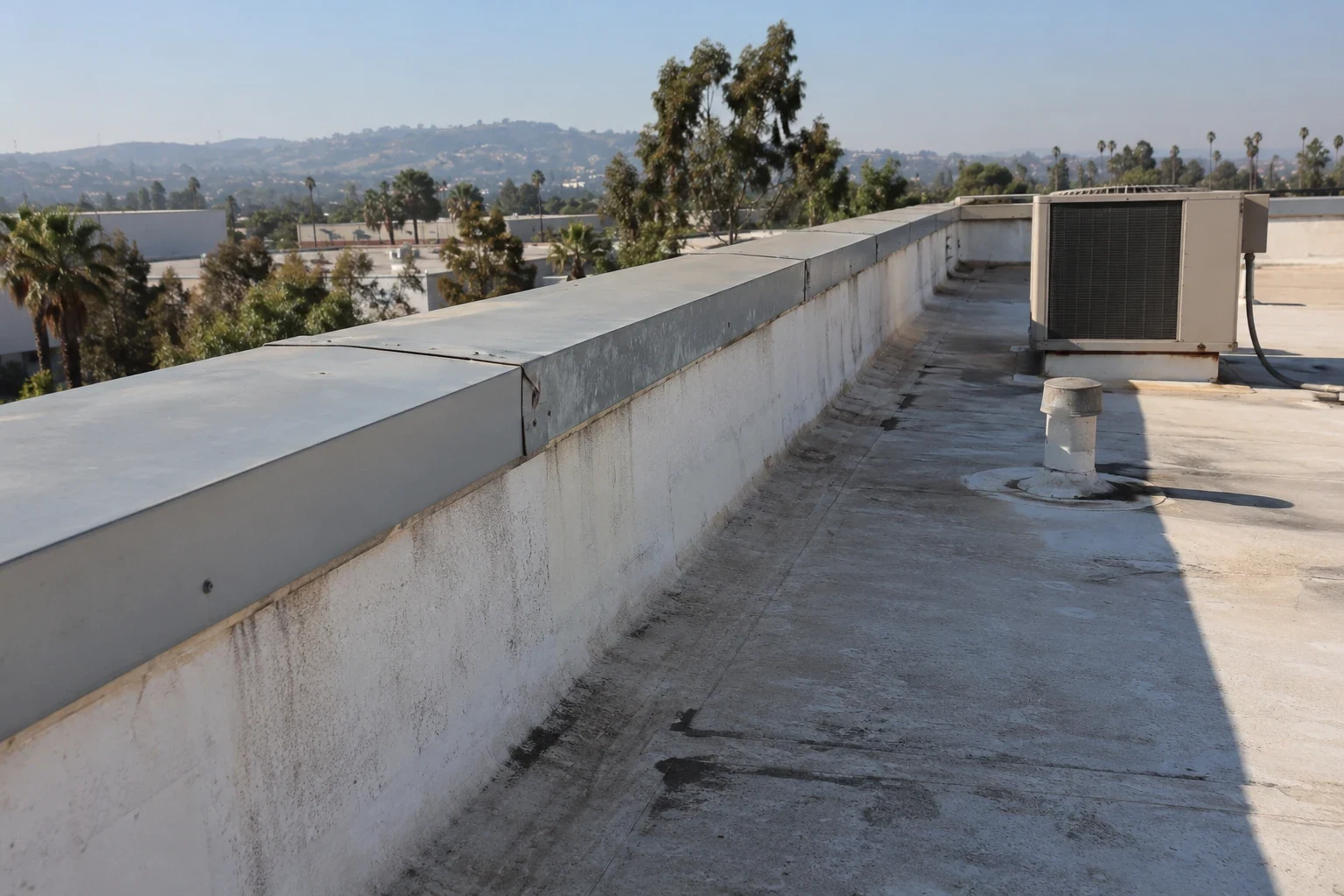
A scupper runs through the roof edge or parapet wall, so we inspect the scupper box, the roof flashing and the wall around it together. We identify the existing materials and the permanent repair we propose. Old coatings or sealants we cannot identify get checked before we plan around them.
An edge metal and gutter repair tied to a scupper has its own scope. Sometimes the gutter or conductor head has to be fixed before the scupper flashing can be finished, or the other way around. We lay out that order and who is responsible, so the manager understands the sequence before approving quantities.
If new insulation or blocking changes how the roof meets the scupper, the detail may need review; a different product does not guarantee a fit. Backing repairs and other trades' work are listed beside the roofing price. The crew starts the permanent repair with materials on hand and the surrounding work settled.
Line up other trades before finishing the roofing
Our roof work does not tell us what is happening inside the drain line. If the problem looks like a broken or blocked pipe, we say a plumber needs to check it and keep that separate from what we saw on the roof. If the roof repair has to wait for that work, it goes on the remaining-work list.
The building's rules set contacts, material routes and work hours. If the job has to be split up, we price the extra setup and protect unfinished outlets in between. Finished drains are reported separately from drains waiting on another trade.
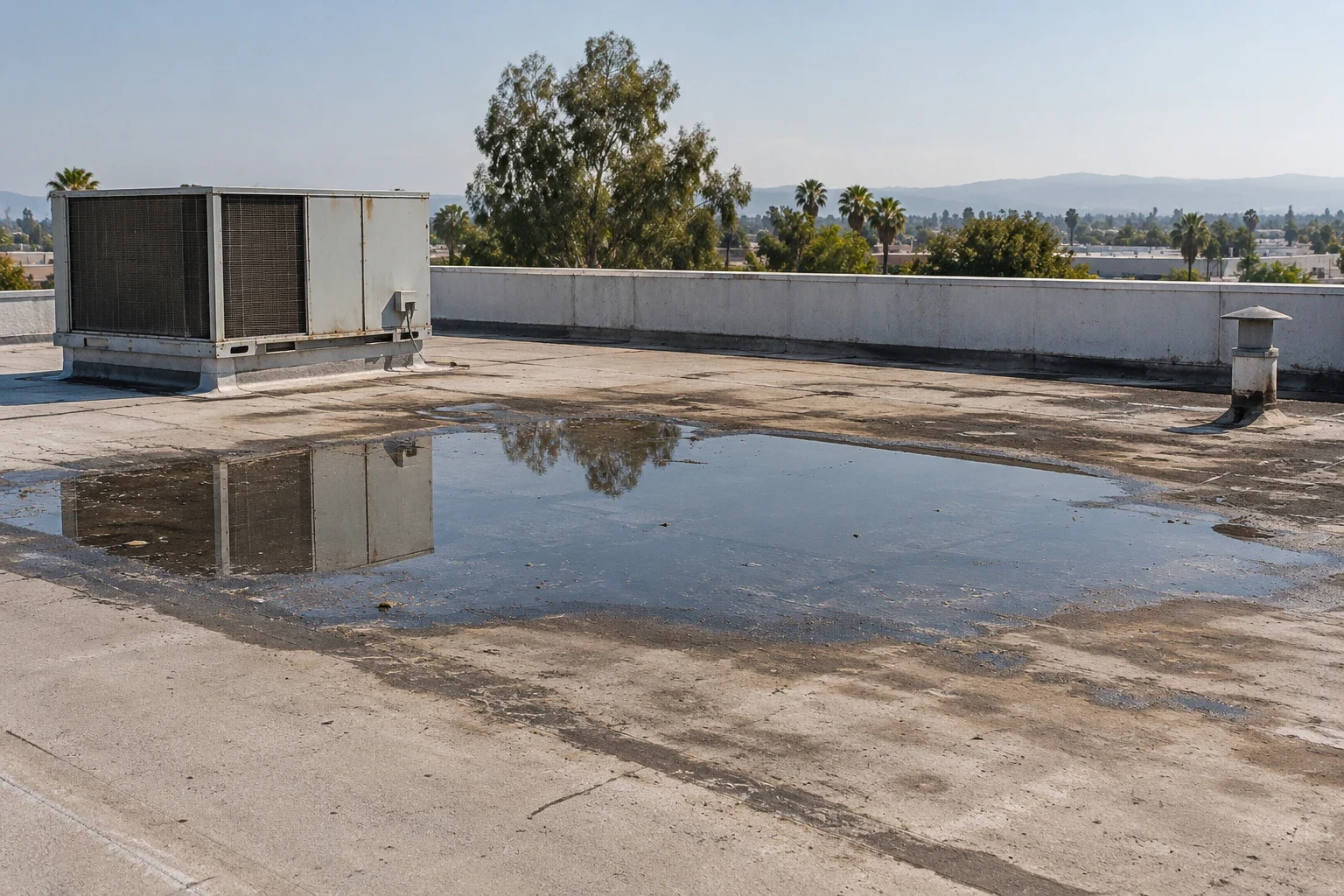
A ponding water repair is a separate question. A new drain part does not fix a roof that slopes the wrong way. The repair is based on what we find and the product requirements, so the manager can bring in the right reviewer before choosing a permanent fix, and our crew has a clear scope for the work it can finish at each outlet.
Keep outlet repairs on record by location
A scupper repair also needs the wall opening and exterior discharge checked with the roof-side flashing. Look for separated metal, open corners, and staining below the outlet. If the adjoining wall or conductor is outside the roofing scope, identify that boundary so water is not directed into an unresolved connection. A closeout should show the finished membrane termination and the path water takes away from it on the roof serving the repaired area.
For buildings near the I-5/I-605 interchange, we confirm the property and which drains and scuppers are included, and we follow that building's work rules rather than another roof's. Anything we could not inspect and work still pending is listed by outlet.
A roof condition report after the work lists the materials installed and backing replaced at each drain and scupper, with photos and test results beside each one. Approved changes and their quantities are recorded. The property manager can see what roofing was done and what other trades still owe, so the next contractor knows the condition of each outlet before working on it.
Commercial Roofing Questions
What should a drain or scupper repair scope include?
Each outlet's location, the existing roof around it, any wet insulation or damaged backing, and how the new membrane or flashing will seal to the drain or scupper. Plumbing or wall issues should be listed separately, not hidden in a parts price.
How does wet insulation around a drain affect the price?
Confirmed wet or crushed insulation is removed and replaced, and that is priced on its own line. Areas not yet tested are noted. If we find more once the drain area is open, we explain the added work and get approval first.
When does a drain or scupper need another contractor?
When the problem is inside the drain pipe, in a downspout or conductor head, or in the wall around a scupper. We identify who should handle it and leave the roof seal unfinished until that work lets us close it properly.
What records do I get after outlet repairs?
For each drain and scupper: what was repaired, materials installed, backing replaced, photos, test results and approved changes, plus any work still pending from other trades.
Get your drains and scuppers sealed properly
Send us the address, which outlets are giving trouble and any roof records. We will inspect each drain and scupper and explain the repairs, backing work and any other trades needed for a permanent seal.