Flashing Failure Repair in Downey, CA
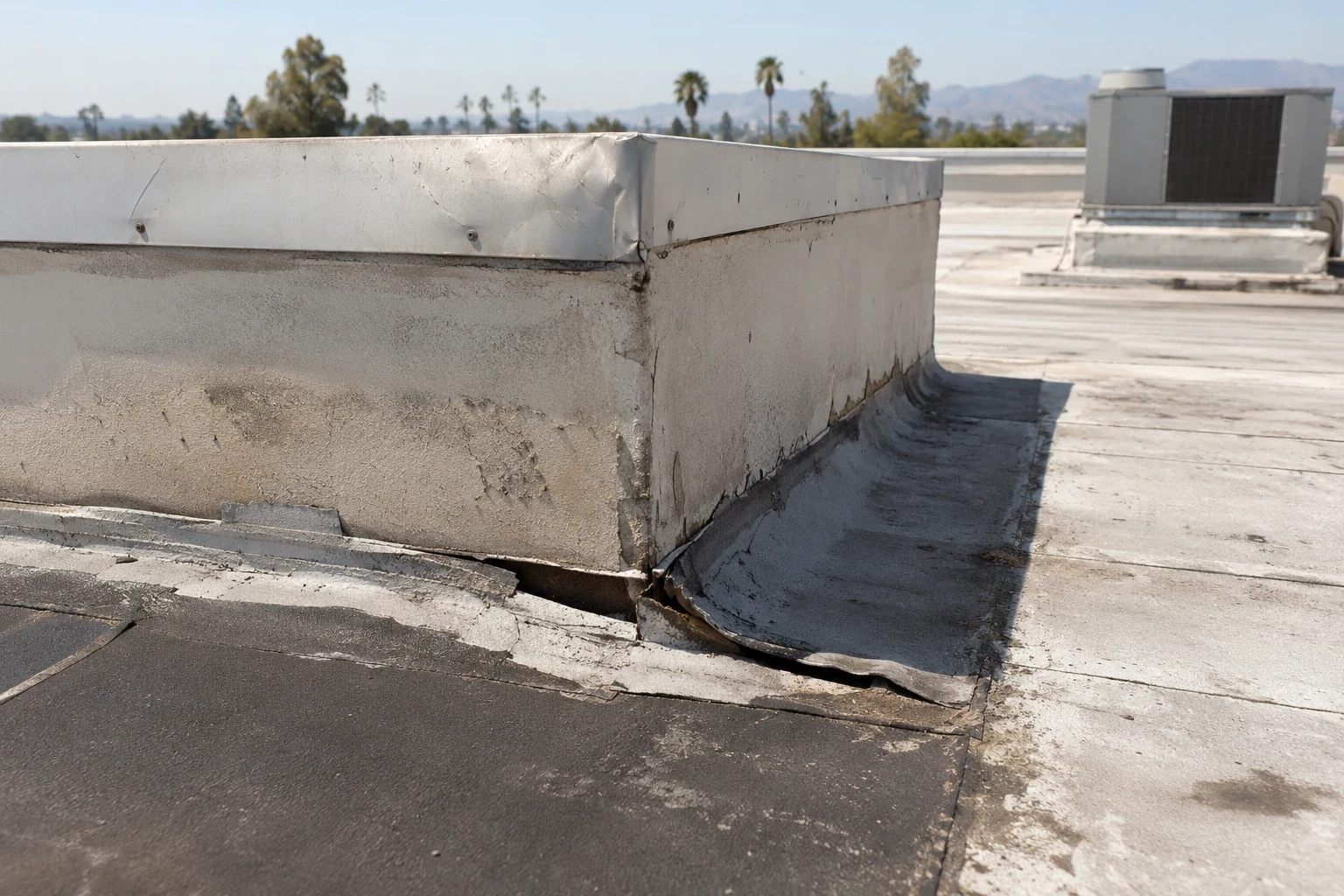
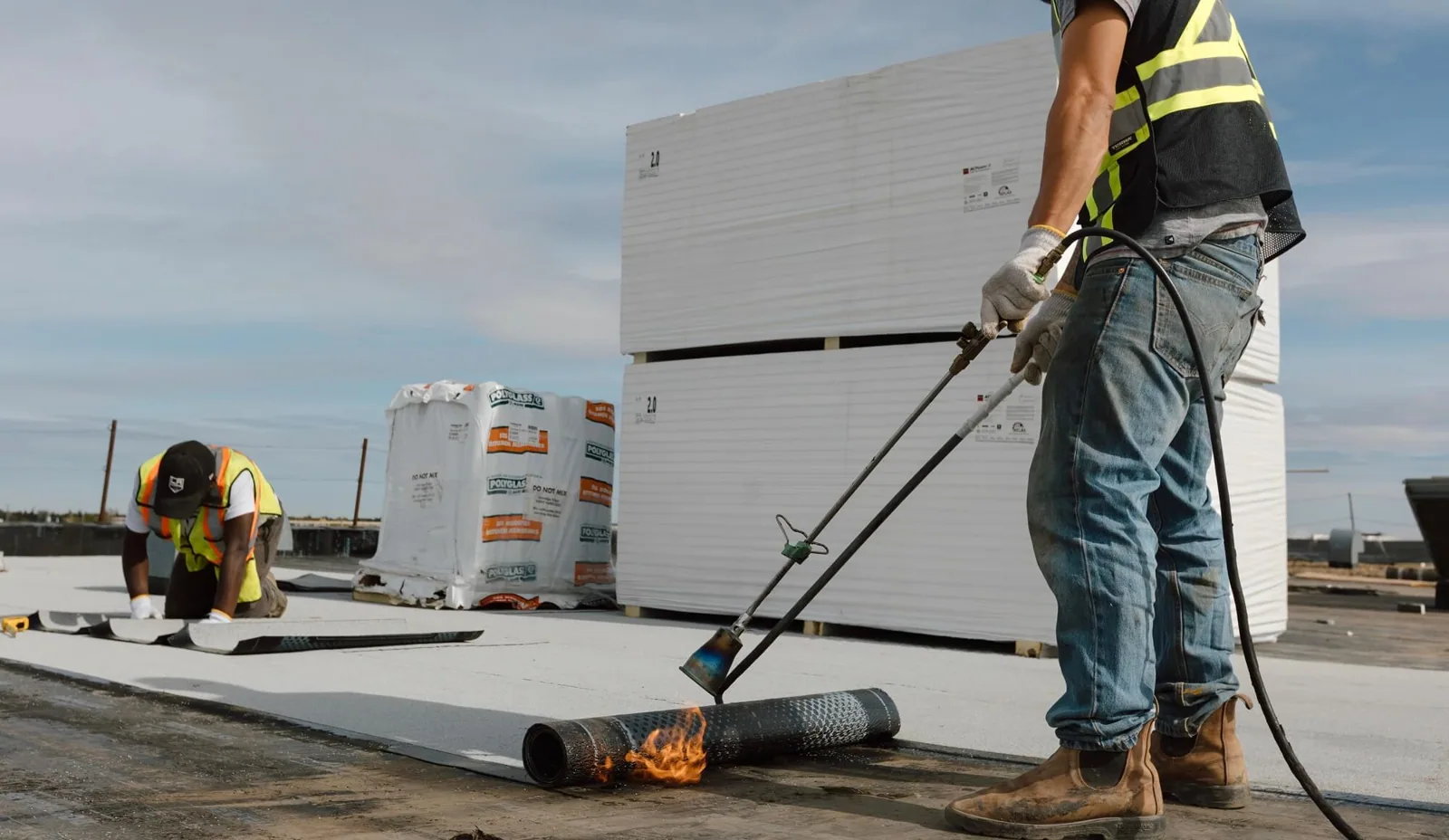
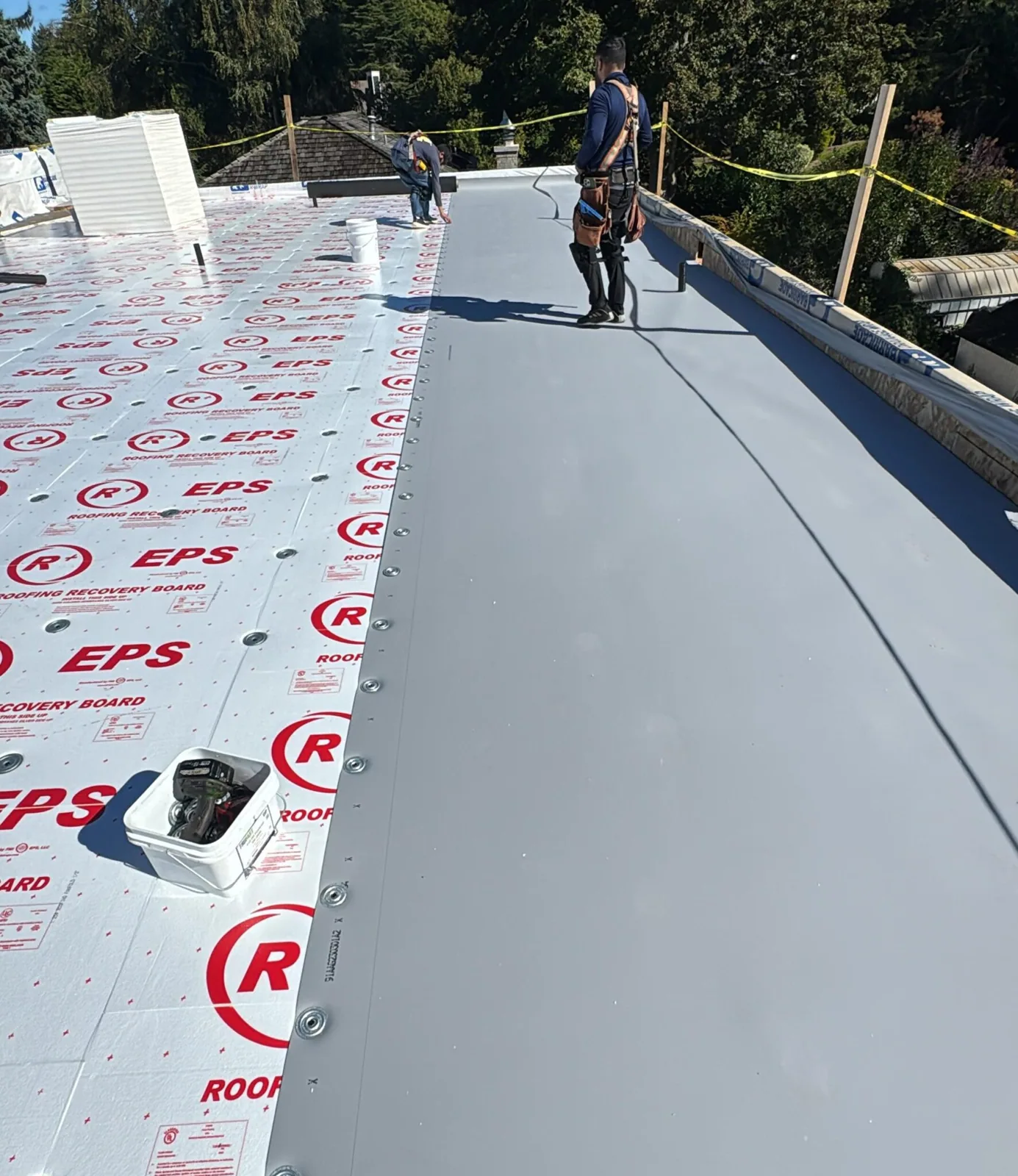
Flashing failure repair in Downey, CA: we find where water is getting past wall, curb and penetration flashing and rebuild the detail properly instead of adding more sealant.
Another bead of caulk along a leaking wall usually buys a few months, then the same leak comes back. On a Downey office building, the fix is to rebuild the flashing at the wall, curb or penetration so it sheds water the way it was designed to. We inspect the failed detail and the roof around it, explain what has to come off and what goes back, and price a local repair alongside a larger fix if the damage has spread. A stain below the wall tells you water is getting in. It does not always tell you where.
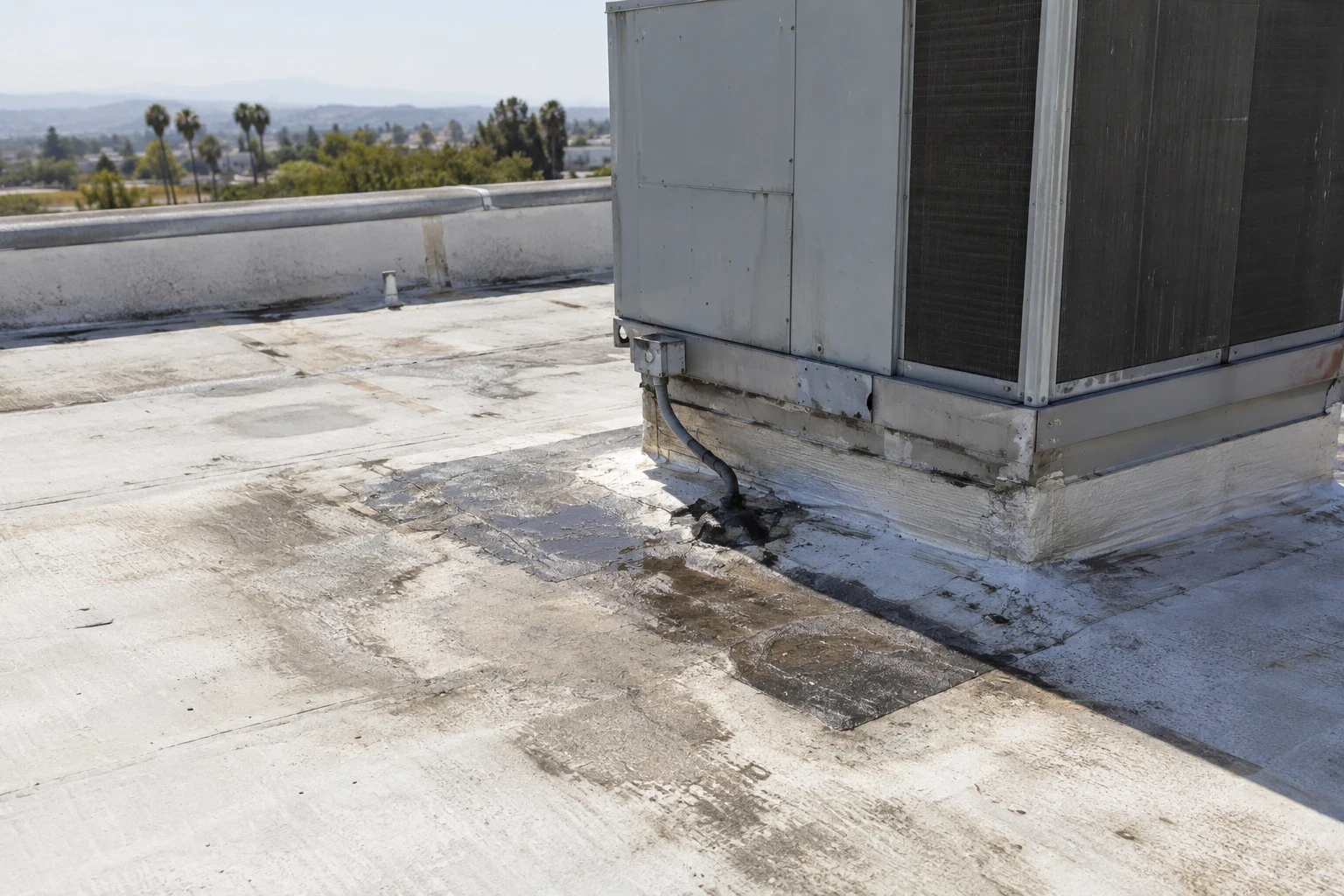
Failed flashing often appears where a roof meets a wall, curb, skylight or pipe. We inspect the membrane transition, corners, termination and the material behind it, then show what must be removed before a permanent flashing is installed. For an office building roof with a wall or curb leak, the repair estimate should include compatible flashing, surface preparation and a finish that sheds water away from the opening. If a rooftop unit or other equipment blocks access, we sort that out with the right trade before roofing begins. Whether the building sits along Imperial Highway or anywhere else in Downey, the repair starts with the actual wall, curb or pipe that is leaking.
Find where the water is getting in
Water that shows up inside near a wall can come from several places: a failed base flashing, an open corner, a cracked wall cap, a loose counterflashing or the wall itself, such as cracked stucco or a bad window above the roof. We check the flashing, the termination at the top and the wall above it to find the actual source. If the wall is the problem, that is a job for a wall or masonry contractor, and we will say so.
Commercial roof leak repair at a flashing should end with a clear answer: what is leaking and why. Sometimes we need to open a small section to see how the flashing was built and whether the material behind it is wet or rotted. We protect that opening and close it the same day. If a rooftop unit has to be moved to reach the flashing, we line up the HVAC contractor first. One bad corner does not mean every flashing on the roof has failed, so we report each location on its own.
Fix what the flashing attaches to
New flashing is only as good as the surface it is fastened to. If the plywood or wall board behind a parapet flashing is soft, or the old membrane is brittle, new flashing over it will fail. We check the backing, remove what is no longer sound, and install the new flashing to the manufacturer's requirements, with proper height, termination and fastening. A price per linear foot that says nothing about the backing is not a full repair price.
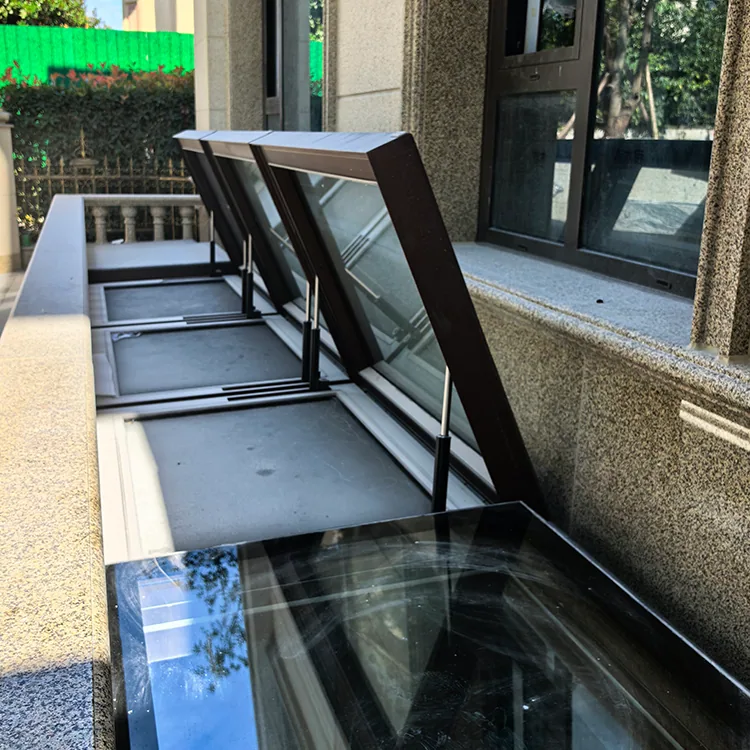
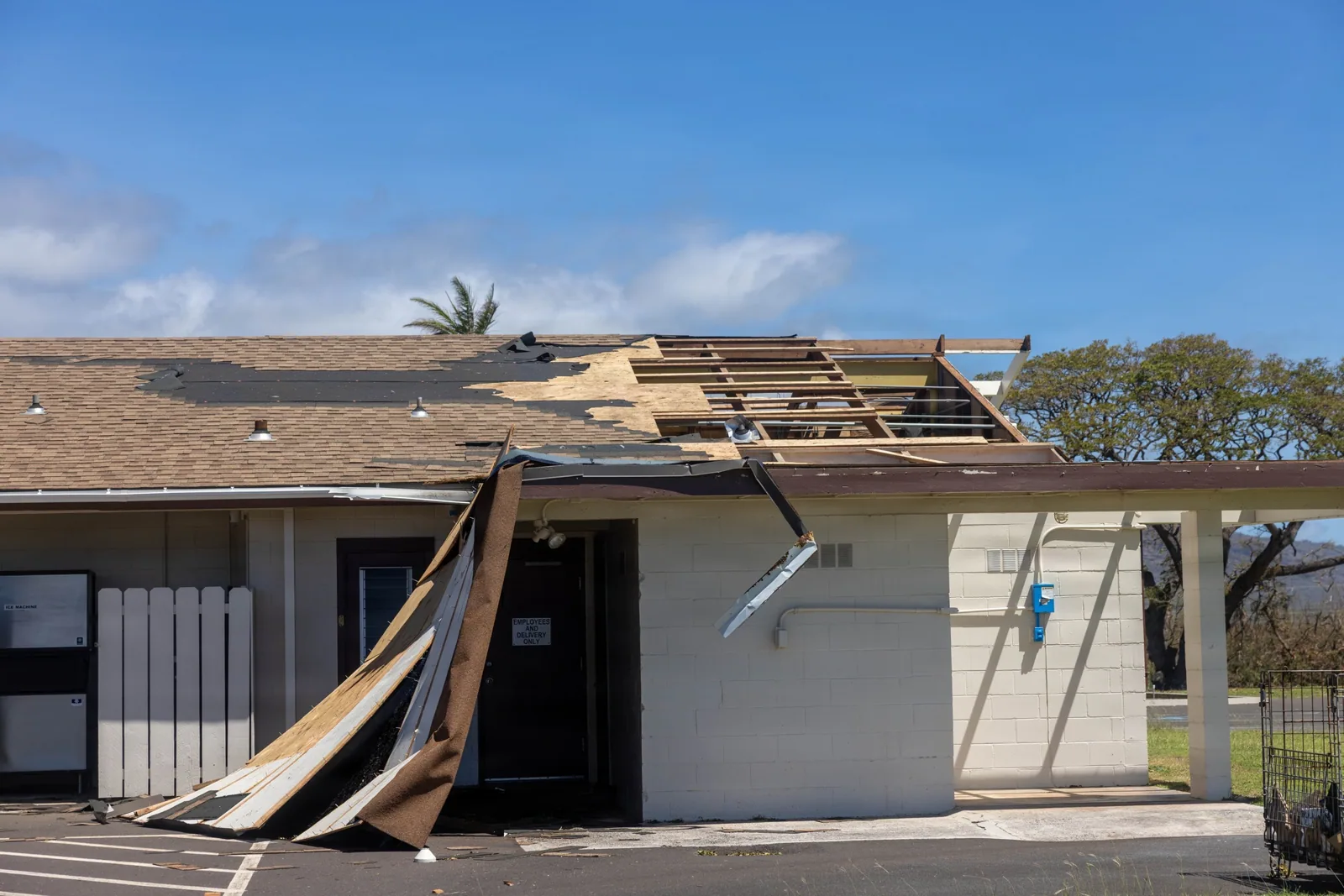
Skylight and penetration flashing is a different detail from wall flashing, with its own materials and steps. Edge metal that has been loosened by wind needs a wind damage roof repair and its own check of the wood nailer underneath. When several of these repairs happen on one roof, they can share a crew and setup, but each one is priced on its own line so nothing gets dropped.
Check the roof next to the flashing
A flashing that has leaked for a while usually wets the insulation next to it. We test along the wall or curb to see how far the moisture has spread and replace the wet material before new flashing goes in. Where we have not tested, we do not assume the insulation is dry or wet; we say it has not been checked.
A commercial roof repair around the flashing should cover the wet insulation, the membrane tie-in and the new flashing as one job. If we open the roof and find more damage than expected, we stop, show the owner, price the extra work and keep the area covered until it is approved. A seam failure right next to the flashing gets fixed too, since a new flashing tied into an open seam will still leak.
Line up other trades before closing the detail
Some flashing repairs cannot be finished by the roofer alone. A cracked stucco wall may need patching before new counterflashing goes on, or an HVAC unit may need to be lifted so the curb flashing can be replaced. We identify those steps up front, schedule them in order and keep the roof temporarily sealed while we wait. Permission to inspect the roof does not cover moving equipment, so we confirm that with the building contact first.
For a roof in Bellflower, we check the building's work hours, access and any tenant restrictions before scheduling. Doing the work in short phases keeps less of the roof open at once but adds setup time. Doing it in one visit costs less but needs everything ready. We price both and explain the trade-off, without cutting any part of the repair to make one option look cheaper.
Document the repair for the next leak
When the repair is done, the owner should get photos of the backing and the new flashing before it was covered, a note of what materials were used, and the exact locations repaired. If a wall contractor still has work to do, that stays on the list with their name on it. New flashing does not fix a wall that is still cracked.
Those records belong with the building's roof condition reports. If a stain comes back later in the same area, the next inspection can see exactly what was done and look for a new cause instead of assuming the old repair failed. Equipment changes or wall work done after the repair can create new leak points, so a returning stain always deserves a fresh look.
Ask the building manager to keep the repair records with the rest of the roof file. Anyone who works on the roof later should be able to find the repaired flashing and see what was done without re-opening it.
Commercial Roofing Questions
Can sealant alone provide the permanent wall-junction repair?
No. Sealant can stop a small leak for a while, but it does not fix a flashing that has pulled away, a wet backing or a corner that was never sealed properly. A permanent repair rebuilds the flashing on sound backing with the right height and termination. Caulk is maintenance, not a fix.
When does the wall need another participant before roofing finishes?
When the leak comes from the wall itself, such as cracked stucco, failed masonry or a leaking window above the roof, a wall contractor needs to fix that before or alongside the new flashing. We point out those problems during the inspection so they can be scheduled in the right order.
How should adjoining moisture change the removal allowance?
If the insulation next to the flashing is wet, it should be removed and replaced before the new flashing goes on. We test along the detail to see how far the moisture goes and price the repair to match. Areas we did not test are noted as untested rather than assumed dry.
What should the final record say about a remaining wall task?
It should show what roofing work was completed and list the wall repair as an open item, with who is responsible for it. The building manager should be able to see right away that the roof flashing is finished and the wall work is still outstanding.
Get the leaking flashing fixed properly
Send us the Downey building address, where the leak shows up and any photos you have. We will inspect the flashing, find the source and price a repair that rebuilds the detail instead of patching it again.