Seam Failure Repair in Downey, CA
Seam failure repair in Downey, CA: we find out why roof seams are opening, check for wet insulation, and reweld or rebond them with the right method for your membrane.
An open seam looks like a quick fix, and sometimes it is. But the repair only holds if the membrane on both sides of the seam is still clean, sound and compatible with the repair method. On a Downey commercial roof, we check the open seam and the roof around it before quoting. You get a price for a repair that will last, and a clear answer on whether this is one bad seam or a sign that many seams are starting to go.
An open seam needs a repair that matches the installed membrane and the condition of both sides of the joint. We check the separation, dirt and contamination, movement and nearby flashing, then prepare enough sound material for a permanent weld or bonded repair. An office building roof seam repair should name the roof system and how much seam was inspected. If several seams are opening, the report records their locations so the owner can decide whether the problem is local or part of a wider maintenance need. Seam problems show up across the I-105 corridor, from Downey through Paramount, Lynwood and Norwalk, and the fix always depends on the membrane type and its condition.
Identify the membrane before choosing the repair
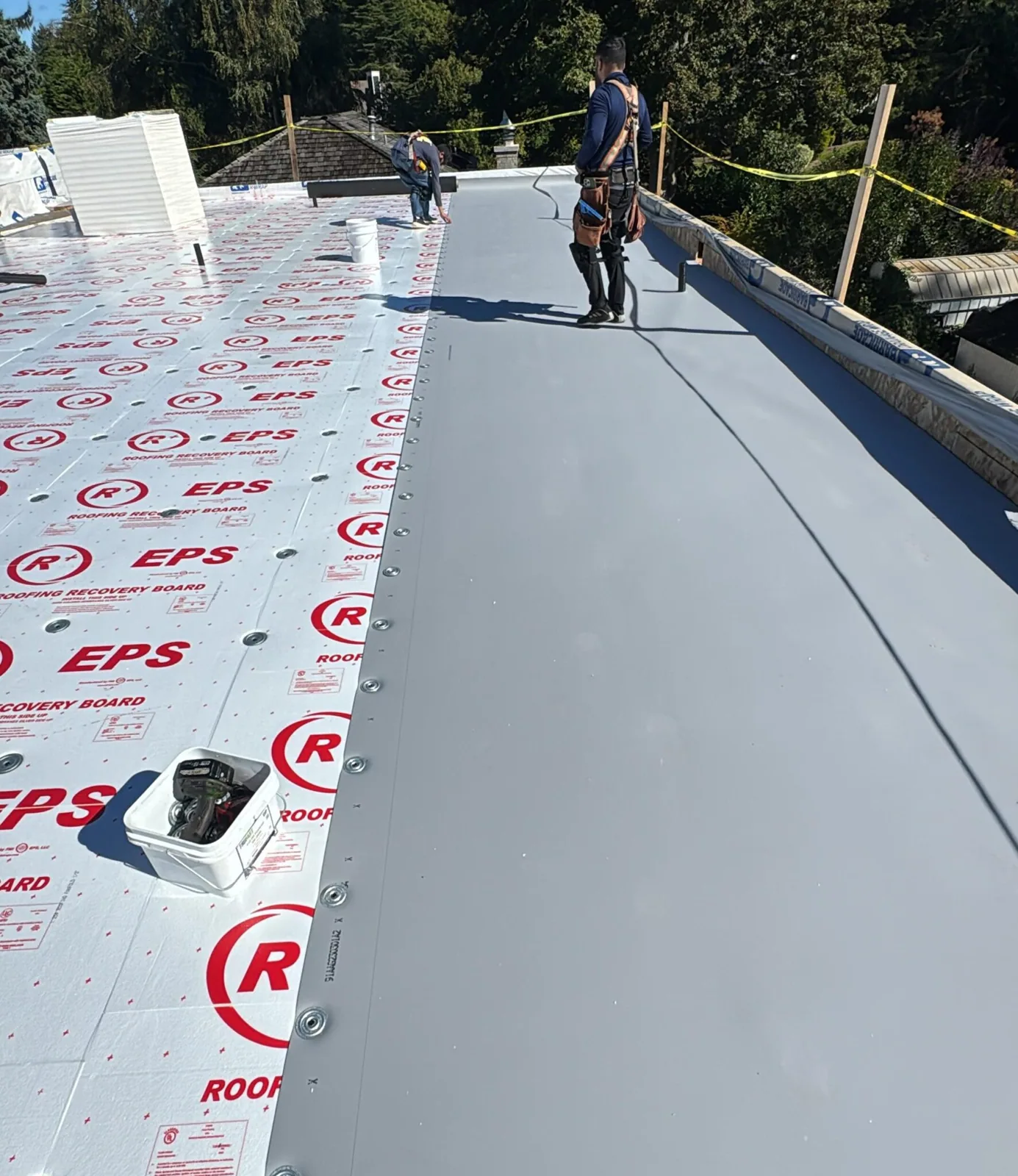
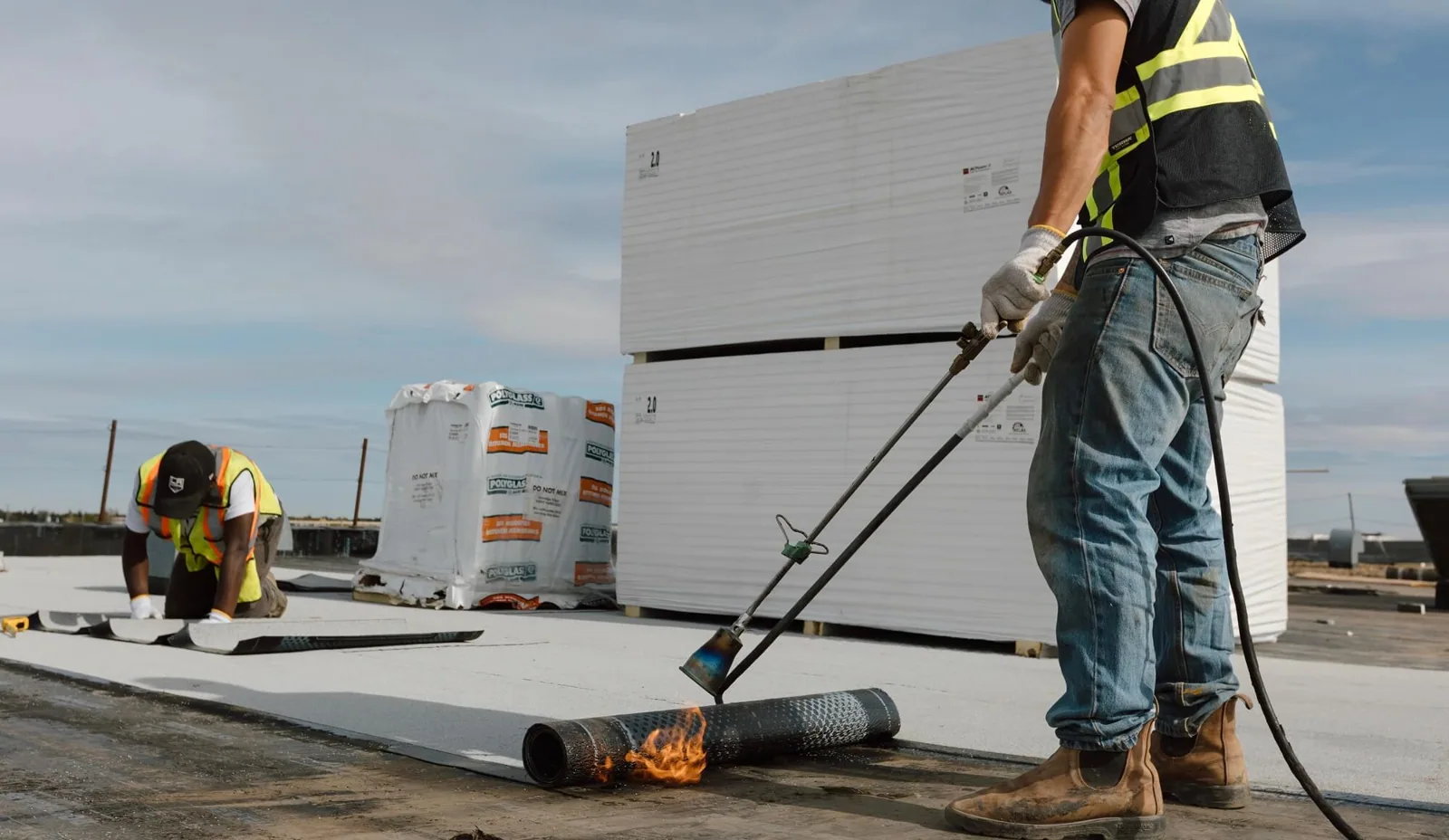
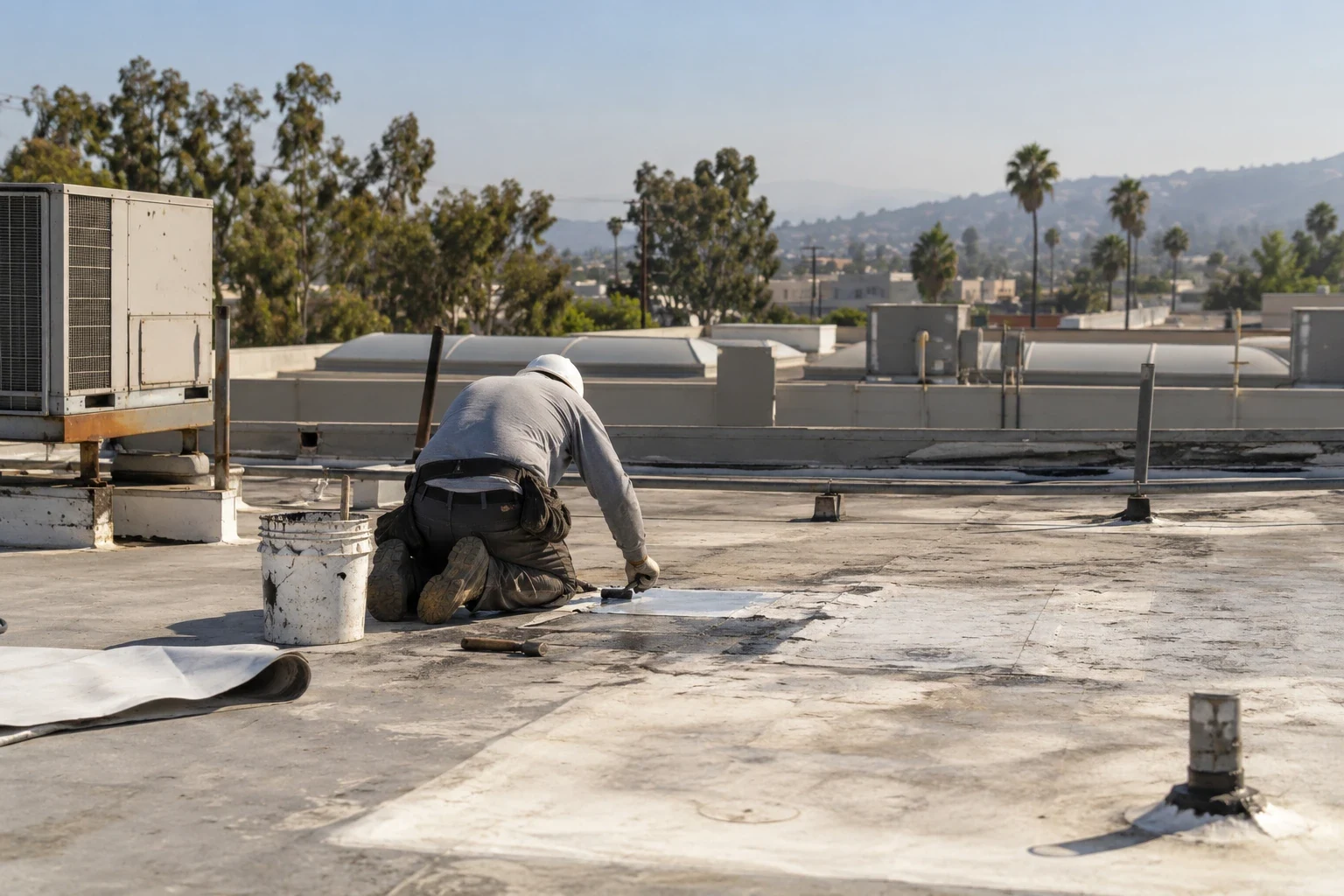
TPO and PVC seams are heat-welded. EPDM seams are taped or glued. Modified bitumen laps are torched or adhered. Each needs its own repair method, and using the wrong product on the wrong membrane will fail. We confirm the roof type from the roof itself and any installation records. Old coatings, sealant or previous patches over the seam have to be removed or accounted for, since new material will not bond to them.
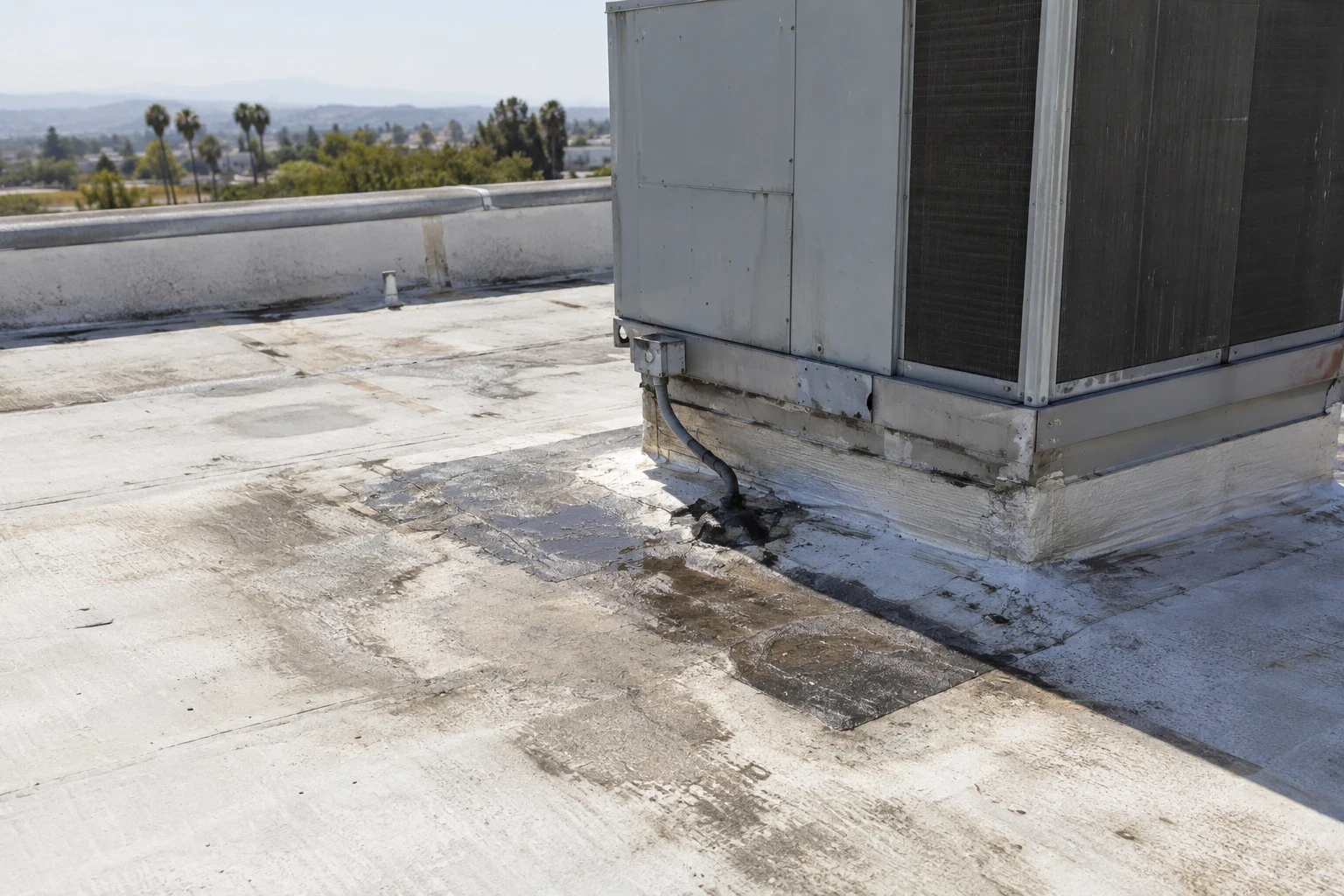
Commercial roof leak repair along a seam starts by confirming that the seam is actually where the water is getting in. A stain inside may line up with a seam, or it may come from a nearby curb, pipe or wall. We check those too. If we need to open the roof to see what is happening underneath, we protect the opening and close it the same day. The repair recommendation is based on what we find, not on the first defect we notice.
Repair onto sound membrane
A seam repair has to bond to clean, sound membrane on both sides. If the membrane next to the seam is brittle, shrunken or contaminated with oil or old sealant, the repair will not hold. We test the membrane, clean and prime it as the manufacturer requires, and cut back to good material where needed. A cover strip over a long seam creates new edges, and each of those has to be sealed properly too.
A commercial roof repair around a failed seam may mean replacing a strip of membrane rather than patching it. A puncture next to the seam gets its own repair. If several repairs are needed on the same roof, they can be done in one visit to save setup costs, but each is listed separately so you can see what the price covers. If a rooftop unit sits over the seam, we coordinate with the HVAC contractor first.
Check for water under the seam
An open seam lets water spread into the insulation, sometimes well beyond the opening. We check under failed seams where the answer would change the repair, and note where we tested. Areas we did not test are listed as untested, not assumed dry. If we cut the roof to check, the cut is patched the same day.
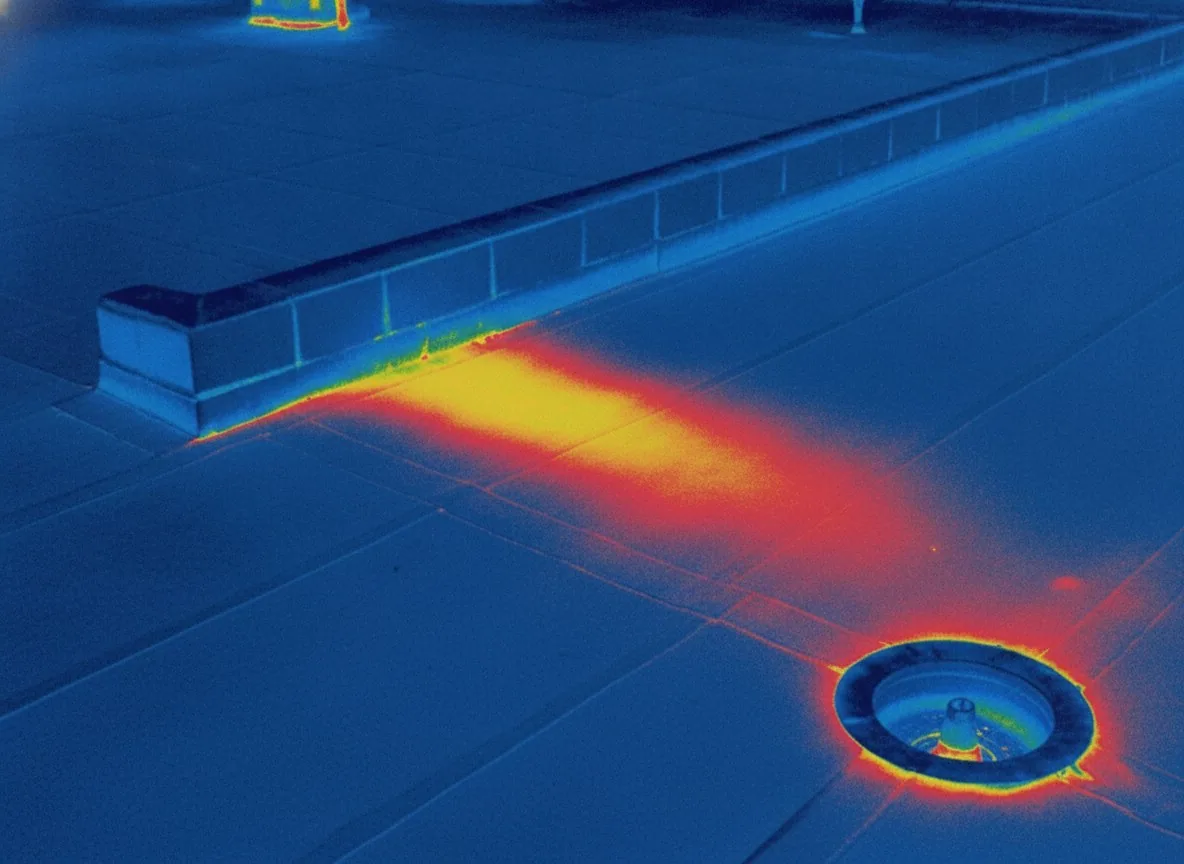
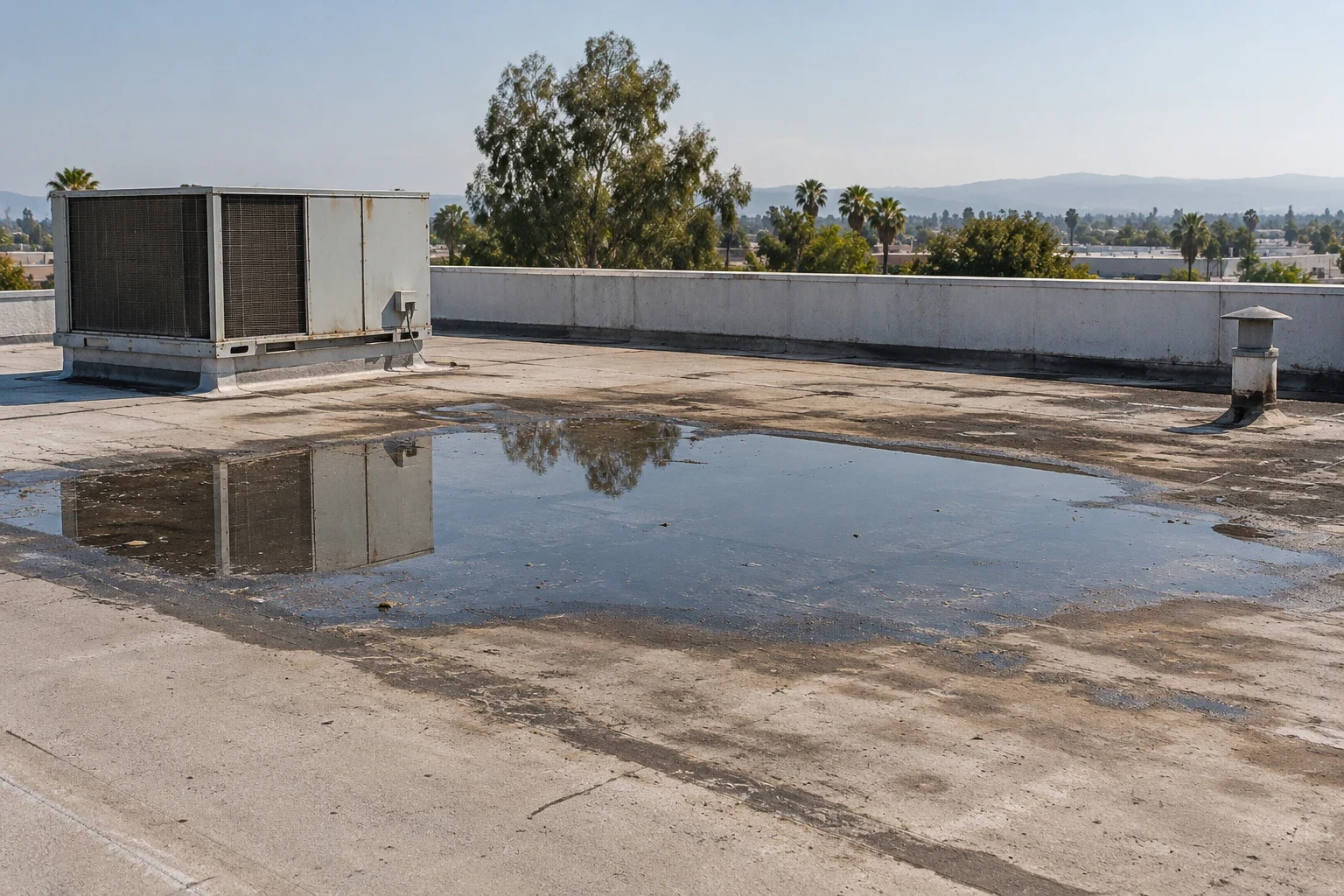
On larger roofs with several failed seams, an infrared moisture survey can show where water has spread. We confirm the suspect areas and replace wet insulation before the seam is repaired. If more damage turns up once work starts, we document it, price it and get approval before continuing. Seams in areas of ponding water fail faster, and repairing the seam will not stop the ponding. The drainage problem needs its own fix.
Schedule for good welding conditions
Heat welding and adhesives both have temperature and moisture limits. A seam welded on a damp morning or glued in cold weather may not bond properly. We plan the work for suitable conditions and keep the area temporarily sealed if there is a wait. The building contact confirms access and what we are approved to do, and any equipment moves are approved separately.
For a property in Norwalk, we confirm the building's access hours, staging area and any tenant restrictions before scheduling. Grouping several seam repairs into one visit saves setup costs, while separate visits may be needed if parts of the roof are only available at certain times. We price both with the same scope, so you are not choosing between a cheaper schedule and a complete repair.
Record what was repaired
When the repair is finished, the owner should get the location of each repaired seam, the method used, and photos of the prep work and finished repair. If wet insulation was replaced, the record says how much and where. Any open items for other trades are listed with who is responsible. A repaired seam does not mean every other seam on the roof was checked.
Keep those records with the building's roof condition reports. If more seams open later, the next inspection can compare them with past repairs and decide whether this is normal wear on a few seams or a sign the membrane is reaching the end of its life. A similar-looking split elsewhere may have a different cause, so it gets checked rather than assumed.
Keep the membrane manufacturer's installation information and warranty with the roof file. Some warranties require seam repairs to be made by an approved contractor with specific materials. A temporary tape or sealant fix should be labeled as temporary, so nobody mistakes it for a permanent repair.
Commercial Roofing Questions
Can the repair method be selected from the seam’s appearance?
No. Different membranes need different repair methods, and some look alike from the surface. We confirm the roof type from the material itself and any installation records before choosing the repair. Using the wrong product on a seam is a common reason repairs fail.
What can enlarge the quantity beyond the visible separation?
Wet insulation under the seam, brittle or contaminated membrane next to it, or other weak seams nearby can all make the repair bigger. We check those before giving a final price, and we show you why the repair area is larger than the visible split.
Should moisture indications automatically become a removal measurement?
No. An infrared scan shows likely wet areas, but each one should be confirmed with a core or moisture reading before insulation is removed. That keeps the repair to what is actually wet and avoids paying to replace dry material.
What should remain after the seam repair is recorded complete?
The record should show each repaired seam, the method used, photos and any insulation replaced. It should also list open items for other trades. It should be clear that the repair covered those seams, not that the whole roof was inspected.
Get open seams repaired the right way
Send us the Downey building address, where the seam is opening and any installation records you have. We will inspect the seam, check for water underneath and price a repair that matches your membrane.