Norwalk Commercial Roofing from Downey, CA
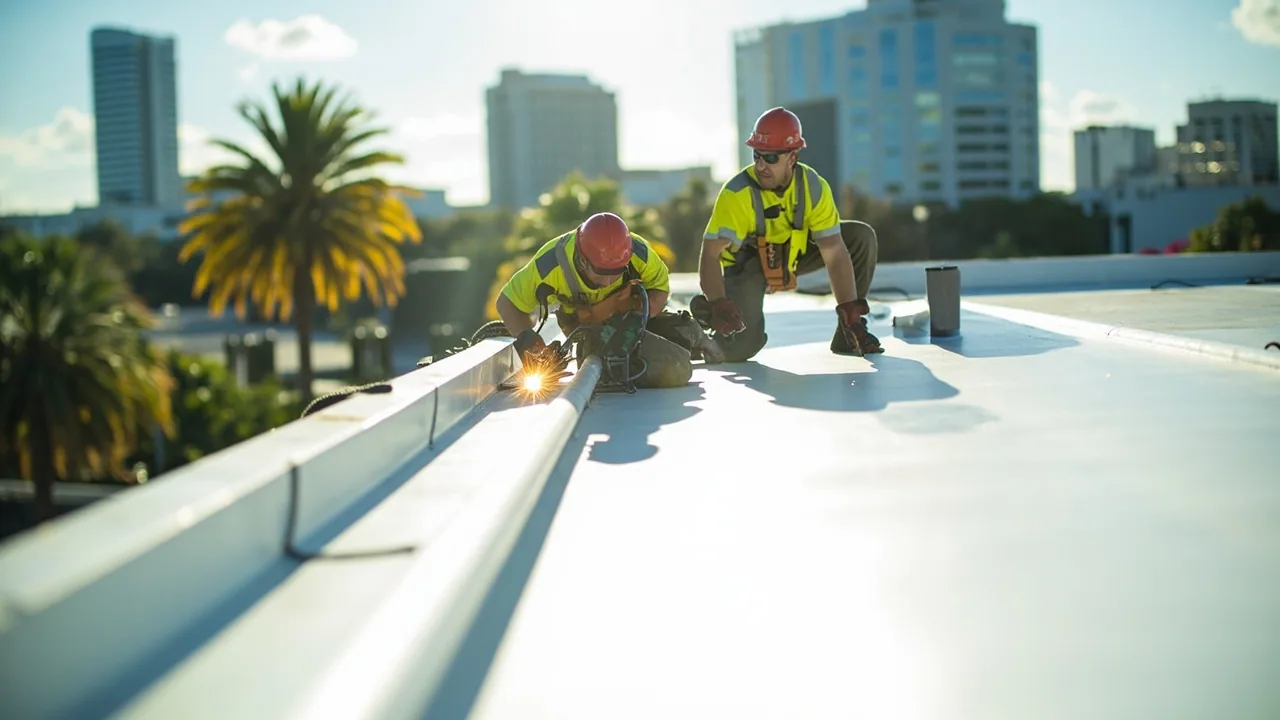
Roof-to-wall flashing repair in Norwalk from our Downey crew. We check the wall flashing, the backing and the counterflashing above, then price the whole repair.
Where a flat roof meets a wall in Norwalk, the membrane turns up the wall and is sealed at the top, usually under a metal counterflashing, a reglet or a termination bar. A leak there can come from the flashing itself, the seal at the top, or the wall above letting water get behind it. New membrane on the wall is only half the repair. The top edge has to be sealed properly, and the wall behind it has to be solid enough to hold it. We check all of that before pricing, so you are not paying for a patch that leaves the real problem in place.
A wall leak can travel before it shows up indoors. We check the counterflashing, termination, coping and membrane below the stain and trace water along the roof edge before choosing a repair. Open joints are photographed and the repair area is marked on the plan. Commercial flashing inspections and repairs are also available in Cerritos.
Inspect the flashing and what is above it
We start at the base of the wall and work up: the membrane flashing for splits, loose laps and open corners; the top edge for a loose termination bar or failed sealant; and the counterflashing or coping above for gaps, rust or missing fasteners. We also look at the wall surface above, since cracked stucco or open masonry joints can let water in behind everything.
Our flashing repair estimate says how the top of the new flashing will be finished. If the counterflashing or wall needs work by another trade first, we say so. A new strip of membrane on the wall does not fix a leaking wall above it.
Check the wall backing before new flashing goes on
The flashing has to fasten to something solid. On many walls that is wood blocking, plywood or masonry. If water has been getting in, wood may be rotted and masonry may be crumbling at the top. When we remove the old flashing, we check the backing, replace rotted wood and point out masonry that needs repair before new flashing goes on.
Our roof repair estimate also covers the roof next to the wall. Insulation along a leaking wall is often wet. We confirm it with a core or by opening the area, replace what is wet and keep the dry insulation. Each opening is sealed at the end of the day. If we find more damage than expected, we photograph it and agree on the change with you before continuing.
New insulation or a new cover board can change the roof height at the wall. We check that the new flashing still runs high enough up the wall above the finished roof, and adjust the detail if it does not.
Plan access along the wall
We need clear room along the wall to remove old flashing, clean the surface and install new material. Equipment, conduit or signs mounted on the wall may need to be moved by whoever owns them. We tell the building manager what has to be cleared and schedule our work once it is.
For commercial wall flashing repairs in Norwalk, we confirm roof entry and material handling before removing the termination. The exposed edge is protected if the repair pauses overnight, and we agree on who moves any wall-mounted items and when our crew can return. We also serve commercial buildings in La Mirada. The wall termination is photographed before opening and after the permanent repair.
Finish the top of the flashing properly
The top of the flashing is where most wall repairs succeed or fail. The membrane has to be secured with a termination bar or tucked into a reglet, then covered by a counterflashing or coping that sheds water away from the edge. Sealant alone at the top edge is a maintenance item, not a permanent detail. Corners and changes in wall direction need their own reinforced pieces.
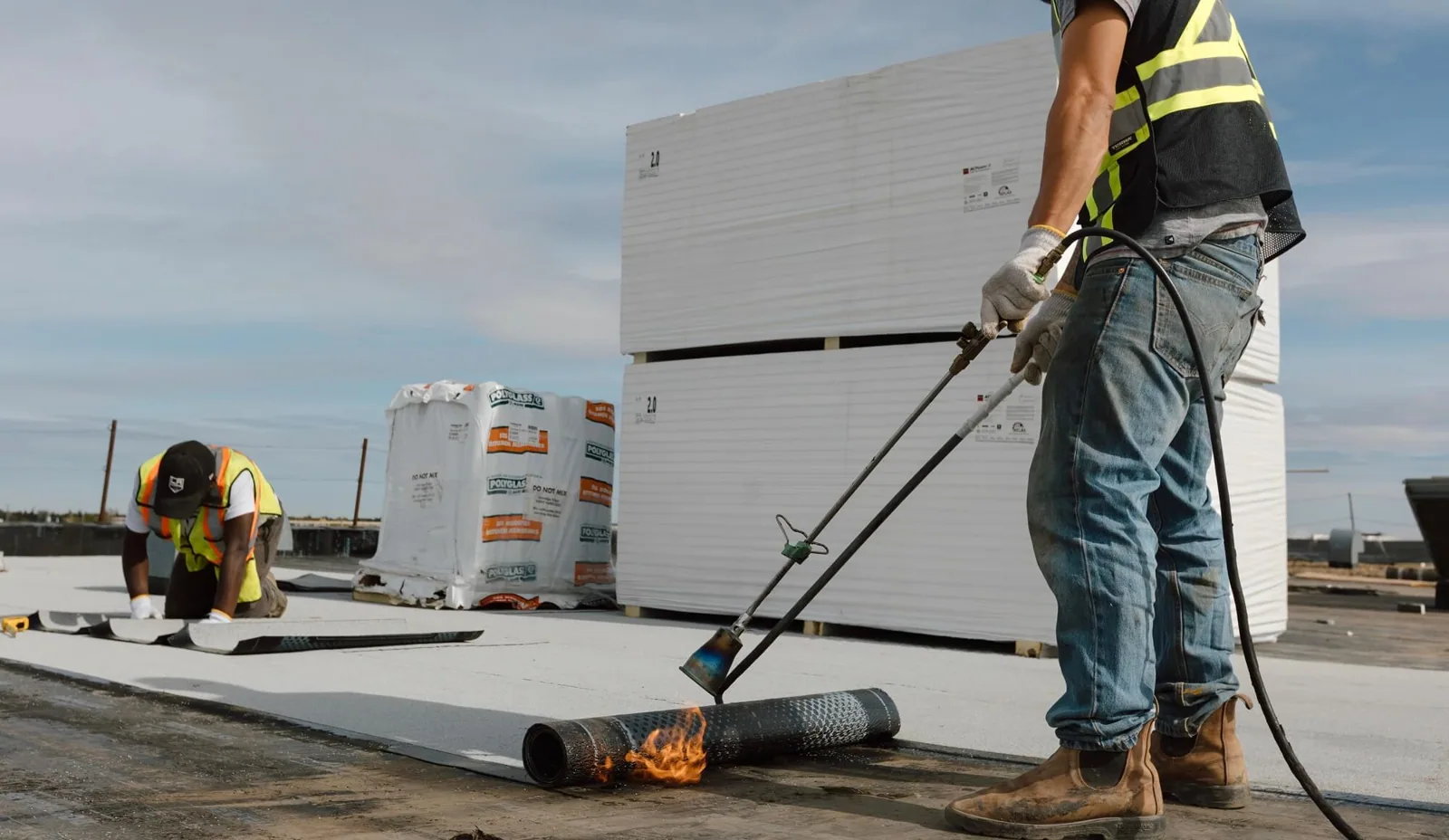
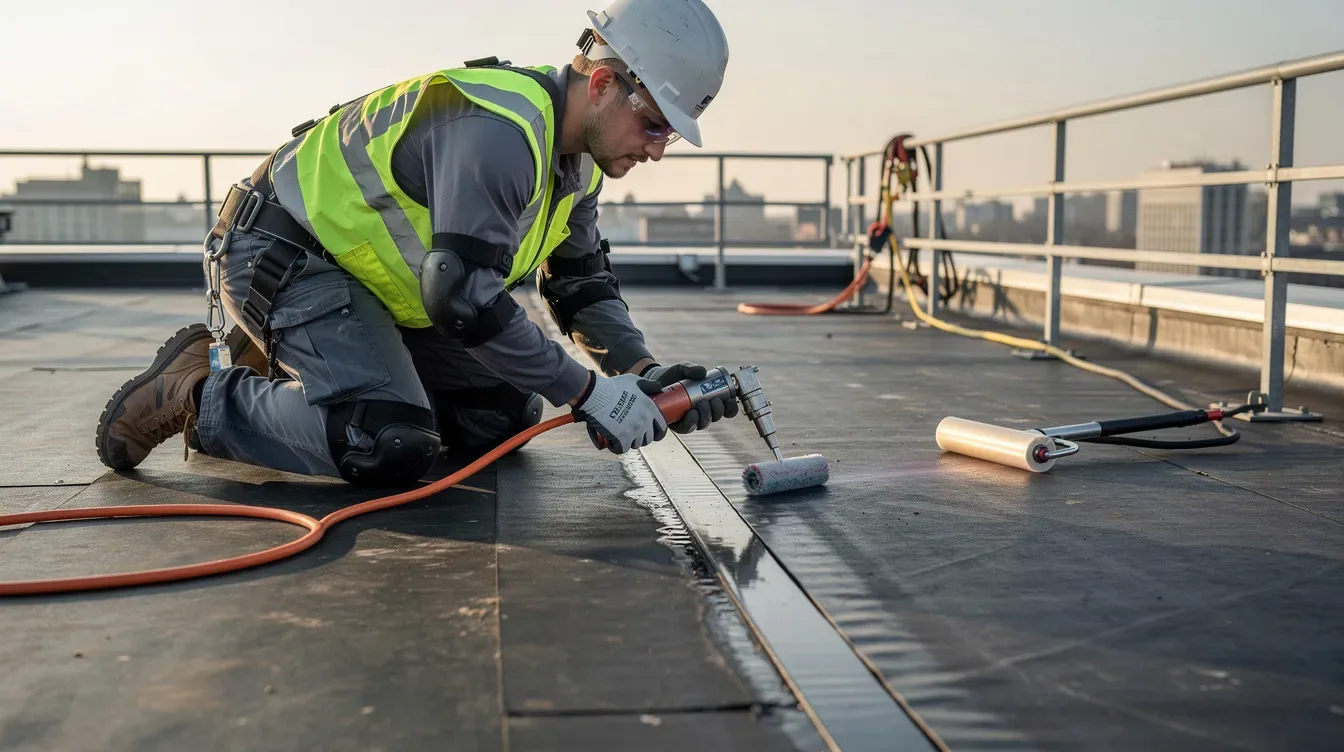
On a PVC roof, wall flashing is usually PVC membrane adhered to the wall and welded to the field membrane, often with PVC-coated metal at the top for a clean termination. We check that the existing PVC near the wall is still weldable and that there is room to work. The estimate shows the full wall detail, not just the membrane.
Photograph the wall work before it is covered
Before the new flashing and counterflashing go on, we photograph the backing repairs, the replaced insulation and the flashing as installed. Once the counterflashing is on, those layers are hidden, and the photos show what was done.
They go into a roof condition report with the wall section marked. Work left for another trade, such as stucco or masonry, stays on the list as open. Other walls on the building are noted as inspected or not, so a future leak elsewhere gets its own look.
We offer emergency leak response nights, holidays and weekends. A temporary seal at a wall stops the water for now. The report will say if backing or other wall repairs are still needed before the permanent flashing can be finished.
Commercial Roofing Questions
Does a wall flashing repair always involve more than the membrane?
Often. The top seal, the counterflashing and the wall above can all let water in. We check each one and include what actually needs work.
When should damaged wall backing be repaired?
Before new flashing goes on. Rotted wood or crumbling masonry will not hold the flashing, so it is replaced or repaired first.
Why check the counterflashing and not just the membrane?
Because water that gets in at the top of the wall runs down behind the membrane. New membrane will still leak if the top edge is not sealed and covered properly.
What needs to be arranged before the wall is opened?
Roof access, a place to stage material and room along the wall. Anything mounted on the wall may need to be moved by its owner first.
What should I keep after the repair?
Photos of the backing, insulation and new flashing before they were covered, plus a note of any wall repairs still open for another trade.
Get the wall flashing inspected
Leak where the roof meets a wall in Norwalk? We will inspect the flashing, the backing and the top seal and give you a clear estimate for a complete repair.