Cerritos Commercial Roofing from Downey, CA
Open roof seam repair in Cerritos from our Downey crew. We check the seam, the membrane around it and the insulation below, then price a lasting repair.
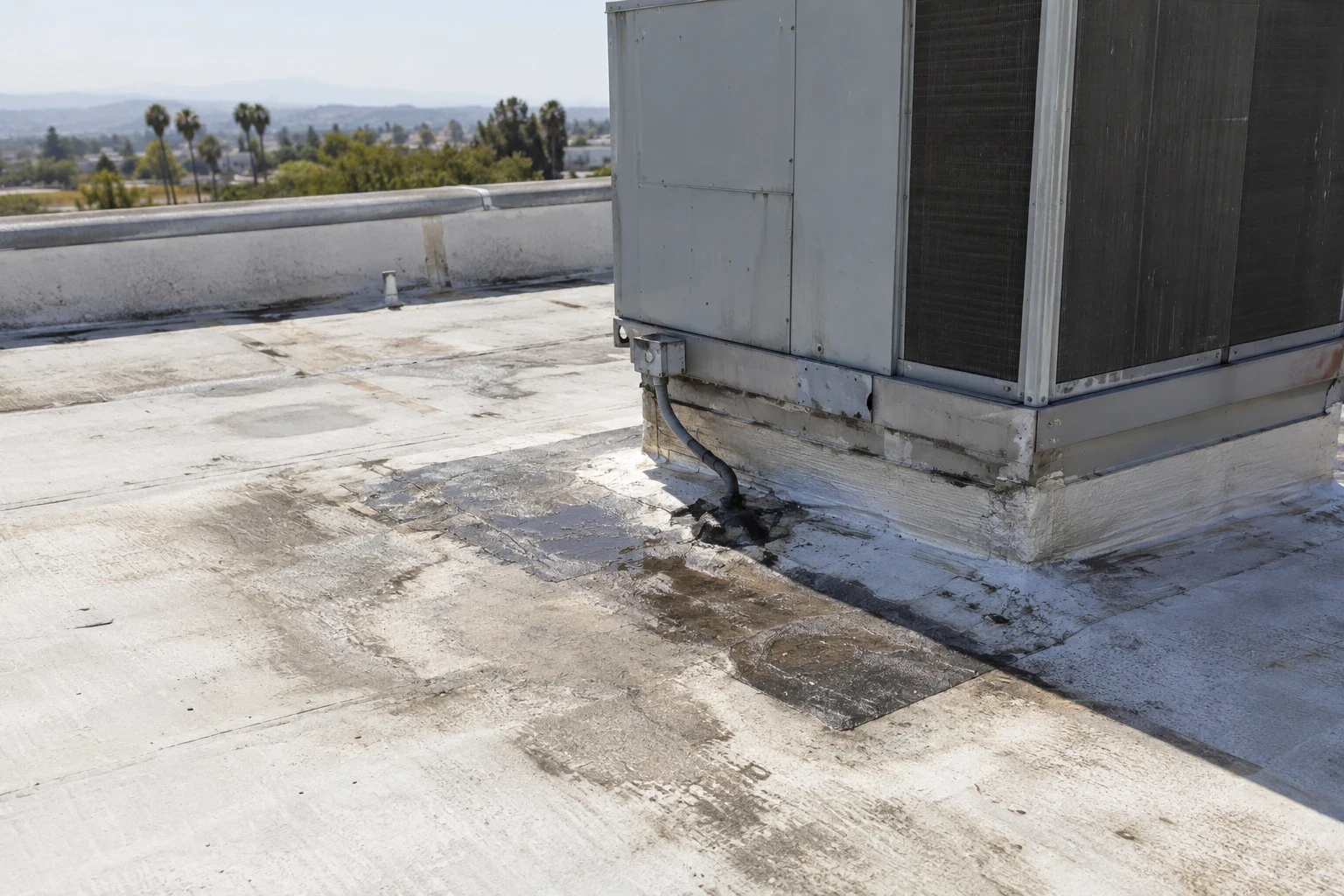
An open seam is one of the most common leak sources on single-ply and modified bitumen roofs in Cerritos. Where two sheets of membrane overlap, the bond can weaken over time from heat, movement or a poor original weld. Once the seam opens, water runs under the membrane every time it rains. Closing the visible gap is only part of the job. The membrane on both sides has to be clean and sound enough to take a new bond, and any wet material underneath needs to come out first.
A membrane leak often starts at a seam, penetration or drain. We trace the path from the interior leak to the roof details above it, then mark the repair limits. We check the adjoining sheets before cutting or welding and photograph the field and each transition that affects the price. Commercial membrane inspections and repairs are also available in Norwalk.
Inspect the open seam and the membrane next to it
We probe the seam along its length, because the loose section is often longer than the visible gap. We check the membrane next to the seam for chalking, cracking or old coatings that would stop a new bond from holding. If the membrane has been patched before, we look at what was used.
A proper roof repair at an open seam names how much will be cleaned, cut back or covered with a new strip, and what preparation the existing membrane needs. If a curb, drain or wall is close by, its flashing may need to be included. The estimate should show all of that instead of one line that says seam repair.
We also check the other seams in the same run. A roof where one weld has let go often has others that are close behind, especially on sheets that face the afternoon sun or sit near rooftop units that get walked around. We do not price those seams unless they are actually loose, but we will point them out so you can decide whether to deal with them now or watch them.
Check for wet insulation under the seam
If a seam has been open for a while, the insulation under it is likely wet. We look for soft spots and stains, and where it matters we take a core sample to check. Wet insulation has to be removed and replaced before new membrane goes on; sealing over it traps the moisture and the problem comes back.
Our leak repair work ties the interior leak to what we find on the roof. When we open the roof, we protect the area, photograph what is underneath and check the deck. If the deck has rust or rot, we show you before covering it. Any change in scope is agreed with you before we continue.
Sometimes the repair needs to be larger than expected because the membrane near the seam is too weathered to bond to. We show you the material that needs to come out and explain why, so the price change makes sense before we do the work, not after.
Make sure there is room to do the work
Some seams run under or next to rooftop equipment, pipes or conduit. If something is in the way, we cannot clean, weld or seal the seam properly. When equipment needs to be moved or supported, that has to be arranged with whoever services it, and we schedule our work around it.
Before a commercial membrane repair in Cerritos, we confirm roof entry, material handling and protection below. We trace the leak path and mark the section that will be opened. Drains are kept clear and replacement material is staged away from the water path. If the work spans several visits, each shift ends with a temporary closure. We also handle commercial roof repairs in Artesia. Seam testing and a final drain check come before temporary protection is removed.
Use the right repair method for the membrane
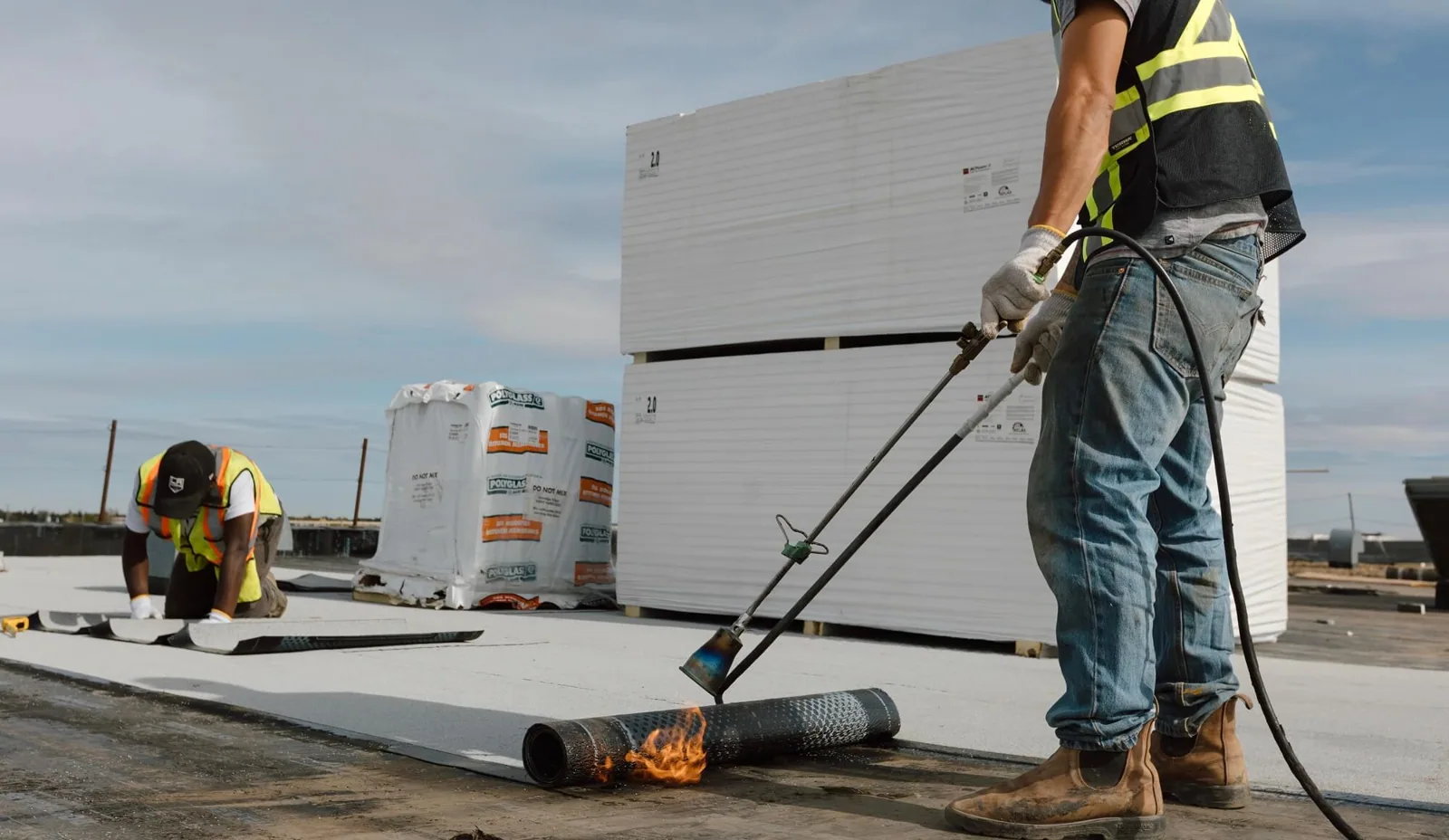
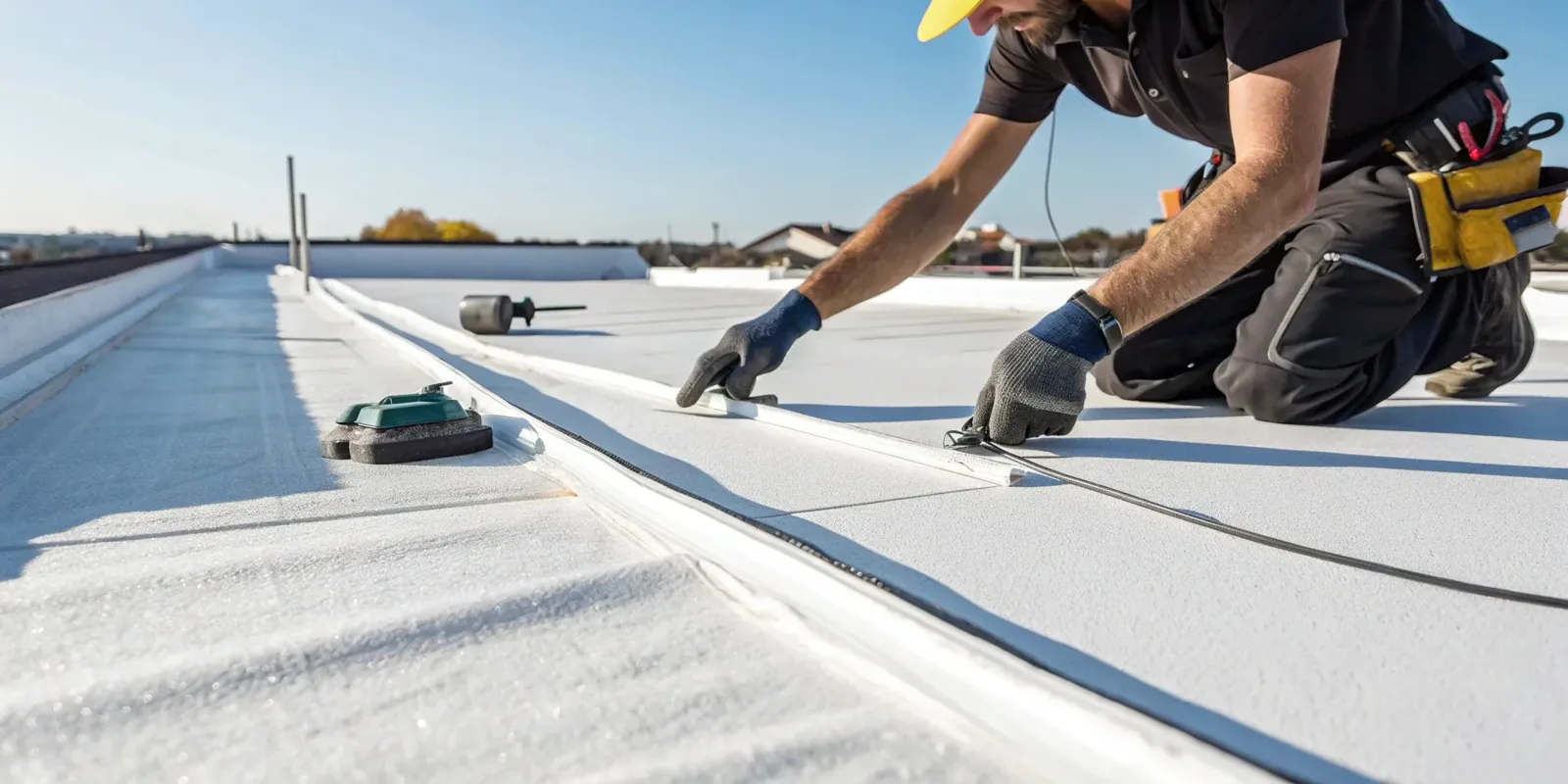
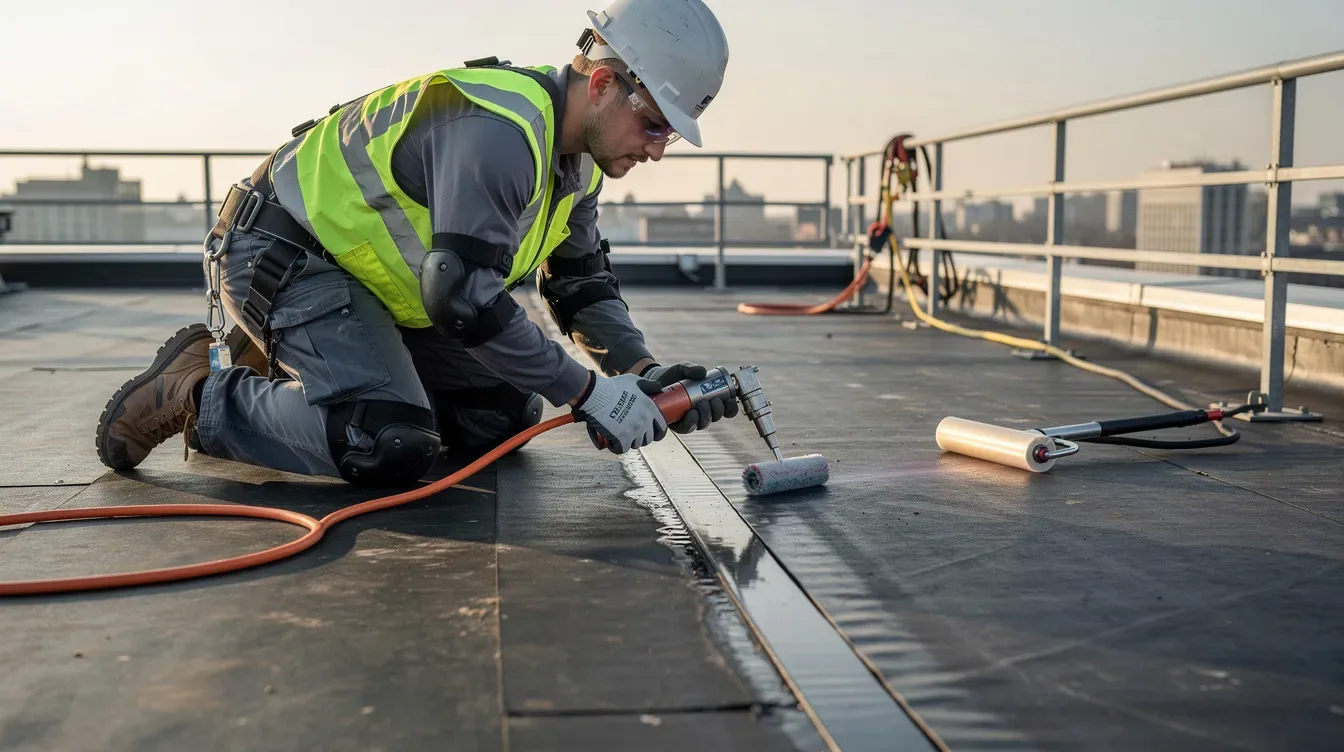
Each membrane type has its own repair method. TPO and PVC seams are hot-air welded; EPDM seams use primer and seam tape; modified bitumen is torched or adhered. Using the wrong cleaner or primer can keep the repair from bonding at all. We identify the membrane first and choose products made for it.
For a TPO roof, an older sheet may need to be cleaned with a specific weathered-membrane cleaner before it will take a weld, and we test-weld before committing. Corners and seam intersections get extra reinforcement. The estimate should spell out the method and the detail at each end of the repair.
Coating over an open seam is a common shortcut. It may look fine for a season, but the seam underneath is still open and water still finds it. We repair the seam first. If a coating makes sense afterward for the rest of the roof, that is a separate decision with its own price.
Keep a record for the next inspection
Before the repair is closed, we photograph the cleaned seam area and any insulation we replaced. After it is welded or sealed, we probe the new seam to check the bond. The record shows where the repair was made and what was done.
That record goes into a roof condition report with the seam located on a roof plan. If a new leak shows up later, the next inspection can start from what was repaired and what was not, rather than assuming the same seam failed again.
We offer emergency leak response nights, weekends and holidays. An emergency seal stops the water, and we come back for the permanent seam repair. Both visits are listed separately so you know what is finished.
Commercial Roofing Questions
How do you decide how long the seam repair needs to be?
We probe the seam along its length. The loose section is often longer than the visible gap, and the repair extends until it reaches membrane that is firmly bonded and in good enough shape to take a new seal.
Does an open seam mean the insulation underneath is wet?
Often, but not always. We check for soft spots and take a core sample where needed. Wet insulation is replaced; dry insulation stays.
What if there is equipment in the way of the seam?
The equipment may need to be moved or supported by whoever services it. We coordinate the timing so the seam can be properly cleaned and repaired.
Why does it matter what type of membrane is on the roof?
Each membrane needs its own cleaner, primer and bonding method. The wrong products can keep the repair from sticking at all, so we confirm the membrane before ordering material.
What will the next inspection use from this repair?
The location of the repaired seam, photos of the work, and notes on what was replaced. If a new leak appears, the inspector can see what was already fixed and check the current condition instead of guessing.
Get the seam inspected
Have an open seam or a leak you think is coming from one in Cerritos? We will inspect the seam and the roof around it and give you a clear estimate for a lasting repair.