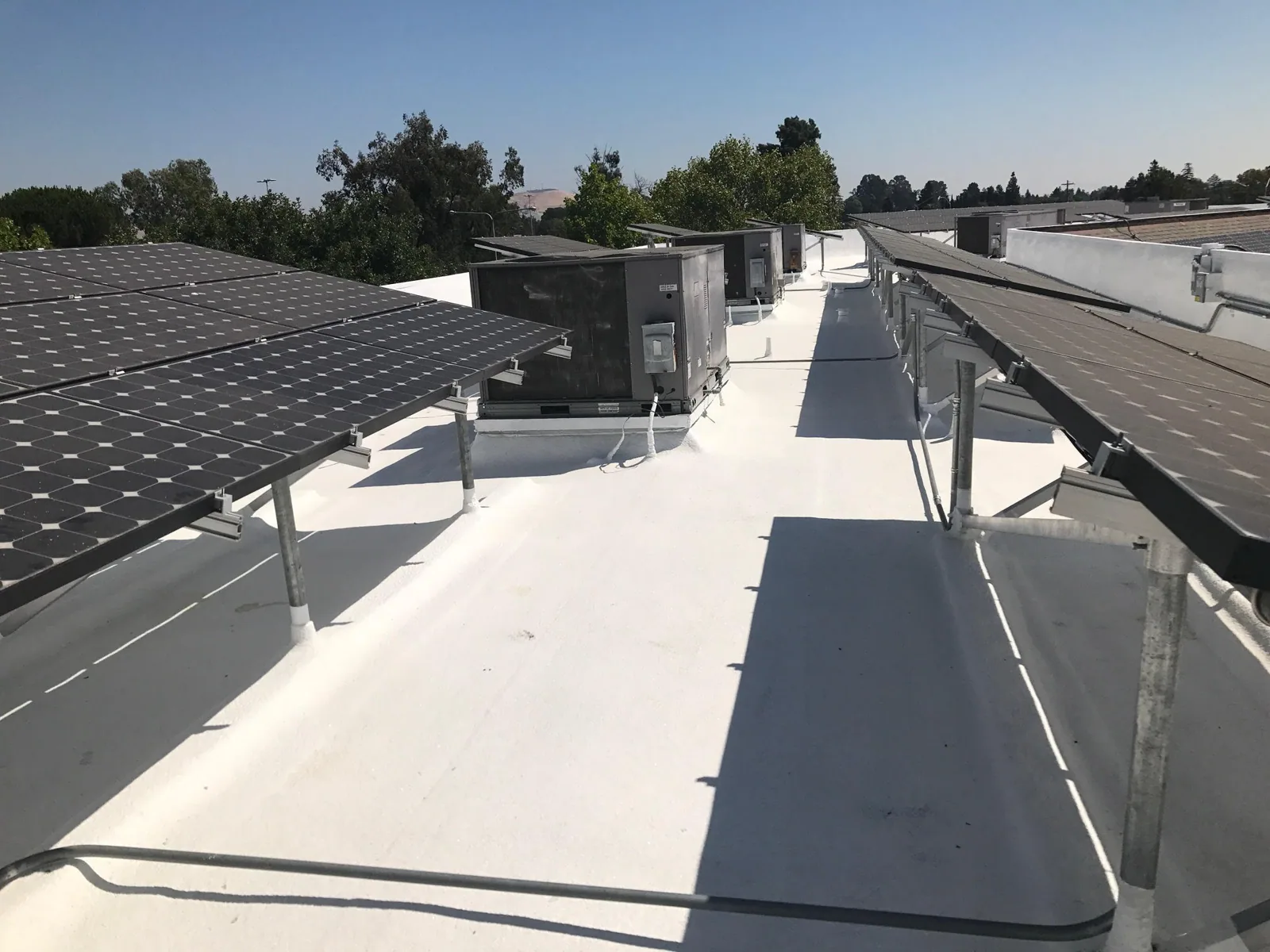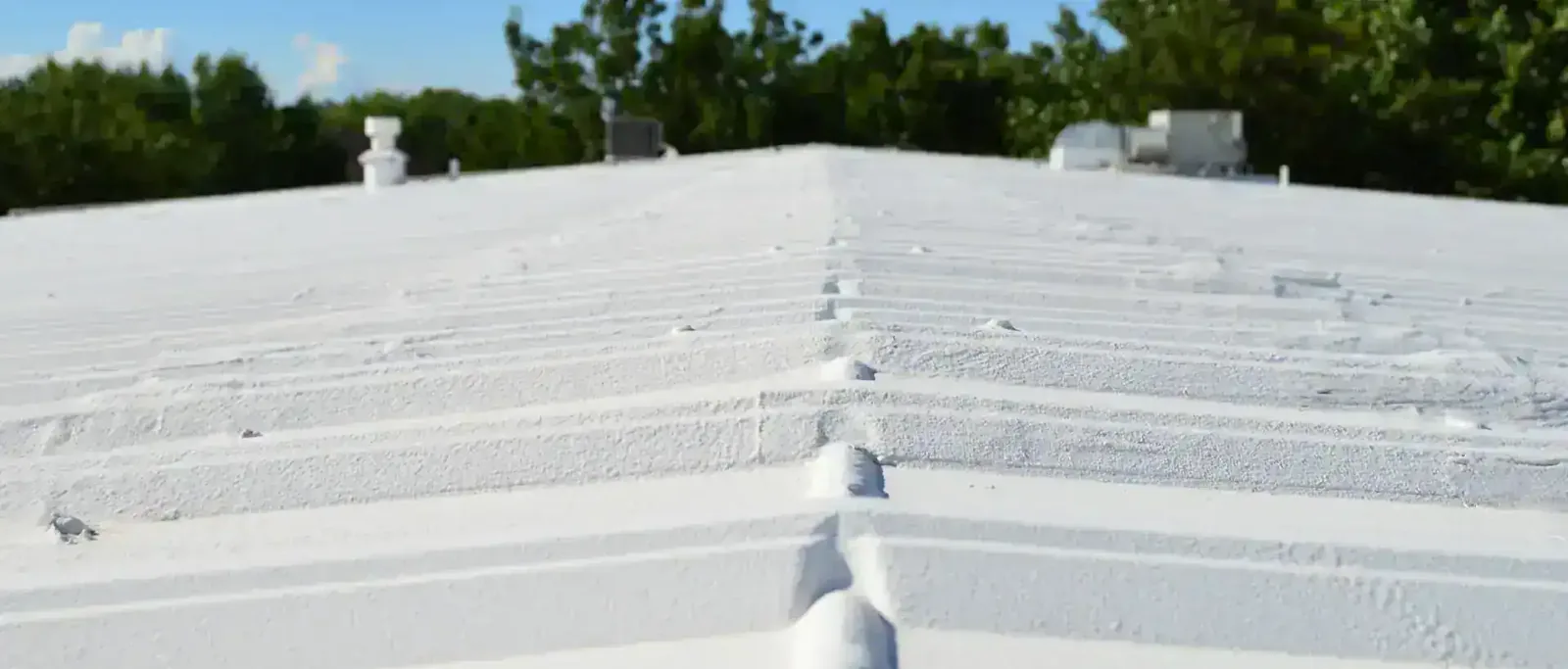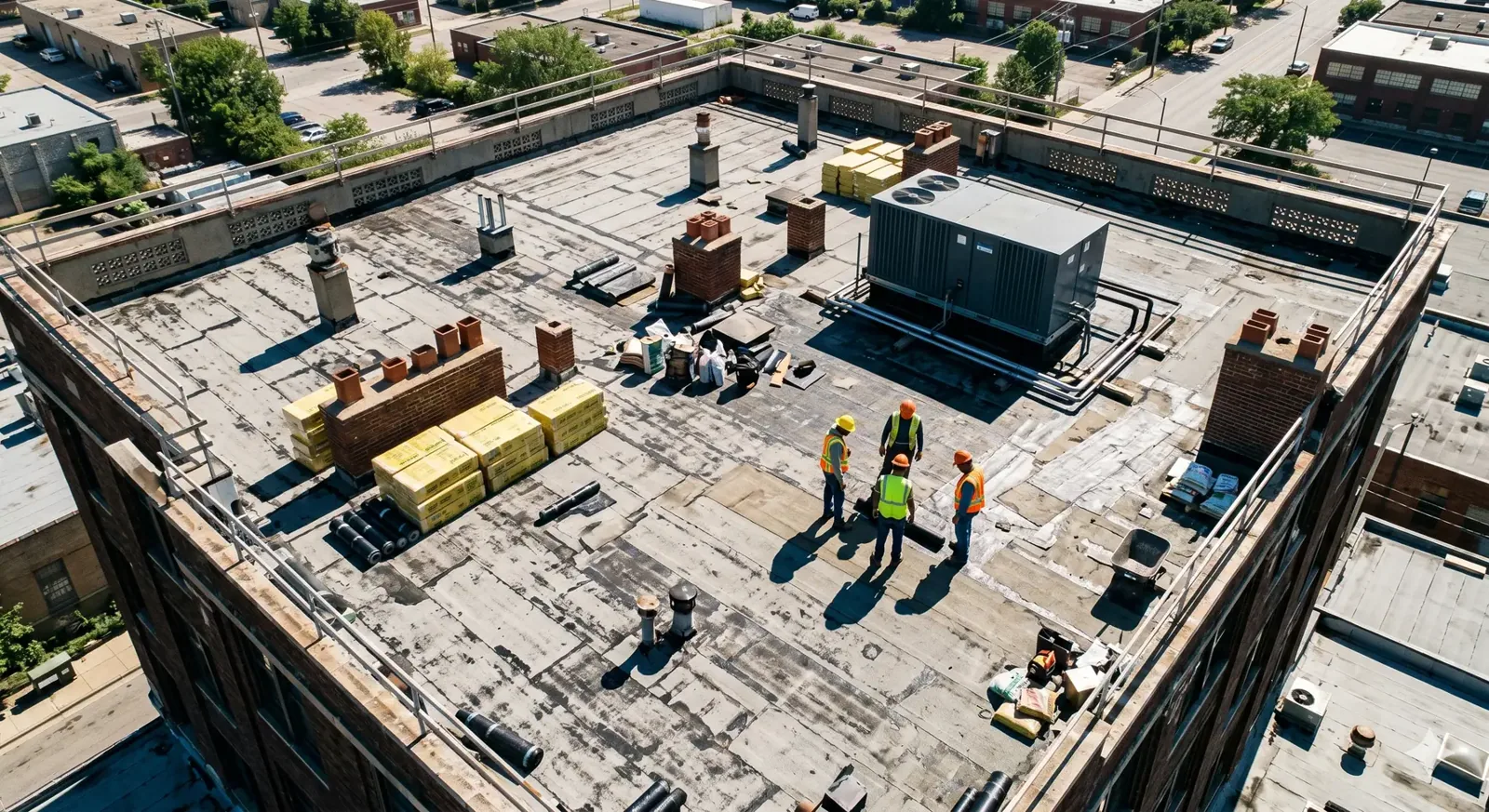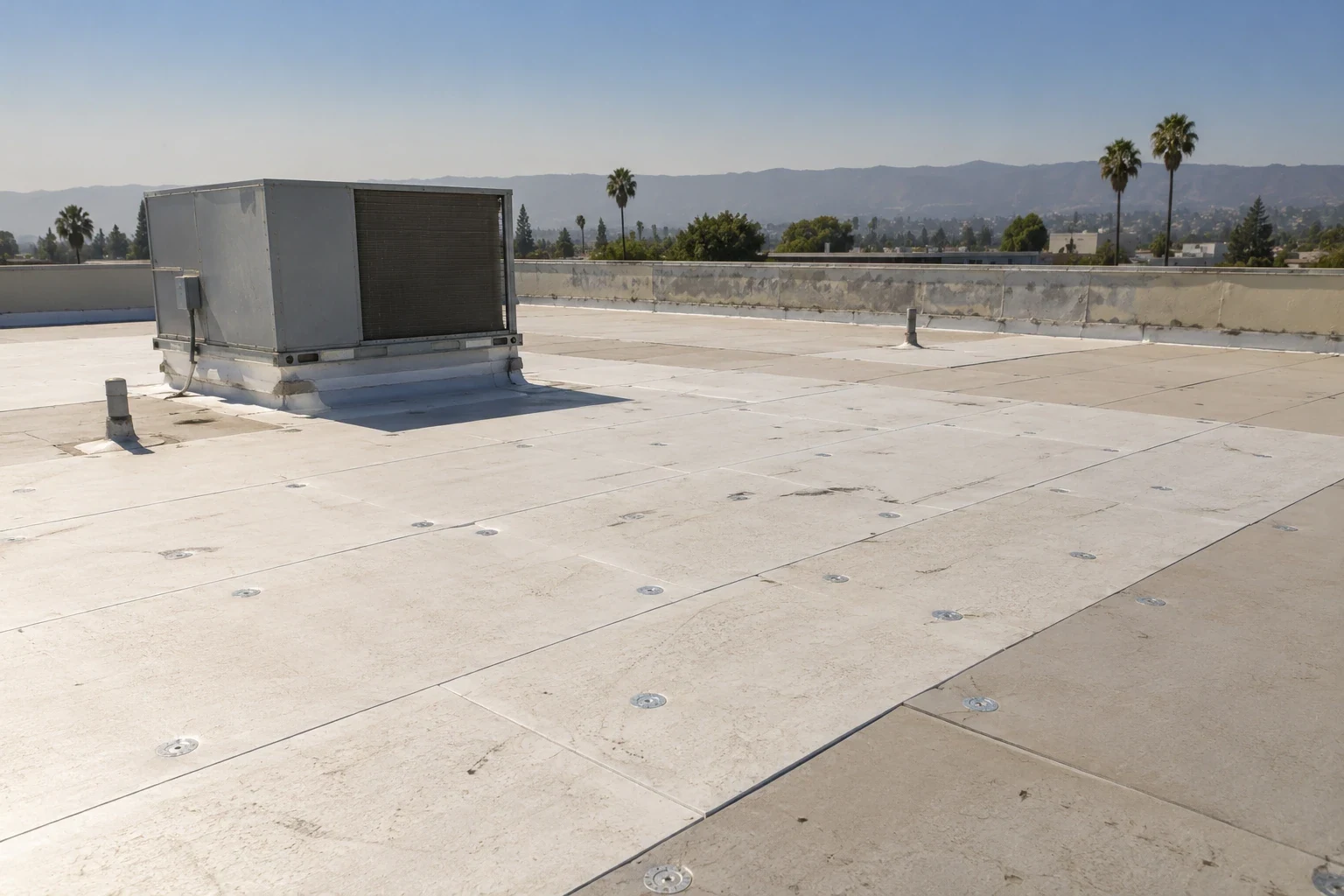
Spray Polyurethane Foam Roofing in Downey, CA
Spray polyurethane foam roofing in Downey, CA: we check the foam and its topcoat, cut out wet or damaged foam, rebuild it and restore the protective coating.
A spray foam roof has two parts that work together: the foam, which insulates and sheds water, and the protective coating on top, which shields the foam from sun and wear. When a foam roof fails, the problem can be in either one. On Downey roofs, we check both before recommending anything. We note what we could see and what still needs testing, and the estimate separates foam repairs, any repairs underneath and the new topcoat.
The Spray Polyurethane Foam Alliance describes an SPF roof as foam followed by a protective coating that guards against wear, sunlight and weather. The specific foam and coating products on your roof still have their own requirements, which we check before choosing the repair.
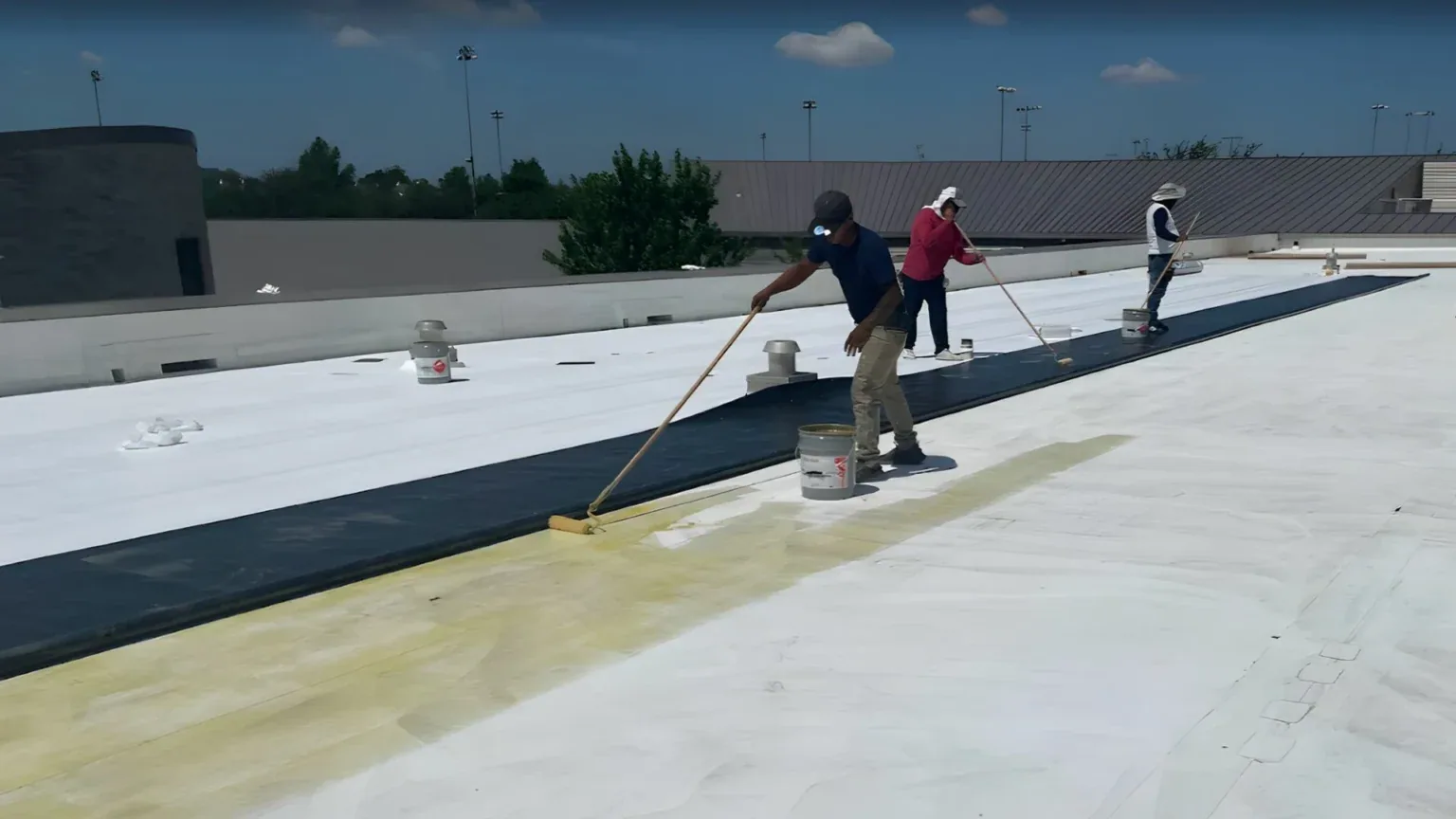
An SPF restoration starts with the condition of the foam, not just the topcoat. We probe blisters, exposed foam and soft spots to see whether moisture or loss of bond reaches the roof deck. Unsound foam is removed to a firm edge, the profile is rebuilt and the protective coating is restored at the specified thickness. We keep the work limits clear, because a new topcoat can hide a foam problem without fixing it.
Check the foam and the old topcoat
We look for records on the existing foam and coating, then compare them with what is on the roof. Old foam roofs have often been recoated or patched more than once. We note where and what was used, and test anything we cannot identify before assuming the new coating will bond.
Silicone roof coatings are a common topcoat for foam, but a fresh silicone coat over damaged foam just hides the damage. We fix the foam first, then decide on the coating and prep.
A roof inspection on a foam roof records which areas we could check and keeps suspected problems separate from confirmed ones. Where findings are uncertain, we explain what testing is needed. That tells you whether the job is a recoat, a local foam repair or something bigger, with each recommendation tied to what we found on your roof.
Price foam removal and backing repairs separately
Wet or damaged foam is cut out to a firm, dry edge and rebuilt with new foam. Foam that is sound stays. If water has reached the deck or the layers under the foam, we check those too and list them separately from foam that is still being evaluated. A new topcoat does not prove the foam underneath is good.
Our roof insulation and cover board work covers the layers under the foam when they need repair, with quantities tied to what we found. New work is checked against the system's requirements, and structural or design questions go to the right reviewer before materials are ordered.
If opening the foam shows a larger wet area, we stop, measure it and explain the added removal and rebuilding. You approve it before we continue, and the area is protected while you decide. The record keeps the original inspection next to the new finding, so the foam repair and the coating are priced separately and you can see why the quantities changed.
Choose the topcoat after the foam is fixed
Once the foam is repaired, we choose the protective coating based on the foam product, the existing topcoat and the manufacturer's requirements. Old coating at the edges of the repair is checked for bond. If adhesion is uncertain, we test it rather than assume the new coating will stick.
An acrylic roof coating is another common choice for foam. Whether acrylic or silicone suits your roof depends on the existing coating, ponding and what the foam supplier allows. There is no one answer for every foam roof.
The coating is part of the permanent repair, with its coverage and thickness listed by area. We follow the product's rules for application and cure rather than borrow numbers from another coating. You get a clear account of the foam repaired and the coating installed over it, plus any questions that need answers before a particular area can be finished.
Detail the edges, curbs and drains
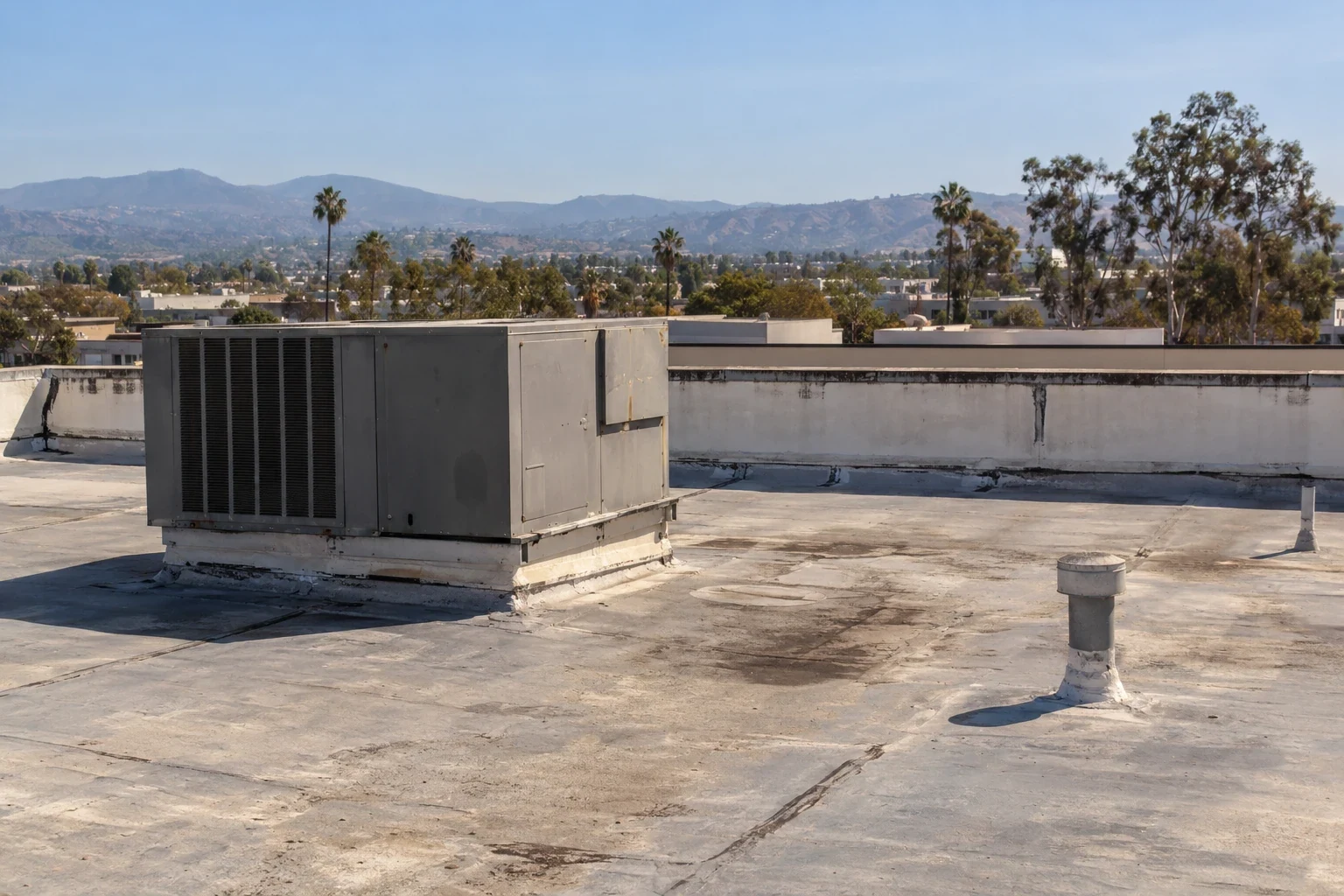
Foam roofs often leak at edges, drains and penetrations where the foam was sprayed thin or has pulled away. We check how the foam meets each detail, repair any damaged backing and remove loose material before rebuilding. Equipment in the way of a detail is a separate task the topcoat cannot solve.
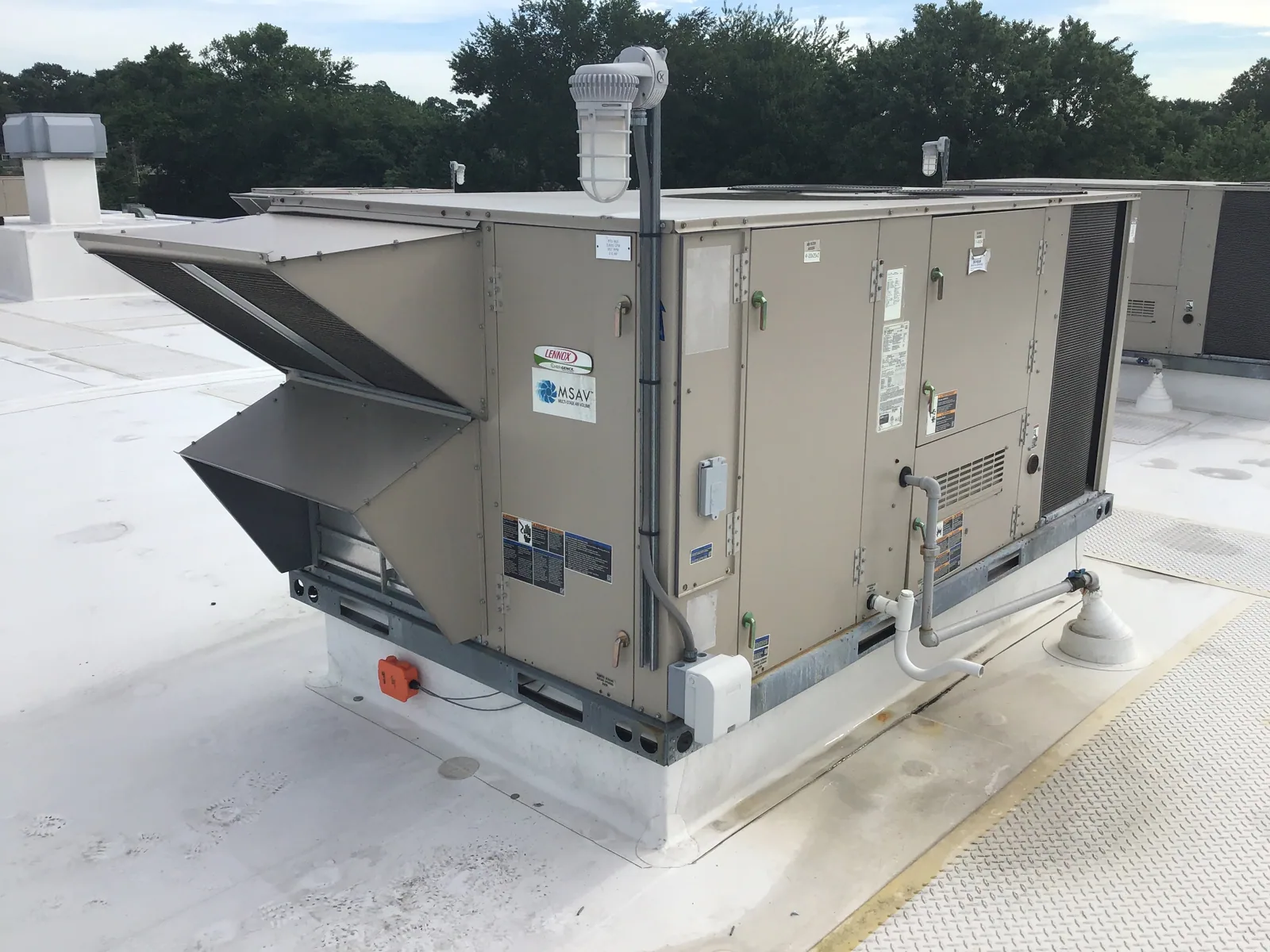
Our rooftop equipment curb and support work identifies who needs to move or support a unit so we can reach the full curb. That is scheduled before we foam and coat around it. If the repair changes how the equipment sits, it is reviewed first.
For occupied building projects, we confirm access and work hours with the building manager and plan around overspray risk to cars, equipment and air intakes. Phased work may add setup and protection, which we price. Unfinished areas are listed with what has to happen next, so a finished section nearby is not mistaken for a completed detail.
Keep foam repairs and coating records together
At penetrations and roof edges, we check that the foam slopes water away from the detail and that the coating runs continuously over the repair. Damaged edge shapes and cants are rebuilt before the coating goes on. Nearby equipment and drains are protected from overspray, and coating is scheduled within the product's temperature and moisture limits. The closeout identifies each foam repair and the coating restored over it. For foam roofs in Norwalk or Cerritos, we record where foam was rebuilt and where coating was restored, without assuming another building has the same roof.
For a building near the I-5/I-605 interchange, we keep the address with its findings and do not borrow another building's foam or coating history. Each roof is inspected and recorded on its own.
A roof condition report at closeout lists the foam and coating products used, the locations of repairs, photos and the results of agreed checks. Approved changes are tied to the foam removed and rebuilt. Areas we did not inspect and equipment work still pending are listed separately, so you know exactly what was done.
Commercial Roofing Questions
Why check the topcoat and the foam together?
Because a foam roof can fail in either one. A worn topcoat exposes the foam to sun damage; wet or damaged foam needs repair before any new coating goes on.
What should a foam repair estimate separate?
Foam that will be removed and rebuilt, foam that can stay, any repairs to the deck or layers below, and the new topcoat. Areas still being tested should be listed separately.
What has to happen before foaming around a curb blocked by equipment?
The equipment owner moves or supports the unit so we can reach the whole curb.
What should the closeout for an SPF roof include?
The foam and coating products used, repair locations, photos, test results and a list of any open items.
Get a foam roof evaluation
Have a spray foam roof in Downey that needs attention? Send us the roof areas and any product records, and we will check the foam and coating and give you a clear estimate.