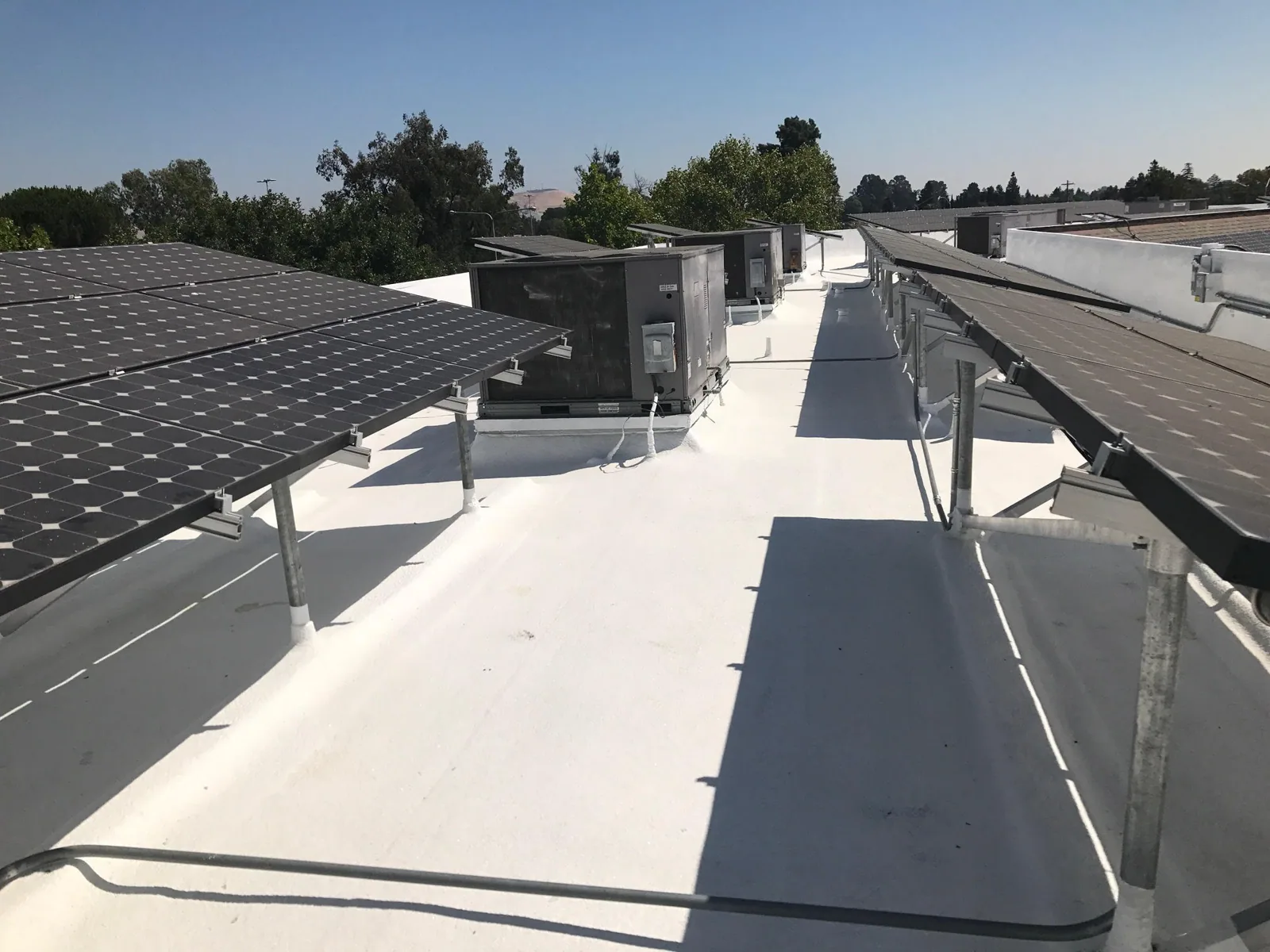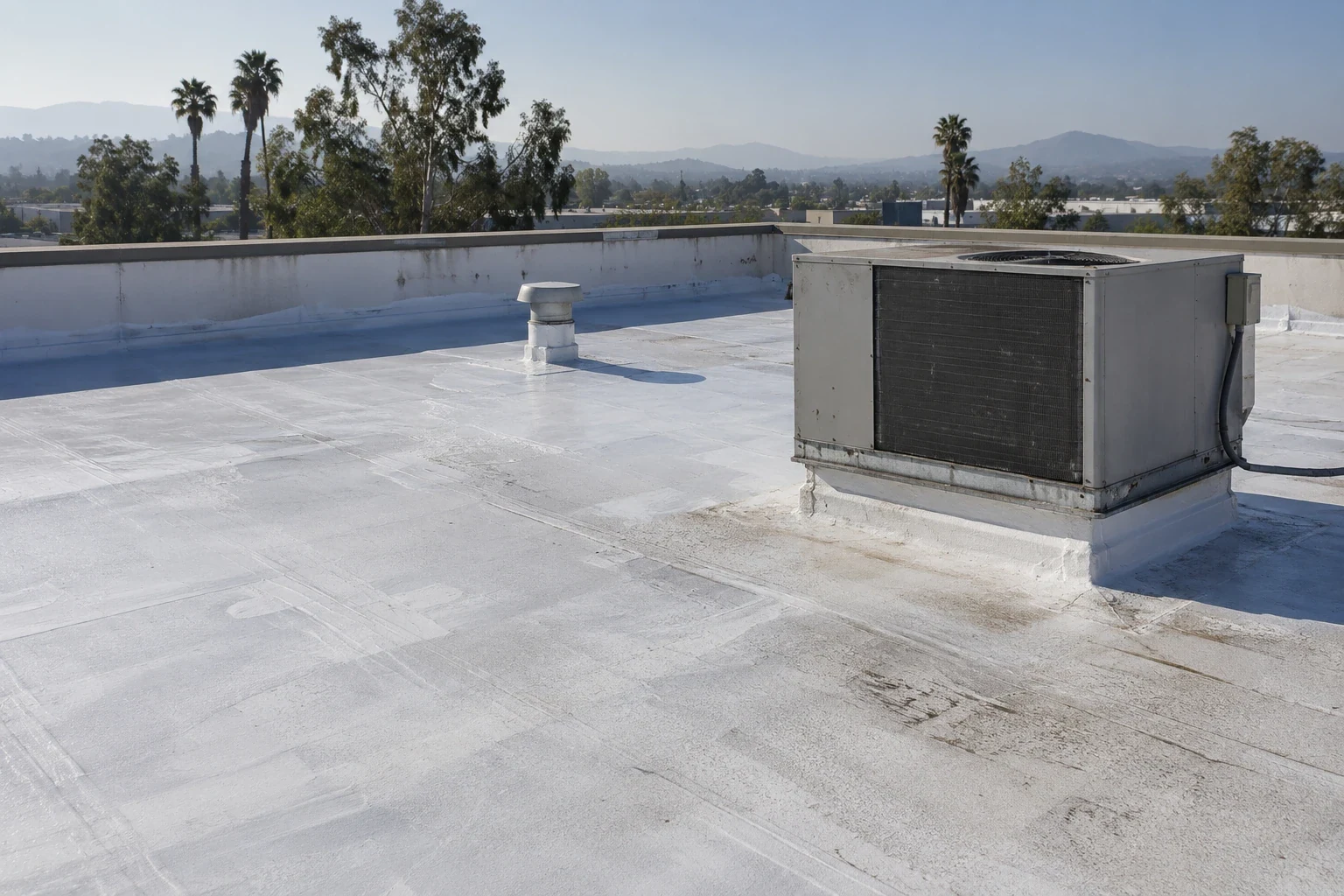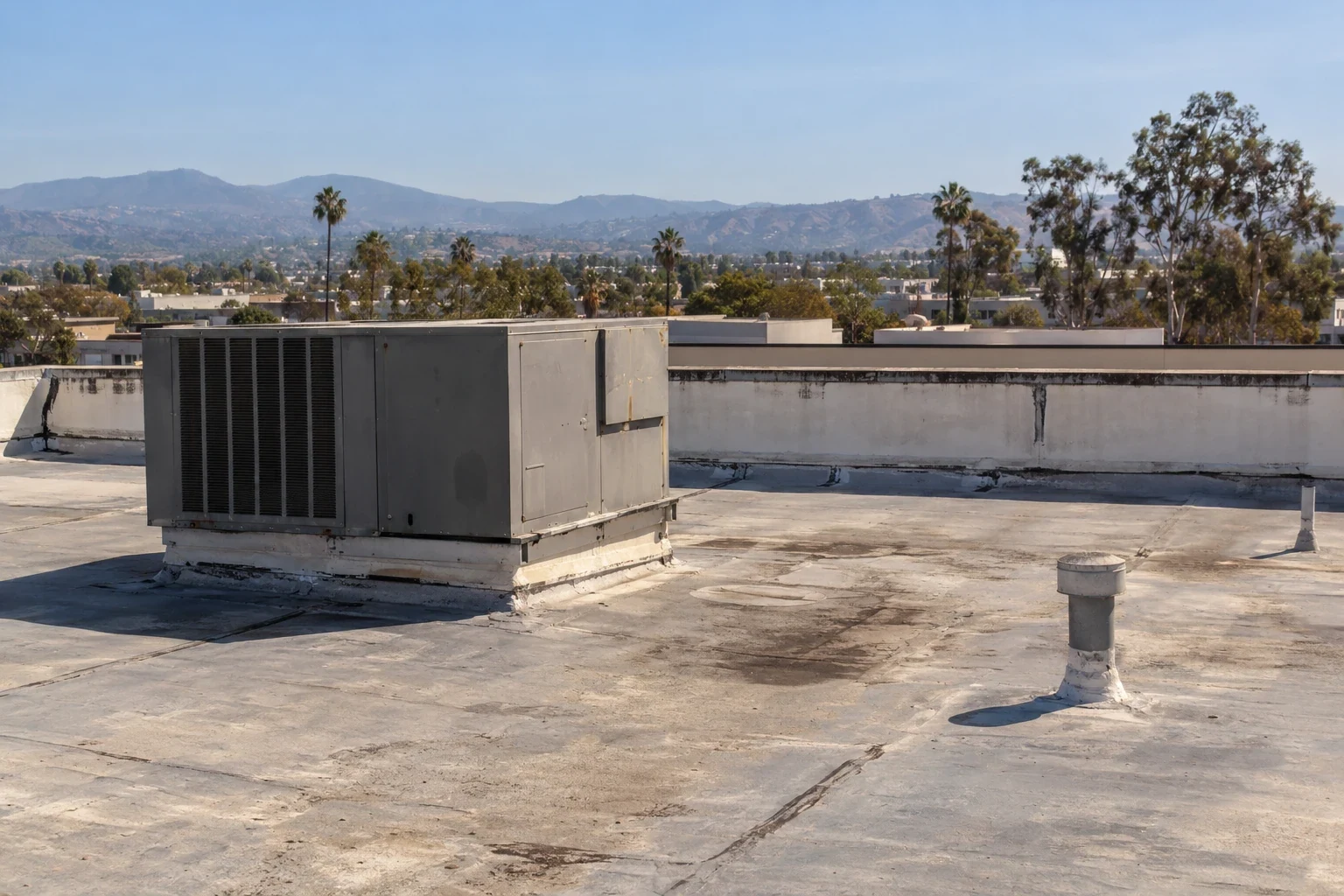
Silicone Roof Coatings in Downey, CA
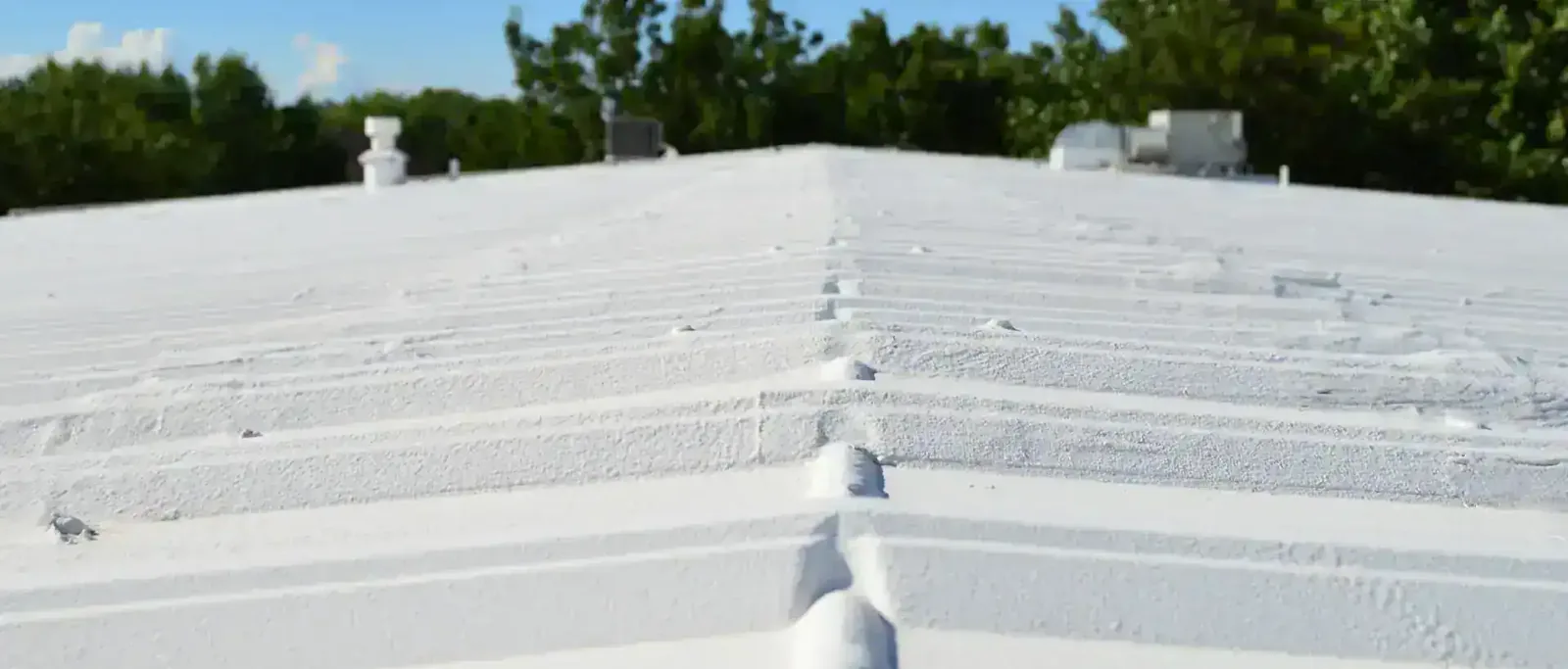
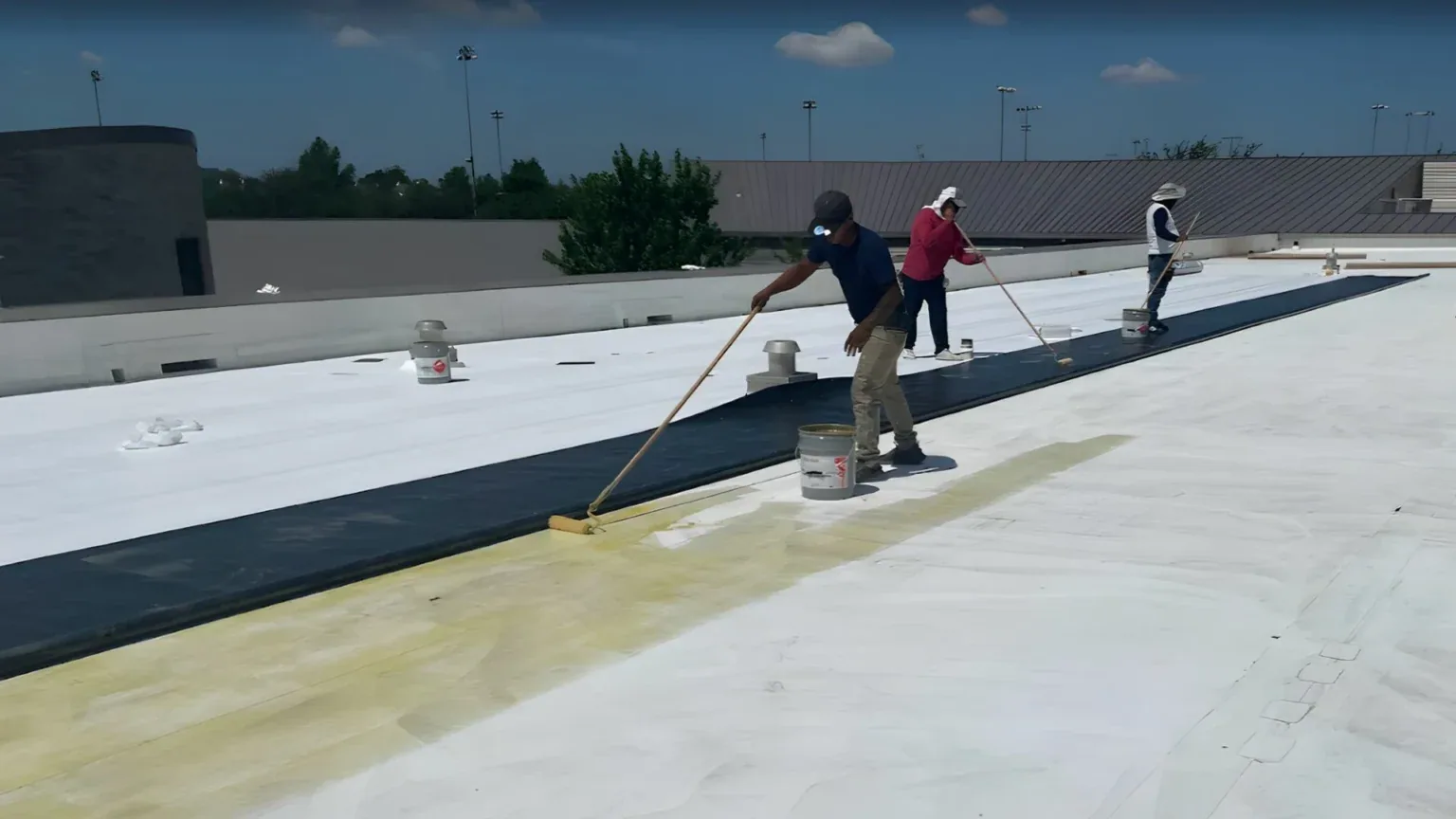
Silicone roof coatings in Downey, CA: we check the existing surface, repair wet areas and details, run adhesion tests and apply silicone to a sound, dry roof.
A silicone coating can protect a commercial roof from sun and ponding water and extend its life by years, but only if the surface underneath is ready. Before we order any silicone for a Downey roof, we check the existing roof, any old coatings and the condition of seams, flashing and insulation. We show you what we found and what still needs to be checked, and the estimate lists the repairs and prep alongside the coating itself.
GAF's High Solids Silicone data sheet calls for a clean, dry roof with no trapped moisture, repair of damaged membrane, flashing and penetrations, and adhesion test patches before application. Those are the instructions for that product. Other coatings have their own requirements, and the fact that a product is silicone does not mean every roof surface is ready for it.
Whether silicone is a good fit depends on the existing roof, any past coatings and the condition of the seams and flashing. We look for loose coating, ponding, dirt or contamination and repairs that need to happen first, then confirm the product's prep and adhesion requirements for your roof surface. The coating price includes the repairs, cleaning and detail work needed before application.
Identify any old coating before prepping
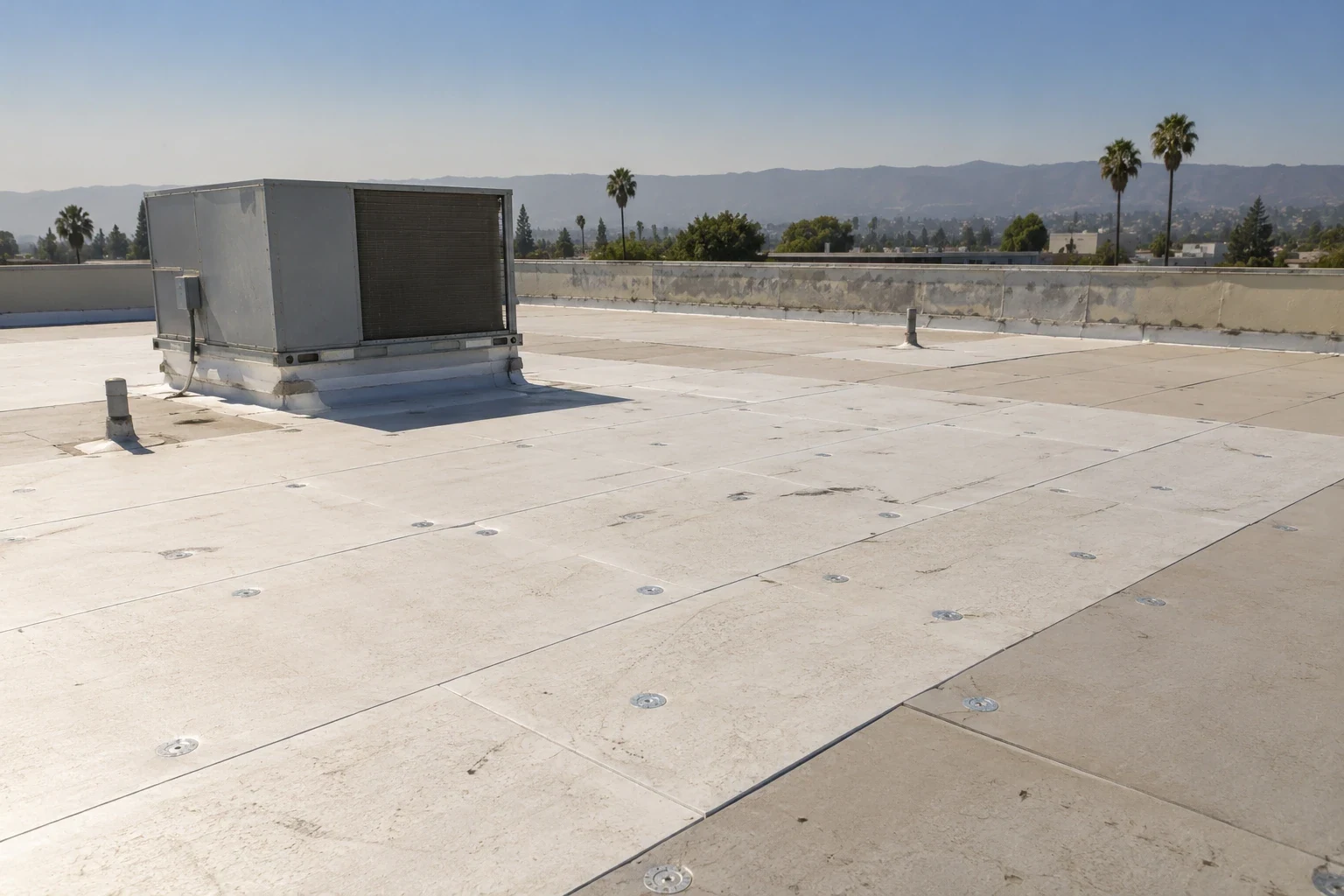
We check records and the roof itself for any earlier coating, patches or areas where the surface changes. Silicone bonds well to many roof surfaces, but some old coatings and patch materials need extra prep or a primer. Anything we cannot identify is tested before we assume the new coating will stick.
If the roof already has an acrylic roof coating, we check whether it is still well bonded. Loose or chalky acrylic has to be cleaned or removed, and a primer may be needed before silicone goes on.
When we specify GAF silicone, we name the product and follow GAF's instructions for it. The brand name alone does not mean a previously coated roof is ready. You will see which surfaces have been confirmed, what still needs testing and how much prep is priced, so any question that could change the plan is settled before materials are ordered.
Fix wet or damaged roof before coating
Any part of the roof that is wet, blistered or damaged has to be repaired before coating. Wet insulation is cut out and replaced. Damaged membrane or deck is repaired. We price those repairs separately from cleaning and coating the good areas. Ordering silicone does not tell you whether the layers under the surface are sound.
Our roof insulation and cover board work replaces wet areas confirmed by cores or moisture surveys, with quantities based on what we found. New material is checked against the coating's requirements, and structural questions go to the right reviewer before materials are ordered.
If opening the roof shows more damage, we stop, measure it and explain the added repair. You approve it before we go further, and the open area is protected while you decide. The record shows what we originally inspected and what we found later, so the added repair is clearly separate from the coating quantity.
Repair the details before the field is coated
Seams, edges, curbs and penetrations are repaired and reinforced before the field is coated. Damaged details are fixed with materials the coating system allows, not buried under a general coat. A coating does not rebuild damaged backing or move equipment that blocks a detail.
If the roof is spray polyurethane foam, damaged foam is cut out and rebuilt before the silicone topcoat goes on. The coating protects the foam; it does not fix soft or wet foam underneath.
Where a detail is blocked by equipment, we identify what needs to move and price the repair once it is clear. Any engineering question is assigned before work starts. You can follow each repair from the damage we found through to the finished detail. Coating the open field is kept separate from details still waiting on access.
Test adhesion and follow the product's rules
Before coating, we follow the product's prep and testing instructions. GAF's silicone data sheet includes adhesion test patches and notes that a primer may be required on some surfaces. We run those tests on your roof rather than assume one product's guidance covers another coating or surface.
Our roof coating restoration proposal names the product, the areas to be coated and the repair work in each. Uncertain surfaces are tested before the price assumes they can be coated, and the checks we agree on are recorded.
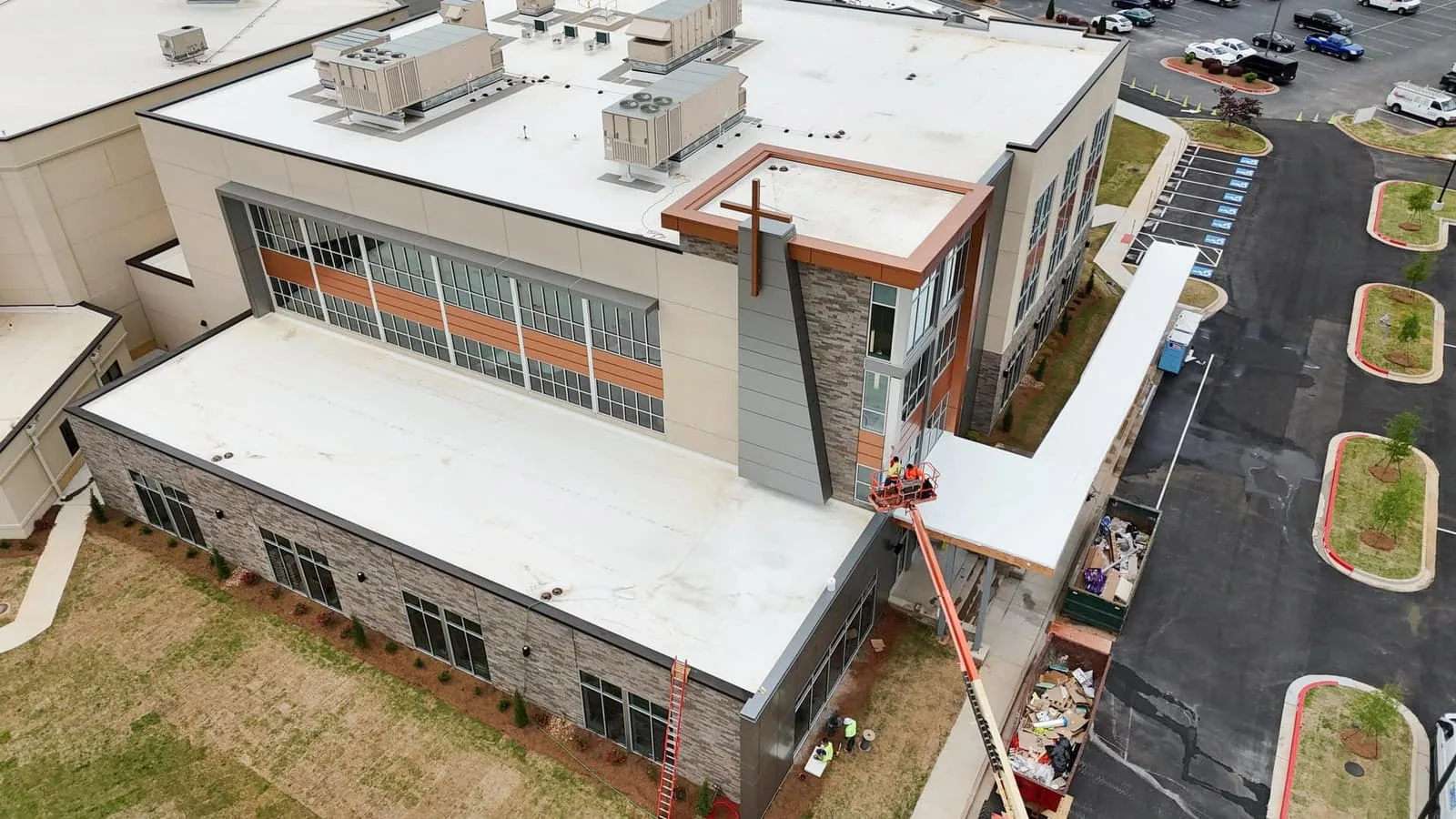
For occupied building projects, we confirm work hours and access with the building manager. Application and cure times come from the product instructions and the weather, not from a different coating. Phased work may add setup and protection. Unfinished areas are listed with what has to happen before they can be coated, so you have a clear schedule tied to real prep and repairs.
Record the prep and the coating installed
Before extending a silicone coating across a roof, we locate drains, curbs, walls and edges that need reinforcement or separate flashing. A new coating cannot repair wet insulation or fix a drainage problem built into the roof. We identify the areas that can be coated and any material that should be removed or rebuilt first. The proposal then states the surface prep and final inspection planned for the application.
For a building near the I-5/I-605 interchange, we keep the property's own surface findings with its estimate. Another roof's coating history does not decide what yours needs; each roof area and repair is evaluated on its own.
At closeout, you get the coating product installed, the prep done and the details repaired, along with how much insulation or backing was replaced, photos of the work and the results of adhesion tests and other agreed checks. Approved additions are tied to what we found. Areas not inspected and equipment work still pending are listed separately, so you know what was coated and what still needs attention.
Commercial Roofing Questions
What should be checked before pricing a silicone coating?
Any old coating, patches and contamination, the condition of seams and flashing, and whether the insulation is dry. Adhesion test patches confirm the coating will stick.
What happens if damage is found under the surface during a coating job?
We stop, measure it and explain the repair. You approve it before we continue, and the coating goes on only after the repair is done.
Does one silicone product's adhesion guidance apply to other coatings?
No. Each product has its own prep, primer and testing requirements. We follow the instructions for the product being installed and test on your roof.
What records should I get after a silicone coating job?
The product installed, prep done, details repaired, insulation replaced, photos, adhesion test results and a list of any open items.
Get a silicone coating evaluation
Considering a silicone coating for your Downey roof? Send us the roof areas and any coating records, and we will test the surface, list the repairs needed and price the full job.