Acrylic Roof Coatings in Downey, CA
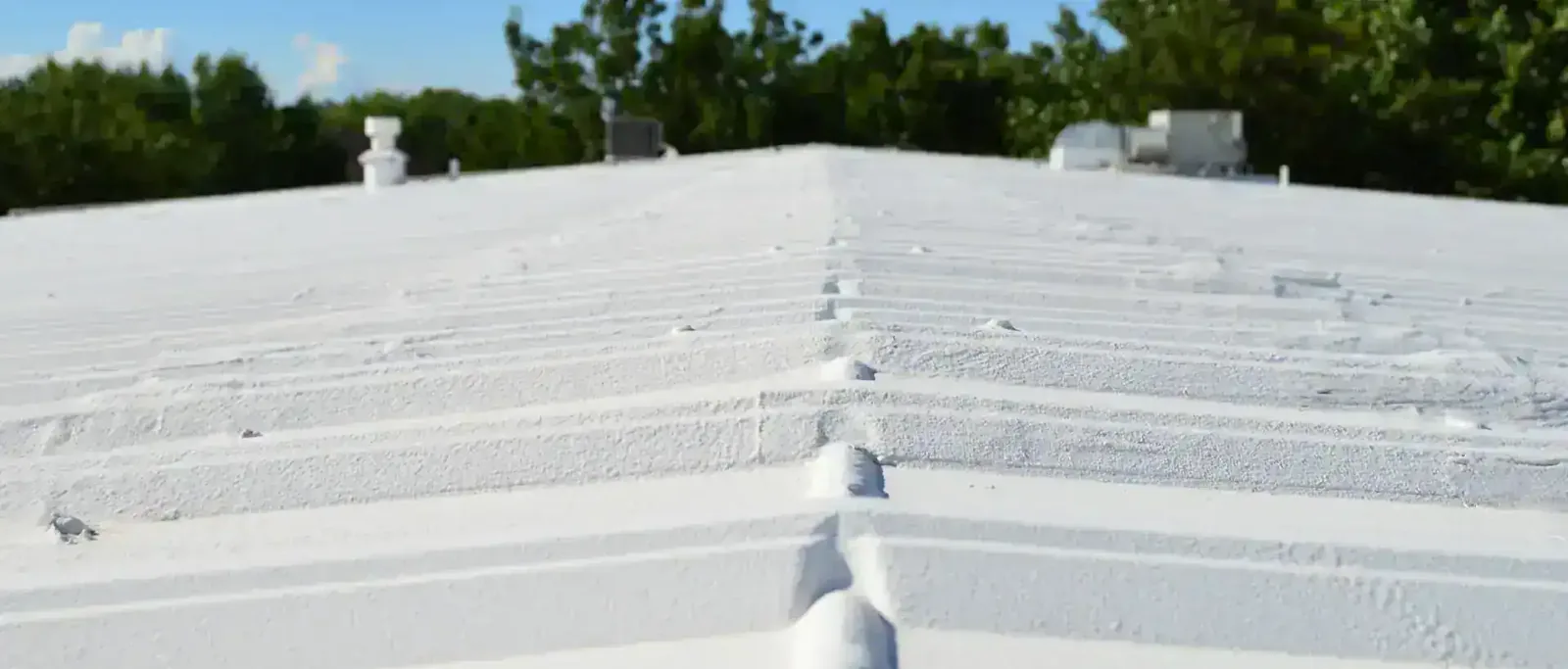
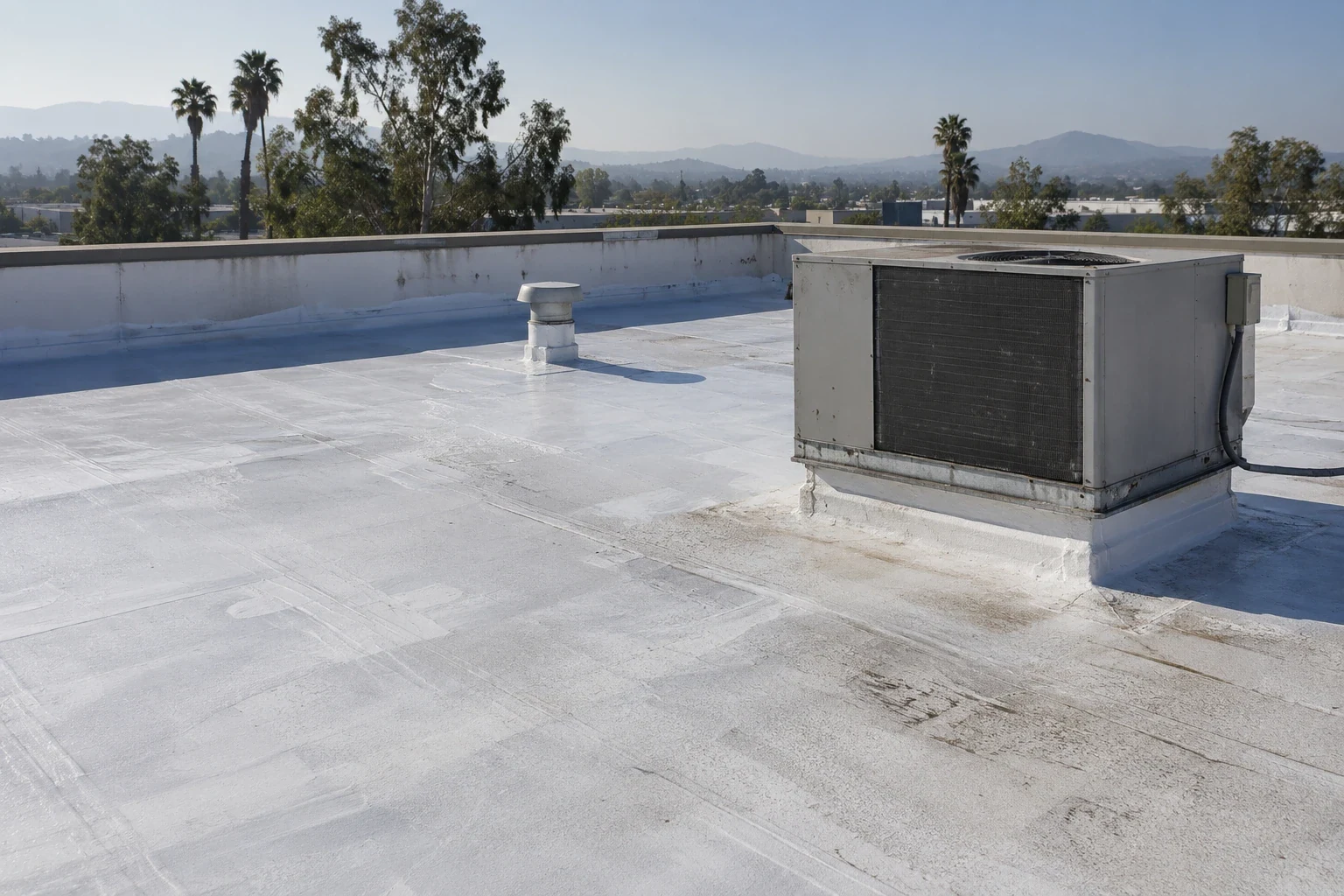
Acrylic roof coatings in Downey, CA: we check the existing roof, repair seams and wet areas, then apply a base and top coat system suited to the surface.
An acrylic coating is only as good as the surface under it. Before we recommend one, we find out what is already on the roof: the membrane, any old coating, patches and repairs, and whether the insulation underneath is dry. Acrylic coatings can be a cost-effective way to extend the life of a Downey roof, reflect heat and protect an aging surface, but they are a finish, not a repair. Our estimate shows the repair and prep work by roof area, alongside the coating itself.
GAF describes its Acrylic Top Coat as a water-based elastomeric acrylic and pairs it with an Acrylic Base Coat in a base-and-top system, where the base coat helps the top coat adhere. Every product has its own requirements for surface prep and application, and a brand description does not tell you whether your particular roof is a good candidate.
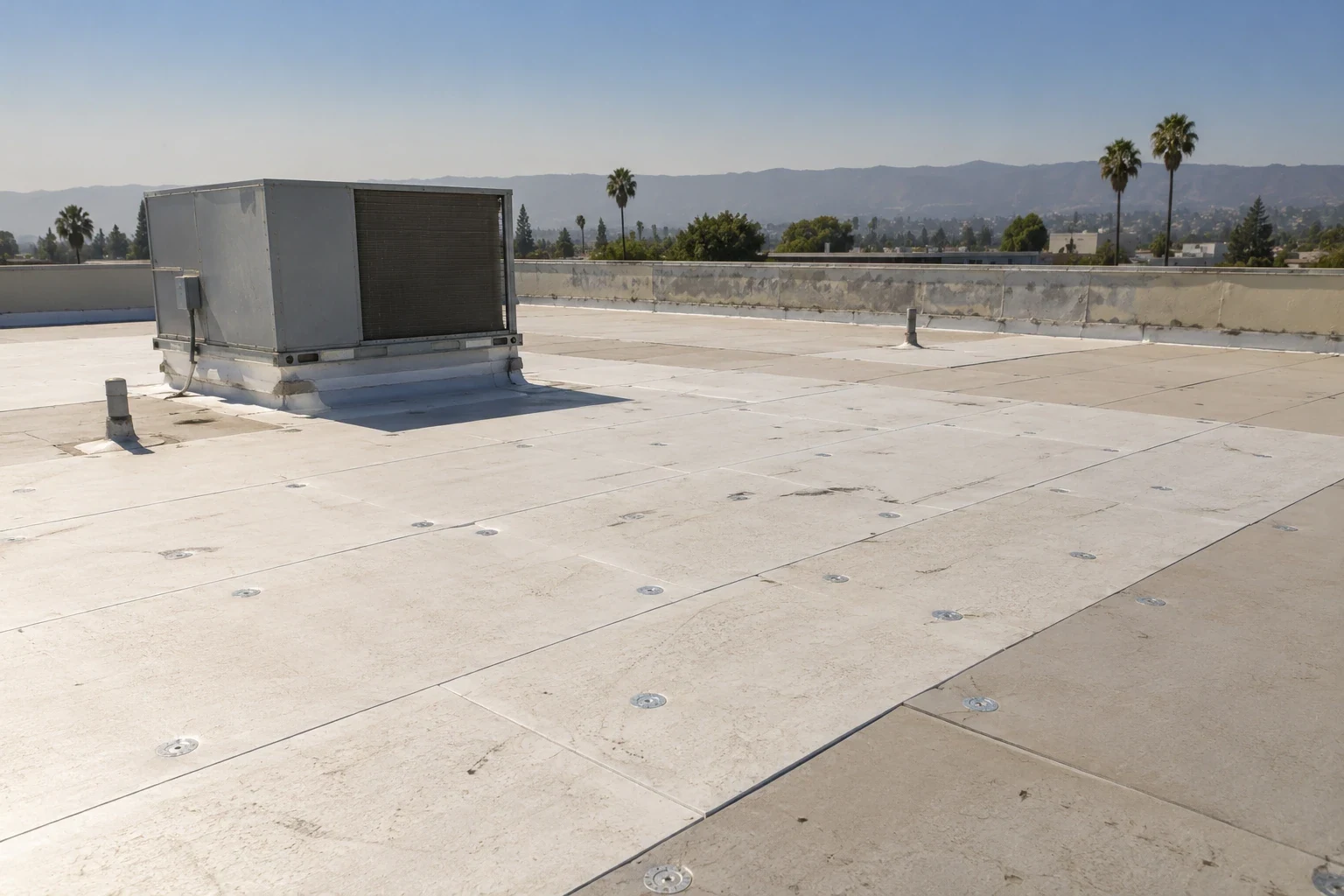
Before selecting an acrylic coating, we check the roof surface for chalking, loose granules, open seams and patches that may not accept the specified primer, and confirm compatibility with the existing membrane and any previous coating. Blisters, splits and failed flashing are repaired first; a coating should not bridge defects that need rebuilding. We follow the product's prep and application requirements, including coverage and cure at transitions, and keep drains and scuppers clear of excess material.
Find out what is on the roof now
We start with any records you have about the roof and compare them with what is actually there. Many roofs have been patched, partly recoated or reroofed in sections over the years. We note where the surface changes, where old patches are and where we are not sure what something is. An unknown coating or patch gets tested before we assume the acrylic system will stick to it.
If the roof already has a silicone coating, that changes things. Acrylic generally does not bond well to silicone, and silicone roof coatings usually need to be recoated with silicone. We identify the existing coating before recommending a product.
A roof inspection for a coating project records which areas we could see and test and which were hidden or uncertain. Where an uncertain surface could change the scope, we recommend a test patch or core sample. That way you can compare our findings with the prep we are pricing, rather than relying on how the roof looks from the ground.
Make repairs before measuring for coating
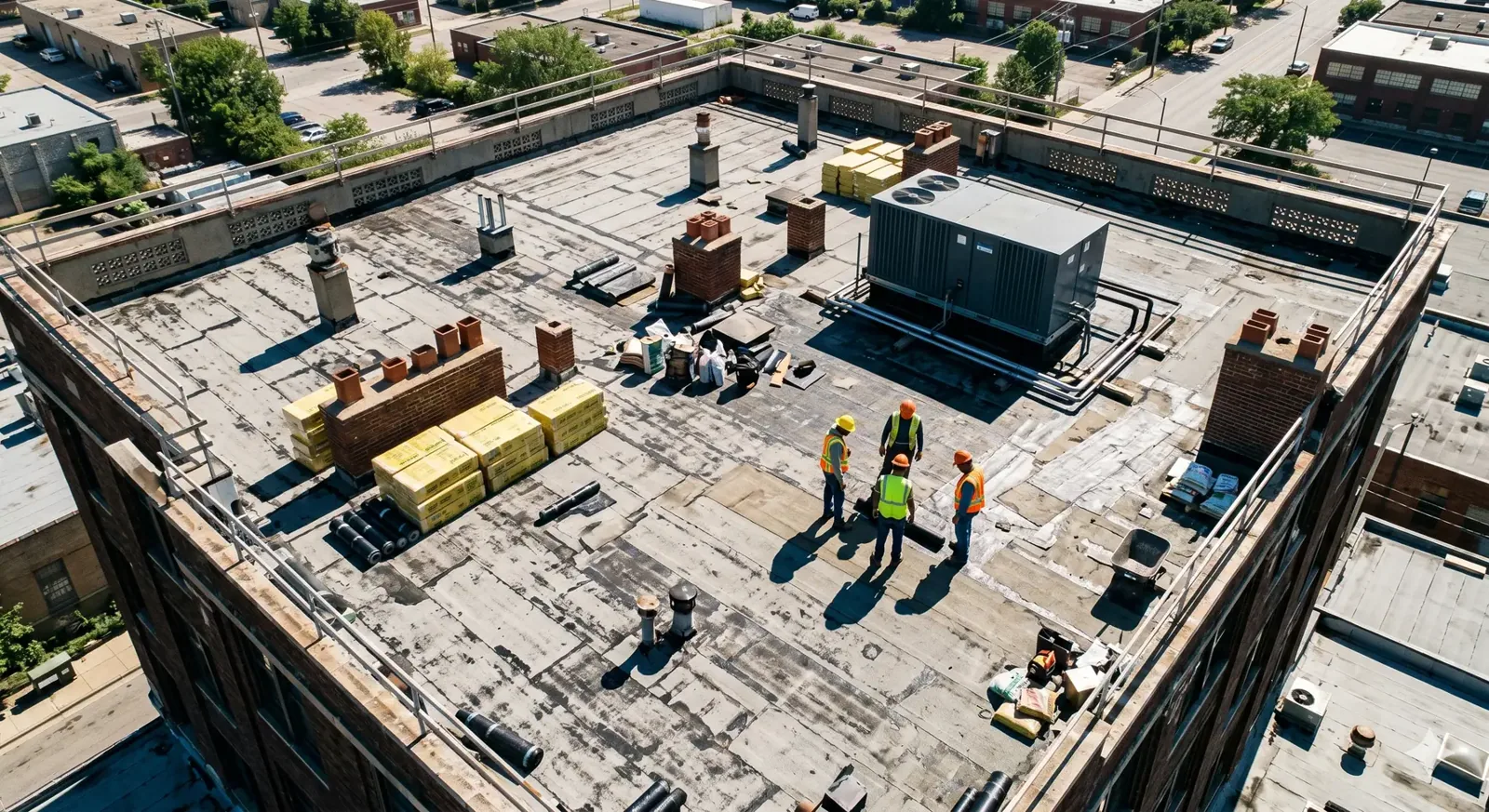
Any area that is wet, blistered, split or soft has to be repaired before coating. Wet insulation is cut out and replaced, open seams are resealed and damaged flashing is rebuilt. A coating does not dry out insulation or rebuild a failed detail, and coating over those problems traps them under a new surface where they keep getting worse.
Our roof insulation and cover board work replaces wet areas confirmed by cores, with the removal area marked on a roof plan. We check that the remaining roof meets the coating manufacturer's requirements for a sound, dry substrate. If any structural question comes up, such as a damaged deck, it is reviewed before we order materials.
Sometimes opening the roof reveals more damage than the inspection showed. When that happens, we stop, measure it and explain the added repair before continuing. Open areas are protected while you decide. The revised estimate shows what was found, so you can see why the repair quantity changed and that the coating still goes on only after the repairs are done.
Choose the products for the actual roof
We list each product in the coating system: primer if needed, base coat, top coat and the reinforcing fabric or detail products used at seams and penetrations. Each one has its own prep, application and inspection requirements. A base-and-top system from one manufacturer does not mean the same prep works for every roof type.
When we use GAF acrylic products, we specify the actual base and top coats and follow GAF's requirements for that system. The brand name alone does not mean your roof surface is ready; the substrate still has to be checked, and seams and penetrations get the detail products the system calls for.
On a built-up roof, gravel usually has to be removed and the surface prepared before an acrylic coating can go on, and any blisters or wet plies have to be fixed first. We list those repairs before the coating line, so you can see how the products match your roof and what has to happen before the coating crew starts.
Fix the details, then coat the field
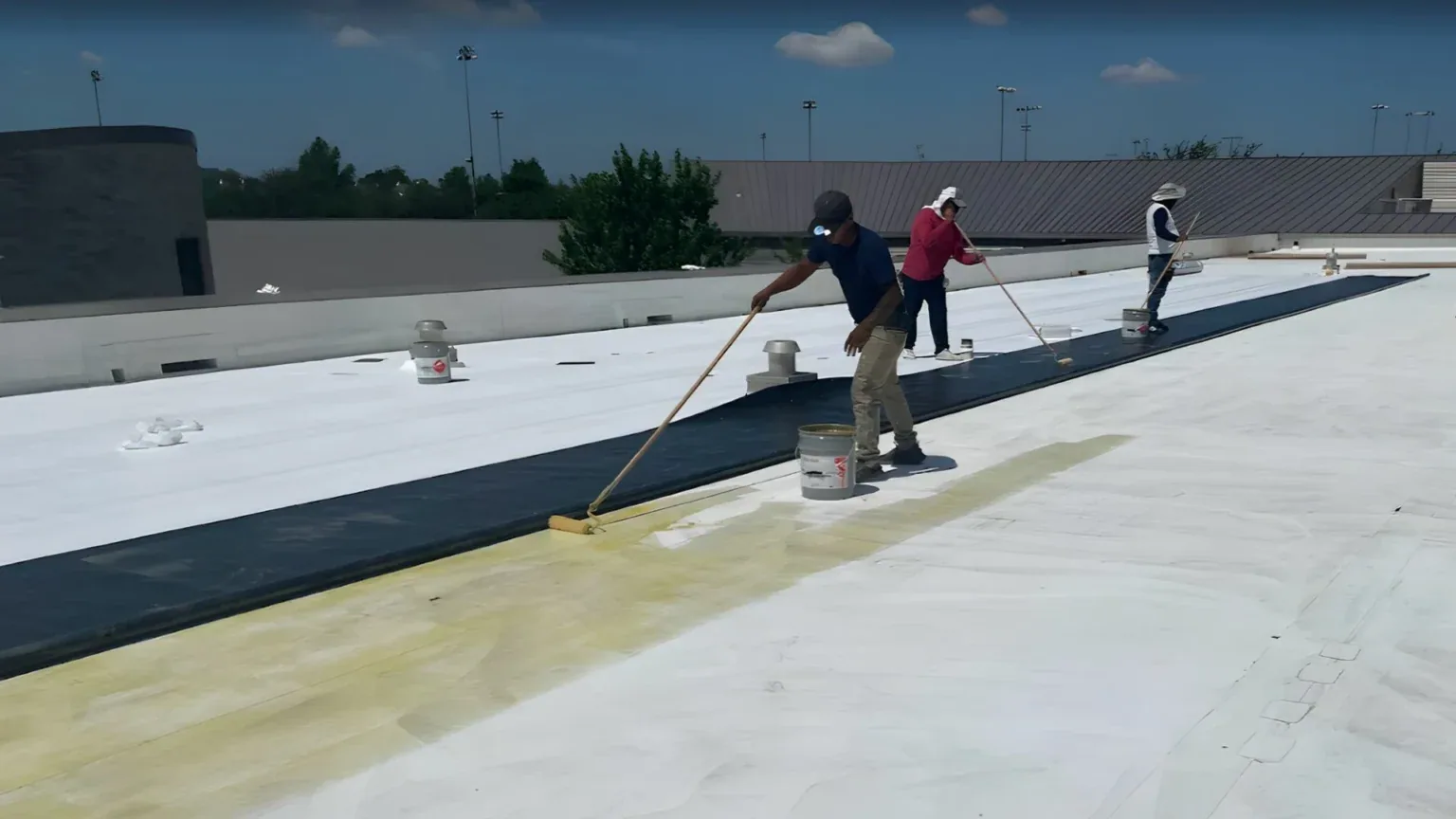
Seams, roof edges, drains and penetrations are where coated roofs fail first, so we repair and reinforce those details before coating the open field. Where wet insulation sits near a detail, it is replaced first. If equipment, conduit or another trade's work blocks a detail, we identify who needs to move it before our crew reaches that area.
Our roof coating restoration plan lists the details repaired before the field is coated, along with the product stages and prep for each. Application and cure times follow the product instructions. GAF's acrylic system, for example, calls for each coat to dry or cure before the next goes on. Timing depends on the product and the weather, so we schedule around the forecast.
For occupied building projects, we confirm with the building manager when and where we can work, and how to handle rooftop access, odors and deliveries. Splitting the job into phases may add setup and protection, and we price that. Each section is finished before we move on, so a coated area next door is never mistaken for a finished detail that is still waiting on access.
Record the prep and the products used
At roof edges, penetrations and wall transitions, we use the reinforced detail the system specifies rather than relying on the field coating to handle movement. We check that each detail laps onto a clean, sound surface and that water still reaches the drains. If the membrane is wet or the insulation has lost support, that repair is listed separately; a coating is not a substitute for replacement. The final inspection notes repaired areas, coating coverage and any sections left uncoated. In Santa Fe Springs and Vernon, as in Downey, we confirm the installed membrane before choosing a coating.
For a building near the I-5/I-605 interchange, we keep the property's own surface findings with its estimate. Another building's coating records do not tell us what is on your roof. The proposal follows the roof and repair boundaries we actually inspected.
At closeout, you receive the products installed and the prep done by section, the location and size of each repair, photos of the details before and after, and the results of any adhesion tests or checks. Any additions you approved are tied to what we found. Areas we could not inspect and any work waiting on another trade are listed separately, so you know what was coated and what still needs attention.
Commercial Roofing Questions
What should an acrylic coating estimate show before the coating price?
What is on the roof now, which areas need repair, which need wet insulation replaced, and what surface prep each area needs. The coating price should come after those, not instead of them.
What happens if more damage is found during the coating project?
We stop, measure it and explain the added repair before continuing. The area is protected while you decide, and the record shows what was found and where.
Why does the specific acrylic product matter?
Each product has its own prep, primer, coverage and cure requirements. The base and top coats are designed to work together, so we follow the instructions for the actual system being installed.
What records should I get after an acrylic coating job?
The products installed, prep done by section, repairs and their locations, photos of details and any test results. Areas not inspected or waiting on other trades are listed separately.
Get an acrylic coating evaluation
Considering an acrylic coating on your Downey roof? Send us the roof areas and any coating records, and we will check the surface, list the repairs needed and price the full coating system.