Metal Roof Retrofit in Downey, CA
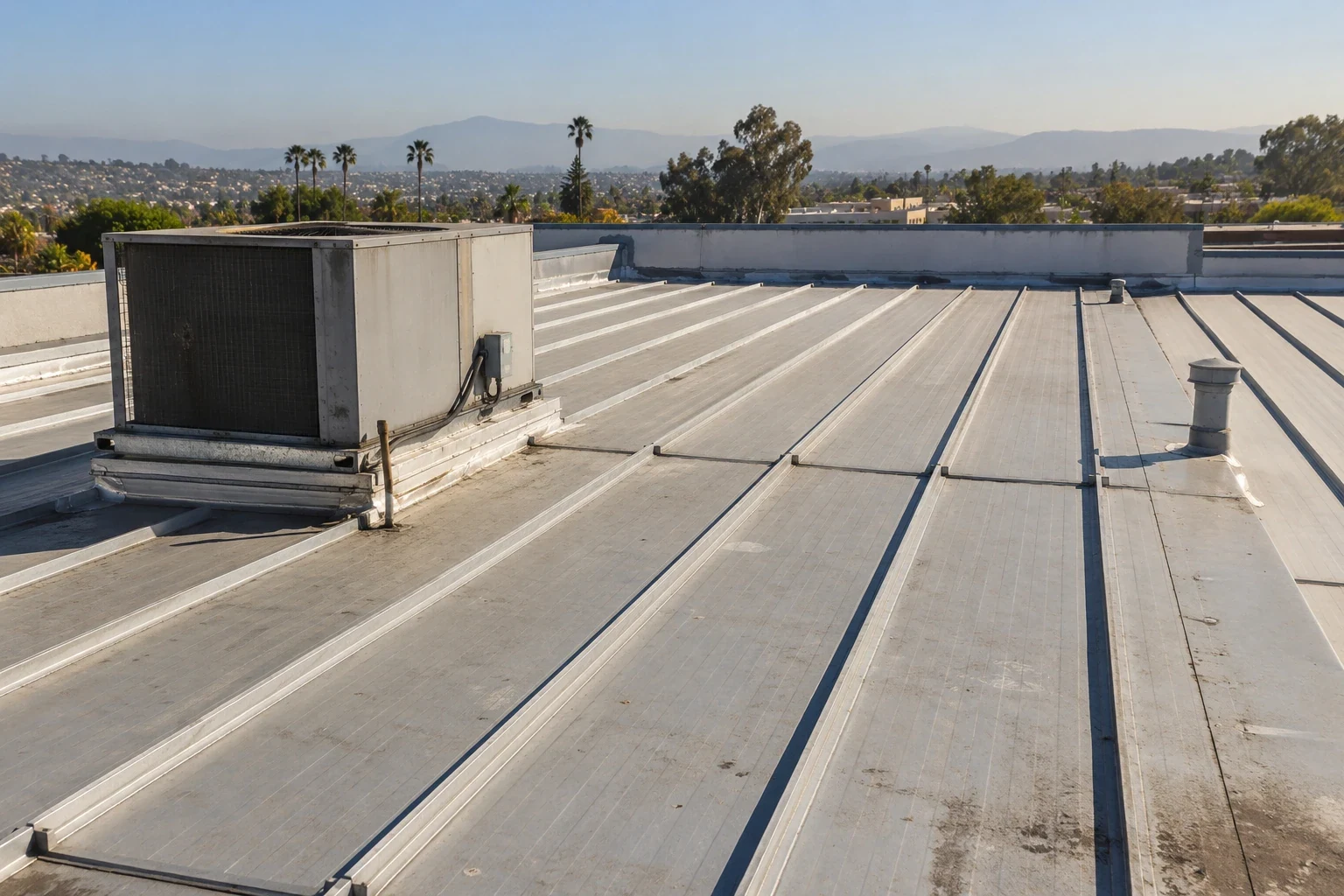
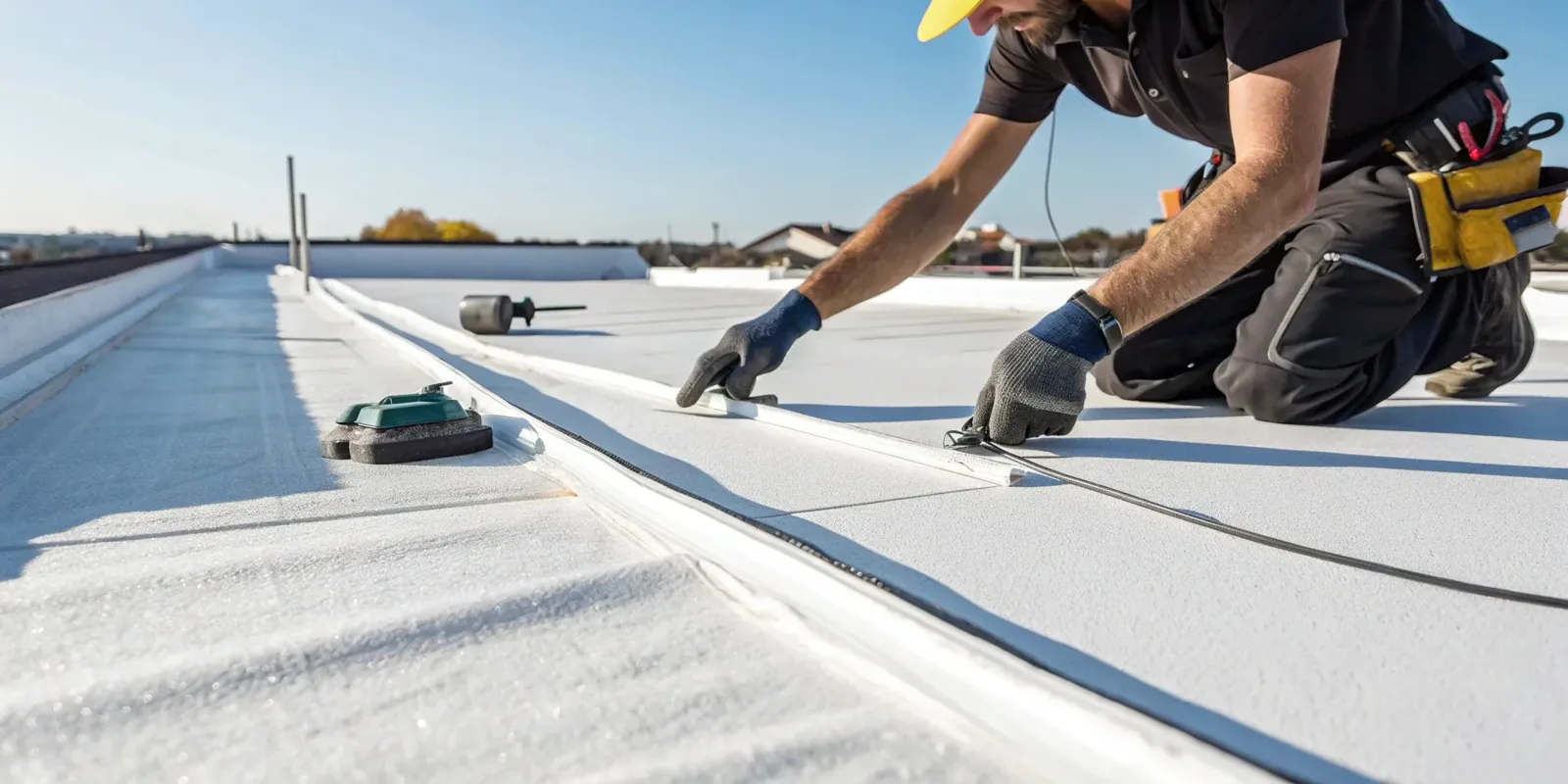
Metal roof retrofit in Downey, CA: we check the existing panels and framing, repair what is needed, then add a new roof over the top with proper edge details.
A metal roof retrofit adds a new roof over an existing metal roof instead of tearing it off. It can save removal costs and keep the building in use, but the old panels and framing become part of the new roof. Before choosing a retrofit, we check whether those panels, fasteners and supports can stay and what the new roof will change at the edges, curbs and gutters. We note what we could see and what is still unknown, and the estimate shows what stays, what gets repaired first and the new details around the edges.
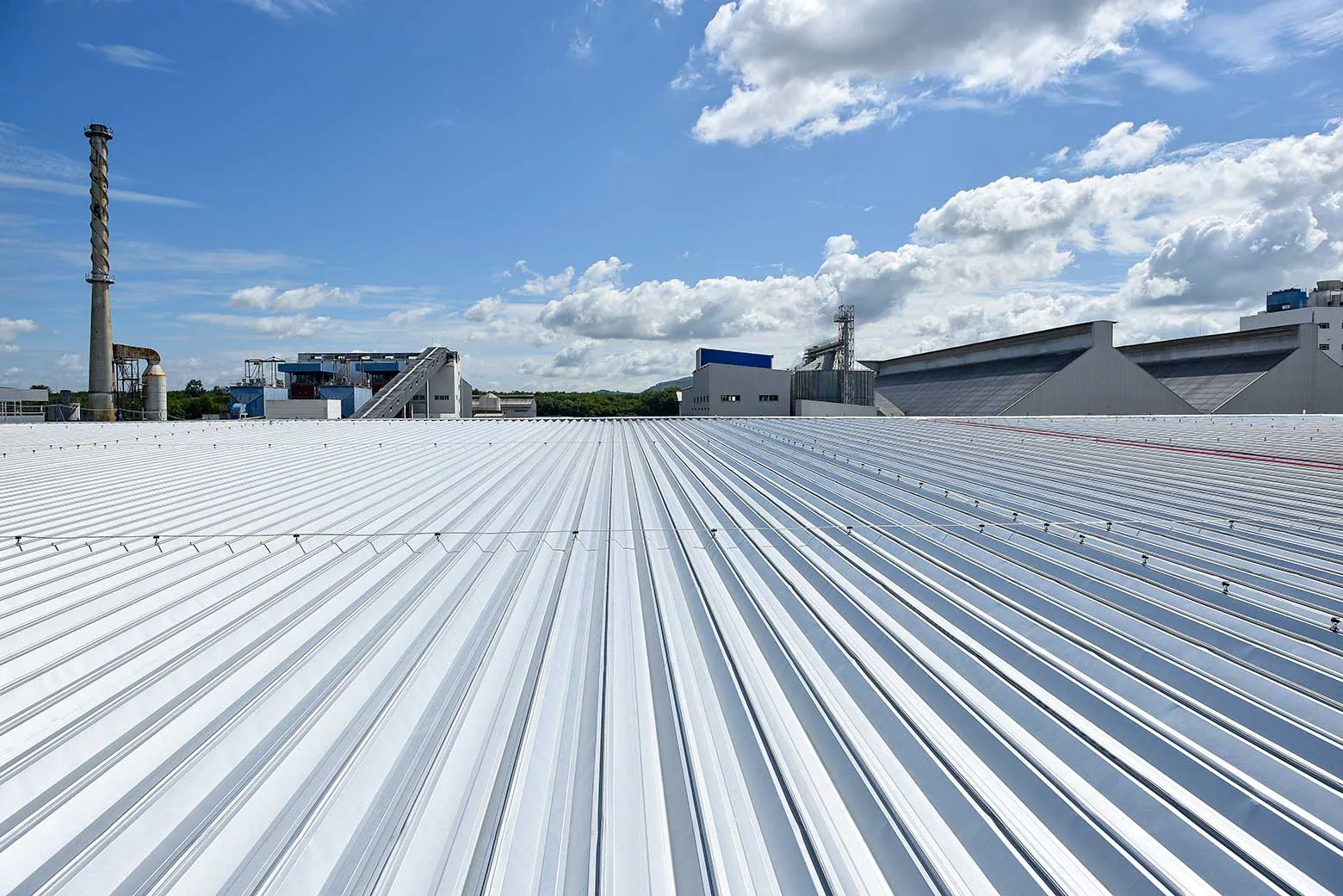
A metal retrofit starts with the existing panel profile, fastener condition, purlins or deck and the roof shape. We check for corrosion, loose fasteners and problems at transitions before recommending an over-roof system. The estimate should show how new supports, insulation and panels affect edges, ridges, curbs and gutters. When a structural review is needed, it goes to a qualified engineer, and our work follows the approved design and what we find on the roof.
A retrofit can involve several jobs: keeping the existing panels, repairing damaged areas, and adding a new roof system. We define each one before ordering materials, and show any repairs, transitions and equipment work the new roof depends on.
Check what the existing panels can support
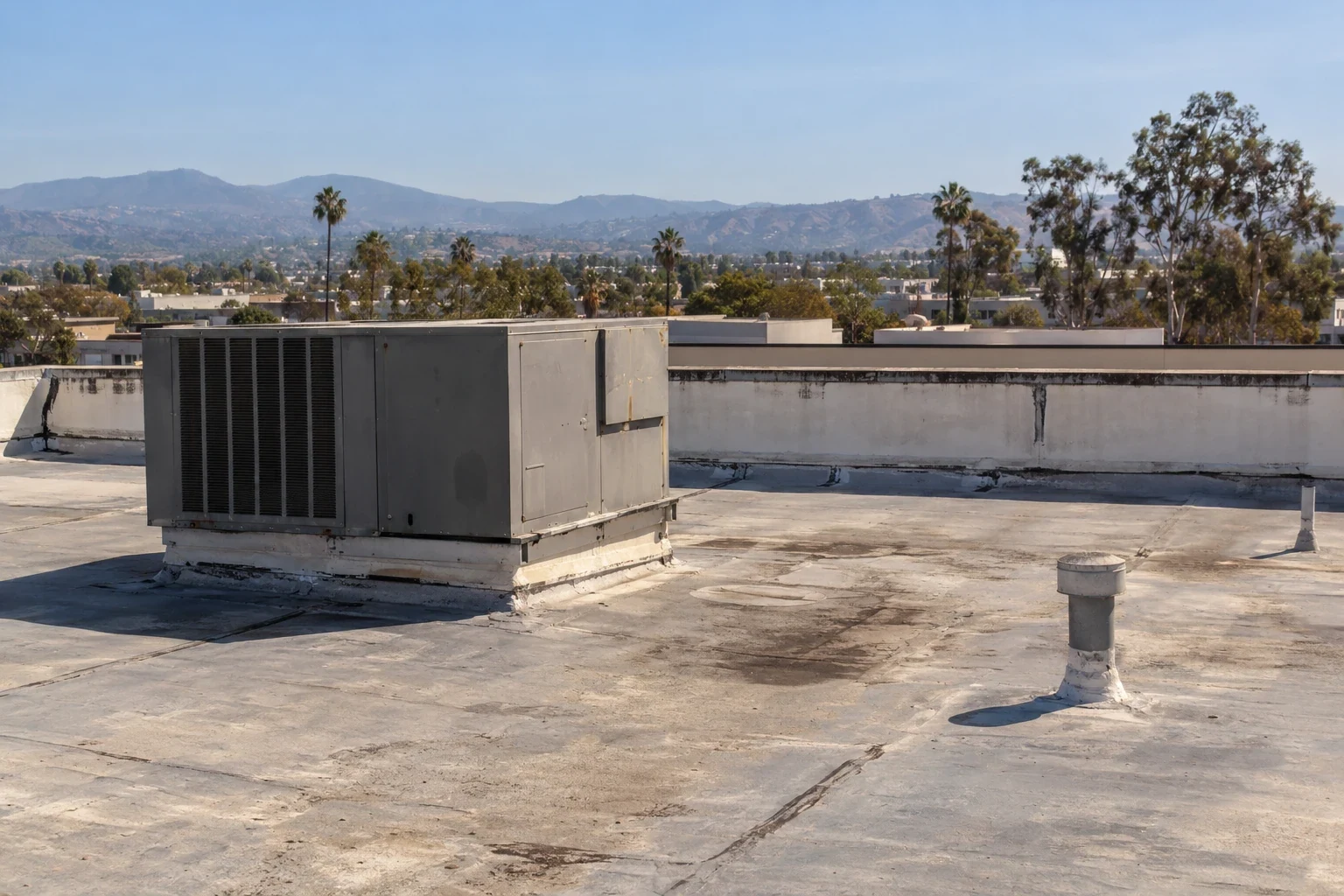
We identify the panel profile and look for drawings or records. On the roof, we check the panels and fasteners in the retrofit area for rust, loose or missing screws and past modifications. Anything we cannot see, such as the condition of purlins or hidden fasteners, stays on the list to check before the retrofit is designed.
If the existing roof is a standing seam metal roof, we identify the specific panel and clip system. A general metal roof label does not tell us which parts can stay. The retrofit method should match the panels actually on the building.
A roof inspection for a retrofit records the areas we checked and those we could not reach, and separates visible problems from structural questions that need an engineer. You will see which existing parts the new roof will rely on and what could change that, before materials are ordered.
Price repairs underneath before the new roof
Badly rusted panels, rotted framing or failed fasteners have to be repaired before the new roof goes on. We measure those repairs and price them separately from the parts that can stay. Where supports are hidden, we note what still needs to be checked. A new roof on top does not fix rusted framing underneath it.
Our roof insulation and cover board work lists what is removed, what is rebuilt and what new insulation or support layers are added between the old panels and the new roof. We check those against the requirements of the retrofit system, and any structural question goes to the engineer.
Sometimes the damage is worse once panels are opened. We locate it, measure the added repair and explain how it affects the plan, then get your approval before continuing. Open areas are protected while you decide. The record shows the original inspection and the new findings side by side, so the added cost is tied to what we actually found.
Choose a new roof and its details
Retrofit options include new metal panels on sub-framing, or a single-ply membrane over insulation fitted to the existing panels. Each has its own requirements for attachment, insulation and details, and not every option suits every existing roof.
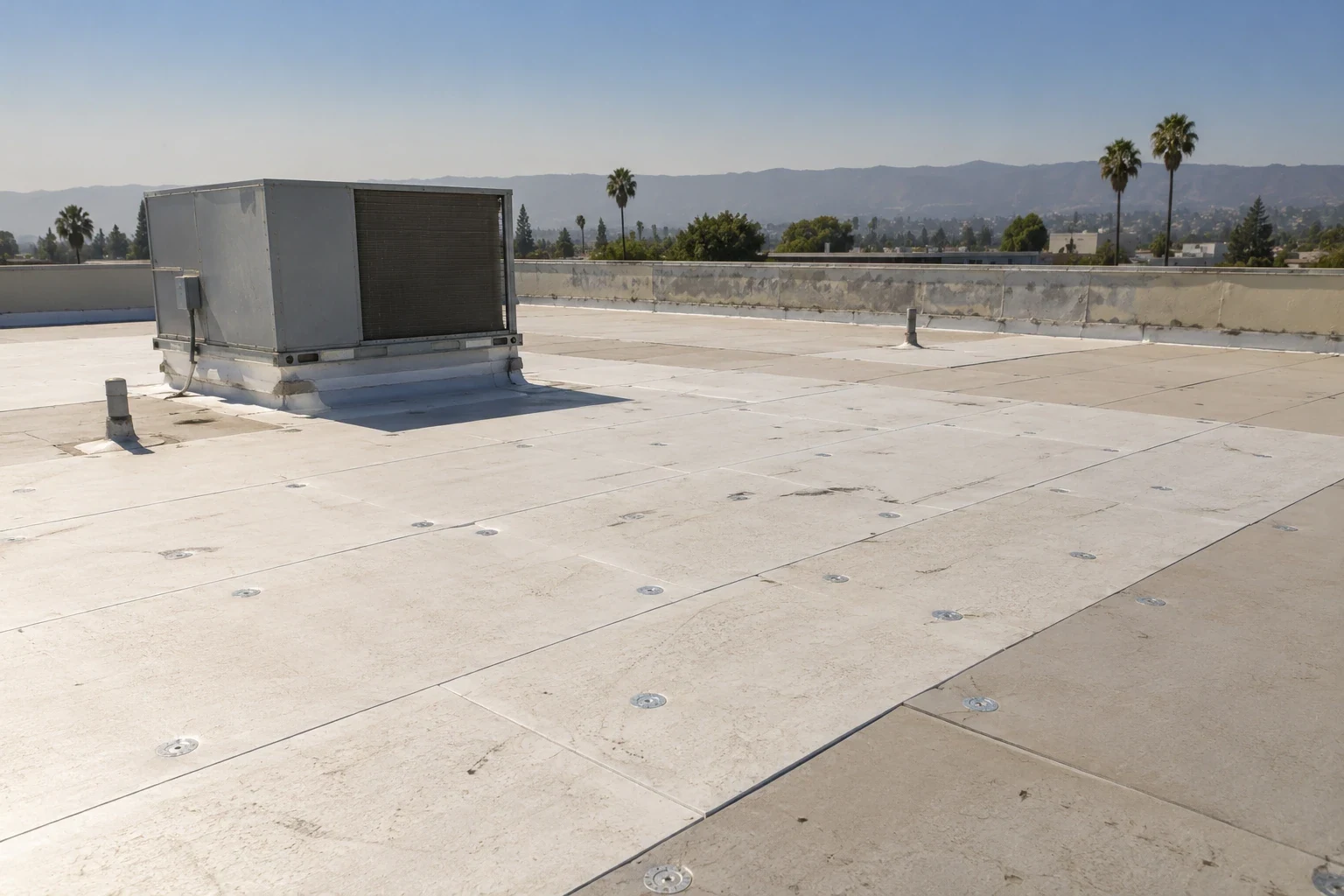
A TPO roofing retrofit, for example, typically uses insulation board to fill the flutes of the old panels, then a cover board and a TPO membrane on top. A new metal retrofit uses clips and sub-framing over the old panels. We spell out the system chosen, along with the repairs and transitions that make it work on your roof.
A retrofit raises the roof, and that changes every edge, gutter, drain and penetration. Those details need to be rebuilt to suit the new height. We include them in the estimate rather than leave them as surprises. You can follow the job from the existing panels through repairs to each finished detail, with any open questions noted before materials are ordered.
Coordinate rooftop equipment at the new curbs
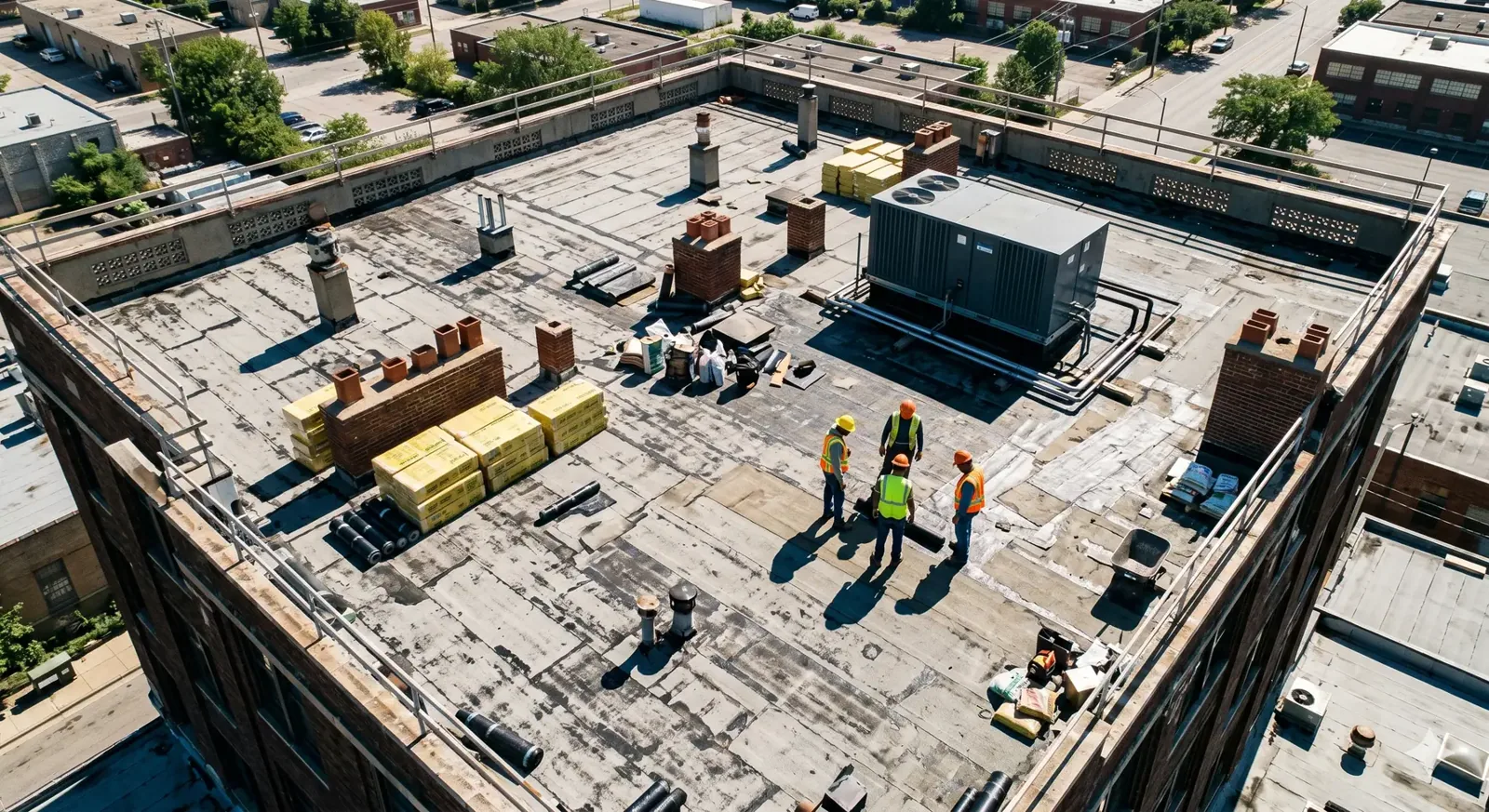
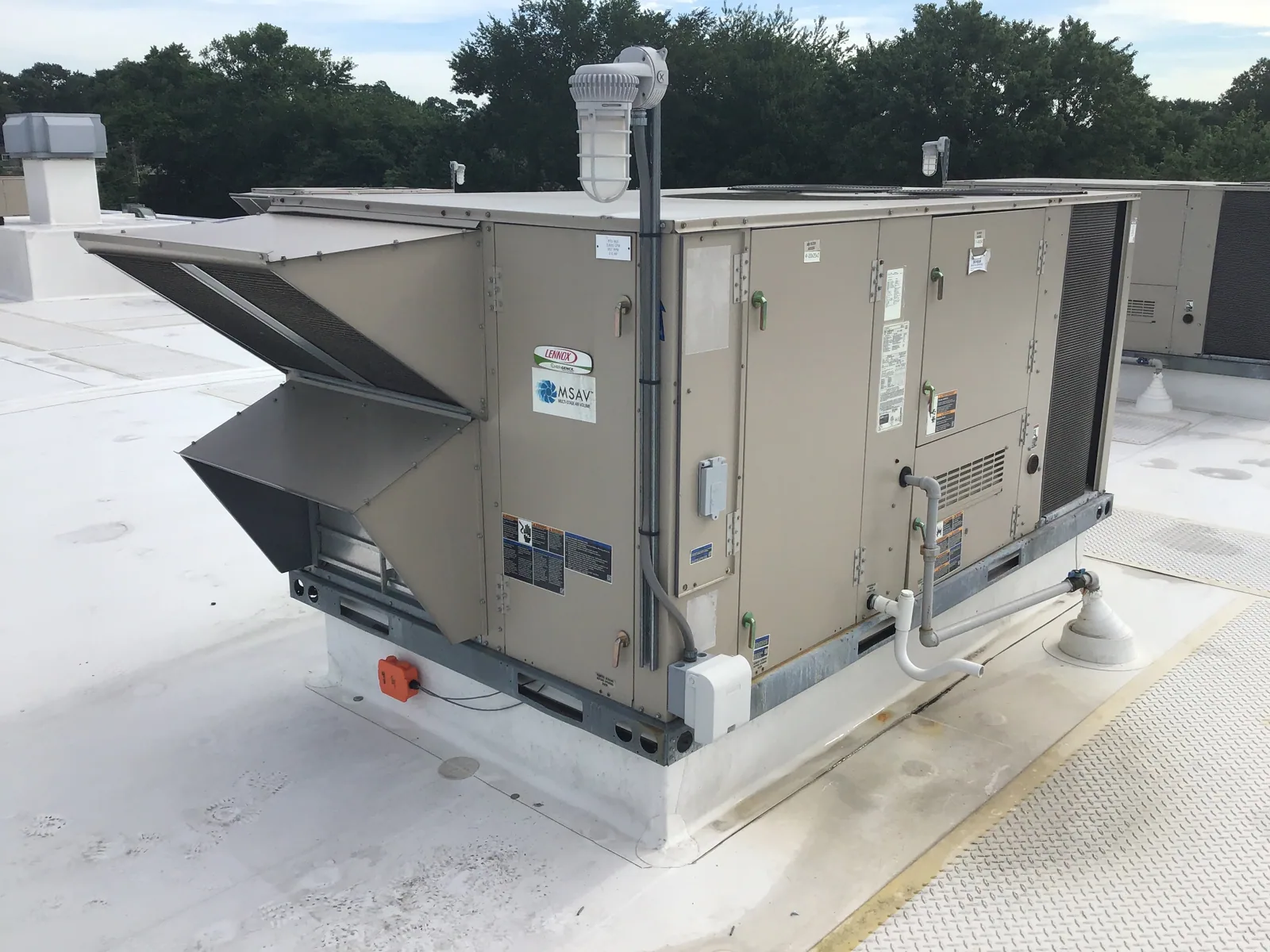
Rooftop units often need to be raised or reset on new curbs so the retrofit can be flashed properly. That is work for the HVAC contractor. We identify what needs to be done at each unit and schedule our work after theirs. A curb that is still blocked stays on the list as unfinished, even if the roof around it is done.
Our rooftop equipment curb and support work separates the equipment contractor's tasks from ours. If a curb or support needs repair, that happens before flashing. Structural questions about supports are answered before the new detail depends on them.
For occupied building retrofits, we confirm access, work hours and material handling with the building manager. Working in phases may add setup and temporary protection, which we price. Unfinished details between phases are listed with what is needed next, so finished roof areas are kept separate from work still waiting on another trade.
Record what stayed and what was installed
Before keeping the existing panels under a retrofit, we check whether they and the framing can hold the new attachments and whether rust or trapped moisture means some sections should come out. We mark the panel areas included, repair damaged sections and plan transitions at walls and equipment. That lets you compare a retrofit with tear-off on equal terms.
For a retrofit near the I-5/I-605 interchange, we keep the property's own inspection with its estimate. A nearby metal roof does not tell us about yours. The retrofit plan is based on what we find on your building.
A roof condition report at closeout lists the products installed and the repairs made, by location, with photos of the new details and the checks done. Approved additions are tied to what we found. Anything not inspected, equipment work still pending and any open engineering questions are listed separately, so you know what was finished and what still needs attention.
Commercial Roofing Questions
What needs to be checked before choosing a metal roof retrofit?
The condition of the existing panels, fasteners and framing, whether any areas are too rusted to keep, and whether the structure can carry the new roof. Structural questions go to an engineer.
What if more damage is found under the panels?
We stop, measure it and explain the added repair. You approve it before we continue, and the area is protected in the meantime.
What equipment work has to happen before the new roof is flashed?
Units often need to be raised or reset on new curbs by the HVAC contractor. We flash the new curbs once that is done.
How do I know what is old and what is new after a retrofit?
The closeout report shows which panels stayed, what was repaired, what was installed and where, with photos and a list of any open items.
Get a metal retrofit evaluation
Considering a retrofit over your existing metal roof in Downey? Send us the roof areas and any panel records, and we will check what can stay and price the full retrofit.