Army Installation Roofing in Downey, CA
Army installation roofing for Downey-area facilities: edge and backing repairs, leak tracing, moisture testing and roof openings cleared with installation staff.
Every Army roof proposal should name the building and the part of the roof that is leaking. A base or installation name does not tell you what is under the membrane. For a request from the Downey, CA area, we start with the specific building. We inspect the roof and explain what a lasting repair will take. The installation representative reviews access and how much roof we plan to open, and the staff who run the systems below make their own calls about them. Protection for the space below is priced with the tear-off and repair, so the owner sees the whole job before comparing material quantities.
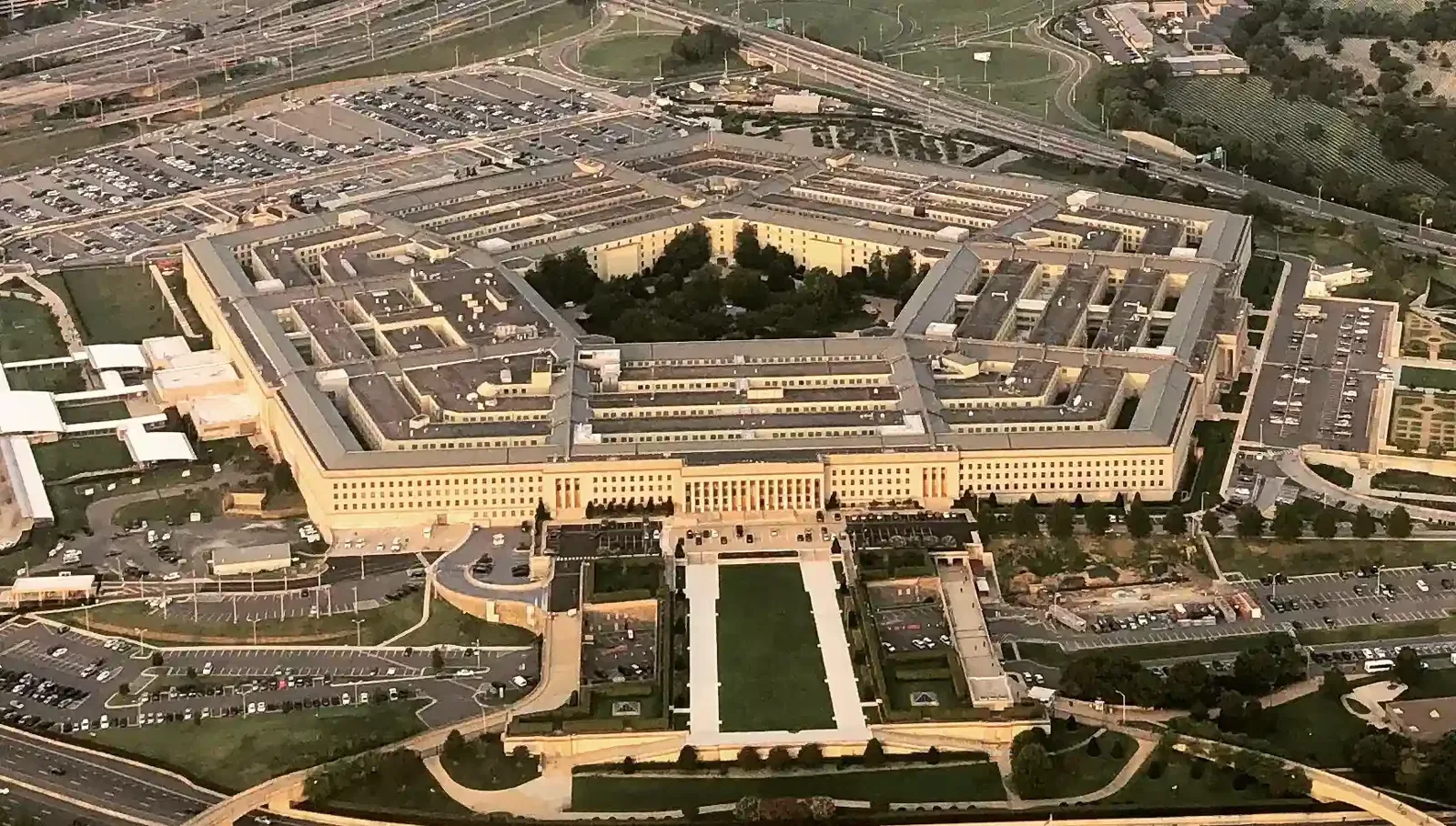
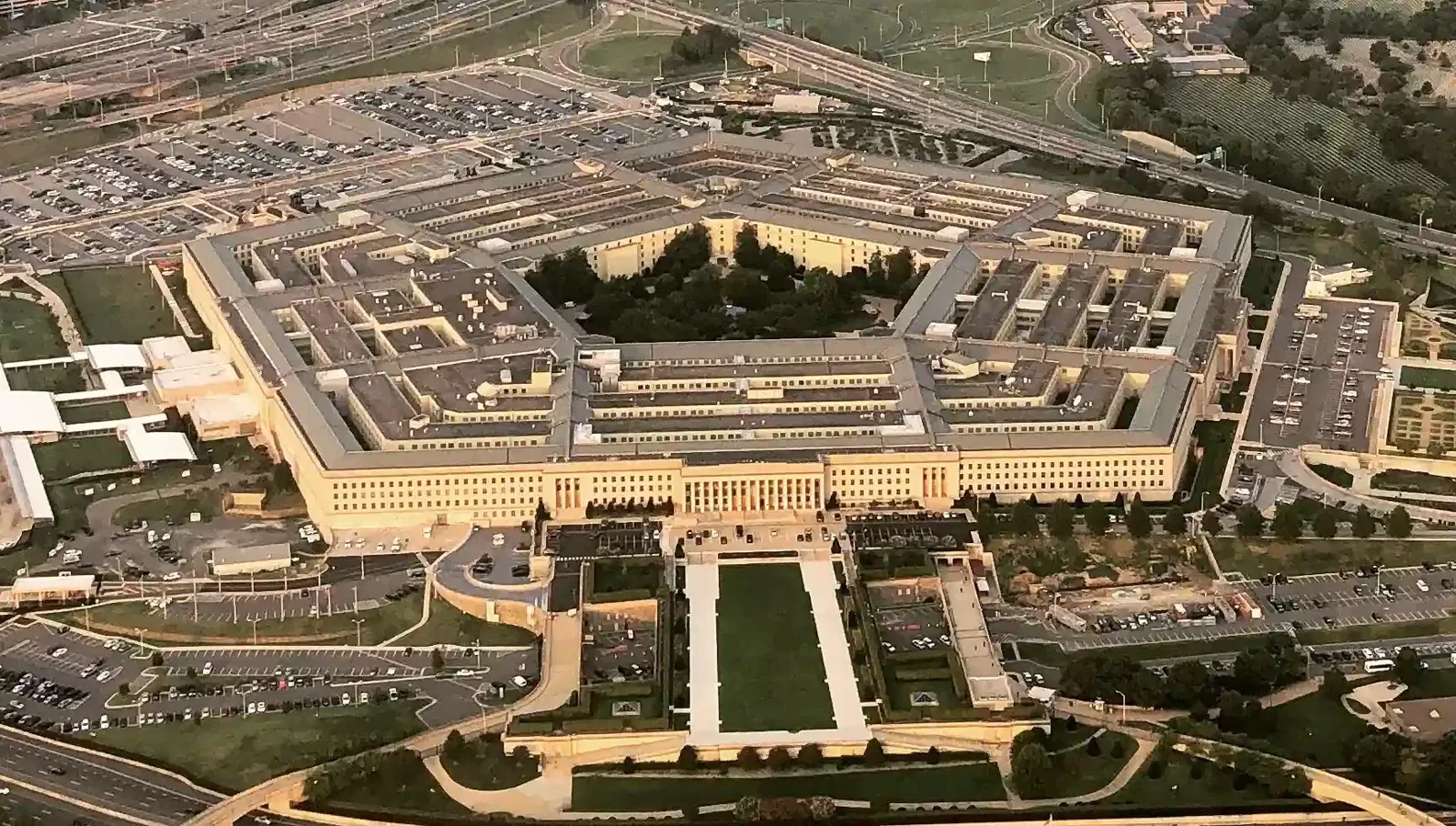
Joint Forces Training Base Los Alamitos is the National Guard installation in the region, but its name tells us nothing about the roof on a particular Army building. Send us the building and any roof records you have, along with the representative who can arrange access and review the work area. We plan the visit around those details, and our recommendation comes from what we find on that roof. The installation name does not grant access or reveal the roof layers.
Price the backing before replacing edge metal
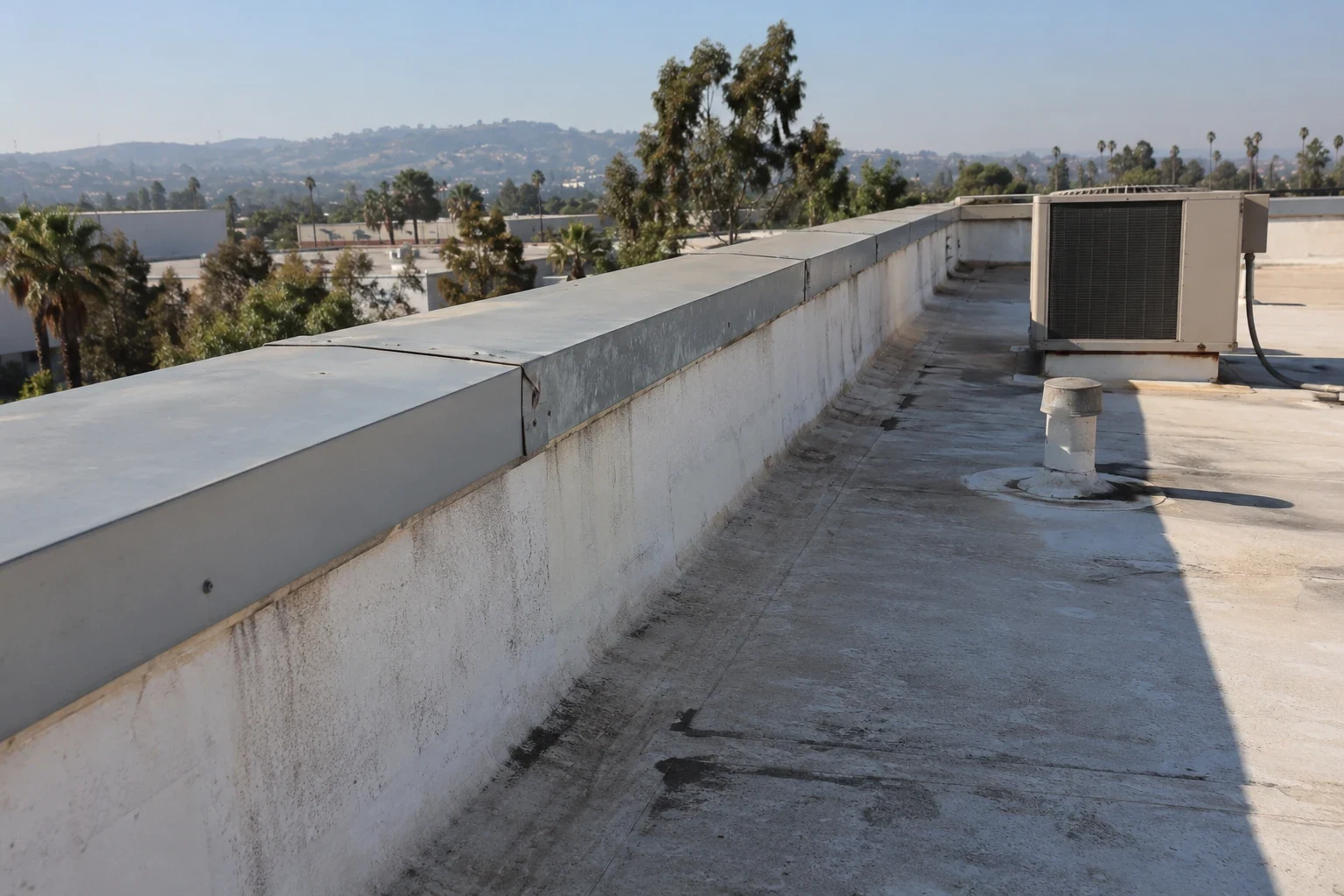
Replacing a short run of edge metal can turn up rotted wood the first price did not include. Our edge metal and coping repair checks the nailer and wall the metal fastens to. If the wood is rotten, it has to come out, sometimes well past the visible damage. A wall repair may fall to another contractor, and we show it next to the roof work so it does not get missed. New metal will not hold on bad wood. Compare complete edge repairs before choosing the shorter quote.
The repair edge should be set where sound material starts. Good membrane may only need cleaning and priming. Damaged or dirty membrane may have to be cut out before new material can bond to it. TPO and PVC need clean, weldable material. Other roof types need the right adhesive or fastening method. We spell out the work needed on each side of the detail. The length of edge metal alone does not tell you how much backing repair is needed.
Clear the work area with installation staff
Opening a roof can affect spaces well beyond the area we inspected. Our military installation roofing plan spells out how much roof comes off, how materials go up and how debris comes down, and the installation representative reviews it. Base staff check the rooms, equipment and stored items below. Specialists handle decisions about their own systems. We include the protection that comes out of that review in the roofing price. An approved inspection does not clear the area for tear-off, so we confirm the plan for the actual opening first.
If more rotted backing turns up, the opening may need to extend over a different room. We explain the change and the reason before making the opening bigger, and the new area gets its own access and protection review. That added preparation is priced alongside the extra roofing. Clearing the first area does not clear a storage room or equipment space next door. If the permanent repair has to wait, a temporary seal keeps water out and stays on the punch list.
Find the roof defect behind the leak
Where water shows up inside is often not where it gets in. Our roof leak repair starts with where and when the water appeared, then checks the seams, flashing and penetrations above and around it. A leaking pipe or HVAC unit may be the real cause, and that goes to the staff who maintain it. We do not promise a roof fix until we find a roof problem that explains the leak. A new coat or patch will not fix every interior leak.
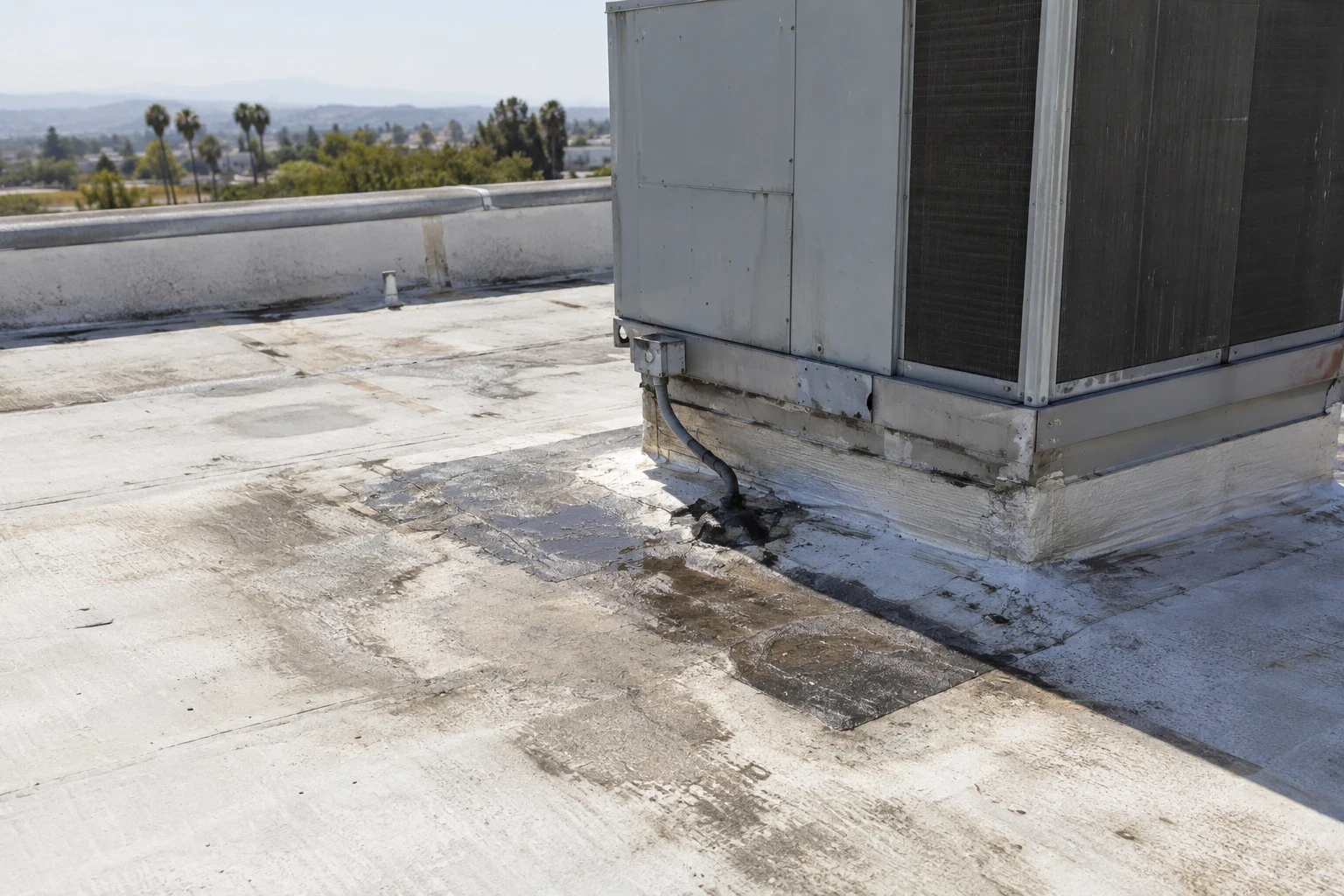
Rooftop units and curbs often need work before the roof can be sealed around them. The mechanical staff handle servicing, clearances and moving units. If supports need to change, an engineer reviews it. We identify the sound surface needed where our flashing ends. More membrane in the field does not fix a curb that has not been prepared. That work stays in the overall project scope so the owner can compare a spot repair with a larger option for clear reasons.
Test the layers before keeping the old roof
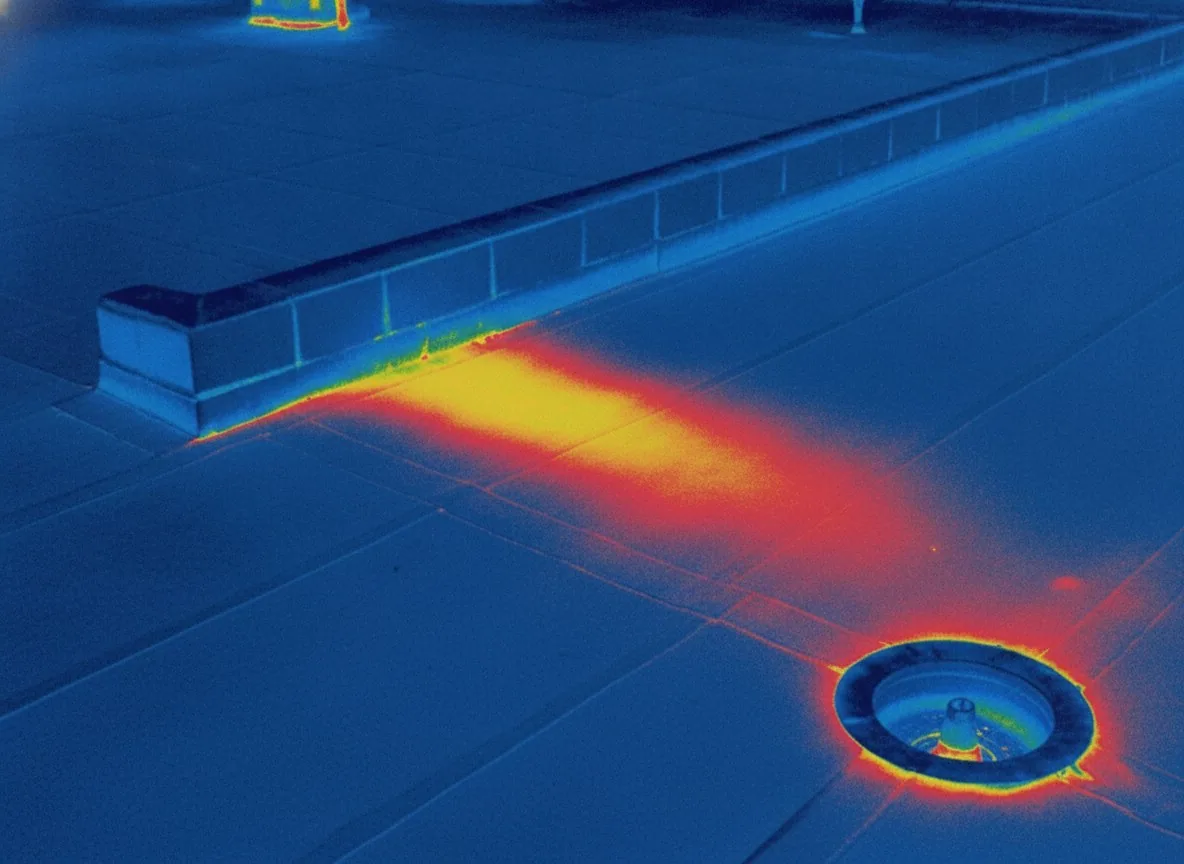
A roof that looks good on top can still have wet insulation underneath. Our infrared moisture survey compares thermal scans with the roof records, taking the weather at the time of the scan into account. A warm or cool spot points us to an area worth checking. It does not prove the rest of the roof is dry. We test with core cuts wherever keeping the old layers affects the repair method. Test cuts are patched as part of the survey, and protection below them is reviewed with the installation contact.
When a wet area is confirmed, we explain how far the removal needs to go. If the moisture is widespread, more testing may be needed before choosing a method. We say what the results show and what is still unknown. Another layer of roofing does not dry out what is underneath. The owner should have that information before choosing a recover over a tear-off. Compare the work each option really requires, not just the lower number. Every price should follow what we found on that particular Army building.
Record finished edge repairs and what remains
The closeout shows the new edge metal and membrane tie-ins we completed. It marks the patched test cuts and any backing problems found during the work. We photograph the substrate before it is covered. Temporary seals are listed separately from permanent repairs. Equipment or other contractor work still needed at each spot is noted. A dry roof does not mean every other system is fixed. The installation representative gets a clear list of what remains, so the next estimate covers only the unfinished work.
The Armed Forces Reserve Center in Bell consolidated Army Reserve units from Pasadena, Long Beach and Los Angeles. Its three buildings include twenty maintenance bays and large mechanical systems. We identify the affected building and roof section before setting removal quantities. Installation access and escort requirements are confirmed with the representative, and then we map the opening and the permanent flashing detail. Temporary protection is kept separate from the finished roof. A building-level roof inspection identifies the affected section before we set the scope. Where the work reaches a maintenance bay, its equipment and service conditions are confirmed with the representative. Closeout shows the flashing tie-in, drain path and any edge detail left for another visit. A separate office roof or warehouse roof needs its own inspection and access plan; it may not share the same materials.
Commercial Roofing Questions
What does a complete Army building edge repair include?
It includes the wood nailer or wall backing the new metal fastens into, removal of any rotted material, any wall work another contractor has to do, and the membrane tie-in at the edge. Compare complete edge repairs before treating a length of replacement metal as the whole job.
Does the installation name give us permission to start roof work?
No. We need the specific building and the representative who can approve the work area. Installation staff review the spaces affected below and arrange access and any system shutdowns. We describe how materials and debris will move so they can review it. The installation name alone does not authorize an inspection or a roof opening.
How do you decide whether hidden roof layers can stay?
We test wherever keeping the old layers affects the repair method, using infrared scans, roof records and core cuts. Test cuts are patched and protection below is reviewed. The results tell the owner whether to keep the layers, remove them or test further before choosing a price.
What happens if more damage means a bigger opening?
We show the added area and explain what we found. Staff review the spaces below, protection and how materials will move before we open more roof. That preparation is priced with the added roofing. Clearance for the first area does not automatically cover the new one.
Compare Army roof repair options
Send us the building, where the leaks show up and any roof records you have. Working with your installation representative, we will inspect the roof and price the edge repair, backing work and protection needed around the opening.