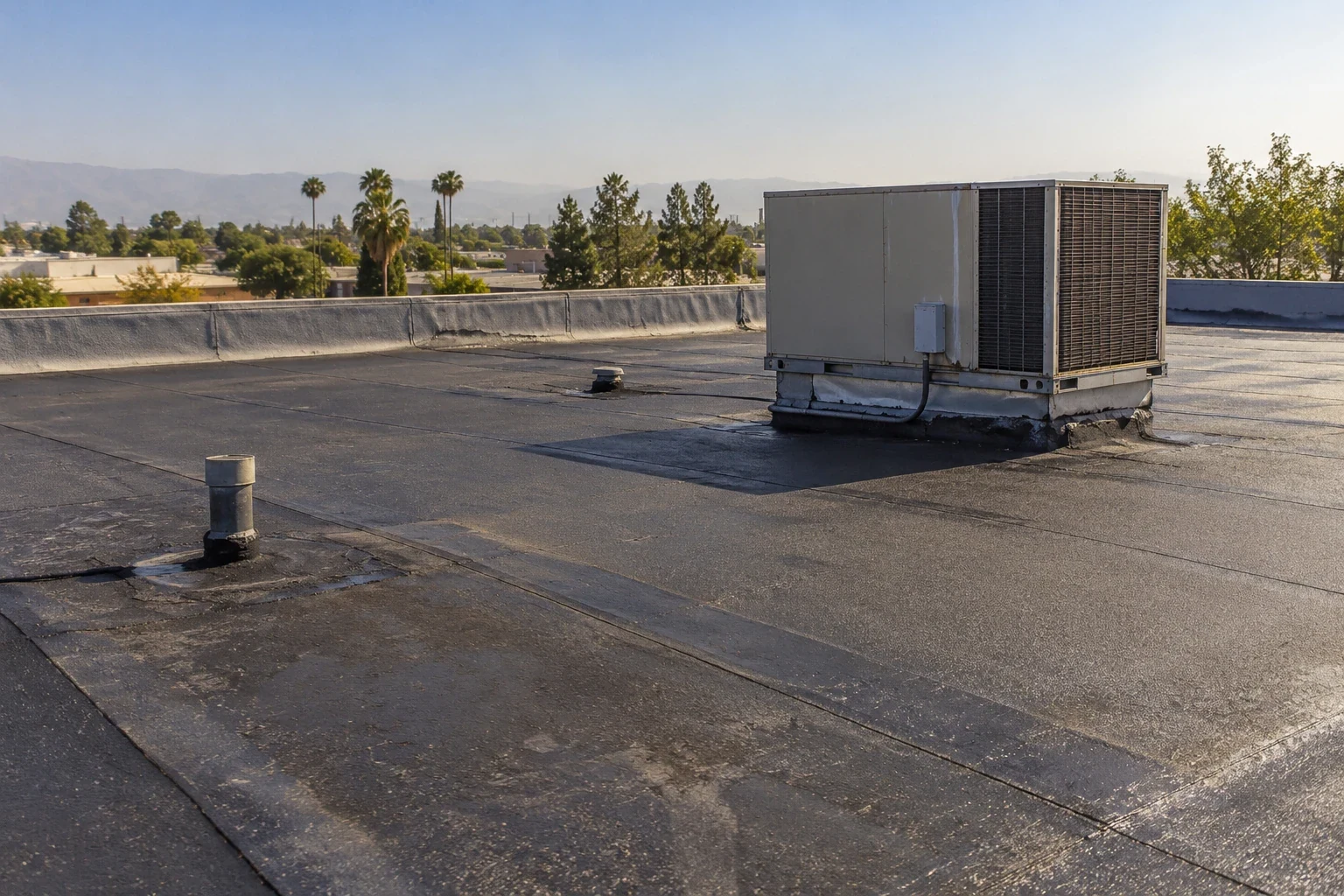
Bell Commercial Roofing from Downey, CA
Roof sealant and flashing joint repair in Bell from our Downey crew. We find out whether the leak is old sealant or failed flashing and price the right fix.
Cracked sealant is one of the most common things a building owner in Bell will point to on a roof. It shows up at metal laps, counterflashing, pitch pans and pipe collars, and it is easy to assume a fresh bead will stop the leak. Sometimes it will. Often the sealant failed because the metal underneath moved, the flashing came loose, or the surface it was stuck to was never clean. More caulk over that does not last. We look at what the sealant was supposed to seal before we recommend anything.
A roof joint needs sound surfaces on both sides of the sealant. We check metal movement, bead separation and moisture at the adjacent membrane before resealing. A new bead will not hold on loose or contaminated material. We price preparation and replacement separately. Property managers can also arrange commercial joint and flashing work in Bell Gardens.
Find out what is under the cracked sealant
We start at the cracked bead and look at everything around it. Is the metal lap still tight, or has it shifted and torn the sealant? Is the membrane flashing below it still bonded, or has it pulled away from the wall? Is the termination bar secure? Each of those leads to a different repair, and a failed membrane seam should never be written up as a caulking job.
A roof inspection notes each joint by location, what we found, and what we could not see behind the metal. If the wall backing or the metal itself looks damaged, we may recommend a closer look before quoting a permanent fix. You will know what is confirmed and what is still a question.
Old sealant is a good place to start looking for a leak, but it is not proof of where the water is getting in. If the interior stain does not line up with the joint, we keep looking.
Fix the flashing or metal first when needed
If the metal is loose or bent, or the membrane flashing behind it has come unstuck, those need to be fixed before any new sealant goes on. That might mean refastening or replacing a counterflashing, re-setting a termination bar, or rebuilding a section of base flashing. We price that work as its own line so you can see it.
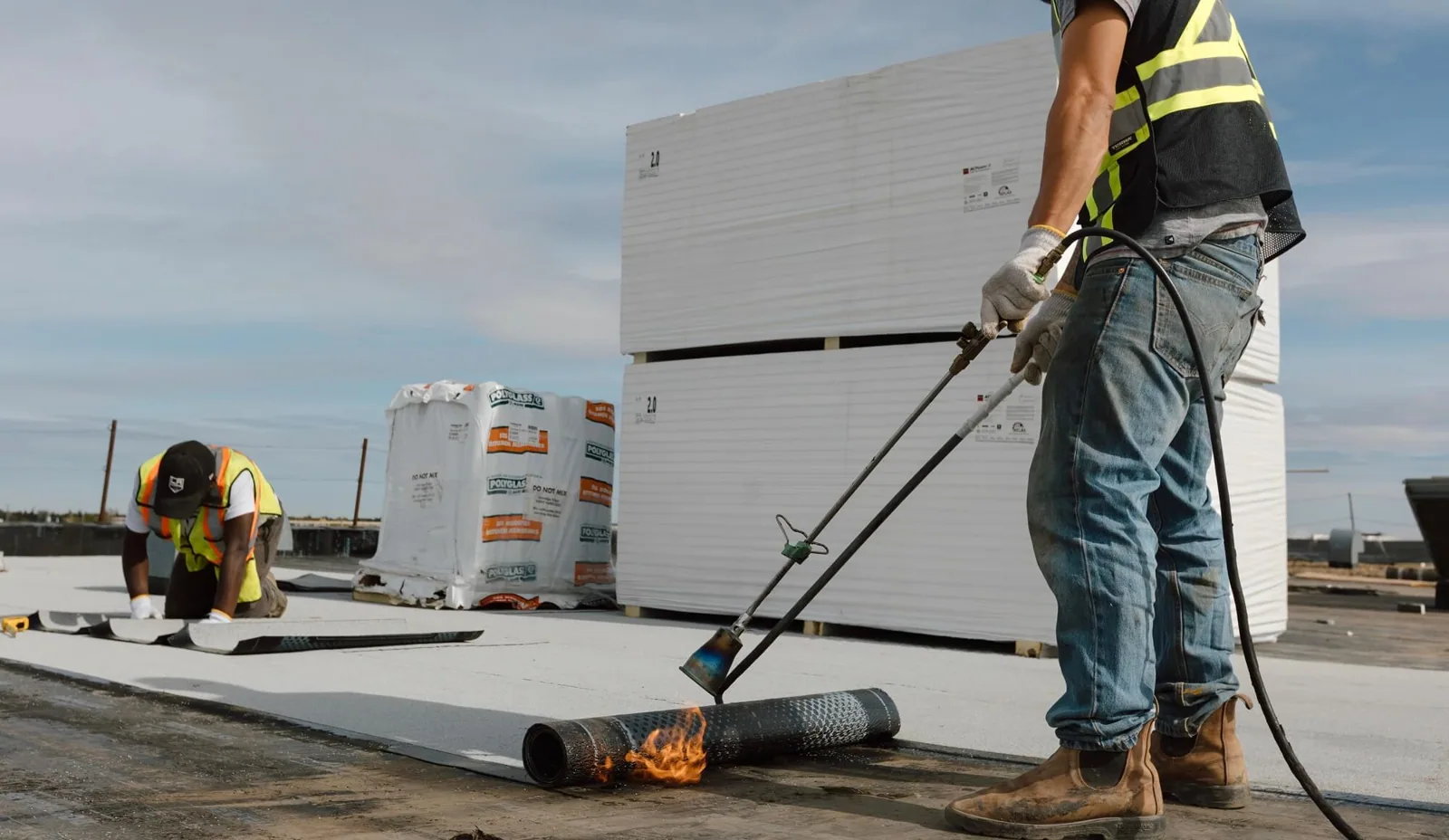
A proper roof repair uses materials that match the roof. On a single-ply roof, failed seams near the joint get welded or re-adhered with the right primer and tape. On an asphalt roof, they get new plies. If water has been getting in for a while, we check the insulation under the joint and replace it if it is wet. A bead of sealant cannot fix wet insulation.
When opening the area reveals more damage, we stop, show you, agree on the added work and keep the roof protected while you decide. The permanent fix follows what we actually find.
Prepare the surfaces so new sealant holds
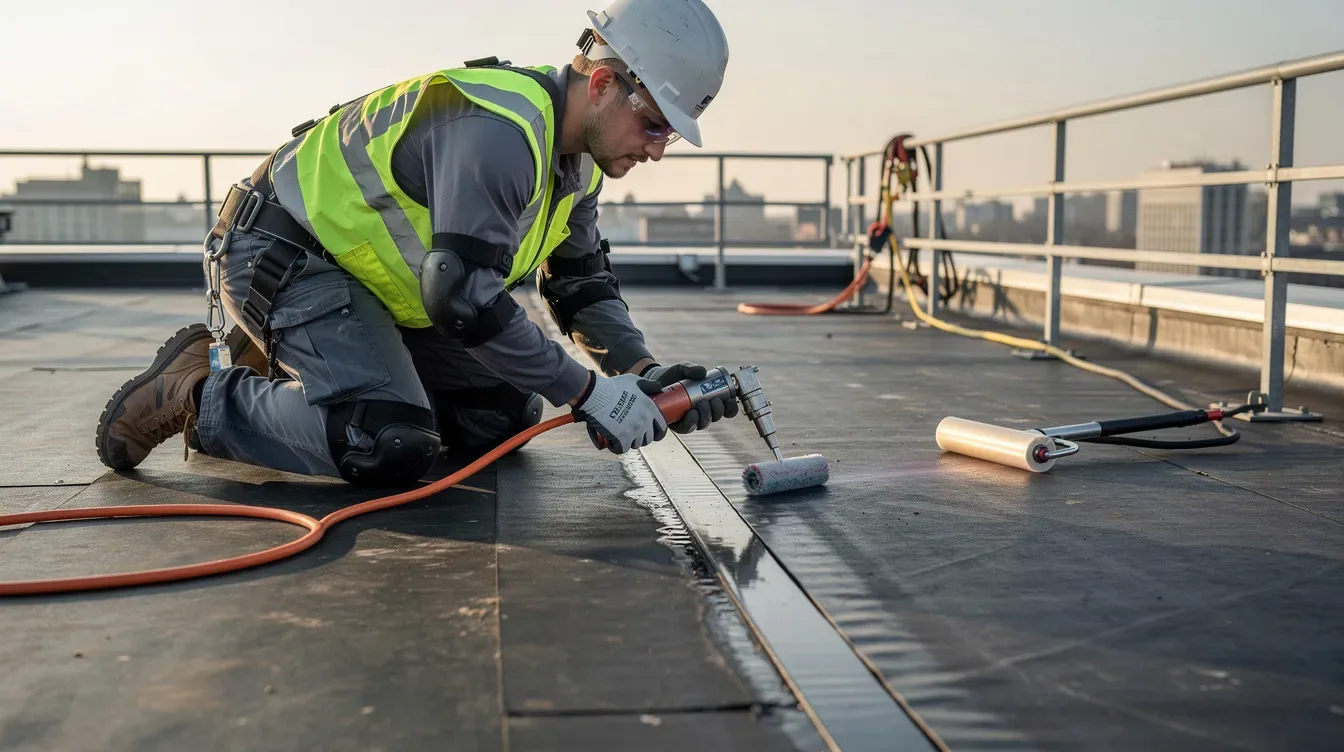
New sealant only holds if it is stuck to clean, sound material. We cut out all the old, cracked bead rather than caulking over it, clean the metal and membrane, and use a primer where the product calls for one. The sealant has to be compatible with both surfaces it touches; some sealants do not bond well to certain membranes or will soften asphalt. The estimate should say what product goes where.
On a modified bitumen roof, the base flashing and the sealant at the top of it are two separate pieces of work. The flashing keeps water out; the sealant keeps water from getting behind the counterflashing. Both need to be right, and the material choice for one does not settle the other.
Each joint on the roof gets its own look. A product that works at one location may be the wrong choice at another with different metal or membrane.
Compare what each estimate includes
At a commercial building in Bell, sealant repairs start with the joint surfaces. We remove failed material, inspect the metal lap and check whether the adjoining flashing is still secure. Cleaning and preparation are priced with the new bead; metal work is added only where the inspection supports it. The manager can schedule similar joint repairs for properties in Bell Gardens.
Two estimates for the same leak can look very different. One may simply reseal the joint. Another may refasten the metal, rebuild a short run of flashing and then seal it. The second costs more but fixes the cause. We will tell you which one your roof needs and why. We also service commercial roofs in Maywood, with each building inspected on its own.
We provide emergency leak response on nights, weekends and holidays. A quick seal in the rain is a temporary fix, and we label it that way until the permanent repair is done.
Photograph the joint before it is sealed
Before the new sealant goes on, we photograph the cleaned joint, any metal we refastened or replaced and any flashing we rebuilt. Once the bead is in place, the prep work is invisible, and the photos are the record of it.
Those photos go into a roof condition report with each joint located on the roof plan. Anything left for another trade, such as wall cracks or loose coping that someone else is handling, stays on the list as open. Joints we did not work on are noted, so no one assumes every seal on the roof was redone.
The cheapest sealant job is rarely the cheapest repair. The real cost depends on whether the metal and flashing underneath are sound. We price the work that fixes the leak, and we show you why.
For a Bell repair, we mark the affected membrane and the edge next to it and price the prep needed for a lasting seal. Any temporary patch is kept separate from the finished flashing work, so you approve the job with its real scope.
Commercial Roofing Questions
Is resealing the joint enough to fix the leak?
Sometimes. If the metal and flashing behind the sealant are sound, new sealant on clean surfaces will do the job. If the metal has moved or the flashing has pulled loose, those have to be fixed first, or the new bead will crack again.
Does cracked sealant mean that is where the leak is?
Not necessarily. It is a good place to start, but water can travel. We check the roof details above and around the interior stain before we decide where the leak is coming from.
What prep should be included in a sealant repair price?
Removing all the old sealant, cleaning the metal and membrane, priming where needed, and using a sealant compatible with both surfaces. If metal or flashing needs repair first, that should be a separate line.
What if the metal behind the sealant needs work?
We refasten or replace it before sealing. If someone else is responsible for that metal, such as a wall or sheet metal contractor, we list it separately and schedule our sealant work after theirs.
What records do I get after the repair?
Photos of the cleaned joint and any metal or flashing repairs before the new sealant went on, a list of materials used, and a note of any open items for other trades.
Get the joint inspected
Seeing cracked sealant or a leak at a roof joint in Bell? We will inspect the joint, the metal and the flashing behind it, and give you an estimate for the repair that actually fixes it.