Air Force Base Roofing in Downey, CA
Air Force base roofing for Downey-area facilities: we inspect the specific building, plan access with base staff and price lasting repairs with protection included.
Roof work on a base starts with a specific building, not the base name. Two hangars or office buildings on the same installation can have very different roofs and very different access rules. For an inquiry from the Downey, CA area, we need the building number and a point of contact who can arrange access. We inspect the roof, find the cause of the leak and explain the repair it needs. Base staff review the work area and any systems below it, and specialists for those systems decide how their equipment is protected. The protection they require is priced alongside the tear-off and repair, because a material quantity alone does not tell you whether the work can start.
Los Angeles Air Force Base is in El Segundo. Joint Forces Training Base Los Alamitos is another installation in the region. Either way, a roof request starts with the building, the base contact and the current installation rules. Send us the leak locations and any roof records you have before we price the work.
Find what the repair has to tie into
A small leak can need more work than the visible split. Our commercial roof inspection looks at the membrane, flashing and backing around the problem area. A roof that looks fine in the middle can still have failed flashing at the walls and edges. If the backing at a wall or curb is damaged, the repair may need to extend further than expected. We explain why, so the owner understands the reason behind the size of the repair. Bids can only be compared fairly once each one shows where the repair ends and what backing work it includes.
Photos show the condition behind each recommendation, but they do not replace an explanation of the repair. We note which areas can stay and which need a closer look. If we cannot see enough to be sure, we may suggest a test cut. A larger repair should have a clear reason. A smaller one still needs sound material to tie into. Comparing two bids by square footage alone tells you very little.
Get base approval for the work area
Permission to inspect a roof is not permission to tear it open over an occupied space. Our military installation roofing process maps out how much roof will be open, where materials arrive and how debris leaves, and the base contact reviews it. Base staff check the spaces and systems below, and the people who maintain those systems set their own requirements. Whatever protection they ask for goes into the roofing price. We confirm the exact area before opening it, because a scheduled roof visit does not mean everything below is ready.
If we find more damaged backing, the work area may have to grow. We explain the extra opening and the reason for it first, then get the new area reviewed before tearing off more. Changes in protection, material handling and access are priced with the added roofing. Approval for the first area does not cover the next one. When a permanent repair has to wait, a temporary seal keeps water out, and we list it separately from the finished work.
Check drains, scuppers and the membrane around them
Many base roof leaks come from a drain or scupper connection rather than the open field of the roof. Our roof drain and scupper inspection follows the water to the outlet and checks the membrane, clamping ring and flashing around it. Problems with the pipe below the roof belong to the base's plumbing staff. If the work changes how the roof drains, an engineer may need to weigh in. Adding more membrane will not fix a broken drain, so we price that work alongside the roofing to make sure the drain actually gets sealed.
How we prepare the repair depends on the roof. Sound membrane may only need cleaning and priming. Brittle or damaged membrane or backing may need to be cut back past the visible split. TPO and PVC need clean, weldable material. Other roof types need the right adhesives and fasteners. We set the repair edge where the existing roof is sound, because a narrow patch over a gap usually fails at its edges.
Check for wet insulation before keeping the old roof
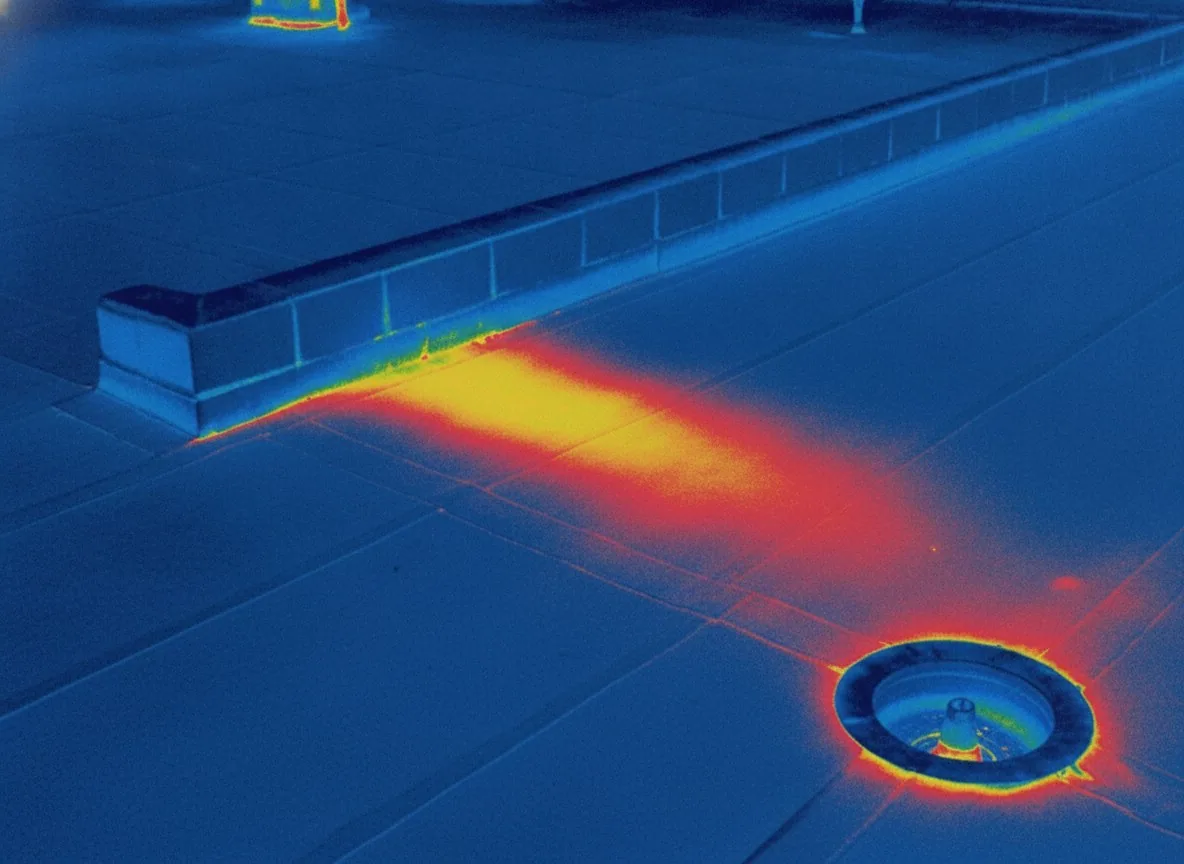
A roof surface in good shape does not mean the insulation under it is dry. Our infrared moisture survey compares night-time thermal scans with the roof records. Weather and recent rain affect the readings, so we confirm suspect areas with core cuts. A scan can point to trapped water, but it does not prove the whole roof is sound. We test wherever keeping the old layers would affect the repair method. Test cuts are patched as part of the survey, and protection under those openings is reviewed with the base contact.
When a wet area is confirmed, we mark its limits for removal. If the moisture is widespread, we may need more testing before recommending a recover over the existing roof. We explain what each test showed and what is still unknown. Putting new roofing over wet insulation does not fix it. The owner should see this before comparing a recover against a tear-off, and each option should show the work it really requires. The price follows the roof we tested, not an assumption about every building on base.
Record the roof work and what is still open
The closeout shows where the new membrane, flashing and drain repairs were completed. It includes the patched test cuts and anything we found during tear-off. We photograph good substrate before it is covered. Temporary seals are marked separately from finished repairs. Any plumbing, mechanical or other contractor work still needed at a detail is listed. A dry roof does not mean every other system is in good shape. The base contact gets a clear list of what remains, so the next roof project can start from the work still unfinished.
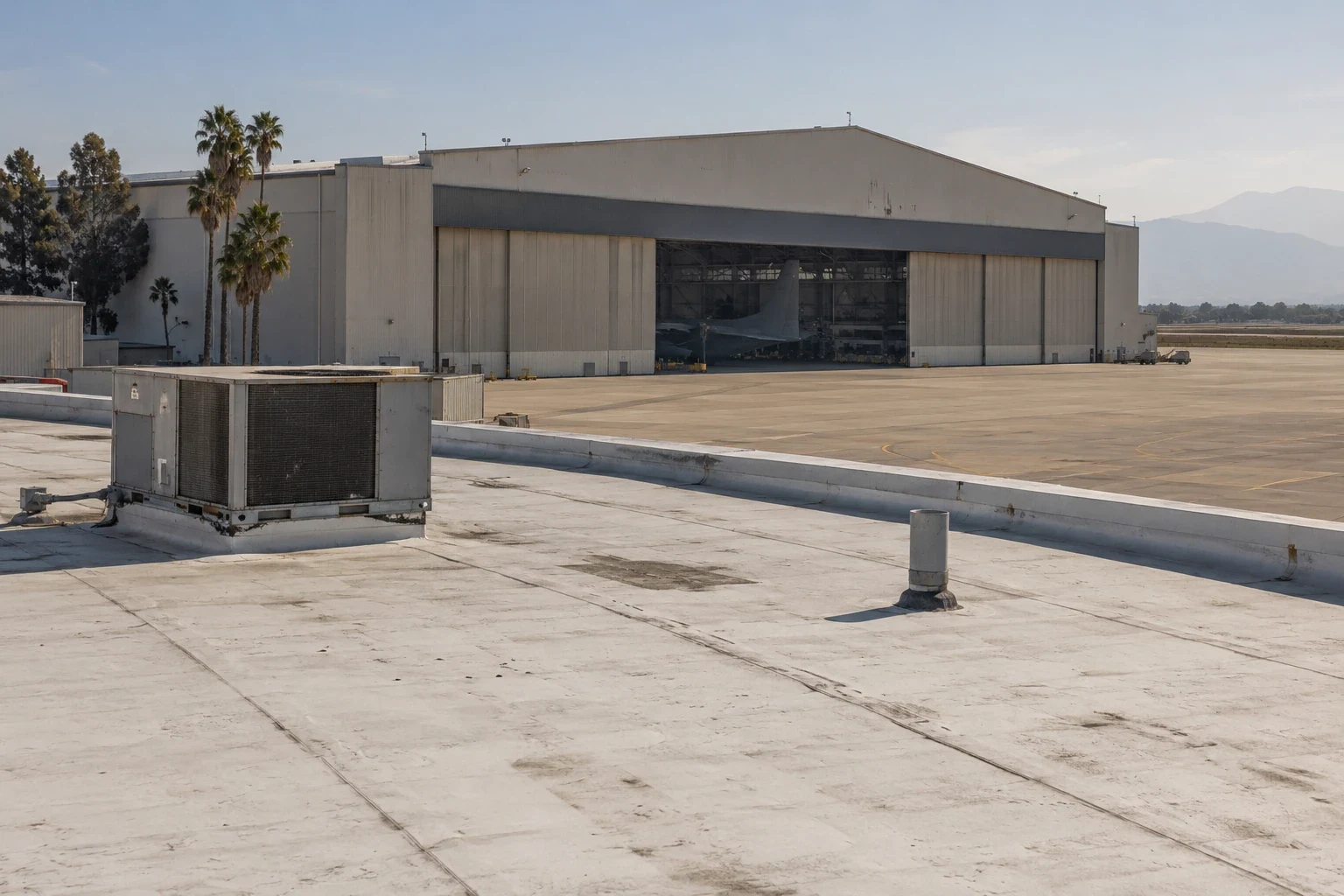
Los Angeles Air Force Base is in El Segundo; Joint Forces Training Base Los Alamitos is another regional installation. A Long Beach area base roof request starts with the building and the base contact. Military hangar roofing and government building roof repairs depend on the facility in question. We record the access approval and the roofing limits together.
For a base roof request, we identify the assigned building and roof assembly before choosing a repair, recover or replacement. The base contact confirms access and any operating requirements for the work. We price only the roof section cleared for inspection, with protection and permanent tie-ins included, and we record the completed work and any detail left for follow-up.
Before mobilizing, we split the work into approved roof areas and note how crews reach each one. Staging, material handling and temporary protection are written down once the base contact confirms them. This keeps the proposal tied to approved areas and makes changes obvious if access rules differ between buildings. At completion, we go back to the same list to record finished work, remaining tie-ins and any condition that needs a separate review.
Commercial Roofing Questions
What do you need before pricing a roof repair on a base building?
We need the specific building, where the leaks are and any roof records available, plus a base contact who can arrange access and review the work area. We build the scope from what we find on the roof and what the base approves. The installation name alone does not tell us how the roof is built or what protection is needed below.
Does approval to inspect the roof also cover a larger tear-off?
No. If the work area needs to grow, we show the extra area and why. Base staff review the spaces and systems below it and grant any new permissions. Changes in protection and handling are priced with the added roofing.
How do you decide whether existing roof layers can stay?
We test wherever keeping the old layers affects the repair method, using an infrared scan, roof records and core cuts. Test cuts are patched and protection under them is reviewed. We then explain whether the results support keeping the layers, removing them or doing more testing before you approve the quantity.
How is unfinished drain or plumbing work shown after the roofing is done?
The closeout shows the drain flashing we completed and lists any pipe or drain body work still needed. Temporary seals are marked separately from permanent repairs. The base plumbing contact handles the pipe work, and the open items stay visible so the next estimate covers only what remains.
Identify the base building and roof area
Send us the building, the leak locations and any roof records you have. Working with your base contact, we will inspect the roof and give you an estimate that covers the permanent repair, any related work and protection for the space below.