Government Building Roofing in Downey, CA
Government building roofing in Downey, CA: roof repair estimates where every change has a documented reason, with drain work, moisture testing and approved access.
On a government building, every change to a roof estimate needs a reason someone can review. If the quantity goes up, it should be tied to something we found or a step that was added. At a Downey, CA building, we keep that link visible from the first inspection to closeout. We inspect the roof and identify the permanent repair it needs. The building representative arranges access and reviews the rooms affected below. Other contractors handle the work that belongs to them. We price those steps alongside the tear-off and repair, so the owner has a complete basis for comparing bids.
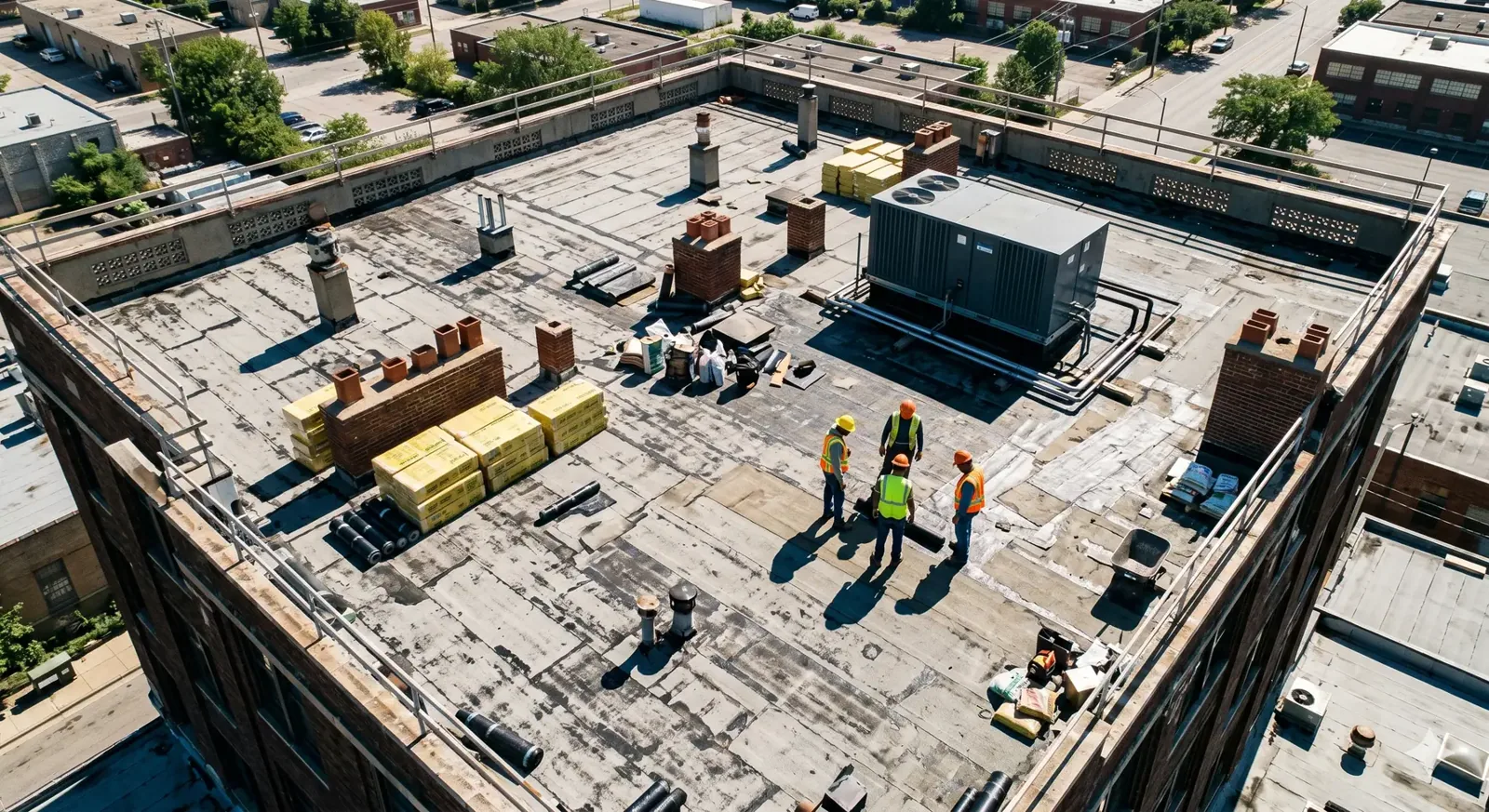
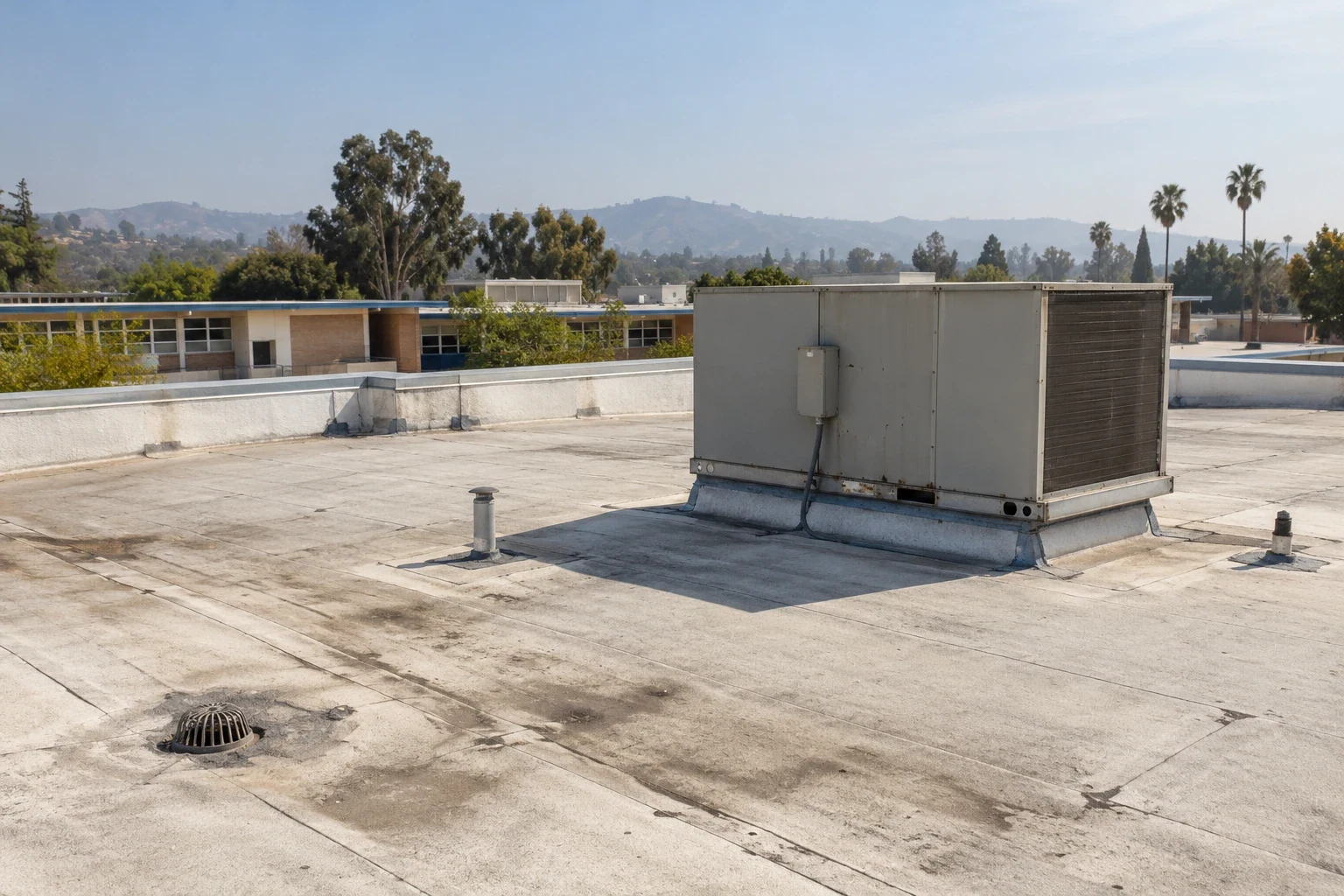
Public buildings can include offices, meeting rooms, service counters and secure rooms. Locate the area below a reported leak and inspect the roof detail above it. Check drains, wall transitions, seams, rooftop units and previous repairs. Confirm which rooms need protection before removing material. The building representative should approve access and identify any restricted area. A proposal should describe the roof work, removal, flashing and closure without implying that the contractor controls public operations. If the deck or support needs review, show that separate task before the permanent roof detail depends on it.
Tie every quantity change to something we found
If the tear-off grows, the estimate should show where and why. Our commercial roof inspection identifies the defects behind the reported problem. We explain which membrane is sound and what is keeping a simple repair from working. A patch may need removal past the visible split, and rotted backing may need replacing before new flashing can attach. We show that work on the roof plan rather than just listing a bigger number. The owner should understand what the revised quantity pays for. Bids are only comparable when they end at the same point and include the same preparation.
Photos support each finding, but they do not replace an explanation. We note the damaged material and the work it requires. Where we could not see enough to be sure, we say so. More testing may be needed before choosing a repair method. A larger option should address a real, documented need rather than assumed damage. A smaller option still needs a repair that can actually be finished. Those distinctions make a budget review useful.
Check the drains and who handles each part
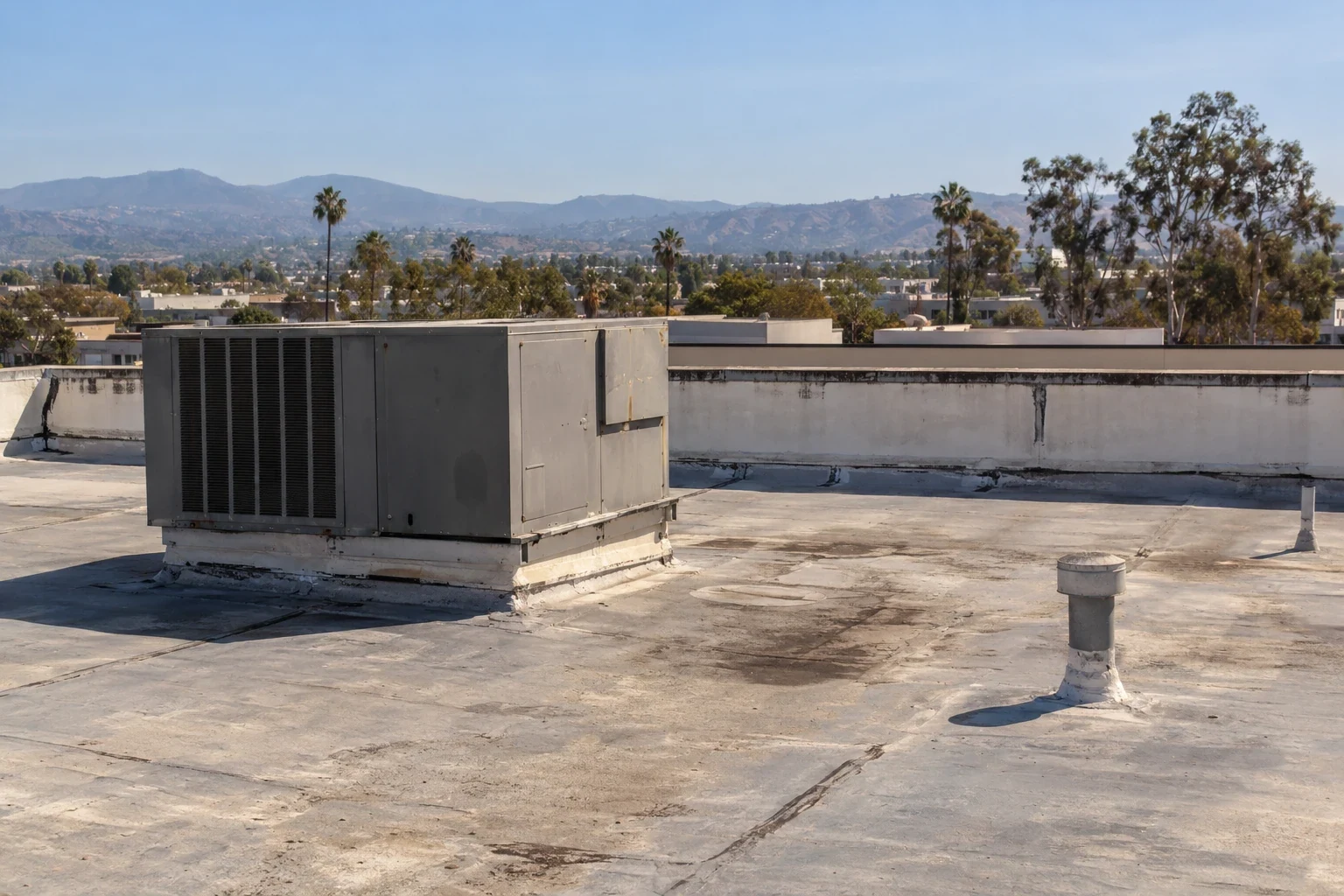
Many leaks come from a drain rather than the open field of the roof. Our roof drain and scupper repair follows the water to the outlet and checks the membrane, clamping ring and drain bowl. Problems with pipes below the roof go to the building's plumbing staff or contractor. If the work changes how the roof drains, an engineer may need to weigh in. More membrane cannot fix a damaged drain. Each step is listed next to the repair, because a complete drain repair needs both the roof work and the plumbing work.
The repair has to suit the existing roof. Sound membrane may only need cleaning and priming. Brittle membrane or wet backing may need to come out. TPO and PVC need clean, weldable material. Other roof types need the right primers and adhesives. We define where the repair ends before you approve a small patch. A strip across the split can leave out the preparation needed on either side.
Get access approved for the actual opening
Permission to inspect the roof does not give permission to open it over offices or public counters. Our occupied-building reroofing plan describes how much roof will be open and how materials and debris will move. We show the building representative the delivery route and debris path. Building staff review the rooms, activities and systems affected below. Equipment specialists handle their own systems. We price the protection that comes out of those decisions and confirm the area is ready before tear-off starts.
Downey's rainfall is concentrated in the cooler months, so unresolved drain or flashing defects should be reviewed before that season. Mark public entrances, service counters and secure areas below the work. Confirm any room closures with the building contact. We describe debris control, daily closure and permanent water protection after the owner approves access.
If the opening has to grow, the new area is reviewed too. We explain what we found before removing more. Another room or service area may need its own preparation. We get approval and include the updated protection in the change price, because the roofing area alone does not capture everything that changes. A temporary seal can protect work waiting for its permanent repair, and it is listed separately from finished work.
Test the insulation before pricing a recover
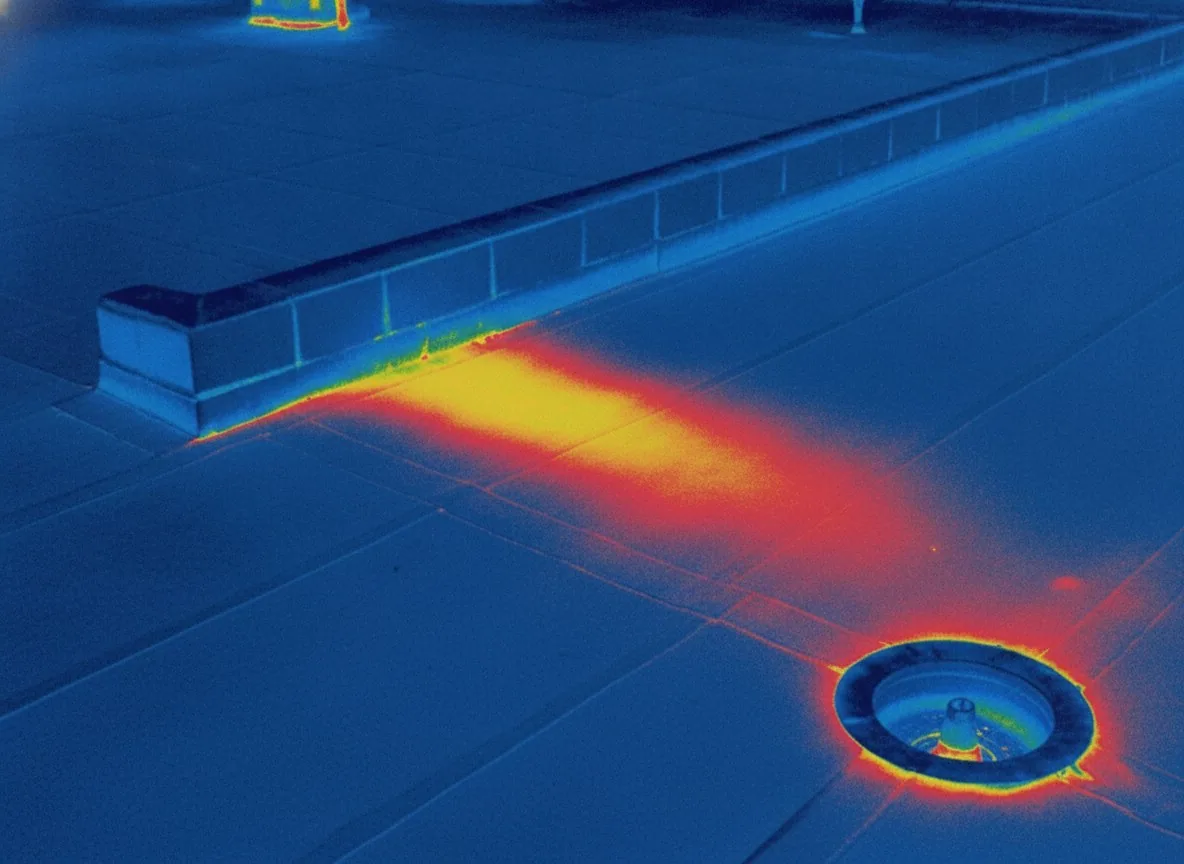
The membrane can look sound while the insulation underneath is wet. Our infrared moisture survey compares thermal scans with the roof records, and the weather during the scan affects the readings. A temperature difference points to areas that need a closer look. It does not prove every hidden layer can stay. We confirm with core cuts wherever keeping the old layers affects the method. Patching the test cuts is included with the survey, and protection beneath them is reviewed with the building representative.
The test results guide the next decision. A small wet area may just need local replacement. Widespread moisture may need more testing before choosing to keep the existing roof. New roofing will not fix wet insulation underneath. We say what we know and what could still change the proposal. That gives the owner a fair comparison between keeping the old layers and removing them, with each price based on what we found on this building.
Keep finished roof work separate from open items
The closeout shows which membrane and drain repairs were completed. It includes patched test cuts and anything found during tear-off. We photograph key materials before they are covered. Temporary seals are listed separately so unfinished work stays clear. Any plumbing, wall or equipment work still needed is noted. A finished roof does not mean every other system is resolved. The owner can see what remains before approving more work, and decisions are based on what was actually completed.
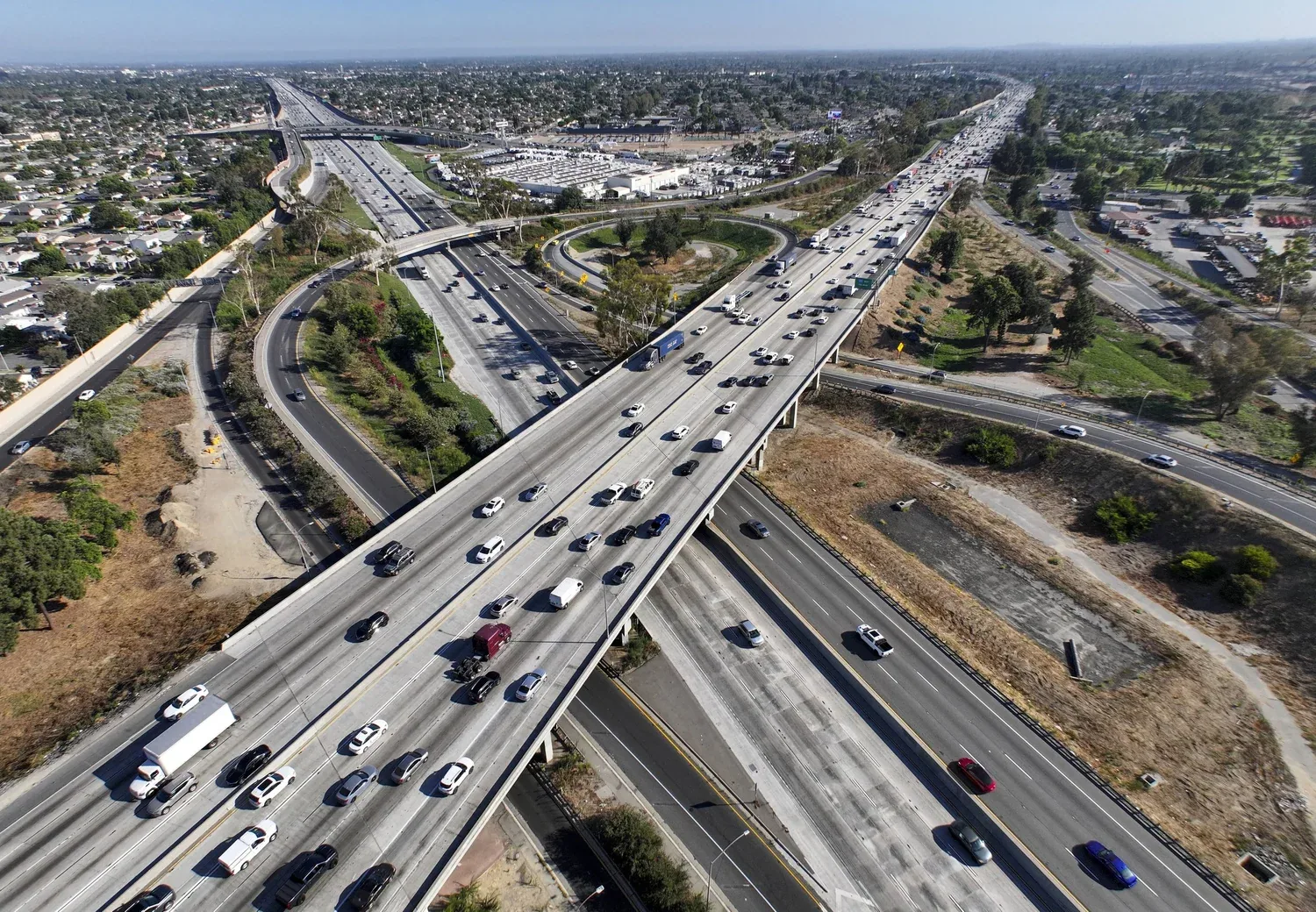
Government roof work begins with the assigned building, authorized contact and construction area available for examination. We inspect membrane, drainage and perimeter details, then identify any phasing or protection the property needs. For roof work near the I-5/I-605 Downey interchange, confirm access and work-area arrangements with the building representative. School roof scopes and office-building repairs are prepared for their specific systems and operating conditions.
Commercial Roofing Questions
What should explain an increase in a government roof repair estimate?
The specific condition we found and the added tear-off or preparation it requires. The estimate should show what the extra work fixes, and any added access or protection if the opening grows. Compare the complete work behind each price rather than accepting a bigger number without a reason.
Should drain repairs be priced along with the membrane work?
Yes. The drain bowl and the membrane around it have to be repaired together for a lasting seal. Pipe problems below the roof go to your plumbing staff or contractor, and that work stays visible in the project scope. New membrane cannot fix a damaged drain on its own.
What supports keeping the existing roof layers in a local repair?
Testing where it matters. We use infrared scans, roof records and core cuts, and take the weather during the scan into account. Test cuts are patched and the rooms below are protected. The results show what can stay, what has to come out or whether more testing is needed before you approve the work.
What should the closeout show if other work is still pending?
It should show the completed roofing and patched test cuts, with temporary seals and open plumbing, wall or equipment items listed separately. Those trades sign off on their own work. Keeping that list makes sure the next estimate covers everything still needed.
Get a documented government roof repair estimate
Send us the building address, where the leaks are and any roof records you have. Working with your building representative, we will inspect the roof and give you an estimate with clear findings, the permanent repair and the protection needed below.