Home / Commercial Roofing Services
Cool Roof Installation in Downey, CA
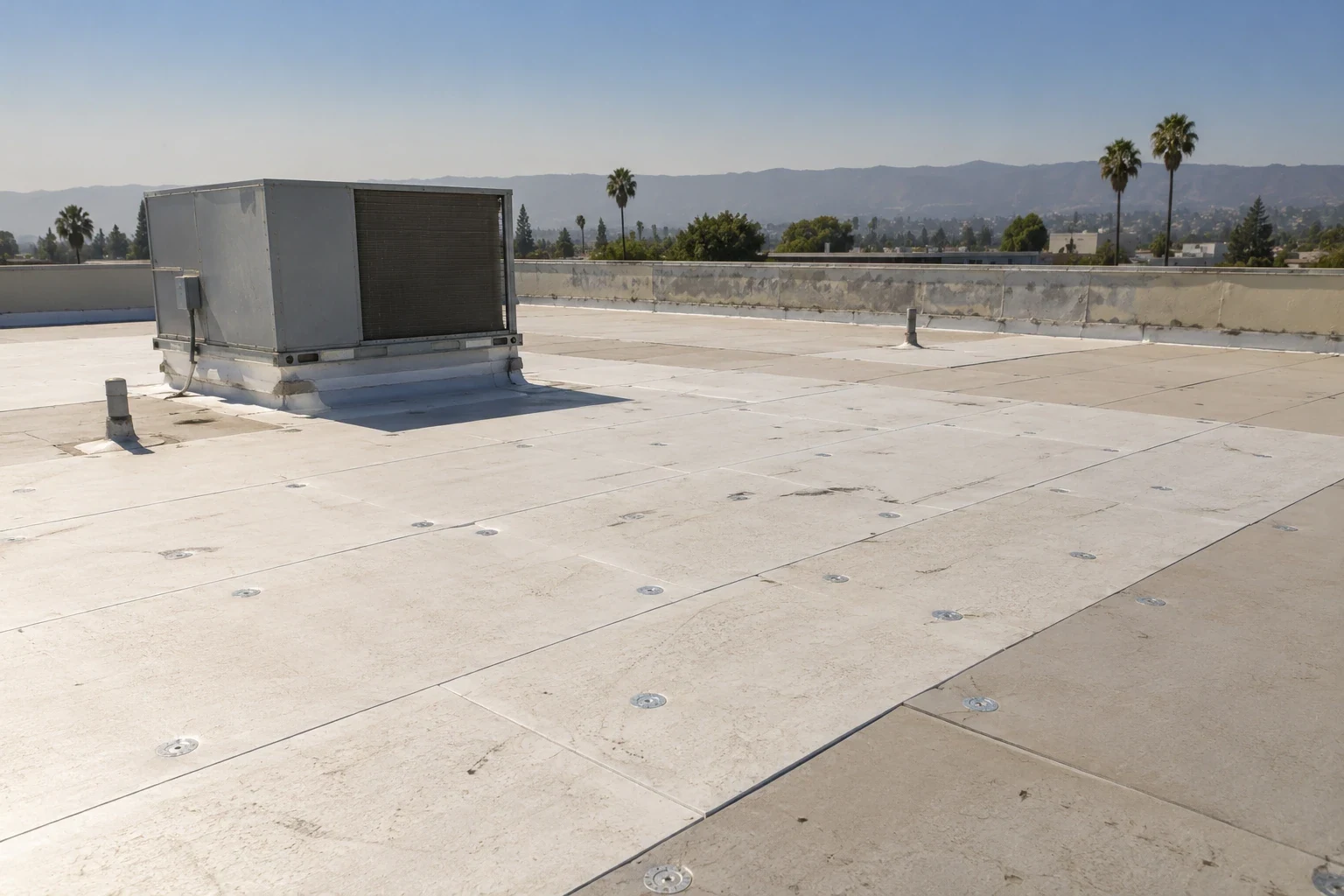
Cool roof installation in Downey, CA. We check the existing roof, insulation and flashings first, then price the reflective system and the repairs it depends on.
Choosing a cool roof is the easy part. The price still has to cover whatever is underneath. A white, reflective surface will not fix wet insulation or a leaking curb. Cool roof installation in Downey, CA starts with knowing which roof areas are included and which product is proposed. We inspect the roof before deciding what stays and what comes off. The manager gets the prep work and flashing repairs listed right next to the material cost, so the product name does not suggest the layers below are ready when they are not.
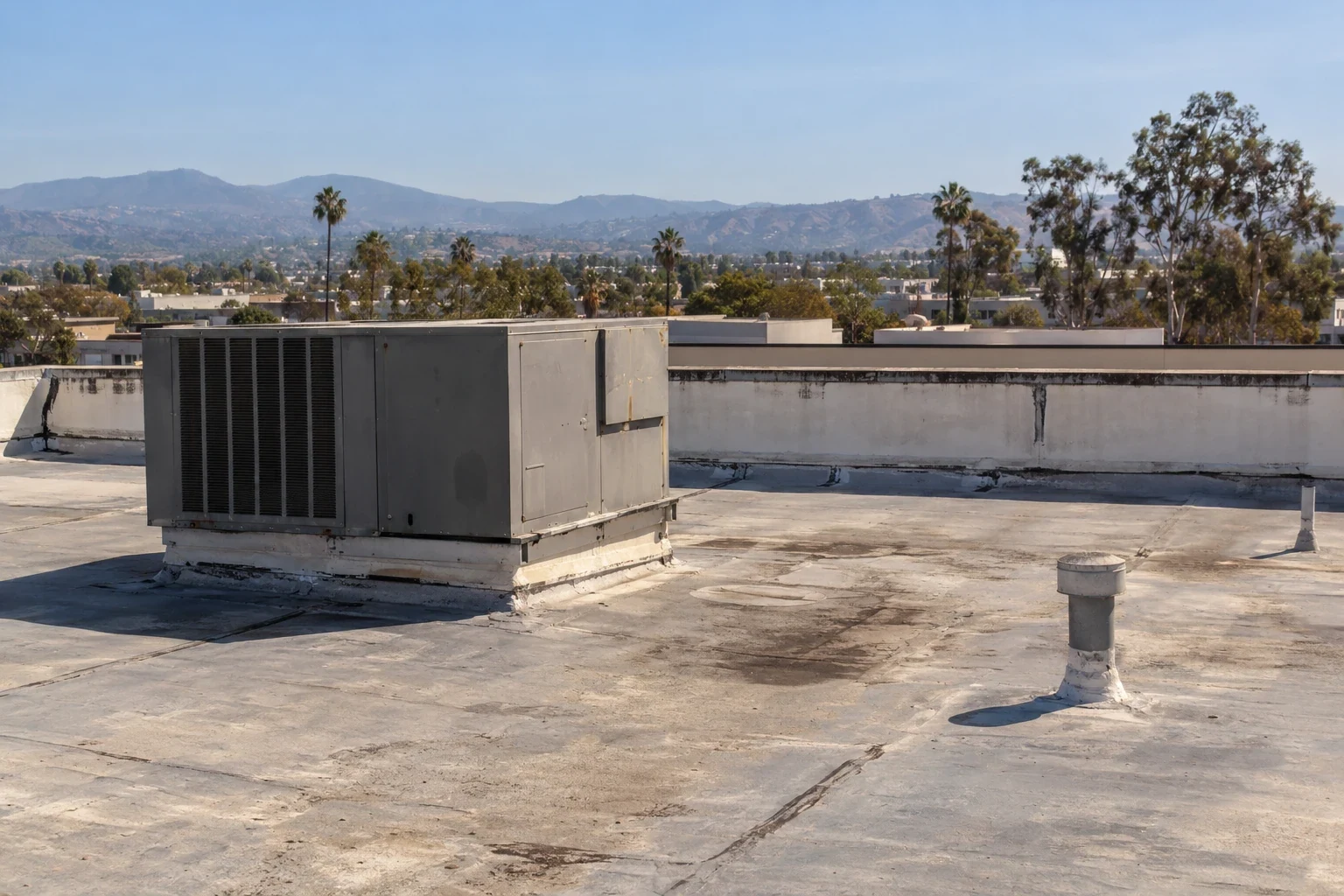
Check roof condition before pricing a reflective system. Look for wet insulation, loose seams, open flashing and drains that hold water. A cooler surface cannot correct those defects. Confirm the current membrane and any coatings, then identify preparation the product requires. Downey roofs face long sunny summers before winter rain. Compare the proposed assembly against drainage, edge and penetration details, not just the color of the field coating.
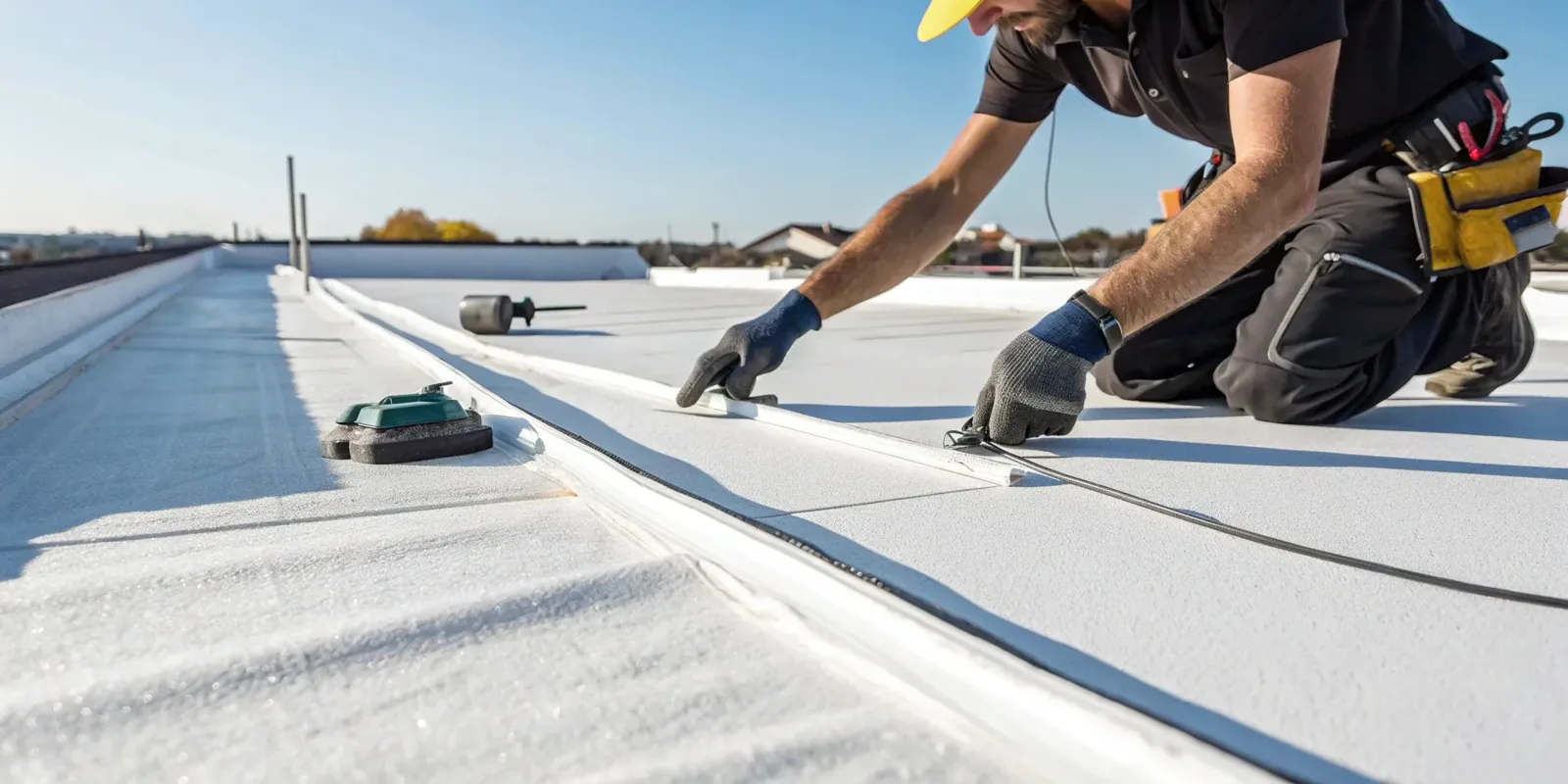
A good proposal names the exact product and how it will be installed. Open questions about the existing roof or equipment curbs should be settled before materials are ordered. That way the manager compares bids that finish every flashing, not just the white surface.
Review product properties without assuming a building result
Solar reflectance describes sunlight reflected by a roof surface. Thermal emittance describes its release of absorbed heat. Those are separate product properties to review when comparing a cool roof. They do not establish a particular building’s energy savings or repair needs.
Compare a coating restoration with a new roof assembly only after measuring the affected areas. Note drainage, insulation and edge heights that a new surface could change. Include preparation and termination details in both estimates. The owner can then compare complete work rather than a reflective-material price against a replacement price.
We name the specific product proposed and the published ratings behind it. Any code or energy requirements for the project are confirmed with the building department or the owner's consultant before materials are ordered. "White" on its own is not documentation.
A TPO cool roof and a PVC cool roof each have their own installation and flashing requirements. We price both against the same inspected roof sections so the comparison is fair. The reflectivity numbers sit next to the actual construction work, not in place of it, and neither membrane makes questionable insulation acceptable.
Inspect the existing roof before choosing the system
We look at the existing membrane and what we can see of the layers under it. Old coatings or patches affect what the new system can bond to, so we identify them. Anything we cannot identify is checked before we plan around it. Deciding to keep existing layers depends on what we find and what the new system's manufacturer allows.
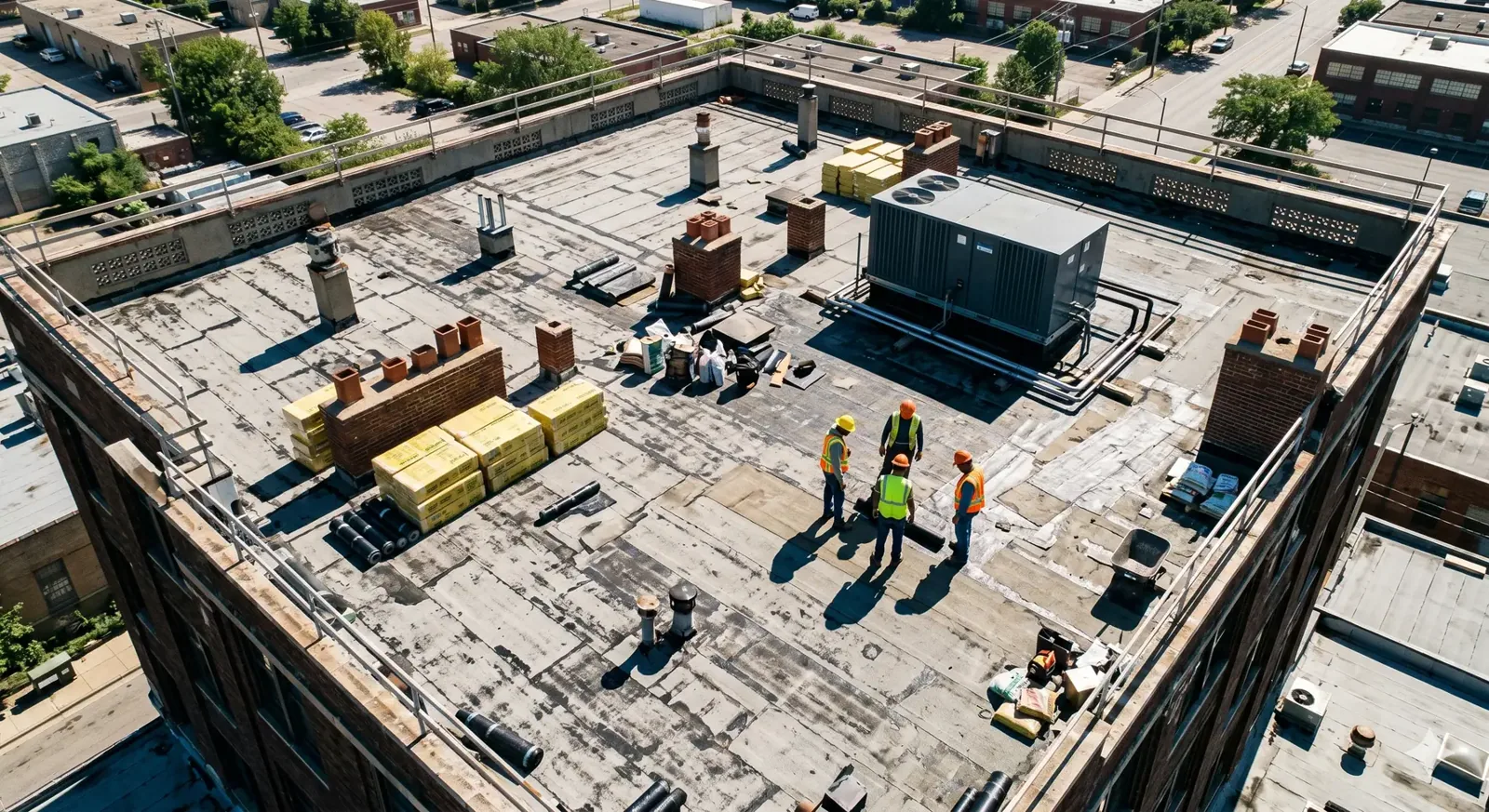
A commercial roof inspection before a cool roof project maps what we inspected. It separates material we know has to go from areas still needing testing, and it says what testing comes next before those areas are priced as definite work.
An insulation and cover board scope for a cool roof lists the products and prep. If there is a structural or design question beyond roofing, it goes to the right professional before ordering. The manager gets a clear description of what comes off, what stays and what goes back, rather than a material allowance that quietly assumes the old insulation is fine.
Include flashing repairs alongside the field membrane
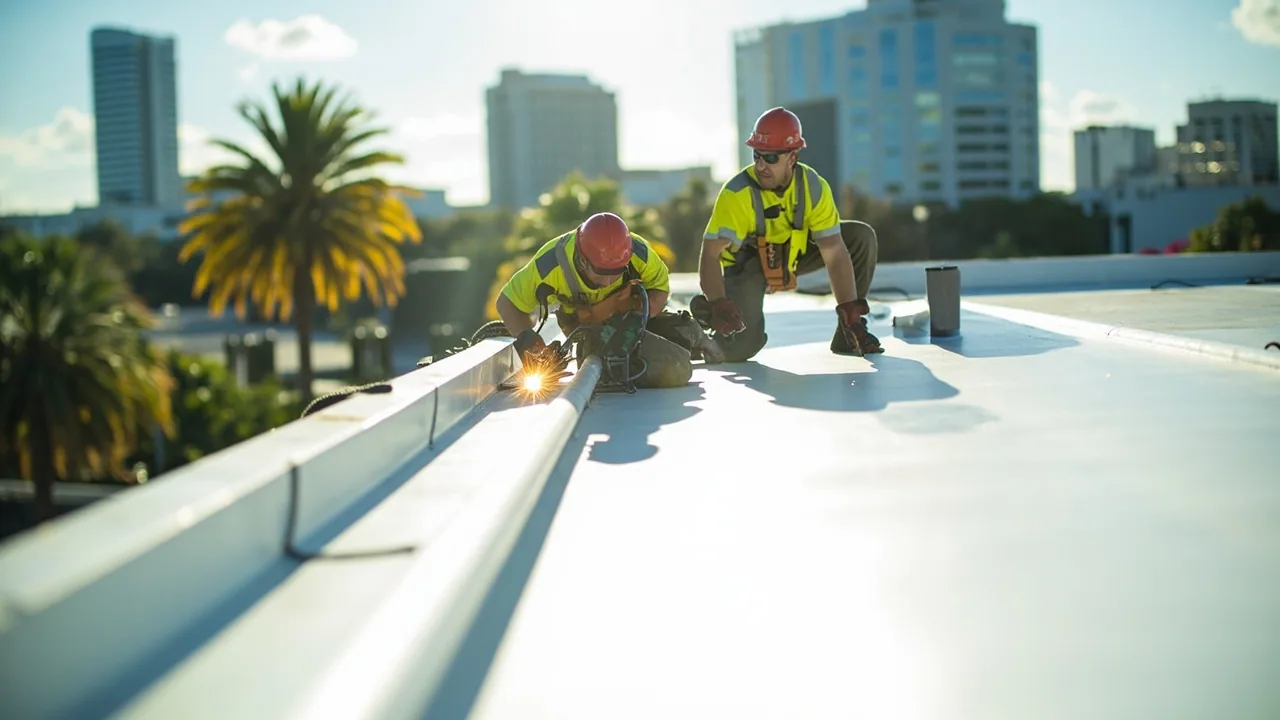
We identify every seam, flashing and edge the installation involves and check what each will tie into before setting quantities. Damaged backing or equipment we cannot reach yet gets its own prep line. Covering the field of the roof does not finish an edge or curb that still has a problem.
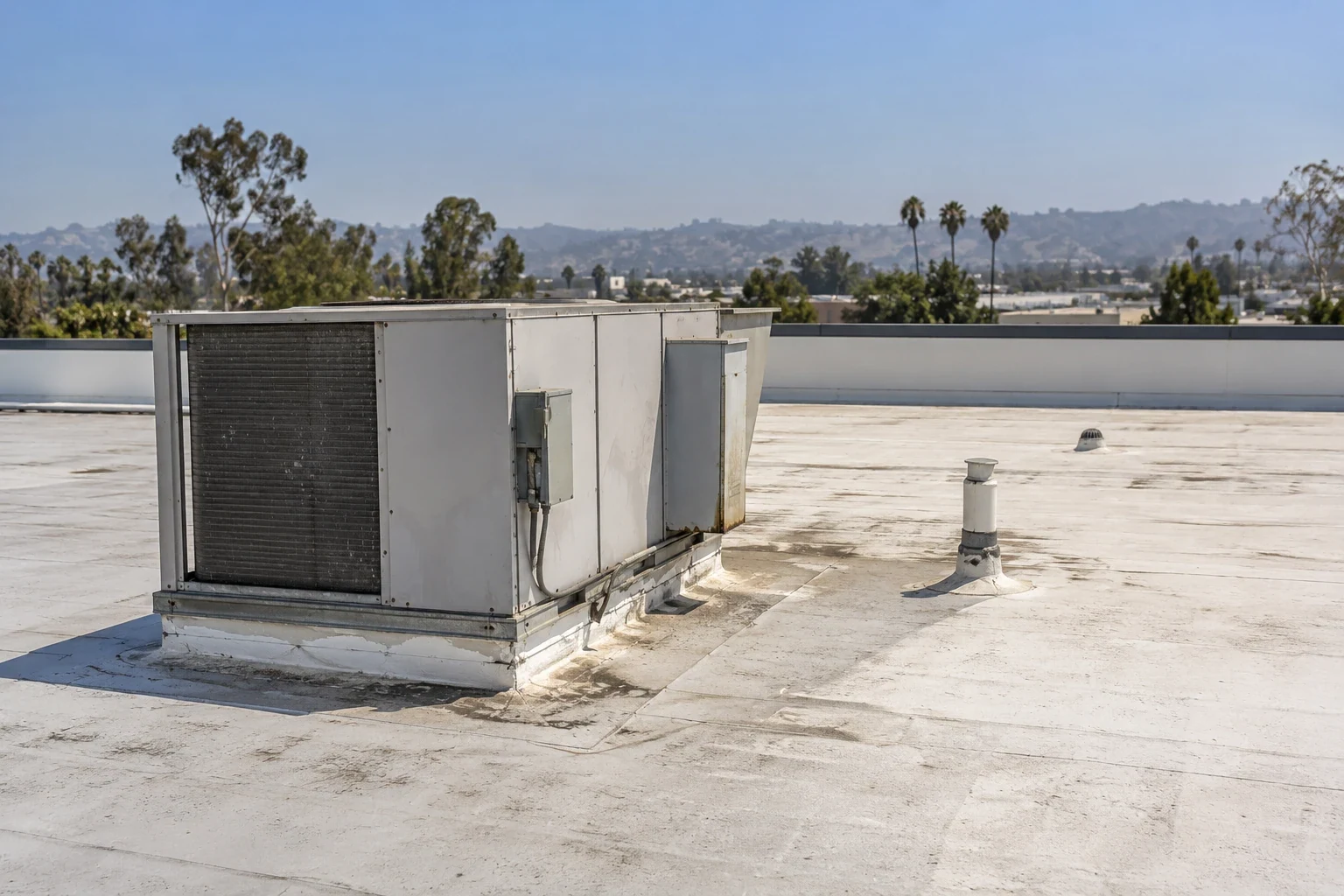
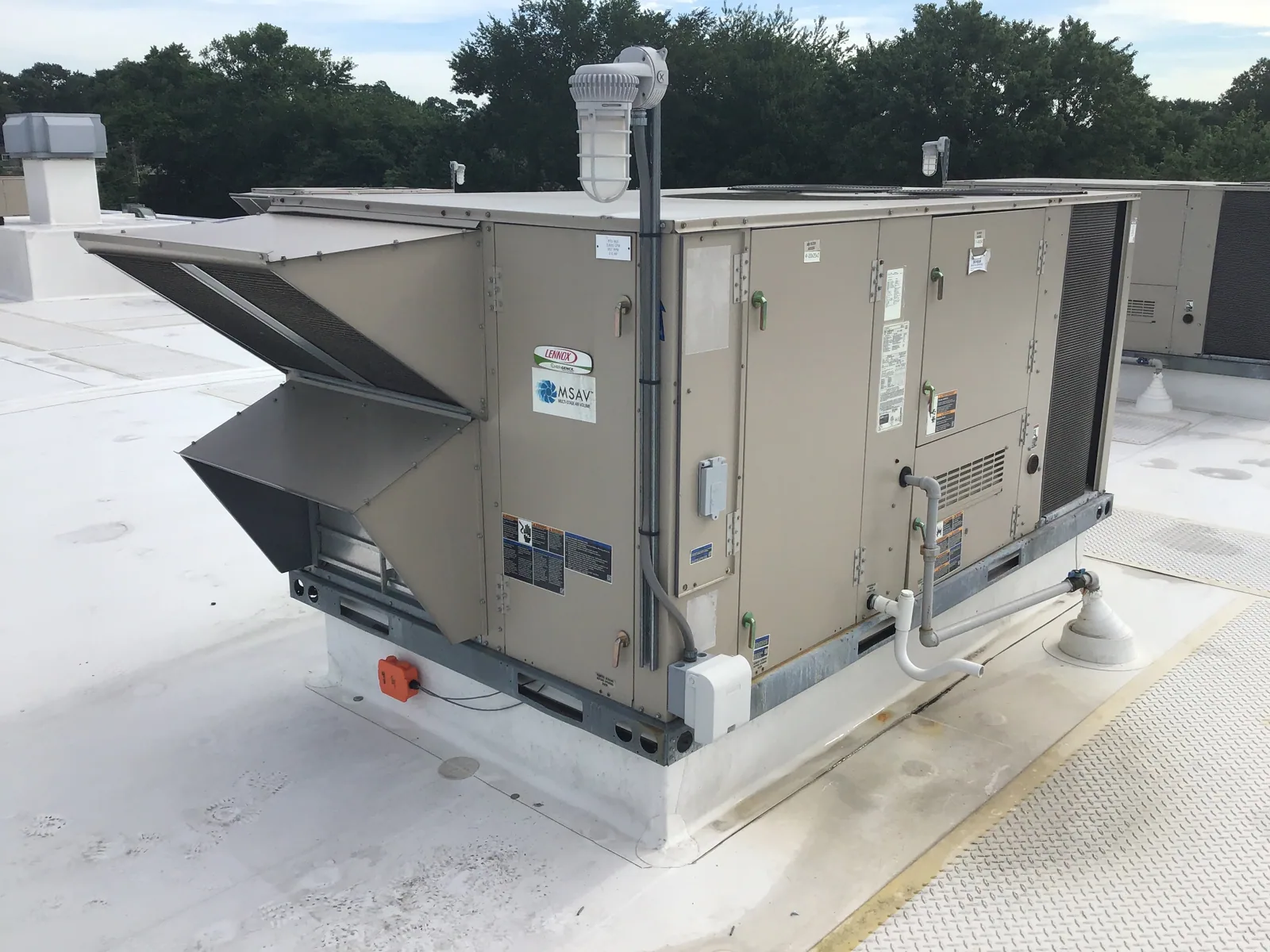
A rooftop curb and equipment support review confirms each curb is solid and tall enough before the new flashing goes on. If added insulation changes the height relationship, we get the right review. Changing to a new membrane does not mean a short curb suddenly works.
When the HVAC contractor has to move or disconnect a unit first, we list that step next to the curb it affects and arrange it through the property contacts. A curb still blocked stays on the unfinished list even if the rest of the roof is done. The manager can line up the missing step before the crew comes back to finish it with the same materials.
Handle hidden damage and work schedules openly
Tear-off sometimes uncovers damage we could not see beforehand. We record where it is, explain the change in removal and replacement quantities, and get approval before continuing. The area is protected while that is decided.
Structural questions go to an engineer, not to the roofing product sheet. We keep the original inspection notes separate from damage found during construction, so the manager can see why the quantities changed.
The building's rules set handling routes and work hours. If those rules split the job into several periods, we price the extra setup and protect unfinished areas in between. Finished work is reported separately from flashings still waiting on access or equipment work. For occupied-building reroofing, the schedule comes from that building's actual needs; a building type cannot set the work hours, and it cannot make an unfinished flashing count as done.
Keep a record of the product and the work completed
A cool-roof project starts with the existing assembly and the area included in the work. Confirm the surface material, edge and penetration details, and any current coating before selecting a compatible system. On a replacement, the specified membrane and insulation need to meet the project’s reflectance and code requirements.
For commercial properties near the I-5/I-605 Downey interchange, we check the roof surface and detail repairs before planning a cool-roof installation. The selected assembly follows the building’s material, project requirements and complete perimeter scope.
A roof condition report after installation records the products used and where flashings were rebuilt. It shows replaced backing and the areas of existing roof we kept, with photos and test results. Approved changes are tied to the work they affected, and anything we could not inspect or HVAC work still pending is listed separately. The manager has a clear record that keeps the product's ratings apart from the actual repairs done.
Commercial Roofing Questions
What should be settled before ordering cool roof materials?
The exact product and its published reflectance and emittance ratings, the condition of the existing roof, any code or energy requirements for the project, and the repairs needed at curbs, edges and drains. A cool roof label alone does not answer any of those.
Does a reflective roof fix damaged insulation underneath?
No. Wet or crushed insulation still has to be found and replaced. A cool surface only changes how the top of the roof handles sunlight. We test questionable areas before deciding what can stay.
What needs coordinating around rooftop units?
The curb condition and height, whether added insulation changes the flashing height, and whether the HVAC contractor needs to move or disconnect the unit first. Those curbs stay on the unfinished list until the flashing can actually be completed.
What records do I get after a cool roof installation?
The products installed, where backing and flashings were rebuilt, which areas of existing roof were kept, photos, test results, approved changes and any items still pending. That helps with warranty questions and future maintenance.
Compare cool roof options with the full scope
Send us the address, roof areas and any records on the existing roof. We will inspect the roof and flashings, then explain the prep work and the cool roof system we recommend, plus anything still to be decided.