City of Industry Commercial Roofing from Downey, CA
Solar-ready roof work in City of Industry from our Downey crew. We inspect and repair the roof before panels go on and flash every mount and penetration properly.
Putting solar on a commercial roof in City of Industry means the roof has to last as long as the panels, or close to it. Once racking and panels are installed, the roof under them is hard to reach and expensive to repair, because the panels have to come off first. So the roofing work needs to happen before the solar crew arrives. We inspect the roof, repair what needs it and flash every mount and penetration properly. Structural capacity and electrical design belong to the engineer and the solar installer, and we keep our scope clearly separate from theirs.
A solar-ready roof needs a sound membrane and a planned route for every support. We inspect attachment zones, penetrations, drainage and future maintenance access before installation begins, and keep roofing repairs separate from electrical and structural work. A measured roof plan helps the owner compare the two scopes. We also assess commercial roofing and solar-preparation details in La Mirada.
Inspect the roof before the solar layout is final
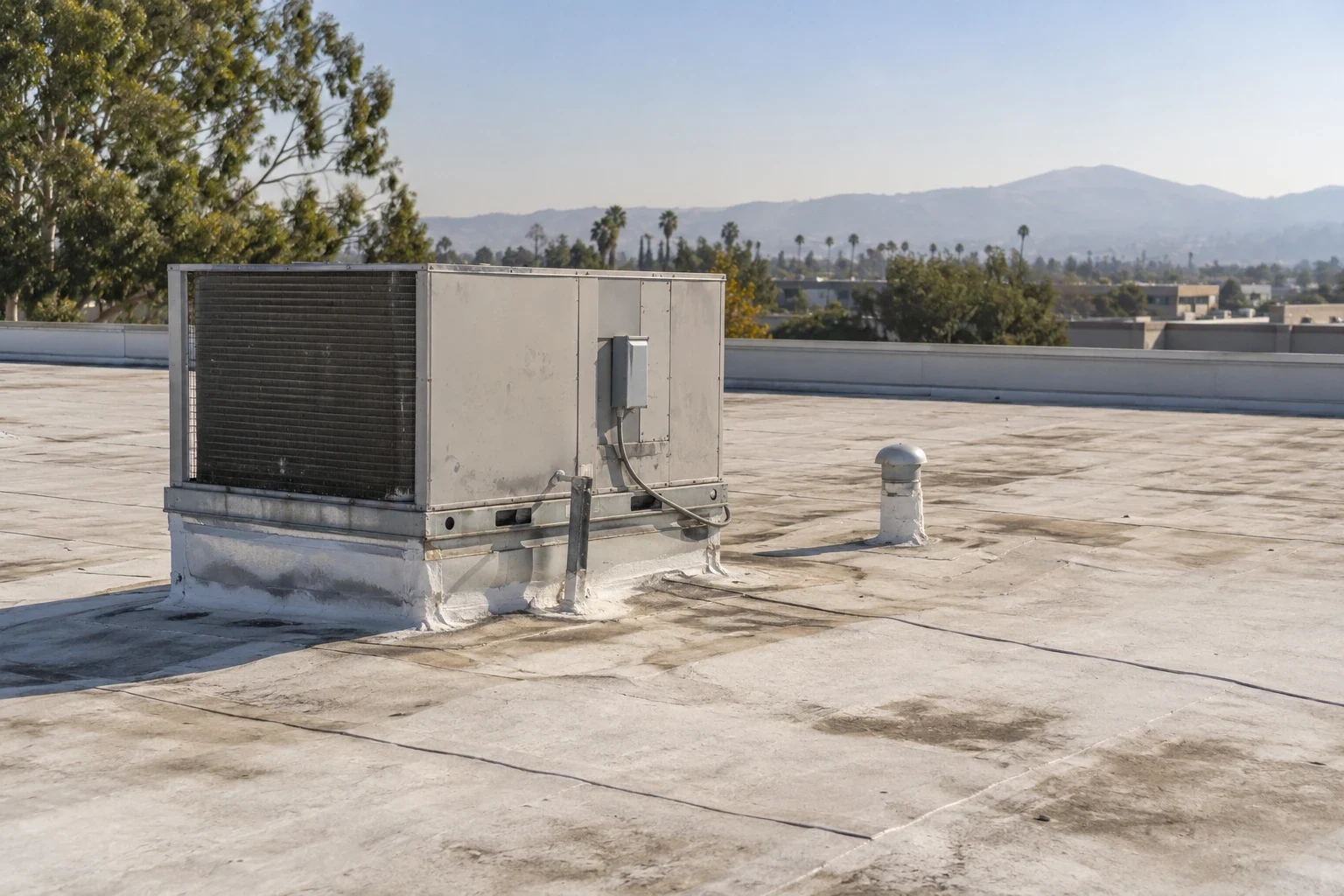
We walk the whole area where panels will go and check the membrane, seams, flashing, drains and any old repairs. If you have roof drawings or past repair records, we compare them with what is actually on the roof, because records are often out of date. Areas we cannot see, such as insulation under the membrane, are marked as unconfirmed until we test them.
Our solar-ready roofing evaluation tells you what roof work is needed before installation and roughly how much life the existing roof has left. If the roof is near the end of its life, it usually makes more sense to replace it before solar than to pull the panels off in a few years. Whether the structure can carry the added weight is a question for a structural engineer, and we will say so instead of guessing.
Repair the roof before panels go on
If there are signs of wet insulation, we confirm with core samples before deciding what to remove. Wet areas under a planned panel field should be replaced now, not left to rot under racking. Each opening is protected and closed the same day, and if the deck shows rust or damage when it is exposed, we show you before anything covers it.
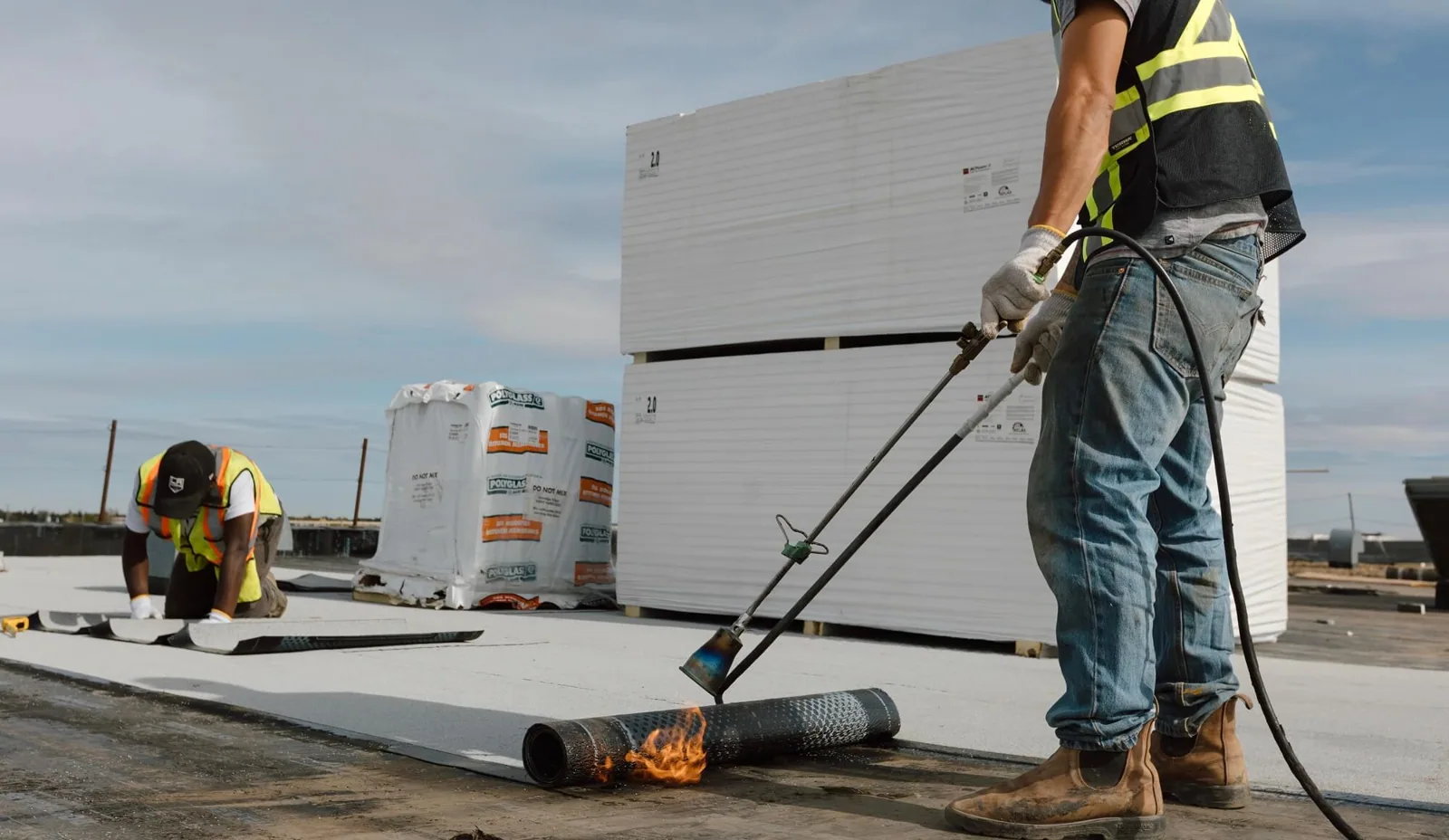
Any roof repair done before solar should be a permanent one: seams welded or sealed, flashing rebuilt at walls and penetrations, and drains working. A coating over problem areas is not a good base for a 20-plus-year panel array. If another trade needs to do something first, such as rerouting a pipe or moving a unit, we note it so the roof work can finish properly.
When we open the roof and find more damage than expected, we stop, photograph it and agree on the added work with you before continuing. It is much cheaper to find and fix that now than after the panels are installed.
Coordinate the roofing and solar crews
Before work starts, we confirm with the property manager where materials will be staged, how they get to the roof and which areas need protection. The solar installer has its own schedule and crew. We agree on which roof areas must be finished before they start, so nobody installs racking over an open repair.
For commercial roofing in Pico Rivera and City of Industry, we confirm roof access, staging and material handling with each building's property manager. Any equipment that needs to move is handled by whoever services it, and any roof area waiting on another trade is protected until we can finish it.
Flash the mounts to suit the roof
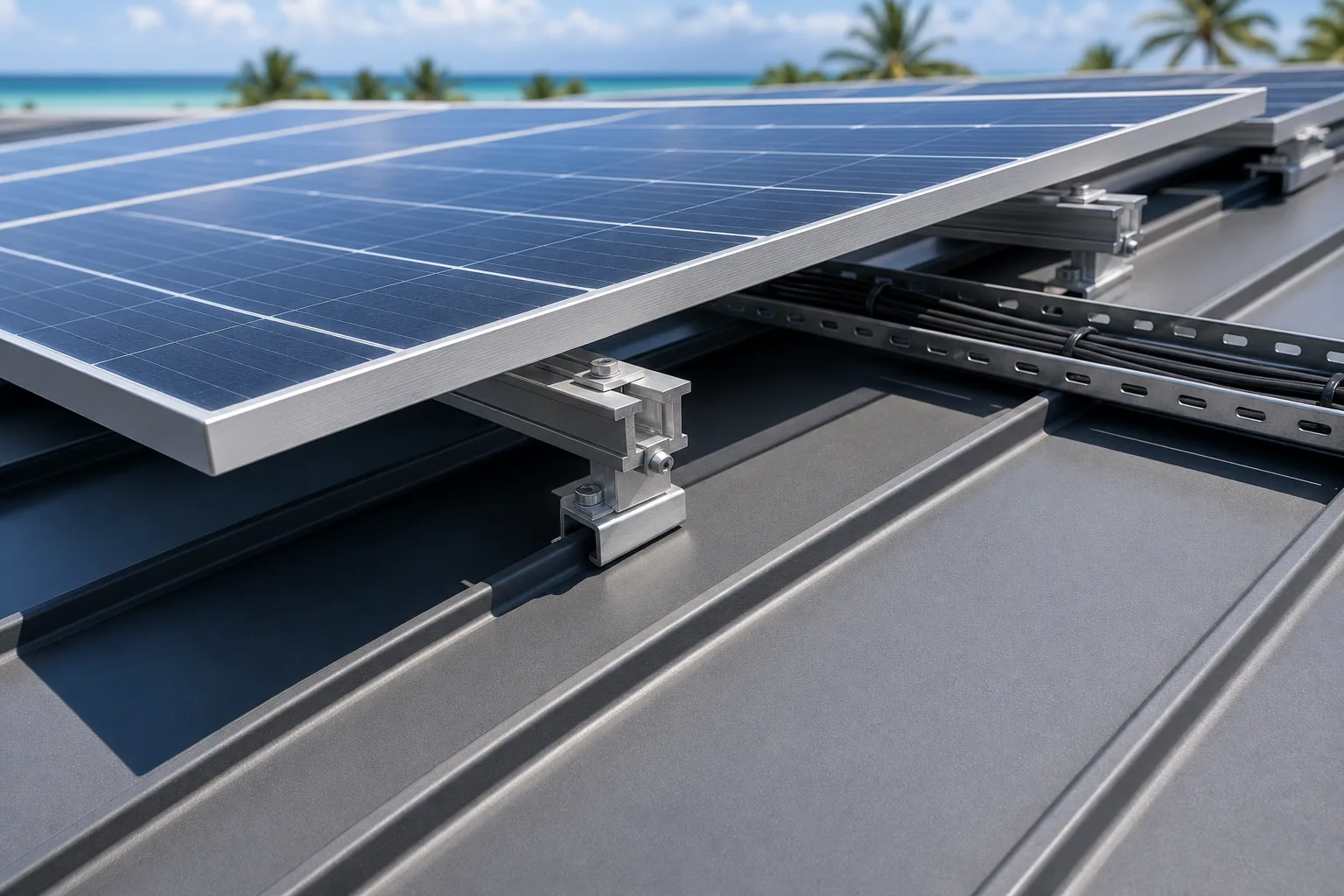
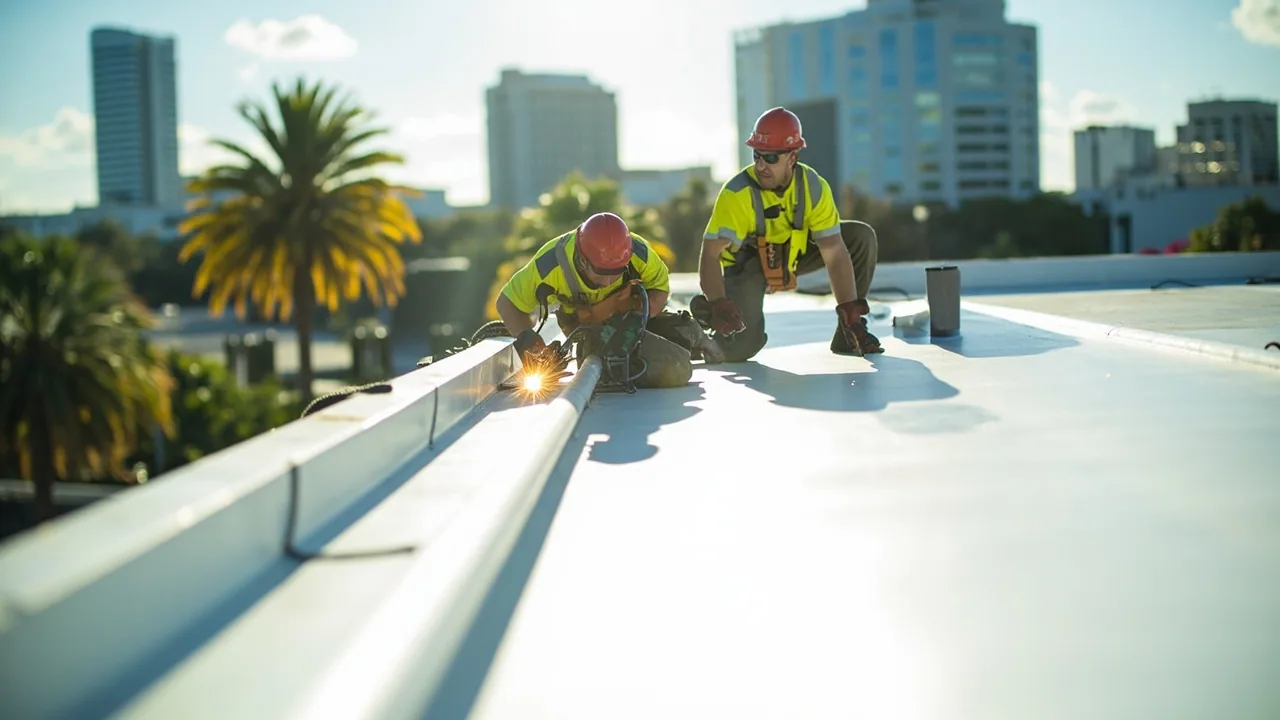
Every solar mount that goes through the membrane is a potential leak. Each one needs a flashing detail made for that roof system, whether a welded boot on single-ply or a proper flashed curb or post. Ballasted systems that sit on the roof without penetrations still need protection pads under the racking so the membrane is not worn through. We specify the detail and the prep before the solar layout is locked in.
On a PVC roof, many solar mounts can be flashed with PVC boots or covers that are welded to the membrane. We check that the existing PVC is still weldable where the mounts will go, and that there is enough room around each mount to flash it properly. Racking layout should leave access for future roof maintenance and drain cleaning.
Photograph the roof before panels cover it
Before the panels go on, we photograph the repaired areas, the new flashing at each mount and the finished roof surface. Once the array is installed, much of that is hidden, and the photos are your record of the roof condition under the panels.
Those photos and our findings can go into a roof survey for your files, lenders or insurers. If the solar layout changes later, or a leak shows up under the array, the next inspection starts from that record and checks the current condition rather than assuming.
We offer emergency leak response nights, weekends and holidays. An emergency repair stops the water; it does not make the roof ready for solar. We will list what still needs to be done before installation.
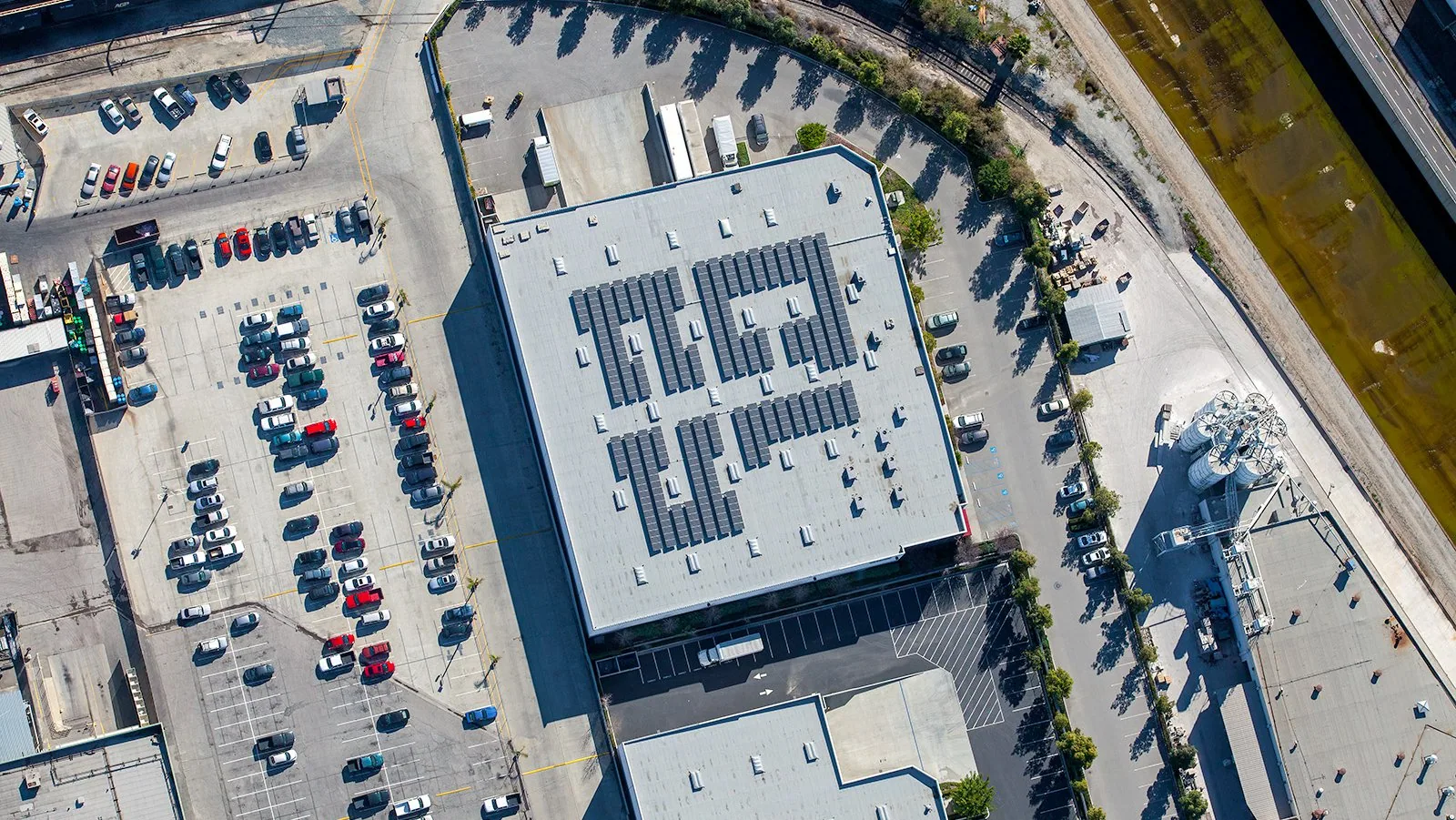
City of Industry is zoned roughly 92 percent industrial, and most roofs here are large, flat warehouse and manufacturing roofs. For those, we map the work area and confirm staging, debris handling and roof access with the property contact, and plan where the crew will close up if work pauses. That closure is included in the bid.
Commercial Roofing Questions
Should the roof be repaired before solar is installed?
Yes. Once panels are on, any roof repair under them means removing and reinstalling panels. We inspect and repair the roof first, and if it is near the end of its life, replacing it before solar is often the better choice.
Can you tell me if my roof can hold solar panels?
We can tell you about the condition of the roof itself. Whether the structure can carry the added load is a question for a structural engineer, and we will recommend getting that review.
What if the solar layout changes after the roof inspection?
We check the new layout against the roof, especially where mounts and penetrations will go. Our earlier findings still apply to the areas we inspected, but any new areas get their own look.
Why photograph the roof before the panels go on?
Because much of it will be hidden under the array. Photos of repairs and flashing give you a record of the roof condition under the panels for future inspections, warranties and insurance.
Is an emergency repair enough to get the roof ready for solar?
No. An emergency repair stops a leak. Getting the roof ready for solar means permanent repairs, proper flashing at every mount and confirming wet areas have been replaced.
Get the roof ready for solar
Planning solar on a City of Industry roof? We will inspect the roof, handle any repairs, and flash the mounts properly so the roof is ready before the panels go on.