Pico Rivera Commercial Roofing from Downey, CA
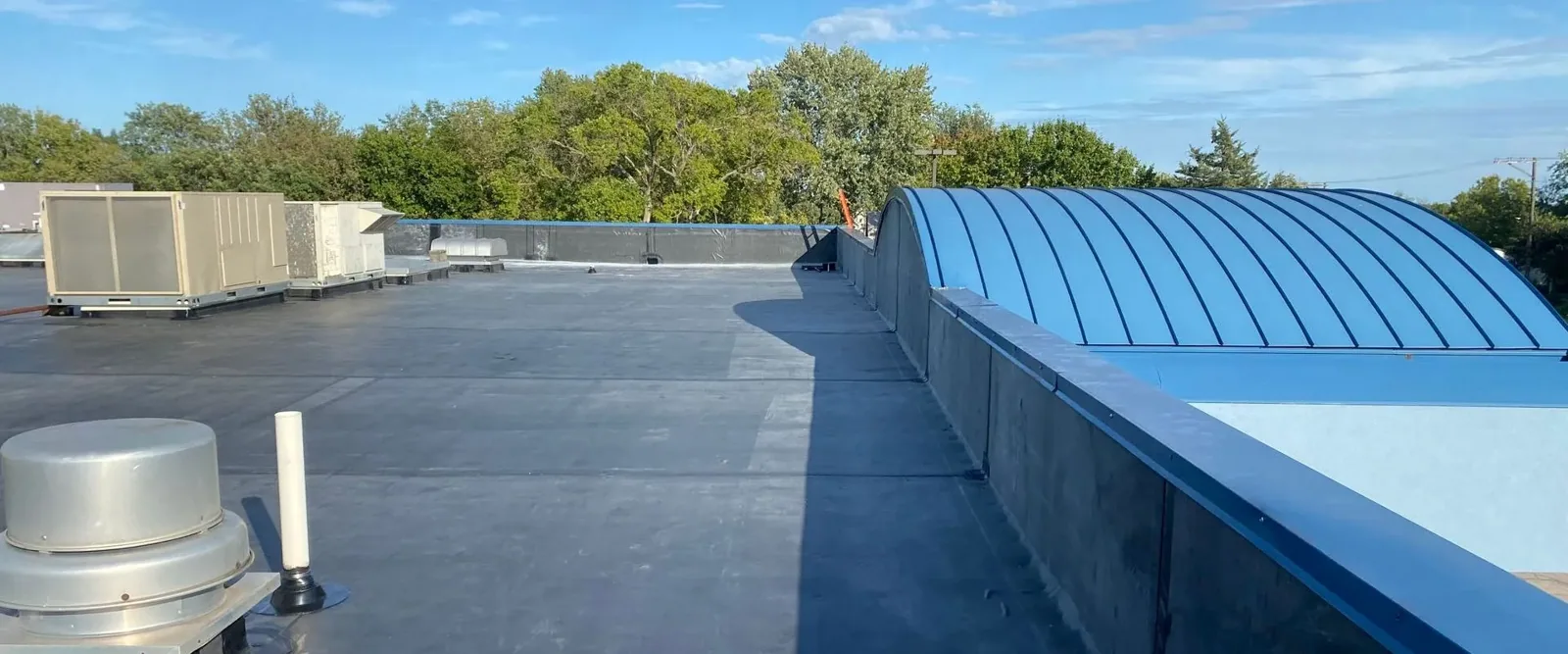
Commercial roof expansion joint repair in Pico Rivera, CA. We inspect the joint cover and the membrane on both sides, then price the right transition repair.
An expansion joint on a Pico Rivera roof is there so the building can move without tearing the roof apart. When it leaks, the problem might be the joint cover itself, or it might be the membrane and flashing running along either side of it. Those are different repairs. We look at the joint closely and tell the manager which part has failed before anyone starts patching. And if the cover is replaced, the roofing on each side has to be tied into it properly, so the estimate should include both pieces of work.
Where two roof materials or two roof sections meet, we check both surfaces and the transition between them. We look for loose flashing, open seams and old patches that will need to come off before a new detail can bond. We mark the repair area before choosing materials, and we keep roof work separate from any wall or equipment work nearby. We handle the same kind of roof transitions in Montebello. Both sides of the joint get photographed before work starts and after the permanent repair is finished.
Identify the joint before selecting a repair
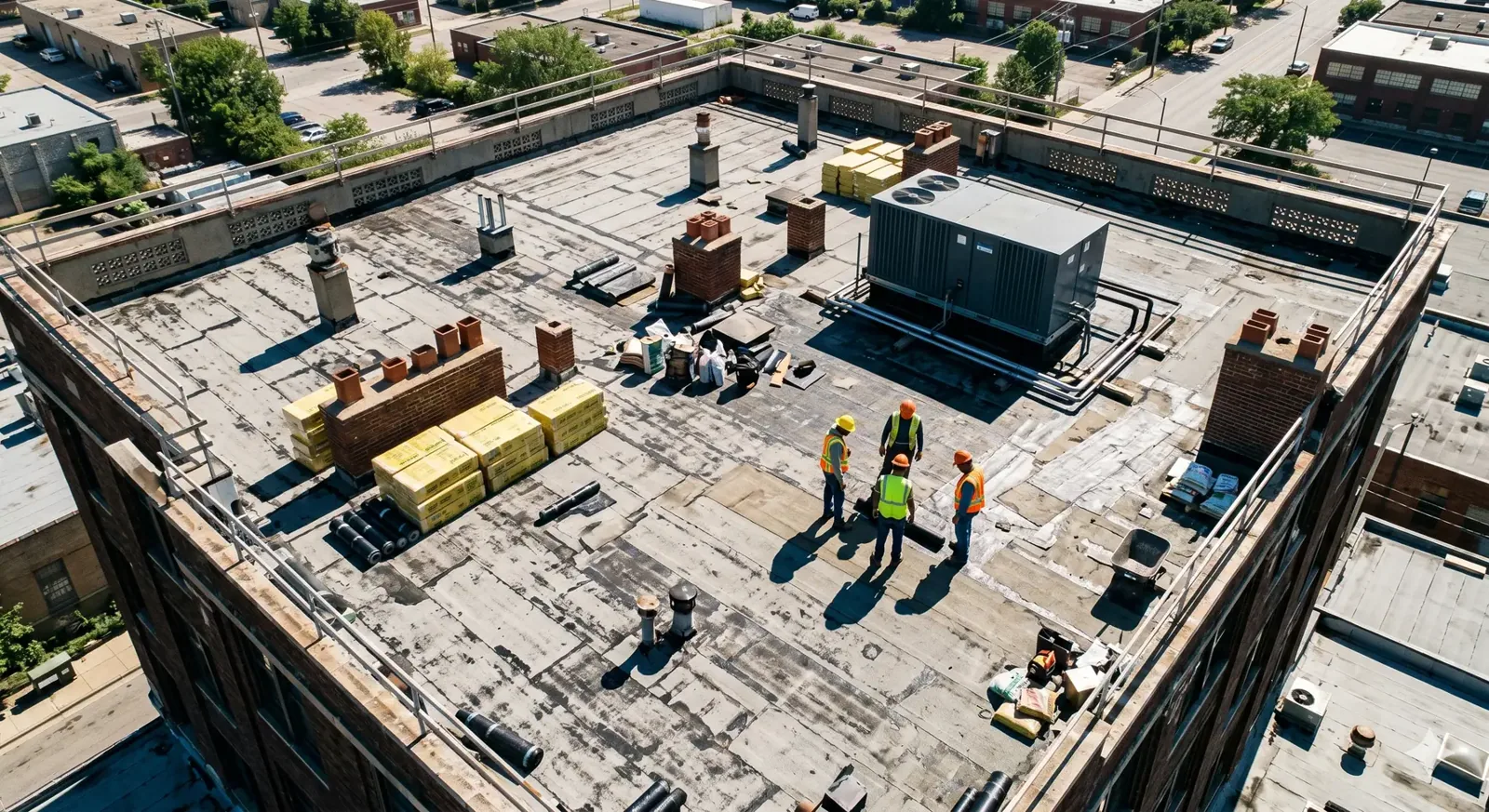
We start by tracing the joint and checking the roofing along both edges. A typical roof expansion joint has a flexible cover, wood or metal curbs that raise it above the roof surface, and flashing that ties each roof section up onto those curbs. A split in the membrane next to the joint is a different repair from a torn or brittle joint cover. We figure out which one is leaking before recommending anything, because a vague instruction to seal the joint never says what is actually being fixed.
Our commercial roof inspections pin each finding to a spot on the roof plan. The report notes what we could see and reach and what we could not. If the curbs or structure under the joint look questionable, an engineer or the building's structural consultant may need to weigh in before roofing goes ahead, and we say so in the estimate. A photo shows the surface of the joint; it does not prove anything about what sits underneath.
Prepare the roof beside the component
Next we identify the membrane on each side of the joint, since the repair materials have to be compatible with what is already there. Sound roofing gets cleaned and prepared. Loose flashing and failed seams near the joint get repaired so the new transition has something solid to bond to. A new strip of flashing along the joint will not last if it is glued to blistered, brittle or poorly adhered membrane.
Our commercial roof repairs at expansion joints spell out where the permanent repair starts and stops. If we suspect wet insulation under the roof near the joint, we confirm it before deciding how much to remove. Replacing insulation can raise or lower the roof surface at the joint, which may change how high the flashing has to run up the curb. We explain that before choosing the edge detail, so the owner can compare a membrane repair with a full joint replacement.
When we open the roof and find more damage, we photograph it before it gets covered and explain how it changes the repair. The opening stays protected while the owner decides. The final repair follows what we actually found, not the scope we guessed at before opening up.
Coordinate the joint cover with the roofing
We check whether the existing joint cover and curbs are in good enough shape to flash the roof into. Sometimes the cover or curbs need repair or replacement first, and occasionally that falls to another contractor. When it does, we explain exactly what condition the roofing work needs, such as a level curb, a sound nailer and a cover that seals at its ends. The manager then knows who is fixing what.
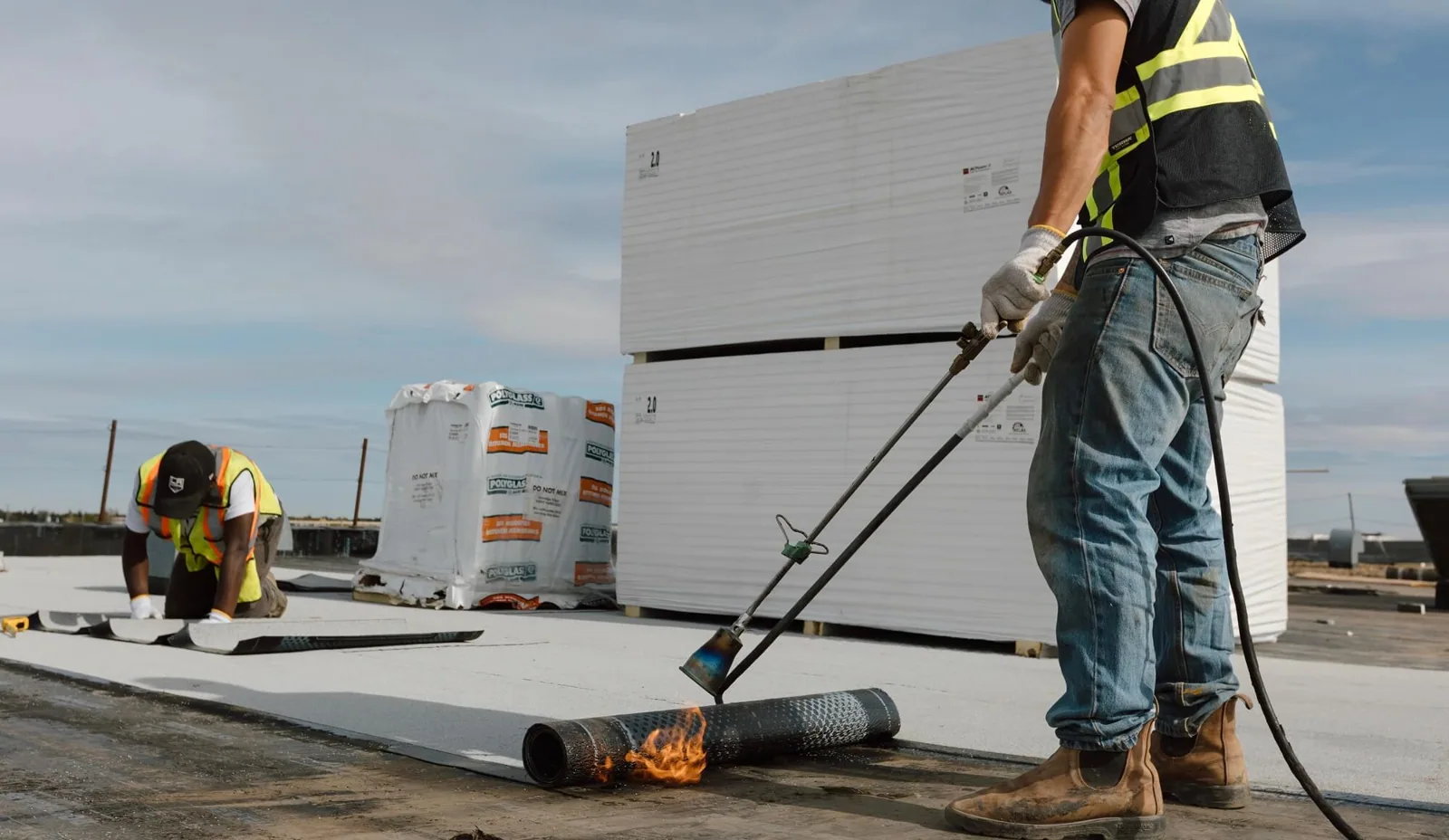
On an EPDM roof at an expansion joint, the rubber membrane has to be flashed up the curbs with compatible EPDM flashing and the right adhesives or tapes. If the joint cover is being replaced, the flashing detail may differ from the one used to keep the old cover. The estimate states which of those two situations it assumes.
We close the roof permanently only after the joint cover is ready. If that work is delayed, we install temporary protection over the open area and label it as temporary in our notes. The manager can see the difference between a job waiting on another trade and a finished repair.
Compare access and the full construction sequence
On a commercial roof in Pico Rivera, we look at both roof materials before picking the transition detail. We check the membrane edge, the metal termination and any wood backing we can reach, photograph the joint, and mark how far the repair will run. If plumbing or HVAC changes are also planned at that spot, they should happen before the roof is closed. We take the same approach on commercial roofs in Montebello.
When comparing bids, look at preparation, joint cover work and membrane flashing together. A low number may leave the joint cover out entirely. A higher one may include it but require another trade to go first. Those differences should be obvious before the owner chooses. We also take on roofing repairs for commercial buildings in Whittier, and every building has its own joint layout and access to sort out.
We offer emergency roof protection on nights, weekends and holidays. During an emergency call we stop the active leak and then tell the manager what permanent repair is still needed. Temporary protection is never billed or described as a rebuilt expansion joint.
Keep records of the joint repair
We photograph the prepared surfaces and any replaced insulation or wood at the joint before they are covered, and we tie each photo to the section of joint it shows. The closeout notes list the joint cover work and the flashing installed on each side. The owner should be able to read them and understand what was repaired and in what order.
A roof asset record for repaired joint sections keeps finished work separate from open questions about the joint cover. When a new leak is reported, the manager can see what has already been done there. A repair on one stretch of joint says nothing about the rest of it, so any new work starts with a fresh look at that area.
The budget should cover a permanent joint repair that can actually be finished, including the prep and any joint cover work that must happen first. Owners can then compare complete proposals rather than vague allowances to seal the joint.
Commercial Roofing Questions
When is a patch next to a roof expansion joint enough?
When the joint cover is sound and the leak is in the membrane or flashing beside it. If the cover itself is torn, brittle or pulling loose, a membrane patch will not fix it. We identify which part failed first, then price the membrane repair and any joint cover work separately.
Does a failed joint cover mean the whole roof needs replacing?
No. The joint cover and the roof around it are separate parts. We check each one and keep everything that is still in good shape. A bad cover only tells you about the cover; the surrounding membrane gets its own inspection.
What happens if you find wet insulation at the joint?
We confirm how far the wet area runs and replace that material. New insulation can change the roof height at the joint, so we may need to adjust the flashing height on the curbs. We explain any change in scope and price before doing the work.
What if another contractor has to fix the joint cover first?
We tell you exactly what the roofing needs from that work, protect the open area in the meantime, and mark the protection as temporary. The permanent roof flashing goes in once the joint cover is ready.
How will I know what was done at the joint?
You get photos of the prep work, any replaced insulation or wood, and the finished flashing, each tied to its location on the joint. The notes also flag anything still outstanding, such as joint cover work by another trade.
Get a complete expansion joint repair price
Schedule a commercial roof visit in Pico Rivera. We will inspect the expansion joint and the roofing beside it, then explain the joint cover work, prep and flashing needed before giving you a repair price.