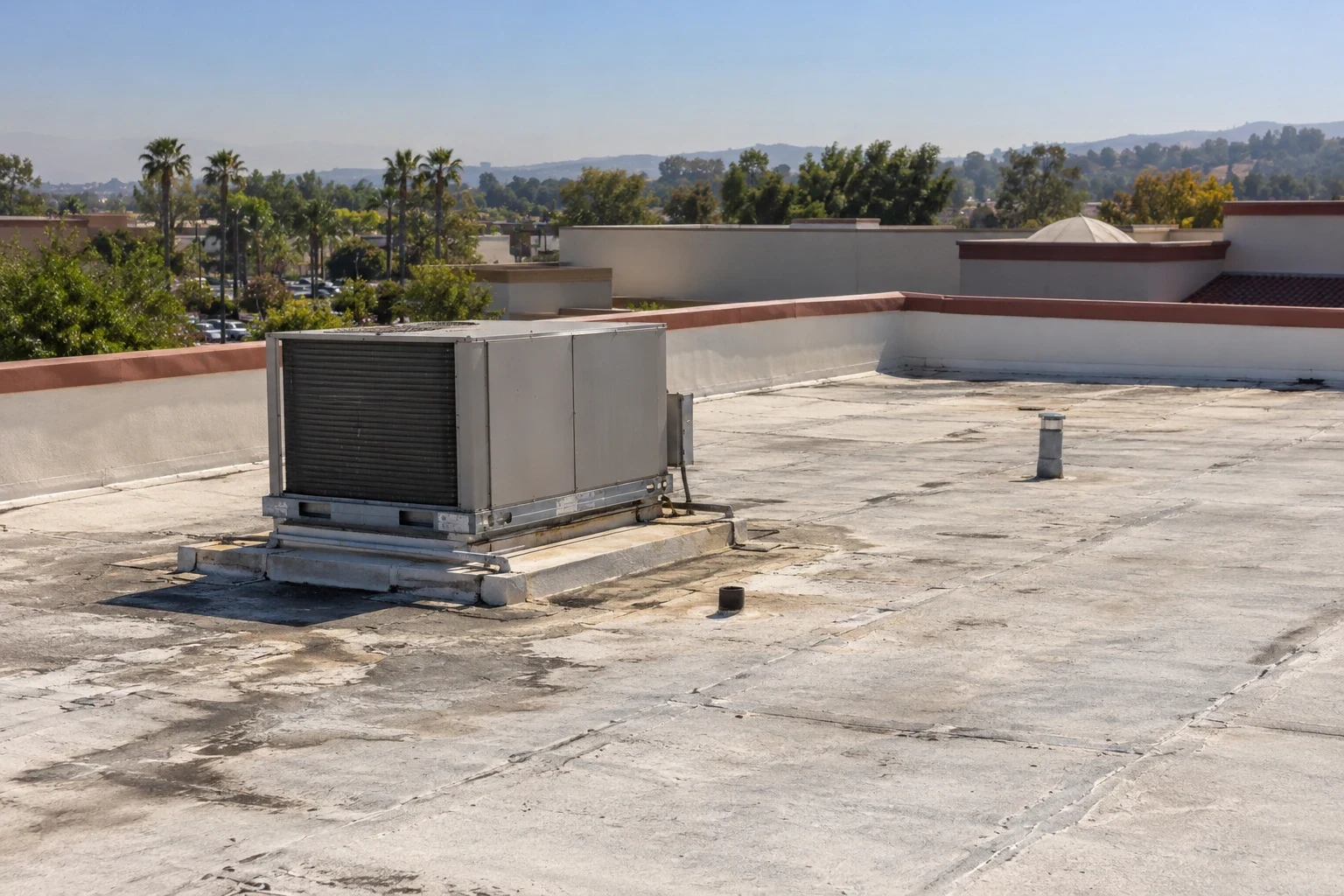
Shopping Center Roofing in Downey, CA
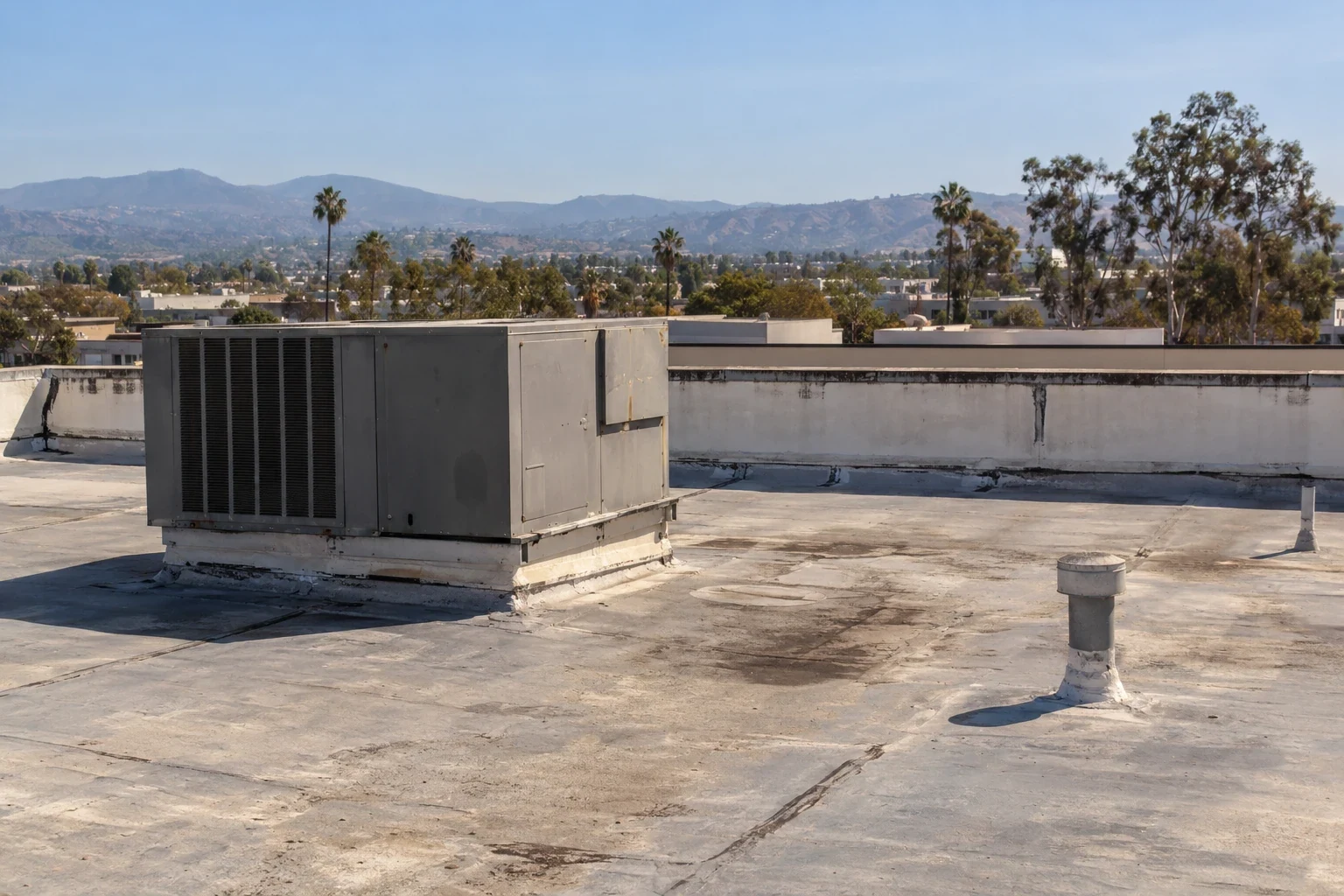
Shopping center roofing in Downey, CA: repairs traced across tenant lines, wall and parapet flashing, moisture testing and roof work coordinated with tenants.
A shopping center roof bid needs more than a suite number. The leak, the actual roof defect and the party responsible for fixing it can all be in different places. In Downey, CA, we sort those out before a repair is approved. We inspect the roof and identify where a lasting repair can tie in. The owner sets the project limits and handles tenant arrangements. Another contractor may need to repair a wall or prepare a rooftop unit, and that work is listed next to the roofing. A low field price is not complete if the repair cannot actually be finished.
A shopping center roof may cross several tenant spaces, additions and roof heights. Mark the unit or common area with a leak report, then inspect the roof above and around it. Check party walls, drains, parapets, rooftop units and membrane transitions. A stain in one suite does not establish which tenant owns the failed detail. Photograph the opening and identify the connected construction before pricing a shared repair. Confirm access and merchandise protection with the property manager. Include removal, support correction and permanent flashing in the amount.
Set the repair edges across tenant lines
The repair does not always stop at the line between two tenants. It may need to reach sound membrane beyond the suite where the leak showed up. Our commercial roof inspection checks the roof around the reported problem. We mark where the permanent repair starts and stops before setting a quantity. The owner sorts out permission and responsibility for the neighboring area. We report what we find on the roof and do not decide lease responsibilities. Open permission questions are noted with the proposal, because approval should cover the area the repair actually needs.
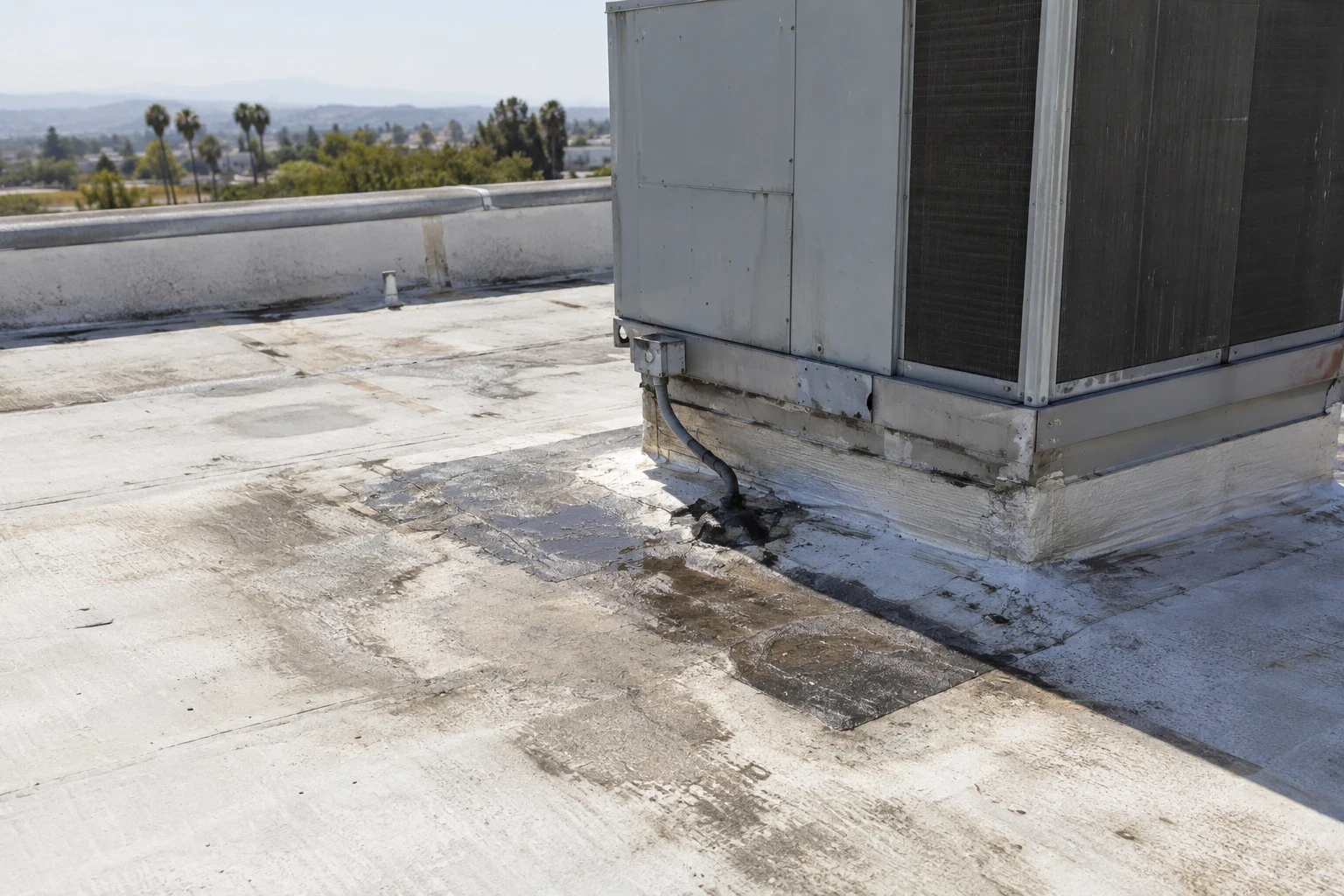
If the wall or parapet next to the repair is in bad shape, we explain what it needs. A masonry or stucco contractor may need to repair it. New membrane cannot make a failing wall sound. We show how the roof repair meets that work and which step has to happen before ours can be finished. The owner can then compare complete bids that cover the same area. Pricing by the suite number alone can leave needed work out of both bids.
Tell roof leaks apart from other causes
Water inside a store does not tell you where it came from. Our roof leak repair checks the seams, penetrations and drains above and around the reported spot. We document the defect behind any roof repair we recommend. HVAC or plumbing problems go to the contractor who maintains them. If the cause is still unclear, we suggest further investigation rather than promise a repair. A membrane patch cannot fix every interior leak, and the proposal says what our roof findings actually show.
Once we find a split seam, we check the membrane around it. The repair method needs material that matches the existing roof. Cleaning sound membrane is different from cutting out worn membrane or rotted backing. We set the repair edges where the roof can take the new work. A smaller patch may skip the preparation the repair needs, which is a difference in scope, not a real saving. Compare bids once the condition of the surrounding roof and the repair edges are clear.
Plan tenant access and deliveries together
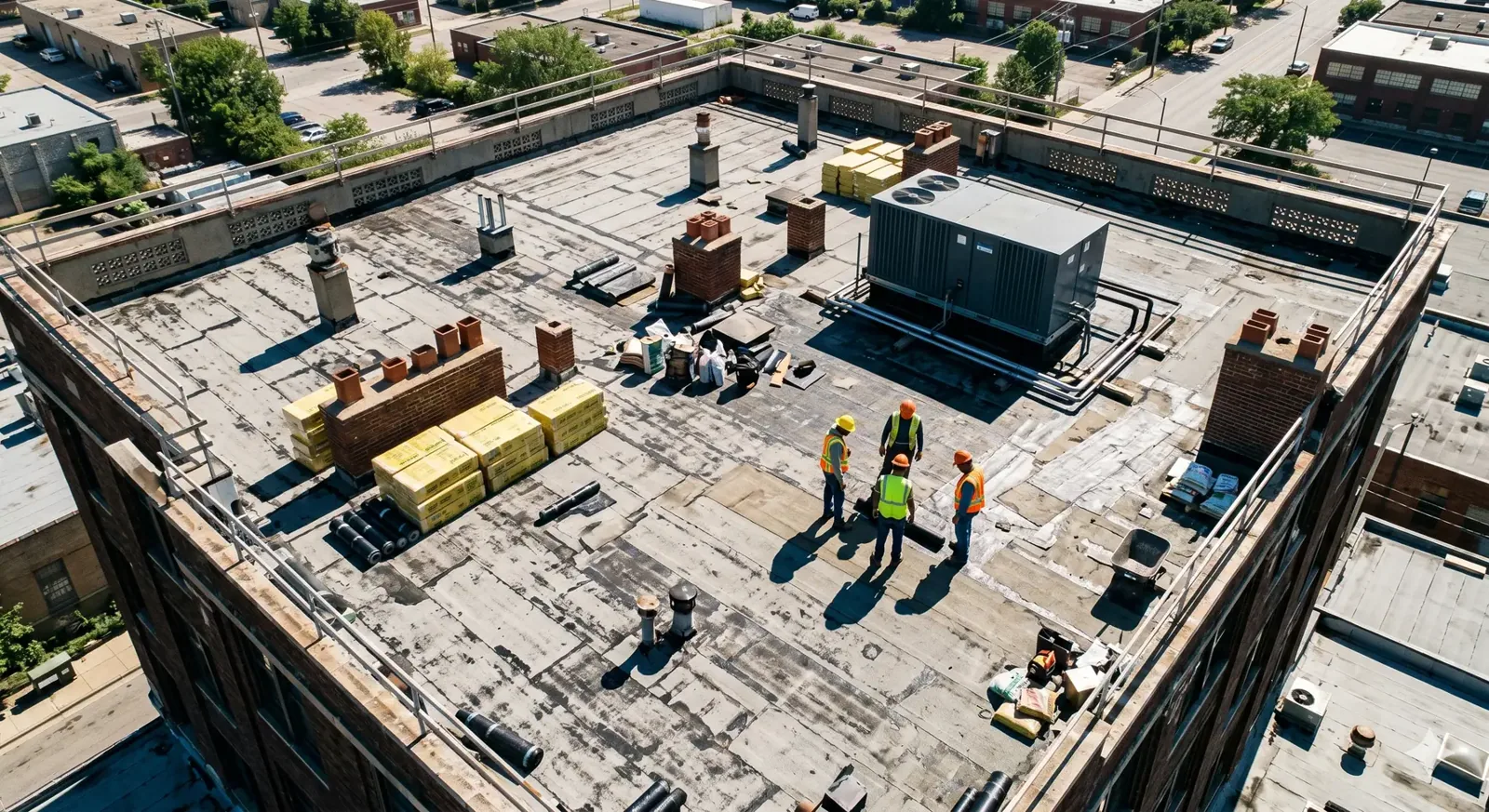
Opening the roof can affect a tenant next door to the leak. Our occupied-building reroofing plan describes the work area and how materials will be handled. We show the delivery route and how debris will be removed. The property manager contacts the affected tenants, who arrange access and raise any equipment concerns. We price the resulting protection with the tear-off and repair. Roof access alone does not mean every store below is ready, so both are confirmed before the work dates are set.
At a multi-tenant shopping property in Commerce or Santa Fe Springs, mark demising walls and shared drainage paths on the inspection plan. Ask the manager which tenant pays for access and who controls common areas. Keep each repair quantity on the side of the boundary the crew actually inspected.
Finding more damage during the work can change those plans. We outline the larger opening before removing more. Another tenant or equipment area may need its own review. We get approval and update protection for that area, and the added material and added preparation are explained together in the change. A temporary seal can protect the area while the permanent repair is scheduled, and it is labeled so the remaining repair does not drop out of the budget.
Test the insulation before pricing a recover
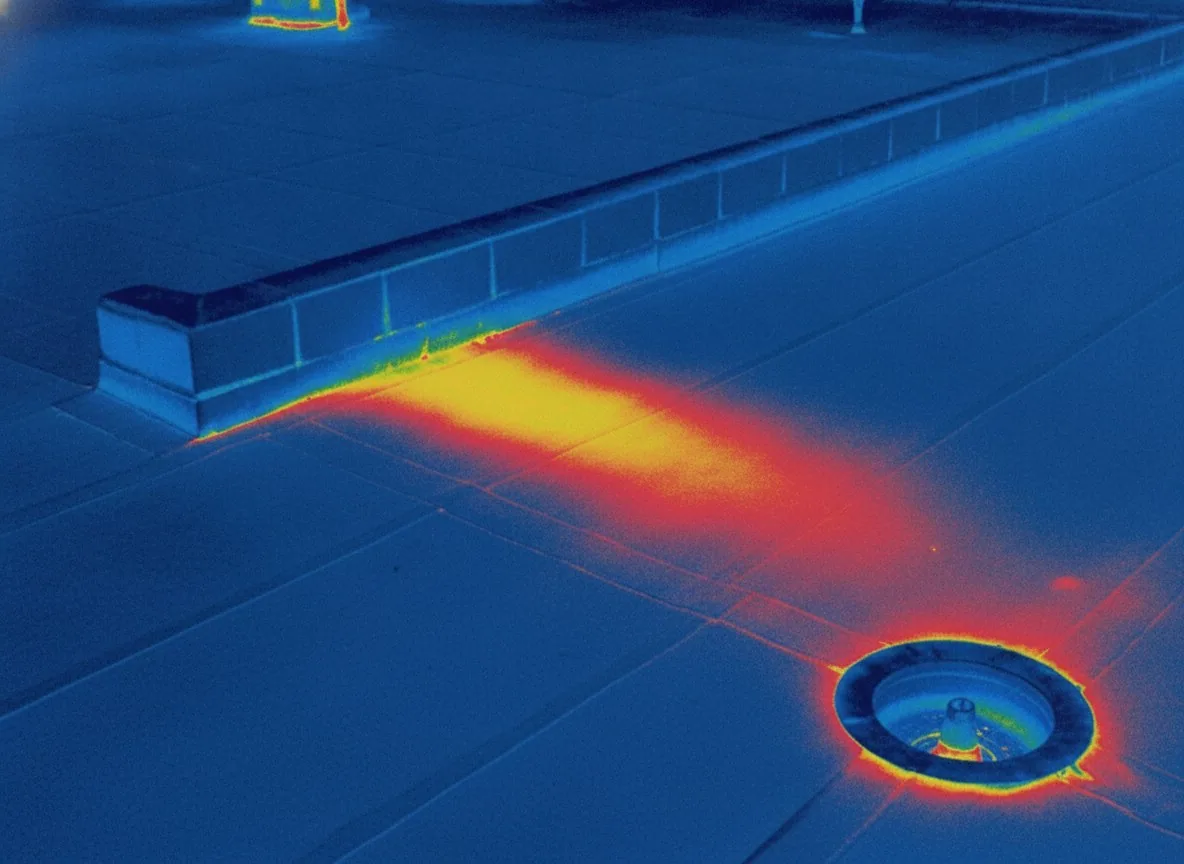
What is under the membrane can decide whether a recover makes sense. Our infrared moisture survey compares thermal scans with the roof records, and we read the results with the weather during the scan in mind. A temperature difference points to areas worth checking. It does not prove every layer can stay. We confirm with core cuts wherever keeping the old layers affects the repair method. Patching those cuts is part of the survey, and protection for the store below is reviewed with the property manager.
We explain what the confirmed condition means for tear-off. A small wet pocket may support a local repair. Widespread moisture may need more testing before choosing a method. New membrane cannot fix wet insulation hidden underneath. We tell you what is still uncertain and how it could affect the work. The owner can then weigh keeping the old roof against a broader tear-off, with each price based on the actual roof above that suite.
Record repairs by suite and list open items
The closeout shows each permanent repair on the roof plan. It includes patched test cuts and backing problems found during tear-off. Temporary seals are kept separate from finished work. Any wall, HVAC or other contractor work still needed is listed. A finished roof does not close out another contractor's task, and the owner needs that list before approving more work. Photos back up the record, so later work starts from where the repair actually ended.
For shopping-center roofing in Commerce, name the building, unit and shared roof section. A big-box roof repair over sales space and a restaurant roof repair around exhaust equipment may need different protection and coordination. Inspect each connection and show the owner which tenant line the repair reaches. Keep a common-area task separate from a unit-specific leak until the inspection supports a shared source.
Commercial Roofing Questions
Does the tenant line define where the roof repair stops?
Not necessarily. The repair has to reach sound material on the roof, which may cross into a neighboring suite. The owner handles permission and responsibility for that area. We price the complete repair rather than assuming the suite number sets how far the work goes.
What if a wall contractor has to repair the wall before we can flash it?
We identify the wall condition that keeps the flashing from sealing and list that contractor's work next to the roofing scope. New membrane cannot fix a failing wall. Compare proposals once that work is visible so you can see which bids will actually get finished.
How does testing affect a proposal to keep the existing roof?
Where keeping the old layers is part of the plan, we test them with scans, roof records and core cuts, taking conditions during testing into account. Test cuts are patched and the store below is protected. The results show whether to keep the layers, remove them or test further before choosing a price.
What is needed if the opening extends into another tenant's space?
We show the added area, why it is needed and which tenant or system is affected. The property manager arranges approval and protection before more roof is opened. Changes in handling and preparation are priced with the added roofing. The first plan does not automatically cover the next suite.
Compare shopping center roof repair options
Send us the building and suite, where the leaks are and any roof records you have. Working with your property manager, we will inspect the roof and price the permanent repair, related wall or equipment work and tenant protection.