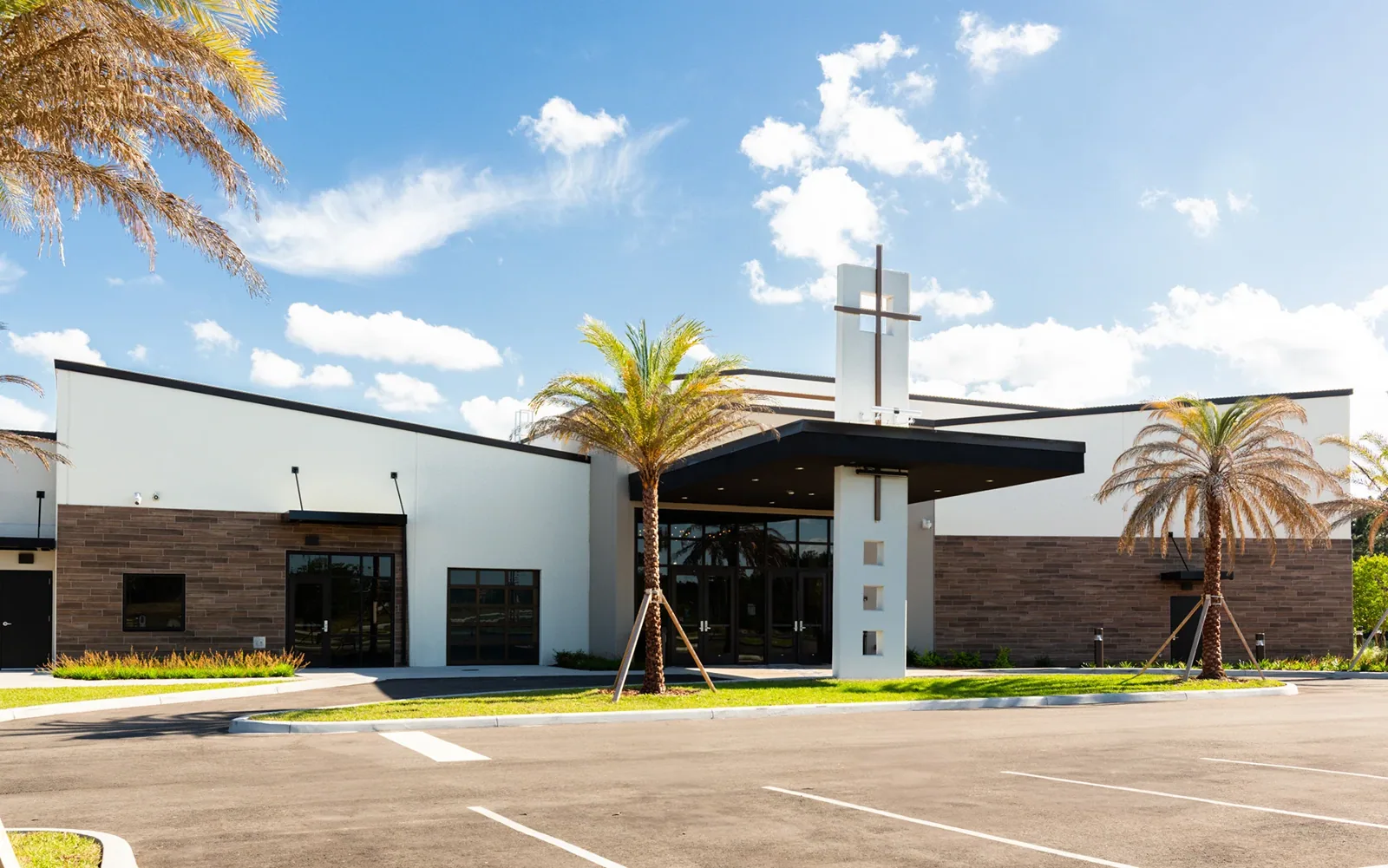
Church Roofing in Downey, CA
Church roofing in Downey, CA: wall and parapet flashing repairs, sound backing, moisture testing and roof work scheduled around services and events below.
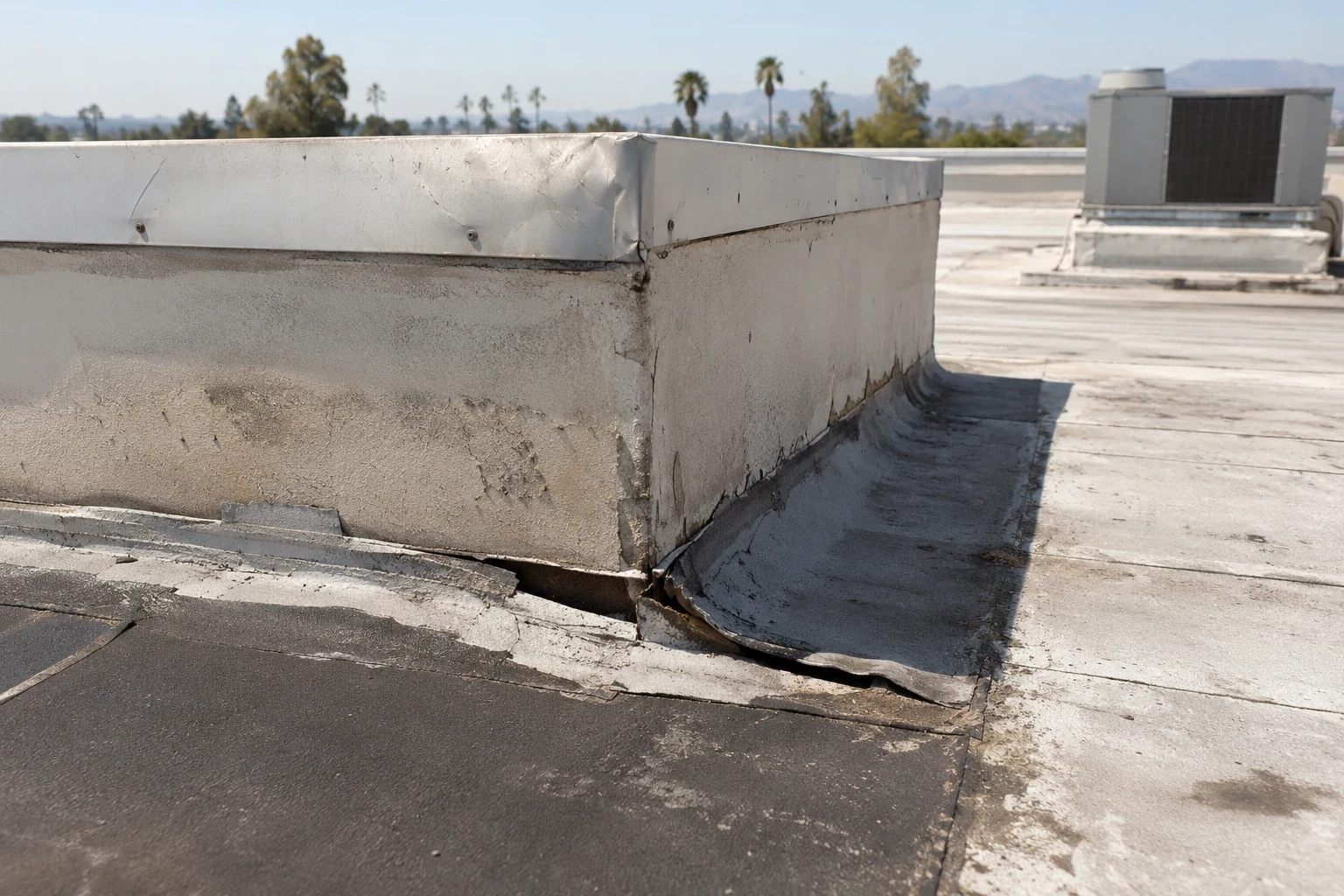
Many church roof leaks start where the roof meets a wall, parapet or tower. The open field of the roof can look fine while that wall flashing has pulled loose. For a Downey, CA church, we inspect that detail before recommending more roofing. We check the membrane and the preparation needed around it. If the wall itself is cracked or the masonry is failing, another contractor may need to repair it first. The building contact arranges for the rooms under any roof opening to be cleared or protected. We price all of that with the tear-off and repair, because new roofing cannot fix a bad wall joint.
A church roof protects sanctuary space, classrooms, offices and gathering areas that may have different schedules. Locate the room below each reported leak and inspect the roof detail above it. Check parapets, steeple or tower transitions, drains and penetrations. Do not assume a stain beneath a sanctuary means the closest roof opening is the source. Trace the water path and record each confirmed defect. Plan interior protection before cutting the roof above finished ceilings or sound equipment. The building contact can identify services and events that affect access. Price a repair with its removal, substrate work, flashing and daily closure included. If the roof has several additions, inspect each roof-to-wall transition separately. A sound section over an older wing does not prove the adjoining roof has the same assembly or condition. Give the owner a location-by-location work list and keep completed roofing separate from any room preparation or unrelated electrical work.
Inspect the wall flashing and the wall behind it
Water often gets in where the roof membrane turns up a wall. Our flashing failure repair work checks the flashing, the counterflashing above it and the wall surface behind it. We look for loose or split membrane, rotted backing and sound material to tie into. If the masonry or stucco needs repair, a masonry or wall contractor may handle it, and we show that next to the roofing work. More membrane in the field will not fix a failing wall. The proposal explains exactly where the repair ends, so the owner can compare bids fairly.
The repair may need to reach further than the visible gap. We check the membrane around it that the new flashing will bond to. Sound membrane may only need cleaning. Brittle or damaged membrane has to be cut back to good material. We separate those two before you approve a small patch. A cheaper quote may leave out that preparation. A complete repair shows how the flashing will be finished at the wall.
Match the repair method to the existing roof
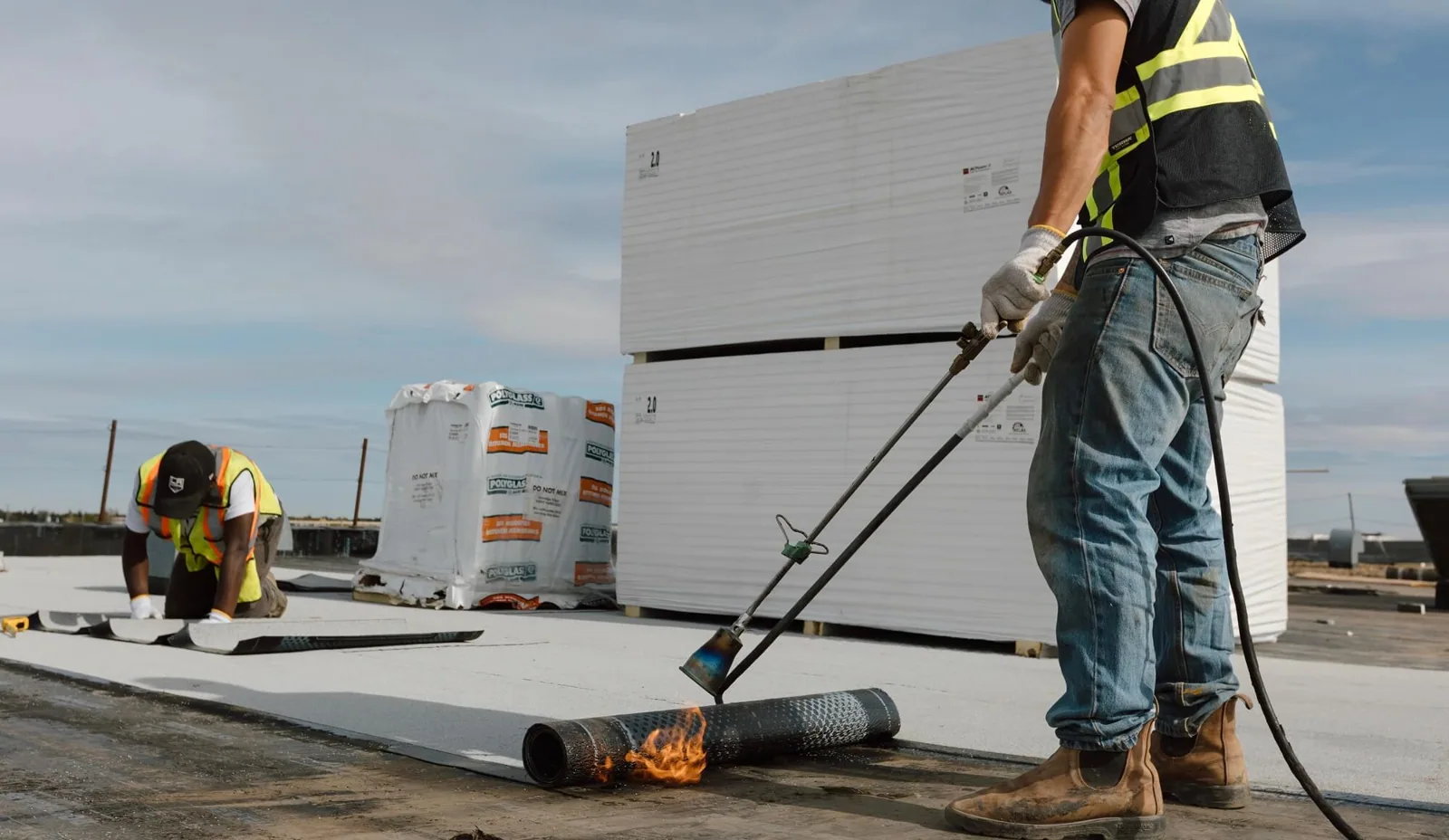
The repair has to suit the roof that is already there. Our commercial roof repair starts by working out what the flashing needs to bond to. TPO and PVC are heat-welded and need clean, weldable material. Modified bitumen and other roofs use their own primers and adhesives. We decide which existing surfaces can be reused. Dirty or aged membrane should not be assumed sound. Where cleaning will not work, removal is priced instead, and the cost follows that preparation.
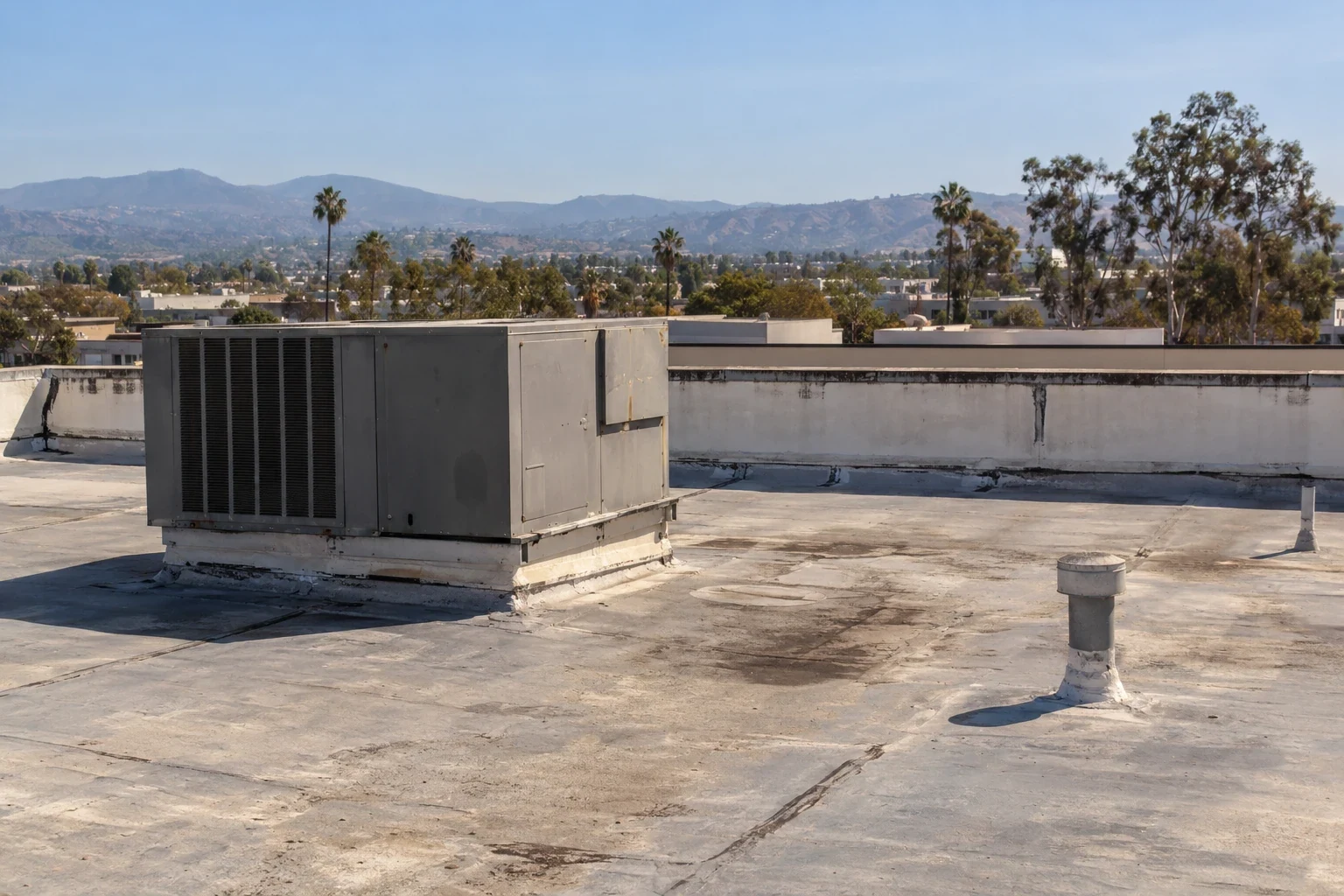
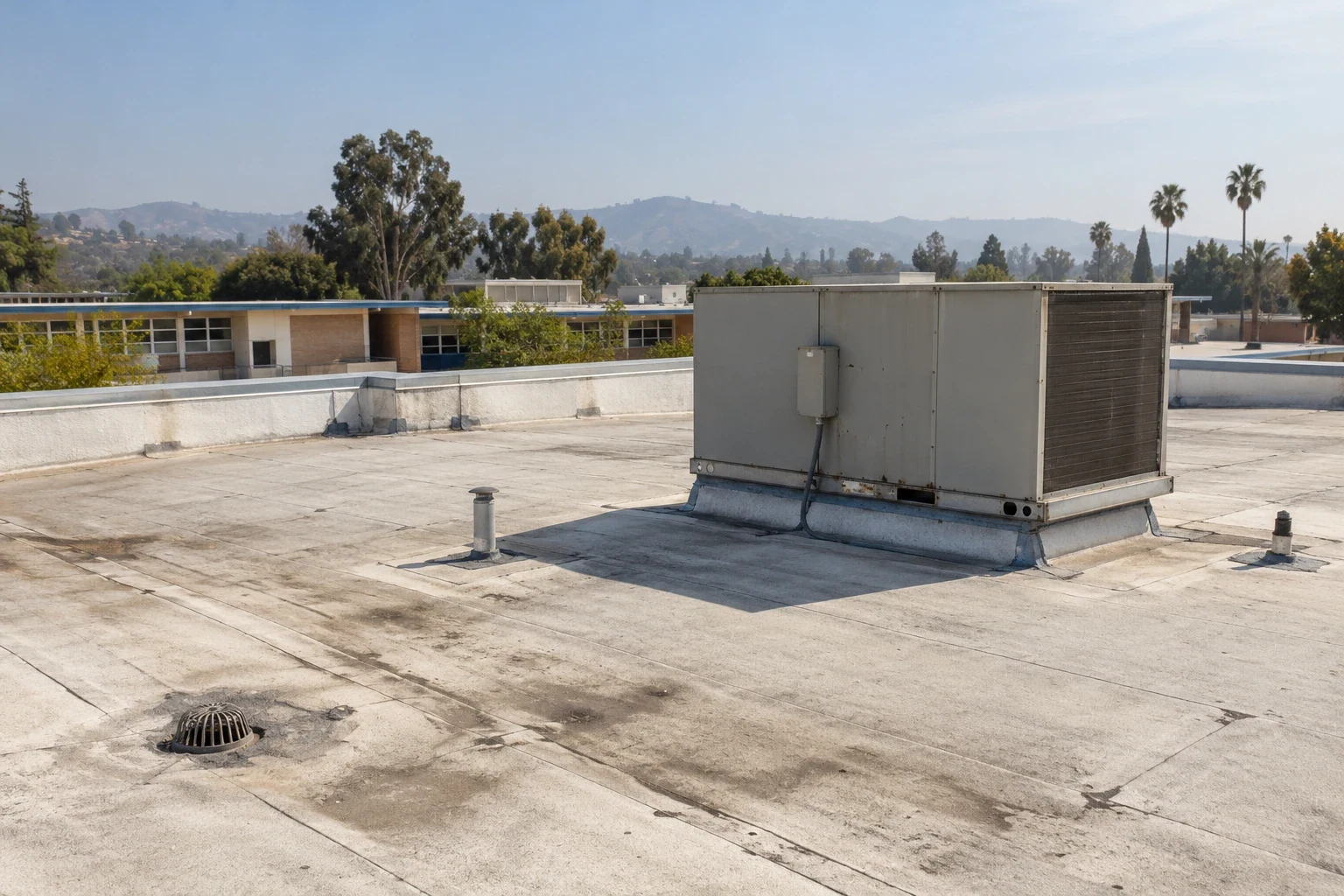
Rooftop HVAC units and vents add work beyond the membrane repair. HVAC contractors handle servicing and moving their units. If a curb has to be raised, a support moved or drainage changed, an engineer may need to review it. We show where our flashing ends at each unit. That work stays in the project price, because a field-only quote can stop short at a curb that still leaks. A spot repair and a larger job can be compared once both are fully described.
Plan around services, events and the rooms below
Before we open a roof over a sanctuary, classroom or hall, we identify which rooms are affected. Our occupied-building reroofing plan shows the building contact where materials arrive and how debris leaves. The contact arranges access and works our schedule around services, classes and events. Organ, sound or HVAC contractors make their own decisions about their equipment. We price the protection that comes out of that planning with the tear-off and repair. A roof visit does not mean the rooms below are ready, so we confirm the plan before cutting.
Hidden damage can push the opening over another room. We explain the added area and what we found, then get it reviewed before cutting further. Updated access and protection are priced with the added roofing. Permission for the first inspection does not cover every later opening. If the permanent repair has to wait, a temporary seal keeps water out and stays on the list as unfinished work.
Test the insulation before keeping the old roof
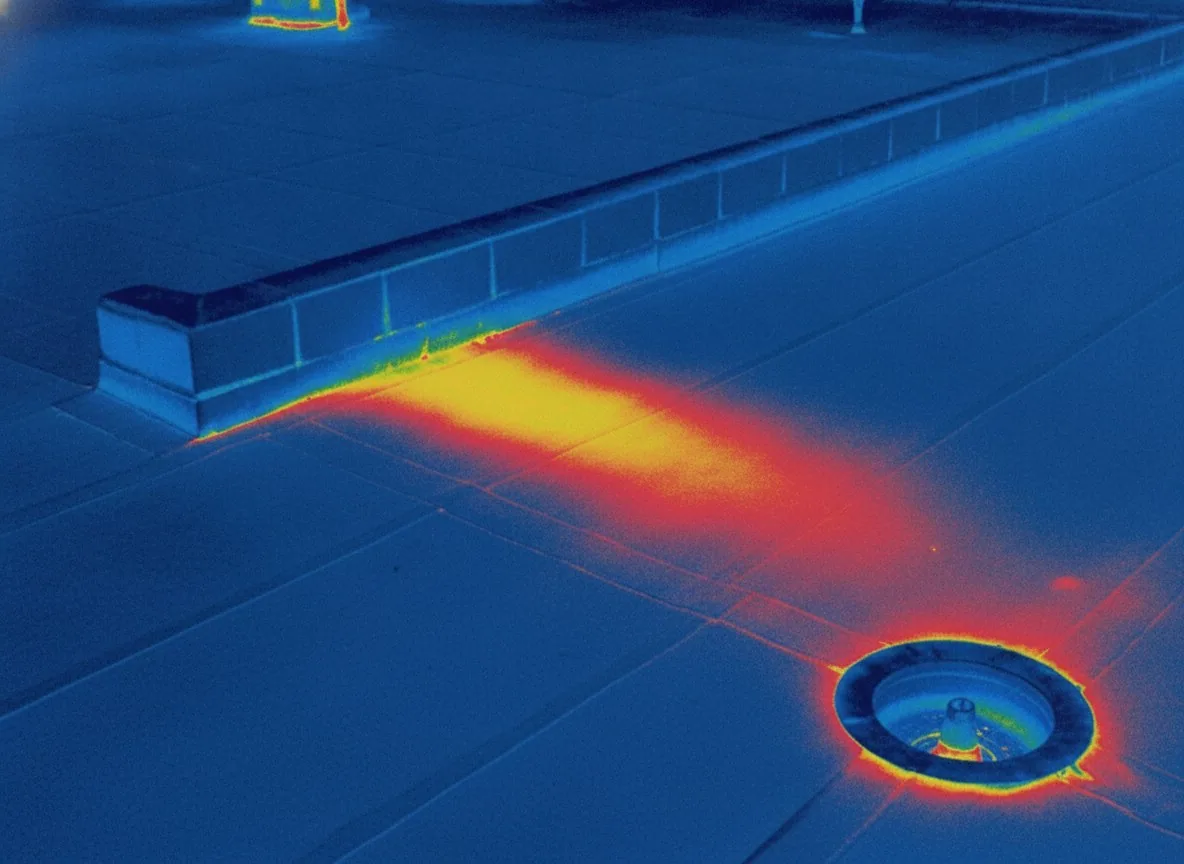
A roof surface cannot tell you whether the insulation under it is dry. Our infrared moisture survey compares thermal scans with the roof records, taking into account the weather when the scan was done. A temperature difference can point to trapped water that needs checking. It does not prove the rest of the roof is sound. We confirm with core cuts wherever keeping the old layers affects the repair method. Test cuts are patched as part of the survey, and protection beneath each one is planned with the building contact.
When a wet area is confirmed, we mark how far the removal needs to go. If the moisture is widespread, more testing may be needed before choosing to keep the existing roof. We explain what we know and what is still uncertain. Covering wet insulation does not fix it. The owner needs a clear reason to keep or remove layers, and both options can be compared once that is answered. The price then reflects the actual condition of the church roof.
Keep wall and equipment items visible after the roof is done
The closeout shows where we completed wall flashing and membrane repairs. It marks patched test cuts and any backing problems found during tear-off. We photograph key wall and substrate conditions before covering them. Temporary seals are listed separately from permanent repairs. Any wall or equipment work still needed stays on the open list. A finished roof does not mean another contractor's work is done. The owner needs that distinction before approving more work, and the next estimate should cover only what remains.
Roof repairs at a church should account for the building areas in use and the times the property contact can release access. We inspect the reported roof section, check nearby drains and flashing, and identify protection needed below. For properties near the I-5/I-605 Downey interchange, the assigned site determines the work route. School roof repairs and government buildings require their own access and assembly review.
Commercial Roofing Questions
What should a church roof bid include where the roof meets a wall?
It should cover the flashing and counterflashing, any membrane that has to be cut back on the roof side and a sound wall surface for the flashing to attach to. If the wall needs masonry or stucco repair, that work should be identified too. Compare complete wall repairs before accepting a field patch that does not address the wall.
Does a small visible split tell you how big the repair is?
Not usually. We check the membrane and backing around the split. Sound membrane may just need cleaning, while brittle or wet material may need to be removed further out. A smaller patch price may leave out the preparation needed for the repair to hold.
What has to be arranged before opening the roof over the sanctuary or classrooms?
We identify the rooms affected, where materials will come in and how debris will leave. The building contact arranges access and schedules around services and events. Protection for the rooms below is priced with the roof work, and the plan is confirmed before we cut the roof.
What supports keeping the existing roof layers?
Testing where it matters. We use infrared scans, roof records and core cuts, keeping the weather in mind. Test cuts are patched and the rooms below are protected. The results show whether the layers can stay, need to come out or need more testing before you approve the price.
Get a church roof and wall flashing estimate
Send us the church address, where leaks are showing up and any roof records you have. Working with your building contact, we will inspect the roof and price the wall flashing, related repairs and the protection needed for the rooms below.