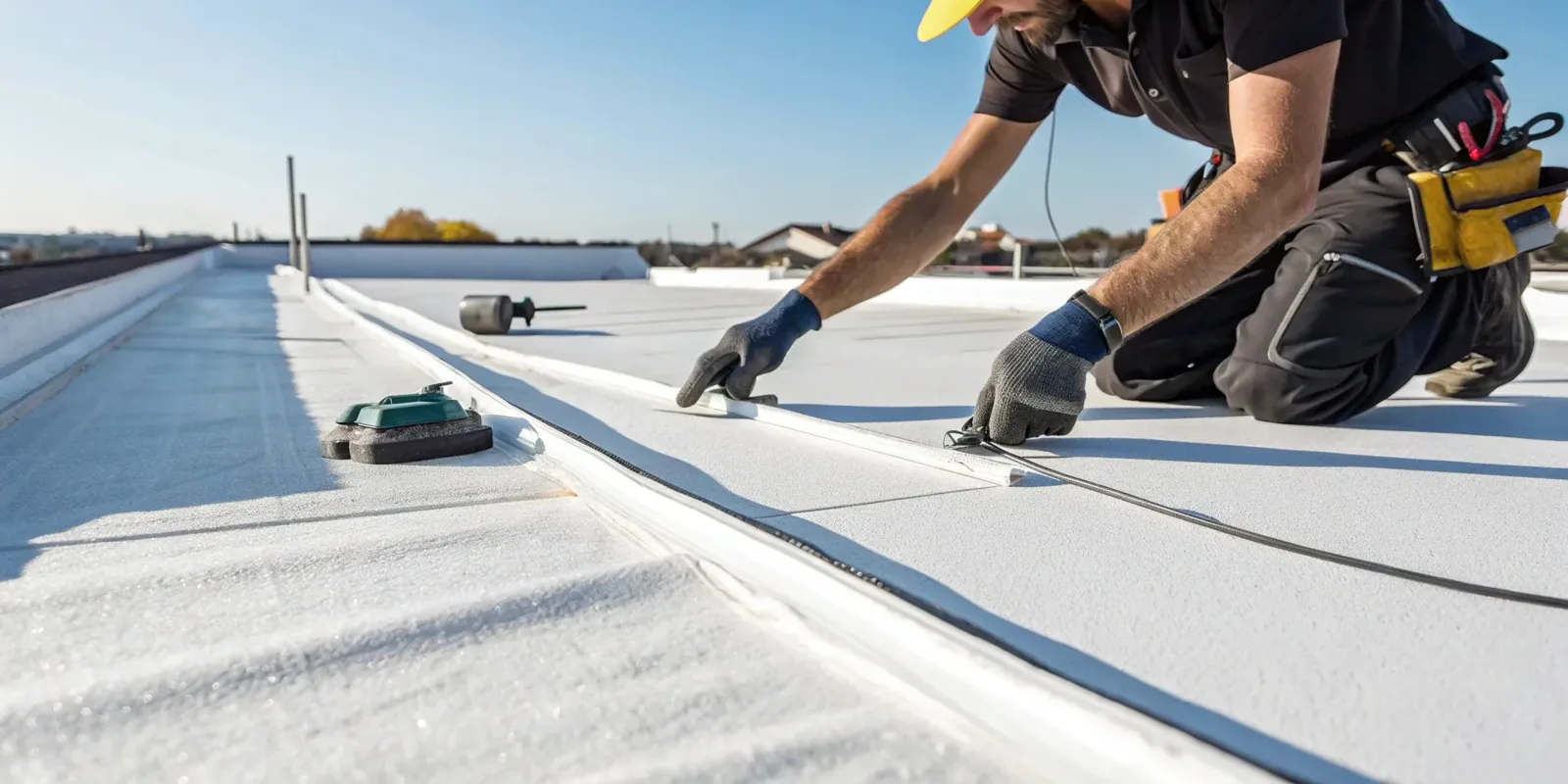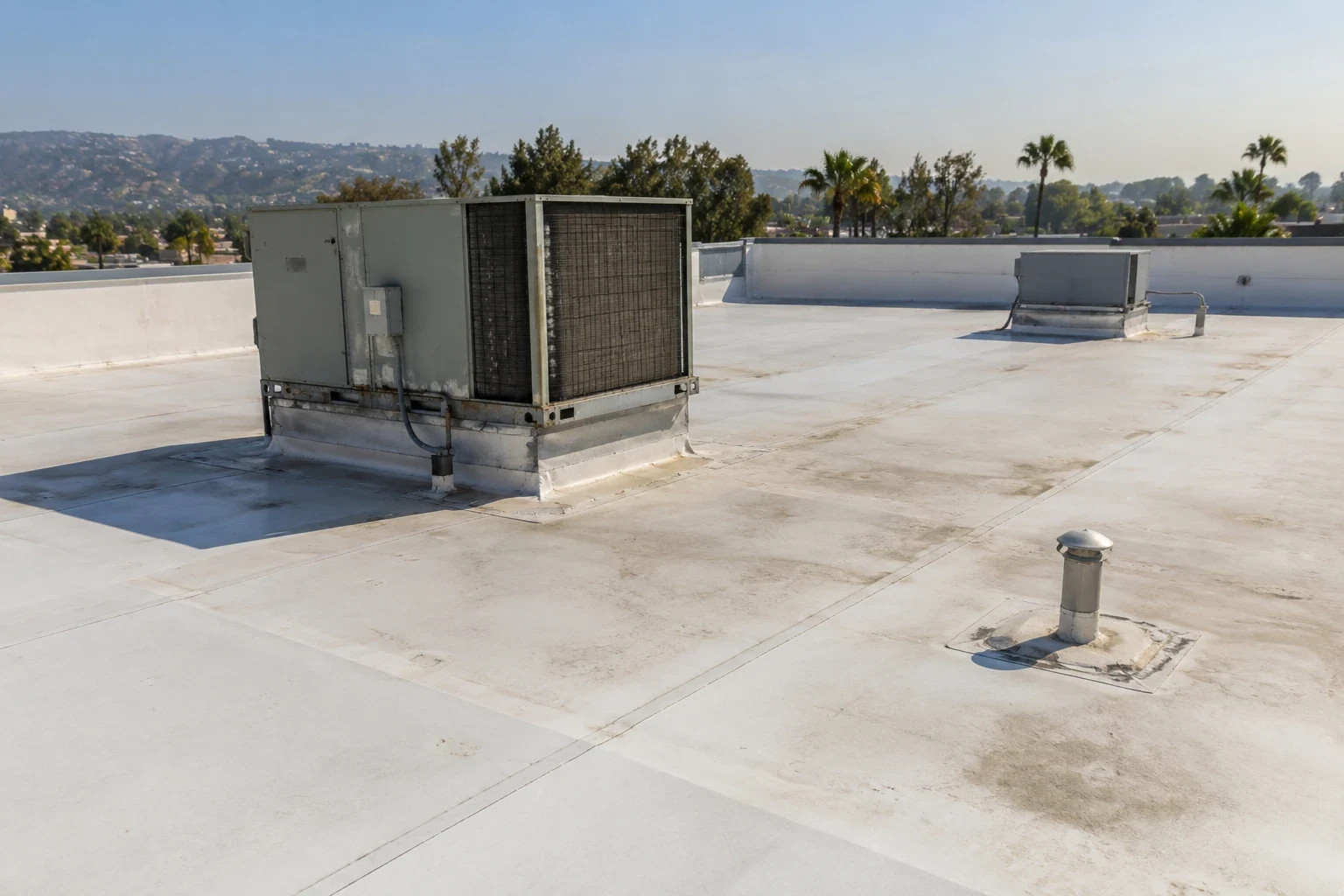
Holcim Elevate Roofing in Downey, CA
Holcim Elevate roof repair in Downey, CA: we confirm which membrane is actually on your roof, check the insulation below, and price seams, flashing and curbs.
Do not order a replacement sheet until the existing roof is identified. Holcim Elevate's product guide lists EPDM, TPO and PVC roofing families. That does not tell you which membrane is installed on a Downey building. Check project records, labels and accessible roof material first. Then match the repair to the product and detail actually present.
Heat and ultraviolet exposure age roof surfaces over time. After Downey's dry summer, winter storms test seams, drains and flashing. A repair estimate should describe the roof sections inspected, the confirmed product and every connection the work will restore. It should also name material questions that could change the chosen repair.
Identify the membrane and earlier repairs
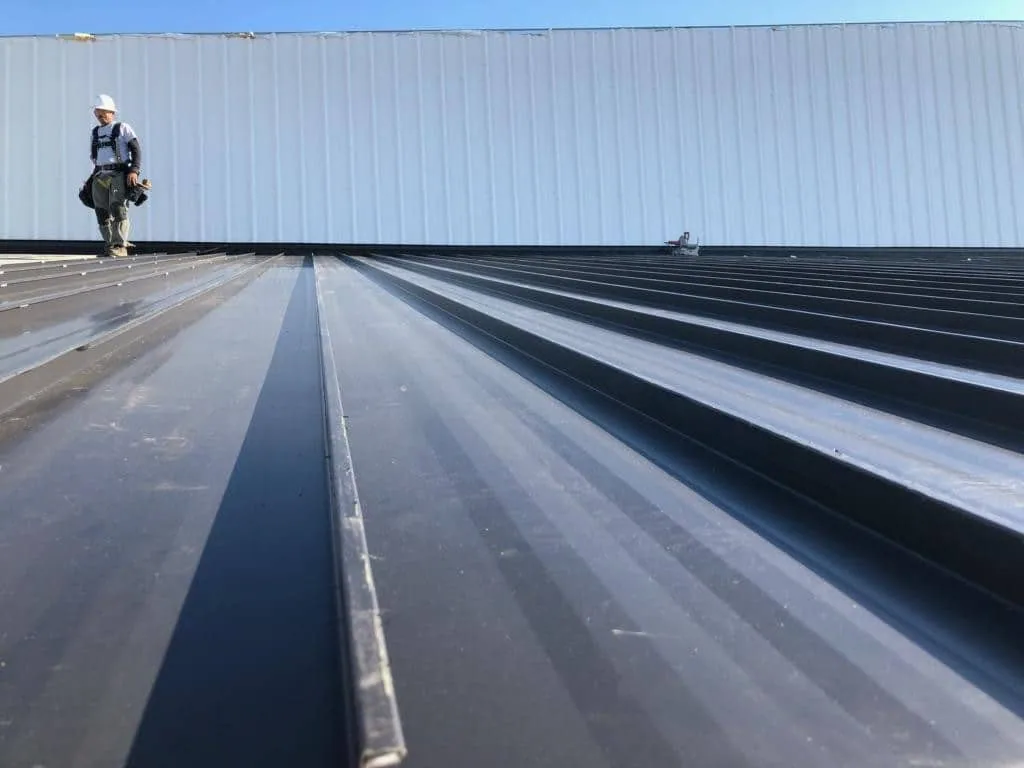
Start with the roof records and the membrane itself. Compare the product name, color, seams, markings and prior repair material. Do not identify a system by color alone. A coating or patch can hide the original surface. If records and inspection do not agree, include a small material identification task before ordering new sheets or accessories.
For a Holcim Elevate EPDM repair, confirm the existing membrane and compatible joining method. A separate Versico roof on a different building tells you nothing about this roof's material. Keep each building and roof section tied to its own records. That avoids applying requirements from one project to another.
Photograph the sheet, seam and any readable product marking. Keep a sample or record only when the owner authorizes removal. Write down where each observation came from. An invoice can identify what a prior contractor purchased, while a roof walk shows what is currently installed. If those records disagree, resolve the difference before using either one to set a material order.
Note earlier patches where they meet the proposed repair. A patch may use another membrane, adhesive or surface treatment. Check the overlap and the material beneath it before preparing a permanent connection. If the product remains uncertain, pause the material order and resolve that question first.
Price wet insulation removal from what we find
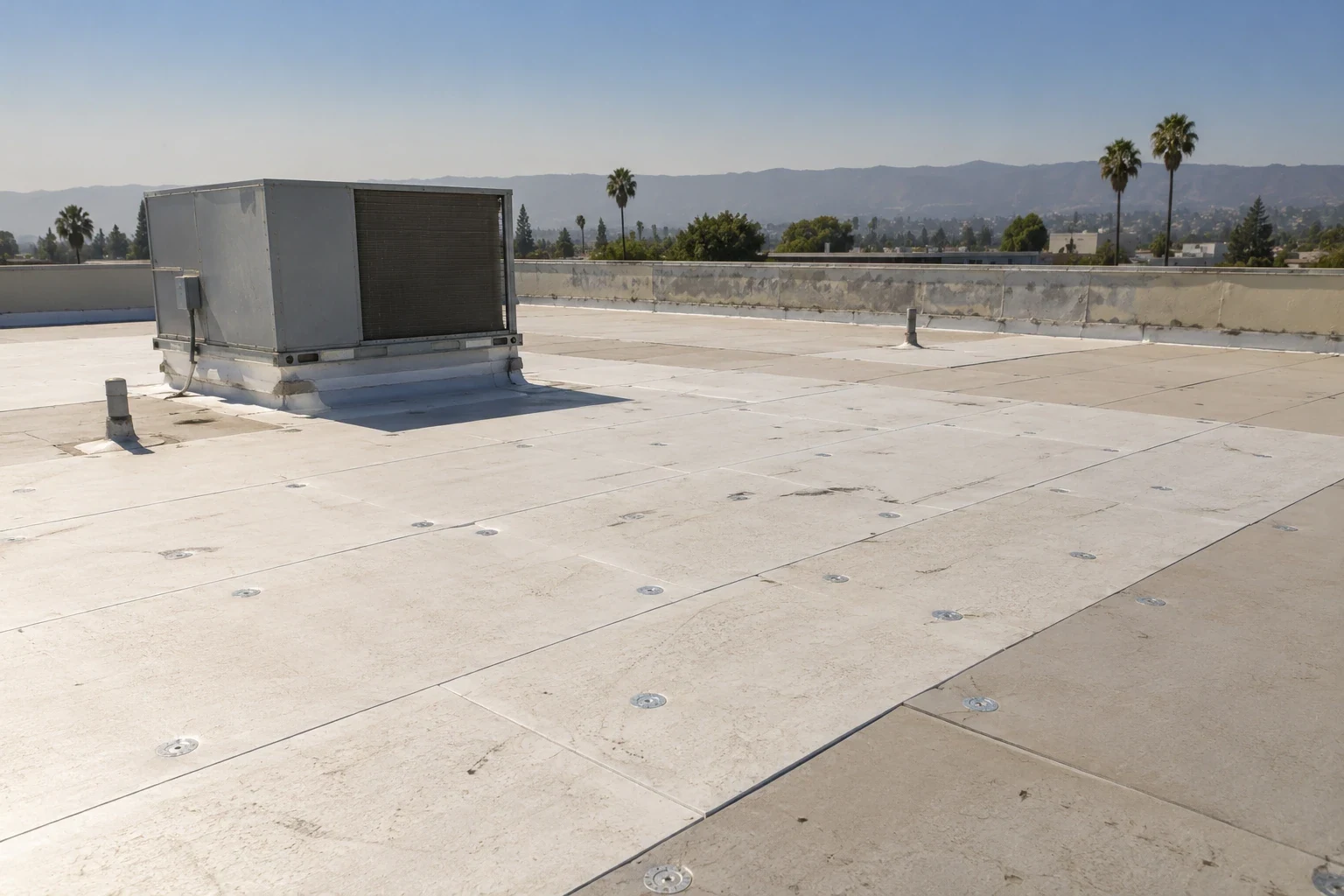
Look at the layers that will support the new membrane. Check for soft insulation, crushed cover board, trapped moisture and deck damage where accessible. A clean top surface does not prove the supporting layers are sound. If the repair depends on concealed material, identify the examination needed to confirm it.
A insulation and cover-board repair should separate wet or deteriorated layers from material the crew can retain. List each thickness and affected roof area when those findings are established. An estimate should not assume the same amount of wet insulation on sections nobody has opened.
If opening reveals more damage, photograph the layers before removal continues. Measure the added work and explain how it changes the assembly. Keep the temporary closure and permanent rebuild distinct. The owner can then approve the added correction based on what the crew found, rather than a revised material total without a clear reason.
Match seams and flashing to the actual product
Seams, walls, drains and penetrations decide whether the new sheet can tie into the existing roof. Confirm the membrane family and applicable product requirements before selecting a weld, adhesive or flashing accessory. Check corners and terminations at the actual repair boundary. A generic membrane allowance does not show how the crew will close those details.
Holcim Elevate's product reference includes TPO among its roof families. A TPO repair still needs the actual sheet and project requirements identified. Keep an unlike system or prior treatment as a separate transition question. What worked on a Johns Manville roof elsewhere does not settle how this joint should be built.
Ask the estimator to list the number of seams, penetrations and wall transitions in the repair area. A square-foot quantity alone will not price each flashing or corner. Include disposal and safe closure for any opening left between visits. When product requirements call for a field check, state the method and result in the closeout record.
Price the field material together with removal, preparation, flashing and edge termination. If sheet metal or the wall behind the flashing needs work, it should be listed separately along with who will do it. You should be able to follow the repair from the exposed deck to the finished flashing before any material is ordered.
Plan equipment work around the roof repair
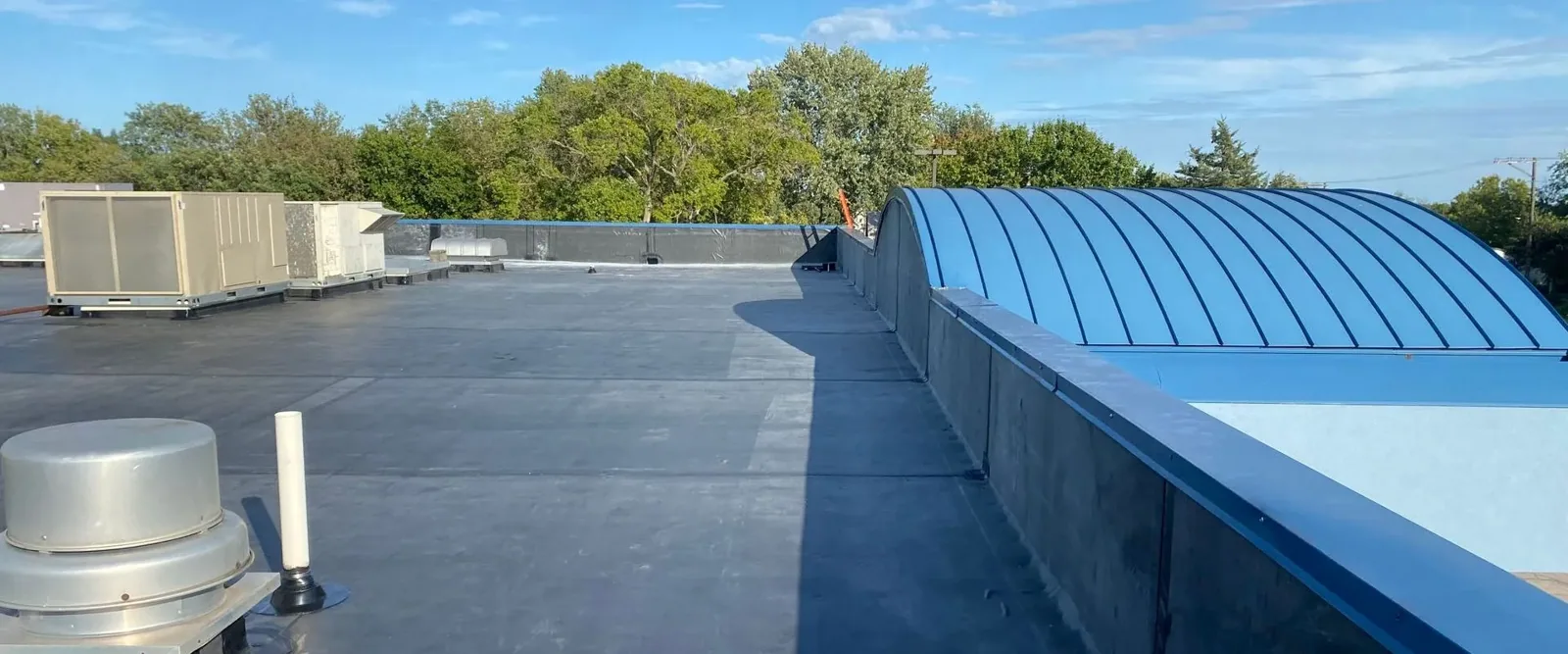
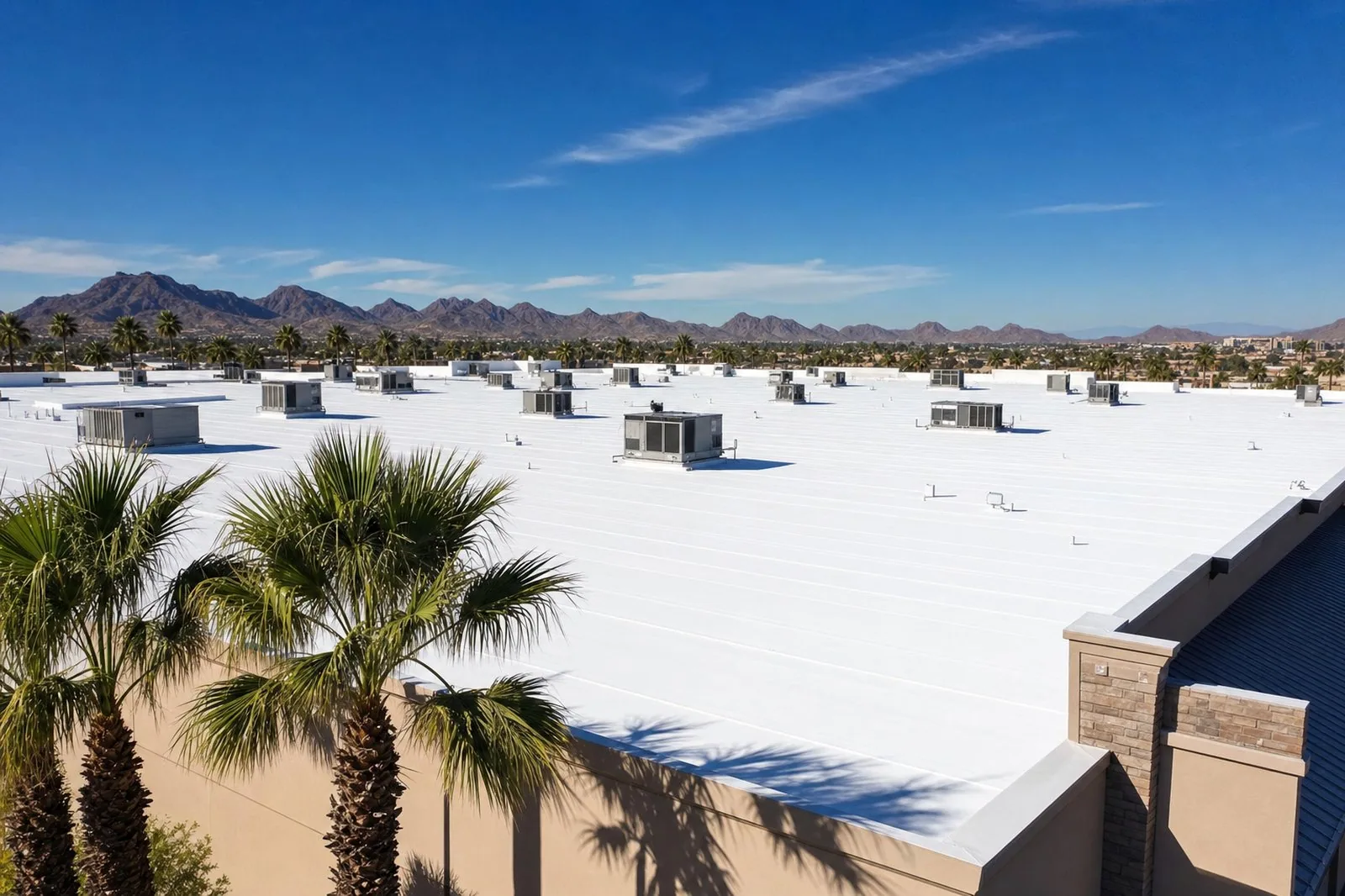
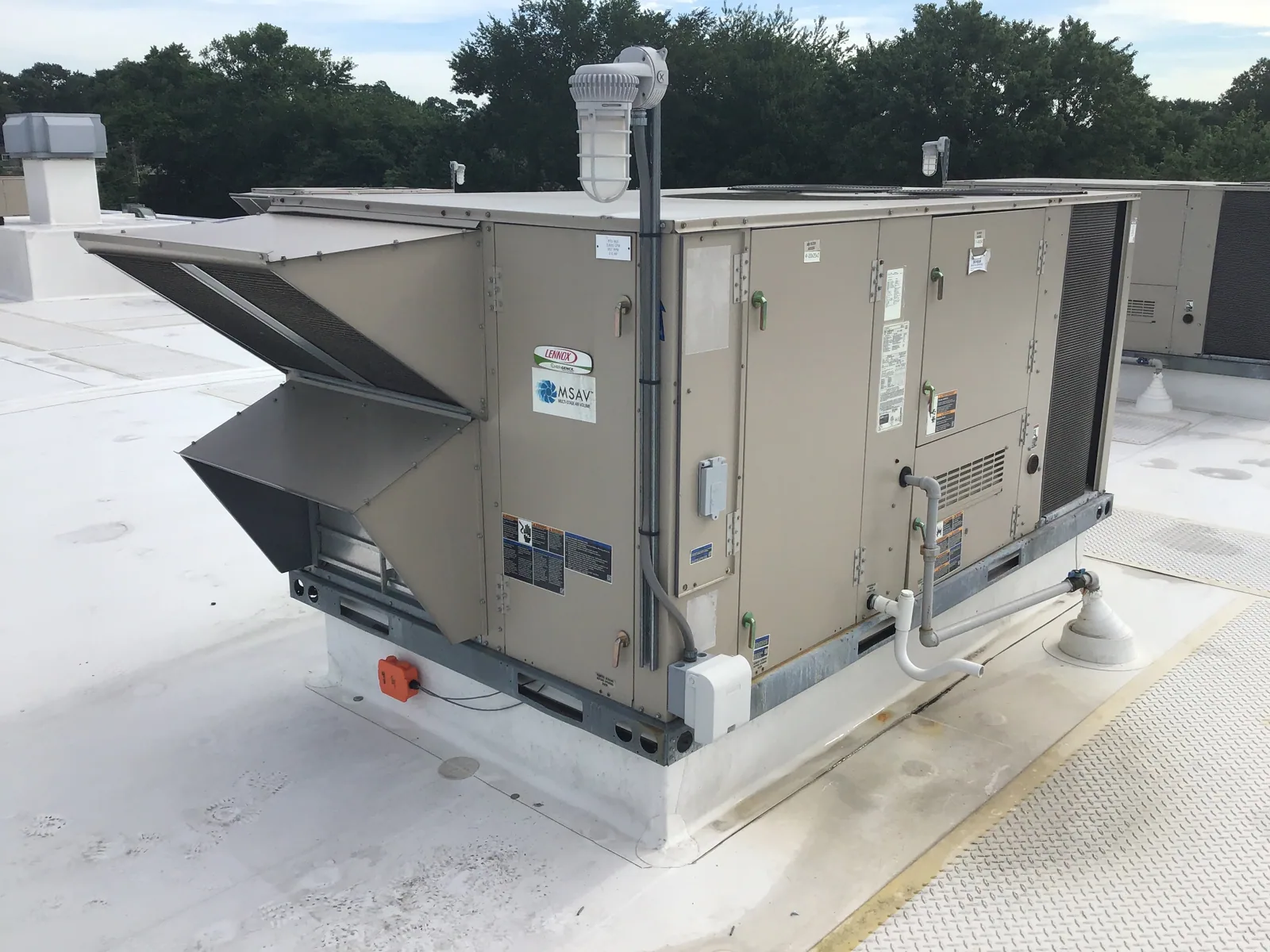
Rooftop units can block the detail the new membrane needs. Check the curb, counterflashing and support condition around the assigned equipment. Some of that work belongs to your mechanical contractor, not the roofer. The roofing crew should not disconnect equipment as an assumed part of membrane installation.
A curb and equipment flashing repair should show both tasks and their order. The mechanical work should happen before the roofer opens the flashing. Confirm how each curb will be protected if the repair takes more than one visit. A piece of membrane installed nearby does not mean the equipment detail is finished.
Downey projects use major routes including I-5 and I-605. Confirm truck access, roof loading and equipment staging with the property contact before delivery. The route map cannot set a building’s gate or loading hours. Keep verified site instructions with the installation plan.
Before opening the roof, set a safe stopping point and temporary cover. Agree on who will inspect the finished seams before the crew leaves. This keeps product-specific work from sitting unfinished between visits.
For an occupied property, confirm access, material staging and the area below each opening. A roofing plan for an occupied building should spell out where each day's work stops and how the space below is protected. Divided work periods can add setup and handling. Compare them with a larger stage using the same permanent construction.
Keep the product record with the repaired section
Keep the product record with the repaired roof section. Photograph the membrane before work, prepared seams and finished flashing. Record material names, areas removed, cover board installed and details completed. Note sections that remain unexamined or awaiting another trade. The closeout should show what was repaired, not imply that every surface at the property uses the same product.
For a product-specific roof question near Santa Fe Springs, identify the building and installed membrane before pricing work. Local conditions do not establish a manufacturer or system. Keep the repair photos and notes in the property file so a later roofer knows what was confirmed and what was only assumed from appearance.
Before the owner signs, compare the proposal with the record. It should name the product, repair locations, preparation, permanent connection and any unresolved question. If the scope relies on product guidance, keep the applicable document with the closeout. That makes future repair decisions easier to verify.
Commercial Roofing Questions
How can I confirm that an existing roof uses Holcim Elevate material?
Compare roof records and markings with accessible membrane and prior repairs. Do not rely on color alone. If the product is unclear, identify a material check before ordering sheets or accessories.
Does the product guide approve a repair method for my building?
No. It identifies product families, not the roof installed at a particular property or the repair detail required. Confirm the membrane, assembly and current requirements for the work.
What should a Holcim Elevate repair proposal include?
It should name the membrane that was confirmed on the roof, then list removal, any layers being kept, seam preparation, flashing and how the work is closed up each day. Work that a mechanical contractor or sheet metal trade must do should be listed separately, along with anything that still needs to be checked.
What belongs in the repair closeout?
Keep product references, repair locations, photos, material removed and finished details together. Note unexamined sections and open equipment tasks separately. This keeps the record specific to the roof section repaired.
Confirm your Holcim Elevate roof before pricing repairs
Tell us which roof areas are leaking and share any product information or past roof records you have. We will inspect the roof, confirm the membrane, check the layers underneath and give you a clear repair estimate.