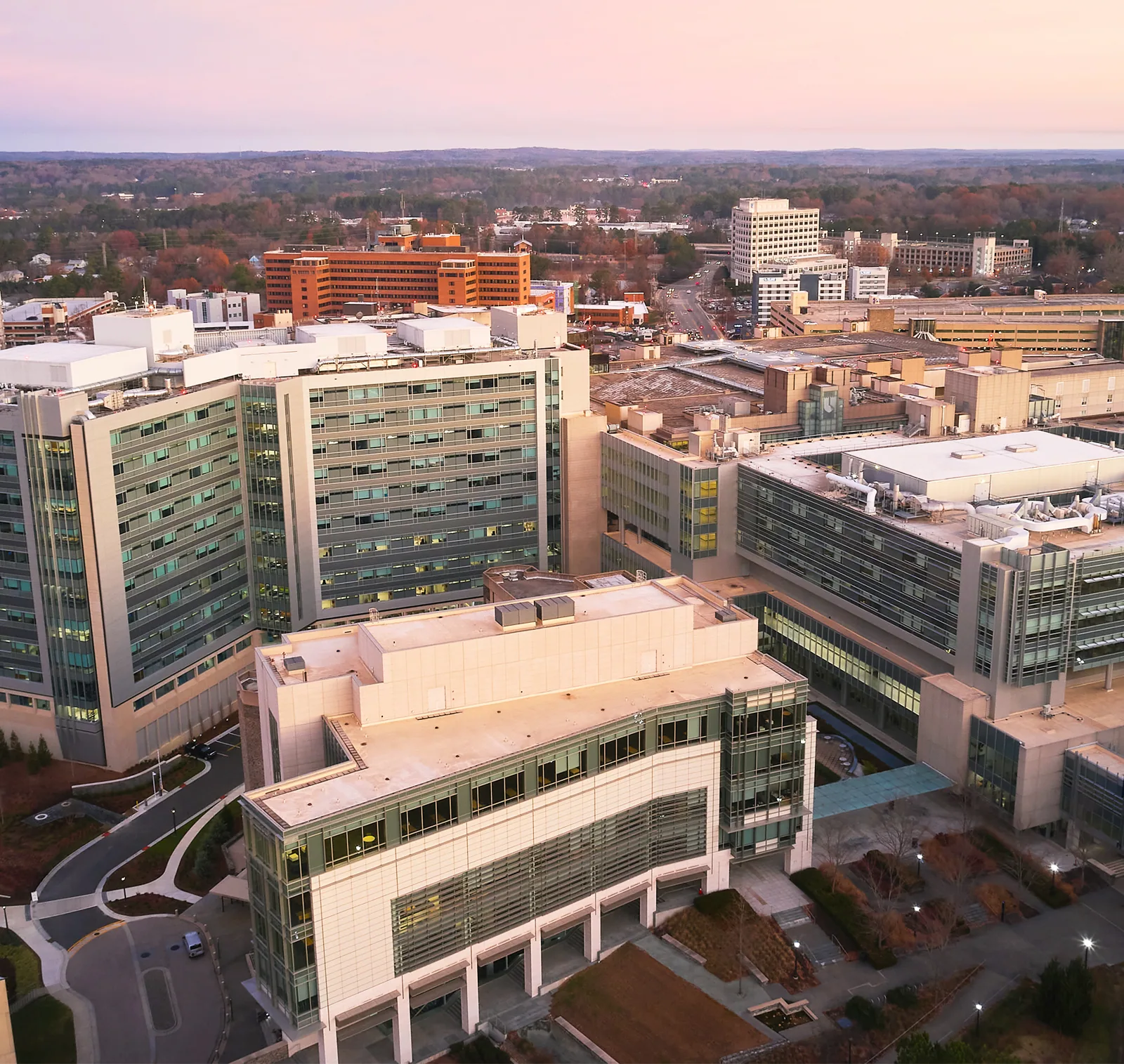
Healthcare System Commercial Roofing in Downey, CA
Healthcare roofing in Downey, CA: leak repairs and roof projects for hospitals and medical offices, planned with facility staff and documented for each building.
A healthcare roof budget needs to show the repair and any work that has to happen before it. A leak over a clinic hallway might come from a seam, a flashing or a rooftop unit. We inspect the roof, find the cause and explain the permanent repair. The facilities manager can then plan around patients, staff and equipment before approving the work. A lower price only helps if it includes the prep work and a complete repair. It should not leave out work the HVAC or plumbing contractor has to do first.
Healthcare roof proposals should locate the affected department, room and roof section. Confirm access with the facility contact before opening any assembly above clinical or occupied space. Our service radius includes commercial roofing in Lakewood, but each hospital and medical office needs its own roof inspection. Check drains, curbs, seams and wall transitions, then price removal, interior protection and permanent flashing together. Keep equipment preparation and clinical operations with the responsible facility team. A Lakewood facility and a Long Beach medical office need separate roof records and access plans.
Find the leak and who needs to fix it
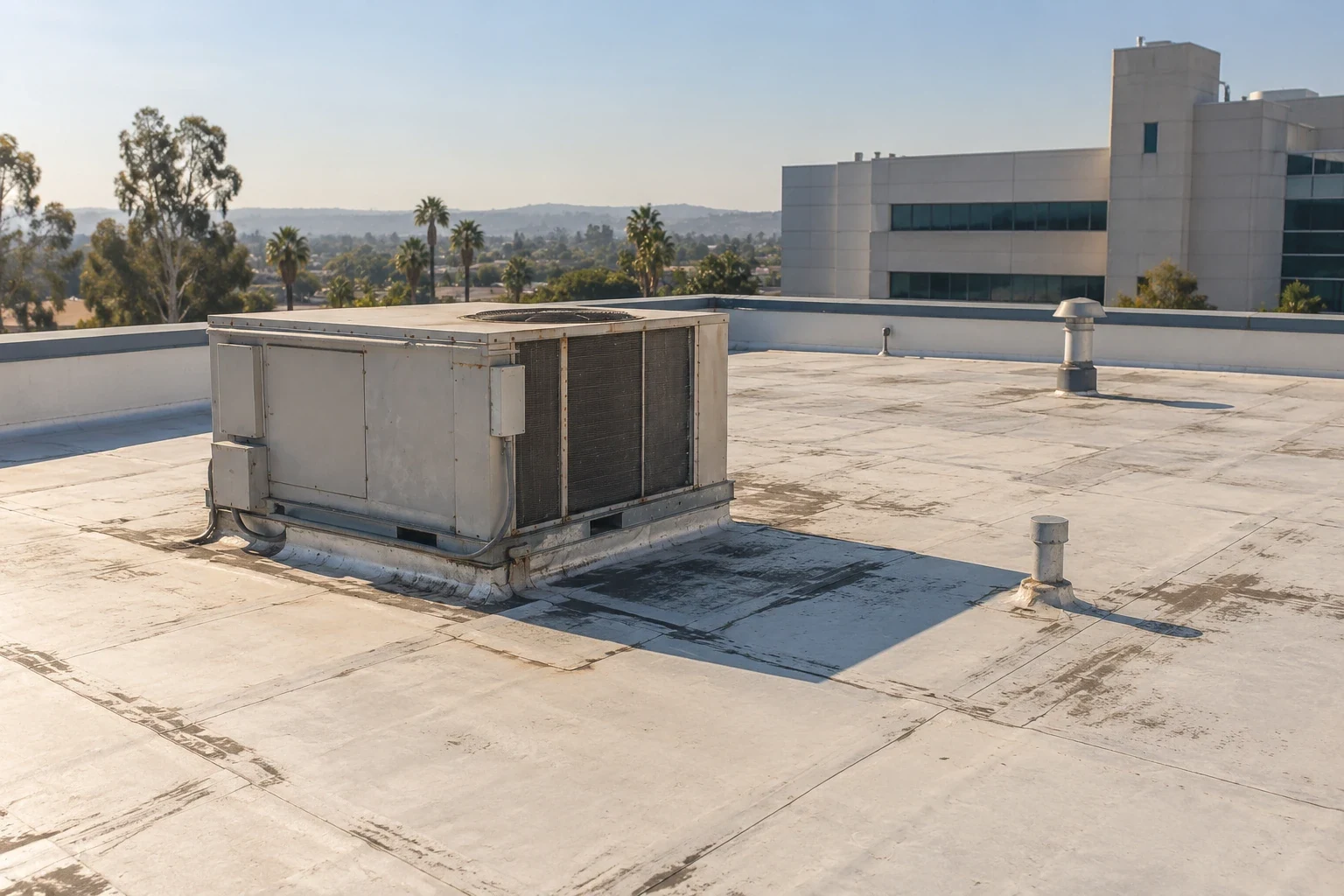
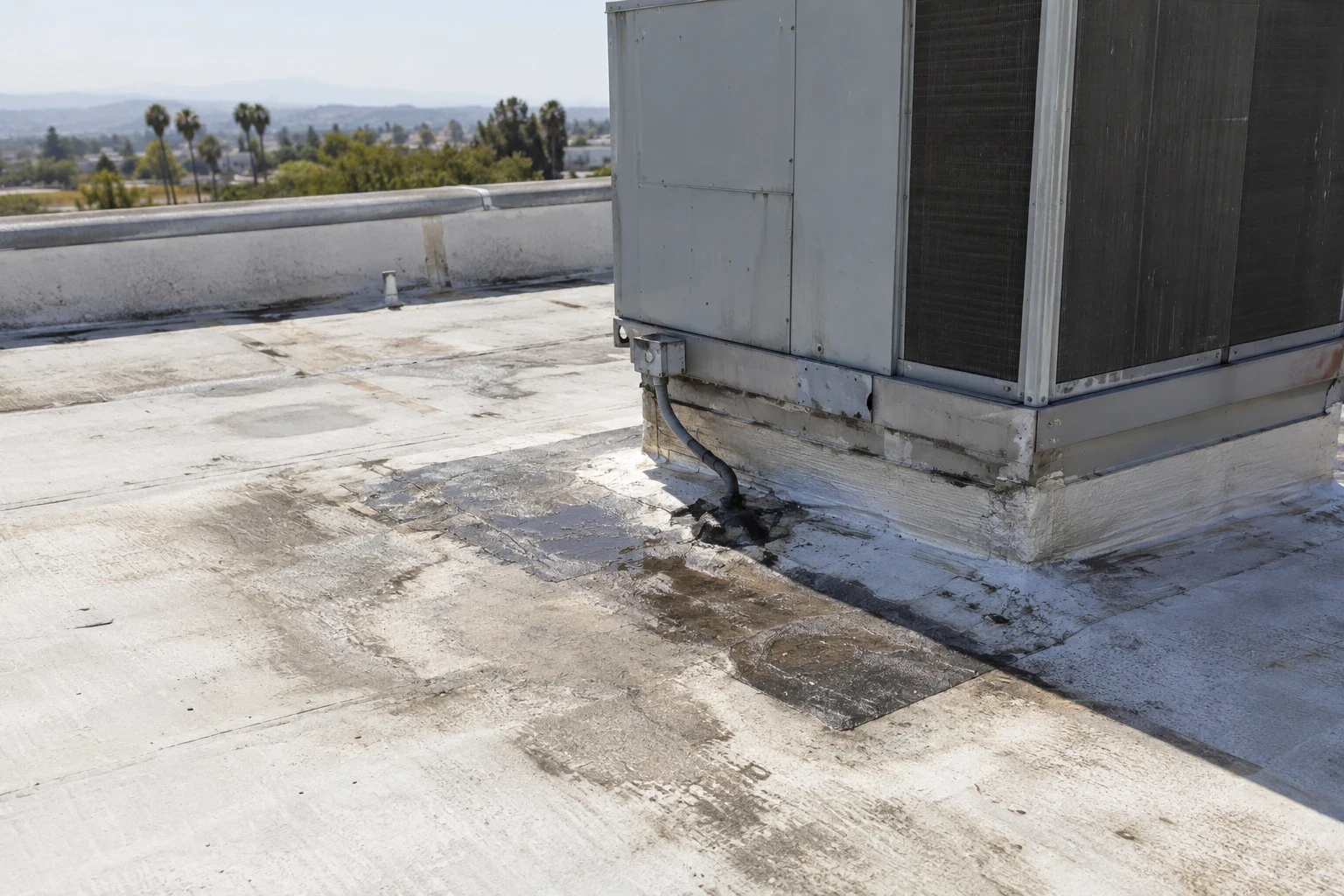
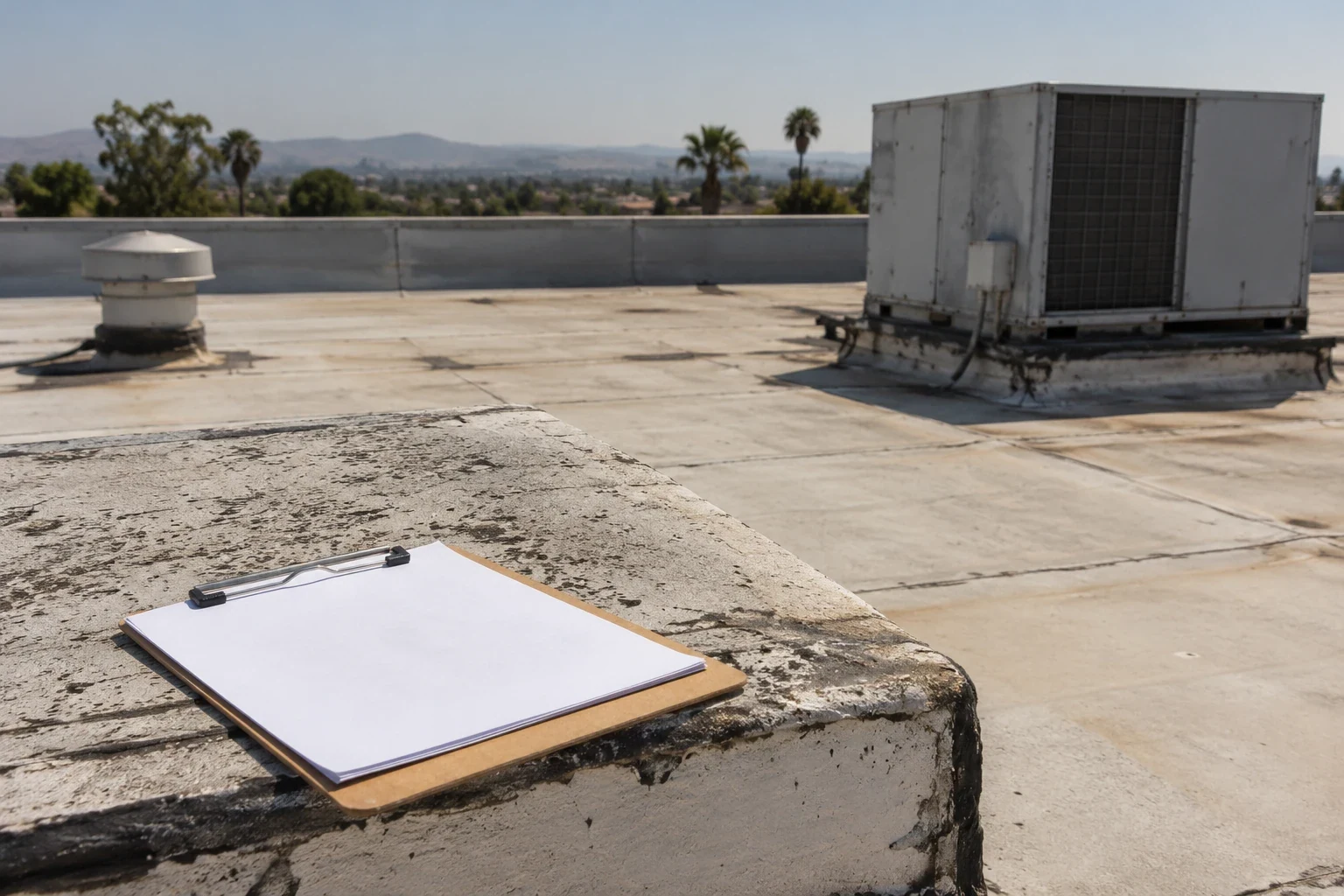
We inspect the roof above the reported leak and the details around it. A leaking curb, a failed wall flashing and a torn membrane each need a different repair. Water showing up under a rooftop unit may be condensate or a unit problem, and the HVAC contractor may need to look at it. We sort that out before recommending roofing work, so the facilities contact knows which part is ours and which is not.
Our commercial roof leak repair reports note the areas we inspected and what we could not see. A section we could not reach is not assumed to be fine. If more testing is needed, we explain what and why. A stain inside does not tell us what is happening in the hidden layers.
Another building in the same health system may have a different roof and different equipment. It gets its own inspection. A repair at one facility does not tell us anything about another.
Price the prep work and any rebuilding
We check the membrane around the repair to make sure the new material has something sound to bond to. Sound membrane is cleaned and prepped. Open seams and failed flashing nearby are fixed so the repair can seal properly. A bigger patch should not cover up another problem that needs its own repair, and the price spells out all the prep work.
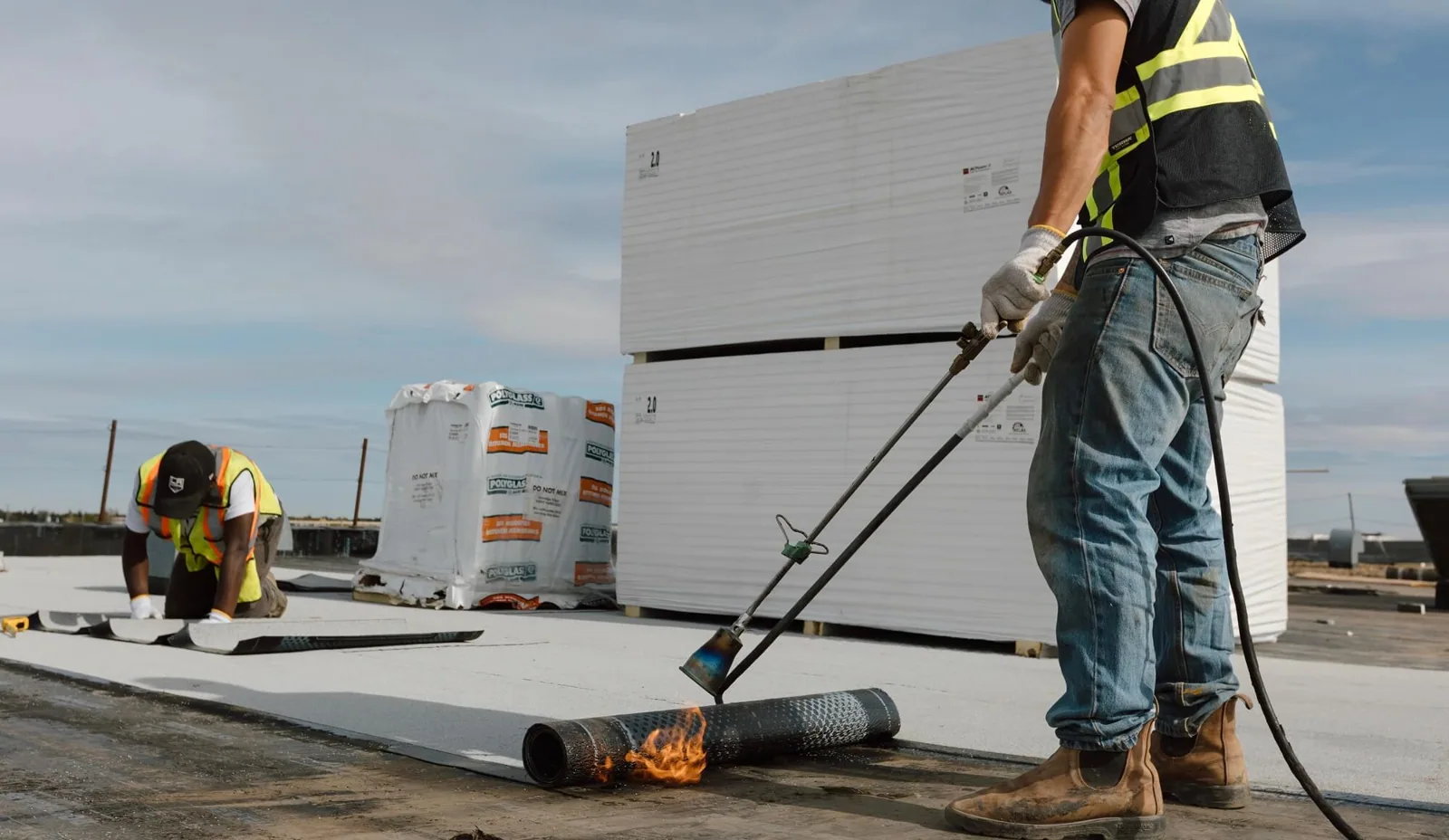
Our commercial roof repair proposals include rebuilding wet or damaged layers where testing confirms it. We note where we tested and how much needs to come out. Rebuilding can raise the roof at a nearby curb or drain, and we explain how that affects the flashing before choosing the detail. That way the manager compares complete repairs, not just patch sizes.
If opening the roof shows more damage, we show what we found and how it changes the job. The extra work goes through the facility's approval process, and the roof stays protected while a decision is made. The final repair matches what we find at that spot.
Confirm facility arrangements before opening
Hospital roofing needs a work window that fits facility operations. Confirm roof access, protection below, and any spaces that require controlled entry before mobilizing. Keep the roof watertight between shifts and limit each opening to work that can be closed safely. Separate roofing tasks from mechanical or clinical operations, then price each preparation step. The facilities manager can compare the schedule with patient, staff, and equipment needs.
Work on hospital roofing follows the facility's requirements and what we find on the roof. Equipment or wall work may need another contractor before the membrane can be closed. We say what that work involves and whether it is in our price or handled separately. Scheduling a roofer does not mean those steps are ready.
Different repair options mean different amounts of roof open at once. A smaller repair keeps more of the existing roof. A bigger one may need more tear-off and new components. We show those differences with the price, and the facility's requirements are confirmed before permanent work starts.
Keep each facility's roof separate
A health system can review roof work across several buildings at once while keeping each building's findings separate. Each price should name the building, the roof area and what we found there. A shared budget line should not hide that one roof needs deeper tear-off or has an open item with another trade. Each repair explains what it fixes.
A roof asset management record keeps each building's repairs, findings and limits in one place. Another facility may still need an inspection before its repair can be priced. A finished repair at one hospital tells us nothing about the hidden layers at another.
The same approach applies to manufacturers comparing roof work across plants. Knowing the industry does not tell us what roof is installed. Each building's own inspection decides the right repair.
Document what was repaired
We photograph the prep work and any rebuilt layers before the new membrane covers them, and mark where each photo was taken. The record shows the finished repair and any items still open for other trades. That way the facilities manager can see exactly what was fixed, not just a clean finished roof.
The same goes for logistics operators coordinating roof and equipment work. Even with one project contact, each building has its own findings. Equipment work by another trade is not finished just because the roof is.
We are available on weekends and holidays or at night for urgent roofing protection. Tell us which part of the facility is affected and what needs to be protected. Facility staff arrange access. Emergency protection is temporary, and it does not mean the facility's roofs have been fully inspected.
A good healthcare roof proposal shows what was found, the prep work and the finished repair together. The manager approves work they can see. Open testing and items for other trades stay listed. That gives the budget a specific result, not a vague promise to stop a leak.
Commercial Roofing Questions
What decides whether the healthcare roof repair amount is complete?
It includes the problem we found, the prep work, any rebuilding of wet or damaged layers, and work by other trades that has to happen first. The manager should be able to see the finished repair. A patch price alone often leaves part of the work out.
Who establishes work arrangements at the assigned facility?
The facility's own staff set access, protection and scheduling requirements. We explain how the roofing work will be done and which other trades are involved, and confirm everything before starting. Each facility sets its own rules.
How should layer questions appear beside a local repair recommendation?
The recommendation should say where we tested and what we found. Areas we did not test stay listed as unknown. We do not assume hidden layers are sound just because the surface looks fine.
Can the facilities group reuse one roof finding across its locations?
No. Each building needs its own inspection. Roofs, equipment and access differ between facilities. A group budget review can include them all, but each building keeps its own findings.
What should remain in the record after the new membrane covers the repair?
Photos of the prep work and rebuilt layers, the finished repair, any items still open for other trades and where we inspected. That lets the manager see what was done without assuming unrelated equipment work is finished.
Get your facility's roof assessed
Schedule a roof assessment for your Downey healthcare facility. We will inspect the roof, explain any hidden-layer or equipment questions and describe the repair, prep work and scheduling it needs.