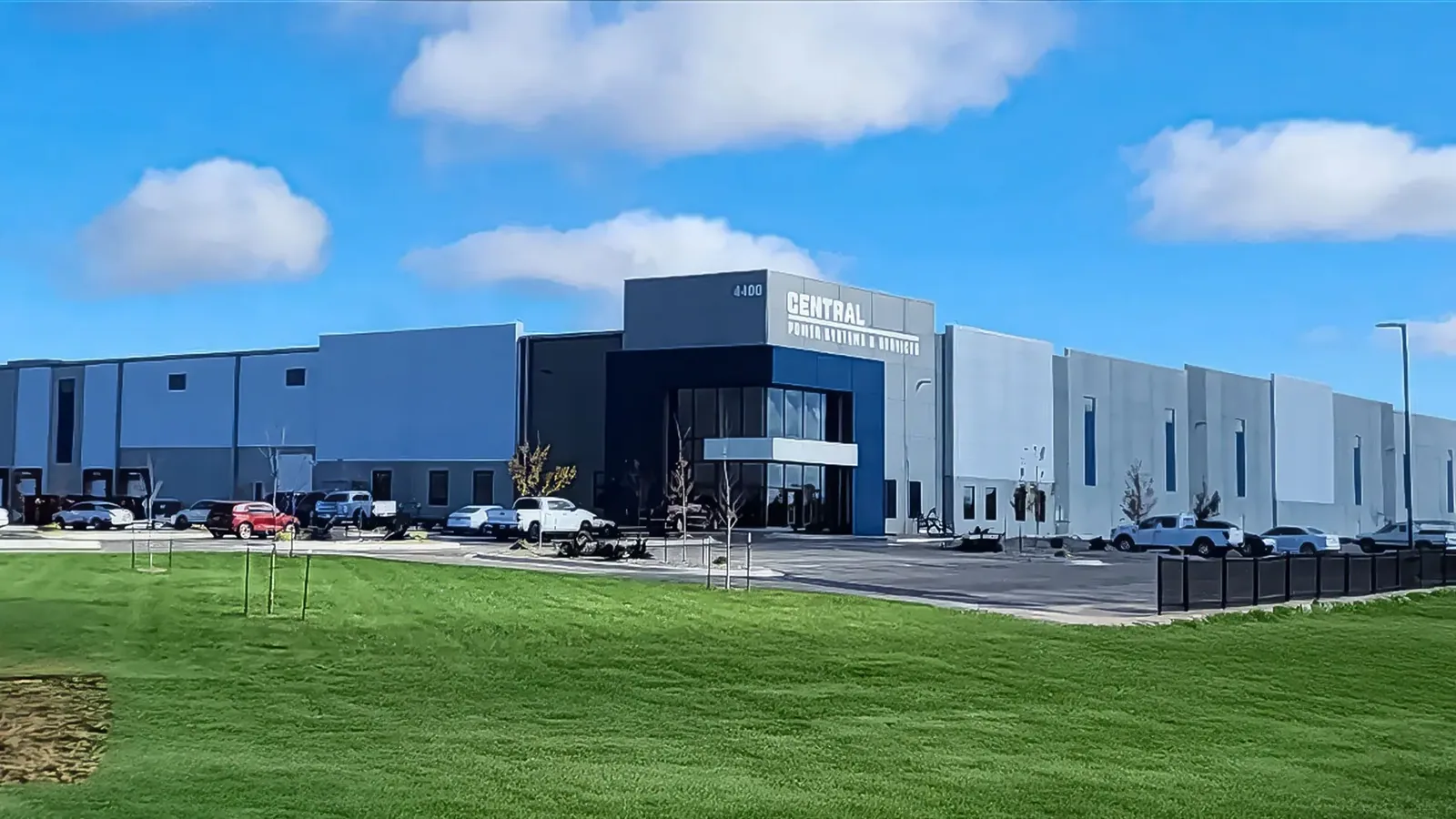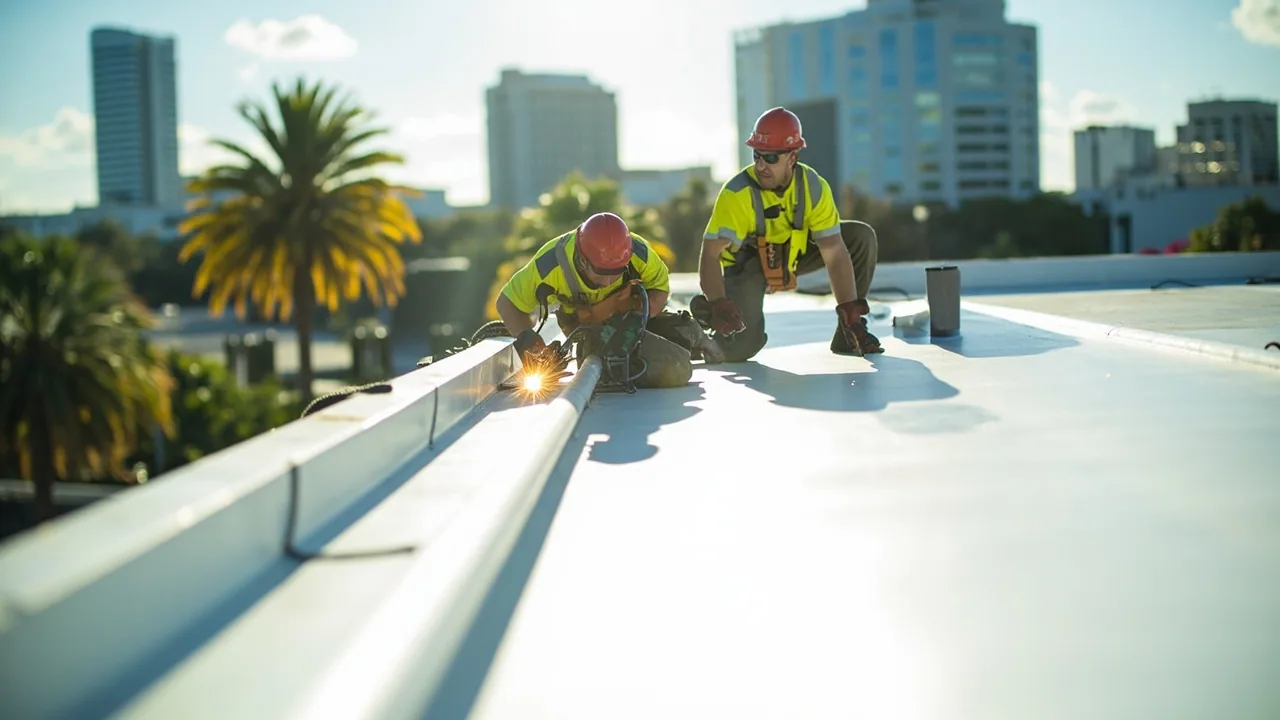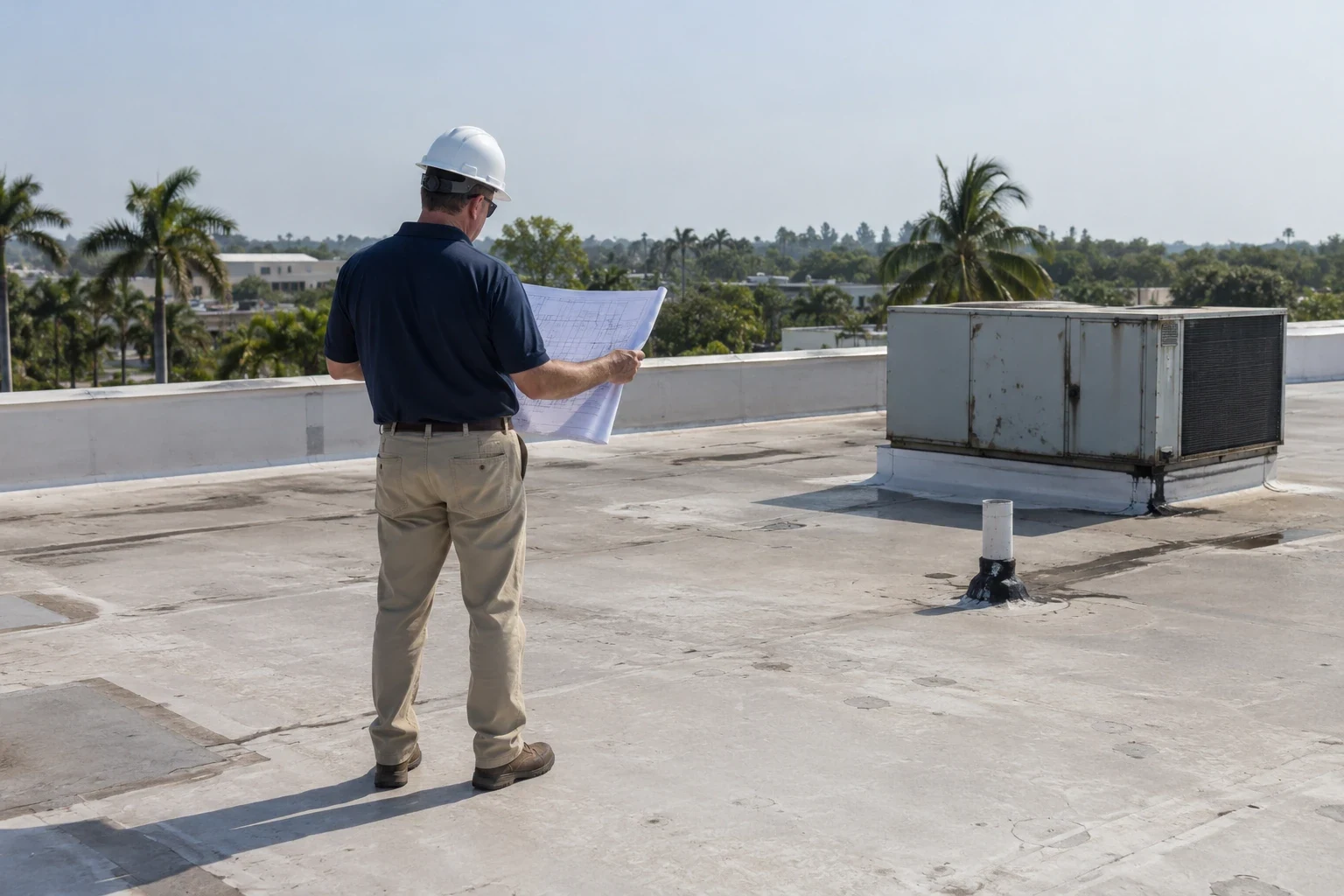
Commercial Roofing for Manufacturers in Downey, CA
Commercial roofing for manufacturers in Downey, CA: repairs around exhausts, curbs and process equipment, coordinated with plant staff and other trades.
Before approving a roof repair at a plant, the manufacturing team needs to know how the work will be done and in what order. A torn membrane near an exhaust fan may also mean wet insulation underneath and a curb that needs work. We inspect the roof and list each of those steps in the proposal. The plant contact can line up the equipment contractor before we open the roof. A smaller repair price only helps if it includes those steps and a complete seal at the end, not a hope that someone else will fix the curb.
A manufacturing property may combine office, process and warehouse roofs. Identify the membrane or panel system at the assigned building before specifying a product. Inspect seams, drains, exhausts and curbs around the affected area. Keep equipment shutdowns with the plant contact and price any roof-side preparation separately. Projects in Vernon and Santa Fe Springs need the same material verification at each roof. A manufacturer name alone does not establish what is installed.
Find the detail that needs fixing
We locate the damaged membrane and inspect the curbs, pipes, exhausts and walls around it. Each of those connections can fail in its own way. The manager should know which roof finding supports the repair. If a piece of equipment is leaking or vibrating loose, the equipment contractor may need to assess it. We point that out before recommending roofing work, because a general "equipment area" allowance leaves both jobs unclear.
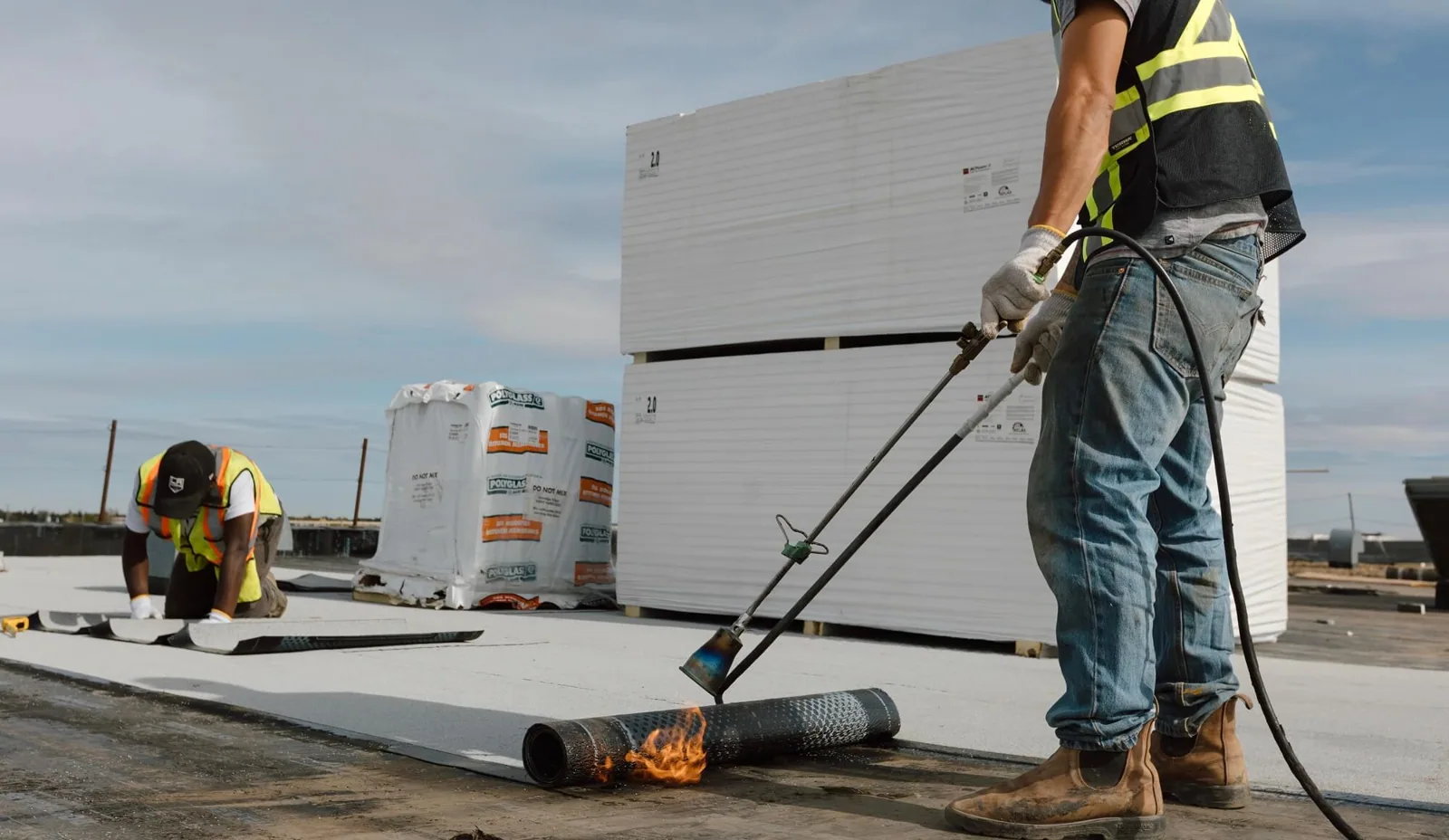
Our commercial roof repair work checks the membrane around the damage for a sound area to tie into. We clean and prep that membrane with a compatible repair method, and fix any failed seams or flashing nearby that would stop the repair from sealing. The repair has to end on good roof, not against another problem.
The owner should see the prep work and how the repair finishes, along with the price. A surface patch and rebuilding the layers underneath are different jobs, and we price them separately so you can compare.
Check what is under the membrane
If there are signs of wet insulation or a damaged deck, we test before setting the repair size. We record where we tested and what we found, and size the tear-off to match. Other parts of the roof may have different conditions, and one test cut does not describe the whole plant roof.
On manufacturing plant roofs, the repair follows the actual layers and the shape of the equipment curbs. Rebuilding insulation can raise the roof at a curb or drain, and we explain how that affects the flashing. The manager should see how the new layers tie into the finished edges. A price per square foot does not show.
If opening the roof reveals more damage, we show the material and explain how it changes the job. The extra work goes through the agreed approval process, and the area stays protected while you decide. The final repair matches what we find, not the original guess.
Coordinate equipment work with the roofing
If a curb or penetration needs repair before we can seal the membrane, we tell you what we need from the equipment contractor. The plant contact schedules that work. An equipment service visit on the calendar does not mean the curb is ready. If the roof price depends on that work being done, we say so.
On a PVC roof, we confirm the membrane type and a compatible flashing detail around existing equipment. The equipment's shape decides how it is flashed. A new curb may need different flashing than an existing one, and we explain which one our price assumes. The membrane type does not tell us whether the equipment is in good shape.
We keep equipment work and roofing work listed separately. Another contractor may still be responsible for work above the roof. The manager can see the status of each. A finished roof patch does not mean the equipment repair was included or done.
Plan access around plant operations
We go over the roof access route, the work area and material handling with the plant's representatives. They set the rules for the site, such as hot work, shutdowns and areas that must stay clear. We explain the repair sequence and which other trades need to be involved, and the manager coordinates permissions. Every plant has its own schedule and access rules.
Roof capital planning keeps repair and replacement decisions for each roof area. An urgent repair can fix one detail now, while another section may need testing before a larger budget makes sense. The owner can see the status of each area. A combined budget line should not hide an open question about wet insulation or equipment.
The same building-by-building approach helps logistics operators. Similar buildings do not have the same roofs or access rules. Each repair price explains what it will fix.
Document the repair before it is covered
We photograph any rebuilt insulation and deck around the equipment before the new membrane covers it, and note what was done and where. The record shows the finished membrane work and any equipment items still open with another contractor. That way the manager can see what was repaired, not just a clean surface.
The same kind of record helps healthcare systems keep roofing and equipment work separate. Each facility's staff set their own work rules. The inspected area and its limits stay documented. A finished repair on one roof says nothing about the hidden layers on another.
For urgent roofing needs, protection is available at night, during holidays or on weekends. Emergency protection and the permanent repair are described separately. Equipment work that is still open stays on the list. Responding to an emergency does not mean every equipment or hidden-layer question has been resolved.
A useful price includes the prep work, any rebuilding and a complete seal. The owner can approve that work once the equipment steps are clear. Open testing and equipment items stay listed next to it. The budget then shows what the repair will do, not a vague promise to patch the area.
Commercial Roofing Questions
What decides whether the manufacturer roof scope can permanently close?
The membrane around the repair has to be sound, any wet layers rebuilt, and any curb or equipment work done first. The manager should see the equipment work and the finished roof detail together. A patch price alone may leave out what is needed to seal it.
Does an equipment service appointment establish readiness for flashing repair?
No. We need the curb or penetration in a specific condition before flashing it. We say what that is and who is responsible, and confirm it through the plant contact. A scheduled service visit does not tell us the curb is ready.
How should layer findings affect the opening sequence?
If testing finds wet insulation, we mark how much comes out and how it is rebuilt, and explain any change in height at curbs or drains. Extra work goes through the agreed approval process, and the repair matches what is actually under the membrane.
Who establishes the relevant property work arrangements?
The plant's own representatives set access, hot work rules, shutdowns and work hours. We explain the roofing sequence and other trades involved. Every plant has its own rules.
What remains useful after membrane closure conceals the rebuilding?
Photos of the rebuilt layers and prep work, the finished membrane details and any equipment items still open. The inspection limits for other roof areas stay documented. That shows what the roofing work did without suggesting unrelated equipment work is finished.
Plan your plant roof repair
Schedule a roof assessment for your Downey-area manufacturing building. We will inspect the roof, explain any hidden-layer or equipment questions and describe the repair, the order it happens in and what it costs.