Roof Capital Planning in Downey, CA
Roof capital planning for Downey properties: repair, restoration and replacement priced on the same roof sections, so owners can see what each budget actually buys.
A roof budget changes when the crew finds wet insulation or a failed wall return. Downey's dry season leaves exposed seams and drains waiting for winter rain. On a warehouse, that connection can decide whether the work stays a repair or grows into a larger scope. We compare repair, restoration and replacement against the same roof sections and permanent details. The owner can see what each amount buys before approval.
Compare near-term repairs, restoration and replacement as separate construction choices. For each, show the roof sections included, removal depth, retained layers, perimeter details and assumptions that could change quantities. Identify what the owner can address this season and which work needs a later budget decision. Do not blend a temporary leak measure into a permanent capital allowance. A located condition report provides the findings behind the comparison, while the selected scope should still name the materials and transitions the crew will complete.
Start with the problem forcing the decision
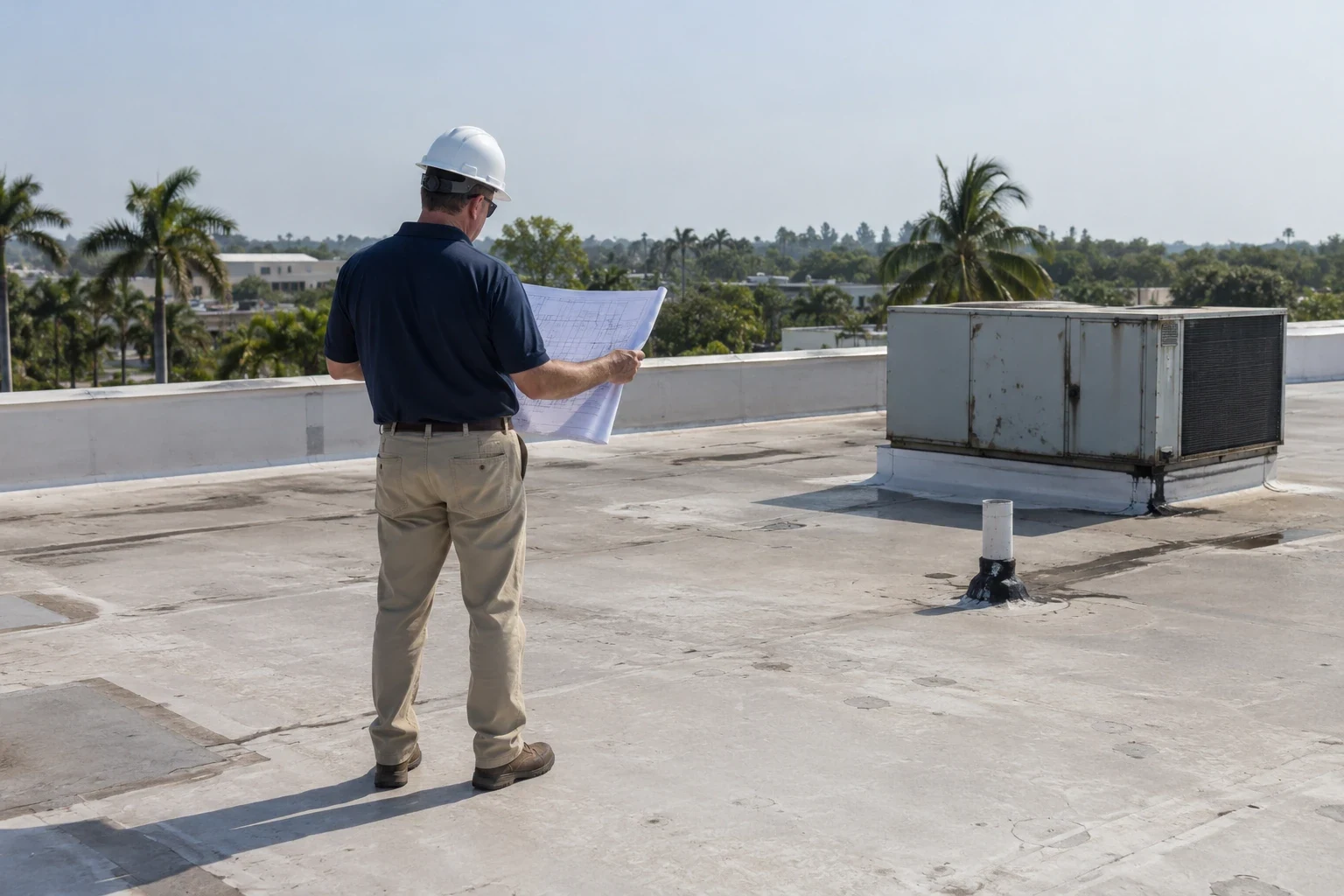
Most capital plans start because something has gone wrong: a recurring leak, a failed wall flashing, or a roof that no longer passes a lender's or insurer's review. A flashing that has pulled away from a parapet wall often involves more than the metal you can see. The wall backing may be wet or rotted, and the membrane behind it may have been taking water for a while. We open up what we can, check the backing, and tell you what still needs confirming.
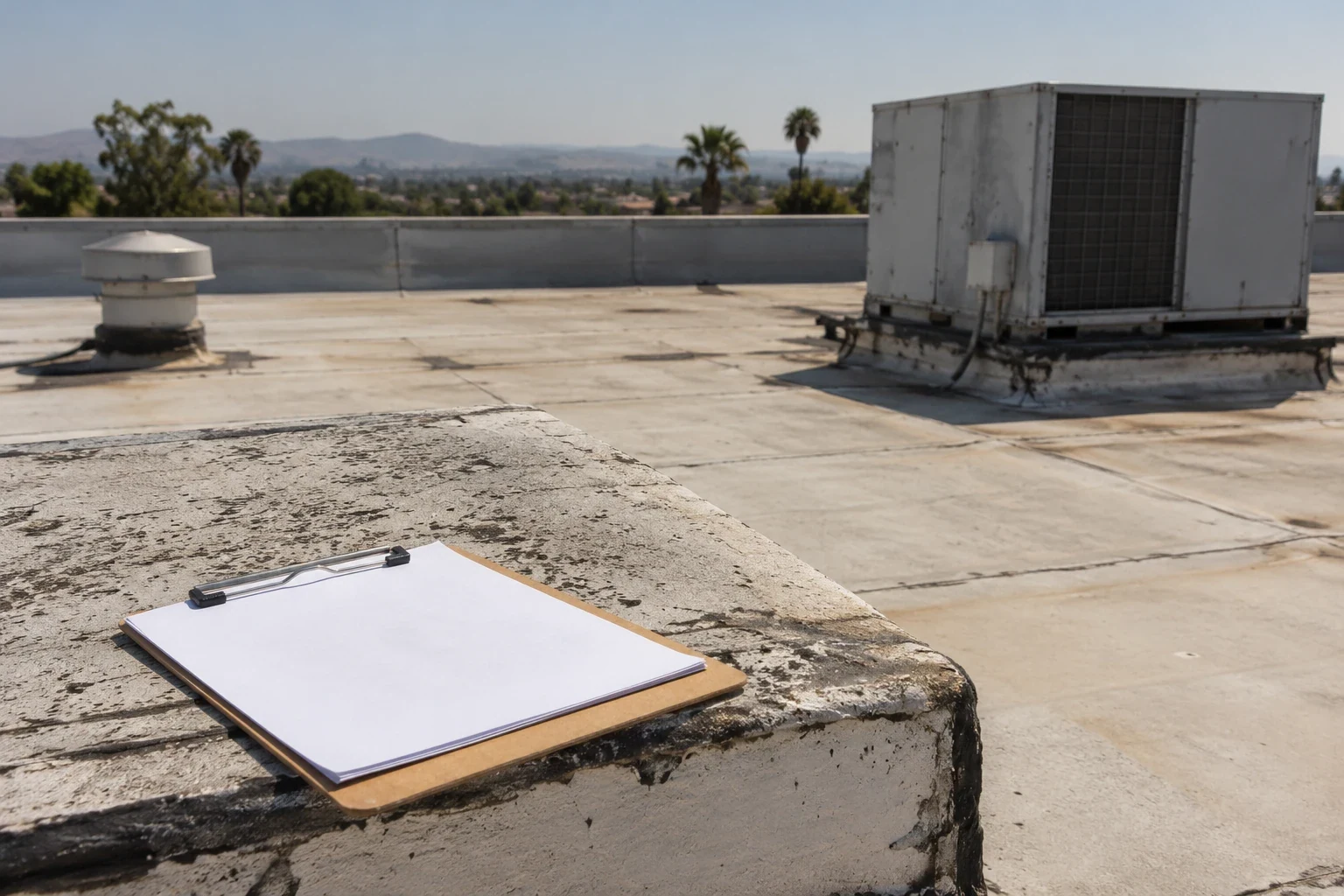
Repair records help, but only when they match what is on the roof now. A tenant may have added a rooftop unit since the last report, or a previous contractor may have patched over a problem instead of fixing it. A roof condition report keeps each finding tied to its spot on the roof and says which areas we could and could not inspect. If we recommend more testing, we explain what it would change in the budget before you pay for it.
Compare what each option actually includes
A repair, a restoration coating and a full replacement do different jobs, and their prices only make sense side by side when you know what each one covers. A repair fixes specific leaks and leaves the rest of the roof alone. A coating extends the life of a sound membrane but will not fix wet insulation. A replacement deals with everything, including flashing, edge metal and drains, if the scope says so.
We list walls, drains, curbs and edge metal under each option, along with any work another trade has to do first, like disconnecting an HVAC unit. That way you can see when one bid is cheaper only because it leaves out flashing or drain work.
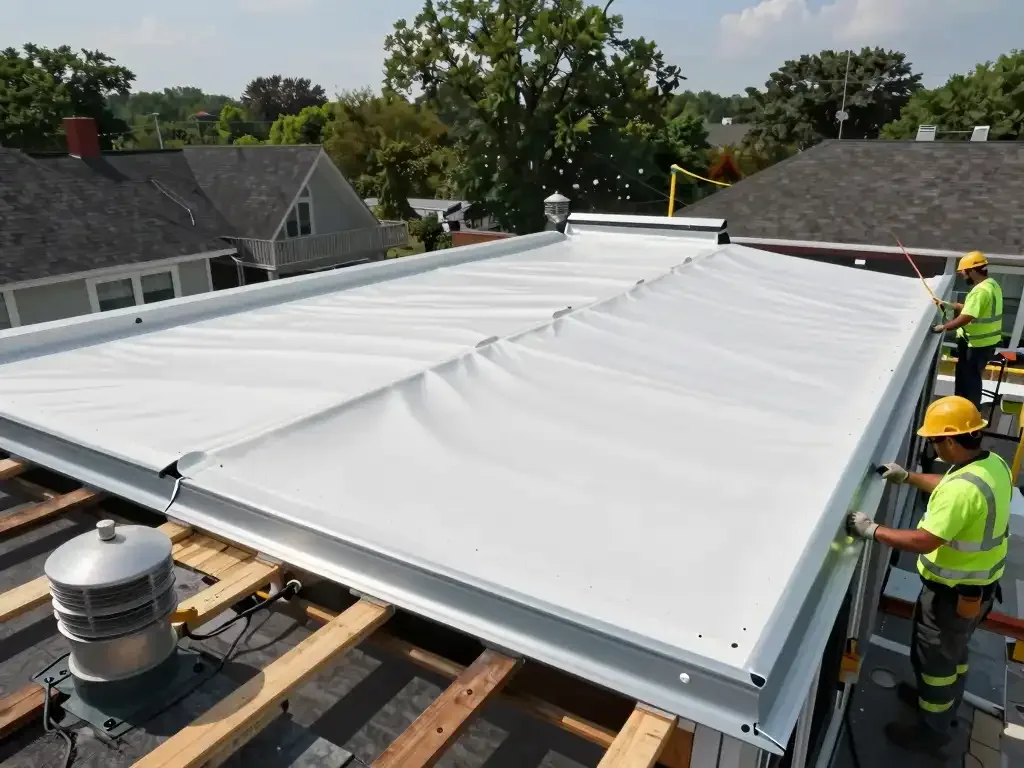
The commercial roof replacement option should state how much of the old roof comes off, what stays, and what new insulation, flashing and edge metal go on. A bigger roof area does not automatically mean every detail is covered. We spell it out so the totals you compare are for the same finished roof.
Confirm the roof underneath before keeping it
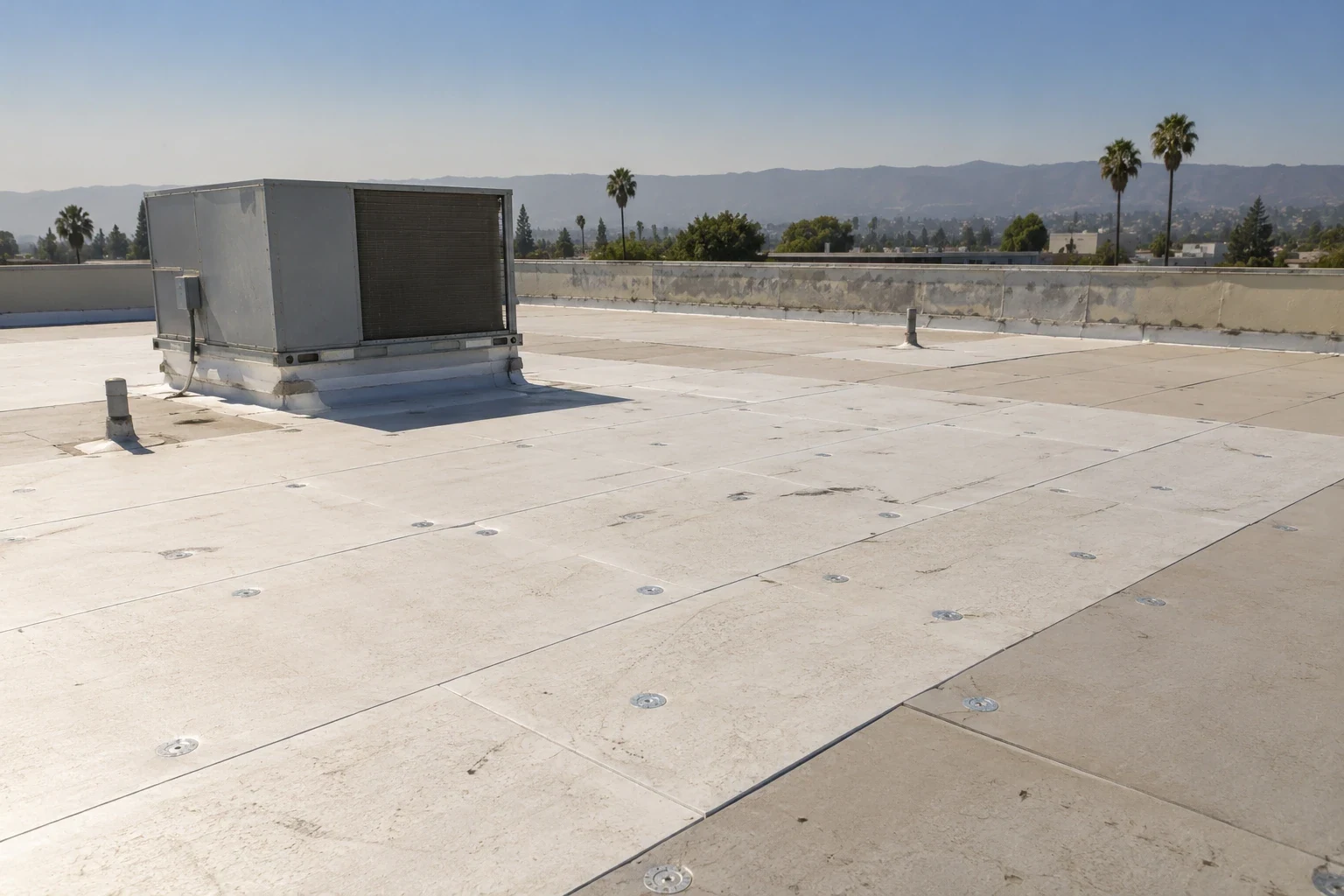
Keeping the existing roof in place, whether with a coating or a recover, only works if the insulation and deck under it are dry and solid. A membrane that looks fine can hide years of slow leaks. We test where the answer would change the plan, record where the samples were taken, and do not assume the untested areas match.
Testing costs money, so it should answer a specific question, such as whether a recover is still possible or whether the north section needs a full tear-off. That is a better use of the budget than carrying a vague allowance for "possible wet insulation."
New roof insulation and cover board can raise the roof surface, which affects drain heights, scuppers and how high flashing has to run up walls and curbs. We check those details before ordering material. If more damage shows up once the roof is open, we document it, price it and keep the area dry until you approve the change.
Plan the work around the building's schedule
When a capital project can start depends on more than budget approval. The roof needs a staging area, a delivery route, tenant notices and sometimes a mechanical contractor to move rooftop units. We go over the plan with the building contact, who coordinates with tenants about noise, odors and access. Permission to inspect is not the same as permission to tear off a roof, so we confirm that separately.
For a project near the I-5/I-605 interchange, put roof sections, access hours and delivery needs on the same comparison sheet. Short stages can repeat mobilization; a wider opening can require more interior protection. Price both sequences against the same repair details and closure requirements. The owner can then compare schedule and cost without losing necessary preparation from either option. List removal depth, retained layers, repeated setup and edge work as separate cost drivers. If one option leaves a drain or wall detail out, show it as an open task instead of burying it in a general allowance.
Keep a record of what the money bought
When the work is finished, the record should show what was installed, where, and what the roof looked like before it was covered. Photos of replaced decking or new wall backing are the only proof once the membrane goes down. If another trade still owes work, such as reconnecting a unit, that stays on the list as an open item with a name next to it.
The completed job becomes part of the building's roof asset management record. Next year's plan should start from that record plus a fresh look at the roof, since tenant equipment changes and new leaks can shift priorities. An old estimate is a reference point, not a price for new work.
Use the same building and roof section names throughout the project, from the estimate to the drawings to the close-out photos. When someone needs to find the new drain on Section C three years from now, they should not have to guess.
Commercial Roofing Questions
What makes two capital amounts comparable for the owner?
The options need to cover the same finished roof. That means each one should state how much of the old roof is removed, what insulation and flashing are replaced, which drains and edges are included, and what other trades must do. When that is spelled out, you can tell a real price difference from a bid that is low because it leaves work out.
When should the manager approve investigation before a wider roof commitment?
Approve testing when the answer could change the plan, for example whether the existing roof is dry enough to recover or coat. Agree on the question before testing, and make sure the report says where samples were taken and how much of the roof they represent.
How should repeated setup enter the timing comparison?
Doing the work in several small phases means the crew sets up, protects the building and closes up the roof more than once, and each round adds cost. One larger phase may need more interior protection or tenant coordination. We price both ways with the same scope so you can compare cost and disruption fairly.
What should carry into the next capital decision?
Carry forward the close-out records, photos of the work before it was covered, warranty paperwork and any open items. Then add a current inspection, because roofs change. The next budget should be based on what the roof needs today, not on an old estimate.
Get a roof budget you can compare
Send us the Downey property, any recent roof reports and the options you are weighing. We will inspect the roof and price repair, restoration or replacement on the same scope so you can see what each one buys.