Lakewood Commercial Roofing from Downey, CA
Pipe penetration and boot flashing repair in Lakewood from our Downey crew. We find whether the roof or the pipe is leaking and fix the flashing properly.
A pipe leak in Lakewood can come from the roof flashing or the pipe connection above it. The right fix depends on what has failed. We check the boot, membrane, clamp or counterflashing, and any pipe joint next to the penetration, and follow the water path before ordering parts. A new boot will not repair a loose membrane or an active plumbing leak.
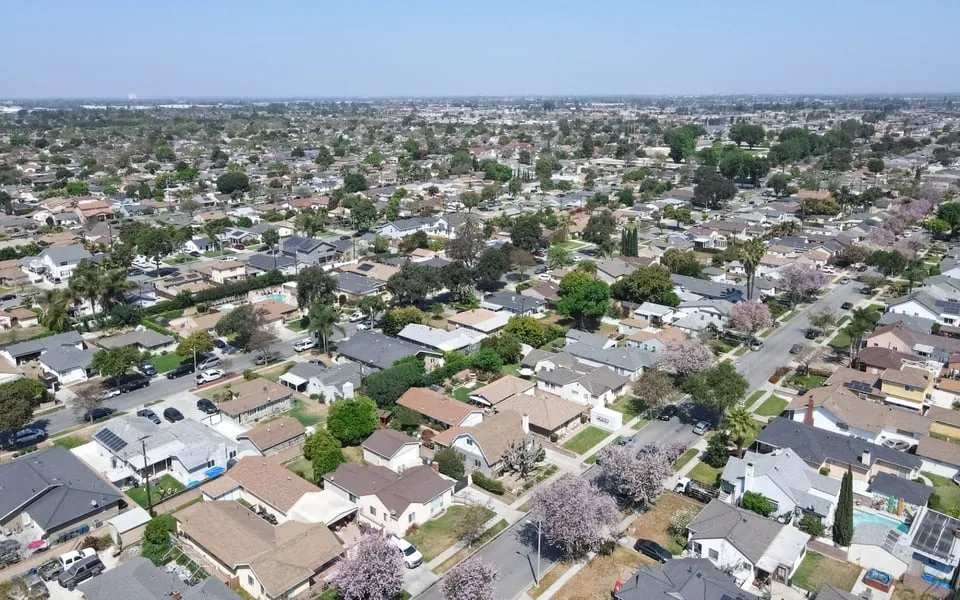
Lakewood Boulevard, Bellflower Boulevard and Del Amo Boulevard are major city corridors, and I-605 runs through the eastern part of Lakewood. Those landmarks help orient service calls, but each roof has its own assembly. We inspect the building and price the repair at the actual pipe. Nearby commercial roofing in Long Beach also starts with a look at the roof.
Inspect the pipe boot and the pipe joint
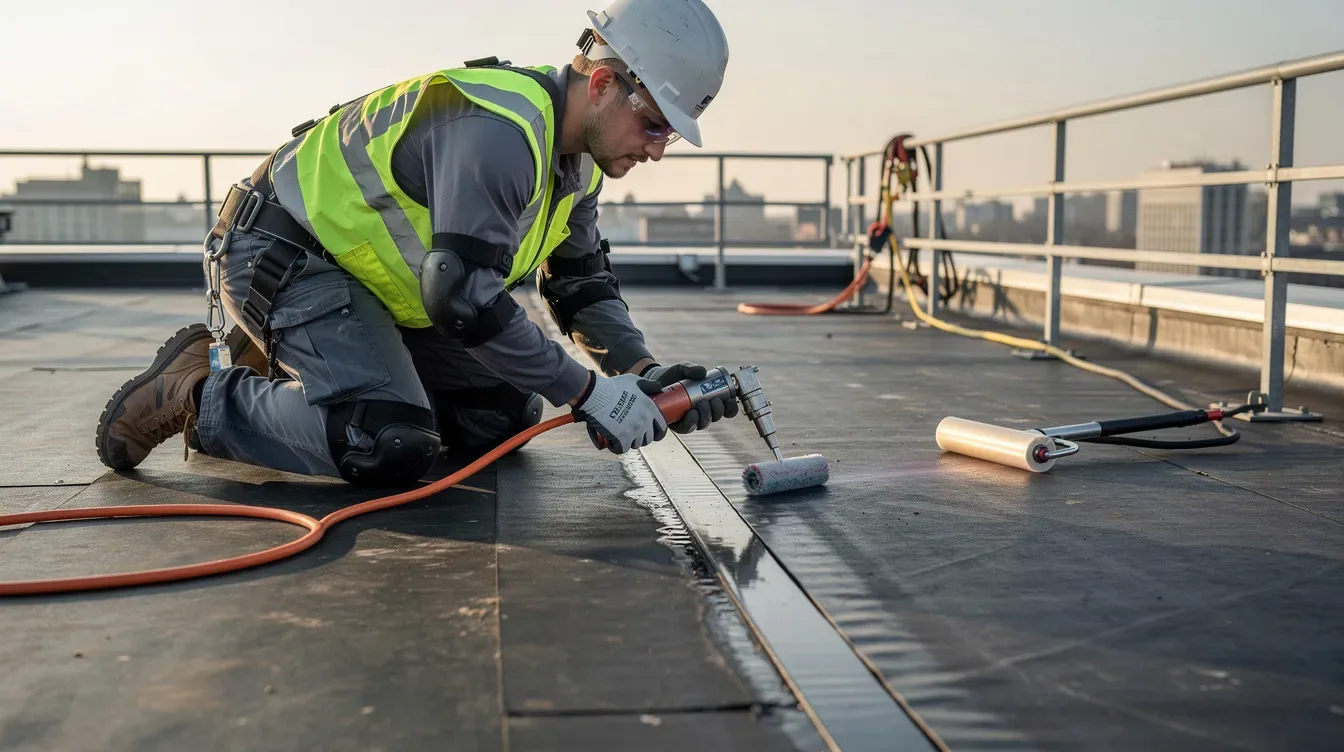
On the roof, we look for a cracked boot, open seam, loose clamp, split corner or failed sealant joint. We check whether the pipe moves and whether the flashing reaches sound membrane, and photograph the condition before removing anything. A ceiling stain can point to the area but cannot identify which connection failed.
We measure the pipe and the damaged membrane before choosing a boot size. A boot that is too small can pull at the pipe; one that is poorly fitted can leave a gap at the upper termination. There has to be enough room around the pipe to prep and seal the new flashing. Any damaged insulation below the penetration is priced as a separate, measured repair.
A pipe flashing repair should state what the crew will remove and rebuild. If a collar or pipe joint belongs to the plumber or mechanical contractor, we note it and keep it out of the roofing price unless you ask us to handle both. The owner can then approve the roof-side correction without assuming that a new boot fixes every pipe issue.
Checking the pipe right after rain or after service work often helps pin down the leak. If the flashing is visibly open, there is no reason to wait for more damage. The interior below is protected while we confirm the source, and any temporary seal is labeled as temporary.
Check the membrane and insulation around the pipe
We identify the roof material before choosing a boot or flashing detail. A single-ply membrane, modified bitumen and metal roof do not use the same connection. We also check old repairs and coatings around the pipe. New material needs a clean, compatible area wide enough to form a lasting termination.
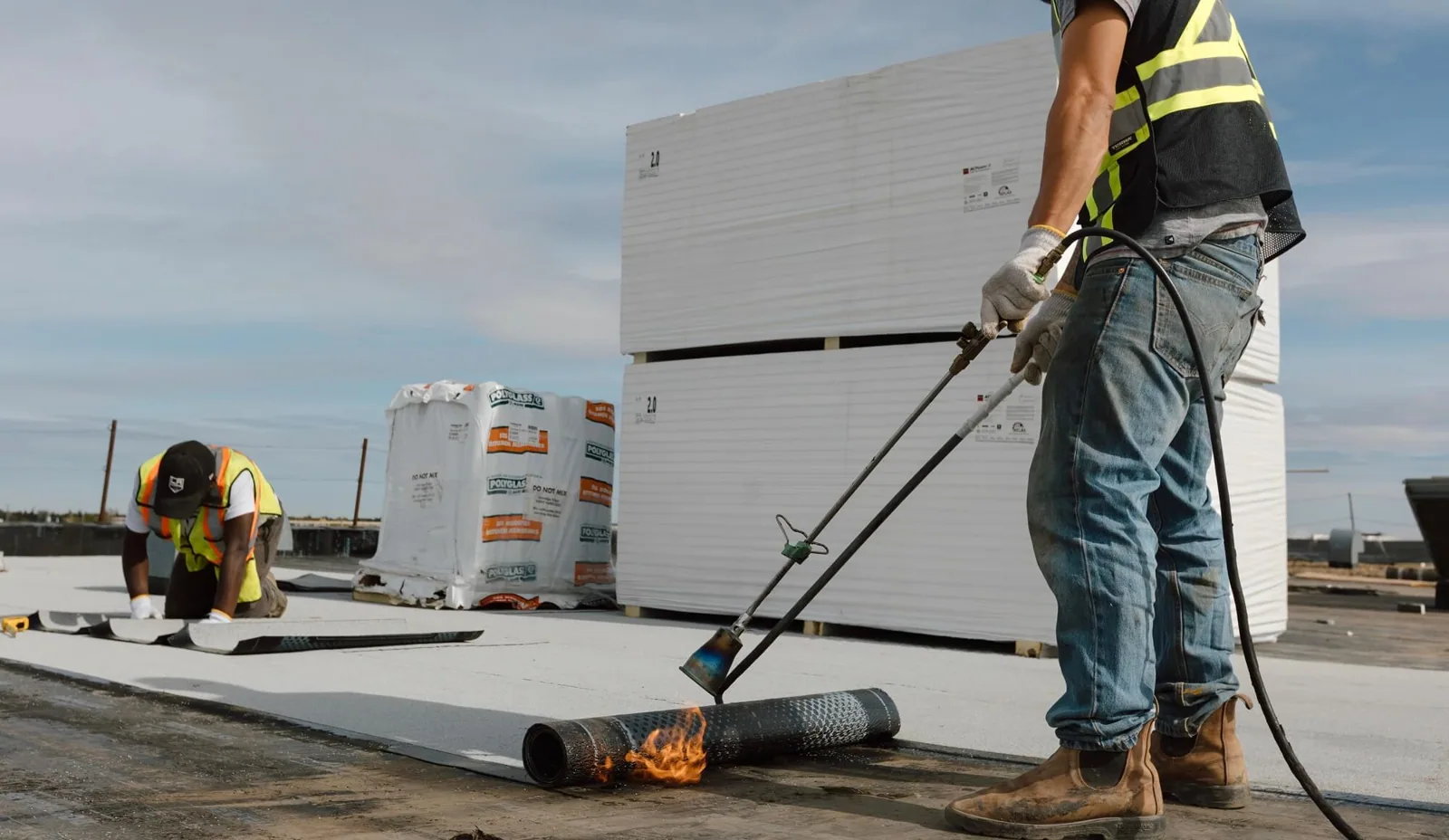
When the membrane around the penetration is damaged, our roof repair estimate includes the surface preparation and permanent tie-in. If the opening shows wet insulation or weak cover board, that rebuilding is priced separately. We do not cover bad material just to make a boot fit, and we photograph both the exposed layers and the finished flashing.
We also look at the insulation and cover board around the penetration. A soft area or crushed board can keep the new flashing from sitting evenly. If we find that, we show you how deep the removal goes and how the surface will be rebuilt, and photograph the open work before the membrane covers it. That evidence helps explain why the repair extends beyond the visible boot.
Some pipe supports, brackets or equipment require a separate operator. If they are in the way, we tell you what must move and who should move it, then come back once the pipe is clear. Any opening that cannot be finished on the first visit is sealed until we return.
Clear the pipes before opening the roof
Before work, we confirm there is room to work around the penetration. A tight pipe cluster can limit the roofer's access to the boot and membrane. We identify nearby conduit, exhaust lines or supports that must stay in service. If something has to be adjusted, the building manager can bring in the right contractor. We do not cut, disconnect or move another trade's system.
Lakewood's older commercial strips and major retail properties have different tenant and access needs. We confirm which rooms, inventory or work areas sit below the repair before opening the roof. A nearby property in Hawaiian Gardens will have its own access and occupant needs. A city boundary does not set a crew route.
For occupied retail or office space, we agree on dust control, temporary ceiling protection and how long the section will be open. The building manager can let tenants know. Every opening is weather-tight before the crew moves on.
Roofing is scheduled once the pipes are clear. If another trade's work delays us, the roof is sealed at a safe stopping point, and we note who needs to act next and what we will finish when we return.
Use flashing that matches the roof
We price the full repair, not just a replacement boot: removal, surface cleaning, membrane patching, new flashing and compatible sealant where the detail requires it. Any support or curb repair is shown separately. If a wall or deck needs work from another trade, we say what has to be fixed before we can flash it.
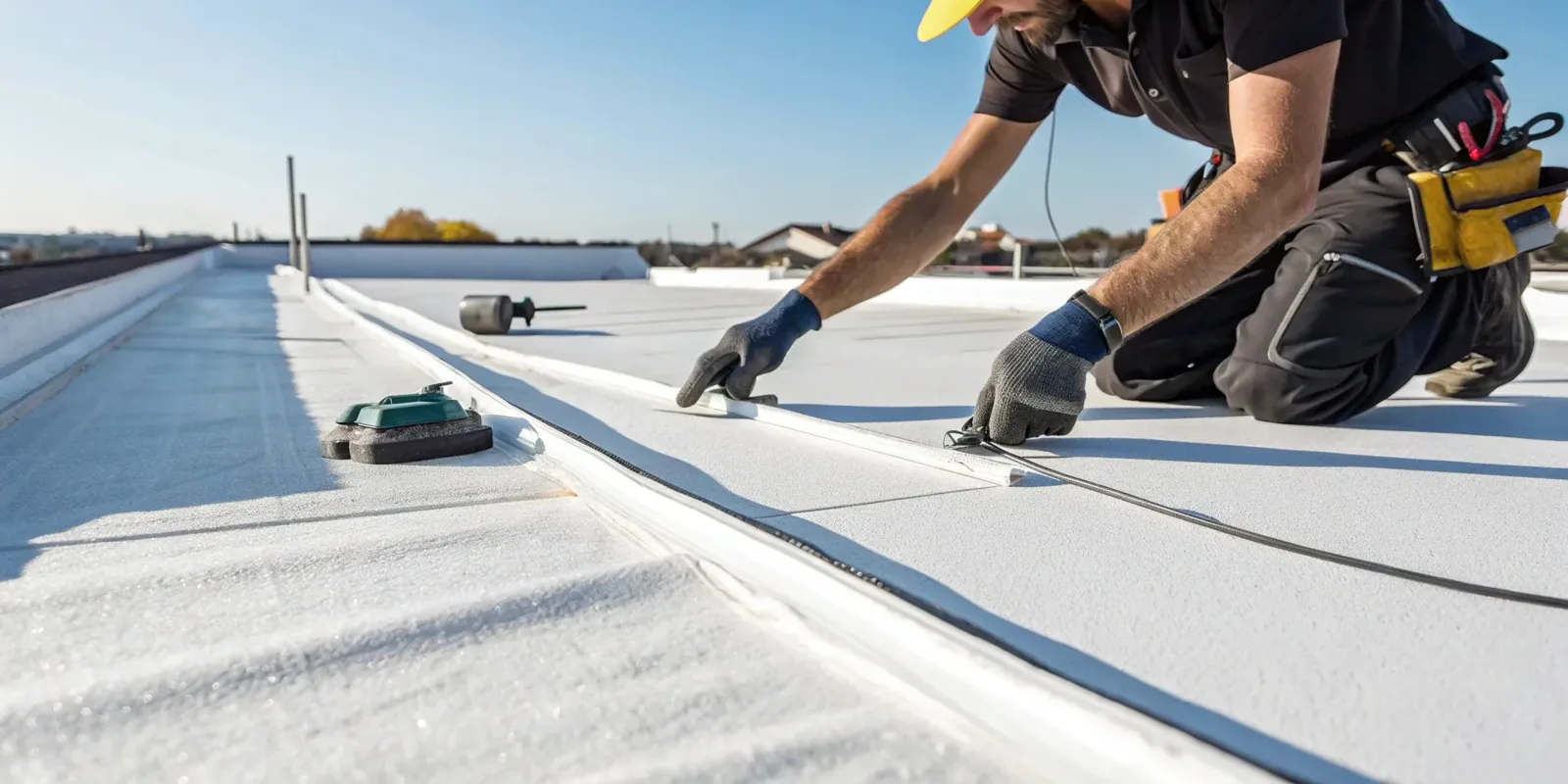
For a TPO roof, we clean the membrane and weld a TPO pipe boot or field-wrapped flashing to it. We confirm the membrane before buying parts; white roofs can be TPO or PVC, and color alone does not tell you.
Where a pipe repair is part of a broader roof project, we include nearby drains and transitions only when the inspection finds a problem with them. A clean line item shows the amount tied to the penetration. The manager can compare a spot repair with larger work without paying for unrelated details.
Record the repair and anything left for other trades
At closeout, we identify the pipe and roof section repaired, with photos of the opened detail, prepared membrane and finished flashing, plus any insulation replaced and the products used. If the pipe joint itself still needs a plumber, it is listed as open rather than marked complete.
A roof condition report with the repaired pipe location helps the next service call. If a new stain appears, we trace it again rather than blame the boot we already fixed.
We make the final walk with the repair list in hand, matching every pipe to a finished detail or an item still waiting on another trade, and checking the membrane nearby for new cuts or loose corners. If another trade returns later, we can show them which flashings to keep clear.
For maintenance, it pays to check pipe flashings after equipment or plumbing work, looking for lifted edges, movement and new penetrations. Photos of changes before another trade covers them make it easy to tell a roofing defect from damage caused by later work.
Commercial Roofing Questions
Can a new pipe boot stop every leak around a penetration?
Only if the boot or flashing is what failed. We check the membrane, pipe movement and the pipe joint first. If the pipe itself is leaking, that goes to a plumber.
What should a pipe flashing quote include?
The roof type, what is damaged, what will be removed, the prep and how the new flashing ties into the membrane. Insulation replacement or moving equipment should be separate lines if needed.
Who moves equipment or service lines for roof access?
The building manager arranges for the contractor who owns that equipment. We need clear room before rebuilding flashing, and our estimate includes the return visit.
How can the owner verify the repair?
Ask for photos before and after, the repair location and the materials used. Any open plumbing or equipment issue should be listed with the closeout.
When should a pipe flashing be checked again?
During regular roof maintenance and after any plumbing or equipment work nearby. If a stain comes back or changes, the roof should be inspected again.
Get the pipe leak checked
Leak around a pipe on your Lakewood roof? We will find out whether it is the flashing or the pipe and give you a clear estimate for a permanent fix.