Fire Damage Roof Repair in Downey, CA
Fire damage roof repair in Downey, CA: we inspect the roof once the building is released, separate roofing damage from structural and electrical questions.
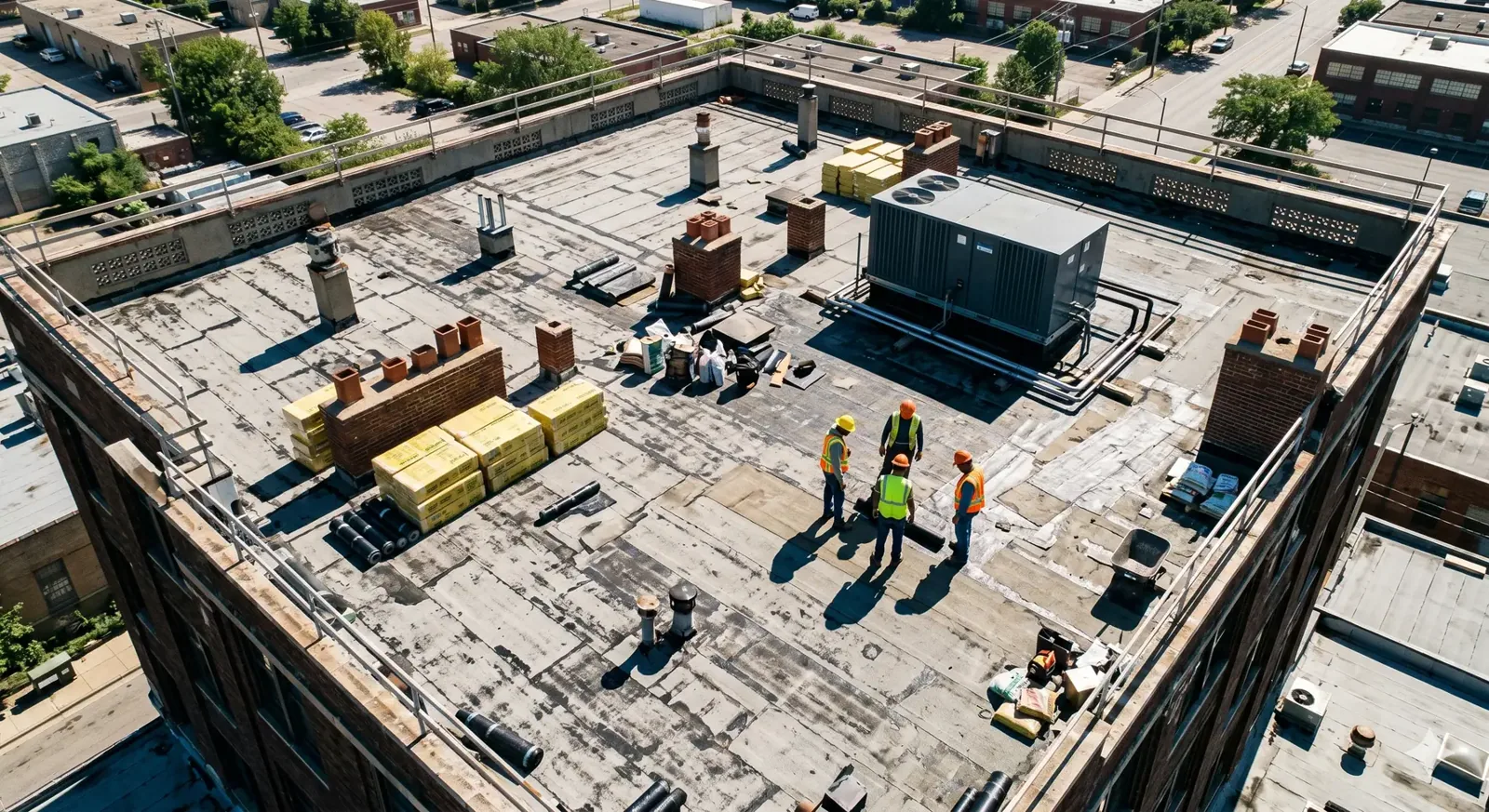
After a fire, the roof is rarely the first thing to fix. A structural engineer, the electrician and sometimes environmental testers need to clear the building before permanent roofing work makes sense. On a Downey office building, putting a new roof over a deck that has not been checked can waste the money and hide damage. We inspect the roof once access is allowed, explain what the roofing work involves, and price repair options as soon as the other reviews are done.
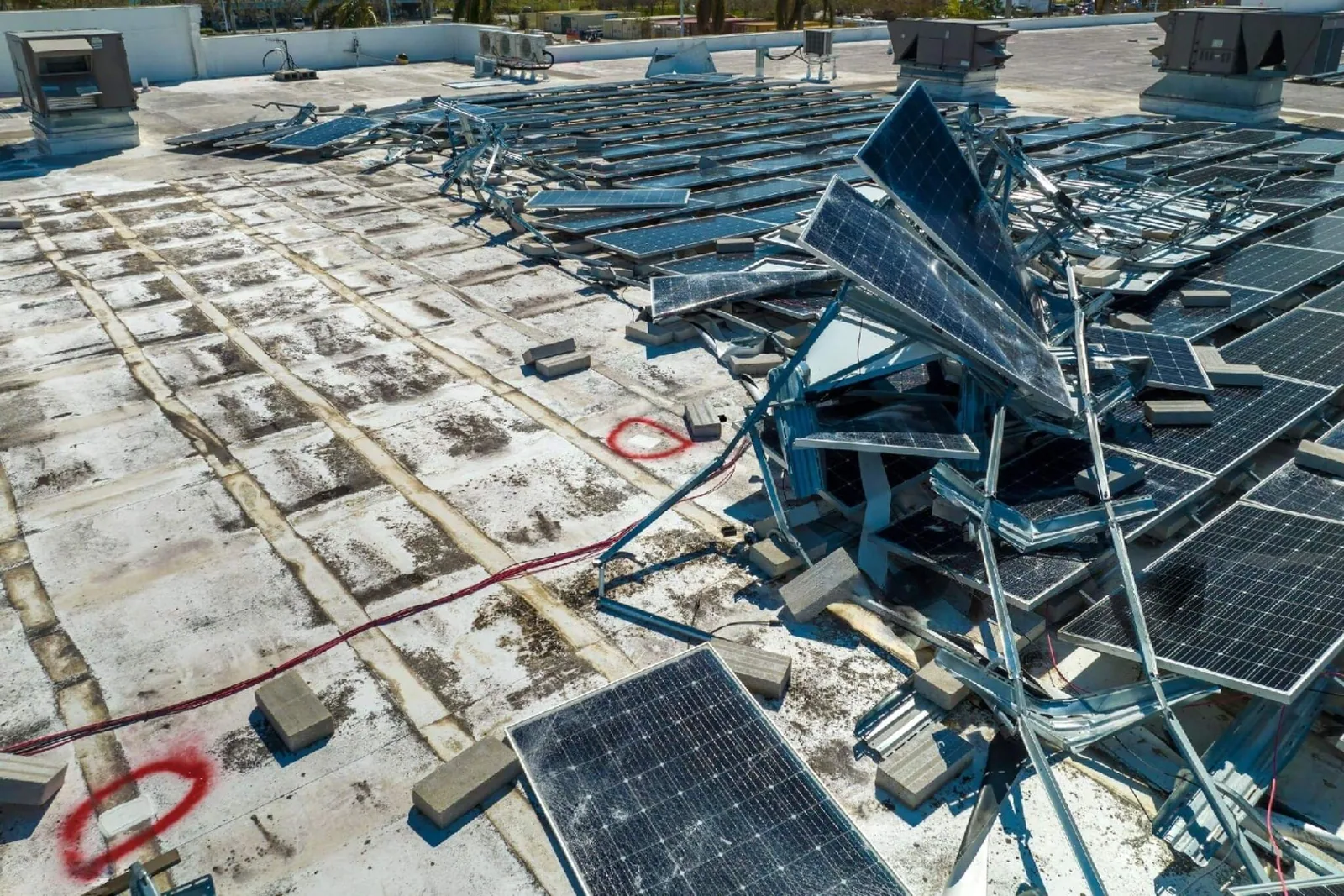
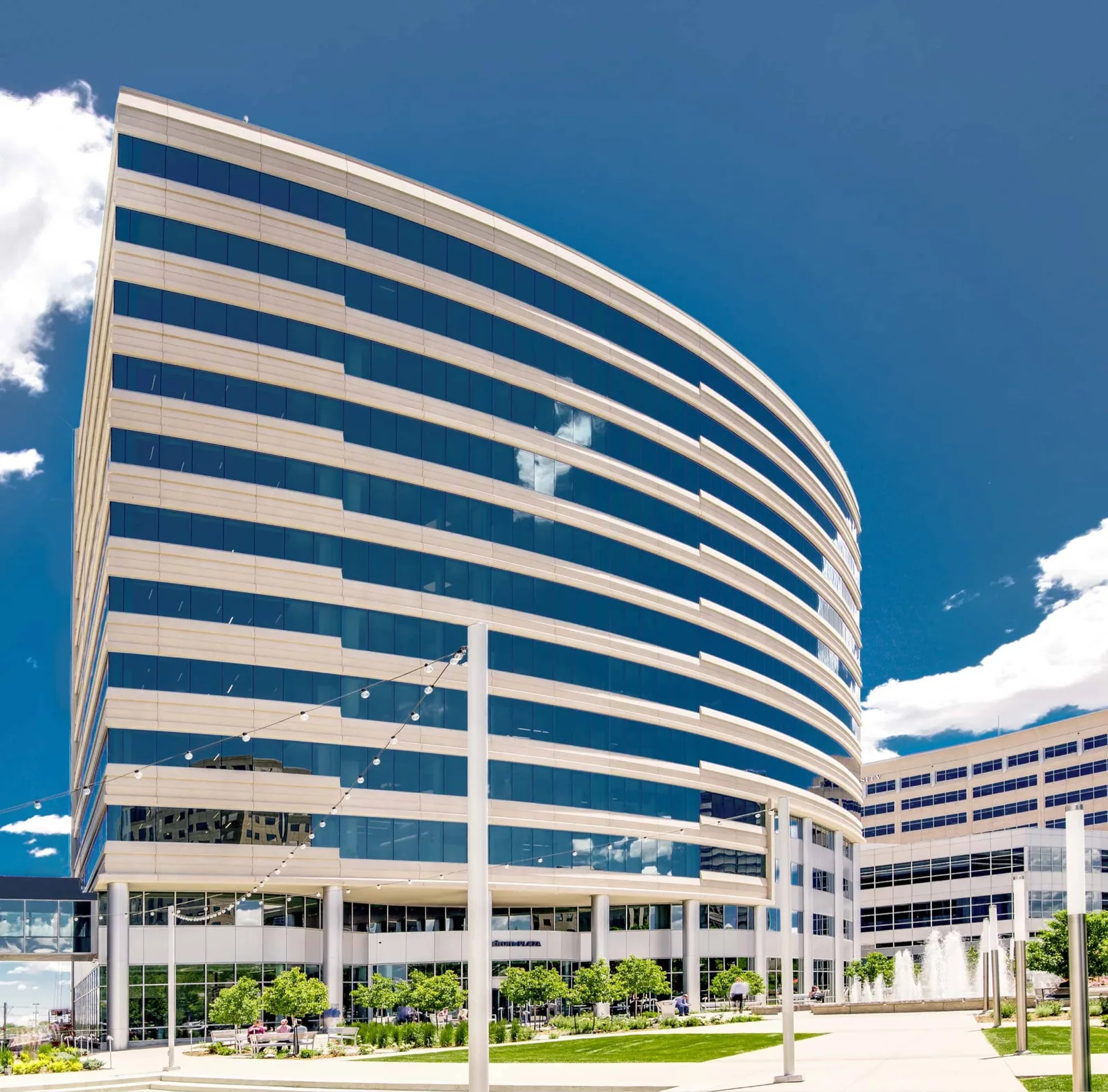
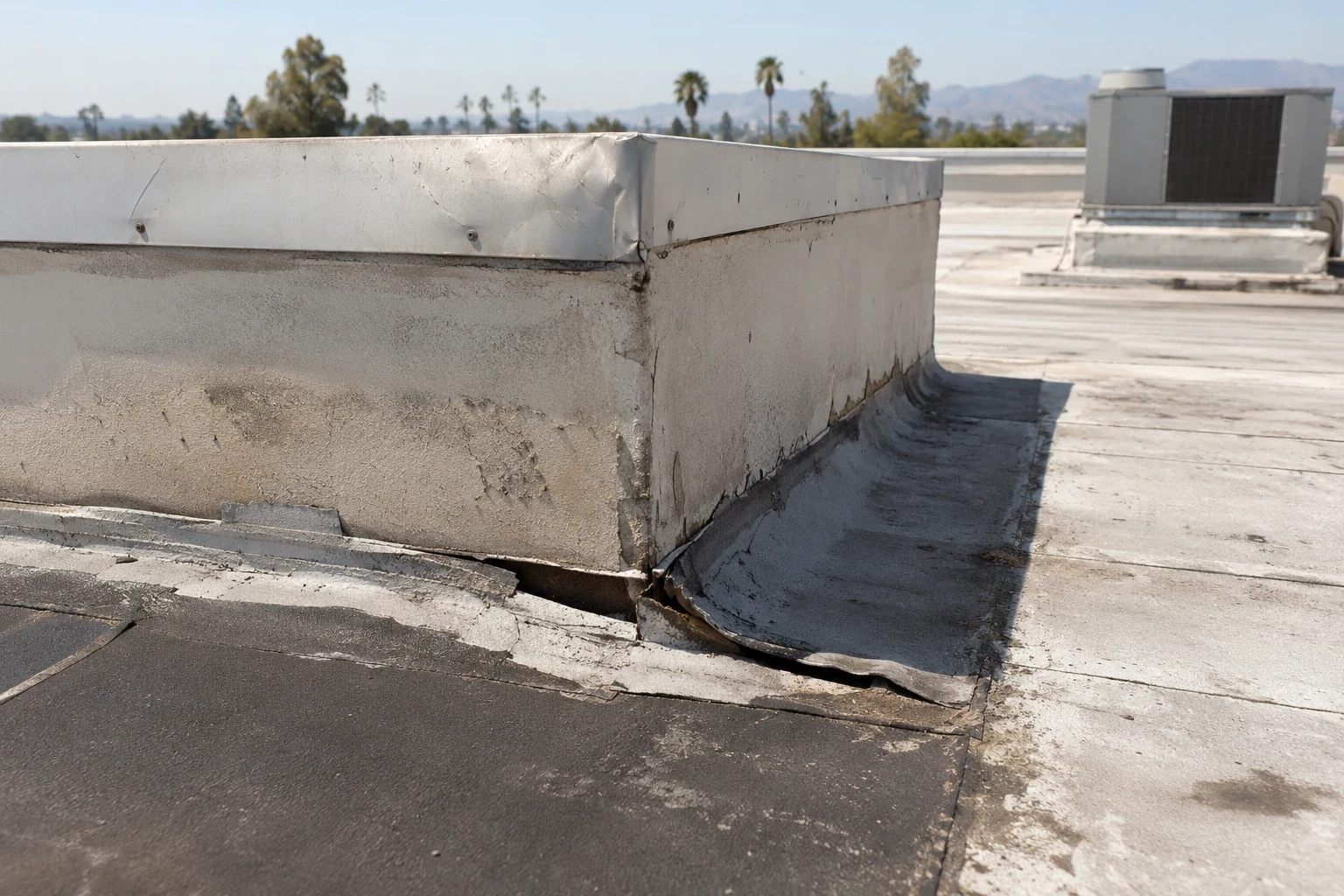
After a fire, the roof may have heat-damaged membrane, compromised insulation, smoke residue or openings left by firefighters. We inspect the accessible roof and document the affected sections, then separate visible roofing conditions from structural, electrical or environmental questions that need qualified review. An office building roof after a fire needs its own access approval and its own findings. Our scope states what we can remove, rebuild and weatherproof once the building owner and other trades release the work area.
Get clearance before going on the roof
The first question is who controls the site and what we are allowed to do. Fire-damaged buildings are often restricted until the fire department, insurer or engineer gives the go-ahead. We work with the owner or property manager to confirm what areas are safe to walk and what activities are allowed. A roofing inspection cannot clear the structure or the electrical system. Those calls belong to the engineer and electrician.
A roof inspection after a fire records which areas we could reach, what damage we saw and what we could not get to. If we need to cut into the roof to check the deck or insulation, that needs separate approval, and we close up the cut the same day. Our report covers the roof, and only the roof. It does not tell anyone the rest of the building is ready for work.
Separate roof damage from structural questions
Heat can blister or shrink the membrane, melt foam insulation and weaken a steel or wood deck. Firefighters may have cut ventilation holes. Some of that is roofing work. Some of it, especially deck and framing damage, needs an engineer to assess before we can rebuild over it. We note what we see on the roof and flag anything that needs another professional's review, so the roofing estimate does not pretend to cover a structural repair.
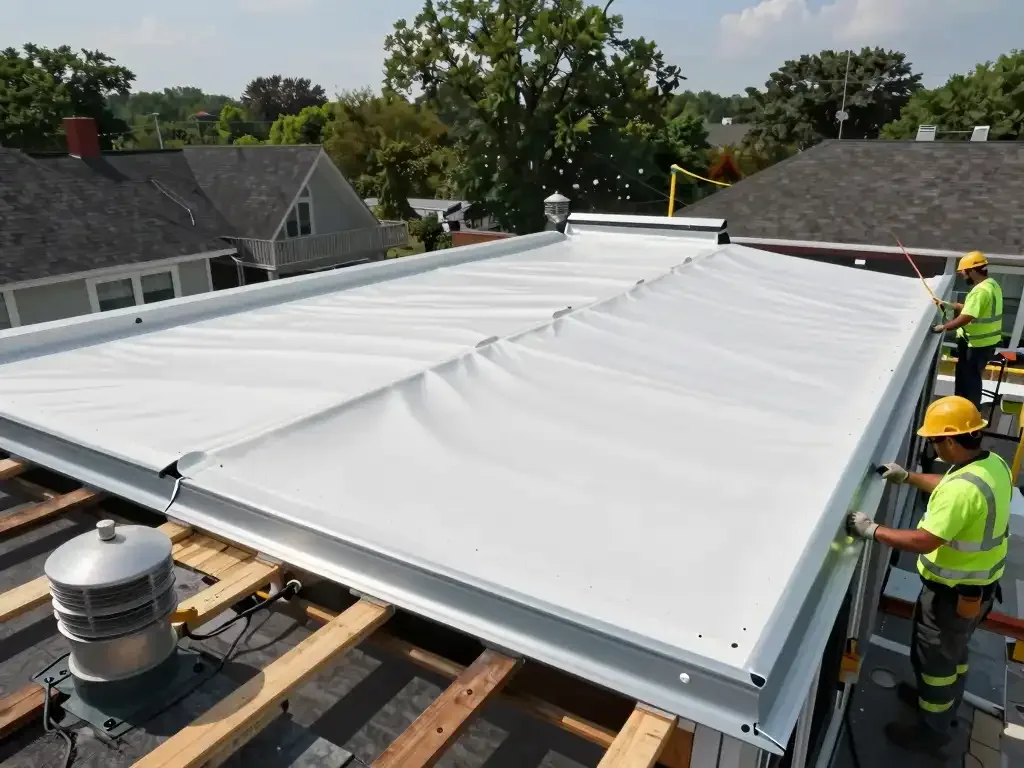
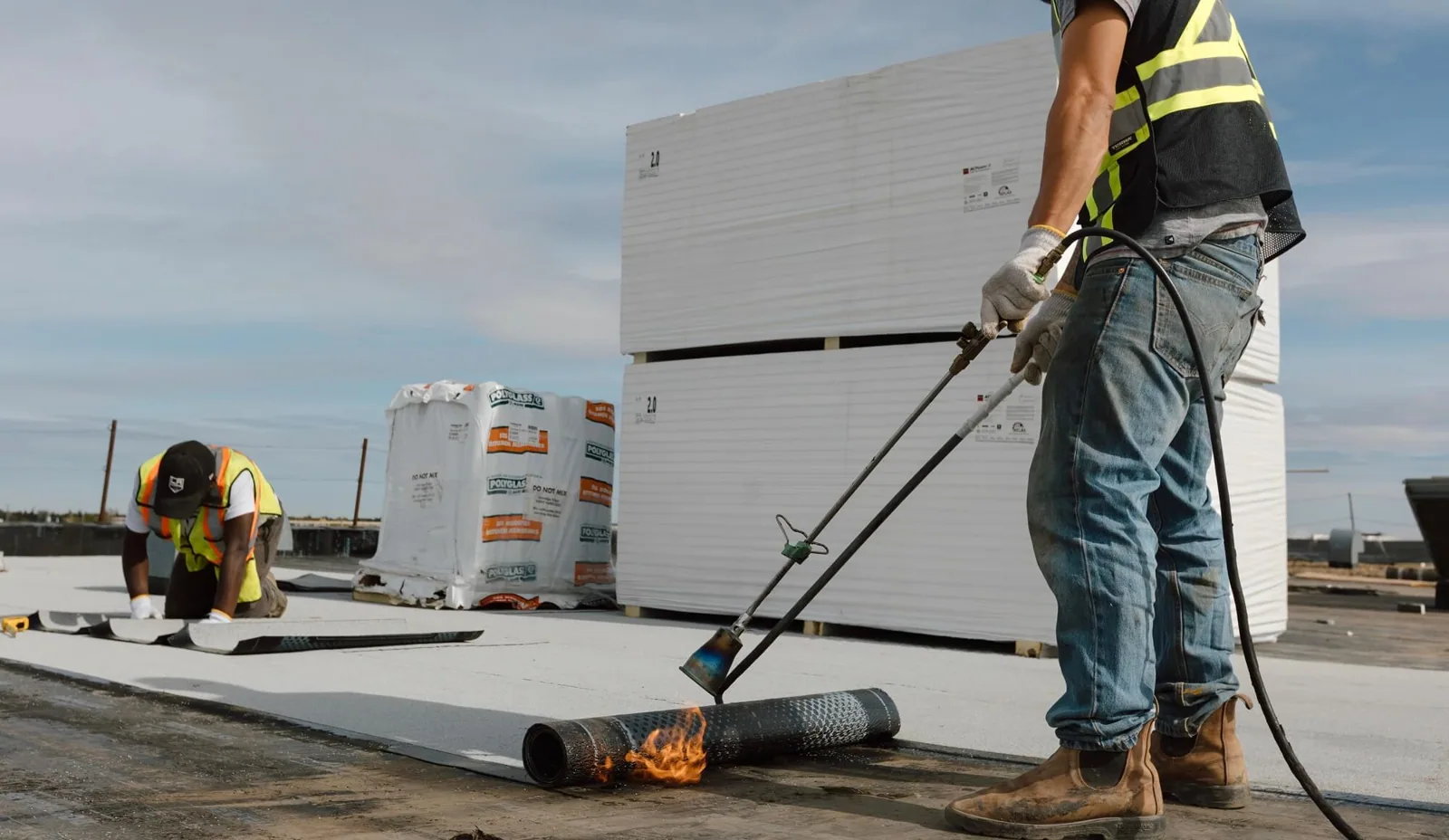
Once the deck is cleared or repaired, a commercial roof replacement of the affected area can be priced with clear limits: what comes off, what stays, and what new insulation and membrane go on. Damaged walls and curbs need flashing repair as part of that scope. If masonry or HVAC work has to happen first, we list it separately so the schedule is realistic.
Test where the damage stops
The burned area is usually obvious. The question is how far the heat and water damage spread. Insulation several feet from the fire may be soaked from firefighting water, and membrane outside the scorched area may be weakened. We check with core cuts or moisture readings where the answer would change how much roof gets replaced, and we record where we checked.
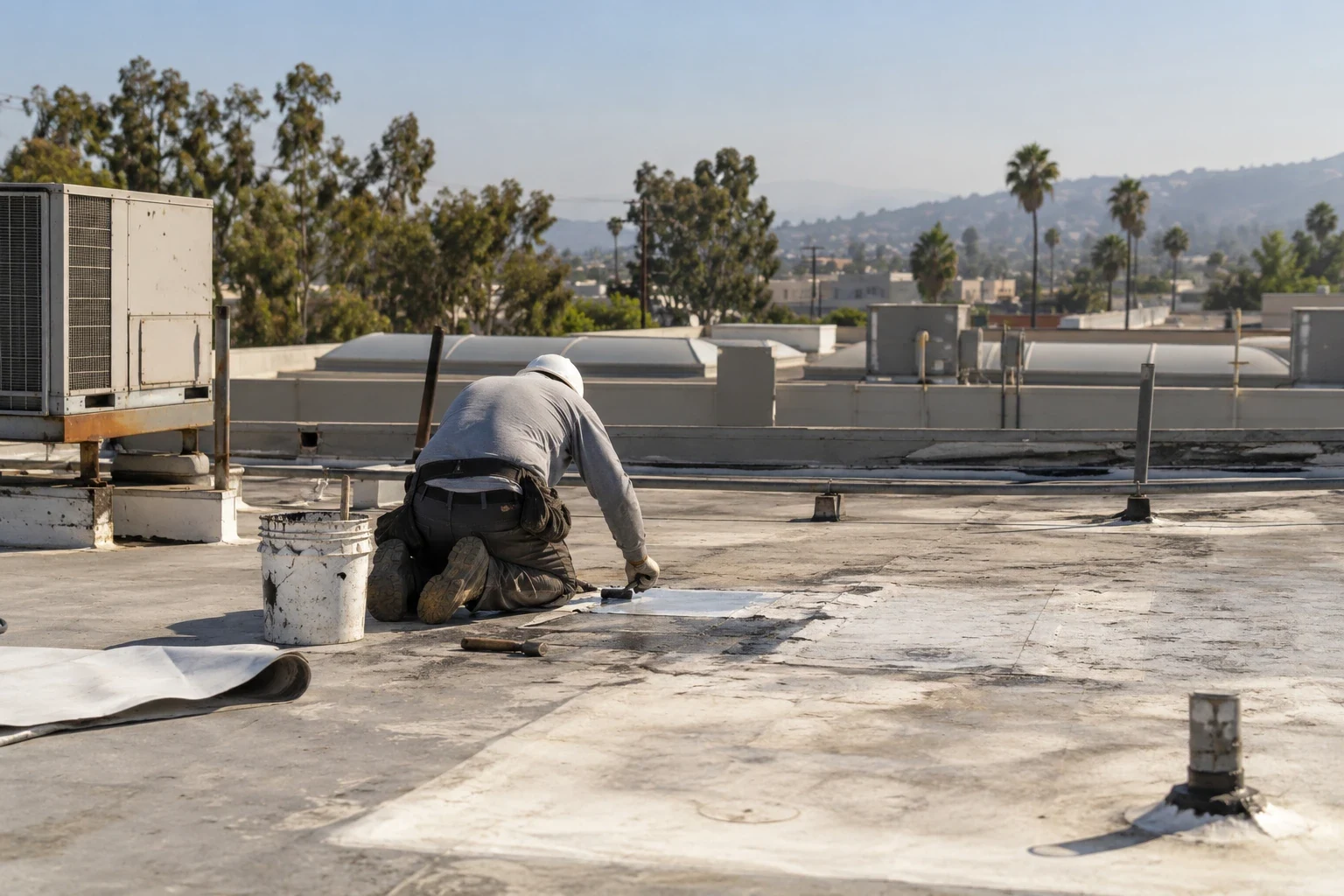
For small, contained damage, a targeted commercial roof repair may be enough. A single hole from debris or a ventilation cut can often be handled as a membrane puncture repair once the deck under it is confirmed sound. A fire somewhere in the building does not mean the whole roof is damaged. If more damage shows up once work starts, we document it, price it and get approval before going further, and keep the roof watertight in the meantime.
Schedule roofing after the other trades
Permanent roofing comes after the structure is cleared and electrical, plumbing and mechanical repairs that affect the roof are planned. Rooftop units may need to be replaced or reset, and that has to be coordinated with the roof work. We confirm with the owner's representative what areas we can use, which trades need to go first, and when each one is expected to finish.
For a property in Commerce, we confirm access and work permissions with the owner or adjuster before opening the roof. Doing the work in small phases adds setup and protection costs, while one larger phase may only be possible once all the other repairs are ready. We price both and explain the difference. Either way, the temporary protection stays in place until the permanent roof is on.
Close out the roof separately from the building
When the roofing is done, the close-out should say exactly what was replaced and repaired, with photos of the deck and insulation before they were covered. If another trade still has work on the roof, such as reconnecting a unit, that open item stays on the list with a name next to it. A finished roof does not mean the building is cleared for occupancy. That is a separate sign-off.
A roof condition report from after the fire, along with the close-out records, gives the owner and insurer a clear history of what was damaged and what was fixed. If new problems appear later, the roof should be inspected again rather than assuming they are part of the original fire damage.
Before the job is closed, go over any remaining items with whoever is managing the restoration. Keep a clear line between documents that were submitted and approvals that actually came back. That makes it easy to see what is finished and what still needs attention.
Commercial Roofing Questions
Can a roofing visit establish the building ready for permanent work?
No. A roofing inspection covers the roof only. After a fire, a structural engineer, electrician and sometimes other specialists need to clear the building. The permanent roof goes on after the deck and any affected systems have been reviewed and released for work.
What should precede approval of the permanent roof material?
The deck and structure need to be cleared, and any damaged insulation and wall backing identified. Rooftop equipment that will be replaced or reset should be scheduled. Once those pieces are in place, the roofing estimate can list the full scope, including flashing and edge work, before material is ordered.
How should a local repair be compared with broader removal?
It depends on how far the heat and water damage reaches. We test the areas around the visible damage to see where the insulation and membrane are still sound. If the damage is contained, a local repair may be enough. If water and heat spread through a large area, replacing that section is usually more reliable.
What belongs in the roofing handoff while another duty remains?
The close-out should show what roofing work was finished, with photos, and list any open items from other trades with who is responsible. It should be clear that the roof is done even if other parts of the building are still waiting on their own inspections or approvals.
Get the roof assessed after a fire
Send us the Downey property address, any engineer or adjuster reports, and what areas are cleared for access. We will inspect the roof and explain the repair work, the order it needs to happen in, and what it will cost.