Roof Warranty Compliance in Downey, CA
Roof warranty compliance for Downey buildings: we match your warranty paperwork to the roof that is actually installed and make sure repairs and new work keep coverage intact.
A manufacturer's warranty only helps if the roof was installed, maintained and repaired the way the warranty requires. On a Downey office building, a wall flashing that was never detailed to spec can be the difference between a covered claim and a denied one. We review the warranty documents, look at the roof that is actually there, and tell you what the warranty requires before any new work or material is approved. A brand name on the membrane does not tell you what coverage you have. The paperwork does.
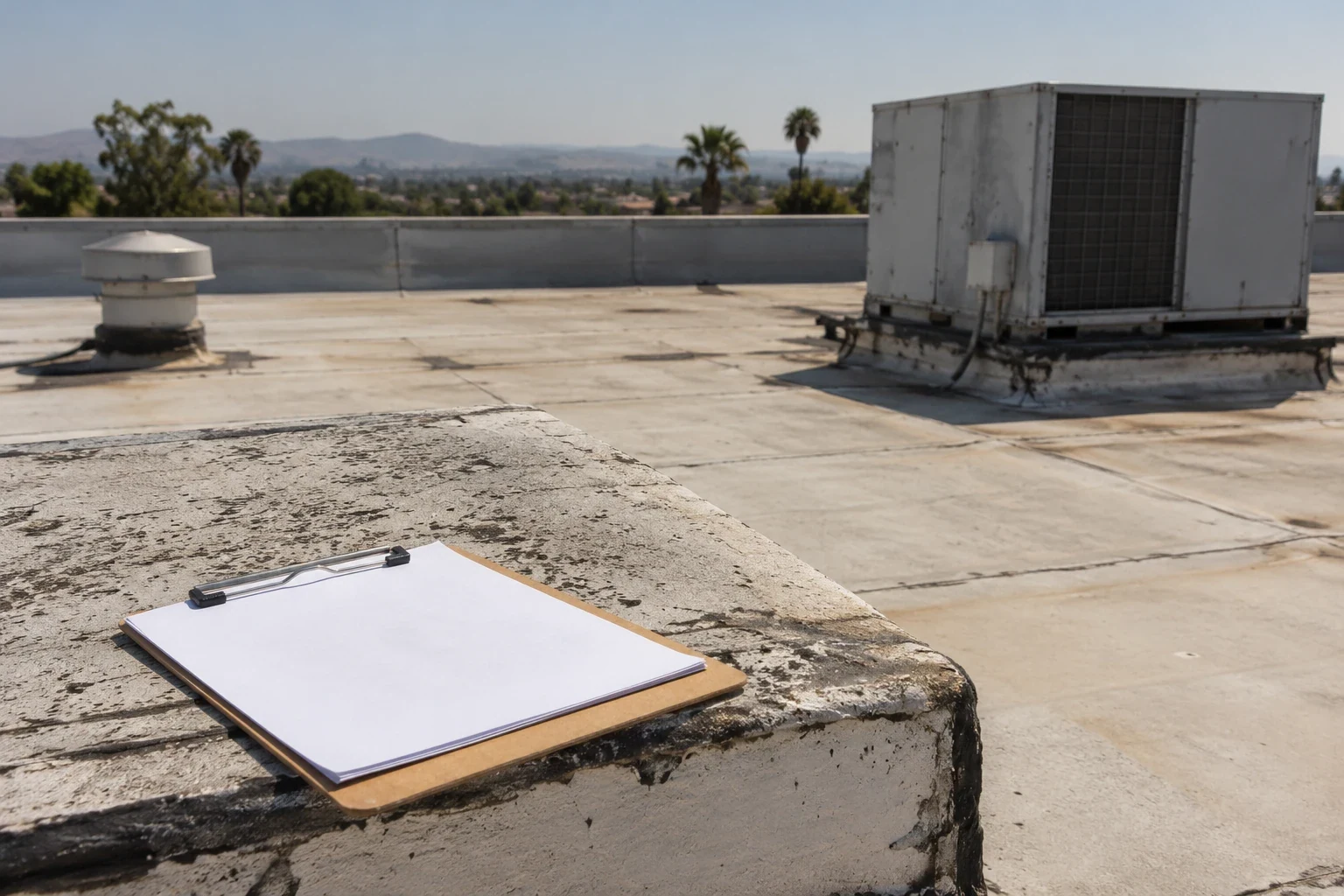
Before work begins, match the building’s warranty document to the roof system and the area being considered. Check the stated term, covered assembly, maintenance requirements, exclusions and any notice or inspection steps that apply. A warranty label alone does not confirm eligibility for a repair or coating. We identify the construction proposed and the records the owner should review with the issuing party when coverage is uncertain. Keep dated inspection findings and completed work together so later service can distinguish documented maintenance from an unresolved membrane or flashing condition.
Check the paperwork against the roof
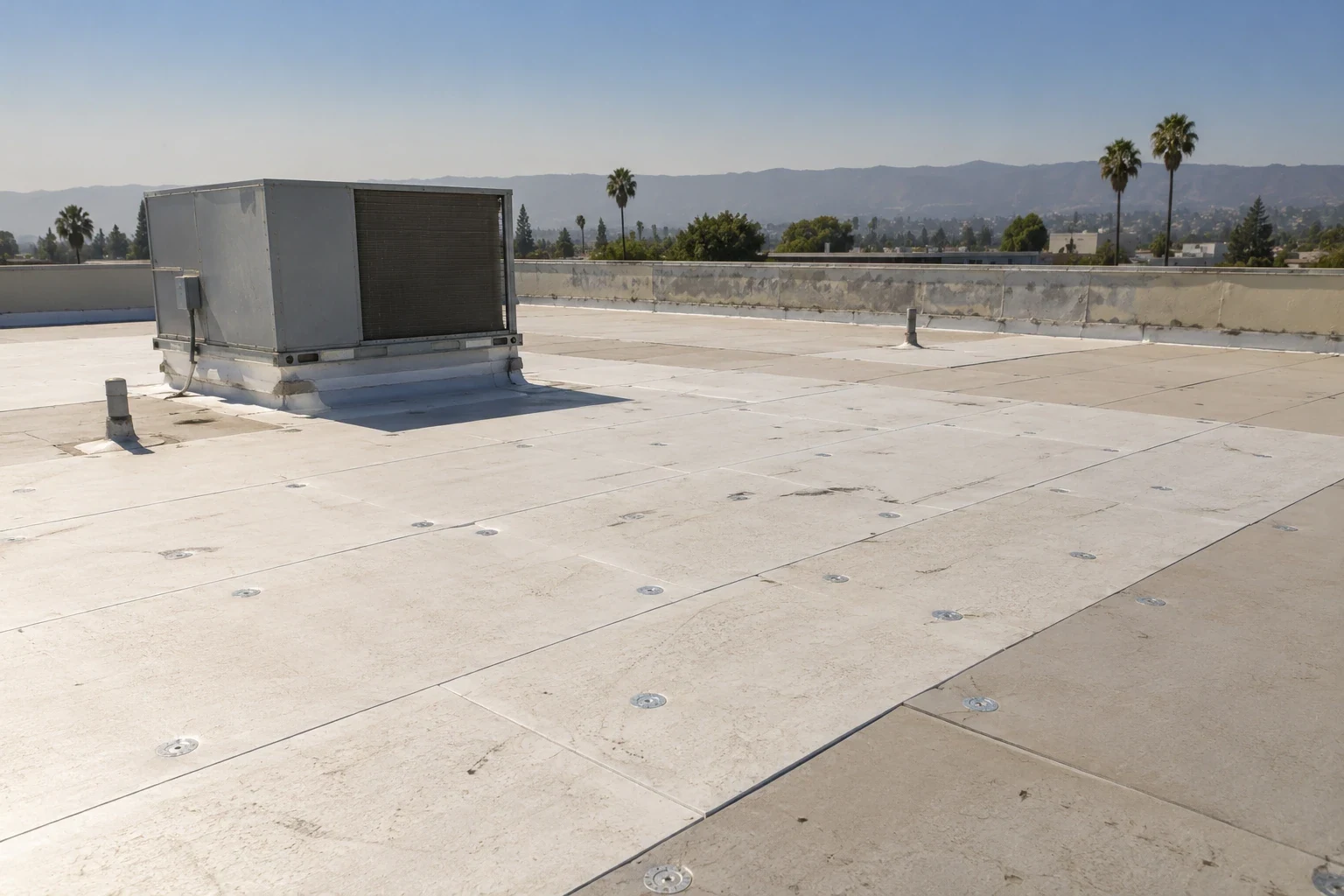
The first step is finding out what warranty you actually have. We read the document, note which roof system and area it covers, and compare it with what we see on the roof. Original drawings help if they match the building today. If tenants have added rooftop units or skylights since the roof went on, those changes may not have been flashed by a certified installer, and that can affect coverage.
A roof condition report keeps physical problems separate from paperwork questions. A warranty cannot tell you whether the insulation under a seam is wet. If a hidden condition matters for the repair, we test for it, note where we looked, and explain what it means for both the repair and the coverage before anything is ordered.
Price the details the warranty requires
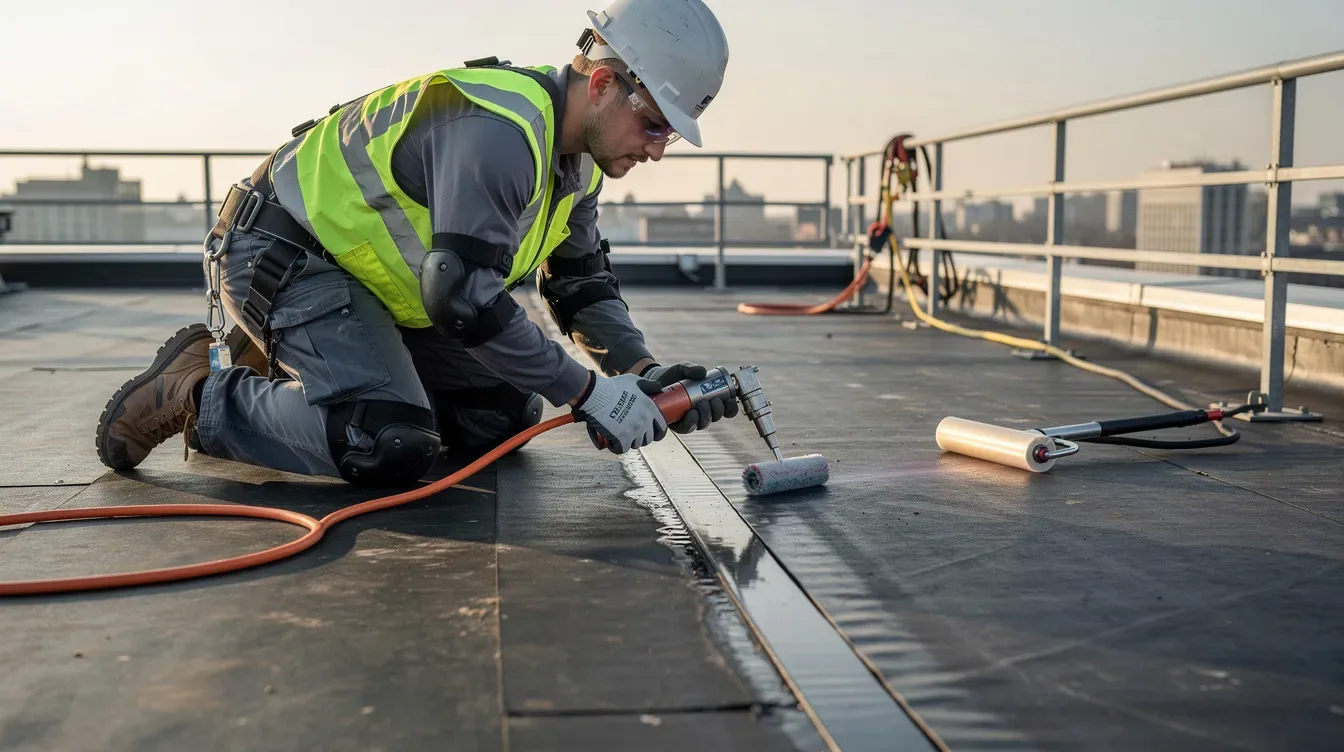
Warranties set specific requirements for flashing heights, termination bars, drain details, edge metal and how rooftop equipment is curbed. A bid that only prices the field membrane will miss those, and the missing details can void coverage. We list each wall, drain, curb and edge detail the warranty needs, along with any work another trade has to do first, such as lifting a unit off its curb.
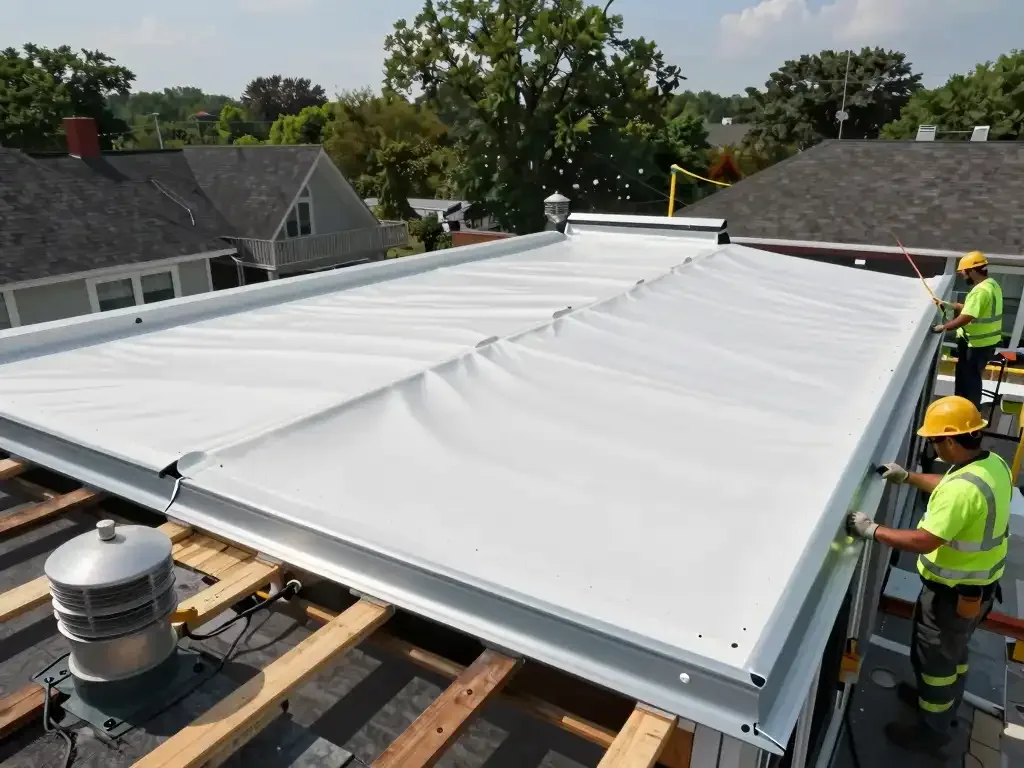
For a commercial roof replacement that will carry a new manufacturer's warranty, the estimate should state what comes off, what stays and which details are included. Some details need the manufacturer's sign-off before installation. Until that approval comes back, we keep the item open in the estimate so it does not quietly get dropped from the order.
Confirm the roof underneath is sound
A new membrane or coating is only as good as what it sits on. A roof that looks fine can hide damp insulation or a soft deck, and most warranties will not cover a system installed over wet material. We test where it matters and record exactly where samples were taken, without assuming untested areas are dry.
Replacing roof insulation and cover board may change the roof height at drains, curbs and walls, so we check those details before ordering material. If more wet or damaged material turns up during the work, we document it, price it and get approval before continuing. The open area stays covered and watertight while that happens.
Schedule inspections before details are covered
Many warranties require the manufacturer's representative to inspect certain details, or the finished roof, before the warranty is issued. Those inspections have to happen at the right time, before insulation is covered or flashing is closed up. We schedule them into the job, and we do not treat a requested inspection as a passed one until the representative signs off.
For a building near I-105 and Lakewood Boulevard, we confirm the site contact, work hours and any areas we cannot use for staging. Permission to inspect the roof does not cover tear-off, so that approval is confirmed separately. If the work has to be done in phases, we explain the extra setup cost and make sure every phase still gets the details the warranty requires.
Keep the warranty with the finished roof
At the end of the job, the owner should receive the issued warranty, not just a copy of the application. The close-out file should also include photos of the work before it was covered, a list of materials used, and any items still open. If an HVAC contractor still needs to reflash a reinstalled unit, that open item stays on the list with a name next to it.
Store those documents in the building's roof asset management file. The warranty spells out the owner's obligations, such as regular inspections, keeping drains clear and using approved contractors for repairs. When a tenant wants to add a rooftop unit or cut a new penetration, check the warranty first and have the work done in a way the manufacturer will accept.
Before the job is closed out, agree with the owner on which roof and which documents the warranty applies to. A later manager should be able to find the right warranty quickly. If something is still waiting on the manufacturer, it should be labeled as pending, not complete.
Keep the project file with dated inspection photographs, proposals, approvals and closeout records. If a requirement is unclear, note the question and contact the warranty issuer before the crew proceeds with work that could affect the stated coverage. For an office roof project, the assigned assembly and contract documents must match before a warranty-related recommendation is made.
Commercial Roofing Questions
Can the specified product settle the warranty allowance by itself?
No. The membrane brand does not tell you which warranty is offered or what it covers. The warranty document and the manufacturer's installation requirements set the terms. The estimate should list the flashing, edge, drain and curb details those requirements call for, so you are comparing complete jobs.
Which detail question should be settled before material is ordered?
Settle any detail that needs the manufacturer's approval, such as an unusual wall termination or a drain change, before materials are ordered. Until the manufacturer responds, the item stays open. Ordering material for a detail that later gets rejected wastes money and time.
How should a required inspection affect the work stage?
If the warranty requires the manufacturer to inspect a detail or the finished roof, that inspection has to happen before the work is covered. We build it into the schedule and do not move on to the next step until the inspection has actually been done and accepted.
What makes the warranty handoff useful for the next manager?
The next manager needs the issued warranty, the roof area it covers, close-out photos and records, and the owner's maintenance obligations. Any open items should be listed with who is responsible. Before any future work on the roof, check the warranty so the new work does not affect coverage.
Check your roof warranty before the next job
Send us the Downey building address, the warranty documents you have and the work being proposed. We will compare the paperwork with the roof and tell you what the warranty requires before any material is ordered.