Paramount Commercial Roofing from Downey, CA
Commercial gutter and roof-edge repair in Paramount, CA. We check hangers, seams, outlets and the membrane behind the gutter before quoting cleaning or repair.
When a Paramount building owner gets a gutter estimate, it should be clear what the money actually fixes. A gutter packed with debris, a gutter pulling away from loose hangers, and a gutter leaking where it meets the roof membrane are three different problems with three different prices. We walk the roof edge, look at each piece, and price cleaning, metal repair and membrane repair as separate lines. That way nobody pays for a cleanout believing they bought a repair.
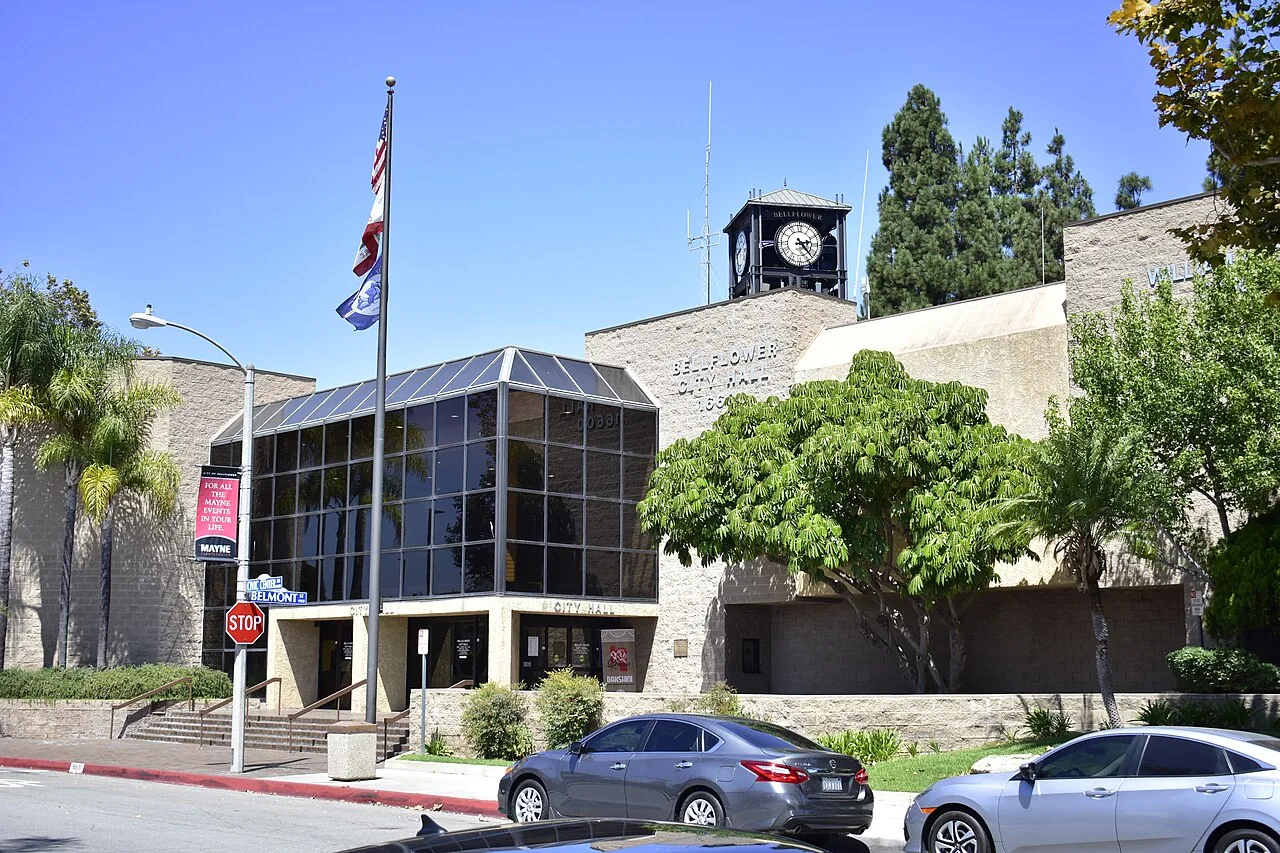
A good gutter repair gets water from the roof to the downspout and away from the building without spilling over the edge or backing up under the flashing. We check outlet height, seams, hangers and the roofing right behind the gutter before we replace any sections, and we plan where overflow will go while the work is open. Paramount sits between I-105 on its north side and I-710 along its west edge, so our crews reach most industrial and retail roofs here quickly. We also handle commercial gutter and drainage work in nearby Bellflower. Once a repair is done, we run water through the outlet and watch where it goes.
Separate debris from component damage
The first job is figuring out what is wrong. We look inside the gutter and down the outlet, and we note clogs separately from split seams, bent sections or hangers that have let go. Clearing leaves and grit can solve a backup, but it does nothing for a seam that has opened up. If water is getting lost further down, in an underground line or a downspout we cannot reach from the roof, we tell the manager that plainly rather than calling the system fixed. A clean gutter only tells you about the part we could see and clear.
Our gutter and edge metal repairs list cleaning and repair separately. When sections need replacing, the estimate says which runs and which joints. Sections we keep get checked where they join the new metal. The owner pays for work that changes how the gutter performs, not for a fresh look over a hanger that is still loose or a joint that still leaks.
Check the support and roofing behind the gutter
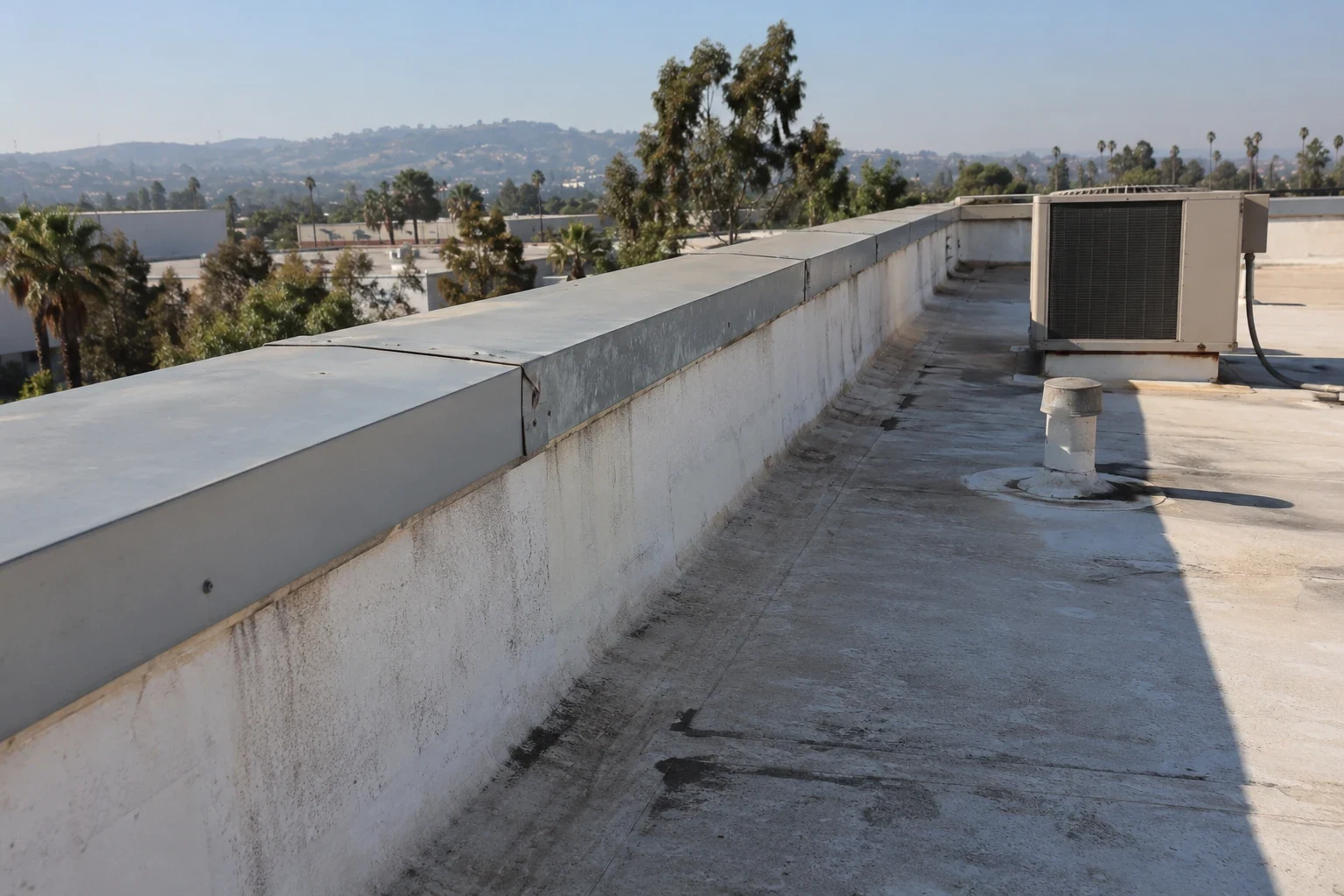
A gutter is only as good as what holds it up. We check the brackets, the wood or metal backing at the fascia, and the fasteners. If the backing is rotted or the hangers are spaced too far apart, a new gutter will sag the same way the old one did, so we price that correction up front. The roofing behind the gutter matters just as much. Where the membrane or edge flashing laps into the gutter, a failed seal sends water behind the metal and into the wall, and replacing the gutter alone will not stop that leak.
Our commercial roof repairs at the gutter edge cover that membrane connection. If we see signs of wet insulation near the edge, we confirm it with a core cut or moisture meter before deciding how much to tear out. Wet material comes out; dry, sound roofing stays. If we find more damage than expected, we stop and talk with the owner before changing the scope.
Swapping a gutter can also change how water comes off the roof. A taller or shorter gutter profile may need the edge flashing reset so water still lands in the trough instead of behind it. Sometimes a wall flashing or a clogged scupper upstream has to be fixed first. We put those steps in order in the estimate so the manager sees the full repair, not a new gutter hung on an edge that still leaks.
Confirm the working position and removal route
Before we start, we confirm how we will reach every side of the gutter. Some repairs can be done from the roof; others need a lift or ladder on the ground side, which may mean blocking part of a parking lot or loading area. We work out with the building contact where the old metal comes down, where new material is staged, and when the work can happen without disrupting tenants. If another trade owns a downspout or underground drain, we sort out who does what before anything comes off the building.
For work around commercial roofs in Lakewood and here in Paramount alike, the building itself sets the access plan. We keep the open edge protected while the gutter is off and schedule removal only when we are ready to finish the connection the same visit.
Match the gutter detail to the roof membrane
The roof membrane and the gutter have to be joined in a way that suits both. We identify the existing roof type, then pick an edge detail that the membrane manufacturer allows and that fits the gutter profile being installed. New hangers or a different attachment method may call for added blocking at the edge. We explain the detail in the estimate so the owner knows how the finished edge will keep water out, not just which gutter shape is going up.
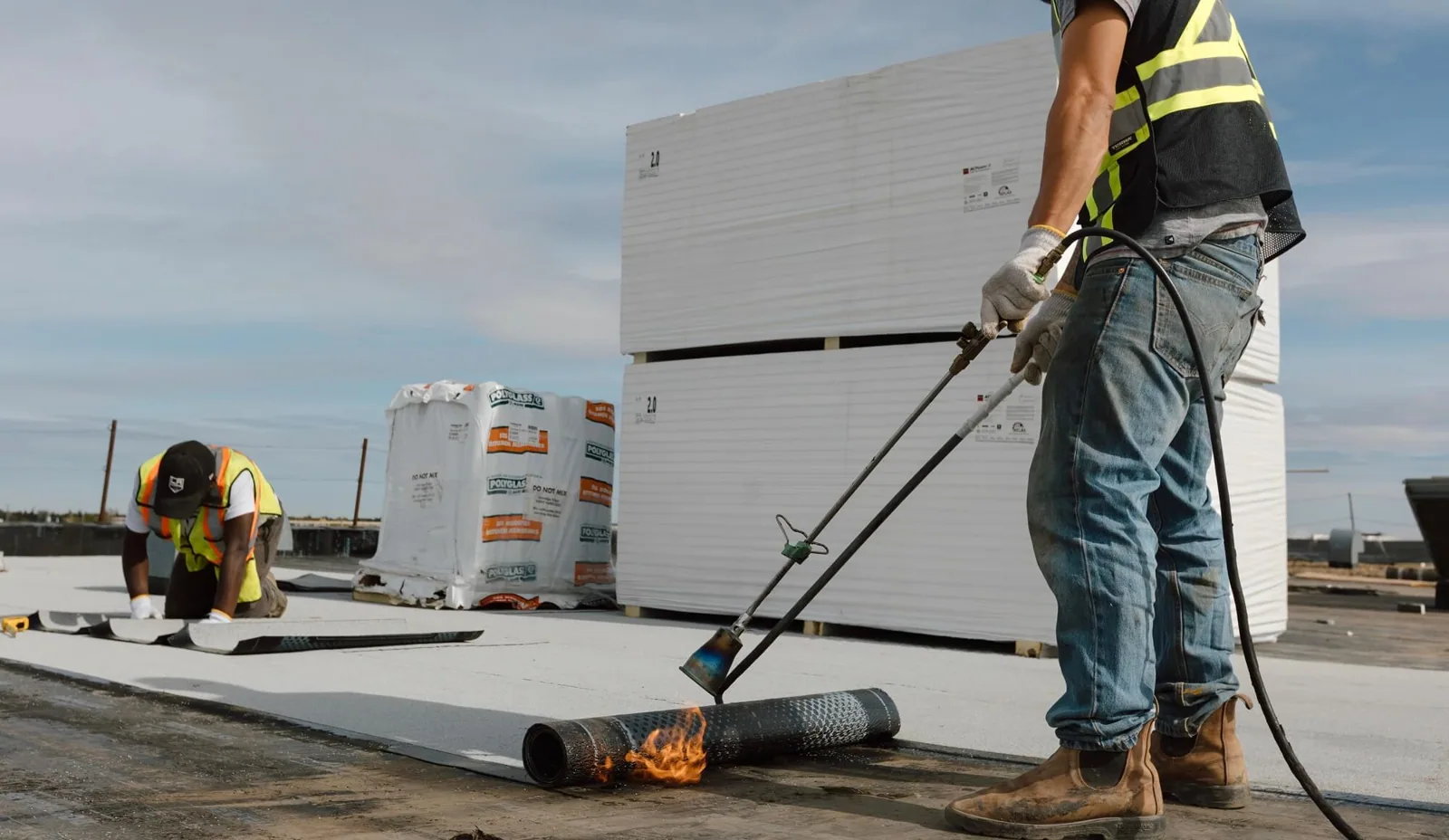
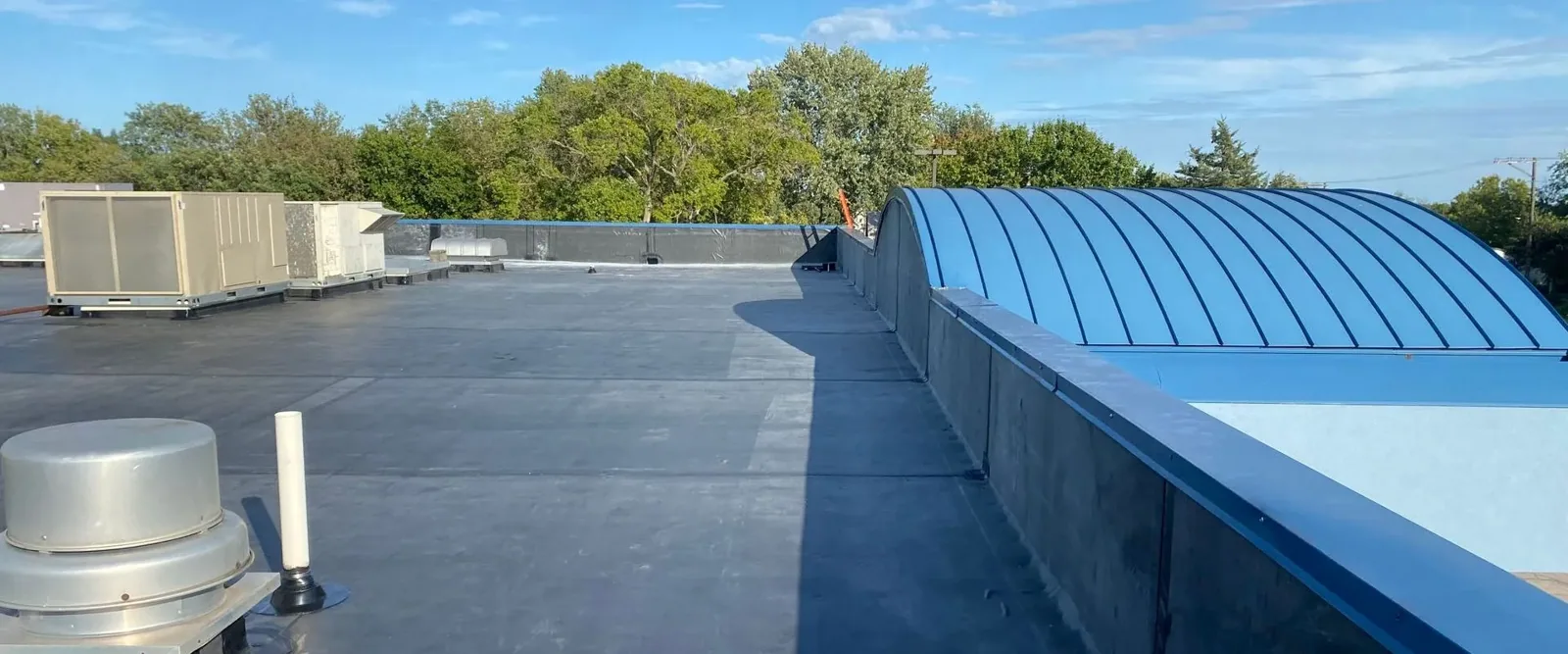
For an EPDM roof at a repaired gutter edge, the rubber has to be cleaned and primed, and the right tape or flashing used to seal it to the edge metal. We check that the existing membrane is sound enough to bond to and that the gutter shape leaves room to make that seal properly. If the edge needs to be built up or straightened first, we do that before installing, not after.
Keep a record of the repair
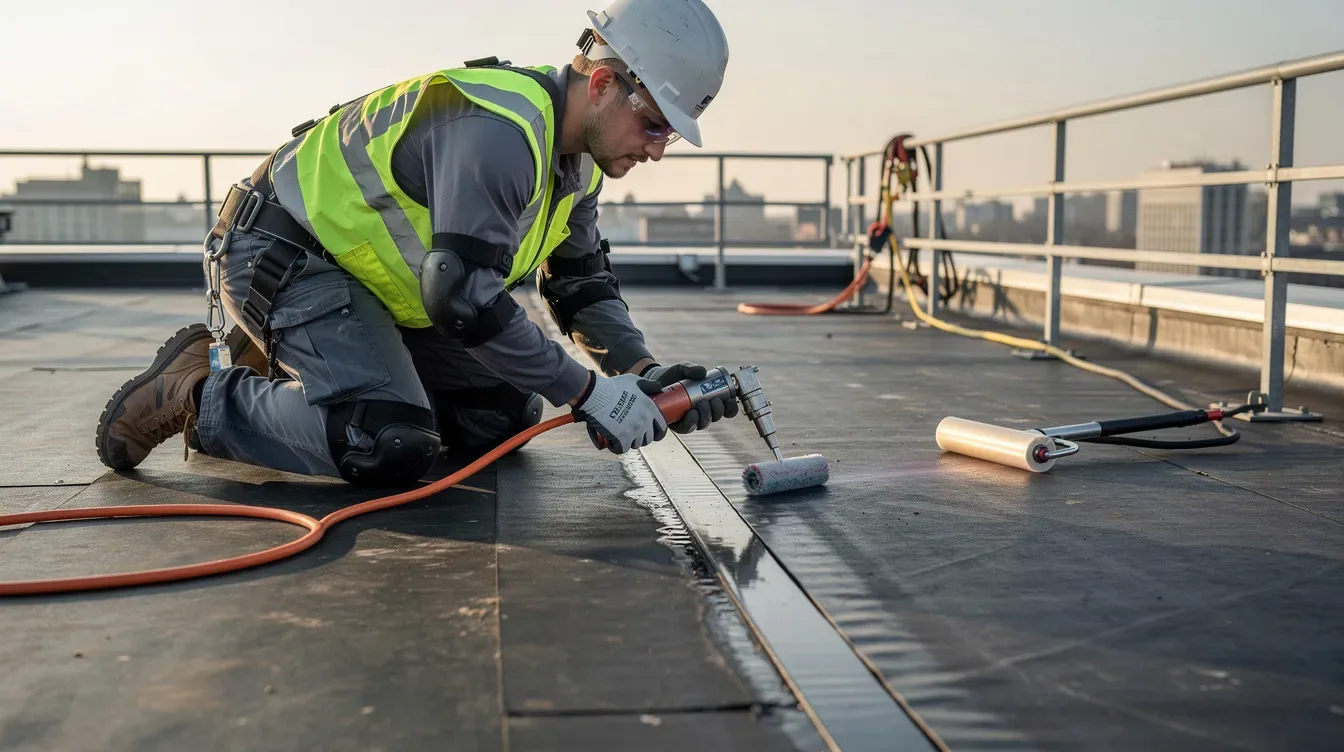
Before we close anything up, we photograph the repaired backing, new hangers and prepared membrane. The closeout notes show which sections were replaced, where the new joints are, and what the finished roof edge looks like. We test installed roofing seams with the method that suits the material. If part of the drainage system was outside our work, the notes say so.
A roof condition report covering gutters and roof edges makes the next visit faster. It keeps clog history separate from actual repairs. If a new leak shows up later, we inspect the current problem and compare it with what we found before. A repair on one run of gutter does not tell you the condition of the rest of the perimeter, so other runs get their own check.
We offer emergency leak protection on weekends, holidays and overnight. A temporary fix stops water now; we then tell the manager what permanent repair is still needed and whether we need lift access or a closer look at the drains before doing it. A tarp or patch is never treated as a finished gutter or roof repair.
Commercial Roofing Questions
How do you decide whether a gutter needs cleaning or repair?
We look at what is actually wrong. Debris causes backups, but split seams, bent sections and loose hangers need repair, and a leak where the gutter meets the roof needs membrane work. We price each problem on its own line so you can see what you are paying to fix.
Does cleaning the gutters mean the whole drainage system works?
No. Cleaning clears the gutter and outlets we can reach from the roof. A blocked downspout or underground line further down can still back water up. If we suspect a problem beyond our reach, we tell you so it can be checked separately.
Why check the backing before replacing a gutter section?
A new gutter hung on rotted blocking or loose fasteners will sag and pull away just like the old one. We check the fascia backing and hangers first and include any repairs in the estimate, so the new gutter stays put.
When does a gutter repair also need roofing work?
When the membrane or edge flashing has failed where it laps into the gutter, or when a new gutter profile changes how water leaves the roof. In those cases we reset or reseal the roof edge as part of the same job so water still lands in the gutter.
What do you look at on a return visit?
We pull up the photos and notes from the last repair, then inspect the current problem on the roof. Past work is useful background, but the decision is based on what we find today. A fix on one gutter run does not mean the other runs are in good shape.
Get a clear gutter and roof-edge estimate
Schedule a Paramount commercial roof visit for your gutter problem. We will inspect the gutters, hangers and roof edge and explain what needs cleaning, what needs repair and what that means for your roof.