Compton Commercial Roofing from Downey, CA
Downey roofing serves Compton. Separate roof moisture indications from confirmed layer findings and define repair boundaries through the assessed assembly.
Water inside a Compton building does not tell you which roof layer failed. Start with the room report, then examine the membrane above and around it. Check seams, drains, wall transitions and penetrations for a visible opening. If the surface appears intact, keep the entry path open as a question. The owner needs evidence before paying for broad removal.
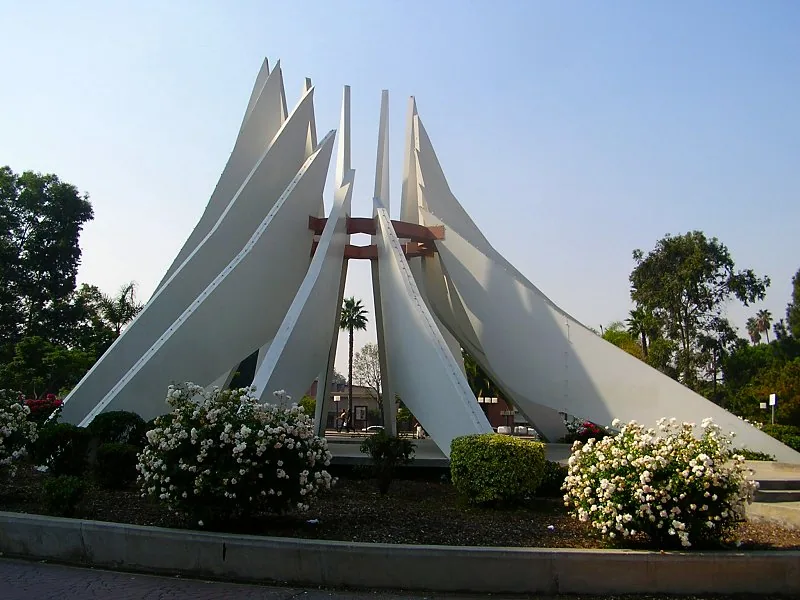
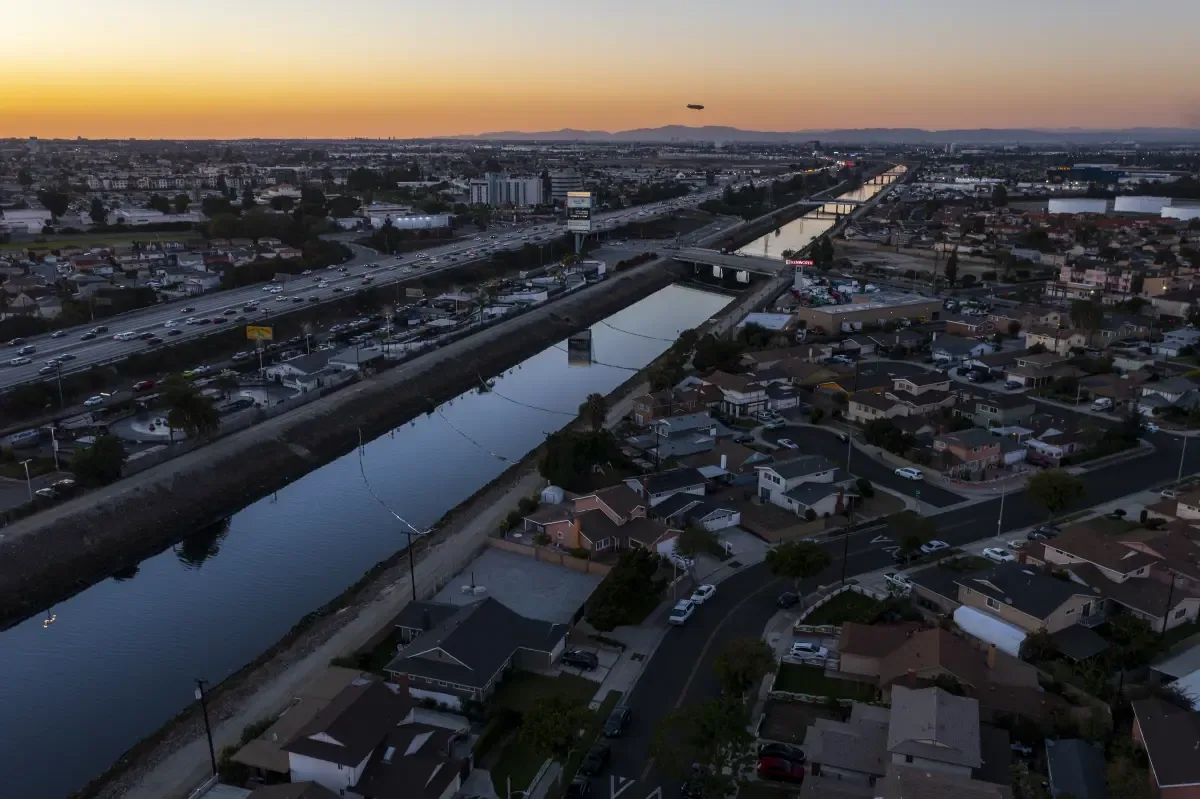
The Alameda Corridor runs north to south through Compton, and major freeways frame the city. We inspect the assigned building and price the condition we can establish. Nearby work in Lynwood commercial roofing service areas follows the same building-by-building approach.
Define the question before choosing the survey
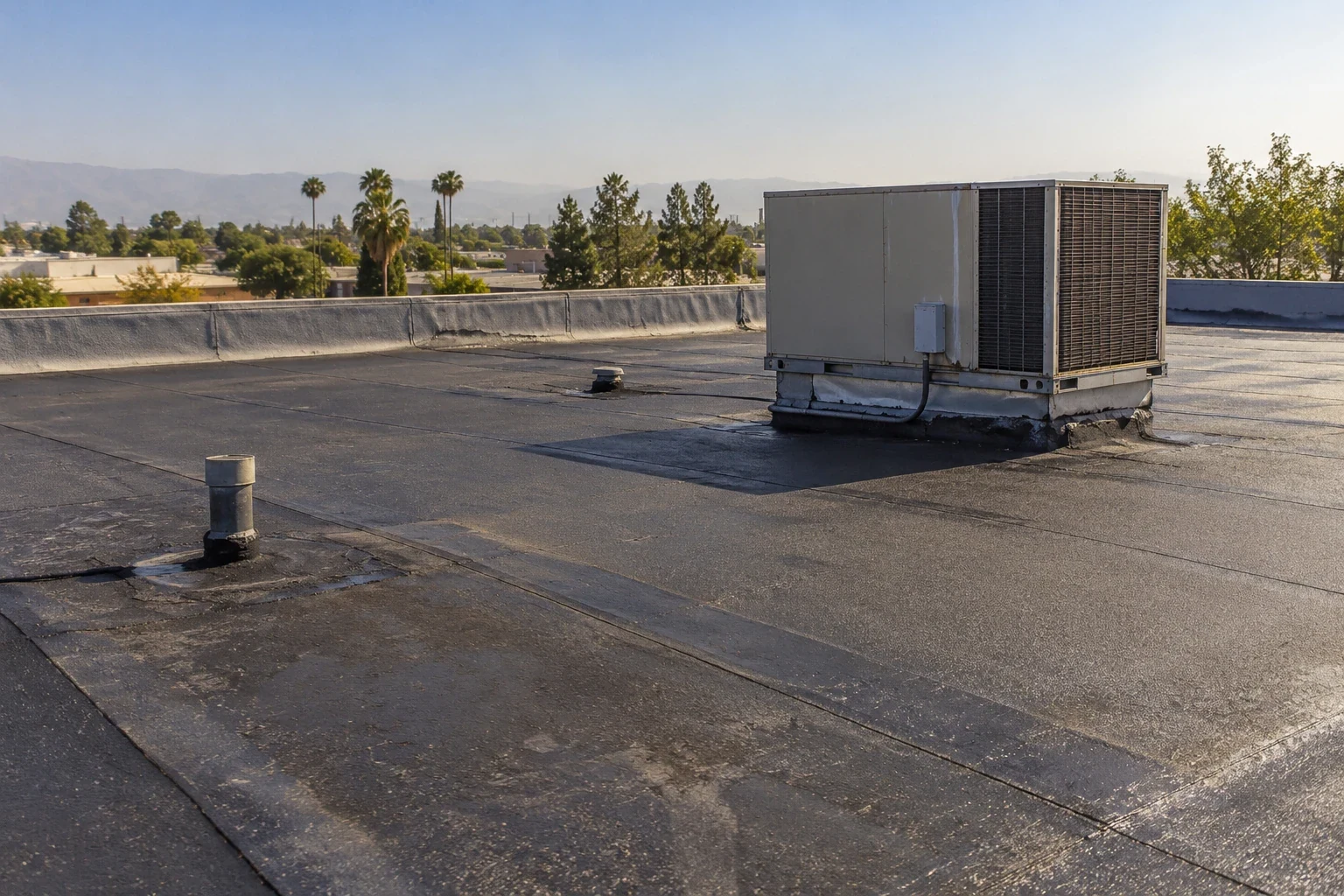
Walk the roof near the reported interior mark. Photograph the stain location from inside, then compare it with roof details above. Water can travel along a deck or insulation before appearing indoors. Trace the path through seams, curbs, drains and changes in roof height. Record what the inspection confirms and what remains concealed.
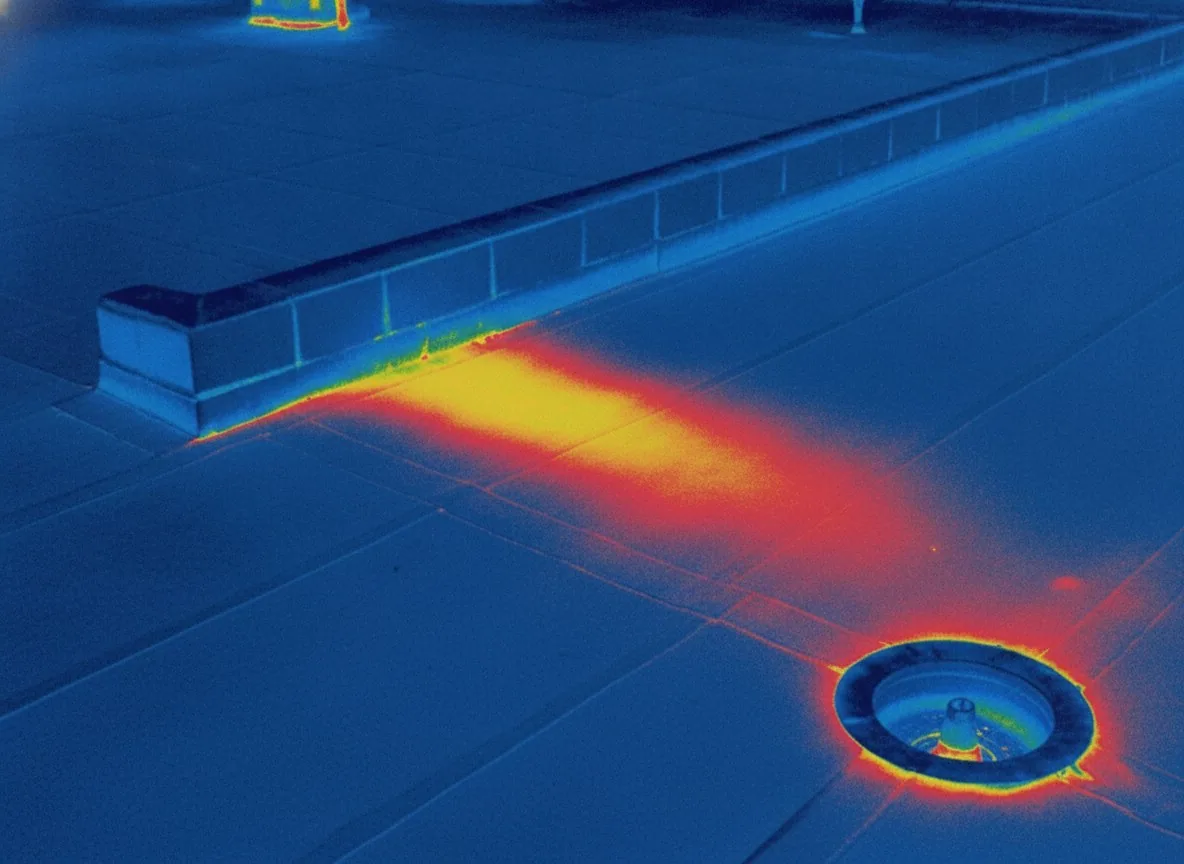
For a roof moisture survey that guides selected confirmation checks, define the decision first. An infrared indication can point toward a test location, but it does not identify every wet layer. Set the opening locations and closure plan before cutting. Mark the result on a roof plan and keep it tied to the correct interior report.
Ask the technician to compare the thermal map with the visible roof walk. The report should show the scan time, roof sections covered and weather conditions noted. Mark each test cut and list the layers found. If an area is blocked by equipment or access, state that plainly and plan a separate check instead of treating the neighboring scan as coverage.
A broader survey is useful only if its coverage fits the owner's question. Do not call an inaccessible section dry because nearby material tested sound. State the limits and next step. That distinction gives the property manager a defensible repair boundary.
Confirm the layers needed for the repair decision
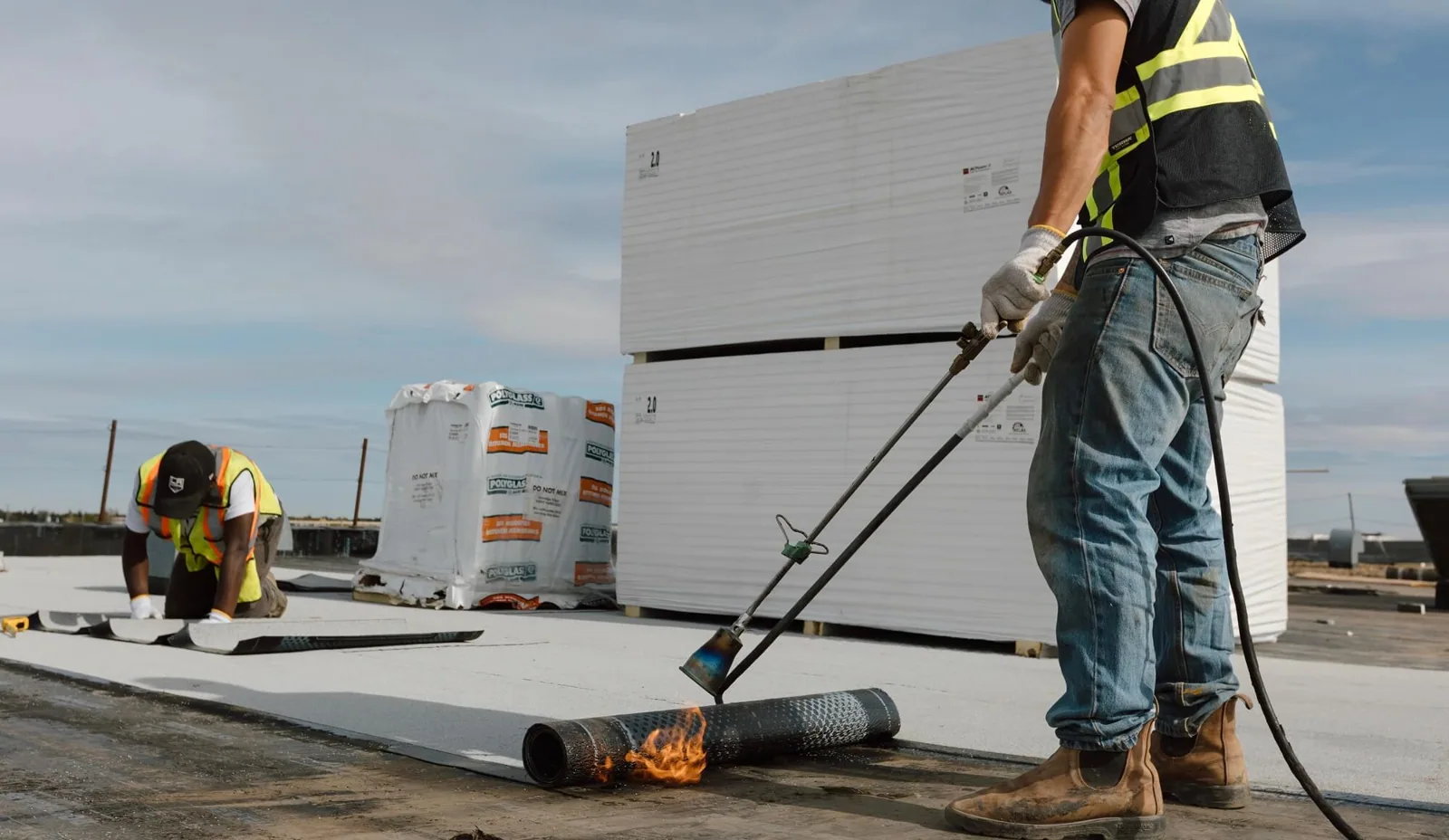
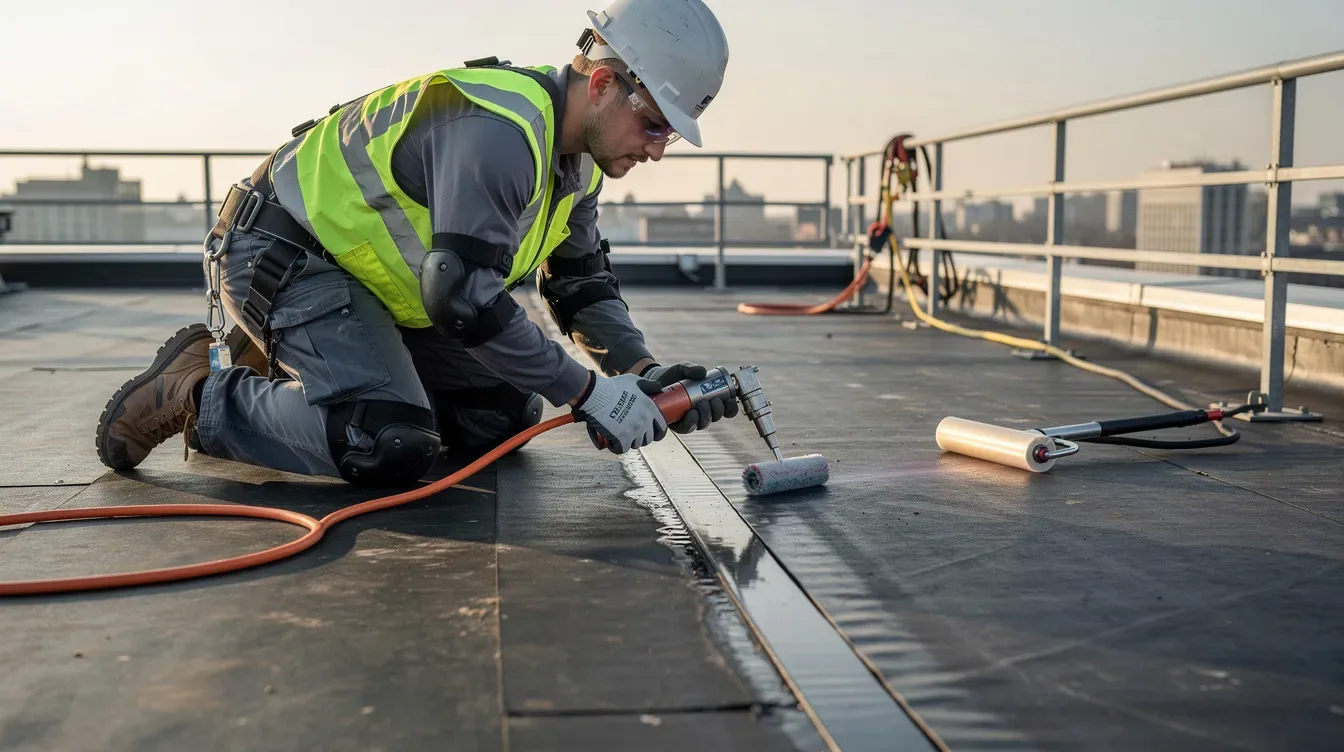
Once the affected layers are known, separate surface repair from rebuilding. Remove failed membrane and wet or deteriorated insulation where confirmed. Inspect the deck or support if its condition could affect a permanent connection. Rebuild the base to a sound, suitable surface, then restore the membrane and its adjoining flashing.
Our commercial roof repairs after confirmed layer investigation should show each step. State the removal area, new materials, tie-in and affected drains or penetrations. A general allowance for “wet roof” leaves the manager guessing about the delivered work. If the proposal keeps surrounding layers, identify the evidence and limits behind that decision.
Drain bowls and scuppers need attention where they meet the roof membrane. Check for loose rings, open laps and sealant that has separated from the surrounding surface. If the water path continues through insulation, record the affected layers before reconstruction. The new surface should carry to the drain or wall detail without leaving an exposed cut edge.
Opening can reveal additional deterioration. Photograph it before removal continues, measure the change and price the added reconstruction. Protect the roof until the owner approves the revision. The new amount should explain its connection to the original findings.
Rebuild before joining the retained covering
Compton properties sit among I-710, I-110, SR-91 and I-105. The site contact can help the crew choose an entry and delivery route that avoids active loading areas. Confirm which doors, docks, stored goods or tenant spaces fall below the work. These arrangements shape a safe roof sequence; they do not change what the roof inspection establishes.
For roof work near Carson commercial properties, access arrangements are equally site-specific. Identify equipment or service lines that must be moved by their operator before flashing can be rebuilt. Keep that task off the roofing quantity unless it is part of the assigned work. Set a closure point for every exposed section.
Plan material delivery so rolls, insulation and cover board reach the roof before an approved section is opened. Confirm a clear path for debris leaving the building. Protect loading activity and stored goods below the work. When a separate operator must move equipment, name the handoff and the roof detail it releases. That keeps the crew from leaving an unfinished penetration exposed.
Compare a small staged repair with a larger opening using the same permanent details. Repeated setup can add cost. A larger stage can require more protection below. Price both options with the removal, cover board, membrane, flashing and closure included.
Compare the scope and site arrangements
Use the roof system found at the property, not a product name from another building. Identify whether the surface is single-ply, modified bitumen, built-up roofing or metal. Previous coatings and repairs can affect what will bond or weld. Check the manufacturer's requirements that apply to the identified material before ordering.
A modified bitumen repair with confirmed layers and a defined tie-in needs the right cap sheet and compatible preparation. A single-ply roof requires its own seam and flashing method. Keep unlike systems separate at transitions. Do not extend a patch across a boundary without a detail suitable for both surfaces.
Drain and edge work can be part of the same opening. Identify metal that must be removed and replaced. Show how the new covering terminates at walls and equipment. These details make the repair last through the next period of rain, rather than simply hide the hole.
Retain the findings beside completed work
Give the owner a repair record with locations and evidence. Photograph removed layers, rebuilt insulation, prepared membrane and finished details. List any concealed sections that were not examined. Separate immediate correction from remaining recommendations.
A condition report that keeps confirmation and repair areas on one plan helps the next inspection. Compare new leaks with the recorded work. Do not assume a different room stain shares the same source. Give each report a roof location and current examination.
Before sealing a repair, inspect the tie-in at every side. Check that the new membrane lies flat, corners are reinforced and the termination reaches sound material. Keep test or manufacturer-required checks with the work record. If a drain or parapet remains outside the repair boundary, label it as a separate condition instead of implying the whole roof was restored.
For Compton roofs, a practical next step is a short, priced list. Identify the defect, access needed, permanent fix and any decision still pending. This lets the owner approve the work that is ready while scheduling investigation for the rest.
Commercial Roofing Questions
Does an infrared reading prove that a Compton roof is leaking?
No. A thermal pattern is an indication. Confirm the affected material at selected locations and inspect visible roof details before pricing removal.
How can a roof leak show up far from its source?
Water can move along a deck, insulation or roof slope. Compare the interior stain with drains, seams, curbs and wall transitions above it. Record the path the inspection can support.
What should a repair price include?
Show removal, layer replacement, membrane preparation and permanent seams or flashing. Identify access and equipment work separately. Keep concealed damage unpriced until the opening confirms it.
How should the crew handle added damage?
Photograph the exposed condition, measure the added work and protect the opening. Get approval for a revised amount before covering the new area.
What should the closeout record show?
Map the repair, layers removed or retained, completed details and test results. List inaccessible sections and future work separately from completed construction.
Define the moisture finding behind the repair
Arrange a Compton commercial roof assessment for the layer or repair question. We will explain relevant indications, confirmation needs and the rebuilding and permanent connections required for the proposed task.