Carson Commercial Roofing from Downey, CA
Roof blister repair in Carson from our Downey crew. We check what caused the blister, how far the damage goes, and price a repair that ends at sound roofing.
A blister on a flat roof in Carson is a pocket where the membrane or one of its layers has separated and filled with air or moisture. Some blisters stay small and stable for years. Others grow in the heat, crack open, and start letting water into the roof. Pressing a blister flat or coating over it does not fix the cause, and it does not tell you whether the insulation below is wet. We look at what caused the separation and how far it goes before we draw a repair boundary, and the estimate says what will be cut out, what stays, and how the new material ties in.
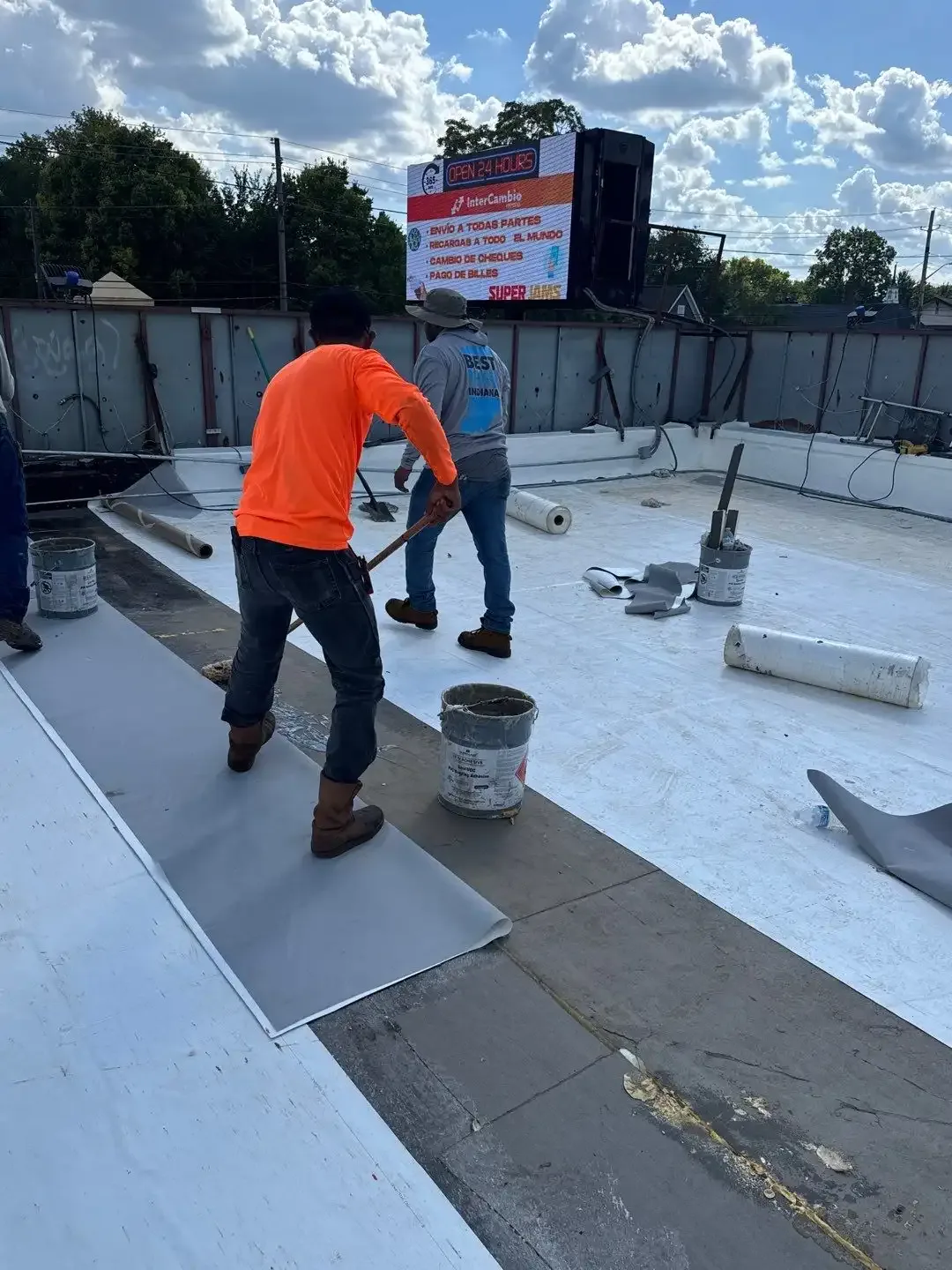
A recover can save removal cost when the existing roof is suitable to remain. We first inspect attachment, moisture, drain height and transitions at the parapets. Wet or unstable areas are recorded separately from sound membrane. We compare selective replacement with full removal before recommending a new layer. We also review commercial recover options for buildings in Long Beach.
Measure the blister and check around it
We start by marking the size of each blister and checking the membrane around it. We look for cracks on top of the blister, nearby seams that have opened, and soft spots that suggest wet insulation. A blister next to a split seam is a different problem from a blister in the middle of the field, and we note them separately.
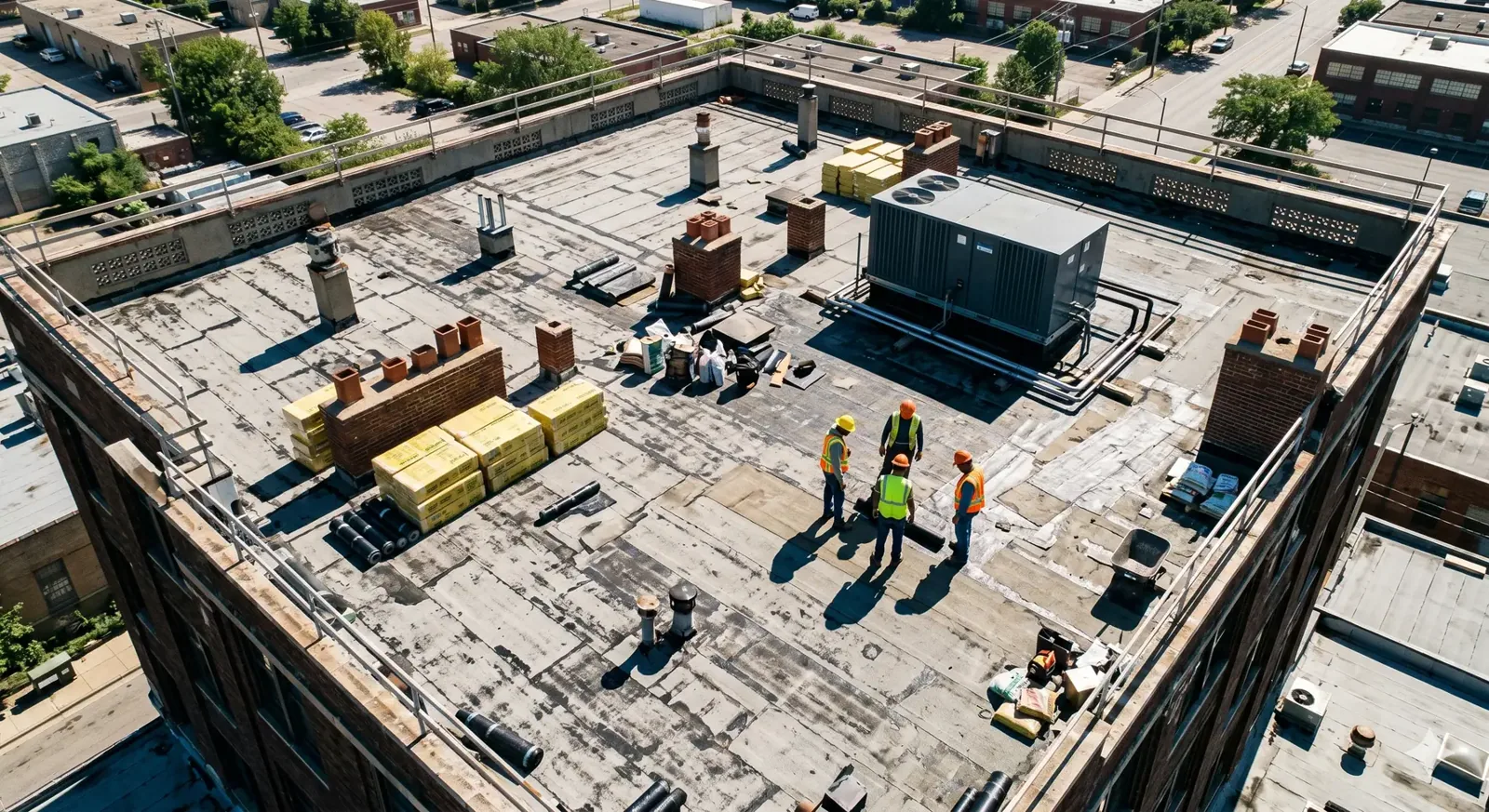
A roof inspection records each blister by location and identifies the roof system, since blisters on a built-up roof, a modified bitumen roof and a single-ply roof are repaired differently. One blister does not mean the whole roof is failing. We tell you whether we see a pattern or an isolated problem.
If the blisters suggest moisture in the roof, we may recommend a core sample or moisture survey before quoting. We will explain what that test is meant to answer, so you know why it is worth doing.
Find out what the repair needs to rebuild
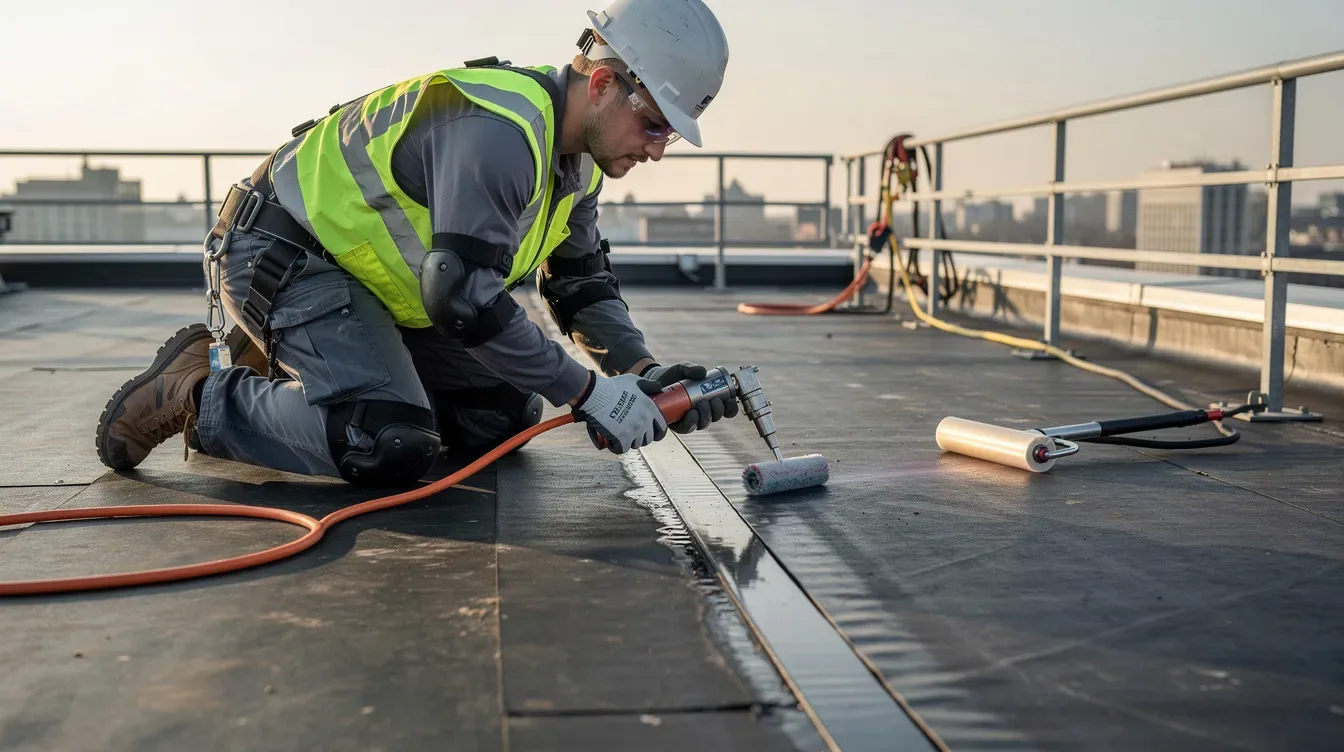
To repair a blister properly, we cut it open, check the layers underneath and remove anything that is wet or no longer bonded. The removal often needs to go past the edge of the visible blister to reach roofing that is well attached. If the insulation is wet, it comes out too. The estimate should explain why the boundary is where it is.
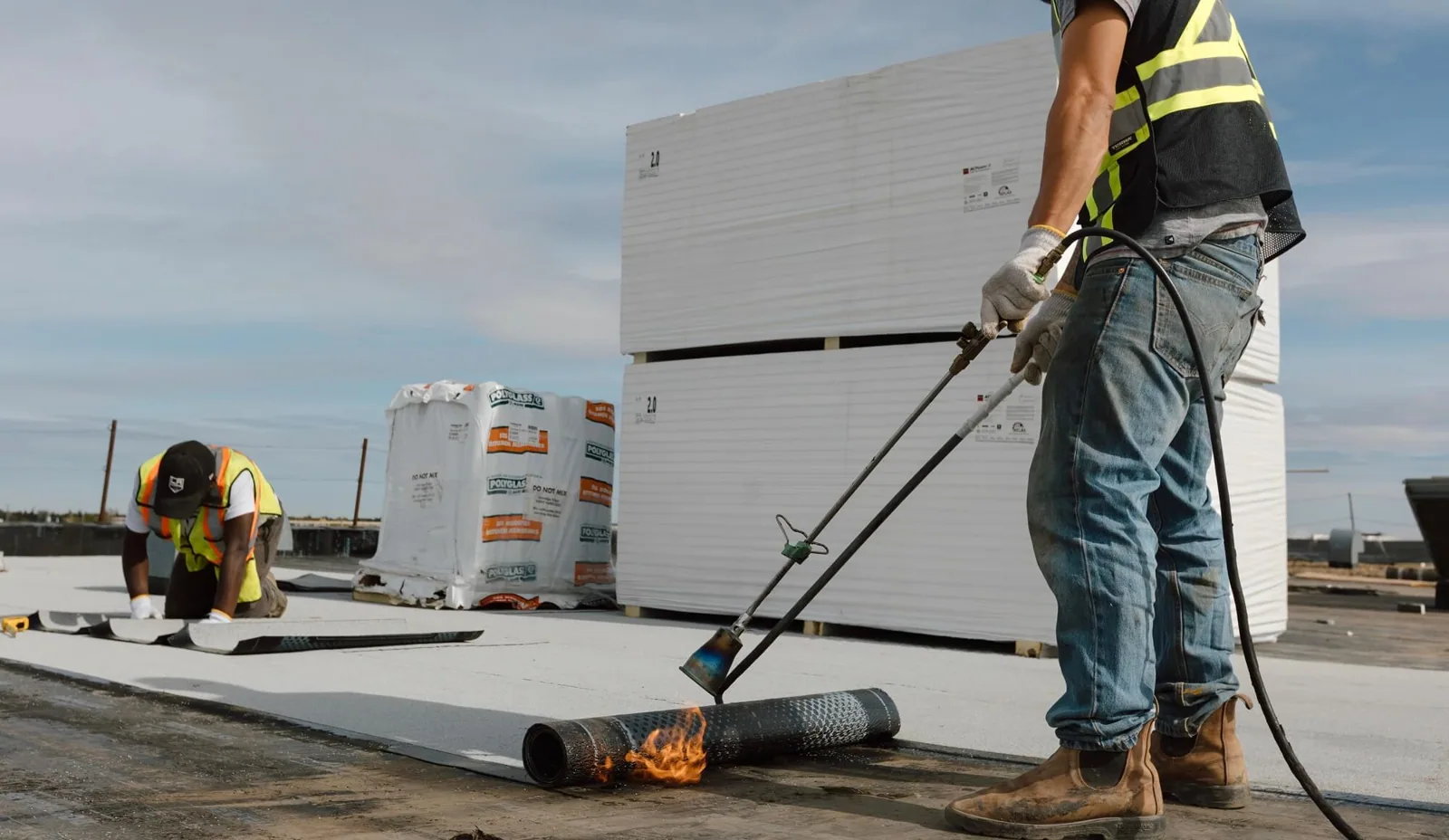
A good roof repair then rebuilds what was removed: new insulation if needed, new plies or membrane, and a proper seal to the surrounding roof. The new layers should sit level with the existing roof so water does not pond at the patch. A price that just says blister repair, with no depth or area, does not tell you what you are getting.
Sometimes cutting a blister reveals wider damage. When that happens we stop, photograph it, explain the added work and get your approval before continuing. The roof is covered and protected while you decide.
Tie the repair into sound roofing
The edges of the repair need to bond to sound, clean roofing. We clean and prepare the existing surface around the cut-out area and fix any loose seams or flashing nearby that would weaken the new patch. A repair that ends on a cracked or loose surface just moves the problem a few feet.
On a built-up roof, blisters are common between the plies. The repair usually means cutting out the blister, drying and re-adhering the layers, and building back up with new plies and surfacing. How much can stay depends on how well the surrounding plies are bonded, which we check by hand and with test cuts.
If the repair is near a drain, wall or pipe, the flashing there may need work too. We include it in the price when it is part of the same repair, and we tell you if another trade needs to handle something first.
Compare repair, recover and protection
A commercial recover in Carson can avoid tear-off only when the existing roof is suitable to remain. We check attachment, moisture, drainage height and edge details first, and map areas with wet insulation or loose membrane separately. Then we compare the cost of selective removal with full tear-off before recommending another roof layer. We also assess recover options in Long Beach.
When you compare estimates, look at how deep each one goes. A cheaper price may only patch the top of the blister. A higher one may remove wet insulation and rebuild the layers. We will show you both, and why. We also inspect commercial roofs in Compton; every building gets its own findings and price.
We provide emergency leak response on nights, weekends and holidays. If a blister has split and is leaking, we seal it to stop the water, then come back for the permanent repair.
Photograph the layers before closing up
Before the new layers go on, we photograph each opened blister, the layers underneath and any insulation we replaced. Once the repair is finished, those details are hidden, and the photos show what was actually done.
The photos and test results go into a roof condition report with each repair marked on a roof plan. The report notes which areas were inspected and which were not, so a future problem somewhere else gets its own look instead of an assumption.
A blister repair is worth doing right once. That means cutting back to sound roofing, replacing what is wet, and sealing the new layers into healthy material, rather than flattening the bump and hoping.
A Carson roof estimate should separate visible damage from suspected damage below. We mark the inspected area and the evidence for removal. If another test cut is needed, we say what it will tell us, so you approve a measured repair rather than an open-ended allowance.
Commercial Roofing Questions
How do you decide how big a blister repair should be?
We cut into the blister and check the layers around it. The repair extends until we reach roofing that is dry and well bonded, which is often a bit beyond the visible bump.
Does a blister mean the insulation is wet?
Not always. Some blisters are just trapped air. If there are signs of moisture, we confirm with a core sample or moisture survey before deciding how much to remove.
What should a blister repair estimate include?
The area and depth of removal, any insulation replaced, the new layers installed, and how the repair ties into the existing roof. Flashing at nearby drains or walls should be listed if it is part of the job.
What if there is a split seam next to the blister?
We repair it at the same time if it affects the patch. The new material needs sound roofing on every side, so loose seams or flashing nearby are fixed before closing up.
What records will I get after the repair?
Photos of the opened blister and layers before they were covered, details of materials used, and a roof plan showing where the repairs were made.
Get the blisters checked
Seeing blisters on your Carson roof? We will check what caused them, how far the damage goes, and give you a clear estimate for repairs that end at sound roofing.