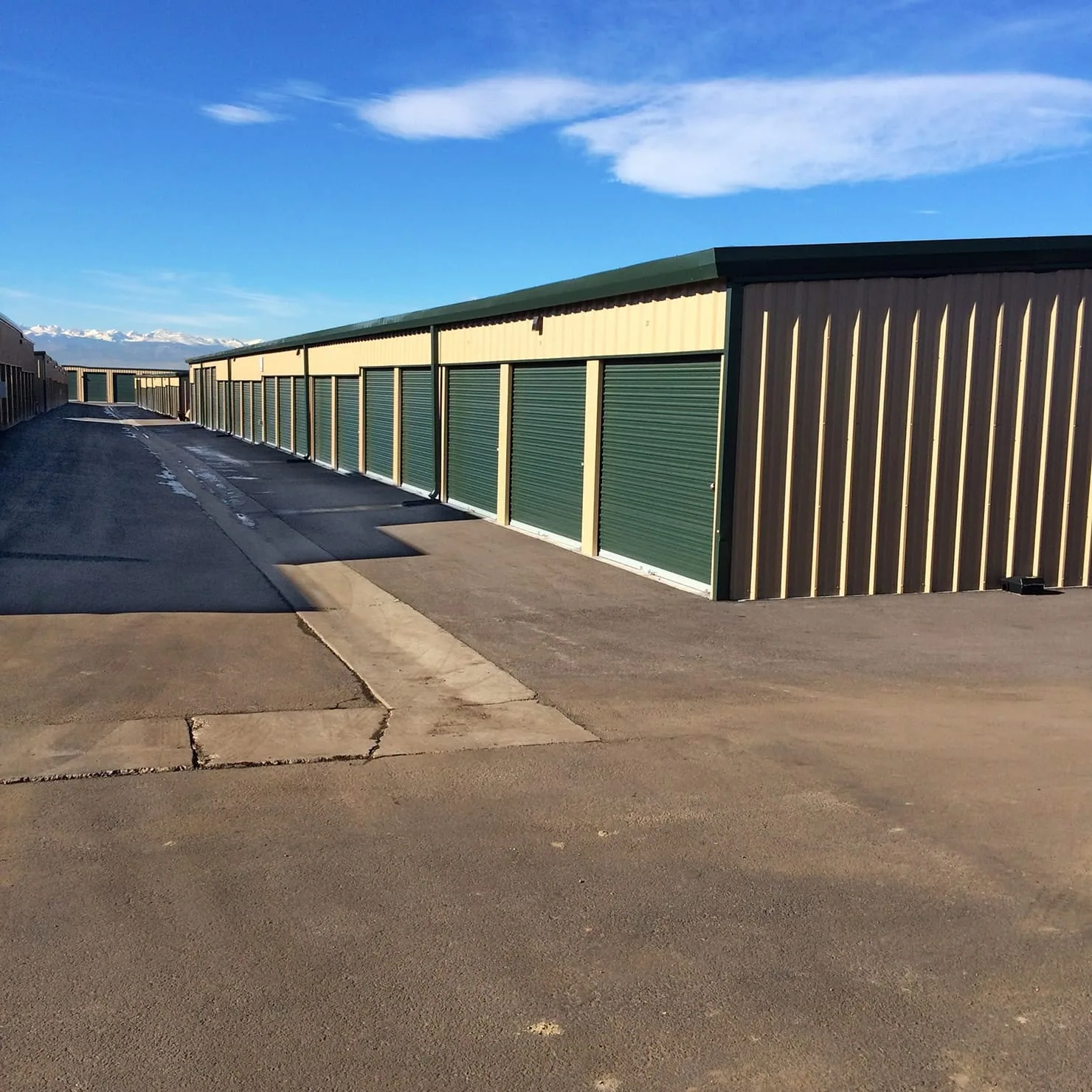
Self-Storage Roofing in Downey, CA
Self-storage roofing in Downey, CA: leak tracing to the right unit row, edge and gutter backing repairs, moisture testing and protection for tenants' stored goods.
A self-storage roof budget has to include protecting the units below. Even a small opening on the roof can put a tenant's belongings at risk. For a Downey, CA facility, we identify those units before pricing any tear-off. We inspect the roof and describe the repair it needs. The facility manager arranges access to affected units and reviews what is stored there. Protection is priced alongside the backing repair and new roofing, because a roof quantity alone does not tell you whether the units below are ready. The owner needs a scope that can be finished under the arrangements actually approved.
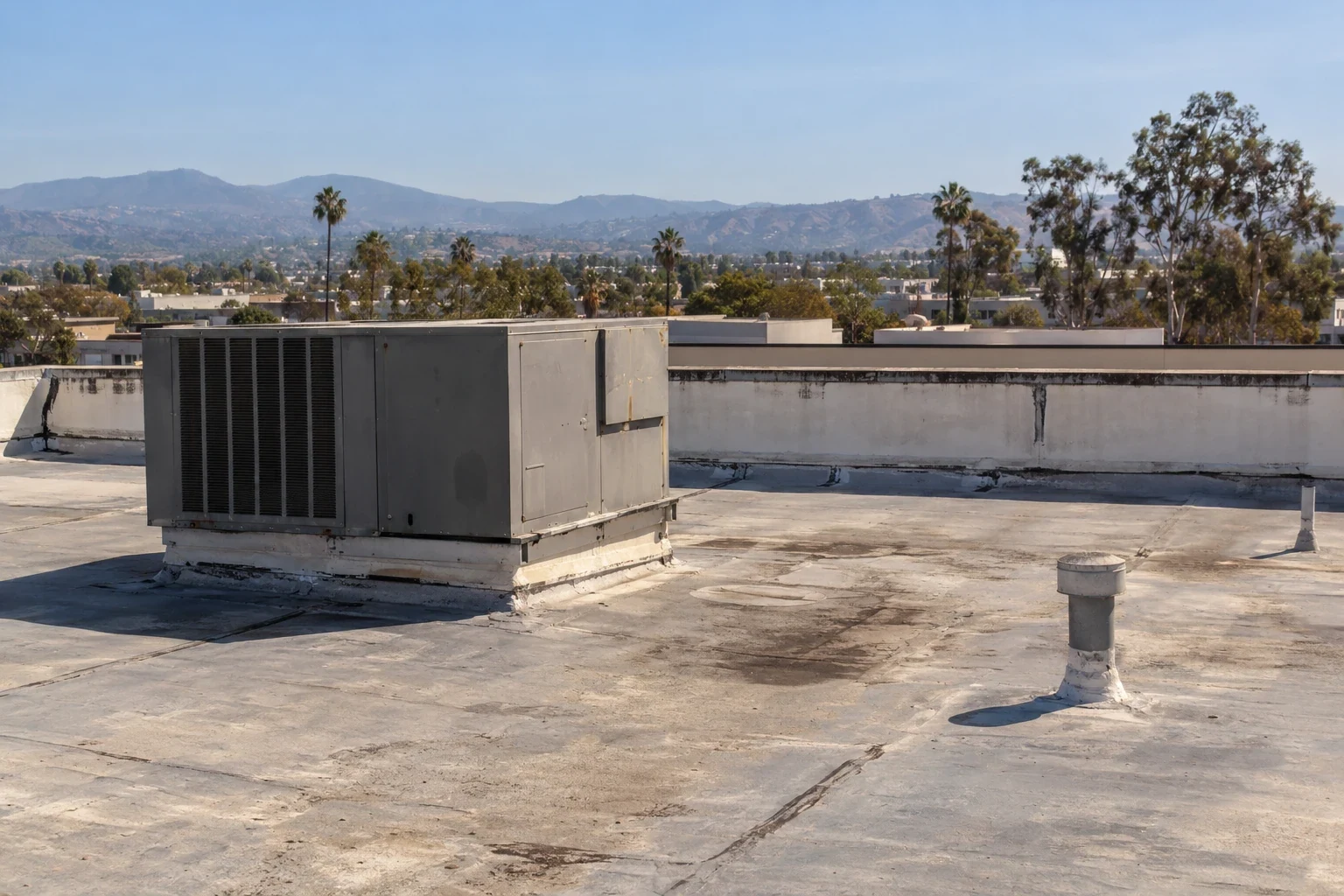
A self-storage roof often covers repeated bays, narrow corridors and many unit doors. Mark the leak report and affected units on a site plan before inspection. Check roof seams, drains, wall transitions, unit-line edges and rooftop equipment above the area. Water can travel across the roof before reaching a storage unit. The owner needs the roof location and interior evidence aligned before pricing repair. Confirm which units contain stored goods and how the crew can reach the work without blocking customer access. Include protection, debris handling, removal and membrane closure in the estimate. Keep one leak separate from nearby units unless inspection shows a shared source.
Arrange unit access and protection first
Every roof opening needs a look at the unit beneath it. Our occupied-building reroofing plan shows how much roof will be open and how materials will be handled. We show the facility manager where materials arrive and how debris will leave. The manager handles tenant notices, access and the review of stored goods. HVAC or lighting contractors handle their own equipment. We include the resulting protection with the tear-off. Permission to inspect the roof does not give us access inside units, so we confirm the arrangements for the actual opening first.
More damaged material can push the tear-off over another unit. We identify the larger area before opening it, and the manager reviews access and protection again. The revised price includes those steps along with the added roofing. Approval for one unit does not clear the next. A temporary seal can protect material waiting for its permanent repair, and it is listed separately from finished work.
Connect the unit report to the roof defect
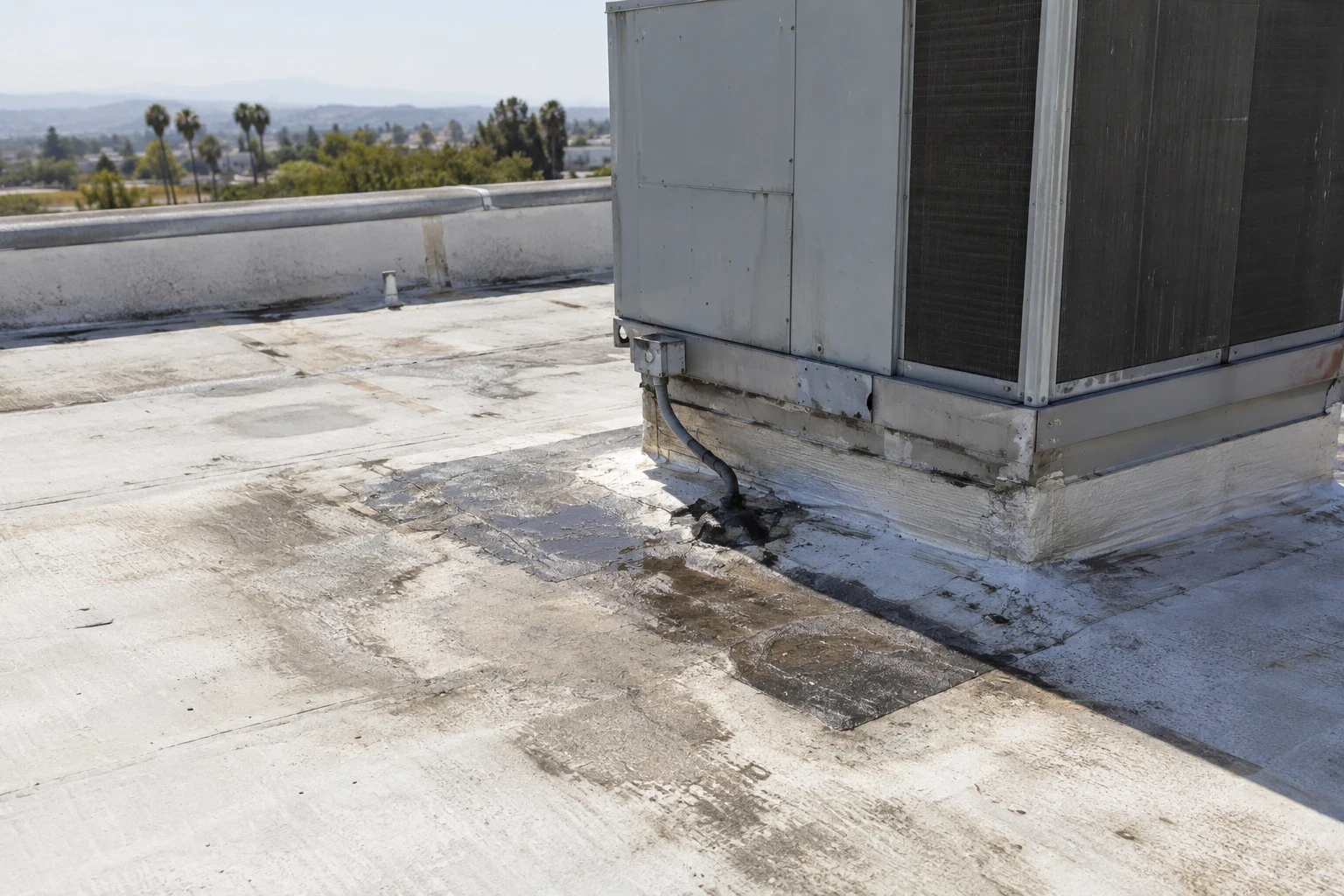
Water inside a unit does not show you where it entered. Our roof leak repair starts with where the moisture appeared and when it was noticed, then checks the seams and flashing above and around that row. A gutter, downspout or equipment issue may need its own contractor. If the cause is still unclear, we say so while it is checked further. Another patch should not promise to fix every leak. Our proposal is based on a defect we found and a repair that will hold.
Measure the repair so it can be tied to the correct building and unit row. Check whether the roof slopes toward a shared drain or an exterior scupper. Protect stored items directly below the opening and keep the customer path clear. The closeout should identify any units that remained inaccessible.
Once we find the split, we check the membrane around it. Sound membrane may only need cleaning for the repair method. Worn layers or rotted backing may need to be removed past the visible damage. We set the repair edges where the material is sound. TPO and PVC need clean, weldable material. Other roof types use their own primers and fasteners. Bids can be compared once the full repair is described.
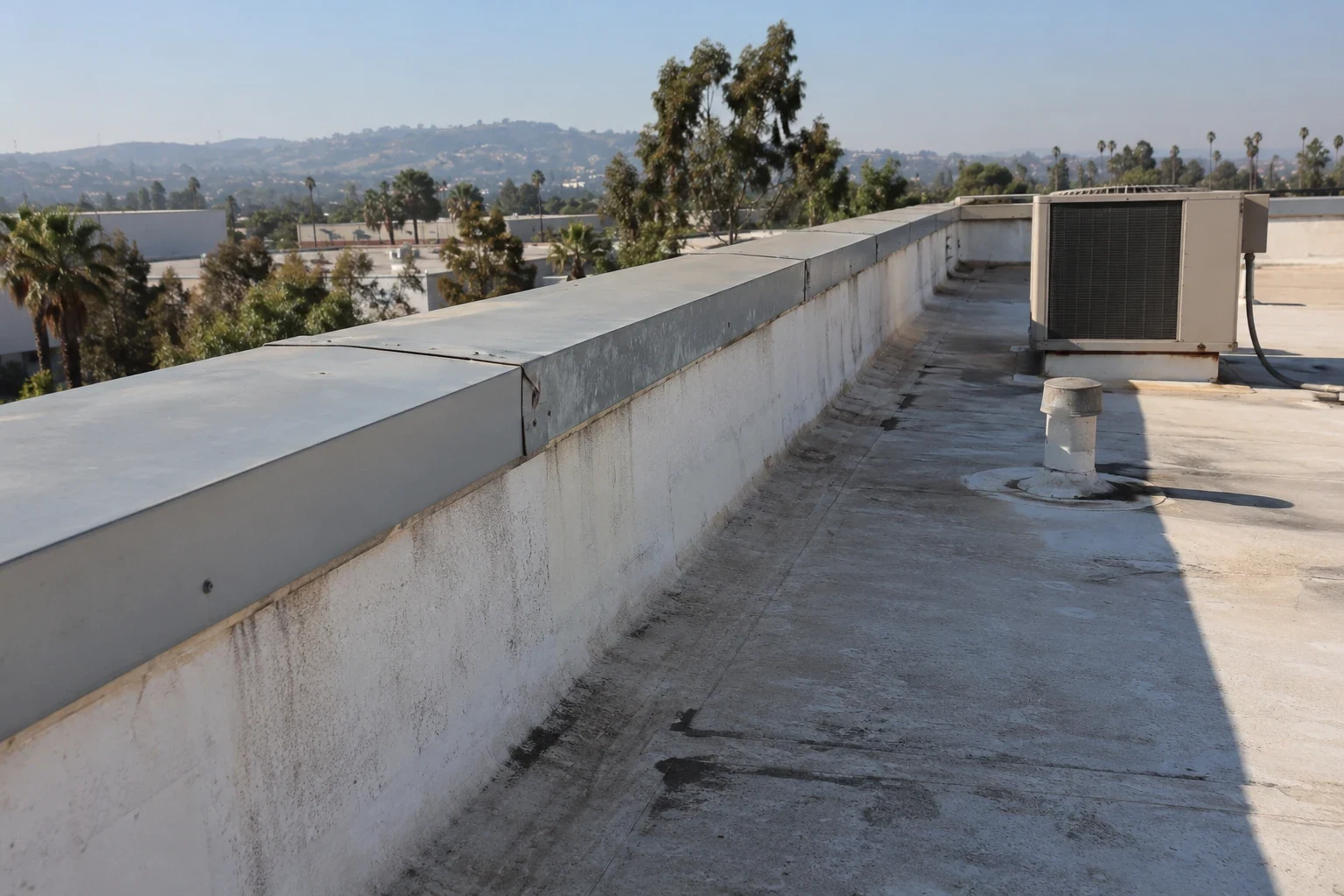
Include the backing under new edge metal
A roof edge price can leave out the wood the metal fastens to. Our edge metal and gutter repair checks the metal and the nailer behind it. We identify rotted backing before anyone approves a simple length of new metal. New edge metal needs solid wood to hold. A wall repair may fall to another contractor, and that work is listed next to the roof repair. More membrane in the field will not fix a rotten edge, so the proposal explains the edge repair that will actually be finished.
A larger repair option should have a clear reason. Replacing more rotted backing is different from just adding membrane over sound roof. Structural changes may need an engineer, and HVAC contractors handle clearances for their units. We describe how the roof will meet that work and include it before comparing square footage alone. That way the owner can see why the complete repair prices differ.
Test the old layers before keeping them
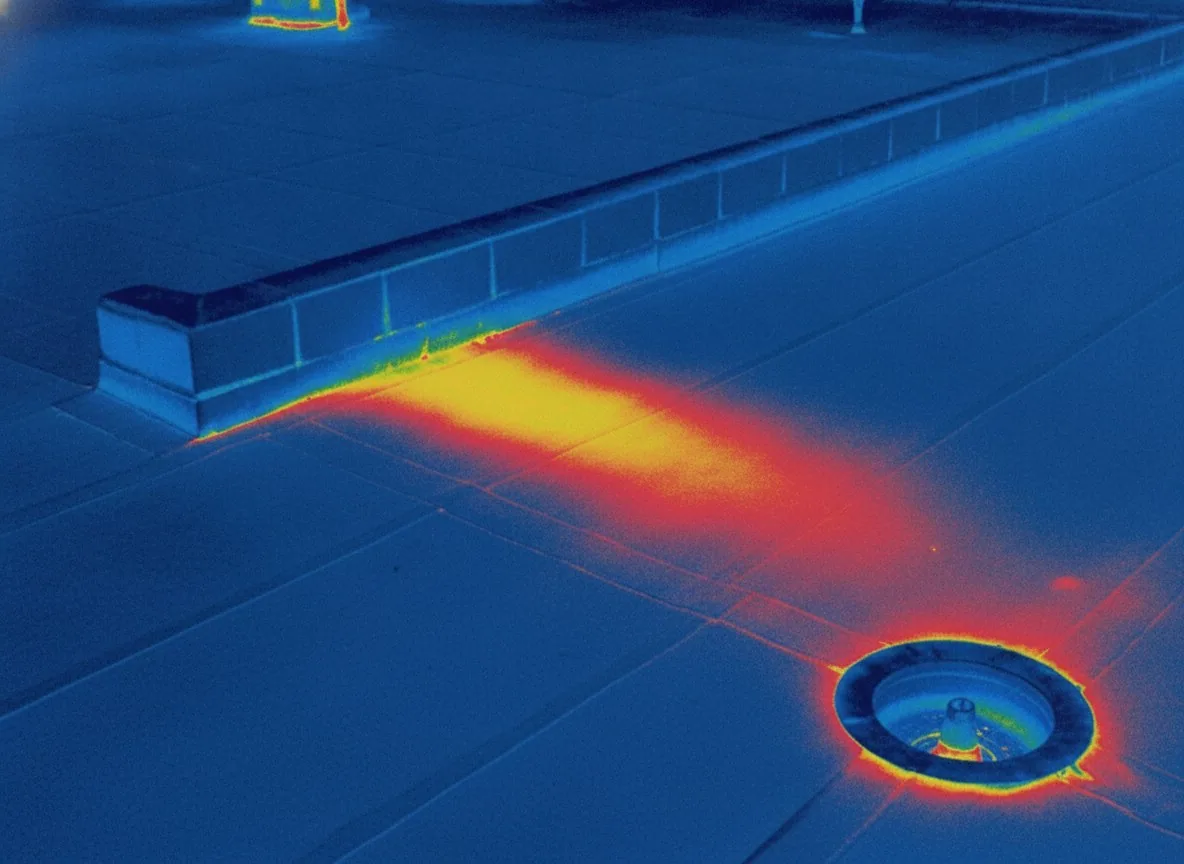
The membrane surface cannot tell you whether the insulation underneath can stay. Our infrared moisture survey compares thermal scans with the roof records. We take the weather during the scan into account. Temperature differences point to areas worth checking, but they do not prove every layer is dry. We confirm with core cuts wherever keeping the old roof affects the repair method. Patching the test cuts is part of the survey, and protection for the units below is reviewed with the facility manager.
A small wet area may only need that section replaced. Widespread moisture may call for more testing before approving a method. We explain what the results show and what is still uncertain. New roofing will not dry out wet insulation underneath. The owner needs those facts to decide between keeping and removing the old layers. Once the testing shows what each option requires, the price follows this facility's actual roof rather than hoped-for savings.
Keep open unit and wall items visible
The closeout shows the membrane and edge repairs we completed. It includes patched test cuts and backing problems found during tear-off. We photograph sound substrate before covering it. Temporary seals are marked separately from permanent repairs. Any wall or equipment work still needed is listed. A finished roof does not mean every tenant's unit has been checked. The facility manager gets a list of what remains for the next approval, and later estimates are tied to work that is actually needed.
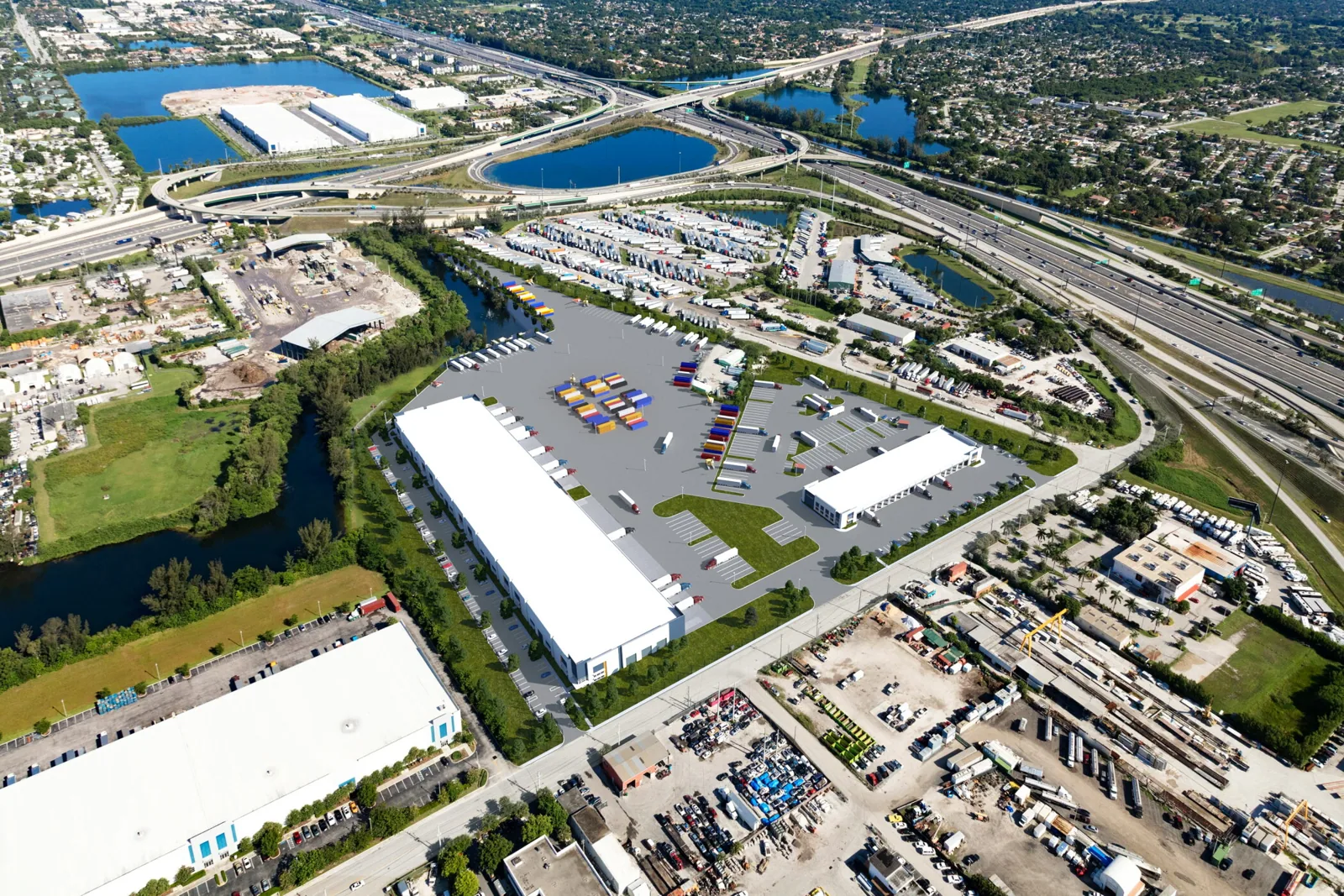
Self-storage roofs often span long rows of units and may have repeated seams, gutters and service penetrations. We locate the affected building or unit row, inspect the roof detail above it and determine whether the repair can join retained material. For an assignment in the I-5/I-605 interchange area, the property contact confirms roof entry and protection needs. A warehouse roof or apartment building can have a different layout, so the estimate identifies the exact storage-roof section examined.
Commercial Roofing Questions
Does permission to inspect the roof give access to storage units?
No. The facility manager arranges access to the units below the planned work. We explain the opening and what it involves so protection for stored goods can be planned. Roof access alone does not open any units, and the confirmed arrangements are in place before tear-off starts.
Why can replacing a section of edge metal need more than new metal?
The new metal has to fasten into solid wood blocking and wall backing. If that backing is rotted, it needs to be removed or repaired, sometimes by another contractor. That work is priced with the roof tie-in, so compare complete edge repairs rather than lengths of metal.
How does testing support keeping the existing roof?
Where the repair depends on keeping the old layers, we test with scans, roof records and core cuts, taking the weather into account. Test cuts are patched and stored goods below are protected. The results show whether the layers can stay, need to come out or need more testing before you approve the price.
What happens if the opening extends over another unit?
We describe the added tear-off and what we found. The facility manager arranges access, tenant notice and protection for the newly affected unit. That preparation is priced with the extra roofing. Approval for the first unit does not automatically clear the next.
Plan your self-storage roof repair
Send us the facility address, which units are reporting leaks and any roof records you have. Working with your facility manager, we will inspect the roof and price the permanent repair, edge work and protection for stored goods below.