Multi-Site Roof Programs in Downey, CA
Multi-site roof programs for Downey-area owners and managers: one consistent record per building, priorities ranked by real risk, and estimates that do not assume every roof is the same.
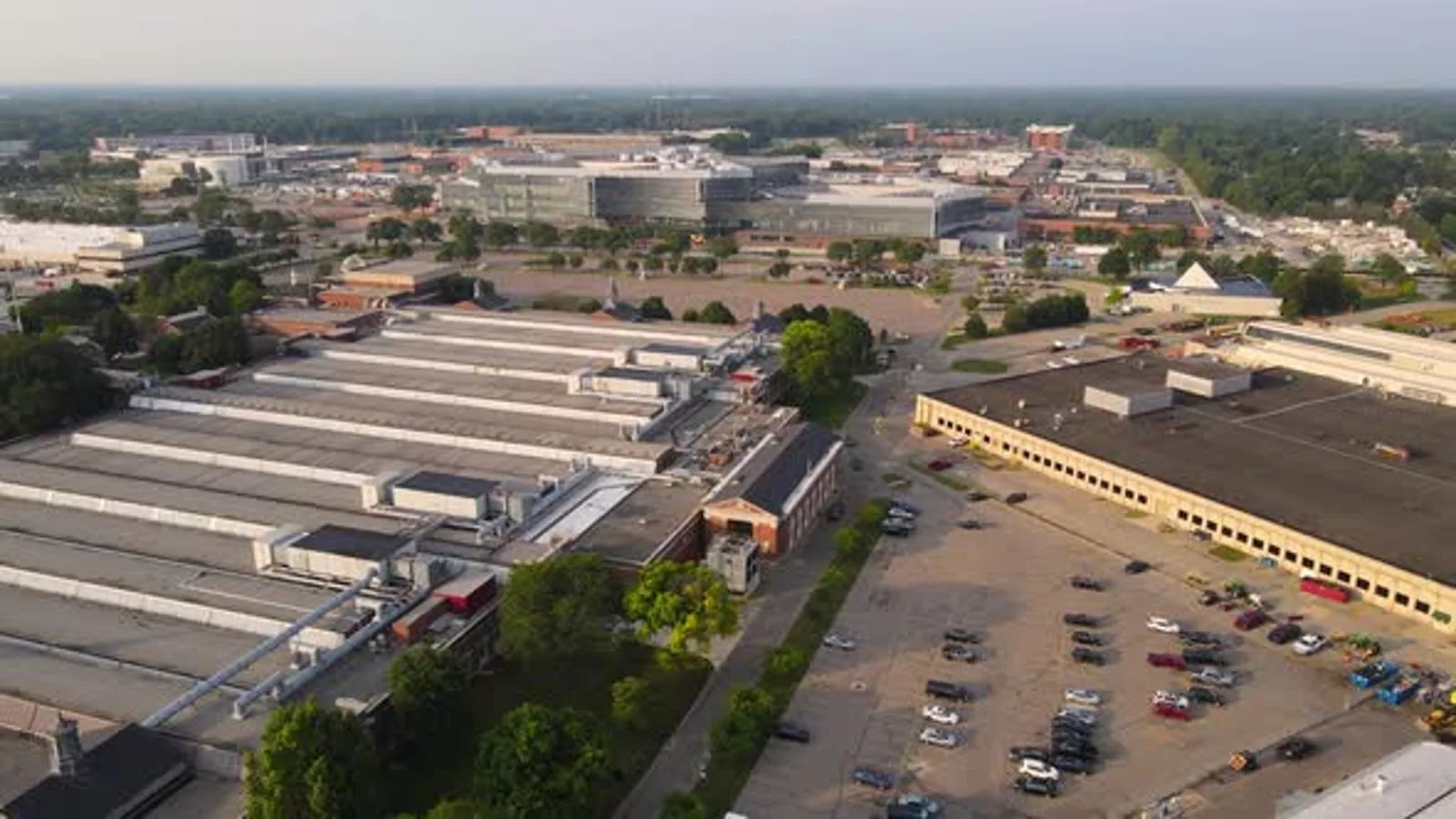
When one owner or manager is responsible for a dozen roofs, the hard part is not finding a contractor. It is knowing which roof needs money first, and making sure a bundled price does not quietly leave out work on one of the buildings. A multi-site roof program in Downey, CA gives every roof the same kind of inspection and the same kind of record, so you can compare them side by side and plan repairs and replacements in a sensible order.
A multi-site program begins with a confirmed property list and a consistent record for each roof. Track building identity, system where known, inspected sections, open repairs, access notes and the next action. Do not carry a finding from one property to another just because the buildings share an owner or roof type. For property management companies overseeing several locations, the program can compare priorities while keeping each repair scope tied to its own inspection and site contact.
Fix active leaks before upgrades
The first pass across the portfolio sorts problems by urgency. A split seam over a tenant's office or a failed drain that is ponding water comes ahead of a cosmetic coating or an energy upgrade. We inspect each roof, note where water is getting in or is likely to, and recommend either a temporary fix to stop damage now or a permanent repair if the cause is clear.
One leak report is not a reason to condemn a whole roof. We pin each problem to a location on that building's roof plan, so the repair stays the size it needs to be. Where the cause is not obvious, we say what else needs to be checked before a permanent repair is priced.
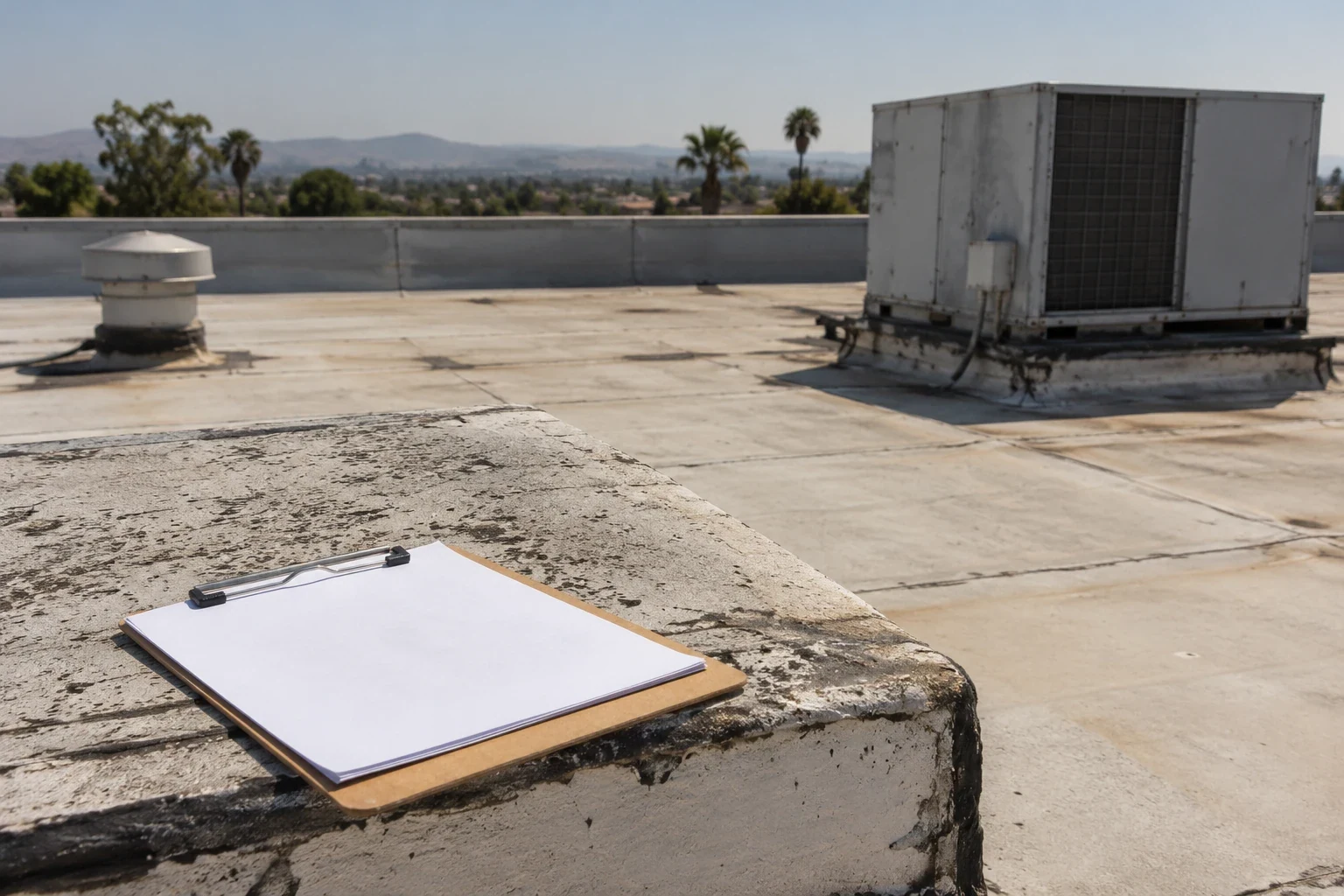
Commercial roof inspections across the portfolio should each state what was covered. If one building's upper roof could not be reached, that gap stays on that building's record. A neighboring roof in good shape does not tell us anything about the section we did not see.
Compare roofs on the full scope of work
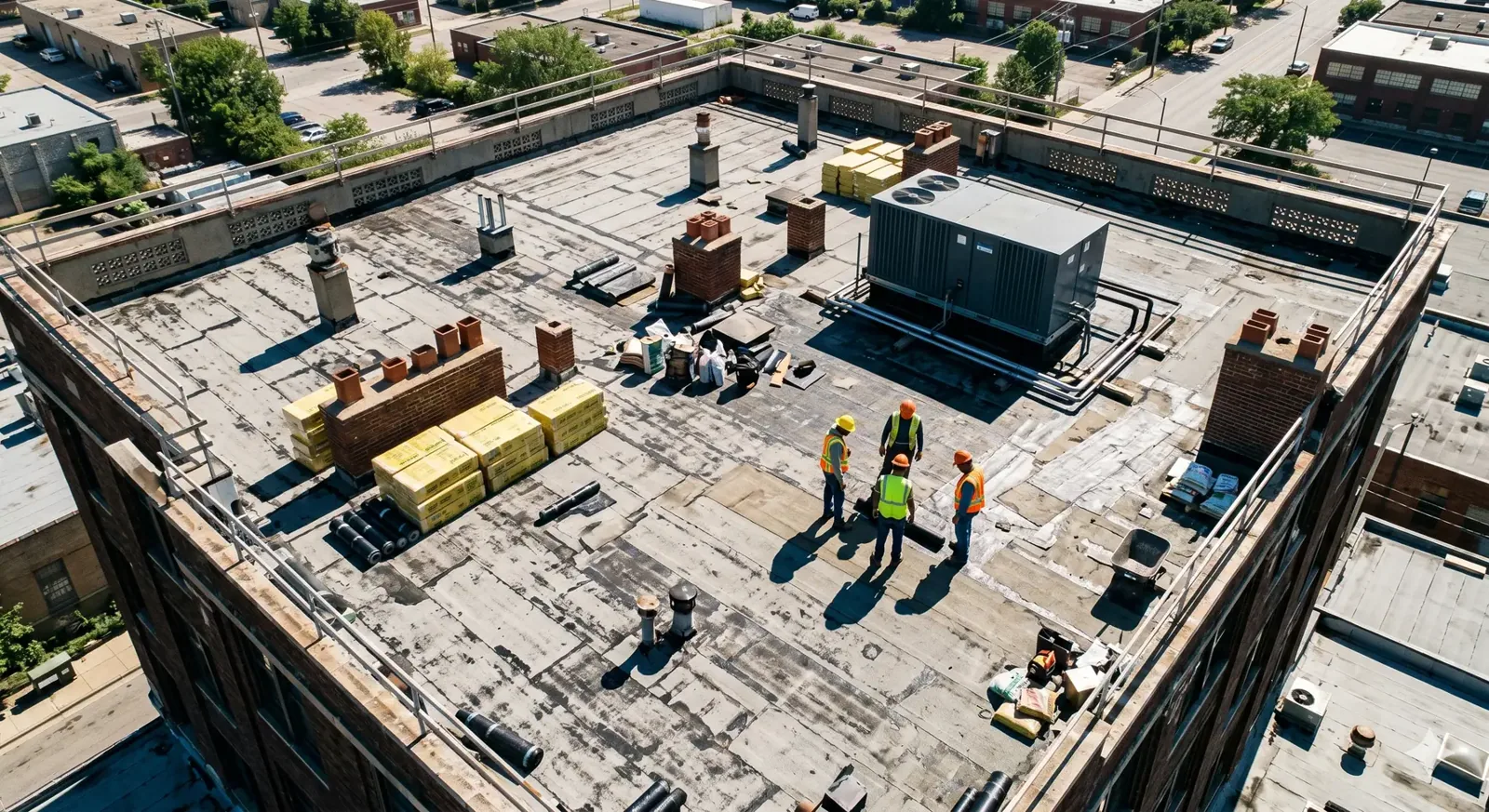
Bundling several roofs into one contract can save money on mobilization and materials, but the total only means something if each building's work is listed separately. Two roofs with the same TPO membrane can still need very different work: one might have a single layer and tidy flashing, the other two layers, rusted edge metal and a dozen rooftop units to curb.
We break each estimate out by building, showing tear-off, insulation, flashing, drains, edge metal and any work another trade has to do first, such as disconnecting HVAC units. That way a lower combined price cannot hide a missing drain replacement on one roof.
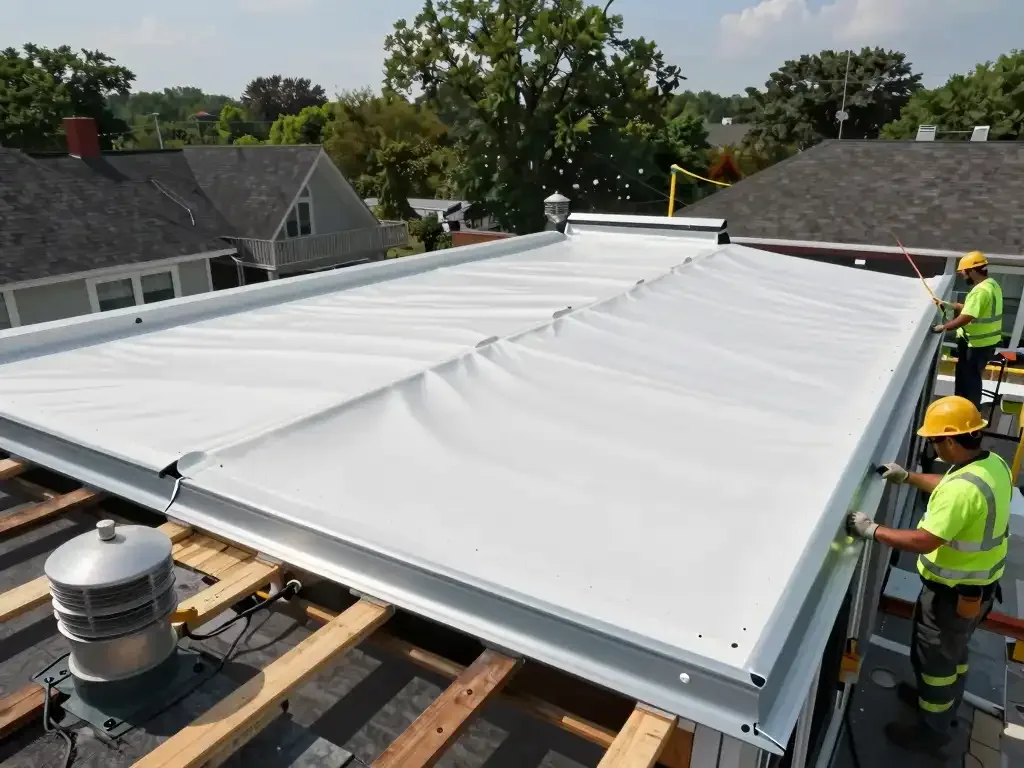
When replacement is on the table, each commercial roof replacement option should spell out whether the old roof comes off or is recovered, and what condition the existing roof must be in for a recover to work. Shared purchasing makes sense once each roof's method is decided. A real savings comes from buying and scheduling efficiently, not from trimming details off the scope.
Test the questionable roofs individually
Some roofs look fine on top but may have wet insulation underneath, and that one question can swing a budget from repair to replacement. Testing is worth paying for when the answer would change what you do with that particular building. It is not something to assume across the portfolio because the roofs were built by the same developer or share a membrane type.
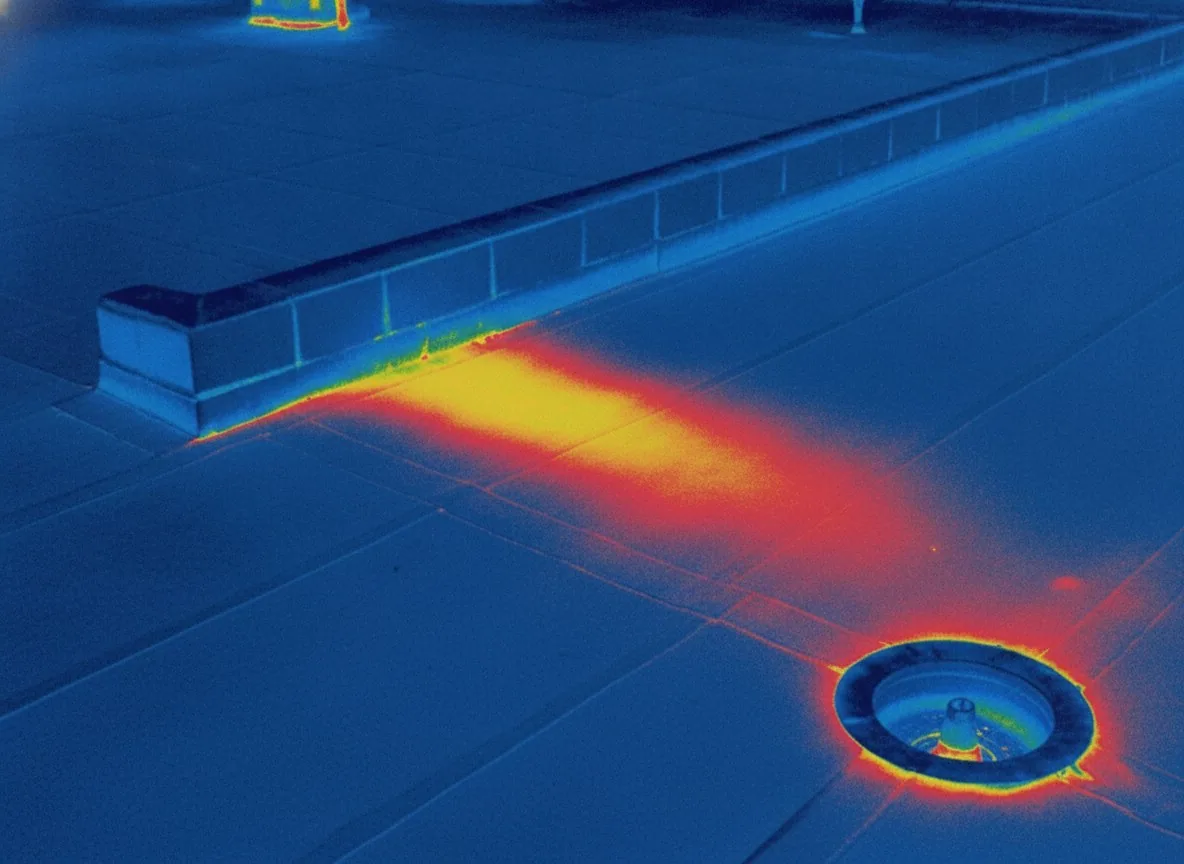
An infrared moisture survey can scan a large roof in one evening and flag likely wet areas. We confirm the suspect spots with core cuts and patch them the same day. The results apply to the roof that was scanned, and the report says how much of it was covered.
Each building's record should show what has actually been tested, what is still an open question, and what the answer would change. A program summary that lumps everything together makes it hard to see which roofs are ready for a decision and which still need work done to find out.
Schedule by readiness, not by calendar
It is tempting to schedule every roof for the same month to get a better price. In practice, each building has its own constraints: tenant hours, landlord approvals, equipment that needs a mechanical contractor, and permits for tear-off work. A roof is ready to start when those things are lined up, not when the calendar says so.
For a building near the I-105 and Lakewood Boulevard corridor, we confirm the site contact, access route, staging area and crane or hoist needs with that property. Several short mobilizations cost more than one, so where two roofs nearby are both ready, grouping them makes sense. Where one is not, we keep it on its own schedule rather than rushing it.
The program plan shows which roofs are ready, which are waiting on something, and what that something is. That lets you move money and crews around as approvals come in.
Close out each building on its own record
When work on a roof finishes, that building's record gets updated with what was done: the areas repaired or replaced, the materials used, photos of the work before it was covered, and any items left for another trade. If an HVAC contractor still has to reconnect a unit, that open item stays on that building's list with a name next to it.
Good roof asset management keeps each roof's history separate and easy to find. Those records feed roof capital planning for the whole portfolio, so next year's budget is built on current conditions. If a tenant adds a new rooftop unit or a new leak appears, that roof gets re-inspected and its plan updated.
Before the next round of work, review the building list together. Note what was completed, what is still open, and who is responsible for each open item. When the list is short and clear, the next approval goes quickly and nobody has to dig through old emails to find out what happened on a roof last year.
Commercial Roofing Questions
When can several roofs share one material purchase?
Once each roof's repair or replacement method is decided, buildings that use the same membrane and insulation can share a material order and sometimes a crew. The estimate should still list each building's tear-off, flashing, drains and edge work separately, so the savings are real and nothing is left out of one roof to make the total look smaller.
Which job should enter the program before an optional improvement?
Active leaks and conditions that are damaging the building come first, such as an open seam over occupied space or a clogged drain causing ponding. Upgrades like coatings or reflective surfaces come later. We inspect the reported problem before assigning a repair, so the priority list reflects real risk rather than every complaint at once.
Can one moisture examination support quantities at other buildings?
No. A moisture scan or core sample tells you about the roof it was taken from. A different building may have a different insulation type, age or leak history, even with the same owner. If the answer matters for another roof's budget, that roof needs its own testing.
What belongs in the handoff after a combined construction period?
Each building should have its own close-out showing what was repaired or replaced, photos of the work, materials used, warranty paperwork if any, and a list of open items with who is responsible for each. One combined completion date for the program does not tell the next manager which roofs are actually finished.
Get your buildings on one roof program
Send us your Downey-area property list, any current leak reports and the roof records you have. We will inspect each roof, rank the work by urgency, and build a plan that keeps every building's scope clear.