Signal Hill Commercial Roofing from Downey, CA
Commercial roof impact and wind damage repair in Signal Hill, CA. We inspect the hit area, confirm what is actually damaged and price a repair that matches.
When something hits a roof in Signal Hill, whether it is a falling branch, a dropped tool or a loose panel blown across in a windstorm, the first job is finding out what it actually damaged. A scuff on the surface is not the same as a puncture, and a puncture does not automatically mean the insulation below is ruined. We inspect the area, explain what we found, and price either a local membrane repair or a larger rebuild if the damage goes deeper. A mark on the roof should never turn into a replacement area nobody can explain.
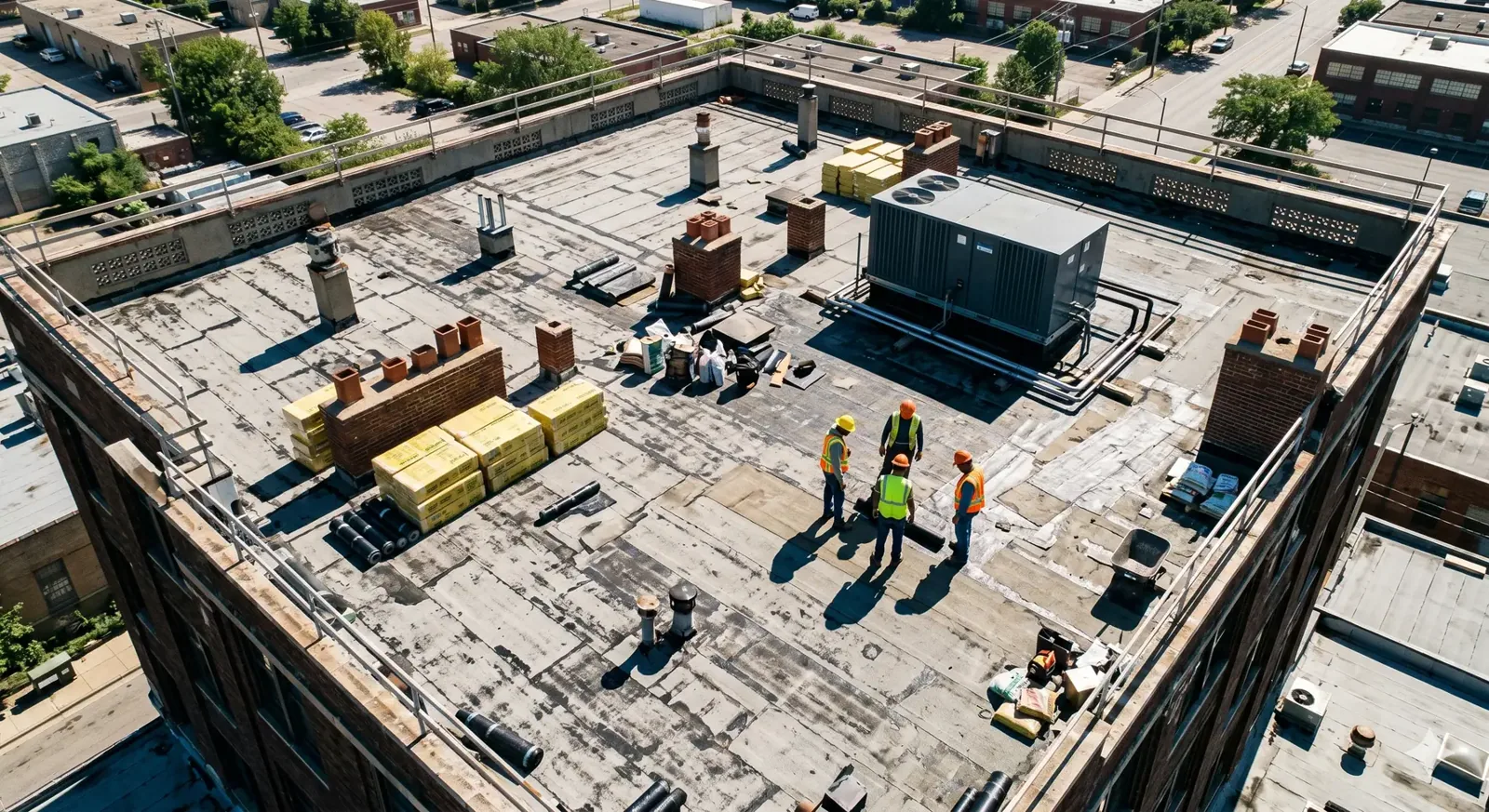
After strong wind, check edge metal, flashing, rooftop equipment, and loose membrane. Photograph displaced material before temporary protection hides the condition. Compare the repair area with nearby seams, then price the affected section. A storm report alone does not show what the roof needs; an inspection gives the owner a short repair list. We also serve commercial roofs in Long Beach.
Examine the impact area and nearby roofing
We find the spot that was hit and check the roof around it for cuts, punctures, torn seams and bent flashing. A dent in a metal cap is not a hole in the membrane, and we report each one with its location. The manager sees exactly what supports the repair we recommend, not just a note that something hit the roof.
Our commercial roof inspections stick to what we can see and confirm. Whether an insurer or another party is responsible is a separate question. If a rooftop unit, skylight or structural member was also hit, it may need its own inspection by the right trade before roofing work starts. A photo shows the surface; it does not show what is going on beneath it, so the report notes what we could not check.
If equipment or debris blocks part of the area, we say what needs to be moved or opened before we can finish the inspection. Areas we have not looked at are not called undamaged.
Confirm the layers needed for rebuilding
If there are signs that water got through, we check the insulation and cover board under the membrane, usually with a moisture meter or a small core cut. We record where we tested and what we found. A dent or a cut on top does not mean every layer beneath is damaged. The manager sees exactly which material needs to come out and what we did not test.
Our commercial roof repairs for impact damage list removal and the new membrane together. Replacement insulation has to sit flush with the surrounding roof so the new membrane lies flat and seals properly. A small patch on top may need that work underneath it, and the estimate shows it rather than hiding it inside a general repair line.
Opening the roof sometimes turns up more damage, like a crushed deck flute or wet insulation that runs further than expected. We mark it, explain how it changes the repair, and get approval before continuing. The area stays protected in the meantime. Damage found at one spot is not assumed to exist elsewhere on the roof without checking.
Restore the permanent membrane repair
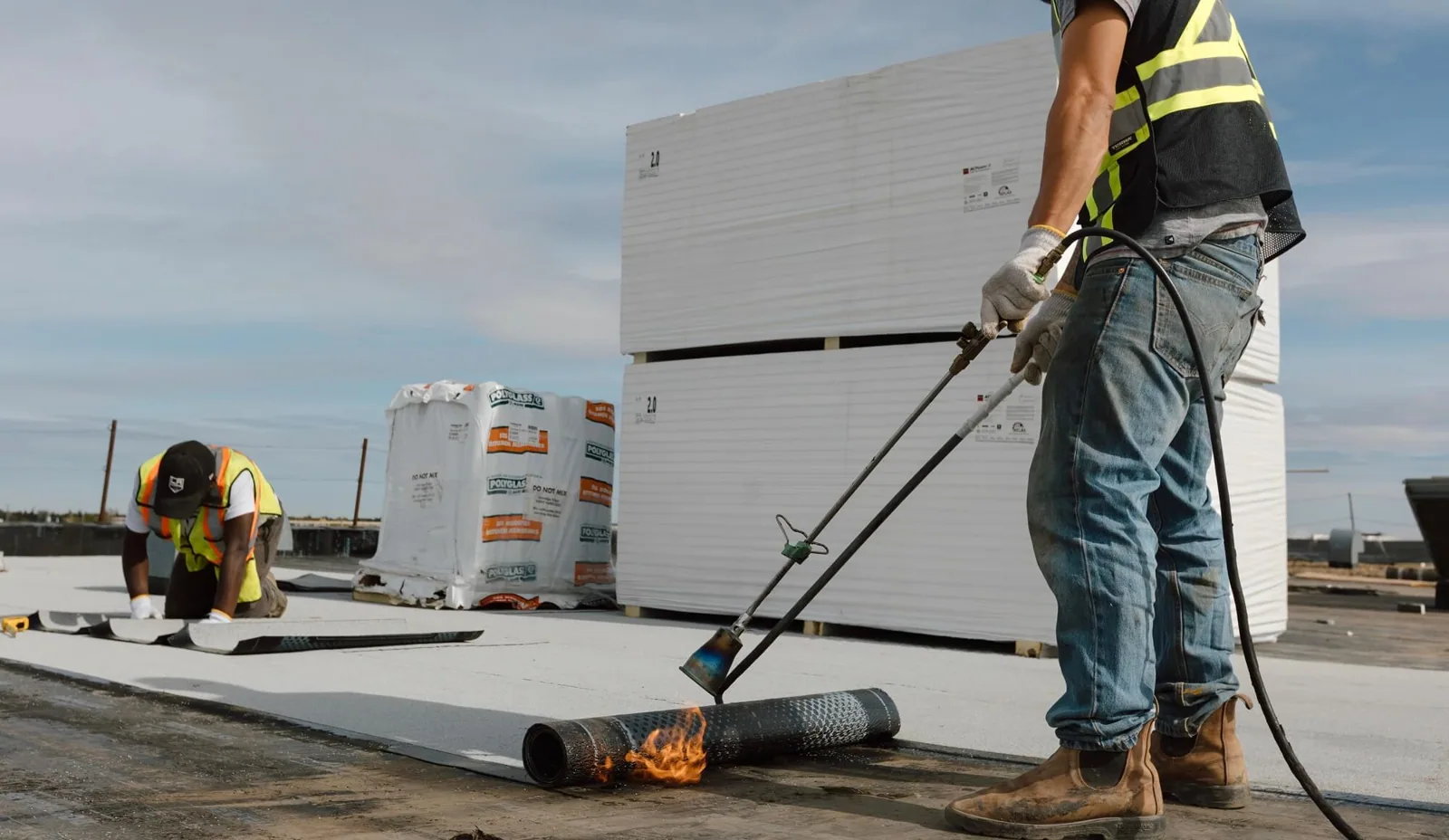
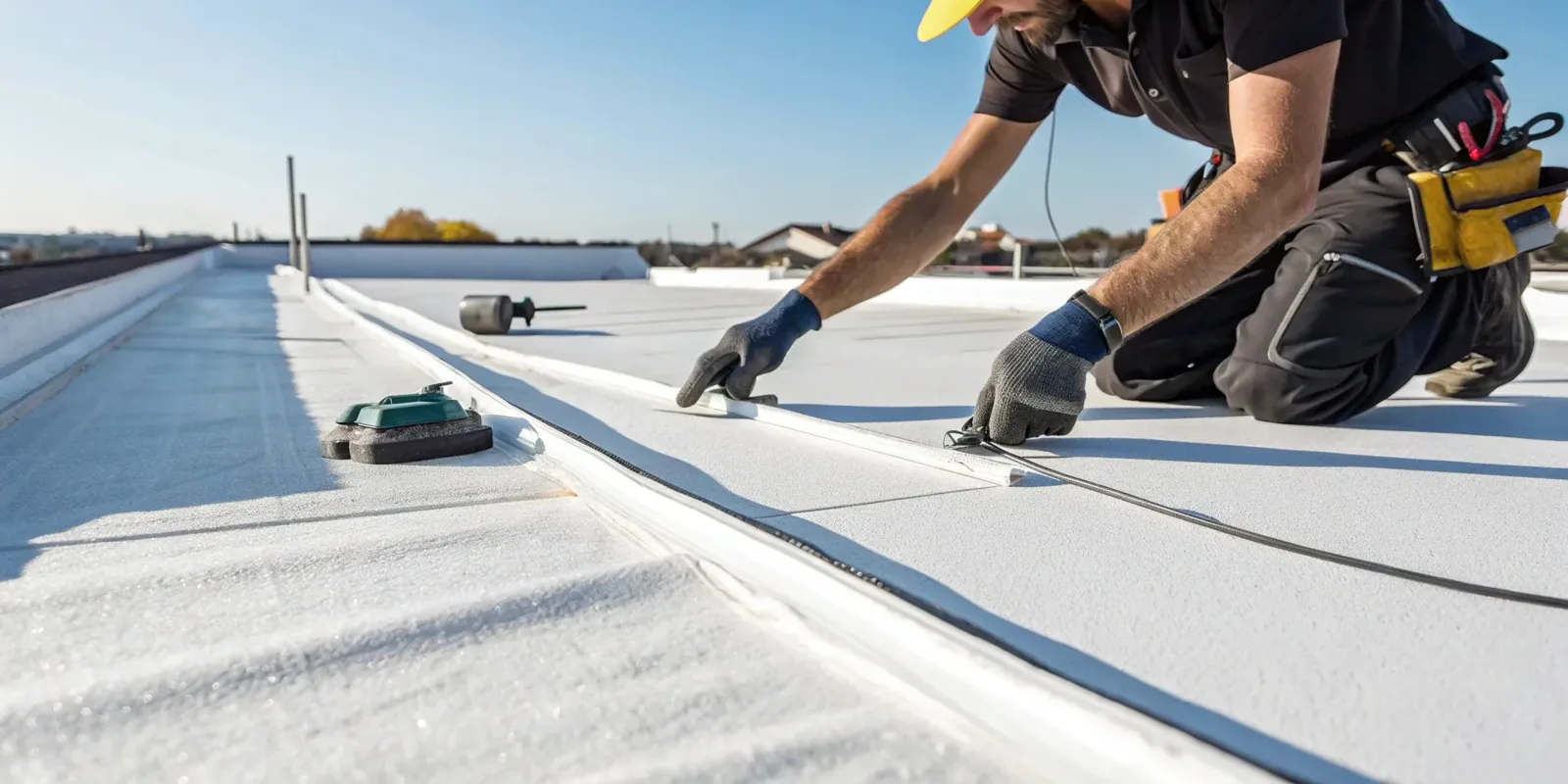
We identify the existing membrane and use compatible materials and seaming methods. The roofing around the repair gets cleaned and prepared, and nearby failed seams or loose flashing are fixed so the new patch has something solid to bond to. The patch should extend out to sound membrane, not just cover the visible mark. Those prep steps are listed in the price.
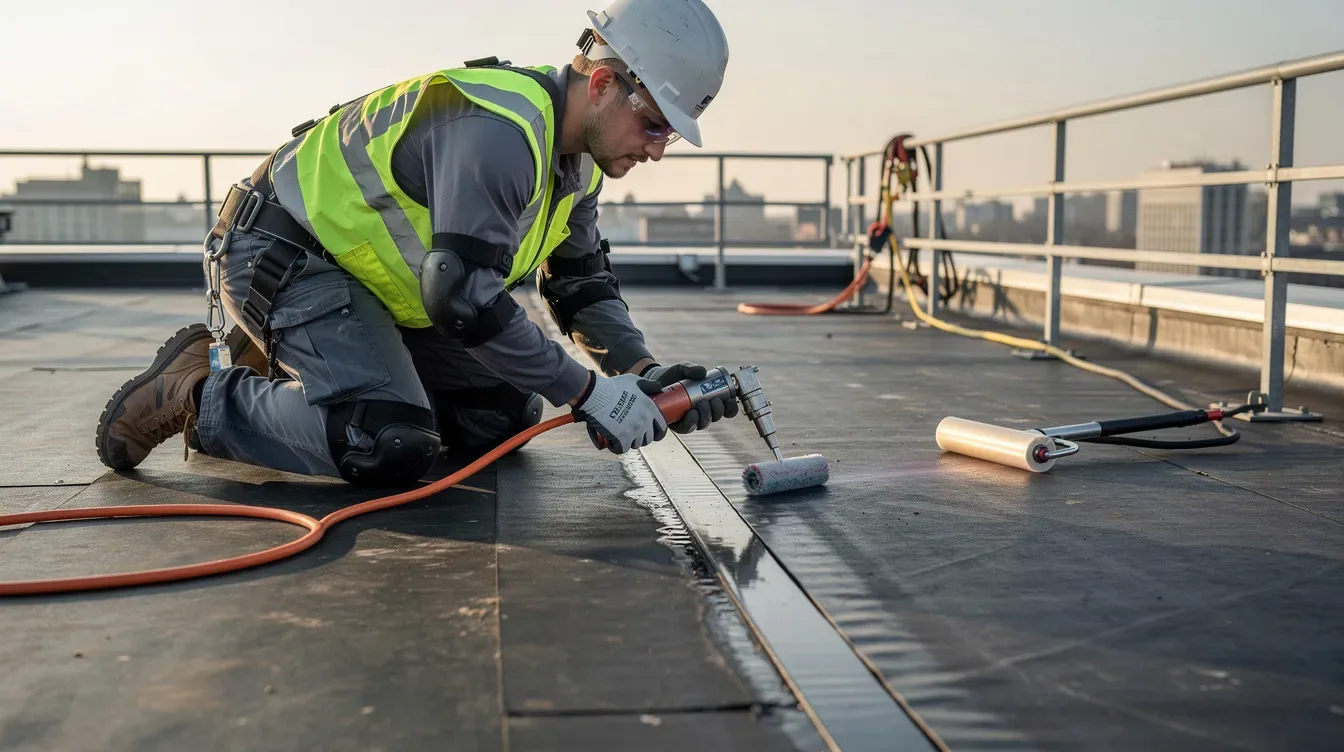
On a TPO roof with a local impact repair, the new TPO is heat-welded to clean, sound existing membrane. If the damage runs up to a wall, pipe or drain, the flashing at that spot is part of the repair too. Knowing the roof is TPO does not tell you the condition of those edges, so we check them.
If a damaged curb, deck or equipment support needs another trade first, we say what that work needs to accomplish before the roof can be closed. A clean patch on top should never hide a problem underneath that nobody fixed.
Compare access and the actual repair duties
After strong wind, inspect commercial roof edges in Signal Hill before water reaches the building. Check coping, flashing, rooftop equipment, and membrane laps for movement. Photograph displaced material and protect open areas while the owner reviews the repair. Price the affected section separately from unrelated maintenance. Commercial wind-damage inspections and repairs are also available in Long Beach.
When comparing bids, look at what each one removes, how it preps the roof and how it seals the edges. A cheaper bid may only patch the surface. Another may include replacing wet insulation or fixing a damaged curb. The owner should understand that difference before choosing. We also inspect and repair commercial roofs in Lakewood, and every building gets its own findings and repair plan.
We respond for emergency protection on weekends, holidays and overnight. The notes say what we covered and what temporary work we did. The permanent repair follows once we have checked the layers underneath and any other trades are done. An emergency visit is not the same as a completed inspection of what is under the membrane.
Keep the repair evidence tied to the damage
We photograph the damage and any wet or crushed material before new roofing covers it up, and each photo is tied to its location. The notes list the prep work and finished seams. The owner can compare the original damage with the repair. A photo of the finished patch alone would not show how deep the damage went.
A roof condition report on impact damage and repairs keeps surface damage separate from damage confirmed underneath. Work assigned to another trade is listed with its status. Areas we did not inspect are marked as such, so if a new problem shows up somewhere else, it gets its own inspection.
The right repair depends on what was actually damaged. The estimate should include the prep and any work underneath that the repair needs. Owners can then compare clear proposals, not a vague impact damage allowance that does not say what was checked or what will be fixed.
For a Signal Hill impact repair, document the damaged area before patching. Look for splits, displaced seams and affected flashing around the mark. A surface scuff alone does not establish deeper damage. The scope should reflect the material actually confirmed.
Commercial Roofing Questions
How do you decide whether an impact on the roof needs a membrane repair?
We inspect the spot that was hit. A scuff or dent in the surface often needs nothing. A cut, puncture or torn seam lets water in and needs a repair. We show you what we found and where before recommending anything.
If the membrane is cut, is the insulation underneath damaged too?
Not always. We check with a moisture meter or a small core cut where needed. If the insulation is wet or crushed, we replace that section; if it is dry and solid, a membrane patch is enough.
What should a small repair price include?
Cleaning and prepping the roof around the damage, a patch big enough to reach sound membrane, any wet insulation that has to be replaced, and flashing repairs if the damage touches a wall, pipe or drain. Work by other trades should be listed separately.
What happens if you find more damage once the roof is open?
We stop, photograph it, and explain how it changes the repair and the price. The area stays covered while you decide. We do not expand the job without your approval.
How will I know what was repaired once it is covered up?
You get photos of the original damage and anything replaced underneath, each tied to its location, plus notes on the finished repair. Anything left for another trade is listed too.
Get the impact damage checked
Schedule a commercial roof visit in Signal Hill after an impact or windstorm. We will inspect the damaged area, check whether the layers underneath were affected, and give you a clear repair plan and price.