Buena Park Commercial Roofing from Downey, CA
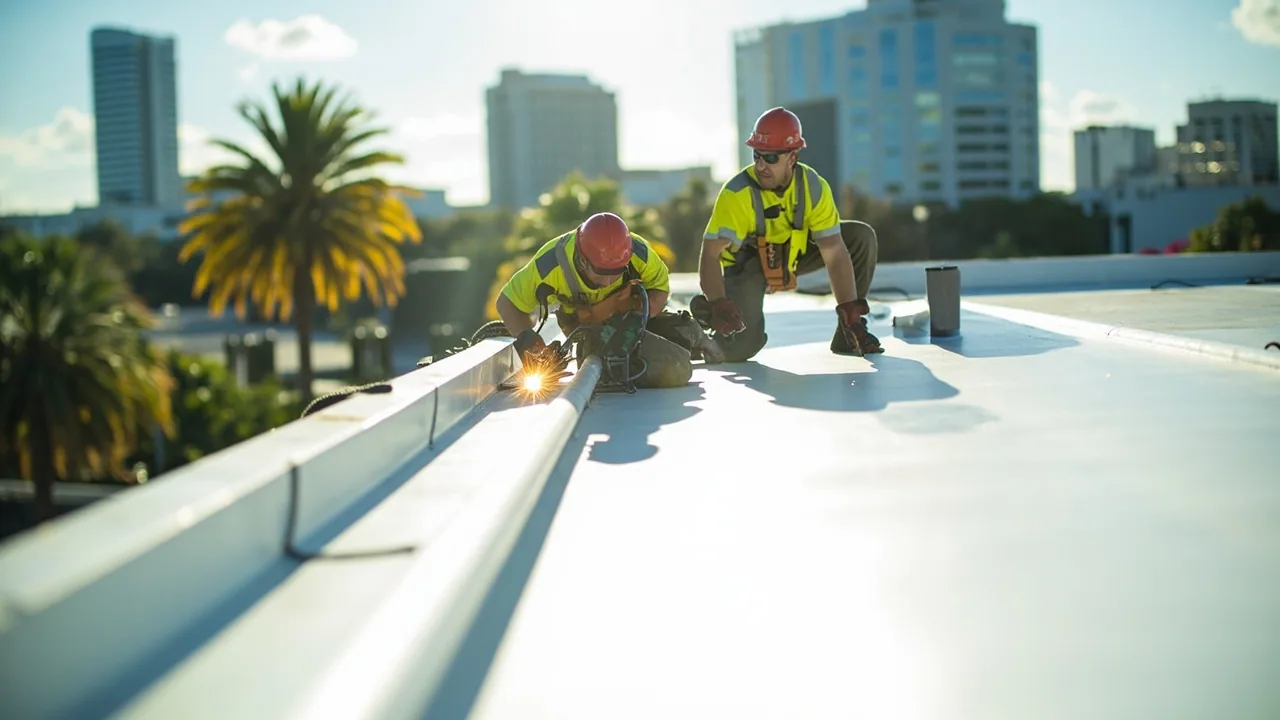
Roof transition repair in Buena Park from our Downey crew: where two roof types meet, we identify both materials and build a joint that works with each.
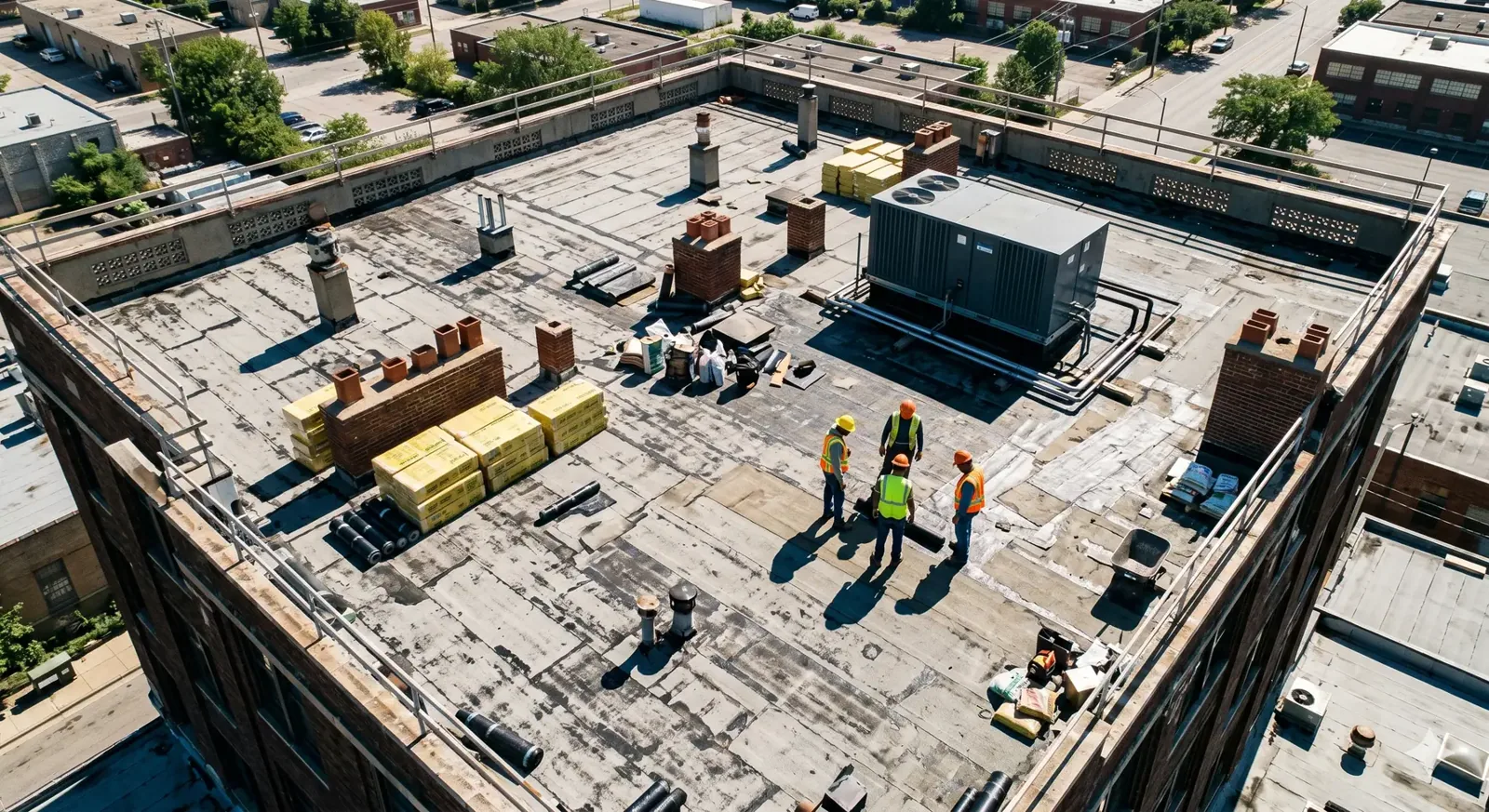
Many commercial buildings in Buena Park have been added on to or partly reroofed over the years, so it is common to find two different roof systems meeting on the same building: a newer TPO section against an older built-up roof, a coated area against bare modified bitumen, a metal roof stepping down to a flat one. Those transitions are where leaks like to start. A patch product that sticks well to one side may not bond to the other, and a coating painted across the line usually just hides a seam that is still open. We identify both roofs before choosing how to join them. We also do this work on commercial properties in Fullerton.
Buena Park's Beach Boulevard corridor, its downtown area and The Source OC give the city several distinct commercial districts, and I-5, SR-91 and SR-39 all cross it along with Union Pacific and BNSF rail lines. For a roof repair at a busy retail or business property, we confirm the exact building and work area, plus the membrane and transition details, before choosing a repair. Delivery routes, roof access and active entrances vary from one property to the next.
Identify the roof material on each side
We start by walking both sides of the transition and identifying what each roof is: the membrane type, the surfacing, and any coating or old repairs on top. A worn coating can hide a completely different roof underneath, so we may scrape a small area or take a core to be sure. That matters because the repair method depends on what the new joint has to bond to.
A roof inspection at a transition records the materials, the condition of each side and the condition of the joint itself. A split along the transition tells us where water is getting in, but not how the layers underneath are put together. We note what we confirmed and what still needs a closer look before we decide how much to remove.
If the transition includes a wall, curb or piece of metal, we look at that too. A loose expansion joint cover or a rusted metal edge may need repair before the roofs can be tied together.
Fix nearby damage before joining the roofs
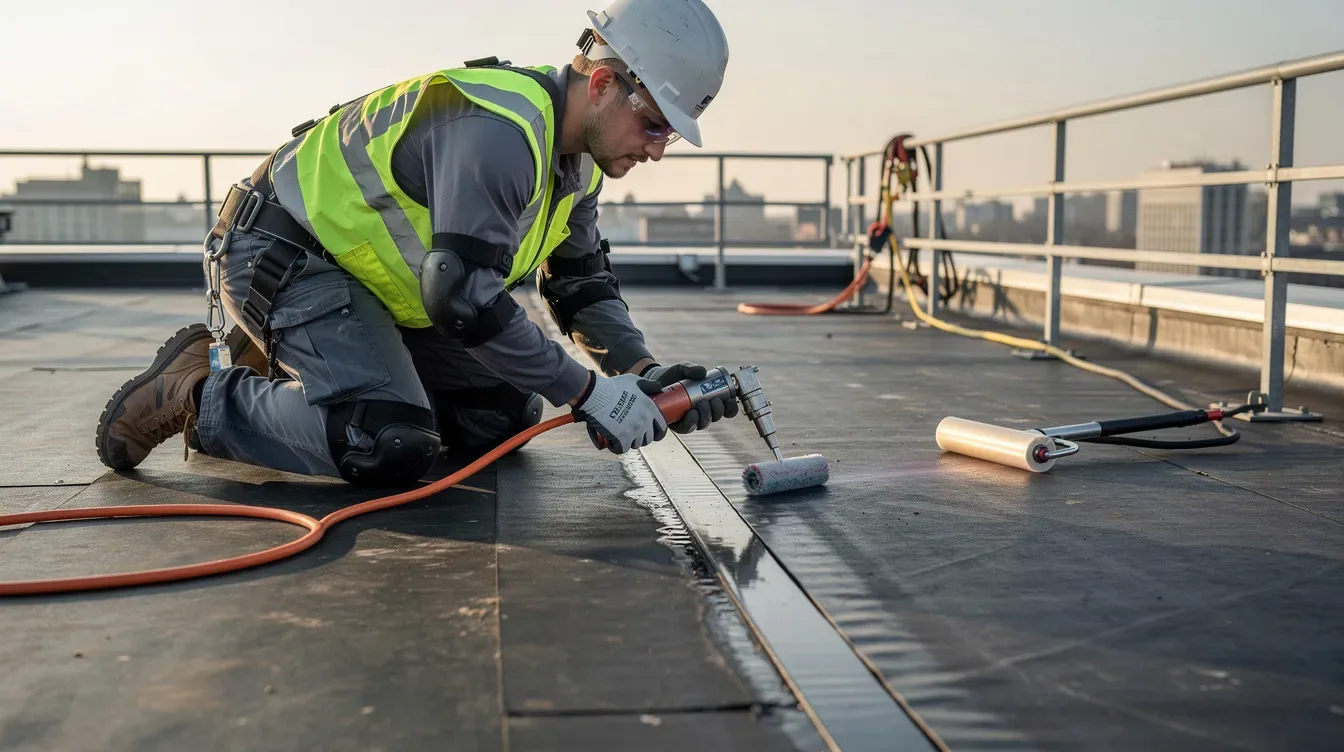
The new joint needs sound material on both sides. We cut out split seams, loose flashing and any brittle or blistered roofing near the transition, then clean and prime each surface for the products we will use. If one side has wet insulation under it, that comes out first. A joining strip laid over damaged roofing will fail at its edges.
A permanent roof repair at a transition often means removing more on one side than the other, because the two roofs aged differently. The estimate should show how far the removal goes on each side and what gets rebuilt, not just the length of the joint.
If we open the area and find more damage than expected, we stop, show you photos, and agree on the change before going further. The roof is protected in the meantime.
Pick a joint detail that suits both materials
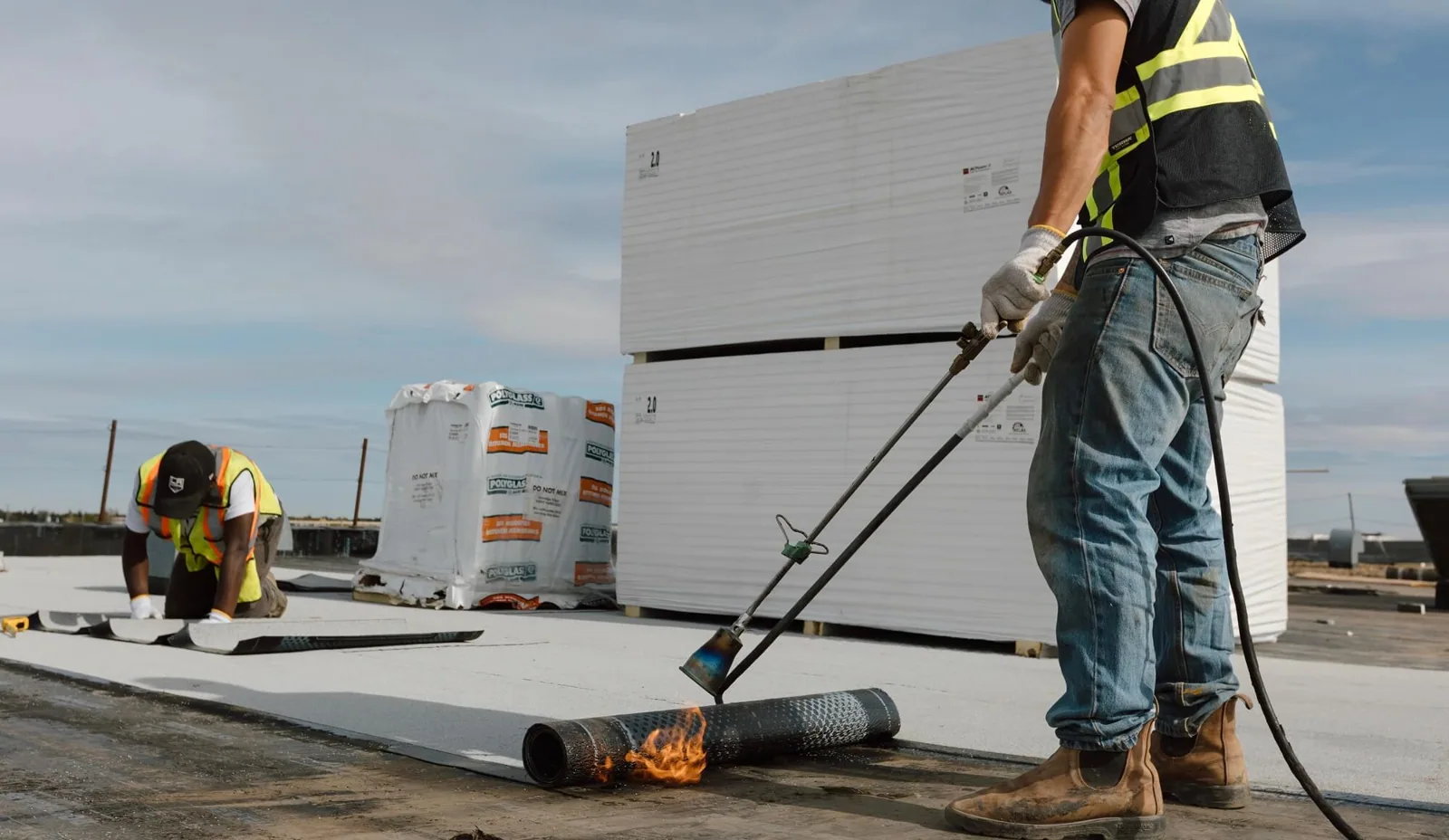
Each material has its own rules. TPO and PVC are heat-welded, EPDM uses tapes and primers, asphalt roofs use plies and mastics. Where two different systems meet, we usually use a transition detail that is compatible with both, such as a separator or a raised curb or edge that lets each roof terminate cleanly on its own side. The right choice depends on the materials and how much the roof moves at that line.
On a PVC roof meeting an asphalt roof, for example, PVC and asphalt should not be in direct contact, so the detail needs a separator or a metal termination between them. The estimate should spell out which detail you are getting and why.
If you are considering replacing one side instead of repairing the joint, the transition changes. A full replacement might move the joint to a better spot, like a wall or a high point. We will show you both options so you can compare.
Compare the options before work starts
A roof transition in Buena Park needs each material identified before the old detail comes out. We inspect the wall or curb, the membrane on both sides and any repair layer already in place, then mark what will remain and what needs to be removed. The estimate shows preparation, flashing and permanent closure as separate items. We do the same transition work in Fullerton.
Cheaper estimates often keep more of the old material and skip the prep. More thorough ones replace damaged sections on both sides and build a proper transition detail. You should be able to see that difference in the line items, not guess at it. We also handle commercial roofs in La Mirada, each with its own inspection.
We offer emergency leak response nights, weekends and holidays. A temporary seal at a transition stops water for now, and we label it that way until the permanent detail is in.
Record how the two roofs were joined
Before the joint is closed, we photograph the cleaned surfaces, any insulation we replaced and the transition detail as it goes in, on both sides. Once finished, the layers are covered, and the photos are the record of how the two roofs were tied together.
Those go into a roof condition report with the transition marked on the roof plan. Anything left for another trade stays on the list as open. Other transitions on the same building are noted separately, since they may involve different materials.
When comparing bids, ask each contractor what materials they found on each side, how far they will remove, and what detail they will use at the joint. If an estimate cannot answer those questions, it is probably pricing a patch, not a repair.
Commercial Roofing Questions
How do you choose a repair method where two roof types meet?
We identify both roofs first, including any coating or old repairs on top. Then we choose a detail that is compatible with both materials, often a separator, metal termination or raised edge where each roof can finish on its own side.
If the transition is damaged, does that mean both roofs need the same amount of removal?
No. The two sides often age differently. We check each side and remove only what is damaged, which may be more on one side than the other.
What repairs should be done before the roofs are joined?
Split seams, loose flashing, brittle or blistered roofing and wet insulation near the joint should be fixed first. The new transition needs sound material on both sides to bond to.
Should I repair the transition or replace one of the roofs?
It depends on the condition of each roof. Replacing the older side can let us move the joint to a better spot. We price both options so you can compare what each one includes.
How will I know how the two roofs were joined?
We photograph both sides of the joint before and during the work and include them in your report with the location marked, along with the materials used.
Get the roof transition inspected
Leaks where two roof sections meet in Buena Park? We will identify both materials, inspect the joint, and give you an estimate for a transition that works with each side.