Commercial Roofing for General Contractors in Downey, CA
Commercial roofing for general contractors in Downey, CA: roofing bids that include drain, curb and wall tie-ins, coordinated with the other trades on your schedule.
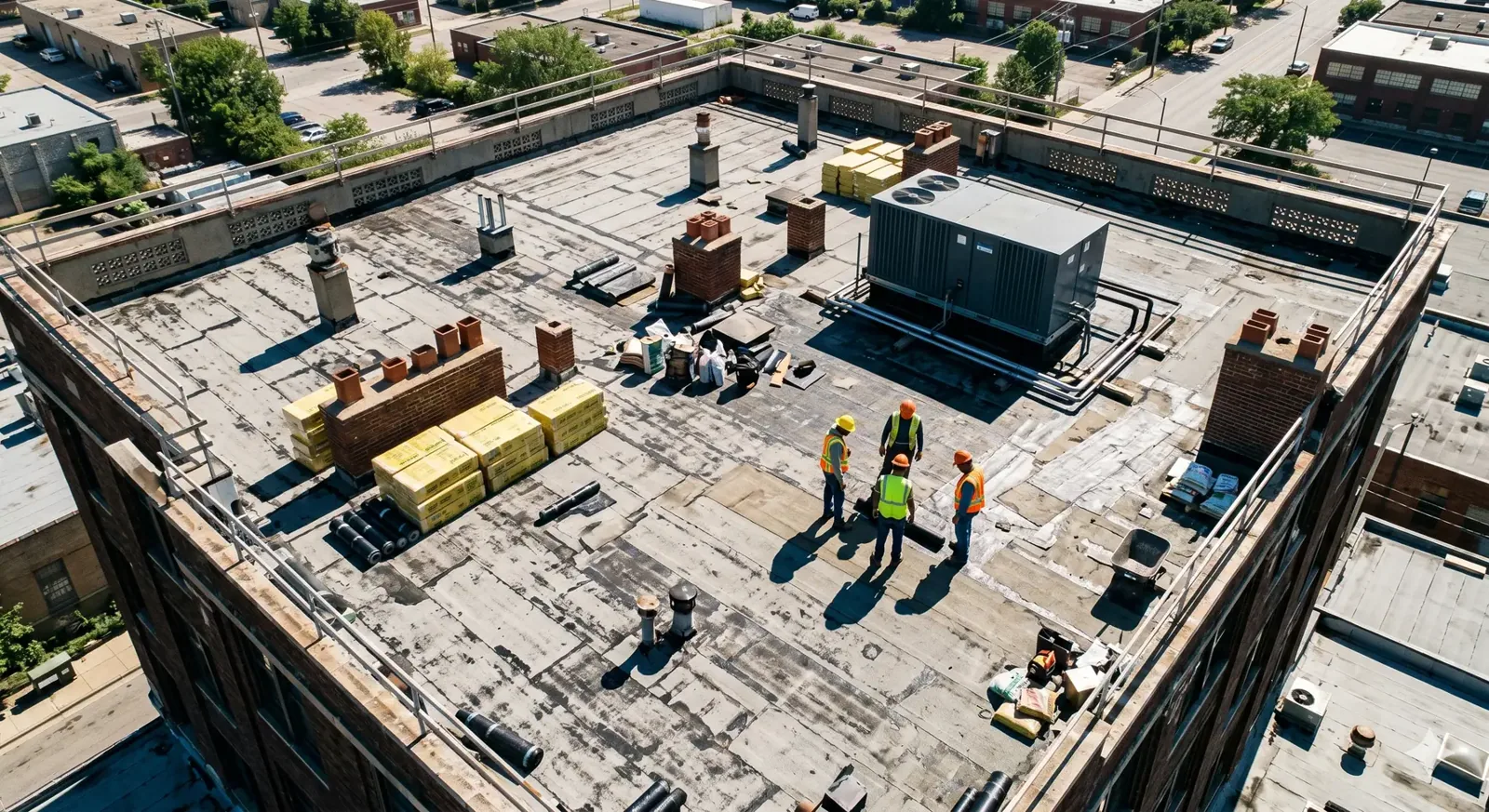
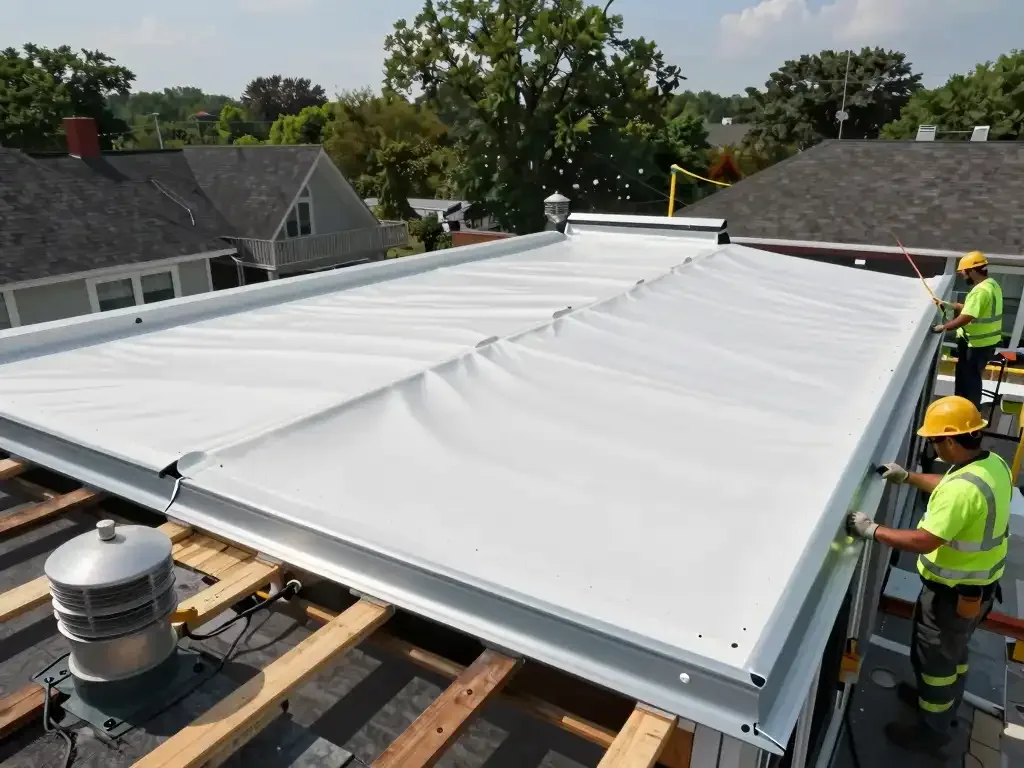
Roofing bids often leave out the small items that cause the biggest headaches, like raising a drain to match new insulation or reflashing a curb after the mechanical contractor resets a unit. For general contractors in Downey, CA, we price those tie-ins up front and tell you which ones depend on another trade. We inspect the roof details, define our scope clearly, and work with your schedule so each connection is ready when we get to it. A submittal approval does not fix a rotted nailer, so we check the conditions in the field.
On a commercial roof project, set the tear-off boundary before comparing bids. Mark the affected section, deck condition, edges and penetrations on the drawing. Keep a separate allowance for hidden layers that cannot be checked before tear-off. For office work in Downey, plan for long dry stretches followed by concentrated winter rain, and build drainage and temporary dry-in into the sequence. On projects near Santa Fe Springs, also identify equipment prep and roof access before the crew opens the roof.
Confirm the roof details before bidding
We start with the details shown on the drawings and compare them with what is actually on the roof. Drawings show design intent, but roofs get modified. A unit may have been added, a drain moved, or an old roof left in place under the current one. When the drawing and the roof do not match, we flag it with the change it could cause, so you can sort it out before ordering material.
A commercial roof inspection for a GC scope notes what we could and could not see. If a detail was hidden or inaccessible, that stays an open item. A test cut at a key detail can show what the roof is made of and whether it is sound. We protect and patch it the same day. Structural or design questions go to the engineer or architect. Our recommendation is based on what we found, plus any confirmation still needed, rather than assuming the drawing tells the whole story.
Price the tie-ins when the roof height changes
Adding insulation or a cover board raises the roof surface. That affects drains, curbs, walls, scuppers and door thresholds. Flashings may need to go higher, drains may need extenders, and units may need taller curbs. We list each of those items in the bid and identify which ones another trade has to handle, such as a plumber for drain bodies or a mechanical contractor for curb changes. That way your number covers the whole job, not just the field.
New roof insulation and cover board has to go onto a dry, sound surface. If the existing layers are staying, they have to be compatible with the new system. Design questions, like tapered layouts or attachment requirements, may need the engineer or manufacturer's review before ordering. We track submitted questions separately from answered ones. Until the answer comes back, that item stays conditional in the bid, so you are not approving a material order with a tie-in still unpriced.
Settle hidden conditions before other trades close them up
Wet insulation or a damaged deck can change how much roof comes off. We test where the answer would change the scope and record exactly where we tested. One wet core does not mean the whole roof is wet, so untested areas are listed as unknown. Test cuts are protected and patched the same day. It is far cheaper to answer these questions before the drywall and ceilings go back in below than after.
A commercial roof replacement on a GC project has clear tear-off limits. If we uncover more damage, we document it, price the extra work and submit it through your change order process. Work that belongs to other trades stays on their scope, with the location it affects. A provisional allowance from the bid does not cover a new finding. Each change gets its own explanation before the revised work is approved.
Sequence other trades before the roof is closed
If equipment or drain work happens after the roof is finished, it can damage new flashing and void a warranty. We agree on the order with you: mechanical sets units and curbs, plumbing sets drains, then we flash and close. The building owner or site contact confirms access and any areas we cannot use. Permission to inspect is not permission to tear off, so we confirm each step separately.
For a project in Paramount, we confirm site access, work hours and staging with your superintendent. Phasing the roof adds setup and temporary dry-in each time. One continuous phase costs less if the other trades are ready. We price both options with the same scope. A quick roofing visit is not done if a tie-in is left open for another trade to finish.
Close out roofing separately from other trades
Our close-out shows the roof areas completed, photos of the deck and details before they were covered, what layers stayed in place and which tie-ins we finished. Any items still waiting on another trade are listed with their location and who is responsible. Temporary dry-in is labeled as temporary until the permanent work is in. A finished roof does not mean every trade's work on the roof is done.
A property management company taking over the building needs that record to manage the roof. A public agency owner may need it for their own review. If equipment is added or a new leak appears later, the roof should be inspected again and the findings added with their dates. The original close-out is a reference point, not proof of the current condition.
Before the project changes hands, review any open tie-in questions together. Each one should say what answer or work is still needed. Someone picking up the file should be able to find the photos and details without a site visit. A clear handoff makes the next phase easier to approve.
Commercial Roofing Questions
What should be priced when the selected assembly changes finished height?
Price the effects of the higher roof: taller flashing at walls and curbs, drain extensions or replacements, scupper and threshold changes, and any equipment curb adjustments. Get design questions answered before ordering. Some of those items may belong to other trades, but they should all be in the comparison.
Can a submitted roofing detail establish an interface ready for installation?
No. An approved submittal tells you the detail is acceptable. It does not tell you the field conditions are ready. The surface it ties into still has to be sound and the other trades' work has to be in place before we install it.
Which task should come first where another trade affects the connection?
The other trade's work comes first, then we flash and close the roof. If equipment or plumbing work happens after the roof is done, it can damage new flashing. We keep temporary dry-in in place while we wait.
What should remain visible in the roofing completion record?
The roof areas completed, photos of the work before it was covered, the tie-ins we finished and the items still waiting on other trades, with who is responsible. The next contact should be able to see what is done and what is not.
Get a roofing bid that covers the tie-ins
Send us the Downey project address, the relevant drawings and what needs to be decided. We will inspect the roof details and price the roofing, the tie-ins and the work other trades need to do first.