South Gate Commercial Roofing from Downey, CA
Repair or replace your commercial roof in South Gate, CA? We check the existing roof, confirm wet or damaged layers and price both options so you can compare.
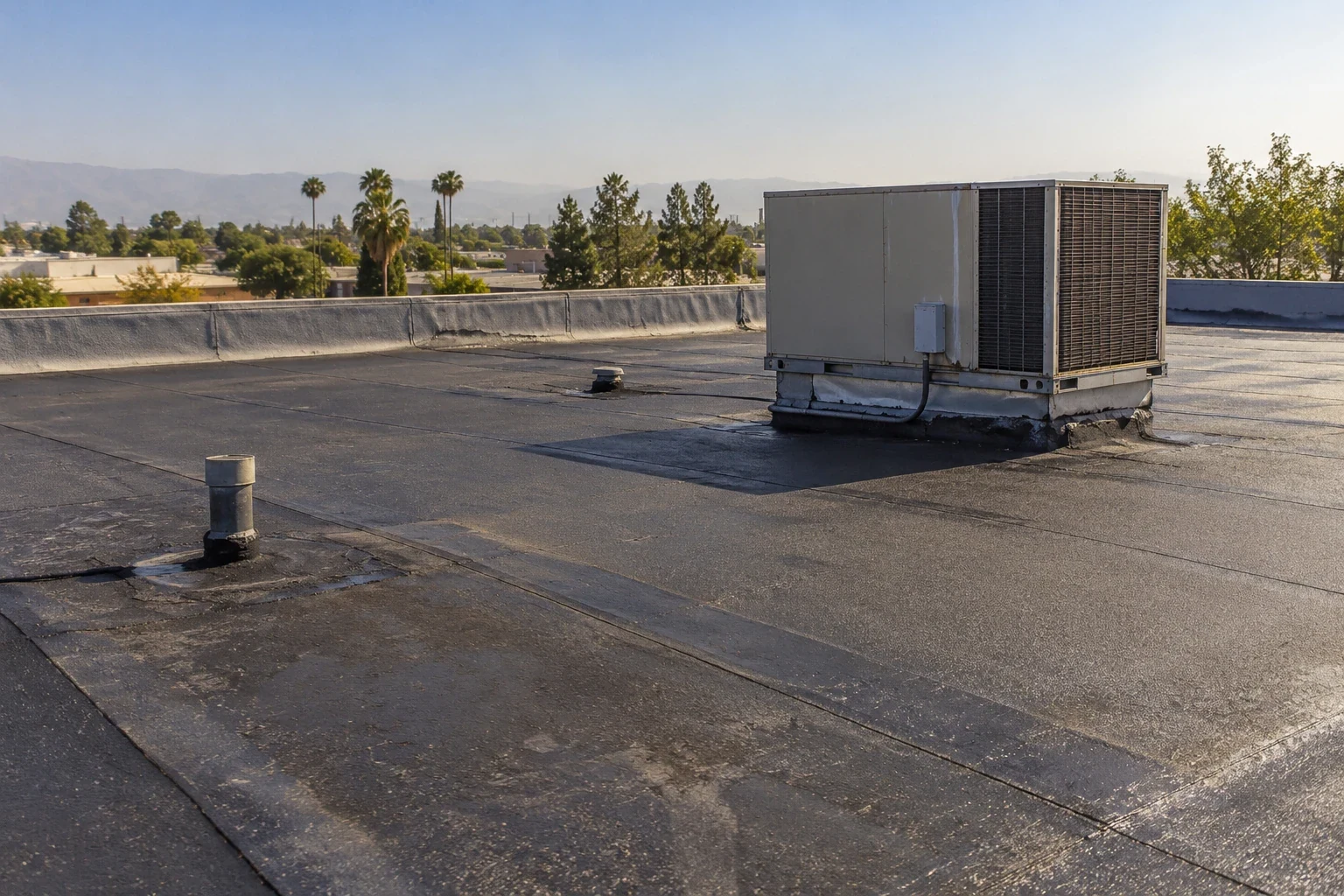
Many South Gate building owners end up weighing a repair quote against a replacement quote. The two numbers often describe very different jobs: how much roofing comes off, how much insulation is replaced, and whether the flashing at walls, drains and curbs is included. We inspect the existing roof first and explain what each option actually covers. A smaller repair makes sense when the roof around it is sound enough to tie into. It should not be chosen just because it is the cheaper number on the page.
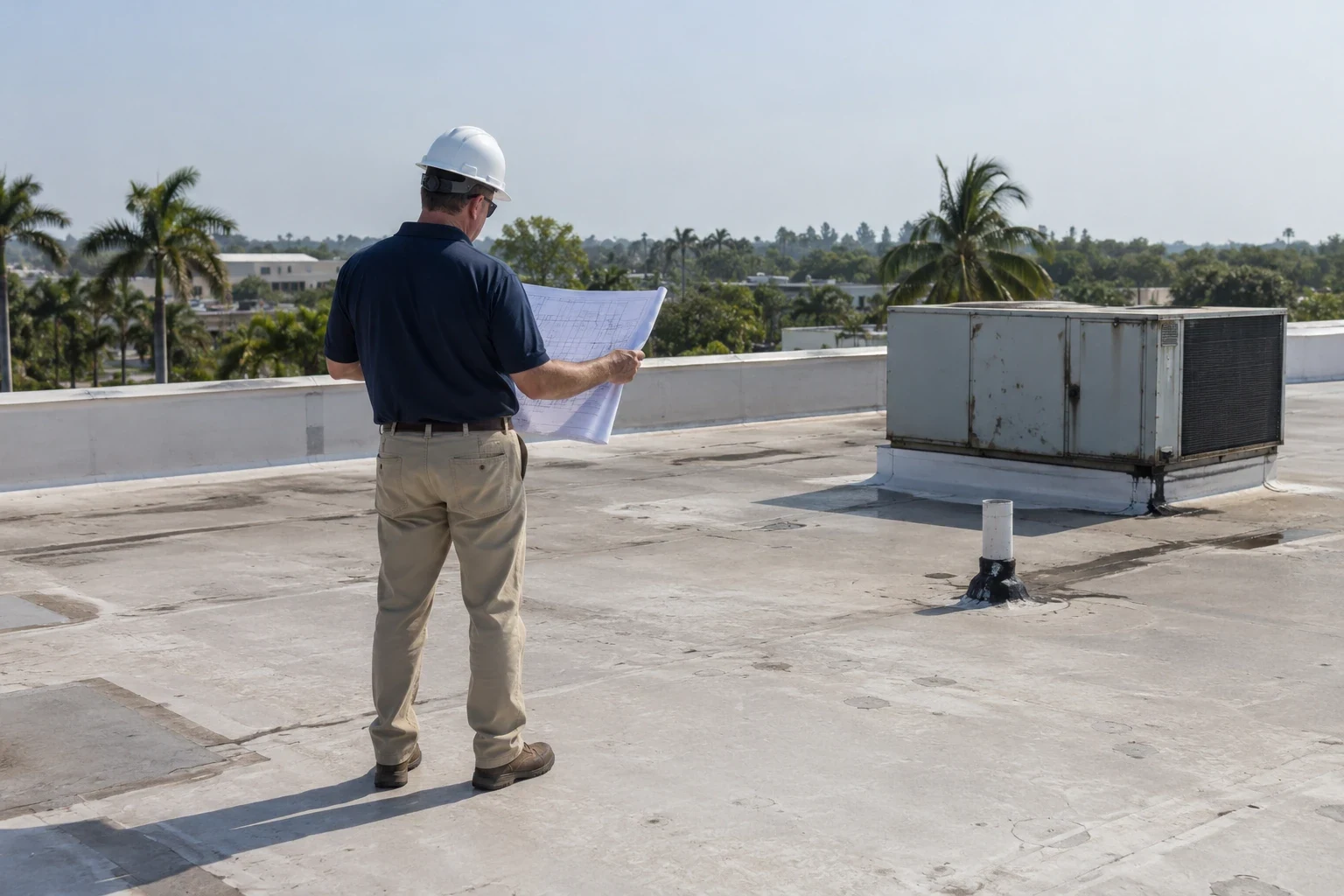
A replacement budget should separate removal, insulation, membrane, edge metal, and drainage. Inspect the existing roof first, then compare repairable sections with areas that need new construction. List access and tenant protection so the schedule is realistic. A measured scope gives the owner room to compare bids. Commercial roof replacement planning is also available for buildings in Lynwood.
Check whether a local repair will hold
We look at the roof around the problem and at anything nearby like walls, drains and pipe penetrations. The existing membrane has to be in good enough shape to clean, prep and seam a patch onto. Sometimes a wall flashing or a drain has to be fixed first. We find that out before pricing the smaller option. A repair also needs enough room to reach solid membrane on every side. If the convenient patch outline lands on brittle or blistered roofing, the manager should know that before comparing it with a replacement.
Our commercial roof repairs spell out what the patch ties into and how. Cleaning sound roofing is one thing; tearing out wet insulation under it is another, and some repairs need both. The estimate shows which. A short line that just says "repair" should not hide the flashing or drain work that has to happen first.
Confirm the damaged layers before comparing
If we suspect water has gotten under the membrane, we check with a moisture meter or core cuts and mark the area we tested. That finding tells us how much insulation needs to come out at that spot. It does not tell us about the rest of the roof. The estimate keeps tested areas separate from areas we have not checked, so the manager can tell confirmed damage from a guess. Both the repair and the replacement price should reflect that same information.
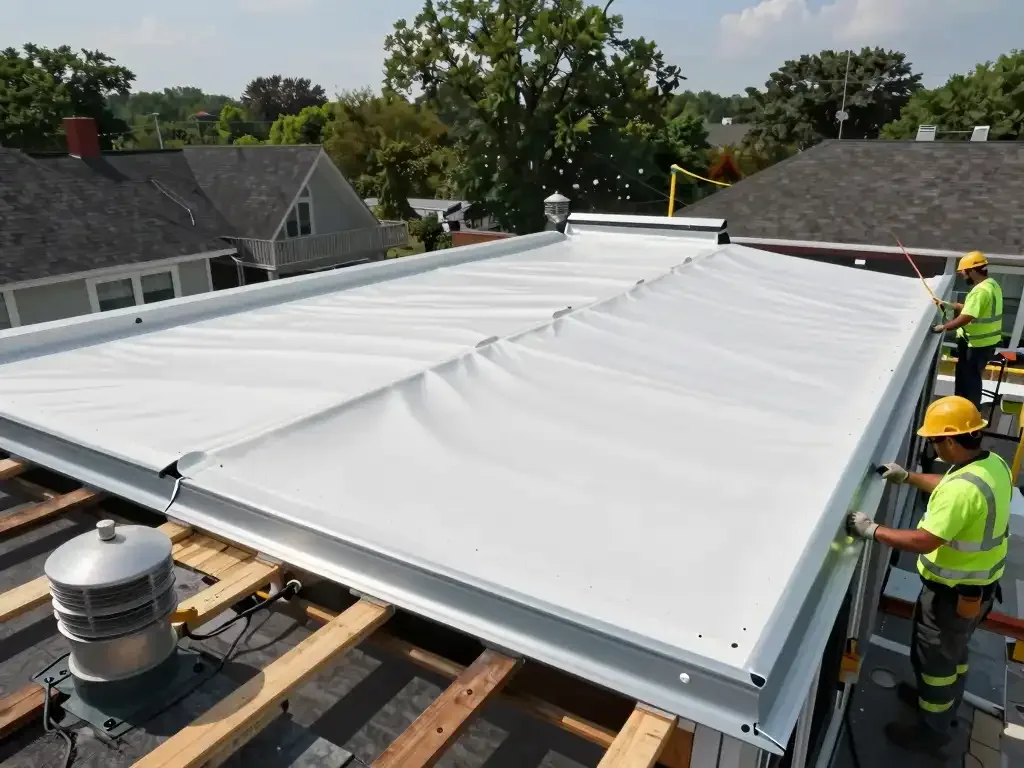
Our commercial roof replacements cover the bigger picture: tear-off, new insulation and membrane, and new flashing at walls, drains and rooftop units. We list what stays, what gets replaced and what another trade has to handle first, such as an HVAC contractor resetting a unit or an engineer looking at a deck concern. A bigger field price does not mean every wall, drain and curb detail is included, so we spell those out.
Sometimes opening the roof changes the picture. If we find wider wet insulation or rusted deck, we show the owner and explain whether the small repair still makes sense. The opening stays protected while they decide. We will not force a small patch onto roofing that cannot hold it.
Compare access and schedule for both approaches
A replacement needs far more material delivered, lifted and hauled off than a repair, and usually a crane or lift and a staging area. A repair may still need someone inside to reach a drain line or a unit below. We confirm with the building contact what access each option needs, and which other trades have to be lined up. That way the manager can compare real schedules, not just labels.
For projects in South Gate and nearby Bell Gardens, the building sets the access plan. Firestone Boulevard and Imperial Highway make South Gate an easy run for our crews. We confirm the building contact, roof access and how work areas below will be protected. Both options include keeping the roof watertight while it is open. A start date means little if another trade still has to finish before the roof can be closed.
Make sure the edges and flashings are included
We identify the existing roof system before choosing a repair or replacement method. The membrane in place, or the new system chosen, determines what materials and prep are compatible. Any new roofing has to tie into the walls, drains and curbs around it, and we describe how each of those will be flashed. A new membrane on the field of the roof does not help much if the edges still leak. The owner should see how the whole job ends up watertight.
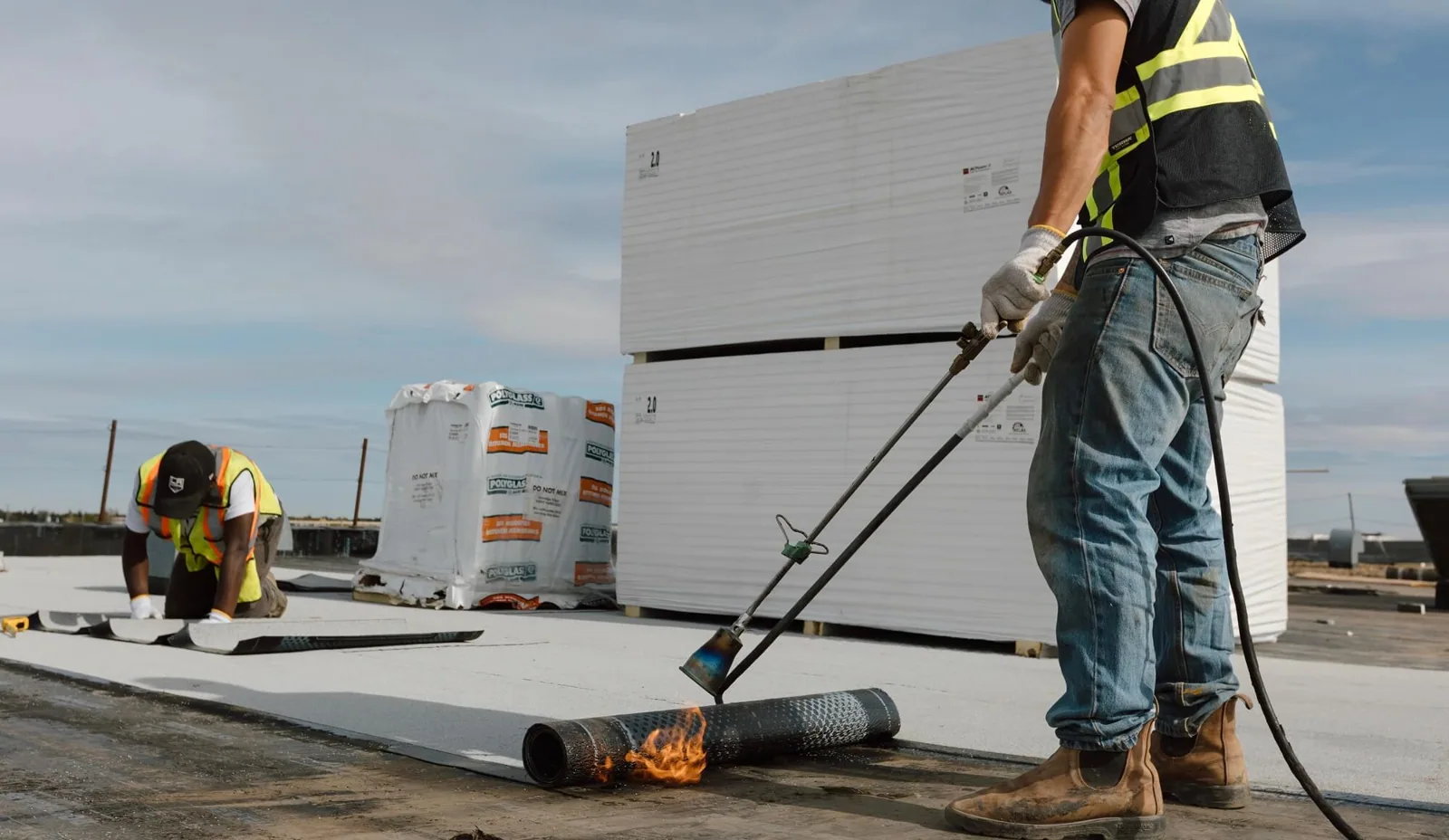
On a modified bitumen roof being repaired or replaced, the existing sheets and their surfacing determine how new material is torched or adhered. Patching old mod bit may call for a different detail than installing a new system. We show that difference in the comparison, along with any deck or curb repairs the work depends on. Knowing the roof is mod bit does not tell you what condition it is in under either option.
Keep a record of why the option was chosen
We photograph wet or damaged material and the prepared surfaces before new roofing covers them. The notes show where insulation or deck was replaced. Finished seams are tested with the method that suits the roof. The closeout explains what the chosen option fixed and lists anything another trade still owes. The owner can tie the work back to the findings that justified it.
A roof capital plan keeps today's repairs separate from future replacement needs. Each roof area has its own condition notes. When a new problem shows up, we inspect that area and compare it with the earlier record. One good repair does not prove the insulation across the rest of the roof is dry, so future budgets follow fresh inspections.
For urgent leaks, we provide emergency protection on holidays, weekends and overnight. The manager gets a note on what was covered and what still needs to be checked underneath. The permanent repair or replacement decision comes after that inspection, not during the emergency call.
Commercial Roofing Questions
How do you know if a local repair will last?
The roofing around the problem has to be sound enough to tie a patch into, and nearby walls, drains or curbs have to be in workable shape. We check those first. If they are, a repair is a real permanent option. If not, the patch will leak again.
If you find wet insulation, does the whole roof need replacing?
No. Wet insulation at one spot only tells us about that area. We test other areas before drawing conclusions. Sometimes a local tear-out and repair is the right answer; sometimes the testing shows the wet area is widespread and replacement makes more sense.
What if you find more damage after opening the roof?
We show you what we found, explain whether the repair plan still works, and give you a revised price before continuing. The open area stays protected while you decide.
Why do repair and replacement take different amounts of time?
A replacement involves much more material, often a crane or lift, and more coordination with other trades and tenants. A repair is smaller but may still need inside access or another trade first. We lay out what each option needs so you can compare actual schedules.
What records will I get when the work is done?
Photos of the damage and the work underneath, notes on what was replaced and where, and a list of anything still pending from other trades. That record helps explain later why you chose repair or replacement.
Compare repair and replacement side by side
Schedule a commercial roof visit in South Gate. We will inspect the existing roof, check for wet or damaged layers, and give you clear repair and replacement options that include the flashing and edge work each one needs.